Article Contents:
- Philosophy of wooden architecture in the modern world
- Technological features of production in Irkutsk
- Variety of styles and forms
- Classic turned balusters
- Milled balusters with decorative elements
- Carved balusters as works of art
- Wood species and their characteristics
- Spruce – accessibility and practicality
- Larch – Siberian strength
- Oak – symbol of reliability and prestige
- Beech – European elegance
- Ash – strength and flexibility
- Technical Aspects of Selection and Installation
- Calculation of quantity and placement
- Mounting methods
- Individual and authorial solutions
- Classic style
- Modern minimalism
- Country and rustic
- Modern and Art Deco
- Care and Maintenance of Wooden Balusters
- Regular Cleaning
- Updating protective coating
- Protection against moisture and temperature fluctuations
- Economic aspects of selection
- Price-to-Quality Ratio
- Factors Affecting Cost
- Ecological advantages of wooden balusters
- Renewability of resources
- Biodegradability and disposal
- Impact on room microclimate
- Industry development trends
- Introduction of new technologies
- New types of coatings
- Individualization and customization
- Regional characteristics of the Irkutsk market
- Climate Conditions
- Logistical Advantages
- Traditions of wood processing
- Conclusion

The majestic staircase without elegant balusters resembles an unfinished symphony. In the world of architectural solutions wooden balusters Irkutsk occupy a special place, combining functionality with aesthetic perfection. These vertical supports transform an ordinary staircase into a work of art that will delight the eye for decades.
The Siberian region has always been renowned for its wood processing traditions. The Irkutsk region, rich in forest resources, became a center for producing high-quality wooden items. Local craftsmen have perfected architectural element creation technologies for centuries, passing down the secrets of their craft from generation to generation.


Philosophy of wooden architecture in the modern world
Wood possesses a unique ability to create an atmosphere of warmth and coziness in any space. When it comes to stair railings, wooden balusters become the link between functionality and beauty. They do not merely support the handrail—they shape the character of the entire interior.
In the era of technological progress and synthetic materials, natural wood remains a symbol of reliability and ecological purity. Each baluster carries the energy of living wood, its growth history in Siberian forests, where harsh climate toughens the wood fibers, making them especially strong and durable.
Modern designers increasingly turn to natural materials, understanding their psychological impact on people. Wooden interior elements can reduce stress levels, create a sense of harmony with nature, and form a favorable energy field in living spaces.




Technological features of production in Irkutsk
Production of high-quality wooden balusters requires a deep understanding of the properties of various wood species. In the Irkutsk region, local species such as pine, larch, and birch are primarily used, along with imported premium varieties—oak, beech, and ash.
The manufacturing process begins with careful selection of raw materials. The wood must be properly dried to a moisture content of no more than 12-15 percent. This is a critically important stage, as improper drying may lead to deformation of finished products during use.
Modern production lines in Irkutsk are equipped with high-precision equipment, enabling the creation of balusters of any complexity. CNC lathes ensure ideal geometry of products, while milling centers allow for intricate decorative carving.
Special attention is paid to final finishing. Multi-stage sanding creates a perfectly smooth surface, ready for protective coatings. The use of modern water-based varnishes and oils ensures the longevity of products and preservation of their original appearance.
Our factory also produces:


Variety of styles and forms
Get Consultation
Classic turned balusters
Turned balusters are rotational bodies with smooth transitions in diameter. This style originated in the Renaissance and remains one of the most popular to this day. Classic forms include various combinations of cylinders, cones, and spheres, creating an elegant silhouette.
Producing turned balusters requires high skill from a turner. Each item goes through several processing stages: rough turning, finishing turning, and grinding with various abrasives. An experienced craftsman can create a unique profile that becomes the signature of a specific project.
Milled balusters with decorative elements
Milled balusters are distinguished by the presence of longitudinal and transverse grooves, creating play of light and shadow on the surface. Modern milling machines allow executing complex geometric patterns that were inaccessible to craftsmen of previous centuries.
Balusters with twisted elements, imitating twisted columns, are particularly popular. Such items require special precision in manufacturing and high operator skill.
Carved balusters as works of art
Carved balusters represent the pinnacle of woodworking craftsmanship. Each item is created individually, taking into account the overall interior style and the client's preferences. Modern CNC machines allow realizing the most daring design ideas in wood.
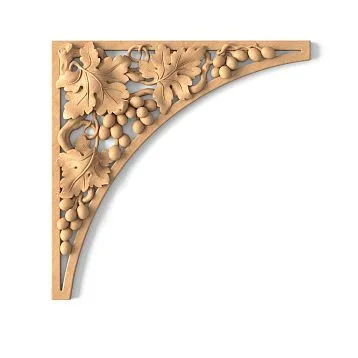
Carving can be geometric or floral. Popular motifs include grapevines, oak leaves, and floral compositions. Balusters with three-dimensional carving, creating a lace-like effect from wood, look especially striking.
Wood species and their characteristics
Spruce – accessibility and practicality
Spruce remains the most popular material for manufacturing balusters in Irkutsk. This species offers the optimal price-to-quality ratio. Spruce wood is easy to process and has a beautiful texture with clearly visible annual rings.
A significant advantage of spruce is its natural resistance to rot due to high resin content. However, this same characteristic requires careful surface preparation before applying coatings — resinous areas may hinder lacquer adhesion.
Spruce wooden balusters for staircases differ in lightness, which simplifies installation and reduces load on the staircase structure. With proper treatment, they can serve for several decades without losing their appearance.
Larch – Siberian strength
Larch is rightfully considered one of the best species for manufacturing staircase elements. Its wood possesses unique properties: high density, natural resistance to moisture and biological damage.
The color of larch varies from light yellow to reddish-brown, allowing for interesting color compositions. The wood texture is clearly defined, with distinct boundaries between early and late wood.
A distinctive feature of larch is its ability to become even stronger over time. Under the influence of air, natural polymerization of resins occurs, increasing the hardness of the wood.
Oak – symbol of reliability and prestige
Oak balusters represent the pinnacle of quality and durability. This wood species has been used in construction for thousands of years, and its reputation is impeccable. Oak possesses exceptional hardness and density, making it an ideal material for manufacturing load-bearing elements.
The texture of oak is distinguished by nobility and expressiveness. Large pores create a characteristic pattern, which becomes even more expressive after toning. Oak balusters can withstand significant loads and are practically immune to wear.
A distinctive feature of oak is its ability to patina — over time, the wood acquires a darker, noble tone, further enhancing its aesthetic value.
Beech – European elegance
Beech wood has a uniform structure and a delicate pinkish hue. This species is easy to process and holds its shape well. Beech is especially valued for its ability to tone — it evenly absorbs dyes, allowing for any desired shade.
Beech density is comparable to oak, but it is more pliable, allowing for the creation of items with complex shapes. Beech balusters are distinguished by smooth surfaces and pleasant tactile sensations.
Ash – strength and flexibility
Ash combines high strength with remarkable flexibility. This species is especially valued for its ability to withstand dynamic loads without breaking. The texture of ash resembles oak, but features lighter tones and less pronounced pores.
Ash balusters have a natural gloss that remains even after many years of use. This species is ideal for creating items in a modern style, where clean lines and the natural beauty of the material are prized.
Technical aspects of selection and installation
Calculation of quantity and placement
Correct calculation of the number of balusters is critically important both for safety and aesthetic reasons. Building codes require that the distance between balusters should not exceed 150 millimeters in clear span. This ensures child safety and prevents the risk of head entrapment between posts.
When calculating, it is necessary to consider not only the length of the staircase run but also the placement of support posts. Balusters should be evenly distributed between posts, creating a rhythmic composition. Experienced craftsmen recommend installing one baluster per step, which creates the most harmonious appearance.
Methods of mounting
There are several ways to attach balusters to steps and handrails. The traditional method involves using wooden pegs and glue. This method ensures the strongest connection and allows creating a monolithic structure.
Modern technologies offer the use of metal fasteners: bolts, screws, special brackets. This approach simplifies installation and allows replacing individual elements without dismantling the entire structure.
Special attention should be paid to attaching to the handrail. The upper part of the baluster must fit tightly into the handrail's groove, ensuring the rigidity of the entire structure. Using polyurethane glue guarantees the durability of the connection and resistance to thermal deformation.
Stylistic solutions for various interiors
Classic style
A classical interior requires appropriate staircase design. Solid wood balusters In the classical style, balusters feature strict proportions and restrained decoration. The composition is based on precisely crafted elements with smooth transitions in diameter.
The color palette of classical balusters leans toward natural wood tones with possible light tinting. Especially striking are oak balusters with patina, highlighting the material's nobility.
Modern minimalism
A minimalist design approach involves using simple geometric forms and clean lines. Balusters in this style may have square or rectangular sections with minimal decoration. The emphasis is on surface finish quality and geometric precision.
The color scheme leans toward light tones: whitewashed oak, light beech, stained pine. It is important to achieve uniformity among all staircase elements, creating a cohesive composition.
Countryside and rustic
The country style implies using rough, deliberately simple forms that emphasize the handmade nature of the items. Balusters may have irregular geometry, knots, and traces of hand-tooling. This approach creates an atmosphere of a countryside home, closeness to nature.
The color palette includes all natural wood tones, from light yellow to dark brown. Especially popular are effects of artificial aging and brushing, creating the impression of long-term use.
Modern and Art Deco
Modern and Art Deco styles involve using complex curved forms and asymmetrical compositions. Balusters may have unusual profiles created using modern milling equipment.
Balusters with carved elements in the form of plant motifs or abstract compositions look especially striking. The color scheme may include contrasting combinations and tinting in various shades.
Care and maintenance of wooden balusters
Regular cleaning
Proper care for wooden balusters begins with regular cleaning of dust and dirt. Soft microfiber cloths slightly moistened with water are used for this. It is important to avoid using aggressive cleaning agents that may damage the protective coating.
For persistent stains, specialized wood care products can be used. They gently remove dirt without damaging the wood structure and preserve its natural luster.
Updating protective coating
The protective coating on balusters requires periodic renewal. The frequency depends on usage intensity and environmental conditions. On average, varnish coating should be renewed every 5-7 years, oil-based coating every 2-3 years.
The renewal process includes light sanding of the surface to remove the old coating and create an adhesive layer. Afterward, a new coating is applied in several layers with intermediate drying.
Protection from moisture and temperature fluctuations
Wood is sensitive to changes in humidity and temperature. To prevent deformation, it is important to maintain a stable microclimate in the room. The optimal air humidity is 45-60 percent, and the temperature is 18-22 degrees Celsius.
When placing a staircase near heat sources (radiators, fireplaces), additional protection for the wood must be provided. This can be a special impregnation or increased thickness of the protective coating.
Economic aspects of selection
Price-to-quality ratio
When choosing wooden balusters, it is important to consider not only the initial cost but also long-term operational expenses. High-quality items made from hardwoods cost more, but their longevity compensates for the high initial investment.
Saving on material quality and manufacturing may lead to the need for premature replacement of balusters, which ultimately costs more. Therefore, it is recommended to choose products from reputable manufacturers with a good reputation.
Factors Affecting Cost
The cost of wooden balusters depends on many factors: wood species, processing complexity, order volume, and production time. The most affordable are simple-shaped pine balusters, while the most expensive are carved items from elite wood species.
The production method significantly affects the price. Items made on modern CNC equipment cost more but feature high precision and quality of processing.
Ecological advantages of wooden balusters
Renewability of resources
Wood is the only construction material that is fully renewable in nature. With proper forest management, wood harvesting does not harm the environment but instead contributes to the health of forested areas.
The Irkutsk region has vast forest resources, enabling local industry to be supplied with high-quality raw materials without long-distance transportation. This reduces the product's carbon footprint and makes it more environmentally friendly.
Biodegradability and disposal
At the end of their service life, wooden balusters can be fully recycled or disposed of without harming the environment. Wood naturally decomposes, enriching the soil with organic matter.
Unlike synthetic materials, wood does not release toxic substances during decomposition and does not pollute the environment. This makes wooden balusters an ideal choice for environmentally conscious consumers.
Influence on room microclimate
Wood has the ability to regulate the humidity of air in a room, absorbing excess moisture and releasing it when necessary. This creates a comfortable microclimate and positively affects the health of the inhabitants of the house.
In addition, some types of wood release phytoncides — biologically active substances with antiseptic properties. This is particularly characteristic of coniferous species, which help purify the air from pathogenic microorganisms.
Industry development trends
Introduction of new technologies
Modern production of wooden balusters actively incorporates new wood processing technologies. CNC machines allow creating items of the most complex shapes with high precision. Laser cutting opens new possibilities for creating intricate elements.
Development of wood drying technologies allows obtaining material with specified moisture and internal stress characteristics. This significantly improves the quality of finished products and reduces the risk of deformation during use.
New types of coatings
The chemical industry constantly develops new types of protective coatings for wood. Modern varnishes and oils have improved characteristics: increased wear resistance, UV resistance, and anti-static properties.
Especially promising are water-based coatings, which do not contain volatile organic compounds and are safe for human health. Such coatings allow preserving the natural texture of wood and its ability to 'breathe'.
Individualization and customization
Modern consumers increasingly value individuality and uniqueness. Wooden baluster manufacturers respond to this demand by offering services for custom-made items based on individual sketches. Modern equipment allows realizing the most daring design ideas in wood.
The development of 3D modeling and virtual reality allows clients to see the future product even before production begins. This eliminates misunderstandings and guarantees full compliance of the finished product with the client's expectations.
Regional characteristics of the Irkutsk market
Climate conditions
The harsh Siberian climate imposes special requirements on wooden products. Significant temperature fluctuations, low humidity in winter and high humidity in summer create additional stress on wood. Local manufacturers take these features into account when selecting processing technologies and protective coatings.
Using local wood species adapted to the Siberian climate ensures maximum product longevity. Pine and larch, grown under harsh conditions, have increased density and resistance to external influences.
Logistical advantages
Irkutsk occupies a favorable geographical position, situated at the intersection of major Siberian transport routes. This ensures accessibility to both local raw materials and imported materials. The developed transportation infrastructure allows prompt delivery of finished products to any point in the region.
Proximity to timber processing enterprises ensures stable supplies of high-quality raw materials at competitive prices. This allows local manufacturers to offer high-quality products at affordable prices.
Traditions of wood processing
The Irkutsk region has rich traditions of wood processing, dating back to ancient times. Local craftsmen have perfected wood-working technologies over centuries, creating unique items known far beyond the region.
Modern manufacturers carefully preserve these traditions, combining them with the latest technologies. This allows creating items that not only boast high quality but also a distinctive Siberian character.
Conclusion
Choosing wooden balusters in Irkutsk opens up wide opportunities for creating a unique and functional interior. Combining traditional craftsmanship with modern technologies allows obtaining items that will serve for decades, preserving their beauty and functionality.
Wooden balusters are not just a functional element of a staircase, but an important component of a house's architectural appearance. They can radically change the perception of space, giving it individuality and character.
Investments in high-quality wooden balusters pay off not only through long service life, but also through increased overall property value. A beautiful staircase with elegant balusters becomes a house's calling card, a source of pride for owners.
For many years, STAVROS has specialized in producing high-quality wooden items for staircases. Our craftsmen possess deep knowledge in woodworking and use only the best materials and modern technologies. We guarantee an individual approach to each project and flawless quality of finished items. Entrusting us with the production of balusters for your staircase, you receive not just functional elements, but works of art that will delight you for many years.