Article Contents:
- Art of Photographing Wooden Elements
- Technical Side of Photography
- Compositional solutions
- Classification of Baluster Photography Styles
- Studio Photography: Academic Precision
- Interior Photography: Context and Atmosphere
- Artistic Photography: Emotional Impact
- Wood Species in Photography: Visual Characteristics
- Oak: Aristocratic Texture
- Ash: Contrastive Expressiveness
- Beech: Uniform Elegance
- Coniferous Species: Natural Simplicity
- Technological Processes in Photodocumentation
- Turning: Symmetry and Rhythm
- Milling: Geometric Precision
- Carving: Artistic Mastery
- Stylistic Directions in Visual Presentation
- Classicism: Strict Beauty
- Baroque: Opulence and Ornamentation
- Modern: Natural Motifs
- Contemporary: Minimalism and Functionality
- Technical Photography: Documentation of Quality
- Surface Quality Control
- Dimensional Control
- Artistic Interpretation in Photography
- Abstract Photography
- Conceptual Photography
- Digital Processing and Retouching
- Color and Contrast Correction
- Defect Removal
- Application of Photography in Marketing
- Catalog Photography
- Advertising Photography
- Conclusion
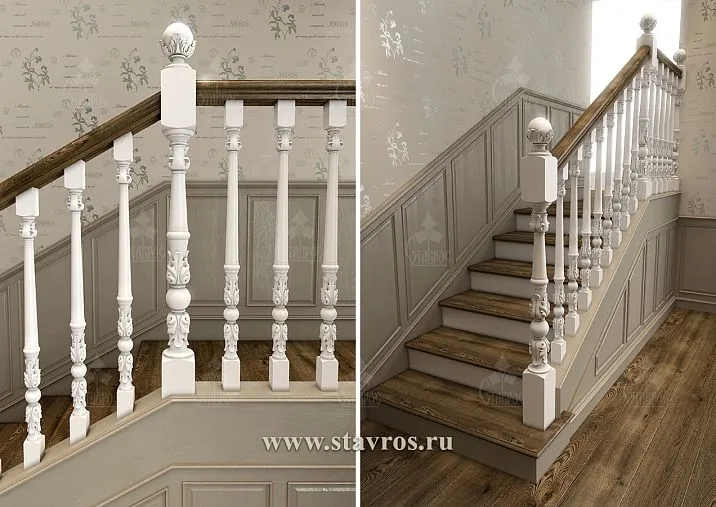
When words are powerless to convey the full beauty and elegance of wooden stair elements, images come to the rescue. Wooden balusters photo This is not just a product catalog, but visual poetry captured in a frame. Each photo tells a story of craftsmanship, demonstrates the play of light and shadow on the noble surface of wood, reveals the secrets of harmonious proportions and flawless finishing.
Photography is capable of showing what words cannot describe: how a sunbeam glides over the elegant curves of a finely turned baluster, how the texture of oak creates a unique pattern on the surface of a carved element, how properly chosen proportions transform a functional detail into a work of art. In a world where visual perception plays a decisive role in decision-making, high-quality photographs of wooden balusters become a bridge between the dream of a beautiful staircase and its realization in reality.


Art of Photography of Wooden Elements




Technical Side of Shooting
Creating high-quality photographs of wooden balusters requires a deep understanding of the material's characteristics and a professional approach to lighting. Wood is a living material with a unique texture that can either highlight the beauty of the item or conceal it under improper lighting. Professional photographers use special techniques to reveal all nuances of the wooden surface.
Side lighting at a 45-degree angle perfectly highlights the relief of turned elements, creating an expressive interplay of light and shadow. Diffused light from softboxes ensures even illumination without harsh shadows, which is especially important when shooting smooth surfaces. Backlighting helps separate the baluster from the background, creating an effect of volume and lightness.
Our factory also produces:


Compositional Solutions
Proper composition in photographs of wooden balusters plays a key role in perceiving the item. The rule of thirds helps create dynamic and interesting frames, where the baluster is placed not in the center but at the intersection points of imaginary lines. Diagonal compositions add energy and movement to the photo, which is especially effective when shooting groups of balusters.
The shooting angle determines the character of perceiving the item. Shooting from below emphasizes the monumentality and grandeur of balusters, highlighting their architectural significance. Shooting at eye level creates a sense of proximity and accessibility, allowing to examine the details of processing and the texture of wood.
Get Consultation
Classification of Styles in Baluster Photography
Studio Photography: Academic Precision
Studio photography of wooden balusters is distinguished by technical perfection and detail in the image. Controlled lighting conditions allow to reveal all nuances of surface processing, emphasize the quality of polishing, show the depth of carved elements. A neutral background does not distract attention from the main subject, allowing to focus on the shape and texture of the item.
Macro shooting in studio conditions reveals the amazing world of details: the structure of wood fibers, the quality of lacquer coating, the precision of carved elements. Such photographs are especially valuable for demonstrating manufacturing quality and can serve as technical standards for manufacturers.
Interior Photography: Context and Atmosphere
Photographs of balusters in interiors show the items in their natural environment, demonstrating how they interact with the surrounding space. Such shots help potential buyers imagine how balusters will look in their own homes. The interplay of natural and artificial lighting creates a lively, dynamic picture.
Interior shooting allows to show the scale of the items, their proportionality relative to other staircase elements and the room as a whole. Photographs of wooden balusters in interiors demonstrate stylistic compatibility with various design directions — from classic to modern minimalism.
Artistic Photography: Emotional Impact
An artistic approach to photographing wooden balusters transforms technical documentation into works of art. Unusual angles, play of light and shadow, use of reflections and refractions create emotionally rich images. Such photographs do not merely show the item — they tell a story, create an atmosphere, evoke a desire to touch the beauty.
Black-and-white photography emphasizes form and texture, freeing perception from color distractions. Silhouette shooting creates graphic, concise images, highlighting the elegance of lines and proportions of balusters.
Wood Species in Photography: Visual Characteristics
Oak: Aristocratic Texture
Photographs of oak balusters demonstrate the noble texture of this species with its characteristic large pores and expressive grain of annual rings. The natural color of oak varies from light yellow to dark brown, creating a rich palette of tones in photographs. Toned oak balusters acquire a special depth of color, which is beautifully captured in high-quality shots.
Macro shooting of oak surface reveals the amazing complexity of wood structure. Large pores create a characteristic porous texture, which especially looks expressive under side lighting. Ray fibers of oak form characteristic "mirrors" — shiny areas that create additional light accents in photographs.
Ash: Contrastive Expressiveness
Photographs of ash balusters are distinguished by high contrast of texture. Alternation of light and dark areas of annual rings creates an expressive striped pattern, which especially looks effective in photos. Ash has a lighter tone compared to oak, making it ideal for interiors in Scandinavian style.
The flexibility and strength of ash allow creating balusters with complex curved forms that look magnificent in dynamic photographs. The smooth lines and elegant curves of ash balusters create a sense of movement and lightness even in static shots.
Beech: Uniform Elegance
Beech features a uniform, fine-pored structure that creates a smooth, silk-like surface. Photographs of beech balusters demonstrate this characteristic through soft transitions of light and shadow, absence of sharp textural contrasts. The natural pinkish hue of beech imparts a warm, cozy character to the finished items.
Beech's ability to take on high-quality stains opens up wide possibilities for color solutions. Photographs of stained beech balusters show how the material accepts various shades—from light yellow to dark brown—while retaining its distinctive texture.
Coniferous Species: Natural Simplicity
Spruce and pine balusters possess their own unique charm, beautifully captured in photographs. The characteristic resinous texture with contrasting growth rings creates an expressive pattern. Natural knots, if present, add individuality and a connection to nature to the items.
Photographs of larch balusters demonstrate the unique properties of this species—high density and natural moisture resistance. The characteristic reddish hue of larch creates a warm, cozy atmosphere in photographs, especially under natural lighting.
Technological Processes in Photodocumentation
Turning: Symmetry and Rhythm
Photographs of the turning process of balusters reveal the magic of transforming a rough blank into an elegant item. Shots capturing the work of the lathe show how smooth lines and perfect forms emerge from under the craftsman's cutter. The spiraling shavings add dynamism and liveliness to the images.
Finished turned balusters, as shown in photographs, demonstrate perfect symmetry and mathematical precision of forms. Repeating profile elements create a rhythmic pattern, especially striking when photographing groups of balusters. The play of light on rounded surfaces creates soft gradients and a sense of depth in the image.
Milling: Geometric Precision
Milled balusters feature clear geometric forms and sharp edges, requiring special photographic considerations. Sharp transitions between planes demand precise lighting to avoid overly contrasting shadows. Photographs of milled items highlight the technical perfection of the processing and precision of dimensions.
Grooves—vertical channels on the surface of balusters—create expressive play of light and shadow. Photographs of such elements under side lighting demonstrate depth and precision of milling, emphasizing the craftsman's skill.
Carving: Artistic Mastery
Photographs of carved wooden balusters represent the highest level of complexity for both the craftsman and the photographer. Numerous fine details, complex transitions between elements, varying depths of carving require a special approach to lighting and composition. Macro photography allows showing the finest details of the carver's work, the quality of each element's execution.
Artistic carving transforms a baluster into a sculptural piece. Photographs of such items must convey not only technical perfection but also the artistic value of the work. Different shooting angles reveal the multifaceted nature of the carved decoration, showing how perception of the item changes depending on the viewpoint.
Stylistic Directions in Visual Presentation
Classicism: Strict Beauty
Photographs of classical balusters are characterized by strict composition and academic precision of execution. Symmetrical forms, correct proportions, noble simplicity—all of this must be emphasized in the photographs. Neutral backgrounds and even lighting allow focusing attention on the perfection of forms and quality of processing.
Classical balusters are often photographed in groups, demonstrating the rhythm and order of the composition. Such photographs emphasize the architectural significance of the elements, their role in creating a harmonious space.
Baroque: Opulence and Ornamentation
Baroque balusters require a special approach to photography due to the abundance of decorative elements. Complex forms, rich carving, numerous details—all of this must be shown in the photograph without creating a sense of chaos. Directional lighting helps highlight the main compositional elements, creating a hierarchy of detail importance.
Photographs of wooden balusters in the Baroque style are often made using warm lighting, which emphasizes the luxury and richness of the decoration. Golden tones of light create an atmosphere of palace grandeur.
Modern: Natural Motifs
Balusters in the Modern style, with their smooth, natural forms, require a special approach to photography. The absence of straight lines and geometric regularity is compensated by the organic and natural quality of the forms. Photographs of such items are often made against natural backgrounds or using natural lighting.
Plant motifs in the decoration of modern balusters beautifully complement living plants in the frame. This technique creates a sense of unity with nature, emphasizing the philosophy of the style.
Modernism: Minimalism and Functionality
Modern balusters are characterized by simplicity of form and functionality. Photographs of such items should emphasize the purity of lines, perfection of proportions, and quality of surface processing. Minimalist composition of photographs corresponds to the philosophy of the style.
Contrast black-and-white photographs particularly effectively highlight the geometry of modern balusters. The absence of color allows focusing on form and texture, revealing the essence of the design solution.
Technical Photography: Documenting Quality
Surface Quality Control
Technical photography plays an important role in controlling the quality of baluster manufacturing. Macro photography allows identifying the smallest surface defects, assessing the quality of polishing, and checking the uniformity of coating application. Such photographs are used both for internal quality control and for demonstrating high production standards to clients.
Special lighting at sharp angles reveals surface irregularities that may be invisible under normal inspection. Polarizing filters help eliminate glare and evenly illuminate glossy surfaces.
Dimensional Control
Photographs with measuring tools document compliance with specified dimensions. Such images are especially important for mass production, where strict adherence to dimensions and interchangeability of components are required.
Using special scale rulers and calibrations in the frame allows accurately assessing the dimensions of the item from the photograph. This is especially important for online retail, where the buyer cannot physically evaluate the product's dimensions.
Artistic Interpretation in Photography
Abstract Photography
Artistic photography of balusters can go beyond simple documentation, creating abstract images. Fragmentary shooting, unusual angles, play of light and shadow transform functional elements into works of art. Such photographs can be used in design projects, advertising materials, and art exhibitions.
Multiple exposure creates surrealistic images where balusters transform into fantastic structures. This technique emphasizes the artistic value of the items, their ability to inspire and surprise.
Conceptual Photography
Conceptual photo sessions with balusters tell stories, convey ideas, create emotional images. Balusters can become symbols of stability, support, and connection between levels. Such interpretation expands the perception of functional elements, imbuing them with additional meanings.
Combining balusters with other objects in the frame creates metaphorical images. Books, musical instruments, works of art arranged with wooden balusters highlight their cultural and historical value.
Digital Processing and Retouching
Color and Contrast Correction
Digital processing of baluster photographs allows accurately conveying the color and texture of wood. White balance correction ensures natural rendering of wood tones, eliminating color distortions from artificial lighting. Contrast adjustment emphasizes wood texture, making the image more expressive.
Local adjustments allow highlighting specific image areas, emphasizing important details, creating focal points. Brightening carved elements, darkening the background, enhancing texture contrast — all this helps create a more expressive image.
Defect Removal
Retouching allows removing minor defects that may appear in the photograph but are absent on the actual item: dust particles, reflections, accidental glare. It is important to preserve the naturalness of the image, avoiding over-processing.
Cloning and restoration help remove distracting background elements, creating a clean, minimalist composition. Gradient masks allow smoothly adjusting brightness and contrast across different image areas.
Application of Photographs in Marketing
Catalog Photography
Wooden baluster photos for catalogs must be informative and standardized. A consistent shooting style, uniform lighting conditions, standard angles ensure easy comparison of different models. A neutral background does not distract attention from the item, allowing focus on its features.
Multi-angle shooting shows the item from all sides, allowing assessment of its shape and proportions. Detailed shots of individual elements demonstrate the quality of processing and construction features.
Advertising Photography
Advertising photographs must not only inform but also emotionally impact potential buyers. Beautiful interiors, atmospheric lighting, stylish compositions create a desire to purchase the item. Lifestyle photography shows balusters in the context of a beautiful life, emphasizing their role in creating a comfortable home.
— is a powerful communication tool between the manufacturer and consumer, between idea and its embodiment. High-quality photographs can convey not only the appearance of the item but also its character, mood, and history of creation. They help make the right choice, inspire the creation of beautiful interiors, and preserve memories of craftsmanship and traditions.
Conclusion
Wooden balusters photo In the era of digital technology, photography becomes a universal language understandable to everyone regardless of cultural or linguistic differences. An image of a wooden baluster can convey information about the quality of wood, the skill of the craftsman, stylistic features, and functional capabilities — all without a single word.
In the era of digital technology, photography becomes a universal language understandable by everyone regardless of cultural and linguistic differences. An image of a wooden baluster can convey information about the quality of the wood, the craftsmanship of the maker, stylistic features, and functional capabilities—all without a single word.
Advancements in photography technology open new possibilities for presenting wooden items. Virtual reality, 360-degree photography, interactive catalogs — all this makes the selection process more convenient and informative. However, the fundamentals remain unchanged: quality photography must be honest, informative, and beautiful.
The future of visual presentation of wooden balusters is linked to the development of augmented reality technologies, which will allow users to "try on" products in their own interiors even before purchase. Artificial intelligence will help automatically generate photos in various styles and lighting conditions. However, the human eye and the artistic intuition of the photographer will remain indispensable in creating truly expressive and emotional images.
STAVROS Company understands the importance of high-quality visual presentation of its products and invests in creating professional photographs that not only document the items but also inspire the creation of beautiful interiors. Each STAVROS baluster photograph is the result of meticulous work by a team of professionals: designers, photographers, and retouchers. Choosing STAVROS, you get not only high-quality products but also complete visual information about them, which will help you make the right decision and turn your dreams of a beautiful home into reality.