Article Contents:
- Evolution of functional design
- Technical aspects of adaptation
- Wood science and selection of wood
- Exotic Woods for Exclusive Projects
- Design solutions and stylistic directions
- Modern Interpretations
- Technological aspects of production
- Innovative Processing Methods
- Structural features of tables with balusters
- Ergonomic aspects
- Applications in interior design
- Specialized solutions
- Maintenance and care
- Restoration and repair
- Economic Aspects and Pricing
- Factors of long-term economic efficiency
- Trends and innovations
- Technological Innovations
- Conclusion

Who said that balusters for wooden tables — is merely architectural fantasy? In today’s interior design world, these elegant vertical elements are experiencing a true revival, transforming from traditional stair balusters into stylish table bases capable of radically transforming any space. Imagine a dining table where each leg is a work of art, crafted by a master from noble wood.
This trend is not accidental. In an era of mass production and standardization, people increasingly gravitate toward unique, handcrafted items that tell a story and create an irreplaceable atmosphere at home. Wooden balusters adapted for furniture embody the ideal balance between functionality and aesthetics, between tradition and modernity.
Each baluster is not just a support, but a sculptural element that brings rhythm, texture, and character into the interior. From classic turned forms to modern geometric solutions — possibilities are limitless. But what makes this idea truly revolutionary? The answer lies in its versatility and incredible ability to transform ordinary furniture into true works of art.


Evolution of functional design
The history of using balusters in furniture manufacturing traces back to ancient times, when master carpenters first realized that architectural elements could become the basis for creating unique furniture. Today, this concept is experiencing a second birth, enriched by modern technologies and design solutions.
The philosophy of multifunctionality lies at the core of the modern approach to using balusters in furniture. These elements simultaneously serve a load-bearing function, ensuring structural stability, and act as decorative accents defining the style of the entire piece. This approach allows creating furniture that is not only functional but also emotionally impactful on the person.
The principle of sustainable design also plays an important role in the popularity of balusters for furniture. Use of natural wood, possibility of repair and restoration, durability of the structure — all this corresponds to modern requirements of ecological safety and responsible consumption.
Modern designers have discovered the remarkable plasticity of balusters as a design element. They can be adapted to any style — from strict minimalism to luxurious baroque. The secret lies in the correct choice of proportions, material, and method of surface treatment.




Technical aspects of adaptation
Transforming a stair baluster into a furniture leg requires a deep understanding of structural features and loads. Unlike stair railings, where balusters primarily work under compression and bending, in furniture they must withstand various types of loads: vertical from the weight of the tabletop and items on it, horizontal from support and accidental impacts.
Calculating load-bearing capacity becomes a critically important factor. A standard baluster with a 50x50 mm cross-section made of oak can withstand a vertical load of up to 300 kilograms, which is more than sufficient for most tables. However, when creating large furniture, the cross-section may need to be increased to 80x80 or even 100x100 mm.
The mounting system also requires adaptation. If in stair constructions balusters are attached to treads and railings, then in furniture, it is necessary to ensure a secure connection to the tabletop and base. Modern technologies offer various solutions: from traditional mortise-and-tenon joints to innovative metal fasteners.
Our factory also produces:


Material science and selection of wood
The selection of wood species for manufacturing furniture balusters is determined not only by aesthetic preferences but also by technical requirements for strength, stability, and durability. Each species has unique characteristics that influence the final result.
Oak remains the undisputed leader among species for manufacturing furniture balusters. Its exceptional strength, noble texture, and ability to be finely worked make oak elements a standard of quality. Oak density of 700-800 kg/m³ ensures necessary resistance to loads, while high content of tannins provides natural protection against biological damage.
Working with oak requires a professional approach. The high hardness of the wood imposes higher requirements on tools and processing technology. Drying oak blanks must be done particularly carefully, as uneven shrinkage may lead to cracks and deformations.
Ash offers a unique combination of strength and elasticity, which is especially important for furniture subjected to dynamic loads. Light-colored wood with a distinctive texture is ideal for modern interiors where the natural beauty of the material is valued without additional staining.
Get Consultation
Exotic species for exclusive projects
Walnut creates an unparalleled atmosphere of luxury and refinement. Its dark wood with rich texture is ideal for creating furniture in a classic style. Walnut balusters look especially striking when combined with tabletops made of the same material or contrasting species.
Cherry has a noble reddish hue that becomes even more saturated over time. This species is ideal for creating furniture in American colonial style or modern interpretations of classicism.
Maple offers almost white wood with a fine, barely noticeable texture. Maple balusters are ideal for Scandinavian interiors or minimalist solutions where the purity of lines and forms is essential.
Design Solutions and Stylistic Directions
Usage Baluster for a wooden table It opens up boundless creative possibilities. Each interior style offers its own interpretation of this idea, creating unique solutions for various spaces and needs.
Classic style requires strict adherence to canonical proportions and the use of traditional decorative elements. Balusters in a classic style are miniature columns with clearly defined bases, shafts, and capitals. For tables, such elements create a sense of monumentality and grandeur.
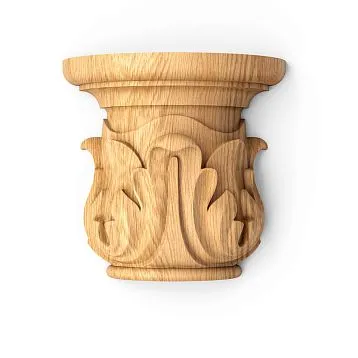
The base of a classic baluster is usually square and decorated with profiled elements — moldings, flutes, or braids. The shaft may be smooth or decorated with vertical grooves, spiral grooves, or floral ornaments. The capital crowns the composition and is often adorned with acanthus leaves, volutes, or geometric motifs.
Provençal style implies simpler, yet no less elegant forms. Balusters for tables in the Provence style often have a slightly worn appearance, created by special finishing techniques. Pastel tones, light patina, deliberate simplicity of forms — all of this creates an atmosphere of French countryside.
Modern Interpretations
Industrial style offers a bold combination of wood and metal. Wooden balusters can be complemented by metal elements — rings, bands, decorative inserts. Such a combination creates an interesting contrast between the warmth of wood and the coldness of metal.
Scandinavian minimalism values the purity of lines and the natural beauty of the material. Balusters for tables in the Scandinavian style usually have simple geometric forms, light shades, and minimal decorative elements. Emphasis is placed on surface finish quality and perfect proportions.
Loft implies deliberate roughness and incompleteness. Balusters may retain traces of processing, have uneven surfaces, or contrasting color solutions. This approach creates a sense of authenticity and connection with industrial aesthetics.
Technological aspects of production
Creating quality furniture balusters requires a deep understanding of wood properties and modern processing technologies. Each production stage affects the final product's quality and durability.
Raw material preparation begins with careful selection of wood. The material must be properly dried to 8-12% moisture and conditioned under conditions close to operational ones. This prevents deformation of finished products and ensures dimensional stability.
Special attention is paid to the direction of wood grain. For furniture balusters, it is preferable to use blanks with vertical grain orientation, which ensures maximum compressive strength and minimal deformation under humidity changes.
Mechanical processing is performed on high-precision equipment. Modern CNC lathes allow creating complex profiles with high accuracy and repeatability. This is especially important when manufacturing sets of balusters for large tables, where all elements must be absolutely identical.
Innovative Processing Methods
Laser engraving opens new possibilities for creating unique decorative elements. This technology allows applying complex ornaments, logos, personalized inscriptions with jewel-like precision. Laser processing is especially effective for creating custom-made exclusive furniture.
Thermal treatment allows changing the color of wood without using chemical dyes. Controlled high-temperature exposure creates various shades — from golden to dark brown. Such treatment not only alters the appearance but also increases wood stability.
Impregnation with stabilizing compounds significantly improves the operational characteristics of balusters. Modern polymer compounds penetrate deeply into the wood structure, creating an internal frame that prevents deformation and increases strength.
Structural features of tables with balusters
Designing tables with wooden balusters requires consideration of multiple factors: from load distribution to ergonomic requirements. Each structural element must work in harmony with others, creating not only an aesthetically pleasing but also functional product.
The support system may vary depending on the table's size and purpose. For small coffee tables, three balusters placed at the corners of a triangle are sufficient. Dining tables usually require four supports, while large conference tables may have six or more balusters.
Support placement must ensure structural stability under any load. The distance between balusters should not exceed 1.5 meters to ensure sufficient tabletop rigidity. For large tables, additional intermediate supports must be provided.
Connection to the tabletop is a critically important node of the entire structure. Traditional mortise-and-tenon joints provide maximum strength and durability, but require high manufacturing precision. Modern metal fasteners allow creating disassemblable structures, simplifying transportation and assembly.
Ergonomic aspects
Table height should correspond to its purpose and anthropometric data of users. Standard dining table height is 750 mm, work table — 720-740 mm, bar table — 1050-1100 mm. Balusters must ensure achieving these parameters, taking into account tabletop thickness.
Legroom should not be restricted by balusters. The minimum distance between supports should be at least 600 mm for comfortable human placement. When designing corner tables, special attention is paid to baluster placement at corners.
Structural stability is ensured by correct calculation of the center of gravity and mass distribution. Heavy tabletops made of solid wood or stone require more substantial balusters and special solutions to prevent tipping.
Variants of Application in Interior
Tables with wooden balusters are used in various interiors, from residential homes to public spaces. Each application requires its own approach to design and construction.
Dining tables for home use allow creating a unique atmosphere for family meals. Massive oak balusters with carved elements transform an ordinary meal into a festive event. Such tables become the focal point of the entire interior and are often passed down from generation to generation.
Dining table sizes vary from compact 4-person models to large family tables for 12-16 people. Each size requires its own approach to construction and number of supports. Small tables may suffice with three balusters, while large ones require a complex support system with intermediate elements.
Desks in offices and meeting rooms require special attention to functionality. Balusters should not interfere with the placement of office equipment, cables, or drawers. Asymmetric constructions with balusters on only one side are often used, ensuring unobstructed access to the work area.
Specialized solutions
Bar tables with high balusters create a unique atmosphere in home bars and restaurants. The increased height requires more substantial supports and special attention to structural stability. Additional horizontal connections between balusters are often used to enhance rigidity.
Coffee tables allow experimentation with proportions and decorative elements. Their small size enables the use of more elegant balusters with delicate carving or unusual shapes. Such tables often become art objects, drawing attention to interior details.
Console tables for hallways and living rooms require a special approach to construction. The absence of rear supports is compensated by reinforced wall mounting and special geometry of front balusters. Such tables are often adorned with particularly intricate carving, as they are visible to guests.
Care and Maintenance
Proper care of tables with wooden balusters ensures their longevity and preservation of their original appearance. Different wood species and finishes require specific maintenance approaches.
Daily care includes removing dust and dirt with a soft dry cloth. For balusters with intricate carving, soft brushes are recommended to clean hard-to-reach areas without damaging the surface. Wet cleaning should be done carefully, using slightly damp cloth and immediately drying thoroughly.
Protection against damage includes using hot item stands, placemats under dishes, and protective pads at high-use areas. Special attention should be paid to protection against scratches and dents, which are especially noticeable on polished surfaces.
Periodic maintenance includes renewing protective finishes every 2-3 years depending on usage intensity. Oil-based finishes require more frequent renewal but are easier to apply. Lacquer finishes last longer but require professional skills for renewal.
Minor damage to oak balusters can be repaired yourself using special wax pencils or wood putty. It is important to select the material to match the wood tone precisely for an undetectable repair.
Minor damages can be repaired independently using special wax pencils or touch-up compounds. It is important to accurately match color and texture to ensure the repair is not noticeable.
Serious damages require professional intervention. Cracks in balusters, loose joints, and significant chips must be repaired by specialists using professional materials and techniques.
Full restoration may be required after 15-20 years of intensive use. It includes disassembling the structure, restoring damaged elements, and renewing all finishes. Properly executed restoration can extend the life of the table for several more decades.
Economic aspects and pricing
The cost of tables with balusters for wooden tables depends on many factors, including material, processing complexity, dimensions, and manufacturer reputation. Understanding these factors helps make an informed choice.
Material costs constitute the main part of the product's cost. Valuable wood species — oak, walnut, cherry — cost significantly more than coniferous species, but offer higher performance and aesthetic qualities.
The quality of the original material also affects the price. Premium-grade wood without defects costs more but guarantees the quality of the finished product. Cutting corners on materials often leads to additional costs for repairs or replacements.
Labor costs depend on processing complexity and the skill level of the craftsmen. Hand carving requires significant time and high craftsmanship, reflected in the cost. Machine processing is more economical but may limit design possibilities.
Factors of long-term economic efficiency
The longevity of quality tables ensures minimal operating costs. Properly manufactured and installed items serve for decades without needing replacement or major repairs.
The ability to restore wooden tables allows restoring their appearance and functionality upon damage. This is significantly cheaper than full replacement and allows preserving the historical or artistic value of the items.
The increase in interior value through quality furniture can significantly exceed the cost of its production. This is especially relevant for luxury real estate, where interior details play a crucial role in determining value.
Trends in development and innovation
The furniture industry using wooden balusters is constantly evolving, adopting new technologies and design solutions. Understanding current trends helps create timely solutions that will remain in demand for many years.
Consumer environmental awareness stimulates the use of certified wood from sustainably managed forests. FSC and PEFC certificates have become an important competitive advantage for manufacturers.
Zero-waste production technologies, use of renewable energy sources, waste recycling — all this forms new industry standards. Consumers increasingly value products made in accordance with ecological principles.
Personalization is becoming a key trend in furniture design. Customers want unique items reflecting their individuality and lifestyle. This stimulates the development of individual production technologies and expands design possibilities.
Technological Innovations
Digital modeling allows creating accurate 3D models of future products and visualizing them in interiors. Customers can see the result before production begins and make necessary adjustments.
Robotized production ensures high precision and repeatability of items while reducing labor costs. Modern robots can perform complex wood processing operations with precision unattainable by hand.
New materials expand designers' possibilities. Wood-based composites, thermally modified wood, nanocomposites — all this opens new horizons for creativity.
Conclusion
World Baluster for a wooden table represents a wonderful blend of traditional craftsmanship and modern design solutions. These elements, transferred from architecture to furniture production, open boundless opportunities for creating unique interiors where each item tells its own story.
Choosing tables with wooden balusters is choosing individuality, quality, and longevity. Such furniture not only performs its functions but also creates a special atmosphere, transforming ordinary spaces into places where one wants to be and create.
Modern technologies allow us to realize the most daring design ideas, but the foundation remains a deep understanding of the material and respect for craftsmanship traditions. It is precisely this combination that ensures the creation of items that become not just furniture, but works of art capable of delighting and inspiring generations.
Investing in a quality table with wooden balusters is an investment in beauty, functionality, and emotional comfort. Properly designed and well-crafted furniture becomes the focal point of any interior, creating a sense of stability and harmony.
The future of this field is linked to further development of technologies, emergence of new materials and processing methods, but the core principles remain unchanged: striving for perfection, respect for traditions, and understanding that true craftsmanship lies in the ability to create beauty that will remain relevant for decades.
STAVROS, recognized as a leading company in the production of wooden architectural elements, successfully adapts its long-standing experience to create unique furniture. The use of premium raw materials, modern processing technologies, and strict quality control at every stage of production enable STAVROS to create balusters perfectly suited for furniture manufacturing. Choosing STAVROS products guarantees quality, reliability, and aesthetic perfection, proven over time and by thousands of satisfied customers worldwide.