Article Contents:
- Geometric philosophy of square balusters
- Psychology of perception of square forms
- Architectural compatibility
- Technical Advantages of Square Cross-Section
- Increased structural strength
- Technological features of production
- Material science aspects of square balusters
- Optimal wood species
- Influence of wood structure on product quality
- Design possibilities of square balusters
- Decorative surface treatment
- Color Solutions and Finishing
- Technology of manufacturing square balusters
- Material preparation
- Mechanical processing
- Quality Control
- Installation of square balusters
- Preparatory work
- Mounting methods
- Features of installation on various bases
- Operation and maintenance
- Regular Maintenance
- Repair and Restoration
- Modern trends in design of square balusters
- Integration of modern technologies
- Ecological Aspects
- Economic aspects of choosing square balusters
- Cost of production and installation
- Long-Term Economic Efficiency
- Conclusion
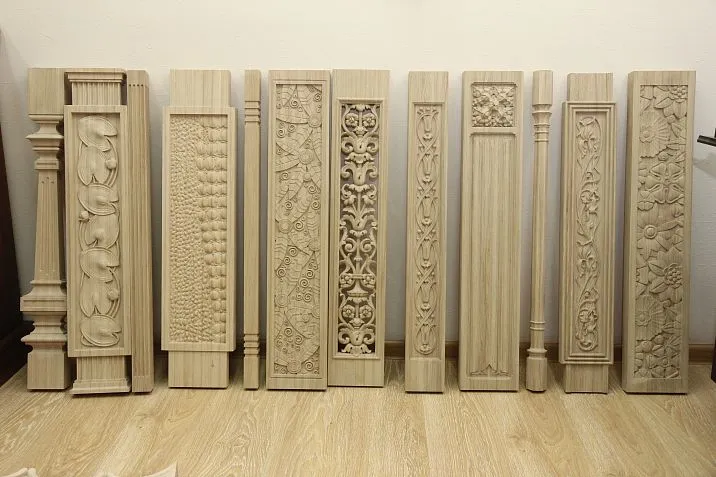
When it comes to creating a stair railing that combines the strictness of lines and flawless functionality, the square baluster becomes the ideal choice for admirers of minimalist aesthetics. These elements of stair construction embody the philosophy of modern design, where every detail adheres to the principles of geometric precision and practicality.
Square balusters represent a unique solution for those who strive to create an interior where classical reliability harmoniously combines with modern architectural trends. Unlike traditional round forms, the square cross-section gives the stair railing a distinctive expressiveness, emphasizing the architectural concept of space.
Modern woodworking technologies allow creating square balusters with perfect geometry, where each angle is precisely set to the millimeter, and surfaces exhibit flawless smoothness. Such precision transforms a functional element into a piece of applied art, capable of becoming a central accent in the interior.


Geometric philosophy of square balusters
Why is the square shape gaining increasing popularity among architects and designers? The answer lies in the unique properties of this geometric form, which possesses a special energy and visual impact.




Psychology of perception of square forms
In architecture, the square symbolizes stability, reliability, and order. This form creates a sense of confidence and security, which is especially important for stair constructions. Square-section balusters affect the human subconscious, forming a feeling of safety while moving up or down stairs.
Straight lines and sharp angles of square balusters create a visual rhythm that calms the nervous system and promotes concentration. This is especially valuable in the modern world, where people are constantly exposed to chaotic forms and aggressive visual environments.
The geometric strictness of square elements allows creating interiors that do not strain the eyes and do not overload space with unnecessary details. This approach corresponds to the principles of Scandinavian design and minimalism, where beauty lies in simplicity and functionality.
Our factory also produces:


Architectural compatibility
Square balusters possess an amazing ability to harmoniously fit into various architectural styles. In classical interiors, they impart a modern sound to traditional forms without disrupting the overall stylistic concept.
In modern spaces, square elements become a natural continuation of the architectural idea, emphasizing the geometry of the room and creating visual connections between different interior elements. They combine beautifully with furniture of strict forms, metal structures, and glass surfaces.
Square balusters look especially expressive in loft interiors, where industrial aesthetics require clear lines and minimal decorative elements. Here, they become a connecting link between the rough texture of walls and the sophistication of modern furniture.
Get Consultation
Technical Advantages of Square Cross-Section
Behind the aesthetic appeal of square balusters lie serious technical advantages that make them a preferred choice for many projects.
Enhanced structural strength
Square cross-section provides more even load distribution compared to round shapes. Four sides create additional stiffening ribs, significantly increasing resistance to bending moments. This is especially important for tall balusters, where deformations under horizontal loads are critical.
The resistance moment of a square cross-section, at the same cross-sectional area, exceeds that of a round profile by 15-20%. This means a square baluster can withstand greater loads with less material, making the structure more economical.
Angular connections of square elements provide more secure fastener fixation. Flat faces allow for various fastening methods, including hidden connections that do not compromise the structure's aesthetics.
Technological Features of Production
Manufacturing square balusters requires high precision machining, but modern CNC machines allow achieving ideal geometry. Four-sided planers ensure parallelism of opposite faces with accuracy to 0.1 millimeter.
Square cross-section simplifies surface decorative processing. It is easier to perform milling grooves, apply relief patterns, or create chamfers on flat faces. This opens wide opportunities for design experimentation and creating unique decorative elements.
Quality control of square items is also simpler and more precise. Dimensions are measured with standard tools, and straightness is checked using inspection rulers and squares.
Material science aspects of square balusters
Selecting wood for manufacturing square balusters requires special attention to the material's structural characteristics and its behavior during processing.
Optimal wood species
For square balusters, the most suitable species are those with uniform structure and minimal internal stresses. Oak remains a classic choice due to its stability and strength. Its dense structure ensures sharp angles and minimal deformation under humidity changes.
Ash has similar characteristics to oak but differs with a lighter shade and more pronounced texture. This species is ideal for modern interiors where the natural beauty of wood is appreciated without additional decoration.
Beech is characterized by exceptional uniformity of structure, allowing for perfectly smooth surfaces without knots or defects. The pinkish hue of beech wood gives interiors a warm, cozy atmosphere.
Coniferous species such as pine and larch are also used for manufacturing square balusters, especially in budget-constrained projects. However, they require more careful processing and moisture protection.
Influence of wood structure on product quality
The direction of wood grain is critically important for square balusters. Ideal placement is with grain strictly along the axis of the item, ensuring maximum strength and minimal deformation. Deviation of grain by more than 5 degrees may cause warping of the baluster.
Annual rings should be symmetrically positioned relative to the cross-section center. This ensures uniform shrinkage and prevents cracks from forming at the corners of the square profile. This requirement is especially important for large-section items.
Moisture content of wood for square balusters should not exceed 10-12%. More humid material will continue to dry after installation, leading to geometric changes and weakened connections.
Design possibilities of square balusters
The apparent simplicity of the square shape opens boundless opportunities for creative expression and unique architectural solutions.
Surface decorative processing
Flat faces of square balusters provide an ideal base for various types of decorative processing. Milling allows creating longitudinal grooves that add visual expressiveness and emphasize the vertical orientation of the structure.
Carving on square balusters gains particular expressiveness due to the contrast between the strict geometry of the basic shape and the plasticity of decorative elements. Shallow relief patterns do not compromise the structural integrity of the item but significantly enrich its visual perception.
Combined processing, combining different techniques on different faces of the baluster, allows creating items with a unique character. For example, two opposite faces may have a smooth surface, while the other two may have decorative milling.
Color solutions and finishing
Square balusters provide wide opportunities for experimenting with color and surface texture. Natural finishing highlights the beauty of wood grain and creates a sense of naturalness and eco-friendliness.
Staining allows adapting the color of balusters to the overall color scheme of the interior. Dark shades give the structure a solid and respectable appearance, while light shades create a sense of lightness and airiness.
Contrasting finish, where baluster faces have different shades, can become a striking design accent. This technique is especially effective in modern interiors, where the play of light and shadow is valued.
Manufacturing technology of square balusters
Producing high-quality square balusters requires strict technological sequence and use of modern equipment.
Material Preparation
The process begins with careful selection of wood. Stock must be dried to 8-10% moisture in specialized drying chambers with controlled regimes. This ensures geometric stability of finished products.
Material cutting is performed taking into account the direction of fibers and the location of defects. Each blank is checked for the absence of internal stresses that could cause warping during processing.
Pre-processing includes trimming blanks with a 20-30 millimeter allowance for final trimming. This allows removal of end cracks and ensures perfect perpendicularity of ends to the product's axis.
Mechanical processing
Main processing of square balusters is performed on four-sided planers, which ensure simultaneous processing of all sides. This guarantees parallelism of opposite surfaces and perpendicularity of adjacent sides.
Feed rate and cutting spindle speed are adjusted depending on the wood species and required surface quality. Lower feed rates are used for hardwoods, ensuring a cleaner finish.
Finishing includes abrasive grinding of all surfaces with gradually decreasing grit size. Final grinding is performed with paper of 220-320 grit.
Quality control
Each finished baluster undergoes multi-stage quality control. Accuracy of dimensions, straightness of edges, and surface quality are checked. Permissible deviations from nominal dimensions must not exceed ±0.5 millimeters.
Visual inspection includes checking for the absence of wood defects, surface finish quality, and conformity to specified color and texture parameters. Items with unacceptable defects are rejected or sent for rework.
Packaging of finished products is performed using protective materials that prevent damage during transportation and storage.
Installation of Square Balusters
Correct installation of square balusters requires special attention to details and adherence to technical requirements.
Preparation Work
Before installation, careful marking of baluster mounting locations must be performed. The distance between the centers of posts must not exceed 150 millimeters on center-to-center basis, ensuring structural safety according to building codes.
Checking the horizontal alignment of steps and vertical alignment of load-bearing structures is critically important for correct installation. Deviations exceeding 2 millimeters per meter require adjustment or compensation during installation.
Tool preparation includes checking measuring instruments, sharpening cutting tools, and preparing fastening elements. Tool quality directly affects installation accuracy.
Methods of mounting
Mounting on bolts provides the most reliable connection of square balusters to the base. Threaded bolts with a diameter of 8-10 millimeters are screwed into the center of the baluster end to a depth of 50-60 millimeters.
An appropriately sized hole is drilled in the step or base, into which a threaded bushing is installed or a dowel is driven. This type of connection allows for removal of the baluster without damage if necessary.
Adhesive bonding using wooden dowels provides an inconspicuous and strong connection. Dowels with a diameter of 12-16 millimeters are made from the same wood species as the balusters.
Features of installation on various bases
Installation on wooden steps provides the greatest flexibility in choosing mounting methods. Both through-bolt connections and blind mounting using bolts or dowels can be used.
Installation on concrete bases requires the use of chemical anchors or spreader dowels. A precisely sized hole is drilled in the concrete and carefully cleaned of dust.
Metal structures require special brackets or transition elements that compensate for differences in the coefficients of thermal expansion of materials.
Operation and Maintenance
Proper care of square balusters ensures their longevity and preservation of their original appearance.
Regular Maintenance
Daily care includes removing dust with a soft dry cloth or special wood wipes. Wet cleaning is performed with a well-wrung cloth using special agents free of aggressive chemicals.
Weekly treatment with polishing compounds maintains surface gloss and creates an additional protective film. Polishes are applied in a thin layer and rubbed in until fully absorbed.
Seasonal maintenance includes inspecting all connections, checking fastener strength, and renewing protective coatings in areas of heavy wear. Special attention is given to corners, where dust and moisture may accumulate.
Repair and restoration
Minor surface damage is repaired by local grinding and application of repair compound. It is important to precisely match the color and texture of the coating to ensure the repair is not noticeable.
Restoration of square baluster corners requires special care. In case of significant damage, partial replacement of the element or professional restoration may be required.
Protective coating renewal is performed every 3-5 years depending on usage intensity. Old coating is removed by grinding, after which new coating is applied in full volume.
Modern trends in square baluster design
Advancements in technology and changes in aesthetic preferences lead to new approaches to square baluster design.
Integration of Modern Technologies
Built-in lighting transforms balusters into architectural lighting elements. LED strips integrated into grooves on the sides create soft, directional lighting for staircases.
Smart monitoring systems allow real-time control of wooden structures. Humidity and temperature sensors embedded in balusters transmit data to the building's central control panel.
Wireless charging for mobile devices can be integrated into handrails supported by square balusters. This is especially relevant for commercial buildings and modern residential complexes.
Ecological aspects
The use of certified wood from sustainably managed forests has become a standard for responsible manufacturers. FSC certification guarantees the ecological safety of the product.
Non-toxic water-based coatings replace traditional varnishes and paints containing organic solvents. This is especially important for living spaces, where occupant health is a priority.
Recycling technologies allow the use of production waste to manufacture auxiliary elements and fasteners.
Economic aspects of choosing square balusters
Investments in quality square balusters pay off due to their durability and versatility in application.
Production and installation costs
Manufacturing square balusters requires less equipment investment compared to round turned products. Four-sided planers are more productive and ensure consistent product quality.
Installing square elements is also simpler and takes less time. Flat surfaces simplify marking and fastening, reducing installation labor costs.
The versatility of square balusters allows their use in various projects without additional modifications, reducing storage costs and simplifying logistics.
Long-term economic efficiency
The high strength of the square cross-section ensures the longevity of the structure and minimal maintenance costs. Properly installed balusters serve for decades without needing replacement.
The possibility of local repair and restoration allows maintaining the structure in ideal condition with minimal expenses. This is especially important for commercial facilities with high usage intensity.
The versatility of the design of square balusters ensures their relevance despite changing interior trends, eliminating the need for full replacement during design updates.
Conclusion
Square baluster represents an ideal combination of functionality, aesthetics, and technology. These elements of staircase structures embody the best traditions of woodworking and modern design achievements.
The geometric strictness of the square shape does not limit creative possibilities but rather opens new horizons for architectural experiments. Properly designed and high-quality square balusters become the basis for creating unique interior solutions.
Investments in quality square balusters pay off multiple times due to their durability, versatility, and timeless aesthetics. These items serve not only as functional elements but also become an important part of the architectural heritage of the home.
Modern production and installation technologies make square balusters accessible to a wide range of consumers without compromising the quality and reliability of the structures. Proper material selection, professional manufacturing, and quality installation guarantee many years of flawless service.
For many years, STAVROS has been a recognized leader in creating exclusive wooden items for staircases. Our craftsmen possess unique experience working with various wood species and are ready to bring the most daring design concepts to life, creating Square balusters of the highest quality.