












































































Article Contents:
- Assortment as the foundation of a successful business
- Packaging: protection against damage during transportation
- Warehouse storage: conditions for preserving quality
- Logistics of bulk supplies
- Pricing and terms of cooperation
- Criteria for Choosing a Reliable Supplier
- Typical errors in bulk purchasing
- Optimizing warehouse stock
- Company STAVROS: a reliable partner for bulk purchases

Procurementbulk molding— a strategically important decision for molding workshops, design studios, furniture manufacturers, and construction companies. The correctness of supplier selection affects not only the business's economics but also the quality of the finished product, delivery times, and customer satisfaction. A reliable supplier ensures a stable assortment, quality packaging, and professional warehouse storage — the three pillars upon which successful bulk cooperation is built.
Why are these three aspects critical? Because the absence of even one undermines the entire chain. A wide assortment without quality packaging means damaged goods during transportation. Excellent packaging without proper warehouse storage leads to deformation, cracking, and changes in profile geometry. Ideal storage with a limited assortment forces working with multiple suppliers, complicating logistics and increasing costs.
In this article, we will systematically examine all aspects of bulk procurement of decorative molding. You will learn what assortment is necessary for effective operation, how packaging should be organized to preserve the product, and what requirements are imposed on warehouse storage. We will discuss criteria for selecting a supplier, typical errors in bulk purchasing, and methods for optimizing costs. Each recommendation is based on practical experience of manufacturers and the needs of market professionals.





Assortment as the foundation of a successful business
The breadth and depth of the assortment determine the competitiveness of a workshop or production facility. A client comes with a task — to frame a picture, create interior decor, or make a mirror frame. If your arsenal contains only ten profiles, the probability of finding the ideal solution is low. If you have one hundred and fifty — the client will find exactly what they are looking for.
Decorative molding from solid wood — a classic that remains relevant.Wooden moldingprofiles — from simple rectangular to complex multi-step — form the basis of the assortment. Wood species (oak, beech, ash, pine) determine price, strength, and appearance. Oak molding — premium segment, durability and noble texture. Beech — optimal price-to-quality ratio. Pine — budget solution for mass projects.
Profiles differ in width, height, and complexity. Narrow profiles, twenty to thirty millimeters, are suitable for small formats — photographs, documents, miniatures. Medium, forty to sixty millimeters — universal, for standard-sized pictures. Wide, eighty to one hundred twenty millimeters — for large canvases, mirrors, panels. Profile height (depth) from ten to fifty millimeters affects the frame's volume.
Profile complexity creates decorative appeal. A simple rectangular cut — minimalism, modernity. A profile with one or two steps — classic, restrained elegance. Multi-step carved profile — baroque, luxury, museum frames.picture frames are used not only for framing but also as standalone decorative elements — for creating wall panels, decorating ceilings, embellishing furniture, forming niches and portals.profiles with complex geometry require high-precision equipment and professional processing.
Color palette expands possibilities. Natural wood with transparent lacquer or oil — natural beauty of texture. Toned molding in shades from light bleached to dark wenge — suitable for any interior. Painted enamel in white, black, gray, and colored shades — modern solutions. Patinated, with an aged effect — vintage aesthetics.
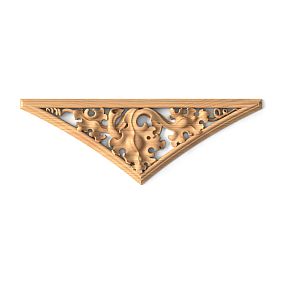
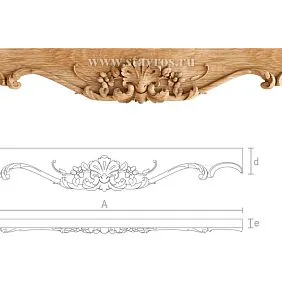
Additional architectural decor elements complement the assortment.Wooden cornicesare used not only for curtains but also as interior decorative elements.Moldings made of polyurethane— a lightweight alternative to wooden, for framing panels, creating relief on walls.decorative elementsfrom solid wood — overlays, sockets, brackets — enrich the composition.
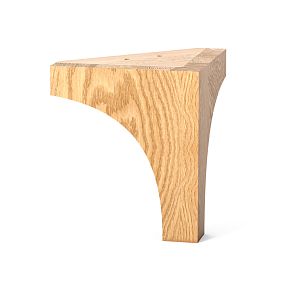
Components for frame production are critical for workshops.furniture legsare used for making easels, stands.Baseboards for countertopsfor crown molding installers' workstations.wooden planks on the wallfor decorative panels, modern interior decor.
Associated products simplify logistics.Wooden baseboardare often ordered together with crown molding for comprehensive interior projects.Casingsfor doors and windows.balusters for staircasesfor manufacturers of wooden structures.
The depth of assortment — availability of different sizes of one profile. The standard length of a rail is two meters eighty centimeters or three meters. But for different tasks, shorter rails — one meter, one and a half — or extended to four to six meters for large-scale projects without joints are convenient. The wall thickness of the profile affects strength — thin-walled for light work, thick-walled for heavy frames.
Continuous updating of collections maintains the assortment's relevance. Fashion trends change — minimalist profiles are popular today, baroque will return tomorrow. A supplier tracking trends regularly adds new profiles, colors, finishes. Outdated items are removed from the assortment, making room for in-demand products.
Custom production expands possibilities. Ordering profiles according to the client's drawings, unique sizes, specific finishes. For serial frame manufacturers and design studios with original projects, the ability to order an exclusive profile is critical. Minimum order quantity, production time, price — parameters that determine the feasibility of such cooperation.




Packaging: protection against damage during transport
Quality packaging — not expenses, but an investment in product preservation. A damaged crown molding cannot be used — scratches, dents, scrapes are unacceptable in frame production. Replacing damaged goods, returns, downtime cost more than any packaging.
Individual protection for each rail — the first level of packaging. Shrink wrap fully envelops the profile, protecting from dust, moisture, minor mechanical damage. The film must fit tightly, without gaps through which dirt can penetrate. Transparent film allows viewing the profile and verifying compliance without opening the package.
End caps prevent damage to rail ends — the most vulnerable areas. Plastic or cardboard caps are placed on ends, protecting against scratches and dents from impacts. Without caps, ends easily get damaged during loading, unloading, or movement within the warehouse. A damaged end requires trimming, shortening the rail, increasing waste.
Group packaging combines rails of the same profile. Five to ten rails are bundled in a package with tape or stretch film. The package is marked — profile article, number of rails, length, color, wood species. Marking simplifies warehouse accounting, order assembly, identification upon receipt. Without marking, each package must be opened, wasting time.
Transport packaging protects against serious damage. Wooden slats — the classic solution for fragile, long items. Rails are placed in a frame made of beams, secured, and covered with plywood or MDF sheet on top. Slats withstand impacts, pressure from other cargo, and prevent foreign objects from entering. The weight of slats increases transportation costs, but guarantees preservation.
Cardboard packaging — a lighter option for not very long rails. Profiles are placed in a long cardboard box, ends are covered. Cardboard protects against scratches, dust, and light impacts, but not against serious mechanical damage. Suitable for transportation by own vehicles over short distances.
Bubble wrap or expanded polyethylene — additional cushioning. Wrapping rail packages in multiple layers of bubble wrap protects against vibrations, shocks, and impacts. Especially critical for painted, lacquered, or patinated profiles, where any damage to the finish is visible.
Pallets or pallets simplify loading and unloading. Slats with rails are placed on standard euro pallets, secured. Loading with a forklift takes minutes, eliminates manual labor, minimizes damage risk. Pallets standardize warehouse storage, simplify inventory.
Protection of corners and edges strengthens packaging. Plastic or cardboard corner protectors on slat corners distribute load, prevent crushing. Internal stiffeners in the slat prevent long rails from sagging under their own weight during horizontal storage.
Moisture protection is critical for wooden trim. Polyethylene film or waxed paper under outer packaging protects against rain, snow, condensation. Wood is hygroscopic — it swells with moisture, dries out and cracks. Fluctuations in humidity cause warping, cracking, and changes in profile geometry.
Documentation in packaging simplifies acceptance. A packing list with contents, quantities, articles, and weights is inserted into the package with documents, attached to the slat. The recipient compares contents with documents, identifies shortages or surpluses, records damage.
Ecological packaging materials are becoming an important factor. Cardboard, paper, wooden slats — recyclable materials. Excessive use of plastic increases ecological footprint and complicates disposal. A balanced approach between product protection and ecological responsibility — a hallmark of a modern supplier.
Our factory also produces:




Warehouse storage: conditions for preserving quality
Proper warehouse storage guarantees that goods shipped from the warehouse half a year after receipt will be of the same quality as on the day of production. Improper storage leads to deformation, cracking, color changes, and loss of appearance.
Temperature regime is critical for wood. Optimal storage temperature is fifteen to twenty-five degrees Celsius. At lower temperatures, wood becomes brittle and cracks. At higher temperatures (above thirty degrees), drying accelerates and warping occurs. Sudden temperature fluctuations (day-night, winter-summer) are especially dangerous — wood does not have time to adapt, internal stresses arise.
Air humidity should be stable at forty to sixty percent. At lower levels, wood dries out, shrinks, and cracks. At higher levels (above seventy percent), it swells, warps, and mold may appear. Controlling humidity with hygrometers, using humidifiers or dehumidifiers maintains optimal levels.
Ventilation prevents air stagnation, condensation, mold, and fungus development. Natural ventilation through windows and doors is sufficient with proper warehouse layout. Forced ventilation (supply-exhaust system) is necessary for large warehouses, rooms without windows, and high-humidity regions.
Protection from direct sunlight is mandatory. Ultraviolet light fades painted and tinted profiles, changes the color of natural wood. Warehouse windows must be shaded with blinds, curtains, or tinted film. Shelving placement — away from windows, under canopies.
Horizontal storage of long rails prevents sagging. Rails are placed horizontally on shelves with supports every meter or one and a half. Without supports, a long rail (three to four meters) sags under its own weight, deforms, and becomes unusable. Stack height — no more than thirty to fifty rails, otherwise lower profiles are compressed and deformed.
Vertical storage — an alternative for short profiles. Rails are installed vertically in special stands with compartments. Saves space, simplifies access to the required profile, eliminates pressure on lower layers. But requires secure fixation — a fallen rail may damage adjacent ones.
Separate storage by profiles, colors, and sizes simplifies order fulfillment. Shelves are marked — article, length, species, color. Warehouse staff find the required profile within minutes, without sorting through the entire warehouse. Address-based storage system (row-shelf-cell) optimizes logistics for large warehouses.
Regular inventory checks identify stock levels and monitor storage periods. Wooden trim does not have an expiration date, but prolonged storage (over one or two years) increases the risk of deformation. The FIFO (first in, first out — first come, first served) system ensures stock rotation, with older items shipped first.
Protection against pests is mandatory for wooden products. Wood-boring beetles, termites, and rodents damage timber. Preventive treatments with antiseptics during production, cleanliness control in the warehouse, rodent traps, and regular inspections prevent infestation. Upon detecting pests, contaminated profiles are isolated, and the warehouse is treated.
Fire safety is critical for warehouses storing wooden materials. Wood is flammable, and fires in such warehouses spread rapidly. Fire extinguishers, fire alarms, fire suppression systems, smoking bans, and electrical wiring inspections are mandatory measures. Dividing the warehouse into fire-resistant sections helps localize potential fires.
Warehousing insurance protects against financial losses due to force majeure. Fire, flooding, structural collapse, theft — risks borne by the warehouse owner. Insurance compensates for the cost of lost goods and enables quick restocking.
Get Consultation
Wholesale delivery logistics
Effective logistics is the link between producer and consumer. Even high-quality goods in proper packaging can be damaged by improper transportation or delayed due to logistical issues.
Supplier's own transport guarantees control at every stage. Specialized vehicles with fixtures for long loads, experienced drivers familiar with transporting fragile goods, tight delivery deadlines. Limitation — restricted geography, dependence on fleet size.
Transport companies expand delivery geography. Cooperation with major carriers (Delovye Liniy, PEC, Baikal-Service) ensures delivery to any region of Russia. Terminal networks in cities speed up delivery. Cargo insurance protects against losses. Limitation — less control, risk of damage during overloading.
Container shipments are optimal for large batches over long distances. Goods are loaded into containers, sealed, and delivered without transloading. Unauthorized access is excluded, damage is minimized. Standardization of containers (twenty and forty feet) simplifies loading planning.
Delivery times affect inventory turnover. Express delivery (two to three days) — for urgent orders, more expensive. Standard delivery (five to seven days) — optimal balance of price and speed. Slow delivery (ten to fifteen days) — cost-saving, but requires larger warehouse stock.
Real-time cargo tracking reassures the client and allows for planning receipt. Modern transport companies provide online tracking by waybill number. The client sees where the cargo is, when it will arrive, and can prepare the warehouse and staff for unloading.
Delivery terms define risk and cost distribution. EXW (ex works) — self-pickup from supplier's warehouse, client arranges transportation. FCA (free carrier) — supplier delivers to carrier's terminal. DAP (delivered at place) — supplier delivers to client's address. DDP (delivered duty paid) — supplier delivers including all costs and risks.
Minimum order quantity determines product availability for small businesses. Delivery from a single board — maximum flexibility, but high delivery cost. Minimum of ten boards of one profile — compromise. Minimum packaging (one hundred twenty boards) — wholesale terms, low price, but requires working capital.
Order consolidation reduces transportation costs. Client orders different profiles in small batches — supplier consolidates into one shipment. Delivery of one consolidated shipment is cheaper than several small ones. Requires warehouse logistics, but beneficial for both parties.
Returns must be organized simply. Damaged during transport, not matching the order, defective goods are returned by the client. Supplier provides a return waybill, arranges removal, compensates cost or replaces the item. Complex return procedures deter clients.
Pricing and Cooperation Terms
Price is an important, but not the only factor in choosing a supplier. The lowest price may result in quality issues, delays, or poor service. A reasonable balance of price and quality is the foundation of long-term cooperation.
Wholesale discounts stimulate large-volume purchases. Discount tiers based on order volume — from three to fifteen percent depending on quantity. Purchasing in packages (full set of boards of one profile) provides an additional discount of five to ten percent. Annual purchase volume affects the personalized discount for regular clients.
Loyalty system for regular clients includes cumulative discounts, bonus programs, priority service. Regular buyers receive better terms than one-time buyers. Personal manager, product reservation, payment deferral — privileges for loyal clients.
Payment deferral eases working capital. Purchasing with a 14–30 day deferral allows using the product, producing, selling, receiving payment, then paying the supplier. Reduces need for working capital, but available only to verified clients with good credit history.
Advance payment provides a discount but requires trust in the supplier. Advance payment of 50–100% of order value ensures supplier liquidity and reduces risks. In return, the client receives a 2–5% discount. For new clients, the risk is that the supplier may not fulfill obligations.
Seasonal promotions and sales reduce prices on individual items. Discontinuing outdated profiles, selling off-season collections, seasonal discounts (summer discounts on winter shades, winter discounts on summer shades) — opportunity to save. But risk — a discounted profile may turn out to be unsold.
Free shipping for orders above a certain amount encourages large purchases. Free shipping threshold (e.g., 50,000 rubles) covers the supplier's transportation costs via margin. Client saves, supplier increases average order value.
Test samples before large orders reduce risks. Ordering samples of several profiles (30–50 cm segments) allows evaluating quality, color, texture, and compatibility with equipment. Sample cost is symbolic or free, reimbursed with the main order.
Technical support adds value. Consultations on profile selection, calculating required quantities, equipment compatibility, processing technology. Experienced supplier knows frame production specifics and can provide valuable recommendations.
Quality guarantee protects against hidden defects. Guarantee against manufacturing defects, compliance with declared characteristics, preservation of geometry. Warranty period is three to six months from the date of sale. Upon discovering defects, the supplier replaces the item at their own expense.
Criteria for choosing a reliable supplier
Supplier selectionbulk molding— a strategic decision affecting business for years. Switching suppliers due to unsatisfactory service is costly — new samples, testing, logistics setup, staff training.
Market reputation is the first indicator of reliability. How many years has the company been operating? Who are its clients — well-known workshops, manufacturers? Reviews from real buyers on independent platforms and professional forums. Reputation is built over years and can be destroyed instantly — a reliable company values its name.
In-house production vs. reselling. Manufacturer controls quality at every stage, can promptly resolve issues, produce non-standard profiles, offer better pricing. Reseller depends on their suppliers and has fewer options.
Warehouse stock determines product availability. A large warehouse with constant stock of popular profiles ensures prompt dispatch. Production-to-order work increases lead times to several weeks. For workshops with urgent orders, product availability here and now is crucial.
Assortment — width and depth. One hundred fifty to two hundred profiles in constant stock — a sign of a serious supplier. Ten to twenty positions — limited capabilities. Regular collection updates and introduction of new profiles indicate that the company follows trends.
Product quality is verified through a test order. Order samples of several profiles, evaluate wood quality, geometric accuracy, finish quality. Test on your equipment — how it saws, glues, paints. A visual inspection alone is insufficient.
Service and customer orientation distinguish professionals. Do they respond promptly to calls and emails? Are managers competent? Are they ready to solve non-standard tasks? Personalized approach versus formal service.
Flexibility of cooperation terms is important for a growing business. Starting with small volumes — need to purchase in small batches. As you grow — you get wholesale discounts, payment deferrals, personalized terms. A supplier willing to grow with the client is more valuable than one working by rigid templates.
Territorial proximity or quality logistics compensate for distance. Local supplier — short delivery times, self-pickup option, personal meetings. Remote supplier must compensate for distance with flawless logistics, tracking, and insurance.
Supplier financial stability reduces risks. A company existing ten to fifteen years, having survived crises, is financially stable. A new company with aggressively low prices may close down, leaving clients with prepayment and no product.
Typical mistakes in wholesale purchases
Even experienced buyers make mistakes leading to losses, downtime, conflicts with suppliers. Knowing typical mistakes helps avoid them.
First mistake — choosing a supplier solely by price. The lowest price often means poor quality, hidden defects, delivery problems, poor service. Saving five to ten percent results in losses from defects, returns, downtime. Evaluate total cost of ownership, not just purchase price.
Second mistake — purchasing without testing samples. A catalog photo does not convey real color, texture, quality. Ordered a batch, received — not what expected. Returns are expensive, time is lost. Always order samples before large purchases.
Third mistake — excessive stock of rarely used profiles. A wide assortment on the warehouse looks nice, but freezes capital. Profiles sold once every six months lie as dead cargo. Sales analysis reveals bestsellers — stock these. Rare profiles order per specific order.
Fourth mistake — insufficient stock of bestsellers. The opposite extreme — cutting costs on stock. Urgent order arrives, needed profile is unavailable, supplier ships in a week. Client goes to a competitor. Balance — maintain stock of bestsellers for two to three weeks of operation.
Fifth mistake — working with one supplier. Dependence on a single source is risky. Supplier delays shipment, raises prices, removes needed profile from production — you’re trapped. Two to three verified suppliers provide flexibility, allow comparing terms, and insurance against force majeure.
Sixth mistake — ignoring storage conditions. Bought quality product, brought it, dumped into an unheated warehouse with a leaking roof. After a month, profiles warped, cracked. Quality of product is meaningless without proper storage.
Seventh mistake — lack of control during acceptance. Truck arrives, driver rushes, you sign documents without checking the cargo. Unpack — half the profiles have damaged ends, several beams are entirely wrong. Supplier’s claims are rejected — signed acceptance act without remarks. Always inspect cargo before signing documents.
Eighth mistake — ignoring transportation costs. Profile price from supplier is ten percent cheaper over 300 km, but delivery eats up all savings and adds another five percent. Calculate total cost including delivery, not just product price.
Ninth mistake — neglecting the contract. Working without a contract or a formal contract, without reading. Problem arises — no legal basis to resolve it. Contract must clearly define obligations of parties, delivery terms, liability, return procedure, dispute resolution.
Tenth mistake — impulsive purchases on sales. Supplier announces a sale — thirty percent discount on certain profiles. You stockpile without considering demand. Profiles lie on the warehouse for years, freezing capital. Sales are good for bestsellers you know you’ll sell.
Optimizing warehouse stock
Effective inventory management balances between sufficiency (always having needed product) and excess (not freezing capital). Professional approach is based on data analysis, not intuition.
ABC analysis classifies profiles by sales volume. Group A — twenty percent of positions, eighty percent of turnover. These are bestsellers that must always be in stock. Group B — thirty percent of positions, thirty percent of turnover. Medium priority, moderate stock. Group C — fifty percent of positions, twenty percent of turnover. Rarely used, ordered per specific order.
XYZ analysis evaluates demand stability. Group X — stable, predictable demand. Group Y — seasonal fluctuations. Group Z — unpredictable demand. Combining ABC and XYZ yields nine categories with different inventory management strategies.
Reorder point determines when to place a new order. Formula — average daily consumption multiplied by delivery lead time plus safety stock. Example: consume ten beams per day, delivery in seven days, safety stock thirty beams. Reorder point — one hundred beams. When stock reaches one hundred, place an order.
Safety stock protects against unforeseen situations. Delivery delay, sudden demand surge, batch defects. Safety stock — stock for ten to fifteen days beyond normal. For critical AX group positions, safety stock is higher; for CZ — minimal or zero.
Software automates inventory management. Warehouse accounting records receipts, issues, and balances in real time. System alerts when reorder point is reached, automatically generates orders. Sales analysis, demand forecasting, purchase optimization — features of professional systems.
Consignment — supplier’s goods on your warehouse. Supplier places their goods on your warehouse, you sell and pay only for sold items. Advantage — does not freeze capital, wide assortment without purchase. Disadvantage — supplier controls prices, your margin is lower.
Dropshipping — work without warehouse stock. Customer orders from you, you forward the order to the supplier, who ships directly to the customer. You earn margin without investing in stock. Disadvantage — dependence on supplier’s delivery times, inability to control quality, lower margin.
Company STAVROS: reliable partner for wholesale purchases
If you are looking for a reliable supplier of decorative trim and architectural elements with a wide assortment, professional packaging, and proper warehouse storage, consider the company STAVROS.
STAVROS — a manufacturing company with its own facilities and long-term experience working with natural wood. Specialization — solid wood products (oak, beech, ash) for interior and architectural decoration.molding wholesaleFrom STAVROS — this is a guarantee of quality, stable supply, and favorable cooperation terms.
STAVROS's assortment covers all categories of decorative molding. Classic profiles for frame production — from simple rectangular tobeautiful moldingswith complex geometry. Various wood species, sizes, and finishes are always available in stock. Regular collection updates, new profiles follow market trends.
Architectural elements complement the offering.Ceiling Moldingmade of solid wood for interior decoration.Wooden Skirting Boardsin various profiles and sizes.Door and window casings. Wooden Planks for Walls— a current trend in modern interiors.
Buy decorative elementswholesale — overlays,Outlets, shelf brackets, — everything must correspond to the chosen era.for enriching interior compositions.Moldings made of polyurethane— a lightweight alternative to wood for large-scale projects.
Furniture components for manufacturers.legs for furniture to buywholesale — over one hundred thirty models in solid oak and beech.Legs for tables, Legs for chairs, Furniture Supportsin various styles and sizes.Baseboards for countertopsready-made and to order.
Staircase elements for manufacturers of wooden structures.balusters for staircasesprecision-cut, carved, flat.components for wooden staircases— posts, handrails, balustrades.
STAVROS product packaging meets high standards. Each board is individually protected with shrink wrap, ends are sealed with caps. Group packaging with labeling simplifies identification and inventory. Transportation packaging in wooden crates or on pallets ensures product safety during transit. Moisture protection prevents wood damage.
Warehouse storage is professionally organized. Own warehouses in Moscow and St. Petersburg with controlled microclimate. Temperature 18–22 degrees Celsius, humidity 45–55 percent year-round. Horizontal storage on racks with supports prevents deformation. Address-based storage system ensures prompt order fulfillment.
STAVROS logistics covers the entire Russian Federation. Own transport for Moscow, the Moscow region, and nearby areas. Partnership with major transport companies for nationwide delivery. Option for self-pickup from warehouses. Company-provided packaging and loading eliminates damage.
Cooperation terms are flexible and advantageous. Wholesale discounts based on purchase volume. Loyalty system for regular clients with personalized terms. Payment deferral for verified partners. Option to order samples for testing. Custom production according to client drawings.
STAVROS product quality is certified and backed by long-term experience working with demanding clients. Premium wood, kiln-dried to 8–10% moisture, modern equipment, strict quality control at every stage. Warranty against manufacturing defects.
Consultative support — an essential part of the service. Experienced managers will help select the optimal assortment for your business, calculate required volumes, advise on processing technology, and recommend new items. Personalized approach to every client — from a new workshop to a large-scale production facility.
Financial stability and STAVROS reputation in the market — the result of long-term work and focus on long-term partnerships. The company values its clients, fulfills obligations, and resolves issues promptly. A growing business needs a reliable partner — STAVROS is ready to grow with you.
Choosing STAVROS as a supplierbulk moldingyou get not just a product, but a comprehensive solution — a wide range of quality products, professional packaging, reliable logistics, favorable terms, technical support. Everything necessary for the successful development of your business.
STAVROS — your reliable partner in the world of quality decorative molding and architectural elements!


