Article Contents:
- Architectural logic of line distribution
- Door opening as basic geometry
- Ceiling transitions through profile
- Walls — layout work
- Moldings as a second plane
- Baseboards as space fixation
- Casing in upper zone — accent frieze
- Full integration of verticals and horizontals
- How to read an interior with a unified system?
- Working with proportions in the system of elements
- Materiality and tactility of the system
- Errors when creating a system of elements
- Modern interpretations of classical systems
- Color solutions in the system of elements
- Working with different wood species
- Seasonality and longevity of the system
- Acoustic properties of wooden systems
- Psychology of perception of the system of elements
- Frequently Asked Questions
- Conclusion

Interior is not the sum of separate details, but a unified system where each line flows into the next, creating a cohesive artistic organism. WhenDoor molding is thoughtfully selected, whenProfile made of wood on the ceiling corresponds to the shape of the casing, whenWooden molding on the walls echo the baseboard — space achieves harmony, architectural logic, completeness.
This is the secret of truly professional design: not just placing beautiful elements, but building a unified system of verticals and horizontals that will connect the floor, walls, and ceiling into an inseparable whole. ModernWooden trim allows to realize the most daring architectural concepts, creating interiors where every detail is in its place, and every line contributes to the overall composition.


Architectural logic of line distribution
Why in some interiors the gaze flows freely, while in others it stumbles over scattered elements? The answer lies in architectural logic — a system that determines how lines are distributed in space, how they interact, creating rhythm and order. This is not the whim of a designer, but the mathematics of beauty, whereTrimming Items become tools for constructing spatial composition.
In classical architecture, there was a clear hierarchy of elements: plinth, building body, cornice. This triad is carried over into interior design: skirting board plays the role of the plinth, walls — the body, ceiling crown molding — the finishing cornice. When this system is respected, the room acquires stability, visual reliability. The use ofwood trimallows highlighting this structure, making it readable and expressive.
But modern design goes further. TodayWooden profileis used not only as a finishing touch, but also as an active shaping element. Profiled strips divide walls into zones, create geometric panels, establish the rhythm of verticals. Recessed ceiling strips guide the viewer’s gaze, visually elongating or expanding the space.
The key principle of architectural logic — repetition and variation. The same profile shape can be used in different scales: a narrow strip on the wall corresponds to a wide skirting board, which in turn echoes the ceiling cornice. At the same time, it is important not to copy blindly, but to vary, play with proportions, creating richness while preserving unity.Production of trim elementstoday offers hundreds of profiles, opening up limitless possibilities for such play.
An important moment — points of junction. How does the door casing connect to the skirting board? Does the ceiling profile transition into vertical layout? These details determine whether the interior will appear cohesive or assembled from disparate parts. Professionals know: it is better to useWood Trimfrom one manufacturer to guarantee compatibility of textures, shades, and profiles.
Rhythm and pause — another principle of architectural logic. You cannot fill all space with decorative elements, otherwise chaos will arise. Between active zones — doorways, wall panels, ceiling structures — there must be calm areas, giving the eye a rest.buy wooden trimand arrange it properly — this is the art of sensing measure, understanding where to stop.
Finally, scale. In high rooms, wide profiles, massive cornices, and oversized details are appropriate. In low rooms, thinner, more delicate elements work better, as they do not steal precious height.buy wooden trim in SPBcan have different cross-sections — from miniature strips to imposing crown moldings, and the correct choice of scale is critically important for the perception of space.




Door opening as basic geometry
A door is not just a functional element. It is the main vertical of the interior, the point of reference from which the entire architectural composition is built. That is whyOak casingsets the tone for the entire room, defines the scale, style, and character of the space. A well-designed door opening becomes a tuning fork, upon which all other elements are tuned.
The geometry of the door opening is built on clear proportions. The width of the casing should relate to the dimensions of the opening and the scale of the room. A too narrow casing will disappear on a wide wall, while a too wide one will overwhelm the door panel. The classical formula — the width of the casing is 1/12–1/15 of the width of the door opening. At the same timeOak skirting board for salecan have different widths, allowing precise proportion adjustment.
The profile of the casing is not just decorative whimsy. Its cross-section determines how light will play on the surface, what shadows will be cast, and how the element will interact with the wall plane. A simple flat casing creates a minimalist image, while a shaped profile with moldings and grooves brings classical grandeur. The use ofdoor trimwith the right profile allows creating the desired mood.
The verticality of the door opening is emphasized not only by casings, but also by additional elements. In classical interiors, above the door, a pediment, a sash, or a decorative overlay is often placed. These elements visually increase the height of the opening, draw the gaze upward, and create an accent.Oak Door Thresholdin combination with the upper decorative strip forms a portal, a majestic entrance to the next space.
The side casings can rest on decorative supports, plinths, which visually link the opening with the skirting board. This detail creates a sense of architectural correctness and constructive logic.Oak door trimwith such elements, the door becomes a full-fledged architectural composition.
The width of the door panel relative to the opening is also important. In classic design, the door occupies approximately 2/3 of the opening width on each side, leaving 1/3 for the casings. In modern minimalist interiors, this proportion may differ, but the principle of proportionality remains unchanged.Buy oak door trimmust be considered with these proportions to ensure the entire composition appears harmonious.
The material of the casing sets the tone for the entire interior. Oak — this is nobility, solidity, durability. Its expressive texture, natural beauty, and ability to acquire a noble patina over time make oak casings a standard of quality.Oak door trim for interior doorscreates a sense of reliability, tradition, rootedness in classical aesthetics.
The color solution for the door opening can be contrasting or nuanced. Dark casings on light walls create graphic clarity and sharp boundaries. Casings in the same tone as the walls blend into the space, creating soft transitions.oak door casings for purchasecan be used in natural form or tinted, opening up wide possibilities for color solutions.
Joining the casing at corners is the most important detail of execution. A precise 45-degree miter cut with perfectly matched profiles is a sign of high craftsmanship. Any misalignment of lines immediately becomes noticeable and spoils the impression. Usingnatural oak casingrequires special attention to these details, as the natural beauty of the material does not tolerate carelessness.
The door opening becomes the reference point for all other verticals in the interior. If the room uses wall panels, pilasters, or columns — their width, profile, and rhythm must correspond to the parameters of the door casings. This creates visual unity and a sense of thoughtful design.Oak skirting boards SPBChoosing such a system as a foundation means laying the correct foundation for the entire interior composition.
Our factory also produces:


Ceiling transitions through profiles
The ceiling is often perceived as a neutral plane, but this is a serious mistake. The ceiling zone defines the upper boundary of the space, affects the perception of height, volume, and proportions of the room.Wooden profileOn the ceiling, it works as an architectural tool that allows controlling these parameters and creating the desired visual effects.
A classic approach — a ceiling cornice separating the wall from the ceiling. This is not just a decorative element, but an important architectural boundary that sets the scale of the room. A wide, heavy cornice visually lowers the ceiling, making the room more intimate and cozy. Conversely, a thin, elegant profile creates a sense of lightness and airiness.Buy wooden profilesof different cross-sections can be used to create exactly the effect needed in a specific interior.
Profiles can be not only around the perimeter. In large rooms, wooden beams, wall panels, and coffered ceilings divide the ceiling plane into zones, create rhythm, and structure the space. These elements can be structural or purely decorative, but their influence on the perception of the interior is immense.wooden wall profileand ceilings should be made from the same type of wood to create a unified textural environment.
The transition from wall to ceiling can be sharp or gradual. A cove, a curved molding, or a complex multi-step cornice creates a soft transition, visually smoothing the corner. This is especially important in rooms with low ceilings, where a sharp boundary may feel oppressive and create a sense of confinement. Usingwooden plank profilesallows creating exactly the transition form needed.
The direction of profiles on the ceiling affects the perception of proportions. Planks running along the long side of the room visually elongate the space, making it even more elongated. Planks across the short side, conversely, balance the proportions, making the room more square. Diagonal placement creates dynamism and movement.Wooden profiles priceof which are available, allows experimenting with different paneling arrangements.
Multi-level ceiling structures require special attention to transitions between levels. Each height change must be finished with a profile that emphasizes the geometry and creates clear boundaries. These profiles can be thin, barely noticeable lines, or expressive accents. It is important that their character corresponds to the overall interior style.
coffered ceilings — the pinnacle of craftsmanship in working with ceiling profiles. This is a system of intersecting beams that divide the ceiling into squares or rectangles, creating a complex three-dimensional structure. Each beam is a carefully selected profile, each intersection is precisely executed. Such constructions require the use of high-qualityoak trimcapable of maintaining its shape and beauty for decades.
Integrated lighting within ceiling profiles creates an additional architectural effect. Concealed lighting behind the cornice creates soft, diffused illumination, visually lifting the ceiling and making it appear to float. LED strips embedded in wooden beams highlight their structure, creating a play of light and shadow. When planning such solutions, it is important to pre-plan technological grooves and channels for wiring.
Connecting the ceiling profile with vertical elements — wall panels, pilasters, and door casings — creates a cohesive architectural system. When a vertical element 'inserts' into the ceiling cornice, interrupting it, this creates an accent, emphasizing the significance of this vertical. When the cornice runs continuously and verticals end beneath it — a sense of calm and balance is created.oak trim buyFor such compositions, attention to the precision of connecting all elements is required.
Get Consultation
Walls — work of paneling
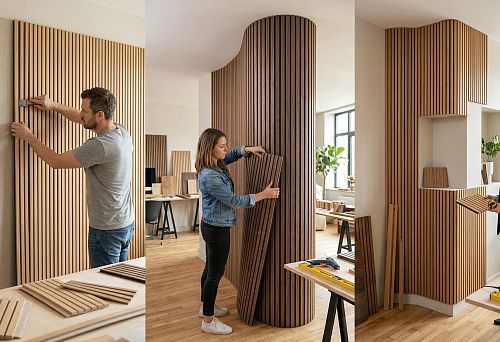
The wall — is the main field for architectural play, a canvas on whichWooden moldingcreate composition. A flat, uniform wall is dull, it does not hold attention, does not create interest. Paneling divides the wall into panels, creates rhythm, forms geometry, transforming a neutral plane into an active architectural element.
The classic division of the wall — into base, main, and frieze zones. The lower part, usually 70-90 cm high, is finished with a darker or more textured material, protected from damage. This zone is separated from the main wall area by a horizontal paneling — dado or balustrades. Such a division creates visual stability and architectural correctness.Wooden moldingFor such solutions, it should be sufficiently expressive to be read as a significant element.
Vertical paneling creates rhythm, directs the gaze upward, visually increases the height of the room. They can be frequent, creating a fine rhythm, or sparse, forming large panels. The distance between verticals is determined by the proportions of the wall and the scale of the room. In high rooms, wide gaps are appropriate, while in low rooms, a more frequent rhythm is suitable.Buy wooden trimof different widths allows selecting optimal parameters for each case.
Geometric panels from layouts allow creating an architectural composition on the wall. Rectangles, squares, rhombuses, complex polygons — all these shapes are formed by wooden strips laid over the wall's base finish. Inside the panel, contrasting finishes, patterned wallpaper, or fabric can be used to add additional visual interest.Wooden corner veneeris used to frame exterior corners, protecting them and creating clear boundaries.
Symmetrical panel layout creates a classic, orderly image. Central axis of symmetry, equal gaps, mirrored elements — all this forms a calm, balanced composition. Asymmetrical layout, on the contrary, introduces dynamism, modernity, freedom. It requires a more refined sense of balance and understanding of visual weights.wooden veneer with a decorative profileallows creating complex, nonlinear compositions.
The width of the layout matters. Thin strips create graphic effect, lightness, elegance. They suit minimalist interiors and small rooms. Wide layouts create massiveness, solidity, classic grandeur. They suit large halls and interiors with high ceilings.Decorative wooden moldingcan be of different widths, allowing precise visual effect tuning.
The profile of the layout affects the play of light and shadow. Flat layout creates minimal shadows and clear graphic lines. Profiled layout with moldings, grooves, complex cross-sections creates rich chiaroscuro plasticity and volume. Depending on lighting, the same layout may appear differently, adding dynamism to the perception of the interior.Flat wooden plankis ideal for modern minimalist spaces.
The material of the layouts must match the overall interior palette. Oak, with its expressive texture, creates a classic, solid image. Beech, with a calmer texture, suits restrained, elegant interiors. Toned layouts allow precisely selecting the desired shade.Oak veneer— is the choice of those who value durability and natural beauty.
Layout corner joints require precise execution. A 45-degree miter cut with perfect profile alignment — a sign of professionalism. Overlay corner elements and junctions at layout intersections can become additional accents, emphasizing the composition's geometry.Buy oak veneerof high quality — is a guarantee that all joints will be executed flawlessly.
Wall panels created using layouts can zone space without using partitions. A zone highlighted by layouts is perceived as a separate territory, even if there are no physical boundaries. This is especially relevant in studio apartments and large open spaces, where functional zones need to be created while preserving the sense of spaciousness.Beech trimwith its neutral texture is ideal for such solutions.
Moldings as a second plane
If layouts work on the principle of dividing a plane, thenDecorative wooden moldingscreate a second plane, a volumetric layer that protrudes above the main wall or ceiling surface. This is not just lines — these are architectural elements with their own plasticity, form, character, enriching space with an additional dimension.
are capable of transforming a flat wall into an architectural relief.Wooden moldingscan transform a flat wall into an architectural relief.
allow creating full-fledged architectural compositions within the interior.wooden wall moldingsallow creating complete architectural compositions within interiors.
Frame doors and windows with moldings to create an additional architectural frame. If the casing is the first contour, then the molding placed at some distance from the casing creates the second contour, enhancing the significance of the opening. Between the casing and molding, contrasting finish can be applied, creating additional visual interest.Buy wooden moldingsfor such framing — means creating a classic architectural hierarchy of elements.
for ceilings are selected taking into account room height and overall style.Decorative wooden moldingsUsing moldings allows creating an imitation of architectural orders. Base of a column, shaft, capital — all this can be executed using moldings laid over a flat wall. Of course, this is not a real structure, but a decorative imitation, yet the visual effect can be very convincing. Such solutions are especially suitable for classical interiors, where the order system is an important part of the style.
Using moldings allows creating an imitation of architectural orders. The base, shaft, and capital of a column — all can be executed using moldings applied to a flat wall. Of course, this is not a real structure but a decorative imitation, yet the visual effect can be very convincing. Such solutions are especially suitable for classical interiors, where the order system is an essential part of the style.Wooden molding for furnitureis also used for decorating facades, creating unity between architecture and interior.
Moldings' color can be contrasting to the wall or nuanced. White moldings on a colored wall — a classic technique, creating clear graphics and expressiveness. Moldings in the wall's tone work more delicately, perceived mainly through volume, play of light and shadow. Natural wood, preserving its texture and color, adds warmth and organic feel.Molding to look like wood for wallscan be coated with varnish, oil, or left unprocessed for subsequent painting.
Combining moldings of different profiles on one wall creates richness and variety. A large molding can frame a panel, within which smaller moldings create additional divisions. It is important to maintain hierarchy: main elements should be larger and more expressive, while secondary elements should be finer and more delicate. Using moldings from one manufacturer ensures that profiles will match each other.
Moldings can conceal technical elements: material joints, cable channels, trim edges. This practical function complements the decorative one. A properly placed molding solves two tasks at once: it decorates the interior and hides technical imperfections. This reflects the rationality of classical architecture, where beauty and functionality are inseparable.
Baseboard as a space fixator
Wooden skirting boards— this is not just a decorative strip at the junction of the wall and floor. It is an architectural element that anchors the space from below, creates a visual base, completeness, rootedness. Without a baseboard, the interior appears unfinished, floating, lacking support. A properly chosen baseboard becomes the foundation of the entire visual composition.
Low baseboards, 4–6 cm high, are almost unnoticed; they work subtly, without drawing attention. Such baseboards are suitable for minimalist interiors, where clean lines and minimal decoration are important.wooden floor baseboardMedium-height baseboards, 7–10 cm, are a classic choice for most interiors; they are noticeable enough to create a visual boundary but do not dominate the space.
High baseboards, 12–20 cm and above, create a classic, majestic look. They visually lift the wall, creating a sense of solidity and tradition. In rooms with high ceilings, such baseboards look harmonious and proportional.Wooden ceiling baseboard— works on a similar principle but in the upper zone, creating symmetry in the architectural composition.
The profile of the baseboard affects its perceived mass. A flat baseboard looks modern, graphic, minimalist. A profiled baseboard with moldings, grooves, and complex curves creates classical plasticity and volume. The upper molding of the baseboard serves not only as a decorative element but also as a practical detail — it smooths the transition from the vertical plane of the wall to the baseboard.Buy wooden skirting boards— can be either simple or complex in profile, depending on the interior’s style.
The color solution of the baseboard is an important choice. A baseboard in the color of the floor creates a visual extension of the floor plane, making the room appear more spacious. A baseboard in the color of the walls, on the contrary, makes the wall visually taller and slimmer. A contrasting baseboard creates a clear boundary, graphic effect. A natural-colored wooden baseboard brings warmth, organic feel, and connection to nature.Floor baseboard woodA baseboard made of oak or beech can be stained in any shade, offering wide possibilities.
The material of the baseboard should match the floor covering or the overall interior style. If the floor is made of solid oak planks, an oak baseboard creates visual unity and organic harmony. If the floor is made of another material, the baseboard can coordinate with doors, window casings, and furniture, creating color harmonies in the interior.Ceiling skirting board made of wood, height 100-150 mm, enhances the perception of ceiling height.— are often chosen from the same species as the floor, creating upper and lower frames for the space.
Baseboard installation requires precision. The baseboard must fit tightly against the wall and floor, without gaps. Corners must be perfectly mitered, and profiles must align. Any carelessness is immediately noticeable and spoils the impression.Wooden baseboard— requires professional installation, especially in rooms with complex geometry.
The baseboard conceals the technological gap between the wall and floor, necessary to compensate for thermal expansion of the floor covering. This is its primary practical function. Additionally, cables can run inside the baseboard, allowing wiring to be hidden. Modernwooden baseboards for sale— can be combined with cable channels, blending classical aesthetics with modern functionality.
Connecting the baseboard to door casings is an important detail. The baseboard can simply butt against the casing, or it can have a special mitered cut, creating a more elegant junction. Some designers use the technique where the casing appears to grow out of the baseboard, sharing a common base. This creates architectural logic and a sense of structural integrity.wooden baseboard— must be carefully planned with all such junctions in mind.
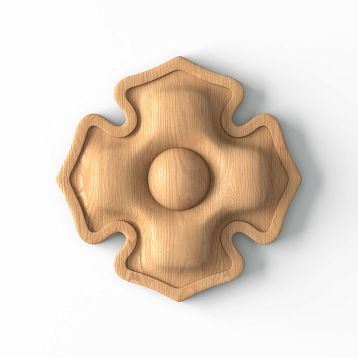
The baseboard can protrude above the wall surface, creating additional volume. This is especially effective with complex profiles, when the baseboard becomes a volumetric architectural element. In classical interiors, the baseboard is often complemented by decorative elements: corner rosettes, inserts, carved details.with a classic profile creates a sense of solidity, reliability.— with such details becomes a fully-fledged piece of carpentry art.
Crown molding in the upper zone — an accent frieze
wooden molding by the meter— in the upper zone of the wall or around the ceiling perimeter creates the final chord of the architectural composition. This is not just a decorative strip — it is a frieze that crowns the wall, giving it monumentality and completeness. The crown molding works as a frame for the entire room, gathering scattered elements into a single picture.
— can be of different widths and profiles, allowing precise tuning of the interior’s character.Beadboard can be purchased by the linear meter (hence the name), cut to required sizes for each specific object (a mirror frame 80×120 cm requires perimeter = 4 meters of beadboard, accounting for 45-degree corner cuts).The profile of the crown molding determines its plasticity. A simple triangular crown molding — this is minimalism, clear lines. A complex multi-step profile with moldings, beads, and grooves — this is classical luxury, richness of forms. Carved crown molding with ornaments — the pinnacle of decoration. The choice of profile depends on the interior’s style and the room’s scale.
The material of the crown molding matters not only aesthetically but also structurally. Wooden crown molding is strong, durable, capable of maintaining its shape for decades. It does not deform or crack with proper processing and installation. Oak and beech — traditional species for crown molding, combining beauty with reliability.
— from these species — is an investment in quality and longevity.Wooden metering — term denoting all long-form wooden items sold by the linear meter: skirting, casings, moldings, rails, trim, beadboard, stop, timber. "Metering" is a method of measurement and sale, where the unit of measurement is the linear meter (length of plank regardless of its width and thickness). If skirting costs 300 rubles per linear meter, a 2.5-meter plank costs 750 rubles. If trim costs 100 rubles per linear meter, you need 10 meters — cost 1000 rubles. Metering is convenient for long-form items, where each customer buys different quantities for a specific project.— from these species — is an investment in quality and longevity.
Recessed lighting behind the crown molding creates a floating ceiling effect. Light reflected from the ceiling produces soft, diffused illumination that visually lifts the ceiling, making it appear weightless. This technique is especially effective in rooms with low ceilings, where the goal is to create a sense of greater space. To install recessed lighting, the crown molding must have an appropriate construction, with a ledge or groove for LED strips.
Recessed lighting behind the crown molding creates a floating ceiling effect. Light reflected from the ceiling produces soft, diffused illumination that visually lifts the ceiling, making it appear weightless. This technique is especially effective in rooms with low ceilings, where the goal is to create a sense of greater space. To install recessed lighting, the crown molding must have an appropriate construction, with a ledge or groove for LED strips.
Molding junctions at corners require the highest level of craftsmanship. The 45-degree miter cut must be perfectly precise, and profiles must align without the slightest misalignment. In complex cases, corner elements — pre-fabricated parts inserted into corners — ensure perfect alignment. These elements can be further embellished with additional carving or ornamentation, turning the corner into a compositional focal point.
Crown molding can carry not only decorative but also functional loads. A hidden valance for curtains can be installed behind the molding, creating the effect of curtains descending directly from the ceiling. This visually increases the height of windows and the entire room. Technical lighting, ventilation grilles, and climate control sensors can also be integrated into the molding, combining aesthetics with practicality.
Rhythmic repetition of molding at different levels creates multi-layered depth and volume in the interior. Molding around the ceiling perimeter is complemented by molding running lower along the walls, creating a frieze zone. This technique is characteristic of classical interiors, where architectural divisions create richness and variety.
Combining crown molding with moldings, rosettes, and brackets creates complex architectural compositions. A central rosette on the ceiling from which crown molding frames radiate, plaster garlands — all are elements of a classical decorative system. Wooden crown molding harmonizes organically with plaster moldings, creating unity among natural materials.
Full integration of verticals and horizontals
True mastery is not demonstrated by using individual beautiful elements, but by integrating them into a unified system. Full integration of verticals and horizontals — this is the pinnacle of architectural design, whenoak lumberthe wall profile corresponds with the ceiling profile, when the door casing continues into the wall layout, when the baseboard corresponds with the crown molding, creating a closed compositional frame.
The foundation of integration — material unity. All wooden elements must be made from the same type of wood or, at least, have matching textures and colors. Oak with oak, beech with beech — this guarantees visual harmony. Mixing species is possible, but requires a special sense of color and texture.wooden planks on the wallmust be made from the same wood as the ceiling profiles.
The second key principle is profile unity. If a specific profile is used on the wall, this same profile must be repeated in other elements — door casings, ceiling transitions, furniture details. Repetition creates rhythm, recognizability, continuity. Meanwhile, scale can vary: the profile on the ceiling may be larger, on the wall — smaller, but the shape remains recognizable.Wooden boards in interioroperate precisely according to this principle.
Verticals and horizontals must intersect logically. Vertical wall layouts may buttress into a horizontal crown molding or, conversely, interrupt it, extending to the ceiling. Both solutions are valid, but each creates its own effect. Interrupting a horizontal with a vertical creates an accent, dynamism. Butting a vertical into a horizontal creates calmness, stability.Decorative wooden stripcan be used to create such intersections.
Element alignment is critically important. If vertical wall layouts continue onto the ceiling as beams, they must be precisely aligned. Even the slightest misalignment creates visual dissonance, an impression of carelessness. Horizontal lines on different walls must be at the same height, creating a unified horizon.
Corner junctions — points where professionalism is tested. In interior corners, vertical elements may buttress or miter. In exterior corners, precise 45-degree mitering with matching profiles is required. Corner overlays, rosettes, and special corner elements help resolve complex cases, creating additional accents.Wooden planks for decorationmust buttress seamlessly.
System modularity simplifies design and installation. If the width of wall panels is a multiple of the width of ceiling coffers, if the height of the plinth zone corresponds to the height of the door opening — all this creates mathematical harmony, proportionality. The golden ratio, classical proportions can serve as the basis for calculating all dimensions.Wooden planks on walls and in interiorsare arranged according to the selected modular grid.
Color coordination complements geometric harmony. If the baseboard is dark oak, then the door casings should also be the same shade. If the ceiling crown molding is light, the upper part of wall layouts can be lightened, creating a gradient from dark lower to light upper. Such techniques visually increase the height of the room.Wooden planks SPBcan be ordered already tinted to the desired color.
Functional integration unites utilitarian tasks. Baseboards conceal cables, wall layouts hide material joints, crown molding conceals technological gaps. The entire system operates as a single organism, solving both aesthetic and practical tasks. This rationality is characteristic of the best architectural examples, where beauty is inseparable from utility.Buy oak wooden planks for wallsto create such a system — means thinking comprehensively.
Scaling elements creates hierarchy. Main architectural lines — door openings, main beams — are executed with heavier molding. Secondary elements — wall layouts, ceiling rails — are thinner and more delicate. This difference in scale creates visual depth, multi-layeredness.Planed wooden stripof different cross-sections allows creating such hierarchy.
How is an interior read with a unified system?
When all elements are connected into a unified system, the interior is read as an architectural work, not as a random collection of details. The eye easily glides from one element to another, finding repetitions, variations, rhythms. A sense of order, harmony, and thoughtfulness emerges. The space appears more cohesive, more complete.
Such an interior is comfortable to perceive. The human brain loves order, patterns. When there is a system, it is easier to orient oneself in space, understand its logic. Chaos tires, order soothes.buying wooden planks in St. Petersburgand build a system from it — means creating a comfortable living environment.
The aesthetic value of such an interior is higher. It is perceived as the result of professional work, not amateur self-made efforts. This is immediately apparent, even to an untrained viewer. The sense of style and professionalism is intuitively perceived.Wooden planks for wall decorationwork differently within the system compared to individual elements.
Practical benefits are also obvious. A unified system is easier to maintain and simpler to repair. If a damaged element needs replacement, it is easy to find a similar one from the same series. If additional interior elements are planned, new elements will fit organically into the existing system.Buy wooden planks for decorationfrom the same collection can be used years later, provided the manufacturer remains stable.
Working with proportions within the system of elements
Proportions are the foundation of beauty in architecture. The ratio of skirting board height to wall height, the width of the door casing to the door opening width, the thickness of the ceiling molding to the ceiling area — all of this is the mathematics of beauty. Classical architecture developed proportional systems that also work within interiors.
can be placed at intervals based on the golden section.Thin wooden lathscan be placed with a spacing based on the golden ratio.
are cut according to the modular grid.wooden strips, beamsare cut according to the modular grid.
Classical orders provide ready-made proportional systems. In the Doric order, the column has a specific diameter-to-height ratio, the base and capital — their own proportions. These ratios can be transferred to interior elements, creating classically balanced compositions.Wooden railscan imitate column fluting while preserving the order's proportions.
create a dynamic contrast. If all elements are the same size, the interior becomes monotonous. Playing with scale — large accents and small details — creates a rich sensory experience. A wide door casing contrasts with thin wall moldings, a heavy ceiling molding contrasts with an elegant skirting board.buy wooden lumberof different cross-sections to create such a contrast.
Materiality and tactility of the system
wood — a living material. It has a texture visible to the eye, a surface feel that can be touched, and a scent that creates an atmosphere. When the entireDoor Trimwalls, ceiling made of natural wood, a special material environment emerges — warm, alive, breathable.
oak texture — expressive, with clear annual rings, with light playing on radial cuts. Beech texture — more calm, uniform, with fine speckles. These differences create different moods. Oak — masculine, solid. Beech — soft, cozy.Oak wooden planks for wallsconvey the character of the species.
surface treatment affects tactility. Smoothly sanded and lacquered wood — cold, glossy. Wood coated with oil or wax retains tactile warmth and porosity. Brushed wood with revealed texture — textured, relief-like. The choice of treatment determines not only the appearance but also tactile sensations.form the architecture of walls and ceilings, creating a play of light and shadow.with different treatments create different atmospheres.
in natural color creates an ecological atmosphere.Wall cladding with wooden lathsin natural color creates an ecological atmosphere.
The sound of wood is also part of materiality. Wooden surfaces absorb sound differently than stone or glass. They create a softer acoustics, more comfortable for the ear. In rooms with wooden finishes, sound is not as loud, and echoes are less sharp. This is a subtle but important aspect of comfort.
The scent of wood — barely perceptible, yet it creates an atmosphere. Freshly planed wood has a characteristic aroma that weakens over time but does not disappear entirely. This scent is associated with nature, forests, freshness. It creates, on a subconscious level, a sense of ecological and natural environment.Facade strips imitation woodmade from natural materials possess these properties.
Errors when creating a system of elements
Classic profile requires a corresponding environment. oak lumber Classic profile requires a corresponding environment.Violation of proportions is another common mistake. A too wide skirting board in a low room visually makes the ceiling even lower. A too narrow casing in a large opening will disappear and look short. The scale of elements must correspond to the scale of the space.Decorative oak plankis selected taking into account the size of the room.
The absence of hierarchy turns the interior into visual noise. If all elements are equally active and expressive, the eye has nothing to focus on, and there are no compositional centers. There must be main elements and secondary ones, accents and background details. A door opening can be an accent, while wall panels can serve as a calm background.Interior oak plankis used sparingly to avoid overloading the space.
Negligence in execution kills even a good idea. Gaps at joints, mismatched profiles at corners, inaccurate cuts — all of this immediately catches the eye. Wooden trim requires joinery precision and professional installation. Saving on installation quality nullifies the beauty of the material.Beech parquetdeserves flawless installation.
Overloading with decoration is an error opposite to minimalism, but no less dangerous. When every centimeter of the wall is covered with panels, moldings, carved elements — visual chaos and fatigue arise. There must be pauses, calm areas, allowing the eye to rest. Decoration works through contrast with clean planes.Beech parquet for saleshould be in the amount that creates harmony, not excess.
Mismatch in scale between furniture and architectural elements creates dissonance. If the furniture is light, airy, modern, while the architectural elements are massive, heavy, classical — a conflict arises. Furniture and architecture must be allies, complementing each other.Solid beech parquetcan serve as a bridge between architecture and interior design.
Ignoring lighting is a serious mistake. Wooden profiles, panels, moldings live thanks to the play of light and shadow. If the lighting is flat, diffused, without directional sources — all the volumetric plasticity is lost. One must plan how light will fall on elements, what shadows will appear, and how this will affect perception.Oak parquetrequire proper lighting scenarios.
Lack of a single supplier may lead to mismatched shades, textures, profiles. Even if all elements are made of oak, oak from different manufacturers may have different shades, different finishes. It is better to buy all trim from one reliable manufacturer who guarantees stable characteristics.
Modern Interpretations of Classical Systems
TodayOak beamcan be used not only as a structural element, but also as a decorative accent in a minimalist interior. The simplicity of form, purity of lines combine with the nobility of the material.
Geometric purity is a characteristic feature of the modern approach. No scrolls, rosettes, complex ornaments. Only straight lines, sharp angles, simple rectangular profiles. But this simplicity is not primitive — it requires perfect execution, flawless proportions.Buy oak beamsgeometrically correct cross-section — the basis of such aesthetics.
Contrast of textures — a modern technique enriching minimalism. Smooth polished surfaces coexist with brushed wood, matte finish contrasts with glossy. This texture play creates visual interest without using complex decoration. Wood shows its natural beauty, unmasked by ornamentation.
Asymmetric compositions — departure from classical symmetry. Panels on the wall can be offset from the center, creating a dynamic composition. Ceiling beams can run with unequal spacing, forming a complex rhythm. This freedom requires a subtle sense of balance, understanding of visual weights.Oak timber beamcan be part of such an asymmetric system.
Integration of technology — inevitability of modernity. Hidden lighting, built-in sensors, acoustic systems must be organically integrated into architectural elements. Wooden molding conceals LED strip, cables are laid into panels, speakers are hidden behind panels. Technology does not conflict with aesthetics, but complements it.Beech beam for lathingwith technological grooves — a solution for modern interiors.
Ecological sustainability — an important trend of modernity. Natural wood without toxic coatings, oils and waxes instead of synthetic varnishes, rejection of formaldehyde and volatile organic compounds. This is not just a trend, but conscious care for health. Wooden elements in interiors improve microclimate, regulate humidity, create a healthy living environment.
Modularity and transformability — modern requirements for space. Panels can be removable, allowing to change panel configuration. Mobile partitions made of wooden frames are easily moved, zoning space differently. This is flexibility, adaptability, the ability to change the interior according to changing needs.
Mixing eras and styles — postmodern approach. Classic oak casing in an industrial loft, minimalist rail in a classical interior. These collisions create tension, interest, individuality. But for mixing to work, a firm hand is needed, understanding of rules, to skillfully break them.
Color Solutions in the System of Elements
The color of wooden elements determines the character of the entire interior. Natural light oak creates Scandinavian lightness, airiness. Dark stained oak — English solidity, dignity. Toned beech in gray tones — modern restraint.trim for interior doorsSets the color tone.
Monochromatic system — all wooden elements in one shade — creates calmness and unity. It's a safe choice that always works. Variations in tone within one wood species add liveliness without disrupting harmony. This approach suits those who appreciate classic elegance.
Contrast system — dark elements on a light background or vice versa — creates graphic impact and expressiveness. Black casings and skirting on white walls — modern classic. Light rails on a dark wall — reverse contrast, softer.Batten trimContrasting color becomes an active compositional element.
Gradient system — gradual change in shade from floor to ceiling — creates visual dynamism. Dark skirting, medium-toned casings, light ceiling molding. This transition creates a sense of lightness at the top and stability at the bottom, aligning with our perception of gravity. This technique visually increases the room's height.
Accent system — main elements in neutral color, with individual accents — bright, expressive. Most molding in natural light wood, but door casings — dark or colored. This creates visual accents, directing attention.Molding SPBDifferent shades allow implementing such an approach.
Patina — creating an aged effect — adds historical depth. Dark patina in profile recesses emphasizes relief, creating noble antiquity. This technique is especially suitable for classical interiors, where the atmosphere of tradition and history is important.
Two-tone solutions — combination of two wood species or two shades of one species — create richness of palette. Light base with dark inserts, or vice versa. It's important to maintain balance: one color should dominate, the other complement.Buy molding SPBDifferent shades for creating such combinations.
The influence of lighting on color cannot be underestimated. Warm light makes wood more golden and cozy. Cool light emphasizes gray tones, creating a modern feel. Daylight changes throughout the day, and wooden elements appear differently in the morning and evening. It's a living game that never gets boring.
Working with different wood species
Oak — king among species for architectural elements. Its density, hardness, expressive texture make it ideal formolding trim purchaseOak doesn't fear moisture, doesn't deform, lasts for decades. Its texture with clear growth rings creates an expressive pattern on the surface.
Beech — noble alternative to oak. It has more uniform texture, fine grain structure, pleasant light shade. Beech is easy to process, holds shape well. It's ideal for profiled elements with complex cross-sections.oak trimand beech can be combined in one interior, creating a subtle texture play.
Ash — close relative to oak, but with a calmer texture. It's strong, elastic, has a beautiful light shade with a slight yellow or gray undertone. Ash is good for modern interiors where expressiveness is needed without excessive ornamentation.
Oak — species for luxurious interiors. Its dark chocolate color, noble texture, ability to polish to a mirror finish make oak an elite material. Oak molding creates an atmosphere of respectability and luxury. It requires appropriate surroundings — quality finishes, expensive furniture.
Mixing species in one interior is possible, but requires taste. Oak casings can be combined with beech skirting if shades are chosen correctly. Contrast in textures creates visual richness. But it's important not to overdo it — usually no more than two to three species are used in one space.
Exotic species — wenge, teak, merbau — bring a special atmosphere. Their unusual colors and textures create an exotic accent. But their use requires caution — they must be stylistically appropriate. In a classical European interior, exoticism may appear out of place.
Seasonality and longevity of the system
Wood — a living material that reacts to changes in temperature and humidity. In winter, with heating on, air becomes dry, wood slightly dries out. In summer, with increased humidity, it slightly expands. These are natural processes that must be considered during design.Door moldingQuality execution takes these deformations into account.
Technological gaps — mandatory condition for proper installation. Wooden elements must not be installed flush, without allowance for expansion. Small gaps, later covered with putty or sealant, allow wood to "breathe" without cracks or deformations.
Finish coating protects wood from external influences. Lacquer creates a durable film, but deprives wood of its ability to regulate humidity. Oil and wax penetrate the structure, preserving wood's "breath," but require periodic renewal. Coating choice depends on usage conditions and aesthetic preferences.
Care for wooden elements is not complicated, but regular. Dust wiping, periodic renewal of oil coating, monitoring room humidity — these are simple actions that extend molding life for decades.Pogonаж priceOf which may be high, justifies itself by longevity.
Restoration is possible even after decades of use. Wooden elements can be sanded, re-coated, and damaged areas restored. This is an advantage over synthetic materials, which after damage can only be replaced. Wood can be renewed repeatedly.
Patina of time — noble aging of wood — may not be a flaw, but an asset. Slightly darkened oak over time, soft sheen of old wax, barely noticeable scratches — all this creates history, character, uniqueness. In interiors where authenticity is valued, such patina is welcomed.
Modern processing technologies increase durability. Thermal treatment makes wood more stable, resistant to moisture and decay. Impregnation with protective compositions without altering the appearance extends service life. QualityMolding Moscowoffers with the use of modern processing technologies.
Acoustic properties of wooden systems
Wood affects the acoustics of a room in a unique way. Unlike hard flat surfaces — concrete, glass, tiles — which reflect sound, creating echo and reverberation, wooden elements partially absorb sound, creating a softer, more comfortable acoustics.molding productiontakes into account the acoustic properties of the material.
Three-dimensional profiles act as micro-resonators. Moldings with coves, grooves, and complex curves create numerous small cavities that scatter sound, breaking it into frequencies. This creates a rich acoustic environment, especially important in musical spaces and home theaters.
Wall wooden panels created with cladding improve sound insulation. The air gap between the wall and the panel acts as a damper, absorbing sound waves. This is especially effective when combined with sound-absorbing materials placed inside the panels.
Ceiling wooden structures — beams, coffered ceilings — alter acoustics in the vertical plane. They prevent the formation of standing waves, which create unpleasant resonances. The room sounds more balanced, without acoustic dips and peaks.
Resonant properties of different wood species vary. Spruce and cedar — resonant species — are used in musical instruments. Oak and beech — more damping, sound-absorbing species. Choosing wood species for architectural elements can consider acoustic requirements, especially in specialized rooms.
Psychology of perception of system elements
Orderliness of architectural elements affects psychological state. An interior with a clear system of lines, repeating rhythm, and understandable logic creates a sense of stability, reliability, and control. This is especially important in living spaces, where people rest and recover.Manufacturer of trimcreates elements forming such an environment.
Verticals activate, direct the gaze upward, create a sense of growth and development. A room with pronounced vertical elements is perceived as higher, more spacious, and upward-looking. This suits public areas and work offices, where energy and activity are needed.
Horizontals calm, create a sense of peace, stability, and horizon. A room dominated by horizontal lines appears wider, spread out, and calm. This is suitable for bedrooms and relaxation zones, where relaxation is important.
Symmetry creates a sense of order, correctness, classical harmony. It satisfies the innate human love for symmetrical forms. Symmetrical interiors are perceived as solid, reliable, and traditional. This is a choice for conservative individuals who value proven solutions.
Asymmetry introduces dynamism, modernity, individuality. It requires more nuanced perception, the ability to sense visual balance without mirror repetition. Asymmetrical interiors are more personal, unique, and reflect individual taste.
The naturalness of the material calms on a subconscious level. Wood is a connection to nature, to the forest, to the organic world. In urban environments, disconnected from nature, wooden elements become an important psychological anchor, reminding us of the natural environment of human habitation.
Frequently asked questions
How to determine the optimal skirting board width for my room?
The skirting board width depends on ceiling height and room scale. For standard rooms with 2.7–3 m ceilings,Wooden baseboardsa height of 7–10 cm is suitable. For high ceilings over 3.5 m, wider skirting boards of 12–20 cm can be used. In small rooms, it is better to limit to a narrow skirting board of 5–7 cm to avoid overloading the space.
Is it necessary to use the same profile for all interior elements?
It is not necessary to use an absolutely identical profile, but it is desirable to maintain stylistic unity.wooden floor baseboardmay have a more substantial profile than wall cladding, but the overall character — classic or modern — should be unified. Material and color unity is more important than exact profile repetition.
Can oak and beech be combined in one interior?
Yes, but it is important to properly match the shades. Light beech combines well with light oak. If the shades are too contrasting, it is better to use them in different functional zones.Wooden ceiling baseboardfrom beech can combine with oak door casings, if the overall color palette is thought out.
How often should oil-based finish on wooden elements be renewed?
This depends on the intensity of use.Floor baseboard woodin traffic areas requires renewal every 2–3 years. Ceiling elements, door casings can retain finish for 5–7 years. Signs of need for renewal — dulling of gloss, appearance of dryness on the surface.
Does the color of wooden elements affect the perception of room height?
Dark and light walls create a contrast that visually increases the height. If the ceiling molding is also dark, it creates a framing effect that makes the room feel more intimate but lower. A gradient from dark at the bottom to light at the top maximally increases perceived height.Ceiling skirting board made of wood, height 100-150 mm, enhances the perception of ceiling height.A gradient from dark at the bottom to light at the top maximally increases perceived height.
What is the minimum budget required to create a wooden element system?
The budget depends on the area, type of wood, and complexity of profiles.Wooden baseboardBeech is cheaper than oak. Simple profiles are cheaper than intricate carved ones. For a standard room of 20 m², the minimum budget for a basic system (skirting, door casings, simple moldings) starts at 30-40 thousand rubles when using beech and simple profiles.
It is theoretically possible, but requires carpentry skills and precise tools.
— it’s half the job; the key is to correctly cut the corners and precisely install them. Installation errors are immediately noticeable and ruin the entire result. For complex profiles and large volumes, it’s better to hire professionals.wooden skirting board purchase— this is half the job; the main thing is to correctly cut the angles and precisely install them. Installation errors are immediately noticeable and spoil the entire result. For complex profiles and large volumes, it is better to hire professionals.
How to choose between lacquering and oil finish?
Lacquer creates a durable protective film, but the wood loses its tactile warmth and cannot regulate humidity.wooden baseboardWith a lacquer finish, it is more practical for daily use. Oil preserves the naturalness of the wood, allowing for localized repairs, but requires periodic reapplication. For residential spaces, oil is preferable; for commercial spaces, lacquer is preferred.
Is it necessary to install ceiling skirting if there is floor skirting?
Not necessary, but desirable for creating a finished composition.with a classic profile creates a sense of solidity, reliability.Without a ceiling counterpart, the interior appears unfinished. The ceiling element can be made thinner and more delicate, but its presence creates an architectural frame that unifies the space.
How to calculate the required amount of trim?
Measure the perimeter of the room for skirting, the perimeter of door and window openings for casings. For moldings, draw a layout diagram and calculate the total length. Add 10-15% for trimming and possible errors.Ceiling baseboard woodenThe calculation is based on the ceiling perimeter with the same allowance.
Conclusion
Creating a unified system of architectural elements in the interior is an art requiring understanding of proportions, material sensitivity, and knowledge of technologies. Whenand paint it to the desired shade — standard practice in modern design. It is important to use special wood finishes that allow the material to breathe., Wide Wooden Skirting Board, interior door casingsmoldings and molding are united by a common logic, the space acquires wholeness that cannot be achieved by randomly selecting elements.
Each line in such an interior has meaning, each element occupies its place in the overall composition. Doors become not just passageways, but architectural portals. Walls transform from flat surfaces into complex volumetric structures. The ceiling ceases to be a neutral plane, becoming the crowning element of spatial composition.
Using natural wood —Wooden baseboard pricewhich may seem expensive — is an investment in quality, durability, and eco-friendliness. Wood lives for decades, becoming more beautiful with age, developing a noble patina of time. Synthetic materials cannot provide such depth, such connection with nature, such warmth.
The quality of execution determines the final result. Even the most expensive materials cannot save an interior from careless installation. Conversely, professional, thoughtful work transforms qualitywooden skirting boards for floor purchasetrimming into a work of architectural art.
Company STAVROS specializes in producing high-qualitysolid wood moldingWe have been offering a full range of architectural elements for many years: fromwooden skirting board St. Petersburgsimple rails to complex carved moldings, from basic strips to exclusive moldings. Our production is equipped with modern equipment, ensuring profile accuracy and consistent quality.
In the STAVROS assortment, products made from oak, beech, and ash — species proven by centuries of architectural use — are available. We control the entire production cycle: from wood selection to final finishing. This allows us to guarantee thatWooden skirting Moscow, Casingselements from the same batch will perfectly match in color and texture.
We understand that creating a unified system of elements requires a variety of profiles and sizes. Therefore, our catalog features dozens of different profiles — from minimalist modern to classic with rich ornamentation.Wide wooden floor skirting boardfor grand spaces, slender elegant rails for minimalist interiors, carved moldings for classic styles — all of this can be found at STAVROS.
Our specialists will help you select elements for your project, calculate the required amount of material, and recommend optimal profile combinations.