Article Contents:
- Evolution of Architectural Thought: History of Columns and Half-Columns
- From Ancient Egypt to Ancient Greece: The Birth of Perfection
- Roman Legacy: Functionality and Decorativeness
- Renaissance and Classicism: Revival of Antique Ideals
- Modern Times: A New Interpretation of Classicism
- Anatomy of Perfection: Components and Proportions
- Three Key Elements: Base, Shaft, and Capital
- Golden Ratio: The Secret of Ideal Proportions
- Order System: Five Classical Variations
- Material Embodiment: From Wood to Marble
- Wood: Warmth and Nobility of Natural Material
- Polyurethane: Modern Solution for Practical People
- Gypsum: Traditions and Plasticity
- Stone and Marble: Eternal Classicism
- Functional Transformation: Role of Columns and Half-Columns in Interior Design
- Space Zoning: Elegant Division
- Concealing Structural Elements: Beauty and Practicality
- Visual Proportion Correction: Optical Illusions
- Accentuating Key Zones: Focal Points in Interior Design
- Stylistic Diversity: Columns and Half-Columns in Different Interiors
- Classic Interior: Harmony and Symmetry
- Neoclassicism: A Modern Interpretation of Traditions
- Art Deco: Geometry and Luxury
- Modern Minimalism: Simplicity and Functionality
- Eclecticism and Fusion: Play of Contrasts
- Technical Aspects: Selection, Installation, and Maintenance
- Dimensions and Proportions: The Mathematics of Beauty
- Installation and Mounting: Reliability and Safety
- Maintenance and Care: Preserving Beauty for Years
- Practical Recommendations: How to Choose Ideal Columns for Your Interior
- Space Analysis: Assessment of Opportunities and Limitations
- Stylistic Compatibility: Harmony and Cohesion
- Functionality and Practicality: Reasonable Balance
- Professional Consultation: Expert Opinion
- Inspiring Examples: Columns and Half-Columns in Real Interiors
- Classic Living Room: Grandeur and Harmony
- Modern Kitchen-Dining Room: Functional Zoning
- Bedroom in Art Deco Style: Luxury and Individuality
- Bathroom: Unexpected Application
- Conclusion: An Investment in Beauty and Status

Have you ever entered a room and stood still in awe, unable to explain what exactly impressed you so strongly? Perhaps the secret lies in harmonious proportions, in the play of light and shadow, in those architectural elements that subtly create a sense of grandeur and nobility. Among such elements, special place is occupied by columns and half-columns – details that have come to us from the depths of centuries, yet have not lost their relevance even in the 21st century.
In this article, we will reveal the secrets of using columns and half-columns in modern interiors, describe their types, materials of manufacture, and technical characteristics. You will learn how to properly choose these architectural elements for your home and what unique opportunities they offer for transforming space.


Evolution of Architectural Thought: History of Columns and Half-Columns
Before diving into the practical aspects of using columns and half-columns, let’s take a brief journey through time and trace the evolution of these architectural elements from antiquity to our days.




From Ancient Egypt to Ancient Greece: The Birth of Perfection
The history of columns begins in Ancient Egypt about 5,000 years ago. The first columns were massive, resembling bundles of papyrus or lotus, and served not only a structural but also a symbolic function – they represented the connection between earth and sky, between the world of humans and the world of gods.
Ancient Greeks truly revolutionized architecture by creating the system of orders – strict proportional relationships between parts of the column and the building as a whole. Doric, Ionic, and Corinthian orders – these are not merely technical solutions, but a whole philosophy of harmony and beauty embodied in stone.
It was in Ancient Greece that the first half-columns appeared – architectural elements representing half a column attached to a wall. They allowed creating the impression of a colonnade where full columns were inappropriate or impossible.
Our factory also produces:





Roman Heritage: Functionality and Decoration
Ancient Romans, inheriting Greek traditions, brought their practical approach to architecture. They created two new orders – Tuscan (a simplified version of Doric) and Composite (combining elements of Ionic and Corinthian). Romans also actively used half-columns for decorating walls of amphitheaters, baths, and basilicas.
It was in Roman architecture that columns and half-columns finally acquired a dual function – structural and decorative. This tradition has been preserved through subsequent eras and has reached our days.
Get Consultation
Renaissance and Classicism: Revival of Antique Ideals
After a long hiatus associated with the Middle Ages, interest in antique forms revived during the Renaissance. Architects of the Renaissance, such as Brunelleschi, Alberti, and Palladio, returned to studying ancient proportions and actively used columns and half-columns in their projects.
Classicism of the 18th-19th centuries continued this tradition, making columns and half-columns an indispensable part of the architectural language. Grand colonnades adorned palaces and public buildings, while half-columns were used to divide façades and interiors.
Contemporary: A New Interpretation of Classicism
In the 20th century, modernism rejected the 'extravagance' of classical architecture, but by the second half of the century, postmodernism revived interest in historical forms, albeit in an ironic, reinterpreted manner.
Today we observe a new wave of interest in classical architectural elements. Modern columns and half-columns – are no longer mere quotations from the past, but an organic part of current design, capable of transforming any space, giving it individuality and character.
Anatomy of Perfection: Components and Proportions
To properly use columns and half-columns in interior design, it is necessary to understand their structure and construction principles. This knowledge will help you make an informed choice and avoid common mistakes.
Three Key Elements: Base, Shaft, and Capital
A classical column consists of three main parts:
- Base (plinth) – the lower part of the column, serving as a transition from the horizontal plane of the floor to the vertical shaft. The base can be simple or profiled, with various decorative elements.
- Shaft – the main part of the column, which may be smooth or adorned with fluting (vertical grooves). In classical orders, the shaft slightly tapers toward the top – entasis – creating an optical illusion of greater elegance.
- Capital – the top part of the column, serving as a transition from the shaft to the supported structure. The capital is the main distinguishing feature of an order: the Doric capital is simple and austere, Ionic is adorned with volutes (spiral curls), Corinthian with lush acanthus leaves.
A half-column has the same structure but represents half a column attached to a wall. This makes it more compact and convenient for use in interiors where space is limited.
Golden Ratio: the secret of ideal proportions
The secret of the attractiveness of classical columns lies in their proportions, based on the principle of the golden ratio – approximately 1:1.618, which the human eye perceives as perfectly harmonious.
Each order has its own canonical proportions. For example, the height of a Doric column should be 7–8 diameters of its base, Ionic – 9 diameters, Corinthian – 10 diameters. These ratios create a sense of harmony and balance, which we subconsciously perceive as beautiful.
Modern manufacturers usually adhere to these classical proportions, although they allow for some variations depending on specific conditions and client requirements.
Order system: five classical variations
The order system is a kind of architectural language defining the proportions, shape, and decorative elements of columns. Classical architecture distinguishes five main orders:
- Tuscan order – the simplest and most austere, with a smooth shaft and minimal decorative elements. Ideal for creating an atmosphere of restrained elegance.
- Doric order – also characterized by simplicity, but with a more complex capital and often adorned with fluting. It symbolizes masculinity, strength, and reliability.
- Ionic order – more elegant, with characteristic volutes on the capital. Associated with femininity, grace, and refinement.
- Corinthian order – the most decorative, with an ornate capital shaped like a basket with acanthus leaves. It symbolizes luxury, wealth, and abundance.
- Composite order – combines elements of Ionic and Corinthian, offering the most elaborate decorative solution.
Choosing an order for your interior depends on the overall style of the room, its functional purpose, and the impression you wish to create.
Material embodiment: from wood to marble
Choosing a material for columns and half-columns is not only an aesthetic issue but also a practical one. Each material has its advantages and characteristics that must be considered when planning an interior.
Wood: warmth and nobility of natural material
Wood is one of the most traditional materials for manufacturing columns and half-columns. It possesses natural beauty, warmth, and a unique texture pattern, making each item one-of-a-kind.
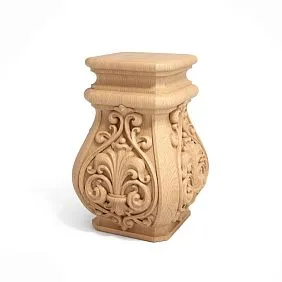
Modern columns and half-columns Columns and half-columns are made from various types of wood:
- Oak – symbol of strength and durability. Oak columns feature expressive texture and can withstand significant loads. Over time, oak develops a noble patina, further enhancing its value.
- Beech – dense and hard wood with a uniform structure, which is easy to process and allows for creating items with clear, detailed profiles.
- Ash – wood with a beautiful pattern and high strength, often used for creating columns in classical style.
- Linden – soft and lightweight wood, ideal for creating intricate carved elements, especially on capitals of Corinthian and composite orders.
Wooden columns and half-columns can be painted in any color, lacquered or patinated, aged, or gilded – finishing options are virtually limitless.
Polyurethane: a modern solution for practical people
Polyurethane – a synthetic material that has gained immense popularity in architectural decor production in recent years. Polyurethane columns and half-columns have several undeniable advantages:
- Lightweight – they weigh several times less than wooden or plaster analogs, simplifying transportation and installation.
- Moisture resistance – they are not afraid of high humidity, allowing their use in bathrooms and other wet areas.
- Durability – does not crack, does not deform, is not susceptible to insects and mold.
- Detail accuracy – modern technologies allow reproducing the most complex and delicate decorative elements with high precision.
Polyurethane columns and half-columns can imitate any material – from wood to marble, and with proper coloring are practically indistinguishable from the original.
Gypsum: Traditions and Plasticity
Gypsum – a traditional material for architectural decoration, used for several centuries. Gypsum columns and half-columns have the following advantages:
- Ecological safety – gypsum is a completely natural material, does not emit harmful substances.
- Plasticity – allows creating items of any complexity with the finest detailing.
- Fire resistance – gypsum does not burn and does not support combustion.
- Humidity regulation – gypsum can absorb excess moisture from the air and release it when drying, creating a comfortable microclimate.
However, gypsum has drawbacks – it is brittle, afraid of moisture, and requires careful handling. Therefore, gypsum columns and half-columns are usually used in dry rooms with low traffic.
Stone and Marble: Eternal Classic
Natural stone – the most prestigious and durable material for columns and half-columns. Marble columns decorating ancient temples have stood for thousands of years without losing their beauty.
Modern marble, granite, or limestone columns – this is:
- Unmatched luxury – the unique pattern of stone, its natural beauty and elegance create a sense of genuine luxury.
- Eternity – stone columns are practically eternal; they are not afraid of time, fire, or water.
- Strength – stone can withstand enormous loads, making it an ideal material for load-bearing columns.
However, natural stone has drawbacks – it is very heavy, requires professional installation, and costs significantly more than other materials. Therefore, in modern interiors, columns made of artificial stone are often used, which imitates natural stone but lacks its drawbacks.
Functional Transformation: The Role of Columns and Half-Columns in Interior Design
Columns and half-columns are not just decorative elements. They perform a range of important functions that can radically transform your interior.
Space zoning: Elegant division
In modern interiors with open floor plans, there is often a need to visually divide space into functional zones without erecting solid walls. columns and half-columns Perfectly handle this task.
A pair of columns can mark the boundary between the living room and dining room, creating a portal effect. Half-columns placed along a wall can highlight a relaxation or work area. In this case, the space remains unified, light freely spreads throughout the room, but each zone acquires its own individuality.
Zoning using columns works especially effectively in spacious rooms with high ceilings. Here, columns can be complemented by arches, balustrades, or decorative partitions, creating a complex, multi-level spatial organization.
Masking structural elements: beauty and practicality
In any room, there are structural elements necessary from a technical standpoint but not always fitting into the interior’s aesthetic concept. These may include load-bearing pillars, ventilation shafts, pipes, or electrical cables.
Columns and half-columns allow elegantly masking these elements, turning technical necessity into decorative merit. For example, an unattractive load-bearing pillar can be transformed into a luxurious Corinthian column, and a ventilation shaft can be concealed behind a half-column with a niche for a statuette or vase.
This approach not only improves the room’s aesthetics but also allows more rational use of space, integrating technical elements into the overall interior concept.
Visual proportion correction: optical illusions
Columns and half-columns are a powerful tool for visually correcting room proportions. With their help, you can:
- Increase height – vertical lines of fluted columns visually 'stretch' the space upward, making ceilings appear higher.
- Expand space – a rhythmic row of half-columns along a wall creates a perspective effect, visually expanding the room.
- Balance proportions – in a long and narrow room, columns placed across the main axis can 'break' the space into more harmonious sections.
These optical effects are based on features of human perception and operate on a subconscious level, creating a sense of harmony and comfort.
Accentuating key zones: focal points of interior design
Columns and half-columns can be used to highlight important zones or interior objects, creating around them a special atmosphere of significance and solemnity.
For example, a pair of columns on either side of a fireplace turns it into the central element of the living room, a sort of domestic hearth altar. Half-columns framing a niche with artwork create a museum display effect, emphasizing the value of the exhibited object.
In a bedroom, columns can frame the headboard of the bed, creating an atmosphere of luxury and intimacy. In an office, they can highlight the work area, emphasizing its status and importance.
Stylistic diversity: columns and half-columns in different interiors
The versatility of columns and half-columns allows their use in the most diverse stylistic contexts – from strict classicism to avant-garde modernism.
Classic interior: harmony and symmetry
Classic style is the natural habitat for columns and half-columns. Here, they are not merely decorative elements but an essential part of the architectural language based on principles of symmetry, proportion, and harmony.
In a classic interior, columns and half-columns are typically executed according to the canons of the order system. They may be part of a cohesive architectural ensemble, including cornices, moldings, rosettes, and other elements. Preferred materials are natural – wood, marble, plaster.
The color palette of classical columns is usually neutral – white, cream, light gray, possibly with gold accents on individual elements. This allows them to harmoniously blend with any wall and furniture colors.
Neoclassicism: modern interpretation of traditions
Neoclassicism is a more free interpretation of classical motifs, adapted to modern realities. In a neoclassical interior columns and half-columns they may be more laconic, with simplified decoration, but retaining the basic proportions and elegance of classical examples.
The color palette in neoclassicism is more varied – in addition to traditional white and cream tones, gray, blue, green, beige may be used. Columns may be painted to match wall colors or, conversely, stand out with a contrasting shade.
Materials in neoclassicism are also more diverse – alongside natural materials, modern ones such as polyurethane, MDF, and composite materials are actively used. This makes the neoclassical style more accessible and practical.
Art Deco: geometry and luxury
The art deco style, which emerged in the 1920s-30s, offers a fresh perspective on classical architectural elements. In an art deco interior, columns and half-columns acquire more geometric, stylized forms while retaining the sense of luxury and theatricality.
Art deco columns may have stepped forms reminiscent of skyscrapers of that era. They are often adorned with geometric ornaments, zigzags, sun rays, and other characteristic motifs. Materials include exotic wood species (ebony, zebrawood), polished stone, chrome-plated metal, and mirrors.
The color palette of art deco is contrasting and dramatic – black and white, gold and silver, deep shades of blue, green, burgundy. Columns may be executed in these saturated colors or feature metallic inserts and inlays.
Modern minimalism: simplicity and functionality
In a minimalist interior, columns and half-columns may seem inappropriate, but this is not the case. Minimalism does not reject classical forms; it simply strips them of excessive decoration, leaving pure geometry and proportions.
Columns in a minimalist interior are primarily architectural elements, not decorative. They may be extremely laconic – a simple cylinder or parallelepiped without a base or capital. Preferred materials are modern – concrete, metal, glass, composites.
The color palette of minimalism is restrained – white, gray, black, natural tones of wood and stone. Columns usually do not stand out in color, blending into the overall color scheme to create an effect of monolithic unity and spatial integrity.
Eclecticism and fusion: playing with contrasts
Eclecticism and fusion are styles based on mixing different eras and cultures. Here, columns and half-columns can be used in unexpected ways, creating interesting contrasts and dialogues between various interior elements.
For example, classical Corinthian columns may coexist with ultra-modern furniture, while minimalist concrete columns may be paired with antique art objects. Such contrasts create a dynamic, lively space reflecting the complex, multifaceted personality of its owner.
In an eclectic interior, columns may be painted in bright, unexpected colors or decorated in non-traditional ways – for example, covered with mosaic, upholstered with fabric, or painted in graffiti technique.
Technical aspects: selection, installation, and maintenance
In addition to aesthetic considerations, when selecting columns and half-columns, a number of technical aspects must be considered to ensure the longevity and safety of the structure.
Dimensions and proportions: the mathematics of beauty
Choosing the size of columns and half-columns is not only an aesthetic issue but also a functional one. Too massive columns may visually 'consume' space, while too thin ones will appear unconvincing and fragile.
Optimal dimensions depend on:
- Ceiling heights – the higher the ceilings, the more massive the columns can be. The classical rule states that the column height should be approximately 85-90% of the ceiling height.
- Room area – in spacious halls, more massive columns are appropriate, while in smaller rooms, elegant half-columns are preferable.
- Functional load – if a column serves a structural function, its dimensions must be calculated by an engineer based on the load.
Regarding proportions, the classical ratios of diameter to height for different orders were mentioned above. However, in modern design, deviations from these canons are permissible depending on the specific situation and artistic intent.
Installation and mounting: reliability and safety
The method of installing columns and half-columns depends on their material, size, and functional load:
- Decorative columns made of lightweight materials (polyurethane, plaster) are typically mounted using special adhesives and anchors. They do not bear structural loads and serve exclusively for interior decoration.
- Half-columns made of wood or stone require more secure mounting – metal anchors, embedded parts, sometimes even a special foundation.
- Load-bearing columns must be installed strictly according to the project developed by a structural engineer. Their installation requires professional skills and specialized equipment.
It is important to remember that improper installation of columns can lead not only to aesthetic issues but also to serious structural damage to the building. Therefore, for complex projects, it is always better to consult professionals.
Maintenance and care: preserving beauty for years
Proper care of columns and half-columns will help maintain their attractive appearance for many years:
- Wooden columns require regular maintenance – cleaning from dust, treatment with special compounds to protect against moisture, ultraviolet light, and insects. Every few years, the paint coating may need to be renewed.
- Polyurethane columns require almost no maintenance – it is sufficient to periodically clean them from dust with a soft cloth. If necessary, they can be washed with warm water and a mild detergent.
- Plaster columns are quite fragile and afraid of moisture. They should be cleaned only with dry methods – a soft brush or cloth. Damaged plaster elements can be restored using special compounds.
- Stone columns require minimal maintenance – periodic cleaning from dust and, depending on the type of stone, treatment with special protective compounds that prevent moisture and dirt absorption.
Practical recommendations: how to choose the ideal columns for your interior
Choosing columns and half-columns for your interior is a responsible step that requires consideration of many factors. Here are several practical recommendations to help you make the right choice.
Space analysis: assessing opportunities and limitations
Before selecting columns, it is necessary to carefully analyze the available space:
- Measure the ceiling height – this will determine the maximum possible height of the columns.
- Assess the room area – in small rooms, massive columns may create a feeling of confinement.
- Define functional zones – columns should not obstruct free movement or the intended use of the space.
- Consider the placement of windows and doors – columns should not block natural light or hinder door opening.
- Analyze existing architectural elements – new columns should harmoniously complement existing cornices, moldings, arches, etc.
Stylistic harmony: coherence and unity
Columns and half-columns should organically fit into the overall stylistic concept of the interior:
- In a classical interior, columns of traditional orders with appropriate decoration are appropriate.
- In a modern minimalist space, it is better to use simple, geometrically shaped columns.
- In an eclectic interior, you can experiment by combining classic forms with modern materials or unconventional finishes.
It is important that columns do not appear as foreign elements but are an organic part of the overall design concept.
Functionality and practicality: a sensible balance
When selecting columns, it is necessary to find a balance between aesthetics and practicality:
- Consider the specific usage conditions of the room – in a child's room or hallway, columns are at greater risk of damage than in a living room or bedroom.
- Choose the material according to the conditions – in humid areas (bathroom, pool), use moisture-resistant materials.
- Think about the long-term perspective – high-quality columns made of natural materials may cost more, but they will last for decades and will only increase in value over time.
- Do not forget about practical aspects of maintenance – intricate carved elements require more careful and regular dust cleaning.
Professional consultation: expert opinion
If you are unsure about your choice or planning a complex project involving multiple columns, it is advisable to consult a professional designer or architect. The expert will help:
- Determine the optimal size and proportions of the columns according to the specific features of your space.
- Select the appropriate style and material in accordance with the overall interior concept.
- Develop a layout plan for the columns to achieve maximum aesthetic and functional effect.
- Resolve technical issues related to installation and mounting, especially if the columns will bear structural loads.
Investing in professional consultation will pay off many times over, helping avoid costly mistakes and achieving the best possible result.
Inspiring examples: columns and half-columns in real interiors
To better understand how columns and half-columns they can transform an interior, let’s consider several inspiring examples from real projects.
Classic living room: grandeur and harmony
In a spacious classic-style living room, a pair of Corinthian columns frames a wide opening leading to the dining area. The columns are made of solid oak and painted white with a subtle patina that highlights the relief of carved acanthus leaves on the capitals.
The columns are 3.2 meters tall with a 40 cm diameter, corresponding to classic Corinthian order proportions. They are mounted on marble plinths 15 cm high, which complement the marble flooring in the foyer.
The columns not only create an impressive portal between two rooms but also visually support the ceiling cornice with moldings, forming a cohesive architectural composition. They lend the interior a sense of grandeur and elegance, evoking the grand palaces of the past.
Modern kitchen-dining area: functional zoning
In a modern apartment with an open layout, a pair of minimalist square-section columns separates the kitchen and dining zones. The columns are made of MDF, painted the same color as the walls (deep graphite), and have no decorative elements.
The columns are 2.7 meters tall (from floor to ceiling), with a 30x30 cm cross-section. They are placed 2 meters apart, creating a wide passage between the zones.
Despite their simplicity, these columns effectively structure the space, creating the impression of separate rooms without constructing walls. They also serve a practical purpose – one column has built-in outlets and switches, while the other has narrow shelves for cookbooks.
Bedroom in the art deco style: luxury and individuality
In a spacious art deco-style bedroom, two half-columns frame the alcove with the bed headboard. The half-columns have a stepped form, characteristic of this style, and are made of dark wood with inlays of polished brass.
The half-columns are 2.4 meters tall, approximately 80% of the ceiling height. They are placed 2.2 meters apart, precisely matching the width of the bed.
The half-columns not only create an impressive frame for the bed but also serve as a base for hidden lighting, which produces soft, diffused illumination ideal for evening relaxation. They lend the bedroom an atmosphere of luxury and theatricality, characteristic of the art deco style.
Bathroom: unexpected application
In the spacious bathroom, two Ionic order half-columns frame a niche with a freestanding bathtub. The half-columns are made of moisture-resistant polyurethane, painted to resemble marble, ensuring their durability in high-humidity conditions.
The height of the half-columns is 2.2 meters, diameter – 25 cm. They are installed 1.8 meters apart and connected at the top by a decorative arch, creating the effect of an ancient exedra.
This solution not only adds a special elegance and charm to the bathroom but also creates a sense of secluded, protected space for relaxation. The half-columns also serve a practical function – they include built-in towel and bath accessory holders.
Conclusion: Investment in beauty and status
Columns and half-columns are not just architectural elements, but true works of art capable of transforming any interior, giving it individuality and character. They combine functionality and aesthetics, practicality and luxury, tradition and modernity.
Choosing columns and half-columns For your home, you are investing not only in beauty and comfort, but also in status, a certain lifestyle, and a cultural heritage that will delight you and your guests for many years.
STAVROS Company offers a wide range of columns and half-columns made from solid wood of various species, crafted with impeccable quality and attention to detail. Years of experience, master craftsmanship, and use of premium materials allow us to create pieces that will become a true decoration of your home for many years.
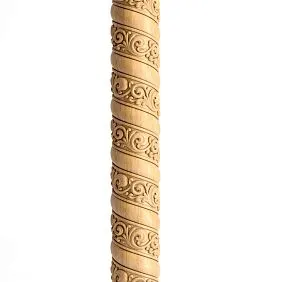
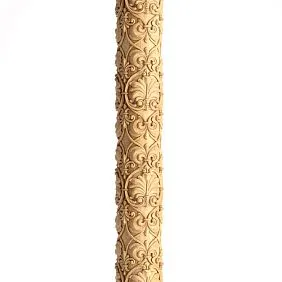
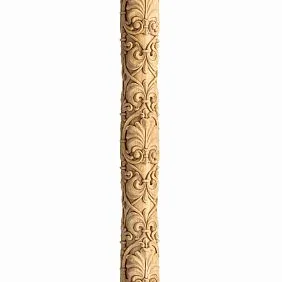
The half-column model PLM-023, presented on the company's website, deserves special attention. This half-column is made from high-quality solid wood and features impeccable proportions and meticulous detailing. It can be manufactured in various sizes and finishes to perfectly match your needs and interior style.
By investing in quality architectural elements from STAVROS Company, you are not acquiring mere interior items, but true works of art that will delight you and your loved ones every day, creating an atmosphere of nobility, comfort, and harmony in your home.
Let your interior reflect your individuality, taste, and pursuit of perfection. Columns and half-columns from STAVROS will help you turn this dream into reality, adding a touch of timeless classicism, proven by time and admired by generations, to your home.