












































































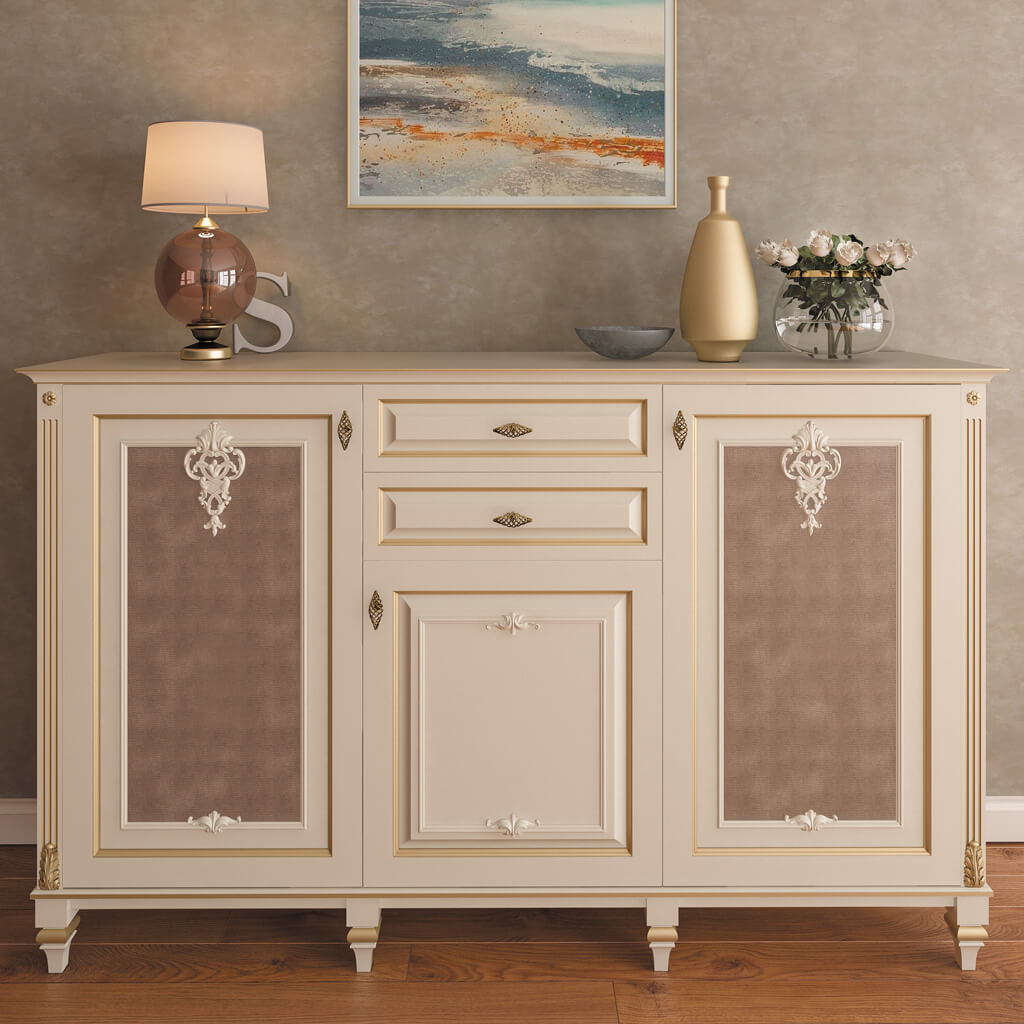

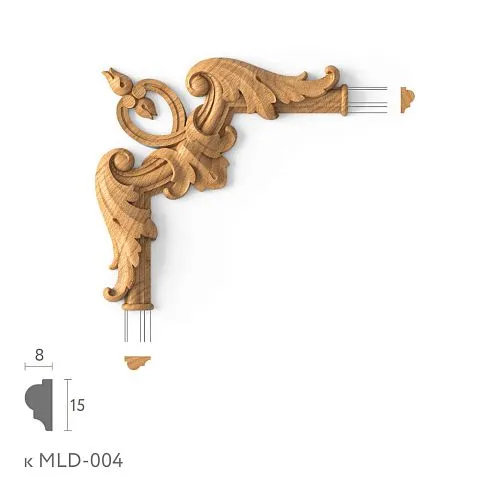
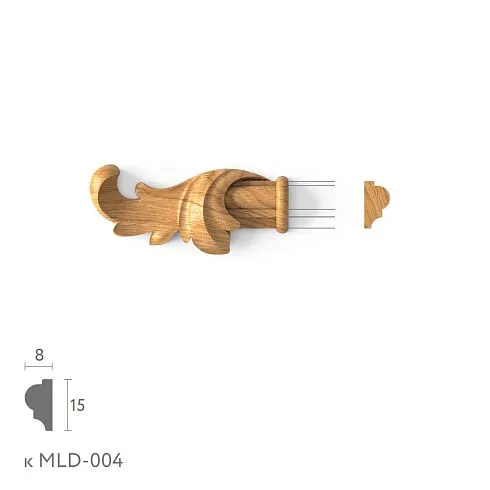
Decorative element MLD-4-1.1
Dimensions and Options
Have questions?
Customers also buy


Yulia Kh.
March 24, 2026
I was satisfied with the quality of the products; we purchased furniture legs. I would especially like to highlight the professionalism of manager Oksana—very client-oriented, competent, and precise specialist. She even arranged additional trimming of some elements as an extra service for us. Huge thanks!
Incognito 7.
March 24, 2026
One of the few firms that is pleasant to interact with on renovation matters. Adequate, responsive managers. Adherence to deadlines. Execution of even complex projects. Bravo! May there be more such firms!!
Marina D.
February 15, 2026
The company ordered the pens for us when we ordered furniture. But I decided to write a review personally because they are amazing! Stylish, expensive, high-quality!
More than 20 years on the market
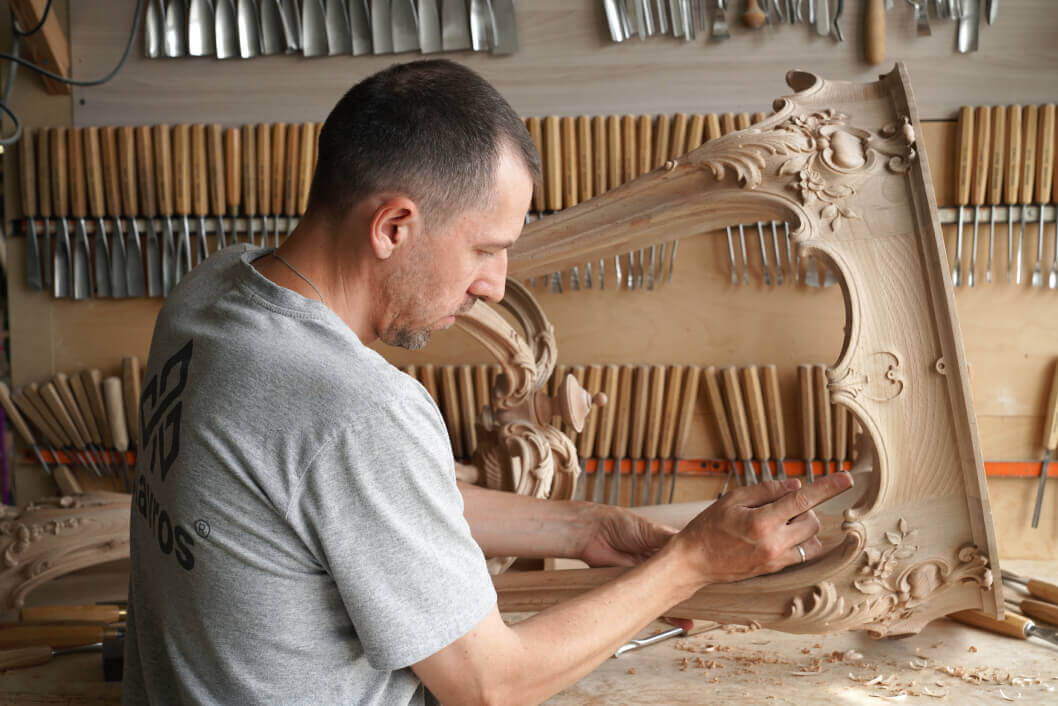
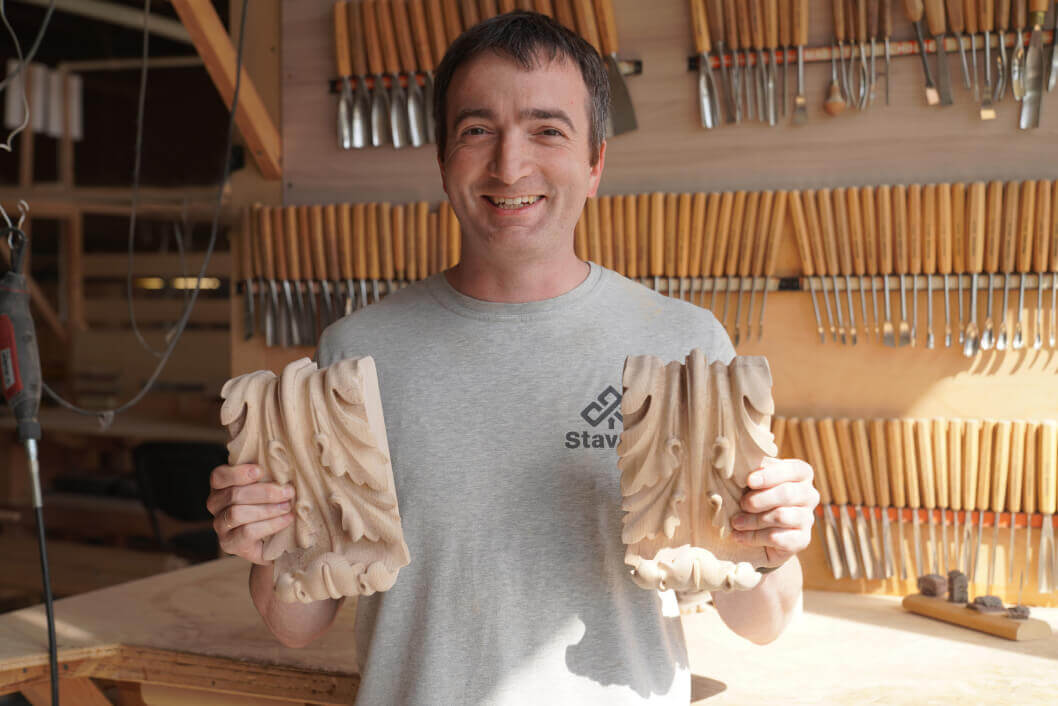
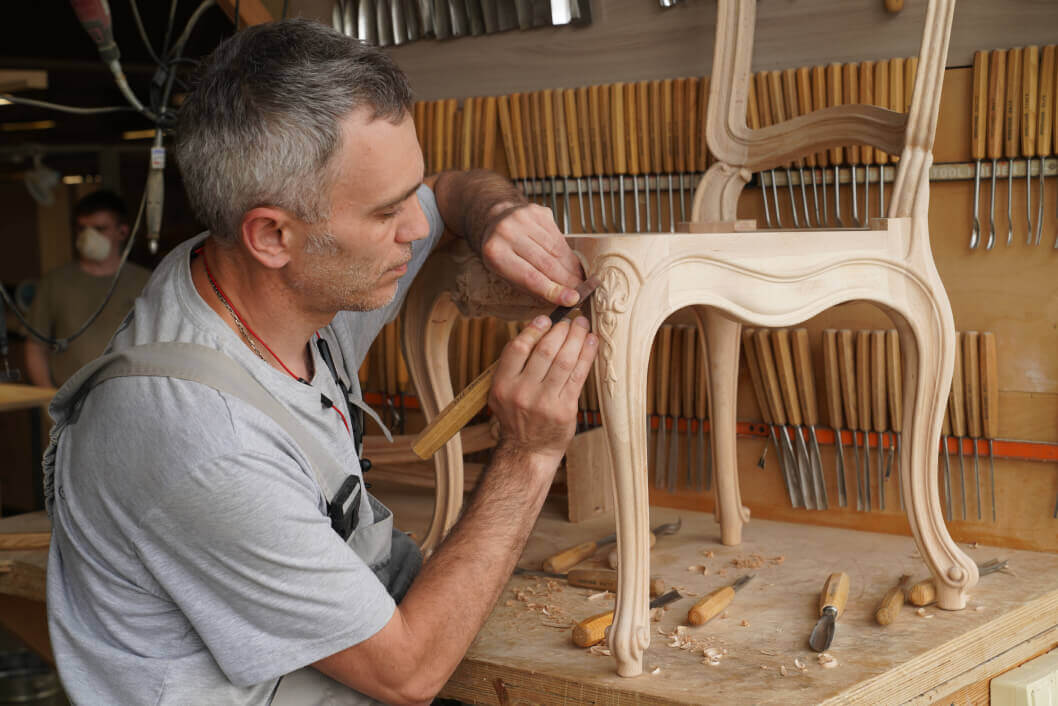
The company's success began in 2002, when two artists — Andrey Ragozin and Evgeny Tsapko — created a small creative workshop for producing wooden carved items. The masters' work was quickly noticed, and within a year they were invited to participate in the reconstruction of the Konstantinovskiy Palace in Strelna.
After the success of this project, the company focused on recreating palace interiors, furniture, church furnishings, and carved decorations in various artistic styles. They worked with cultural heritage sites: The Hermitage, the Alexandrovsky Palace, the Troitsko-Izmaylovsky Cathedral, the Sheremetyevsky Mansion, and many others.
The masters' task — and still is — to create wooden items with the highest level of detail and understanding of every element, based on impeccable knowledge of artistic laws and interior styles.

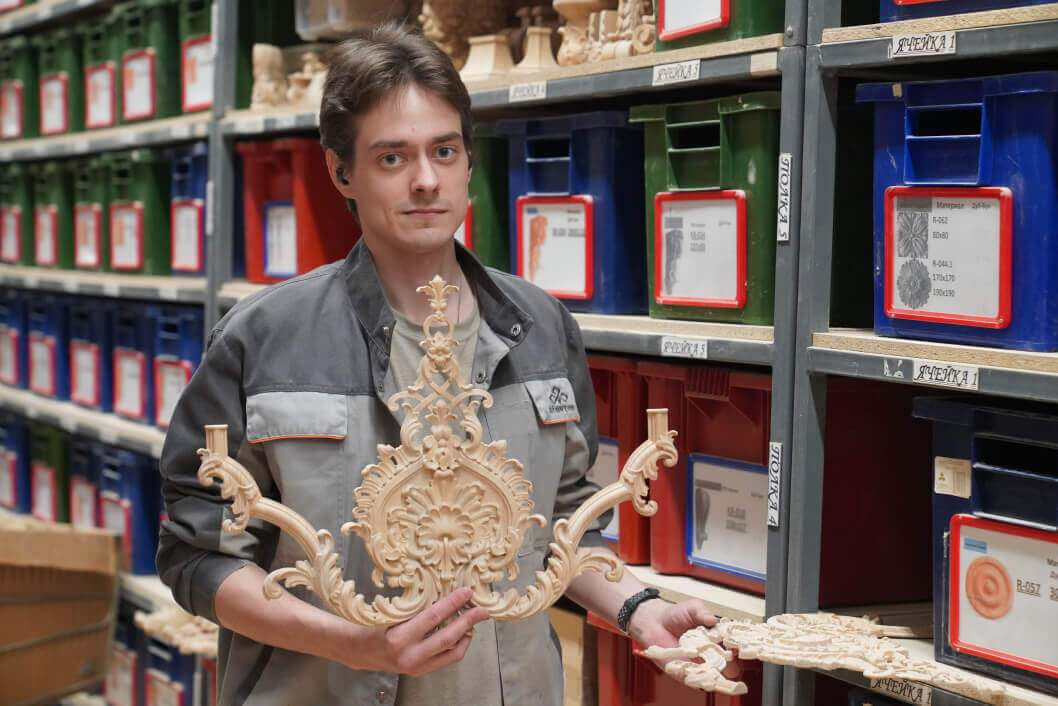
STAVROS Guarantees
Quality of products without complaints
We save your time, peace of mind, and budget
Large warehouse program
We solve your tasks with maximum speed
Adherence to production deadlines
Streamlined process reduces all risks
Delivery from 1 piece throughout Russia
Quality service regardless of order volume
Your positive business reputation
Reliable partner — the foundation of your business
More products in the molding decor category


Frequently asked questions
Our showrooms are located in Saint Petersburg and Moscow. Production is located in Saint Petersburg.
Moscow contacts: https://www.stavros.ru/contacts_all/?tab=msk
Contacts of Saint Petersburg: https://www.stavros.ru/contacts_all/?tab=spb
- Send request by email [email protected]
- Write to us at Telegram
- Write to us at WhatsApp
- Order by phone +7 (800) 555-46-75
- Visit our showroom in Saint Petersburg and Moscow
Yes, we ship orders throughout Russia and to CIS countries.
We cooperate with transportation companies such as СДЭК and DPD.
You can also arrange pickup of your order through any convenient transportation company for you.
Delivery cost depends on the size, weight of the item, and delivery address.
When placing an order, the delivery cost is calculated automatically and displayed as a separate line on our website.
Prices and availability of items on the website are always current. Data is updated daily.
Note: items in stock are stored on the warehouse in unpolished form and shipped within 3 working days.
If the item is not in stock, average production time: 5–10 working days.
This is the quality of polishing of the items.
Standard — machine polishing, at a more attractive price.
Prestige — detailed hand polishing, items do not require further work.
More details: https://www.stavros.ru/information/kachestvo/
This is the type of veneer of the items.
Under enamel: produced by gluing wooden laminates without color and texture matching. Contrast tonal and textural differences are noticeable. This blank should be chosen if the item is intended for opaque coating.
Under tinting: produced by gluing wooden laminates with color and texture matching. Tonal and textural differences may occur. This blank should be chosen if the item is intended for semi-transparent finish.
More details: https://www.stavros.ru/information/kachestvo/
Beech — dense, non-porous wood, most often used for items covered with enamel.
Oak — dense, porous wood with clearly visible natural grain. Due to its strength and decorative properties, it is often used in items with semi-transparent coating, highlighting the wood pattern.
Custom-made, if non-standard items are required, we can produce products from other types of wood, including blanks provided by the customer, manufactured according to our technical specifications.
All our furniture legs can withstand a vertical load of at least 100 kg.
Average production time for custom-made items: 5–10 working days.
Most items are stored on the warehouse in unpolished form. We need time to polish and pack orders.
Yes, we manufacture non-standard items according to individual projects, but we only accept orders with a minimum quantity.
We can manufacture items of the desired size, but we only work with bulk orders. For details, please consult the sales department manager.
Yes, some of our products can be used outdoors. For example, polyurethane items, as well as carved door casings made of pine.
Other items are produced to order using PUR glue, if minimum quantity is available. No warranty is provided for such products, as outdoor conditions are considered aggressive.
Yes, we paint items when ordering products for a total amount of 150,000 rubles or more.
- Dust removal. After sanding, the surface must be dusted.
- Priming. Apply primer in an even layer.
- Matting. After the primer has fully dried, the surface should be matted (lightly sanded for better adhesion).
- Finish coating. Apply finish coating: lacquer or enamel, in 2 layers, with interlayer drying.
More details: https://www.stavros.ru/information/sovety/
Apply adhesive to the decor. Place it on the surface and press briefly. Then, lift the decor from the surface and leave it open for 3–5 minutes. Press the decor firmly onto the surface and hold for 5–10 seconds.
More details: https://www.stavros.ru/information/sovety/
Ideally, you should prepare a design project before placing an order.
You can do this yourself by downloading drawings of our products from our website, or you can order a project from us.
If the number of decorative elements and fittings is small, our company's manager can assist you with selection.
Unfortunately, this service is not provided.
The packaging method depends on the type of items, but in each case, we ensure sufficient protection for safe transportation.
We most often use corrugated cardboard and stretch film. Fragile items are additionally secured on a rigid base to prevent damage during transport.
We ship all items starting from 1 piece.
Room measurements and item installation can be performed by our partners — carpentry companies represented in most regions of Russia.
Often searched in category Wooden and MDF items
7083
2945
2639
1453
1323
1088
858
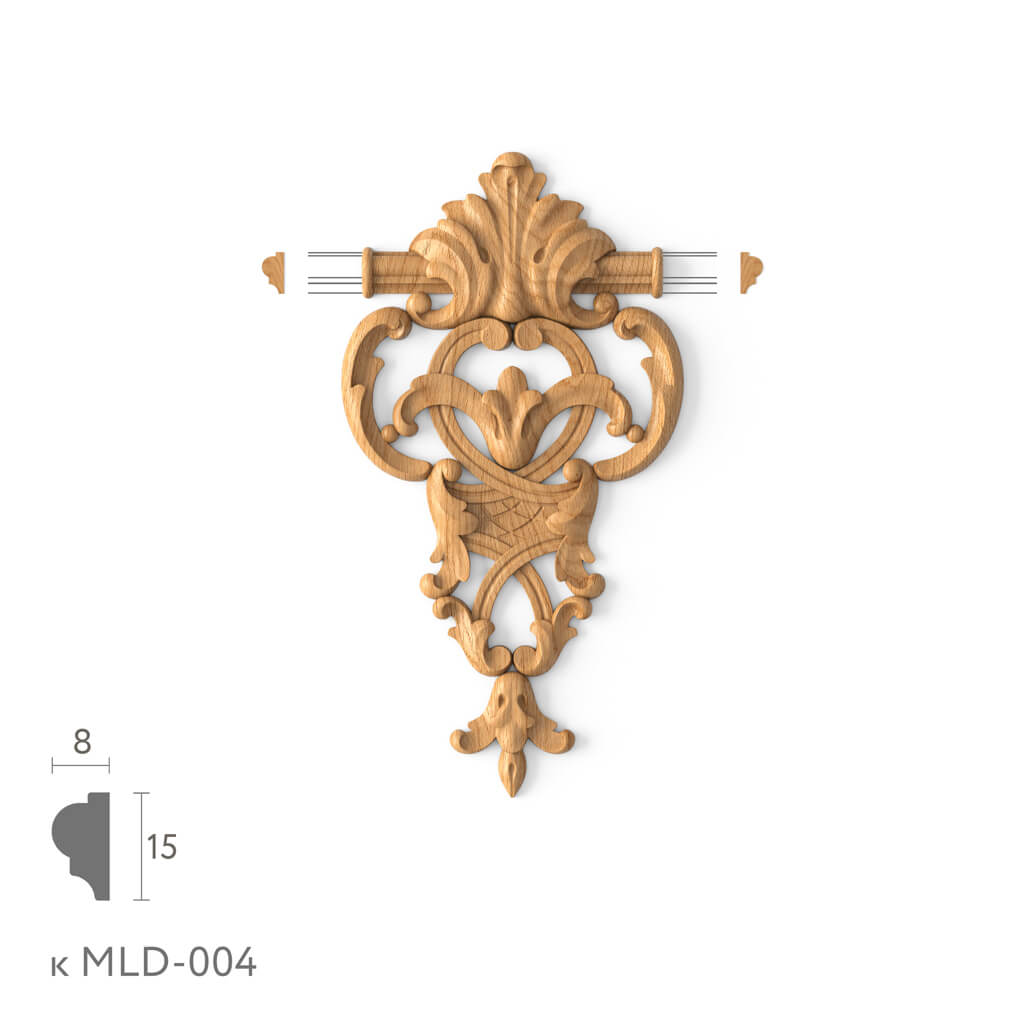
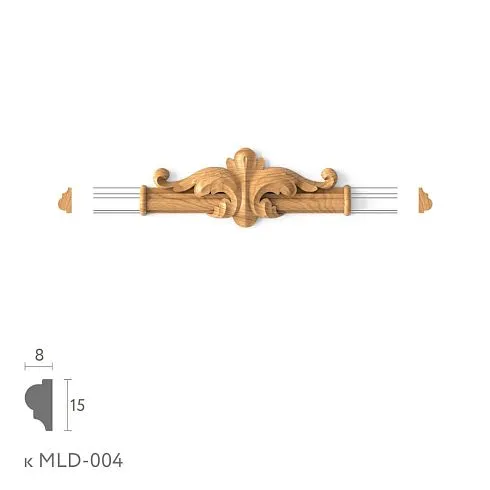
Decorative element MLD-4-1.1 for beech and oak moldings
There are details that don't catch the eye immediately—but they are precisely what defines the character of an entire interior. One properly chosen carved accent can transform an ordinary wall into a thoughtfully designed decorative composition, and a standard furniture facade into a piece you want to examine. The MLD-4-1.1 decorative element is exactly such a detail. This carved wooden decor for moldings, sized 232 × 124 × 14 mm and made from natural beech or oak, has become a professional tool for everyone creating interiors with a claim to genuine quality.
The product is suitable for decorating wall panels with moldings, furniture facades, doors, decorative frame layouts, and interior niches. It is produced in two versions—Standard and For Enamel—and works equally well both in projects with natural wood finishes and in classic white interiors intended for painting.
What is the decorative element MLD-4-1.1
If you try to describe this product in one phrase—it's an overlay carved accent that integrates into a decorative molding system and instantly elevates it to another level. But behind this brief description lies a thoughtful structural logic, understandable to anyone who has ever worked with classic decor.
The MLD-4-1.1 decorative element is an overlay detail made of solid wood with a relief ornament, installed as part of decorative layouts on walls, furniture panels, door leaves, and facades. The product serves as a central or accent element in a molding system: it is not a molding itself, but it is precisely what gives the entire layout meaning and completeness.
Why is this important? Because a molding without a decorative central accent is just a frame. Add a carved overlay element to it—and you already have a full-fledged interior panel. This is exactly the logic underlying the classic decorative school, which never goes out of style: each element carries its own function, and together they form a holistic image.
Decor for MoldingMade from natural wood—a category where the MLD-4-1.1 product occupies a stable niche. This is not a universal element for all occasions, but a precisely designed detail for a specific task: visually enriching decorative layouts on walls, furniture, and doors in classic and neoclassical styles.
Purpose: why this is specifically decor for moldings
In the interior professional environment, the word 'molding' means more than just a profiled strip. A molding is an element of a decorative system that operates on a modular principle: straight horizontal and vertical strips form a frame, and inside this frame, a central or accent decorative element is placed. This is exactly the role performed by the MLD-4-1.1 model.
The product is used as an accent insert within decorative framing — where it's necessary to fill the space between moldings with an expressive carved detail, without overloading the surface. This type of decorative molding overlay is particularly in demand in the following scenarios:
-
Wall layouts — rectangular decorative fields on walls, framed by moldings with carved accents inside
-
Furniture fronts — doors of cabinets, sideboards, buffets, and dressers with decorative frames and ornamental inserts
-
Door panels — doors with milling or applied decor in a classic style
-
Interior niches and panels — decorative inserts for visually enriching flat surfaces
-
Decorative mirror frames and portals — the product organically complements complex multi-component structures
A carved element for wall moldings of this format allows the designer to work not in a point-by-point manner, but systematically: to select decorative elements from a unified line, to create spaces that are coordinated in proportions and ornamental logic. This is the professional approach to decorative finishing.
Size, shape, and design features
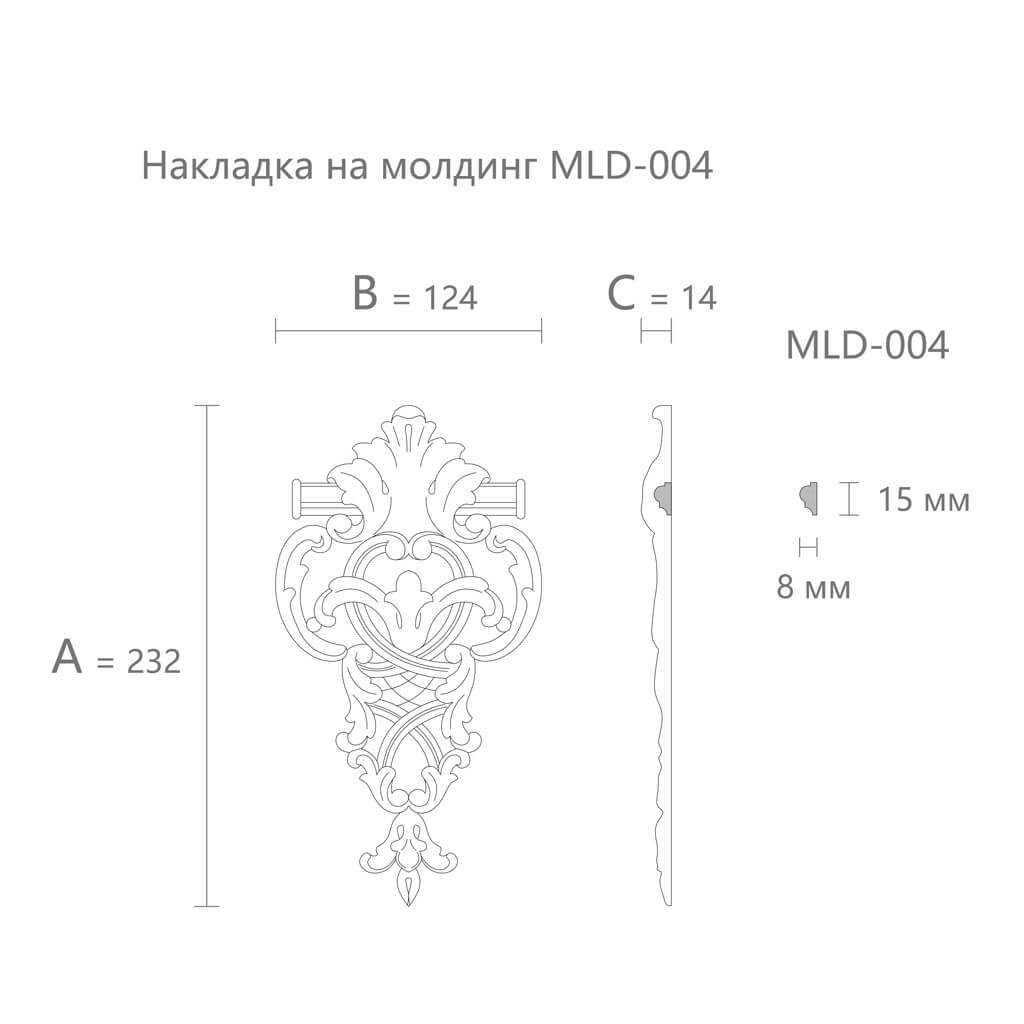
Product parameters: 232 × 124 × 14 mm
The size of decorative element MLD-4-1.1 is 232 × 124 × 14 mm. These numbers carry more meaning than might appear at first glance.
The aspect ratio of 232 × 124 mm is an elongated rectangular format, almost exactly a 2:1 ratio. This proportion has historically been one of the most harmonious in decorative art: it easily fits into vertical panels, creates a dynamic rhythm in horizontal layouts, and does not disrupt the balance in mixed compositions. The decorative element measuring 232 × 124 × 14 mm is equally suitable for narrow wall sections and wide furniture fronts.
The 14 mm thickness is a fundamental parameter. The product is not a flat sticker: it is a three-dimensional part with a relief profile that creates a play of light and shadow on the surface. At the same time, 14 mm is a sufficiently delicate depth to not overload the decorative plane with excessive volume. The neat relief is clearly legible, does not dominate over moldings, and does not enter into visual conflict with other decorative details.
Why the product format is convenient for work
The elongated rectangular format is convenient for several key tasks. Firstly, it organically fits into vertical decorative layouts—for example, in narrow wall panels or vertically oriented fronts. Secondly, two such elements placed horizontally form a balanced symmetrical composition on a wide surface. Thirdly, the size of 232 × 124 mm is large enough for the element to be read as an accent, yet it does not overlap adjacent moldings.
A decorative insert of this scale is a working tool in the hands of a designer and a carpenter. It does not dictate rigid conditions but provides the opportunity to form a composition by varying the number and placement of elements depending on the task.
Materials: beech and oak
The choice of wood species for the decorative element is not merely a technical decision. It is an aesthetic choice that directly influences the character of the finish, the durability of the product, and the overall visual appearance of the entire project.
Beech: the perfect base for enamel and paint
Beech is a species with a dense, uniform structure and fine-grained texture. It is precisely this uniformity that makes it the first choice where an impeccably smooth surface for enamel, paint, or primer is needed. A decorative element made of beech does not have pronounced resin canals or large pores, which ensures even and predictable absorption of paint and varnish materials.
Practically, this means the following: when applying white enamel to a beech surface, you get an even, smooth coating without stains or uneven absorption. This is fundamentally important for furniture manufacturers and carpentry workshops, where the quality of painting directly affects the class of the finished product.
Decorative element made of beech— the optimal solution for white classic furniture, enameled kitchen sets, door panels for painting, and wall moldings in light interiors. If the project involves multi-layer painting or enamel application — beech will deliver the best result.
It is worth noting separately that beech responds well to mechanical processing: sanding, milling, and on-site fitting. This makes it a convenient material for joinery work of any complexity.
Oak: natural texture and premium appearance
Oak is a species with a fundamentally different character. Expressive, slightly rough texture with clearly visible fibers, high density, and natural strength — all this makes oak a material with a pronounced individuality.
Wooden decor made of oak looks different than beech decor: not just as a painted detail, but as an element with history and character. This is precisely why oak is chosen where one wants to emphasize the naturalness of the material, preserve, and enhance the natural wood texture. Under tinting, oil, wax, or clear varnish, an oak element reveals itself fully.
Decorative element made of oakis appropriate in studies with wooden paneling, libraries, dining rooms with classic furniture, hunting-style interiors, and spaces where the image of solidity and naturalness is important. Oak decorative overlays fit organically into custom furniture, handmade items, and restoration projects where matching the historical wood species is required.
Material comparison: how to choose correctly
If you are designing a light classic interior with white furniture and enameled fronts — choose beech in the Under enamel finish. If your project involves natural wood finishing, tinting, or working with the wood's natural color — oak will be the best solution. Both options are made from solid natural wood and meet high-quality standards.
Finishes: Standard and Under Enamel
Two finish options for one model — this is not a marketing gimmick, but a practically significant difference that affects the entire finishing process and the final result.
Standard finish
The Standard option involves standard surface sanding while preserving the natural texture of the material. This finish is suitable for those who plan to independently control the entire finishing process: applying tinting, oil, wax, varnish, or natural-based paint.
The Standard finish is chosen by:
-
carpentry workshops with their own finishing section
-
furniture manufacturers who apply coatings as part of their technological process
-
decorators working with custom finishing formulations
-
private clients who prefer the natural look of wood
The Standard option is a high-class blank with a relief ornament, ready for any type of finishing coating.
For Enamel finish
The For Enamel finish is a fundamentally higher level of surface preparation. The product surface undergoes additional fine sanding, the smallest defects are eliminated, and pores are partially sealed to ensure the smoothest possible application of enamel paints.
A decorative element for enamel is a ready-made part for direct priming and painting. It does not require additional finishing, which saves working time and reduces primer consumption. For production lines where speed and predictability of results are no less important than quality, this is a tangible advantage.
Why is under-enamel primer especially relevant for classic interiors? Because white or cream enamel on furniture fronts is a standard of classic style. Any uneven absorption, stain, or texture variation on the surface under the enamel becomes visible defects. The Under-enamel primer execution eliminates this risk and guarantees a visually flawless result.
Where is the decorative element MLD-4-1.1 used?
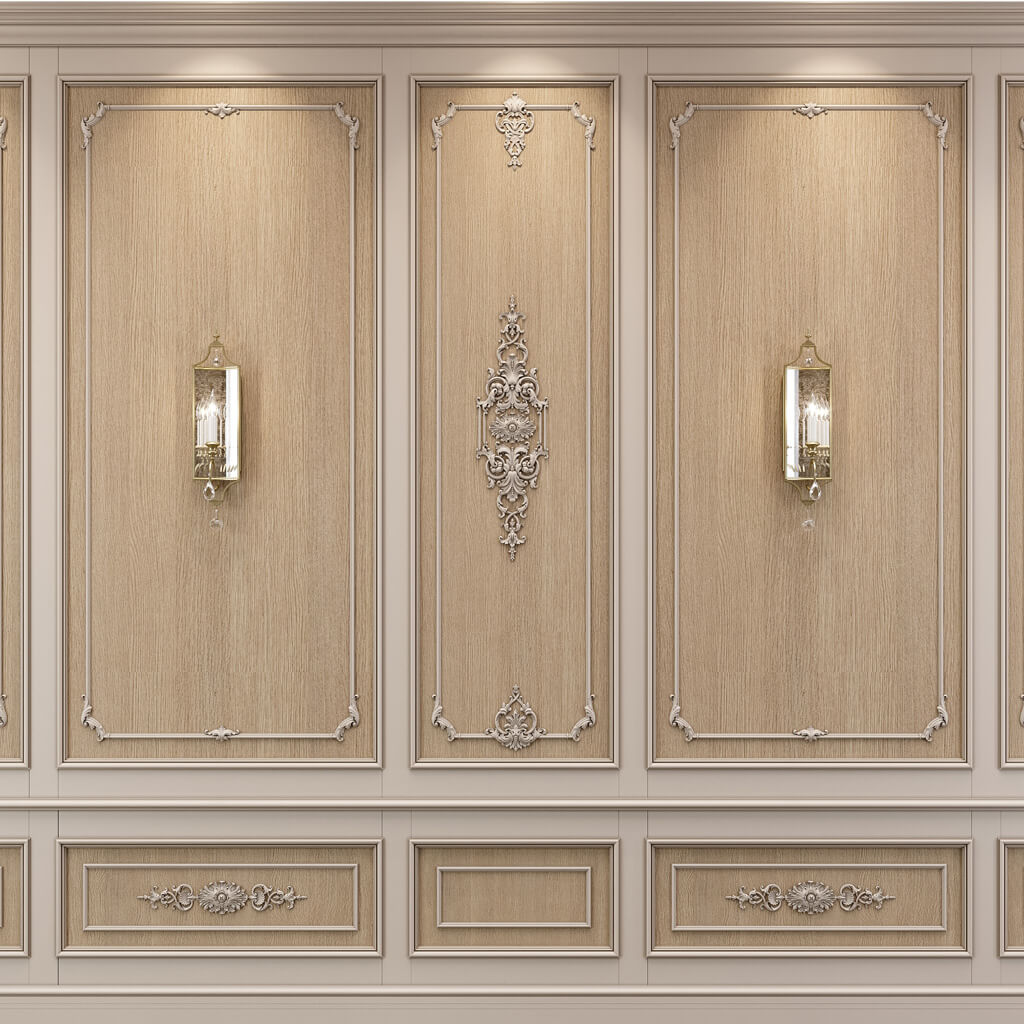
Wall panels with moldings
This is perhaps the most natural application for the product. Wall paneling with moldings is a classic decorative finishing technique experiencing a steady revival in modern interiors. Horizontal and vertical moldings form rectangular fields on the wall, and inside these fields, a decorative insert is placed — exactly like MLD-4-1.1.
A carved element for wall moldings creates a visual focal point within the frame: the gaze lingers on the ornament, reads the depth of the relief, and senses the attention to detail. This is precisely the effect for which classic decor exists.
Decorative wall finishing
In addition to being integrated into a molding system, the product can be used as a standalone accent element on a wall. A group of such overlays, arranged in a certain rhythm, creates a subtle decorative texture on the surface. This is especially relevant for halls, living rooms, and bedrooms in classic style, where the wall should not just be a background, but part of the decorative concept.
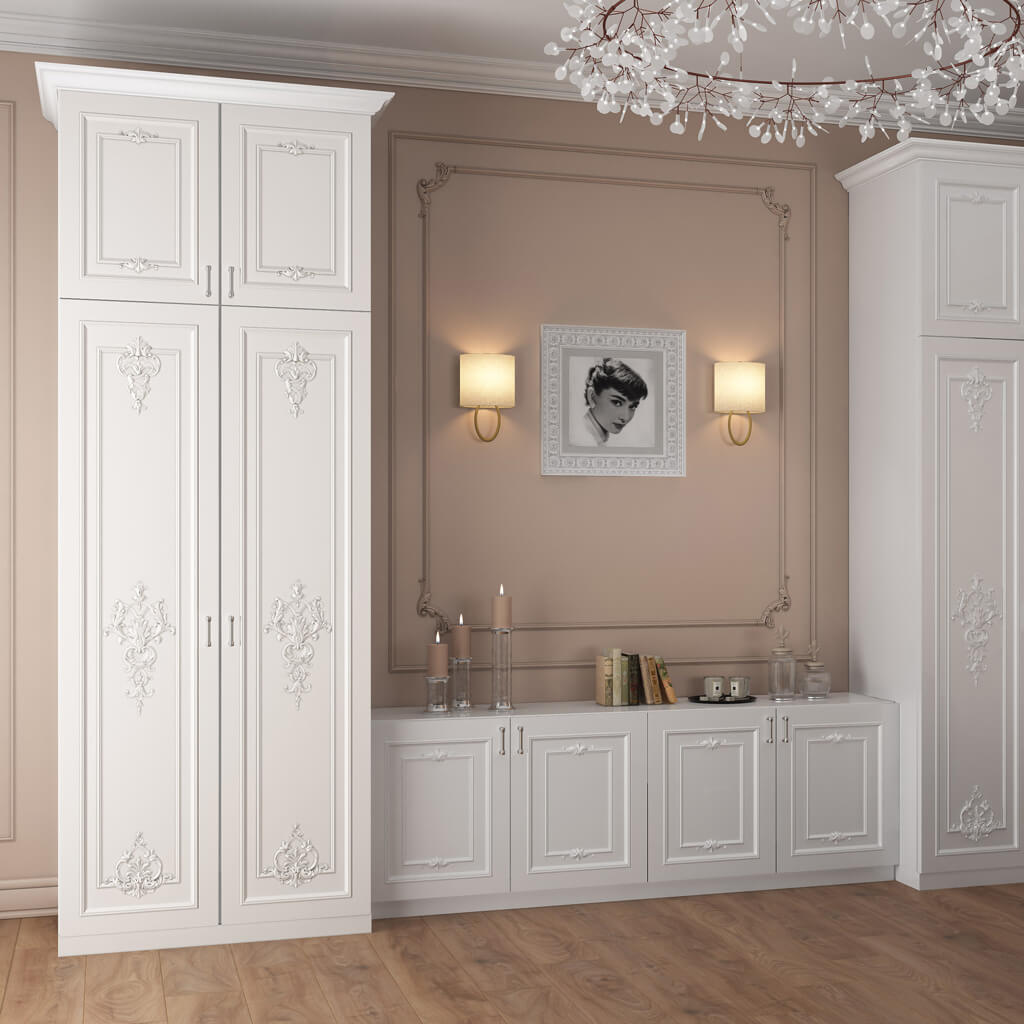
Furniture facades
Decor for furniture fronts is a separate and very important area of application. Furniture in classic style without carved details looks unfinished.to buy, which will allow you to transform your furniture using carved wooden elements. You can use the C-003-3 decor set to decorate furniture, walls, doors, or any other surface. The C-003-3 decor set is made of oak or beech, known for their strength, durability, and beauty. You can buy the C-003-3 decor set at the Stavros decor store, which specializes in producing and selling decorative elements and hardware for furniture and interiors. At the Stavros decor store, you will find a wide selection of decor sets of various shapes, sizes, and styles. You can chooseIt adds volume, relief, and stylistic identity to the front.
The MLD-4-1.1 product is installed on cabinet doors, fronts of nightstands, dressers, and sideboards — as a central ornamental accent within a frame layout or as a standalone overlay decor. Combined with moldings forming the perimeter of the front, the element creates a professional decorative solution that distinguishes custom furniture from mass-produced.
Doors
Interior doors in classic style are traditionally finished with overlay decorative details. Decor for doors made of natural wood is one of the most advantageous investments in an interior: a door occupies a significant part of the visual field and is perceived as an architectural element, not just a functional object.
The MLD-4-1.1 element integrates seamlessly into the overlay decorative system for door panels: it is installed in the central zone between moldings and creates an ornamental accent that is visible from a distance and adds nobility to the door.
Interior niches, mirror frames, and portals
Decorative interior niches, mirror frames, fireplace portals—all these structures benefit from the use of carved overlay details. A wooden decorative element integrated into such a structure creates a sense of handcrafted work and expensive craftsmanship, even if the main structure is made from more affordable materials.
Custom carpentry and designer projects
A decorative element for moldings made from solid natural wood is an indispensable component in custom carpentry projects. A craftsman or designer creating custom furniture or panels uses such products as ready-made ornamental details, eliminating the need to mill complex reliefs by hand. This saves time without compromising quality.
Advantages of the MLD-4-1.1 model
Discussing the advantages of a decorative product abstractly is unproductive. Let's be specific.
Solid natural wood without compromises
The product is made from solid beech or oak wood. No laminated boards, MDF substrates, or polymer components. This is important not only from an aesthetic standpoint—solid natural wood ensures reliable fastening, does not deform with proper use, and maintains its geometry for decades.
Relief ornament with depth and shadow
A 14 mm thickness creates sufficient volume for expressive relief. This is not a flat decorative sticker—it is a carved overlay element that comes alive through the play of light and shadow. Depending on the lighting angle, the pattern reads differently, giving the surface dynamism.
Integrates into any decorative system
The MLD-4-1.1 model is designed as an element of a decorative system, not as an isolated product. This means it easily pairs with moldings, cornices, pilasters, rosettes, and other overlay parts from the unified line. You don't select elements by trial and error—you work with a coordinated system.
Two materials and two finishes for different tasks
Four variants of one product (beech/standard, beech/under enamel, oak/standard, oak/under enamel) is not complicating the choice, but professional flexibility. Each specialist selects exactly the variant that meets the requirements of the specific project.
Suitable for furniture, walls, and doors
Versatility of application is a real advantage. One product type covers decorative needs for three fundamentally different surfaces. For furniture manufacturers and finishing companies, this means simplified logistics and standardized assortment.
Durability of natural wood
Wooden decorative overlays made from solid wood, with proper use, are not inferior in durability to the main structural elements of furniture. They do not crumble, delaminate, or lose geometry—unlike MDF or polyurethane analogues, which are prone to mechanical damage and deformation with humidity changes.
What to combine the decorative element MLD-4-1.1 with
A professional decorator works not with individual elements, but with systems. Understanding the principles of compatibility is the key to creating an interior that looks like a unified whole, not a collection of disparate details.
Moldings are linear profiles used to create framed compositions, zone walls, and frame openings. They come in various widths (from 20 to 150 mm) and relief complexity — from smooth to richly decorated.
Solid wood decorative moldings— this is the foundation of any classical decorative layout. Moldings form the perimeter of the decorative field, and the element MLD-4-1.1 fills this field with an ornamental accent. Properly selected moldings in width and profile create a proportional frame for the carved insert.
Crown mouldings
Cornice moldings in the upper part of a wall or furniture case create a horizontal decorative tier. Combined with carved overlay elements on the panels below the cornice, a multi-level decorative system is formed — precisely the kind characteristic of high-end classical interiors.
Pilasters
Decorative pilasters on the sides of furniture cases or doorways are a classic architectural technique. Combined with carved inserts, they create a sense of a columnar order, transferred to an interior scale.
Rosettes
Central decorative rosettes and corner elements form a system with carved inserts: the rosette occupies the center of the composition, the corner elements fix the corners of the frame, and the overlay detail MLD-4-1.1 adds an ornamental accent in the field between them.
Decorative overlays and trim elements
Overlay decorative details of different types are components of a single decorative 'grammar'. A specialist working with classical decor combines them according to the principle of consistency: a unified ornamental style, compatible proportions, similar relief. This is why products from a single line yield better results than an assembly from different sources.
For which interior styles the product is suitable
Classic
A classical interior is symmetry, moldings, carved details, natural wood, and noble materials. The decorative element MLD-4-1.1 was created precisely for this context. It organically fits into the classical decorative system and does not require stylistic justification — it is simply in its place.
Neoclassicism
A neoclassical interior is a modern reinterpretation of classical forms: fewer details, cleaner lines, more air. A carved overlay element in a neoclassical space works as the sole decorative accent on a neat, restrained wall — and that is precisely why it is especially noticeable and valuable.
Palace and Baroque style
In interiors with rich decor, gilding, and multi-level compositions, the decorative insert MLD-4-1.1 is one of many ornamental elements. Here, the consistency of the ornament with the entire decor system is important: a carved wooden element under enamel with gilding or in combination with stucco looks organic.
Traditional interior
Russian traditional interior with wooden panels, solid wood furniture, and an emphasis on natural materials is another environment wherewooden interior decormade of beech and oak feels like an absolutely natural solution. Here, the oak version with tinting or natural varnish is especially appropriate.
Custom and study furniture
In handmade furniture, decorative details made of solid natural wood are not an option but a standard. A custom library cabinet, a writing desk with carved decor, a wardrobe with classic fronts — in all these products, the decorative element MLD-4-1.1 becomes the master's signature.
Why wooden decor for moldings is the right choice
The market for decorative elements today offers a huge selection of materials: polyurethane, MDF with PVC coating, plaster, polystyrene. So why do professionals consistently return to natural wood?
An aesthetic that cannot be faked
Wood is a living material. Its texture, color, and tactile qualities are unique in every piece. No synthetic alternative fully reproduces this sensation. In an interior where the decision has been made to use natural materials, wooden decor is not just appropriate but essential: it creates a conceptual unity of space.
Functionality in work
Natural wood is easily adaptable on-site: it can be cut to length, its angles adjusted, and it can be additionally sanded. This is critically important when working with non-standard surfaces or in restoration projects, where the precision of fit is no less important than the visual effect.
Durability with proper use
Wooden overlay decor, with proper coating application and adherence to operating conditions, lasts for decades. It does not crumble under mechanical stress like polyurethane, does not delaminate like MDF in high humidity, and does not lose its geometry with temperature fluctuations—if the finishing is done professionally.
Restorability
A wooden decorative element can be restored: repainted, sanded, minor damages repaired. Synthetic analogues, as a rule, require complete replacement in case of serious damage. For objects with long-term value—residential houses, restaurants, hotels—this is an important argument in favor of natural wood.
The status of a natural material
In the segment of classic and neoclassical interiors, natural wood is a marker of quality and taste. Clients and end-users who understand interiors can distinguish solid wood from imitation. Using wooden decor made of beech or oak is an argument for genuine quality, which enhances the perceived value of the entire project.
Who is the decorative element MLD-4-1.1 suitable for
For furniture manufacturers
For serial and small-scale production of classic furniture, decorative elements made of natural wood are standard consumables. The MLD-4-1.1 product is suitable for installation on cabinet fronts, dressers, kitchen sets, hallways, and any other classic-style case furniture. The availability of the Under enamel option simplifies the integration of the element into the painting production process.
Interior designers
A designer working in classic or neoclassical style is constantly looking for decorative details that match their vision and can be easily integrated into the project.Solid wood decorative elementsfrom a unified line is a tool that allows creating coordinated decorative systems without the need to develop details from scratch each time.
For carpentry workshops
A workshop specializing in custom furniture and wooden construction manufacturing uses ready-made decorative overlays as a working element. This significantly reduces labor costs for manually milling complex ornaments while ensuring a high level of decorative expressiveness.
For architects and decorators
When developing decorative systems for walls, panels, and interior architectural details, carved wooden decor made of natural wood is a standard component. The MLD-4-1.1 product is suitable for projects of any scale—from a single decorative field on a wall to multi-level panel systems in large spaces.
Private clients
A person decorating their own house or apartment who wants to use natural materials for classic wall or furniture decor will find this product meets their needs. A decorative element for beech or oak moldings is a purchase that will last long and delight with its appearance for as long as the interior itself exists.
For restorers
Specialists in furniture and interior structure restoration need decorative details made of natural wood that match the material and character of the original elements. Carved wooden decor made of beech and oak allows performing such replacement without disrupting the overall style of the restored item.
Technical Specifications
| Parameter | Value |
|---|---|
| Model | MLD-4-1.1 |
| Product type | Decorative element |
| Purpose | Decor for moldings |
| Size | 232 × 124 × 14 mm |
| Material | Beech / Oak |
| Finish | Standard / Under enamel |
| Application | Walls, furniture, doors, facades, panels |
| Style | Classic, neoclassical, traditional interior |
Decorative element MLD-4-1.1 and classical interior decor system
Professionals working with classical decor understand well: an interior is a system, not a collection of random details. The beauty of a classical space is formed not by individual items, but by the logic of their interaction, the harmony of proportions, ornaments, and materials.
The decorative element MLD-4-1.1 was created as part of precisely such a system. It does not exist on its own—it works in tandem with moldings, cornices, corner and central elements. By purchasing such parts from a single source, from a single product line, you get a guarantee of consistency: identical relief, identical profile depth, compatible proportions.
This is the professional approach to decorative finishing. Not an attempt to assemble similar parts from different sources, but working with a line of products designed as a unified whole.
Questions and answers
What is the decorative element MLD-4-1.1 used for?
The product is intended for use as a central or accent decorative element in a molding system. It is installed on wall panels with molding layouts, furniture facades, door leaves, and in decorative interior compositions of classic and neoclassical style.
Is this element suitable for moldings?
Yes, this is the primary purpose of the product. The decorative overlay for molding MLD-4-1.1 is designed as an accent inlay element that is installed inside the decorative frame formed by moldings. The product is stylistically and ornamentally consistent with other elements of the classic line of decor.
Can the product be used for wall panels?
Yes. The carved element for wall moldings MLD-4-1.1 is widely used in wall layouts. It is installed inside rectangular decorative fields formed by moldings and creates an ornamental accent on the wall surface. The size of 232 × 124 mm provides sufficient expressiveness for a legible decorative accent.
How does the beech version differ from the oak version?
Beech has a homogeneous fine-grained structure, is ideal for enamel and painting, and ensures even absorption of paint and varnish materials. Oak has a more expressive natural texture, high density, and a characteristic visual appearance that is better revealed under tinting, oil, or clear varnish. The choice of wood species is determined by the nature of the finish and the style of the project.
Is the product suitable for enamel?
Yes. The 'For Enamel' finish is specially prepared for applying enamel paints: the surface has undergone additional fine sanding and does not require finishing before priming. This is the most in-demand option for furniture manufacturers and finishing companies working with white classic facades.
Where is it best to use the size 232 × 124 × 14 mm?
This format is most appropriate in vertical decorative layouts on walls, on medium-sized furniture facades, as well as in door leaf frames. The 14 mm thickness provides a neat three-dimensional relief without visually overloading the surface.
Is the decorative element suitable for a classic interior?
Yes, classic and neoclassical interiors are indeed the primary environment for using the product. The carved ornament, solid natural wood, and the principle of overlay decor are the basic components of the classic decorative system, into which MLD-4-1.1 organically integrates.
Can it be combined with furniture facades and wall moldings?
Yes, these are two key application scenarios. The product works equally well on furniture facades (cabinet doors, dresser fronts, kitchen units) and in wall layouts with moldings. In both cases, it serves as an ornamental accent inside a decorative frame.
Is the product suitable for restoration and decorative projects?
Yes. A decorative element for restoration made of natural wood is exactly what is needed for restoring or complementing furniture and interior structures with historical value. Natural solid beech or oak ensures compatibility with original materials and allows for professional restoration without stylistic compromises.
Why choose wooden decor for moldings?
Because natural wood is not just a material, it's a quality that is visible and tangible.wooden interior decorIt possesses durability, aesthetic uniqueness, and functionality that synthetic counterparts cannot replicate. A decorative element made of solid wood is an investment in interior quality that pays off with years of flawless appearance.
Summary: decorative element MLD-4-1.1 as a professional tool
The decorative element MLD-4-1.1 is not just a beautiful wooden detail. It is a tool for creating a classic interior, thoughtfully designed in terms of proportions, material, execution, and compatibility with other decorative elements. Size 232 × 124 × 14 mm, two material choices—beech and oak, two execution options—Standard and Under enamel: all this gives the specialist a full range of choices without unnecessary complexity.
The product will find application in the hands of a designer, carpenter, furniture manufacturer, or attentive private client. It works on walls, facades, and doors, fits into classic and neoclassical styles, pairs with moldings, cornices, and pilasters, withstands enamel and natural varnish finishes. This is a product made of natural solid wood that lasts long and looks dignified—exactly what is needed for decorative finishing where there is no room for compromise.
Your request has been sent!
Our manager will contact you within 5 minutes