












































































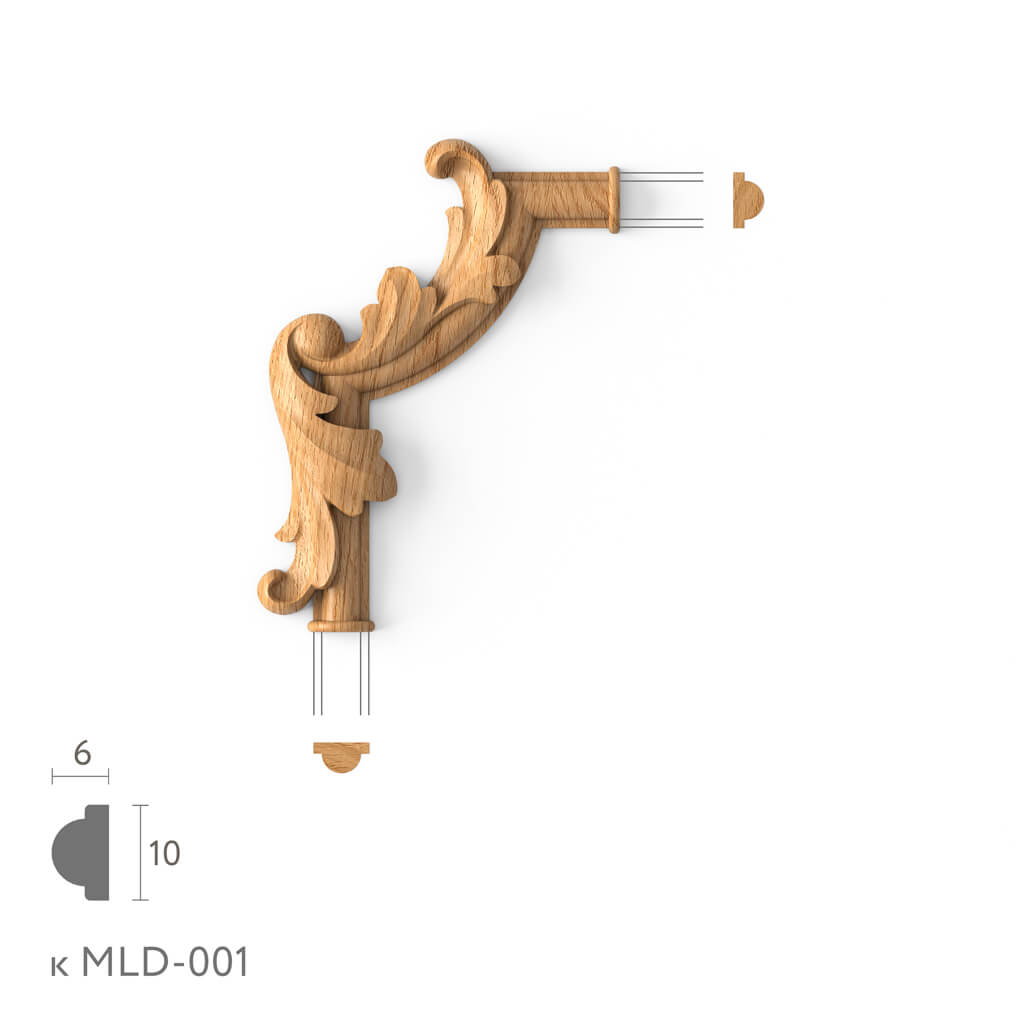

Corner decorative element MLD-1U-2.1L
Dimensions and Options
Have questions?
Customers also buy
 In stock
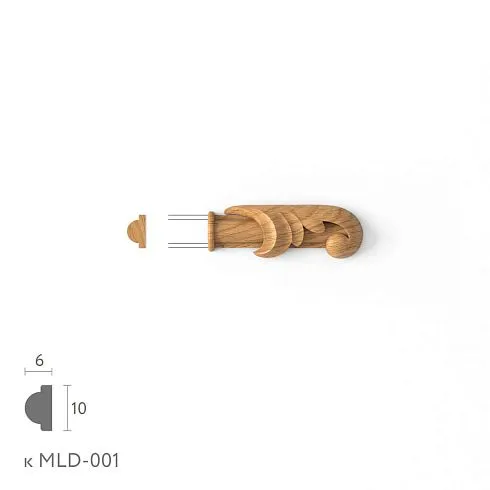
Carved molding tip N-438.1R kit for MLD-001
from 3.43 $
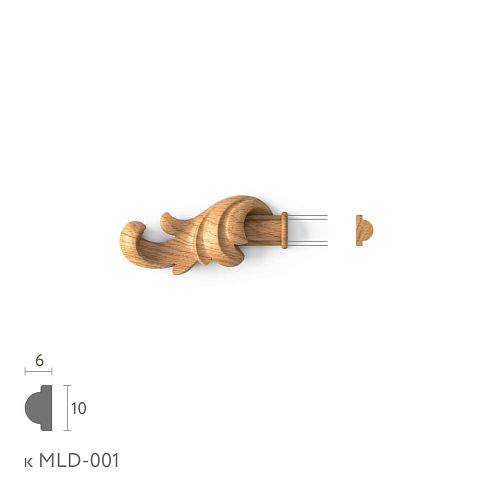 In stock
Carved tip for molding N-362.1L kit for MLD-001
from 4.57 $
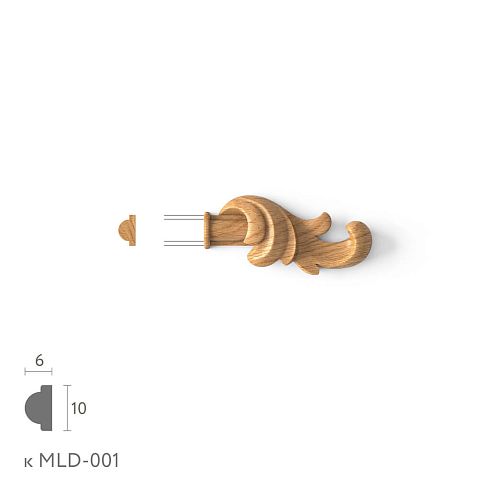 In stock
Carved molding tip N-362.1R set for MLD-001
from 4.57 $
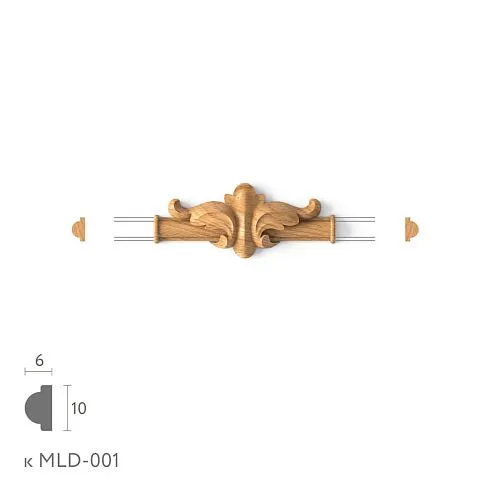 In stock
Connector decorative element N-398.1
from 8.89 $
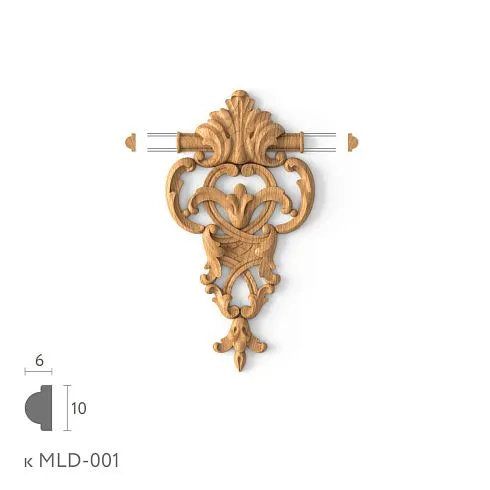 In stock
Decorative element MLD-1-1.1
from 14.73 $

Yulia Kh.
March 24, 2026
I was satisfied with the quality of the products; we purchased furniture legs. I would especially like to highlight the professionalism of manager Oksana—very client-oriented, competent, and precise specialist. She even arranged additional trimming of some elements as an extra service for us. Huge thanks!
Incognito 7.
March 24, 2026
One of the few firms that is pleasant to interact with on renovation matters. Adequate, responsive managers. Adherence to deadlines. Execution of even complex projects. Bravo! May there be more such firms!!
Marina D.
February 15, 2026
The company ordered the pens for us when we ordered furniture. But I decided to write a review personally because they are amazing! Stylish, expensive, high-quality!
More than 20 years on the market
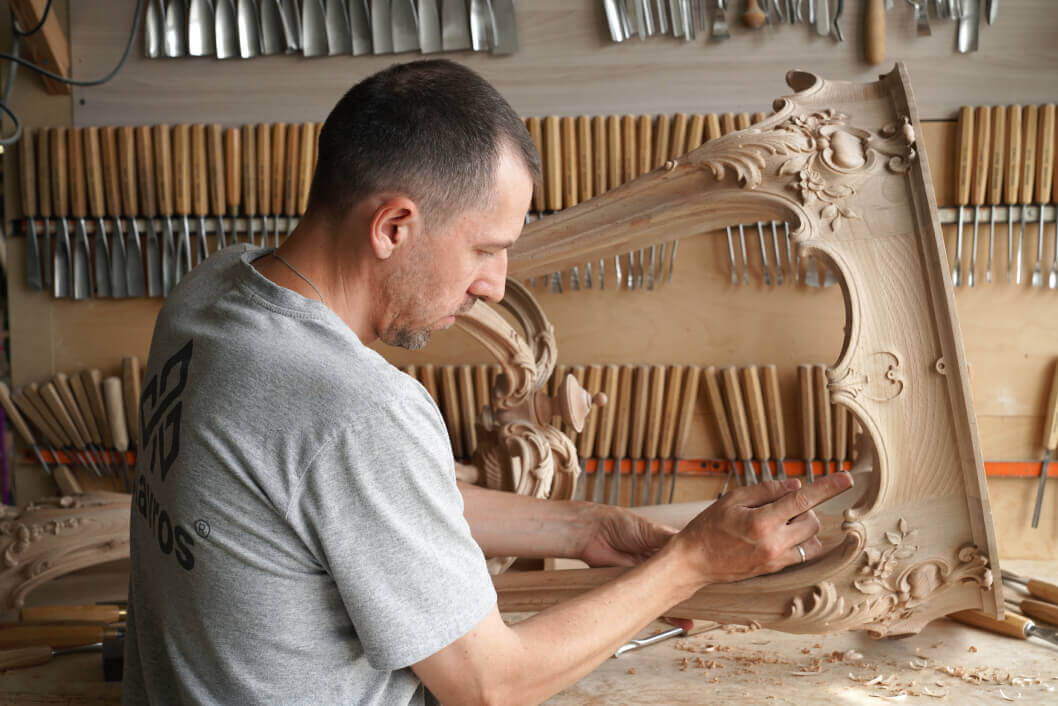
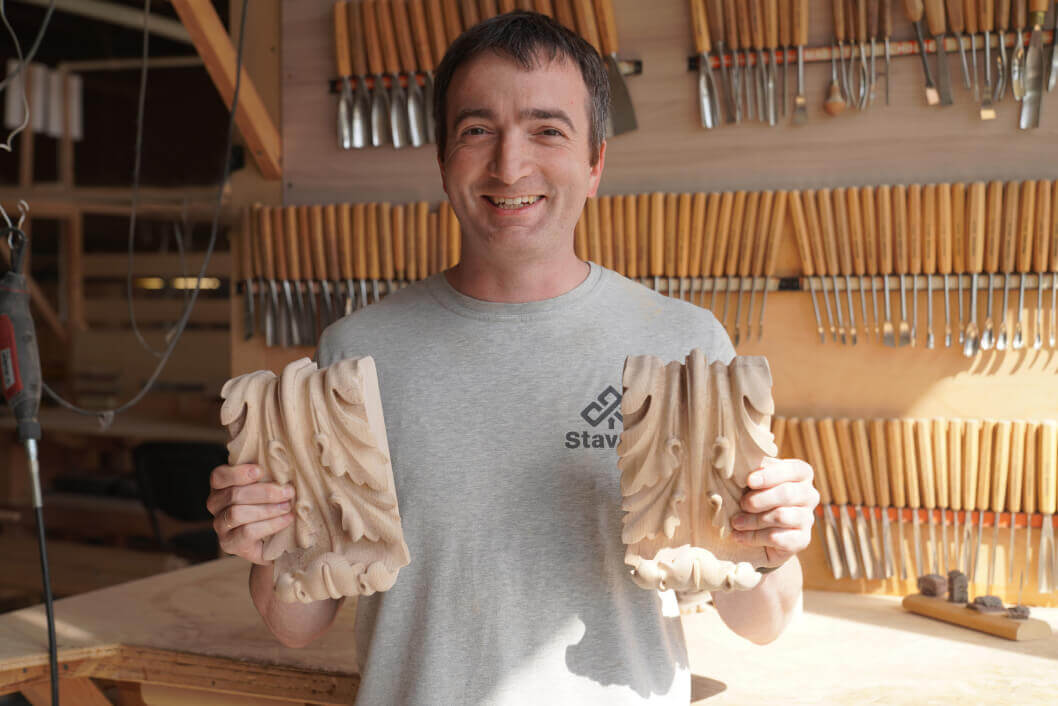
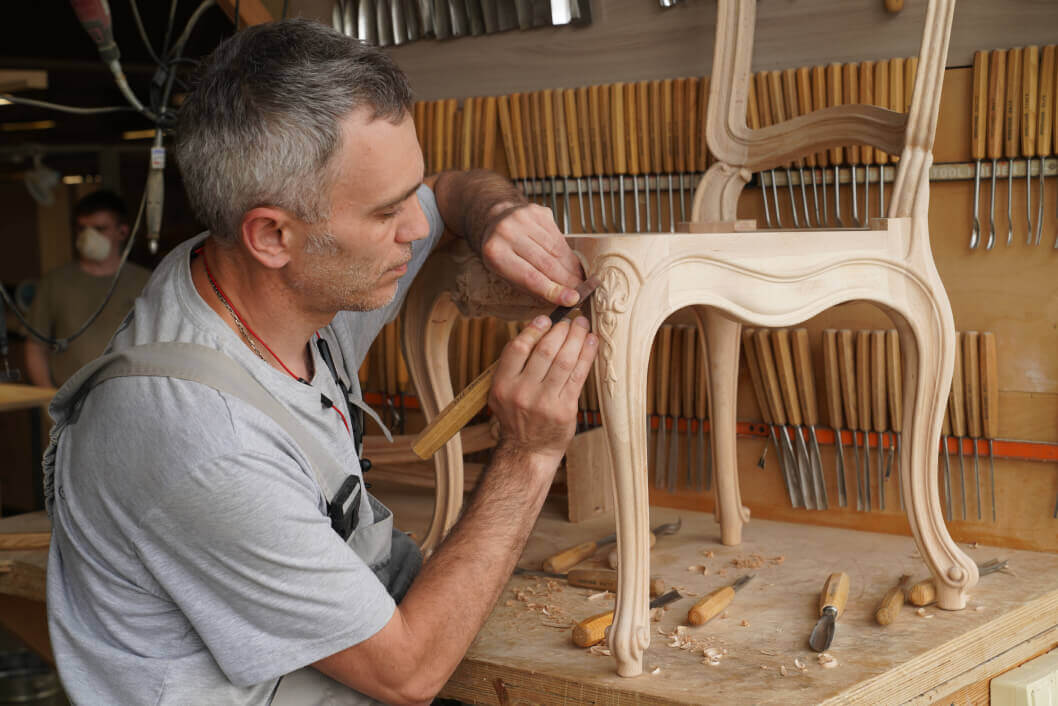
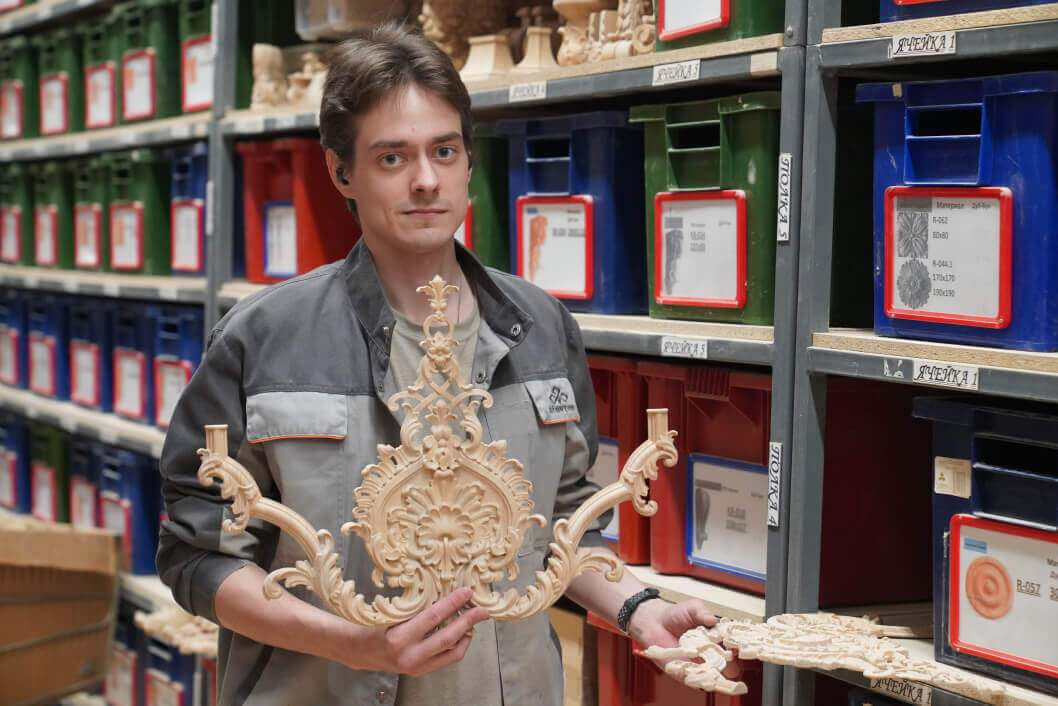
The company's success began in 2002, when two artists — Andrey Ragozin and Evgeny Tsapko — created a small creative workshop for producing wooden carved items. The masters' work was quickly noticed, and within a year they were invited to participate in the reconstruction of the Konstantinovskiy Palace in Strelna.
After the success of this project, the company focused on recreating palace interiors, furniture, church furnishings, and carved decorations in various artistic styles. They worked with cultural heritage sites: The Hermitage, the Alexandrovsky Palace, the Troitsko-Izmaylovsky Cathedral, the Sheremetyevsky Mansion, and many others.
The masters' task — and still is — to create wooden items with the highest level of detail and understanding of every element, based on impeccable knowledge of artistic laws and interior styles.

STAVROS Guarantees
Quality of products without complaints
We save your time, peace of mind, and budget
Large warehouse program
We solve your tasks with maximum speed
Adherence to production deadlines
Streamlined process reduces all risks
Delivery from 1 piece throughout Russia
Quality service regardless of order volume
Your positive business reputation
Reliable partner — the foundation of your business
More products in the molding decor category


Frequently asked questions
Our showrooms are located in Saint Petersburg and Moscow. Production is located in Saint Petersburg.
Moscow contacts: https://www.stavros.ru/contacts_all/?tab=msk
Contacts of Saint Petersburg: https://www.stavros.ru/contacts_all/?tab=spb
- Send request by email [email protected]
- Write to us at Telegram
- Write to us at WhatsApp
- Order by phone +7 (800) 555-46-75
- Visit our showroom in Saint Petersburg and Moscow
Yes, we ship orders throughout Russia and to CIS countries.
We cooperate with transportation companies such as СДЭК and DPD.
You can also arrange pickup of your order through any convenient transportation company for you.
Delivery cost depends on the size, weight of the item, and delivery address.
When placing an order, the delivery cost is calculated automatically and displayed as a separate line on our website.
Prices and availability of items on the website are always current. Data is updated daily.
Note: items in stock are stored on the warehouse in unpolished form and shipped within 3 working days.
If the item is not in stock, average production time: 5–10 working days.
This is the quality of polishing of the items.
Standard — machine polishing, at a more attractive price.
Prestige — detailed hand polishing, items do not require further work.
More details: https://www.stavros.ru/information/kachestvo/
This is the type of veneer of the items.
Under enamel: produced by gluing wooden laminates without color and texture matching. Contrast tonal and textural differences are noticeable. This blank should be chosen if the item is intended for opaque coating.
Under tinting: produced by gluing wooden laminates with color and texture matching. Tonal and textural differences may occur. This blank should be chosen if the item is intended for semi-transparent finish.
More details: https://www.stavros.ru/information/kachestvo/
Beech — dense, non-porous wood, most often used for items covered with enamel.
Oak — dense, porous wood with clearly visible natural grain. Due to its strength and decorative properties, it is often used in items with semi-transparent coating, highlighting the wood pattern.
Custom-made, if non-standard items are required, we can produce products from other types of wood, including blanks provided by the customer, manufactured according to our technical specifications.
All our furniture legs can withstand a vertical load of at least 100 kg.
Average production time for custom-made items: 5–10 working days.
Most items are stored on the warehouse in unpolished form. We need time to polish and pack orders.
Yes, we manufacture non-standard items according to individual projects, but we only accept orders with a minimum quantity.
We can manufacture items of the desired size, but we only work with bulk orders. For details, please consult the sales department manager.
Yes, some of our products can be used outdoors. For example, polyurethane items, as well as carved door casings made of pine.
Other items are produced to order using PUR glue, if minimum quantity is available. No warranty is provided for such products, as outdoor conditions are considered aggressive.
Yes, we paint items when ordering products for a total amount of 150,000 rubles or more.
- Dust removal. After sanding, the surface must be dusted.
- Priming. Apply primer in an even layer.
- Matting. After the primer has fully dried, the surface should be matted (lightly sanded for better adhesion).
- Finish coating. Apply finish coating: lacquer or enamel, in 2 layers, with interlayer drying.
More details: https://www.stavros.ru/information/sovety/
Apply adhesive to the decor. Place it on the surface and press briefly. Then, lift the decor from the surface and leave it open for 3–5 minutes. Press the decor firmly onto the surface and hold for 5–10 seconds.
More details: https://www.stavros.ru/information/sovety/
Ideally, you should prepare a design project before placing an order.
You can do this yourself by downloading drawings of our products from our website, or you can order a project from us.
If the number of decorative elements and fittings is small, our company's manager can assist you with selection.
Unfortunately, this service is not provided.
The packaging method depends on the type of items, but in each case, we ensure sufficient protection for safe transportation.
We most often use corrugated cardboard and stretch film. Fragile items are additionally secured on a rigid base to prevent damage during transport.
We ship all items starting from 1 piece.
Room measurements and item installation can be performed by our partners — carpentry companies represented in most regions of Russia.
Often searched in category Wooden and MDF items
7095
3017
2639
1467
1323
1118
858
Corner decorative element MLD-1U-2.1L: wooden corner decor for MLD-001 beech molding under enamel
A corner is where a furniture frame either closes beautifully or reveals craft negligence. The joint of two molding profiles at the frame's corner is the point where a design solution proves or disproves its validity. And it is hereCorner decorative element MLD-1U-2.1Ltakes control: turns a technical joint into a decorative accent, and an unfinished frame layout into a full-fledged classical composition.
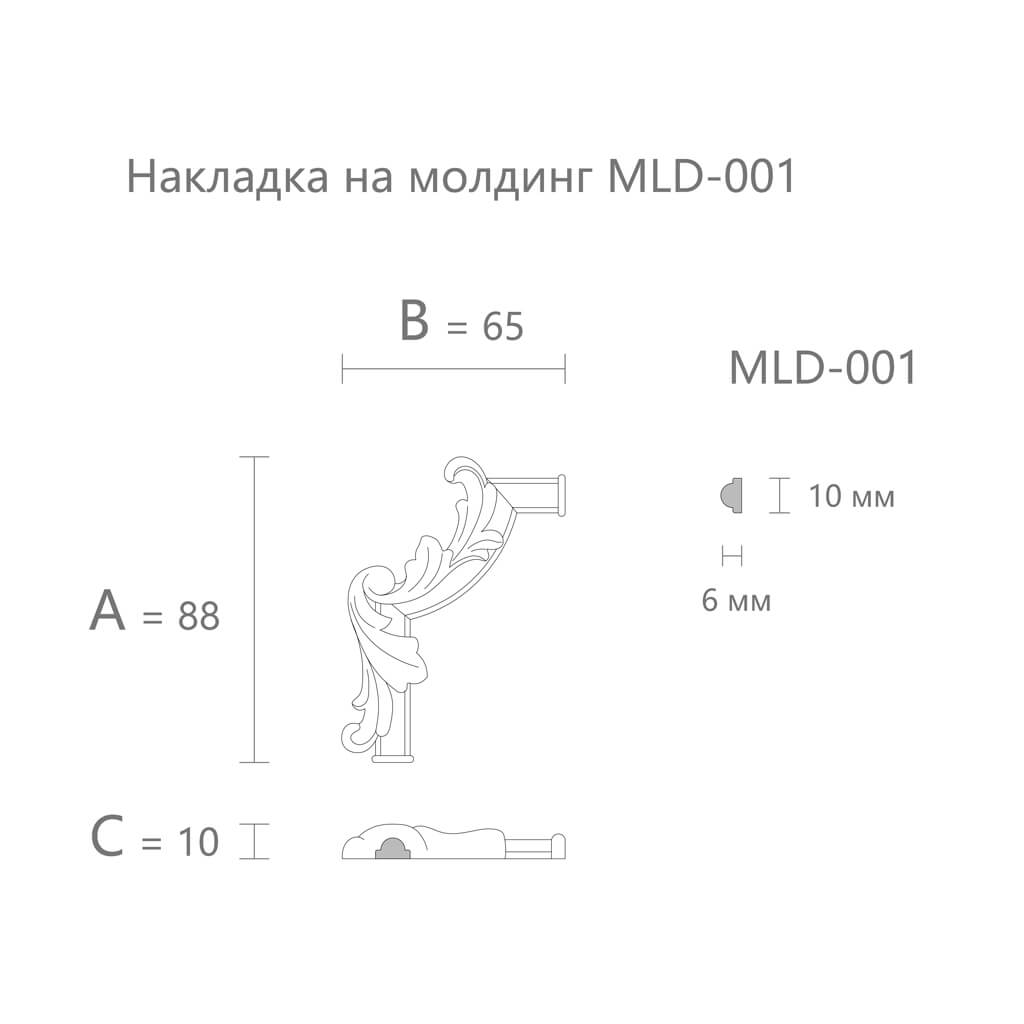
Before you is a carved corner element made of beech, specially designed to work in tandem with the MLD-001 molding—a wooden profile 10×6 mm with a quarter-round cross-section from the STAVROS line. The size of the corner element is 88 × 65 × 10 mm. Finish: Standard, Under enamel. Material: beech. Manufactured by STAVROS, Saint Petersburg. Production time is 3–7 business days. Delivery across Russia via SDEK.
Decor for moldings of this type is not an auxiliary trifle. It is the final chord of the system, without which the system remains incomplete. Understanding this means understanding why corner decorative elements are needed at all and how to work with them correctly.
Corner decorative element MLD-1U-2.1L—what this product is and why it is needed
Let's start with the question almost everyone asks when first encountering molding layouts: 'Why a special corner? Can't you just join the moldings at a 45-degree angle?'
You can. But the difference in the result is fundamental.
A miter joint cut at a 45-degree angle is technically acceptable but decoratively poor. The cut line is visible, the angle reads as a structural necessity rather than a design decision. Especially on wooden moldings with a pronounced profile—a miter joint creates a geometrically correct but visually 'bare' corner.
Decorative corner element for molding— this is a fundamentally different logic. The corner decor covers the joint area, conceals it with carved ornamentation, and creates an independent decorative accent at the corner point. Two molding profiles approach the corner element and 'butt' into it—they do not join end-to-end but rather come to a termination. The frame assembly acquires a finished, professional appearance.
MLD-1U-2.1L is a corner element designed precisely for this logic. It is made of beech with machine sanding to the 'Standard' finish, prepared for opaque enamel painting. Its compact dimensions of 88 × 65 × 10 mm make it suitable for frame assemblies of standard furniture scale—without excessive weight or decorative overload of the corner zone.
Technical specifications:
| Parameter | Value |
|---|---|
| Article number | MLD-1U-2.1L |
| Dimensions | 88 × 65 × 10 mm |
| Material | Beech |
| Finish | Standard |
| Finishing | For enamel |
| Partner molding | MLD-001 (10×6 mm, quarter-round) |
| Installation | Mounting adhesive |
| Application | Furniture, doors, wall panels, decorative frames |
Which molding is MLD-1U-2.1L intended for: a system, not an individual part
MLD-1U-2.1L can only be understood in the context of a system. This corner element was created for a specific molding profile—Molding MLD-001—a wooden profile with a quarter-round cross-section of 10×6 mm, one of the basic formats in the STAVROS wooden molding line.
What is a molding with a 10×6 quarter-round cross-section? It is a profile with a height of 10 mm and a projection of 6 mm, forming a smooth quarter-circle arc in cross-section. Such a profile is one of the most classic in cabinetmaking: it is used for frame assemblies on the fronts of cabinets, chests of drawers, buffet doors, and library sections. The profile shape is soft, somewhat archaic in the best sense—originating from the joinery traditions of the 17th–19th centuries. This is precisely why the MLD-1U-2.1L decorative corner carries ornamentation in a classical spirit, organically continuing the language of the molding itself.
A critically important point: a decorative corner element for molding works correctly only when its geometry is coordinated with the profile geometry. For MLD-1U-2.1L, this coordination is implemented constructively: the end zones of the product, where the ends of the molding runs meet, are made to the exact profile of MLD-001. The molding fits into the corner element without a gap, without a step, without a visible transition.
This is the coordination that cannot be ensured by selecting a 'similar' corner element with different geometry. A difference of a few tenths of a millimeter—and the joint becomes visible. A difference in profile curvature—and the corner reads as an installer's mistake, not a designer's solution.
By orderingDecor for MoldingOn the STAVROS website, it's important to immediately determine: for which specific molding you are taking the corner elements. The decorative line for moldings is structured precisely on this principle. MLD-1U-2.1L is an article where 'MLD-1' indicates belonging to the MLD-001 system, 'U' stands for corner (from 'corner piece'), and '2.1L' is the type size and version in this series.
Design and form of MLD-1U-2.1L: where carving speaks louder than words
Carved wooden ornament is not a decoration on top of an object. It is the object's own statement about itself. How the ornament is carved, its plasticity, how precise the transitions from plane to relief are—all this shapes the perception of the item as cheap or expensive, clumsy or masterful.
MLD-1U-2.1L features a carved ornament of a classic botanical character. Smooth curves, symmetry along the diagonal axis of the item (the corner element is symmetrical relative to the angle bisector), soft transitions of the relief from the background plane to plastically elaborated motifs. Relief depth is 10 mm. For an item sized 88 × 65 mm, this is quite a substantial relief: the ornament reads clearly, shadows from side lighting give it sculptural volume.
The item's shape is a rectangle of 88 × 65 mm with a diagonally oriented ornament. The larger dimension (88 mm) runs along one of the molding profiles, the smaller one (65 mm) along the other. This uneven distribution along the axes creates a slight asymmetry in proportions, which, nevertheless, is perceived as organic—because the diagonal ornamental axis visually balances the rectangle.
The character of the ornament is classic. Not strict geometric classicism, but soft Baroque-classical plasticity with botanical motifs: scrolls, petals, smooth transitions of forms. This language works perfectly in interiors of classic direction, neoclassicism, Provence, English traditional style. In more neutral interiors—when painted to match the cabinet color and creating a monochrome composition—the ornament 'recedes' into the background and works not as a bright accent, but as a subtle textural detail.
Visually, corner decor of this type solves a problem that is otherwise difficult to solve: it 'softens' the corner of the frame. A geometrically precise right angle of a molding frame is architecturally correct, but decoratively rigid. A carved corner element with botanical ornament brings liveliness, plasticity, 'breath' into this corner. The frame ceases to be a drafting rectangle and becomes a decorative object.
Material: beech, Standard, for enamel—a choice that proves itself practically
Three words in the item description—'beech', 'Standard', 'For enamel'—are not just technical specifications. This is a production and commercial concept, behind which lies a specific logic.
Why beech is the right choice for enamel
Beech is one of the most common wood species for producing wooden furniture decor, and the reason for this is directly related to the material's characteristics.
Beech has a uniform, fine-pored structure. Annual rings are minimally pronounced. The surface of beech after sanding is smooth, with a uniform microstructure, without large pores or open fibers. This is precisely what makes it ideal for enamel painting: the paint applies evenly, without 'raising' the fibers, and without the wood grain showing through the paint coating.
Compare with oak: oak has pronounced porosity, with large vessels in the wood. When applying enamel without special preparation, these vessels 'break through' the coating, leaving a textured imprint on the finished surface. For transparent varnish coating, oak is excellent. For opaque enamel, it requires additional labor and pore filling.
Beech under enamel is a logical, practical solution without compromises.
STAVROS emphasizes this suitability in the description of its beech product line.Article on the website about moldings and overlaysdirectly states: beech is recommended for overlays intended for painting precisely because of its uniform texture. This is not a marketing claim—it's a materials science reality.
What 'Standard' Means
The 'Standard' finish in the STAVROS classification system is machine sanding. The product is processed on sanding equipment with precise grit control and uniform material removal. The surface is smooth, without dents or marks from hand tools, ready for final painting without additional manual finishing.
This is fundamentally important for beech products under enamel: enamel is merciless to surface defects. The slightest trace of sandpaper, uneven sanding, or tool marks—all of this becomes visible under glossy enamel as unwanted texture. The machine sanding of the 'Standard' finish eliminates these risks.
What does 'Under enamel' mean in the context of edge gluing?
In the production of STAVROS wooden products, edge gluing is used — joining several layers or sections of wood material to stabilize the product. 'Under enamel' edge gluing means that grain matching is not performed: sections are joined without attempting to align the direction of the grain or wood tone.
Why is this acceptable? Because with opaque enamel painting, the wood grain is not visible. Grain matching only makes sense with transparent or semi-transparent coatings — where the boundary between sections is visible. Under enamel, this boundary does not exist; it is covered by the paint. Accordingly, 'Under enamel' edge gluing is not a simplified version, but the optimal choice specifically for this type of finish.
Economic consequence: 'Under enamel' products are more affordable in price while maintaining the same quality of construction and surface finish. For furniture fronts that will be painted anyway, this is direct savings without loss of quality.
Where to use the MLD-1U-2.1L corner decorative element: four practical contexts
The corner element lives within a system. Its application is always in the context of frame layout, molding composition, decorative framing. Let's examine specific objects.
On furniture fronts: from cabinets to buffets
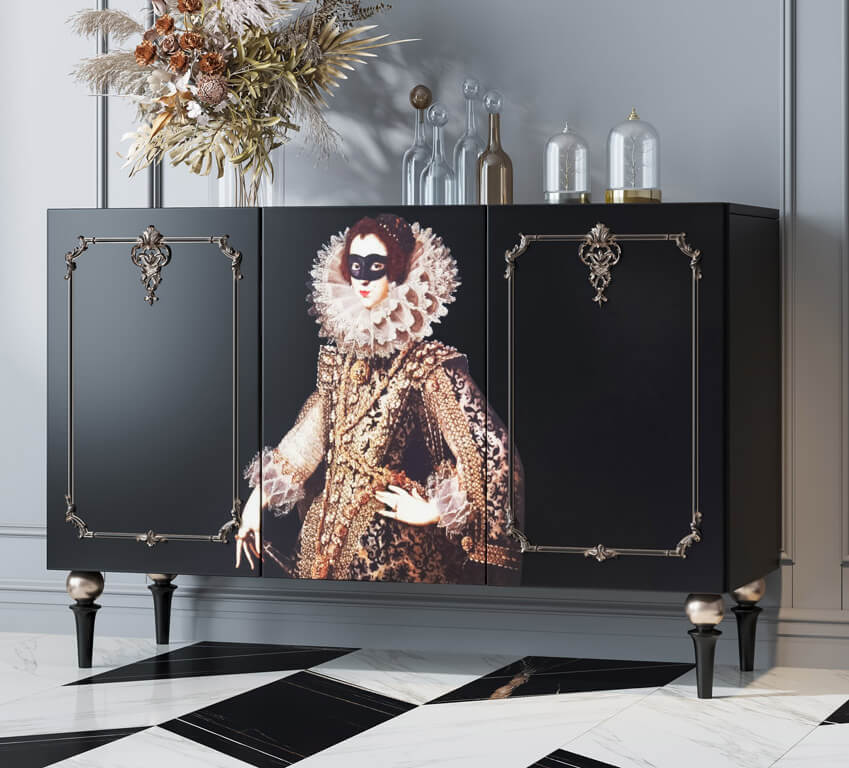
A furniture front with a molding frame is a classic that never goes out of style. A frame layout made of wooden moldings, at the corners of which standCorner decorative elements, — is a solution that has been used in furniture for several centuries, and deservedly so: it works.
A wardrobe with molding frames on the doors and MLD-1U-2.1L corner elements at the corners of each frame is no longer just a 'wardrobe'. This is furniture with a decorative program, with a classic character, with detailed craftsmanship. When painted in white enamel — Provence or classic white kitchen. When painted in dark green or blue enamel — English style, neoclassical. When painted monochromatically to match the wall color — a subtle, almost hidden decorative system, noticed as a feeling of 'expensive' furniture without understanding its source.
Furniture formats for which such a system is particularly organic:
-
Kitchen sets with frame fronts — corner decor on each door gives the set a salon look
-
Sliding wardrobes with decorative panels on the ends — MLD-1U-2.1L on the end decorative frames completes the side planes of the system
-
Chests of drawers and cabinets — small fronts where one frame element with four corner accents creates a comprehensive decorative program
-
Sideboards and display cabinets — especially in the upper glazed part, where the molding frames of the glass require neat decorative corner finishing
-
Cabinets in a study or library shelving — wooden frame layout with carved corner accents in a classic style
On compact fronts of cabinets and small wardrobes, the MLD-1U-2.1L size (88 × 65 mm) is especially appropriate: the corner element occupies a proportionate share of the surface — noticeable but not overwhelming.
On doors and panels: completeness instead of a technical joint
Interior door with decorative molding frame — an object found in a wide variety of interiors. The molding contour is applied directly to the smooth MDF or veneered chipboard door leaf, imitating a classic frame-and-panel construction.
On a standard size door (2000 × 800 mm), traditionally one to three molding frames are made. In each frame — four corners. In each corner — a solution: a 45-degree joint or a decorative corner element.
A 45-degree miter joint when working with wooden moldings requires precise cutting with a miter box or miter saw. The slightest angle error—and a visible gap appears at the joint when painted, which fills with paint differently than the surrounding surface. The result is an unsightly artifact, noticeable precisely after the final coating, when it's too late to fix.
Decorative corner piece for moldingcompletely eliminates this problem. The ends of the molding runs are cut straight—without an angle. The corner element covers the joint area from above. No gaps, no precise miter cuts, no risk of defects after painting.
For a door leaf with multiple frame cells, using decorative corner elements on all corners of all frames creates a unified ornamental program with a regular rhythm: identical carved accents at all points where moldings intersect.
On wall panels and decorative layouts
System wall layouts with wooden moldings are a trend that has gained significant popularity in recent years. A wall divided into 'fields' by molding frames in a classical or neoclassical spirit is an inexpensive way to add architectural character to a standard living space.
When working with wooden moldings on walls, corner elements are especially important precisely because of the scale: a wall frame is larger than a furniture one, and corner points are read from a greater distance. On such a surface, a 45-degree miter joint is clearly visible—and its technical 'bareness' disrupts the decorative program.
MLD-1U-2.1L on the corners of a wall frame layout works the same as on a furniture facade—visually completes the corner, making it a decorative event. With white enamel on the moldings and corner elements against a painted wall (for example, in a restrained shade of gray, blue, green), a contrasting classical system is achieved, entirely appropriate in a classical or neoclassical interior.
In the article"Wooden Corner Elements and Furniture: How to Design Joints and Create Completeness"on the STAVROS website, the logic of corner inserts in molding systems is analyzed in detail—I recommend it for study to everyone who designs wall layouts independently.
In classical and neoclassical interiors: decor with cultural memory
Carved floral ornamentation is a language with history. Its use in interior design is read as a quote from the European decorative tradition: soft Baroque curls, classical acanthus motifs, neoclassical medallion inserts. This language is appropriate where the interior aspires to cultural depth, not just relevance.
In the MLD-1U-2.1L classical interior, it is an organic part of the decorative program. Alongside wooden carved fronts, handcrafted stucco decor, classic fabrics, and furniture with cabriole legs, the beech corner carved element sounds like its own detail, grown from the same decorative soil.
In a neoclassical interior, it is slightly stricter, slightly drier in plasticity. Molding frames with neat corner decorative elements create architectural surfaces without Baroque excess. This is a modern interpretation of a classical theme.
Size 88 × 65 × 10 mm: why this particular format works best
Compactness as a strategy sounds paradoxical, but precisely in corner decorative elements, compactness is a key advantage.
The corner of a frame is the point where two molding profiles meet. The corner element 'sits' in this corner, not protruding significantly beyond the molding runs. If the corner element is too large, it begins to protrude into the frame field, visually consuming its area. If too small, it gets lost, doesn't cover the joint, and doesn't create an accent. 88 × 65 mm is a proven compromise for 10×6 mm molding.
Let's calculate with a specific example. A furniture front 400 × 600 mm with a molding frame set back 30 mm from the front edge. The inner frame size is 340 × 540 mm. The 88 × 65 mm corner element occupies 88 mm from each horizontal run—about 26% of the 340 mm horizontal run. From the vertical run—65 mm—about 12% of the 540 mm run. Proportionally, this is modest: the corner is noticeable but does not dominate.
A relief depth of 10 mm with the MLD-001 molding profile depth of 6 mm means the corner element protrudes slightly above the molding level. This is a standard solution: the corner accent should be visually 'read' as higher than the molding line—it is more important, more significant in the decorative hierarchy. The 4 mm of additional protrusion creates precisely the needed level difference.
For thin frame systems made of 10×6 mm molding, using larger corner elements would look disproportionate: a massive corner on a thin profile is a scale imbalance. The compact 88 × 65 × 10 mm corner decor is an organic partner for the 10×6 mm profile.
What to pair with MLD-1U-2.1L: system furniture decor
Corner element is part of a system. Let's consider what else should be included in this system to achieve a finished result.
MLD-001 molding is the first and mandatory element. Without it, MLD-1U-2.1L loses its purpose. On the STAVROS website, MLD-001 molding is presented in the wooden moldings and cornices section. The quarter-round profile 10×6 mm is made of beech, ensuring identical color and behavior under paint — critically important for monochromatic enamel finishing.
Central decorative overlays for molding frames. In the molding layout system, corner elements are not the only ornamental accents. Central overlays are elements installed along the central axis of molding runs or in the center of the frame 'field'. Together with corner decorative elements, they create a complete ornamental program for the frame cell. Full assortment in the sectiondecoration for moldings.
Other corner elements of the MLD-1U series. To decorate one frame, four corner elements are needed — one for each corner. Depending on the element's orientation (left/right corner) and design, the corresponding series article numbers are used. When ordering, ensure you take the correct four items to cover all corners of the frame.
Mounting adhesive. STAVROS recommends specialized adhesive for wooden decor. In the consumables section of the STAVROS website, compatible adhesive compounds tested in production conditions are presented. Universal mounting adhesive is a less preferable option: the setting speed and final bond strength on wooden surfaces are significantly higher with specialized compounds.
Enamel paint for final painting. Since the entire product — molding, corner elements, and the facade itself — will be painted in a single color, it is important to use enamel with suitable characteristics: good coverage, film hardness, and minimal shrinkage during drying. For furniture facades with carved details, acrylic enamels with satin or semi-matte finish are optimal: gloss on carved surfaces emphasizes the smallest irregularities, while semi-matte finish evens them out.
Installation and finishing: how to assemble a neat frame composition
Installing corner decorative elements as part of a molding frame is work that requires sequence. Violating the order of operations yields poor results even with good material.
Sequence for assembling a molding frame with corner elements
Step 1. Marking. Apply the contour of the molding frame onto the facade surface. The setback from the facade edge is standardly 20–40 mm. Marking lines — a thin pencil on the inner side of the runs. Mark the corner points of the frame.
Step 2. Fitting corner elements. Before applying adhesive, align the corner elements with the corner points of the marking. Ensure that the end zones of the molding runs will precisely fit against the side planes of the corner elements without a gap.
Step 3. Installing corner elements. The corner elements are installed first. Apply adhesive to the back surface of MLD-1U-2.1L. Place it against the surface, align with the marking, press. Allow to set according to the adhesive instructions. Secure with painter's tape until fully cured.
Step 4. Installing molding runs. After securing the corner elements, install the straight molding runs. Cut the MLD-001 molding into straight segments of the required length — from the side plane of one corner element to the side plane of the opposite one. Apply adhesive to the back side of the molding. Lay the run precisely between the corner elements. The end of the molding should tightly abut the side plane of the corner element without a gap.
Step 5. Filling gaps. If there are small gaps in the joint areas after installation — fill them with acrylic sealant matching the color of the base coating. Wood filler is a second option. After drying — light sanding with P180 in the joint area.
Step 6. Priming. All wooden elements (molding and corner decorations) are primed with one coat of acrylic primer. This ensures uniform absorption of the enamel and prevents 'raising' of the fibers under the first coat of paint.
Step 7. Painting with enamel. Two to three coats of enamel with complete drying between coats. For carved surfaces — use a brush with natural bristles of medium stiffness: it better reaches into the relief of the ornament. Do not overload the relief with paint: in the deep recesses of the ornament, a thinner layer of paint creates a tonal transition, giving the carving visual volume.
Several important technical notes
Wooden decor for enamel does not require special pore sealing before priming — beech is already low-porosity. If you are working with oak products (other STAVROS articles), filling the pores with a special compound is mandatory before priming.
Do not paint at temperatures below +10°C and at relative air humidity above 70% — these are standard limitations for acrylic enamels. In a workshop, this is easily controlled. During installation at a finished site — monitor the room conditions.
Why MLD-1U-2.1L specifically: a direct answer to a direct question
If you've read this far, the answer has probably already formed itself. But let's state it precisely.
MLD-1U-2.1L is chosen because:
-
It is designed specifically for the MLD-001 molding — geometrically aligned, without gaps or steps at the joint areas. There is no interchangeability: a different corner element with a different profile will not yield the same result.
-
Beech under enamel is the optimal material. Homogeneous structure, perfect surface for opaque coating, no issues with porosity or texture under paint.
-
"Standard" finish — machine sanding, surface ready for painting without additional manual finishing.
-
Compact size 88 × 65 mm — proportionate to its 10×6 profile molding partner. Does not overload the corner, does not consume frame field area, does not disrupt proportions.
-
Carved classic ornament — decoratively self-sufficient, organic in classic and neoclassical styles, working in a monochrome system as a fine textural detail.
-
Installation is suitable for DIY — glue, tape, level, sequence.
Full catalog of corner decorative elements, moldings, and central overlays for molding frames — in the section decor for STAVROS moldings.
FAQ: Answers to Real Customer Questions
Which molding is MLD-1U-2.1L suitable for?
For the MLD-001 molding — a wooden profile 10×6 mm with a quarter-round cross-section produced by STAVROS. The geometry of the corner element is specifically coordinated with this profile. Use with moldings from other manufacturers or other STAVROS profiles requires prior compatibility verification.
Can MLD-1U-2.1L be used without the MLD-001 molding — simply as a decorative accent?
Technically — yes, the product can be mounted as a standalone decorative element on furniture fronts or wall panels. However, its shape and proportions are optimized specifically for use as part of a molding frame. As a standalone accent, it will look less organic than specialized central overlays.
Is the element suitable for MDF furniture fronts?
Yes. The adhesive provides reliable adhesion to MDF. The MDF surface must be clean, dry, and degreased. Sanding the mounting area with P150 grit will improve adhesion on laminated surfaces.
Can corner elements be installed on doors with factory paint/varnish coating?
Yes, but with a caveat: after installation, the entire door will need to be repainted, because the corner elements and moldings are painted together with the front to create a unified surface. This option is not used on doors with factory coating that are not planned to be repainted.
Why is beech under enamel better than oak under enamel for such a part?
Beech has a finer-pored, more uniform structure, which provides a smoother surface under the enamel without special pore treatment. Oak requires pore filling before priming — an additional operation necessary for a quality result.
What exactly does 'Standard' mean in the description of the STAVROS product?
'Standard' refers to machine sanding. The surface is processed on industrial sanding equipment with uniform material removal. It is ready for primer and paint application without additional manual finishing. This is the standard production finish for products intended for opaque painting.
How many corner elements are needed for one furniture frame?
Four pieces — one for each corner of the rectangular frame. When ordering, it is necessary to specify the version (left/right or symmetrical) depending on the MLD-1U series article numbers.
How to achieve a perfectly neat corner during installation?
Key rules: first, install the corner elements, then the molding runs are cut to the exact size 'from corner to corner'; gaps are filled with acrylic sealant before priming; sanding of joint areas is done before the first coat of paint, not after. Never — in reverse order.
Is the product suitable for opaque paint of any color?
Yes. Beech under enamel can be repainted to any color: white, cream, pastel, dark, saturated — without restrictions. Beech does not 'show through' the paint, does not give a yellow or brown undertone. The only condition is a sufficient number of enamel layers with good coverage.
Where can I find other decorative elements for STAVROS molding frames?
The full range — corner elements of different series, central overlays, molding profiles, consumables — is in the section decoration for moldingson the STAVROS website. There you can also select compatible items to create a complete decorative system program for furniture and walls.
Your request has been sent!
Our manager will contact you within 5 minutes