













































































Decorative connecting element N-400.1
Dimensions and Options
Have questions?
Customers also buy



Yulia Kh.
March 24, 2026
I was satisfied with the quality of the products; we purchased furniture legs. I would especially like to highlight the professionalism of manager Oksana—very client-oriented, competent, and precise specialist. She even arranged additional trimming of some elements as an extra service for us. Huge thanks!
Incognito 7.
March 24, 2026
One of the few firms that is pleasant to interact with on renovation matters. Adequate, responsive managers. Adherence to deadlines. Execution of even complex projects. Bravo! May there be more such firms!!
Marina D.
February 15, 2026
The company ordered the pens for us when we ordered furniture. But I decided to write a review personally because they are amazing! Stylish, expensive, high-quality!
More than 20 years on the market
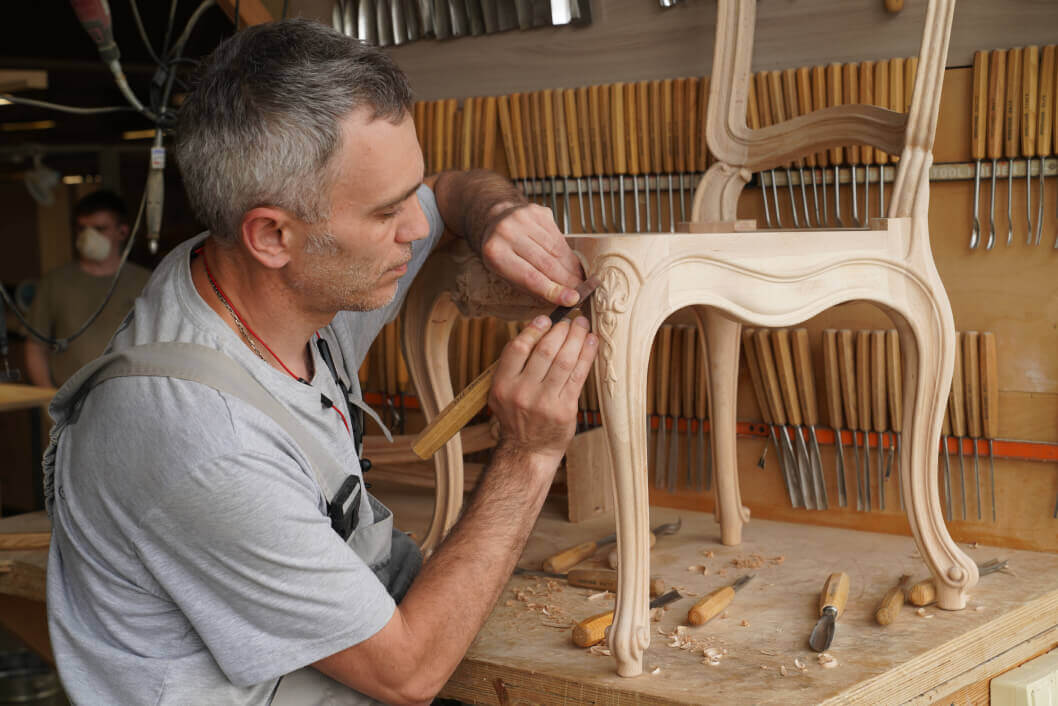
The company's success began in 2002, when two artists — Andrey Ragozin and Evgeny Tsapko — created a small creative workshop for producing wooden carved items. The masters' work was quickly noticed, and within a year they were invited to participate in the reconstruction of the Konstantinovskiy Palace in Strelna.
After the success of this project, the company focused on recreating palace interiors, furniture, church furnishings, and carved decorations in various artistic styles. They worked with cultural heritage sites: The Hermitage, the Alexandrovsky Palace, the Troitsko-Izmaylovsky Cathedral, the Sheremetyevsky Mansion, and many others.
The masters' task — and still is — to create wooden items with the highest level of detail and understanding of every element, based on impeccable knowledge of artistic laws and interior styles.


STAVROS Guarantees
Quality of products without complaints
We save your time, peace of mind, and budget
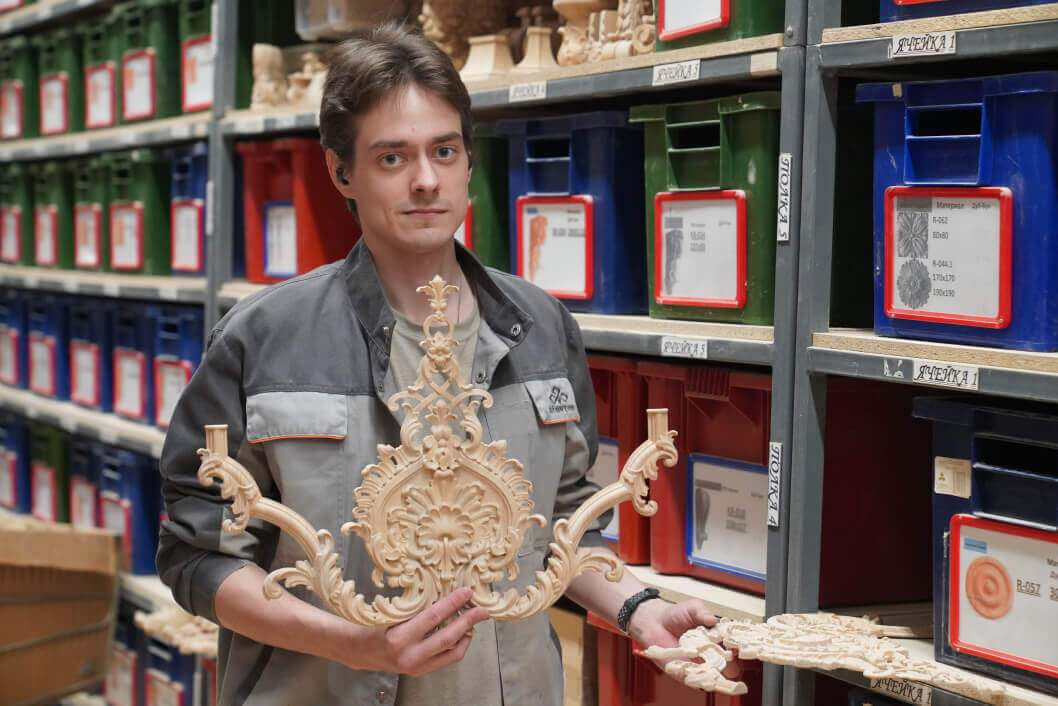
Large warehouse program
We solve your tasks with maximum speed
Adherence to production deadlines
Streamlined process reduces all risks
Delivery from 1 piece throughout Russia
Quality service regardless of order volume
Your positive business reputation
Reliable partner — the foundation of your business
More products in the molding decor category


Frequently asked questions
Our showrooms are located in Saint Petersburg and Moscow. Production is located in Saint Petersburg.
Moscow contacts: https://www.stavros.ru/contacts_all/?tab=msk
Contacts of Saint Petersburg: https://www.stavros.ru/contacts_all/?tab=spb
- Send request by email [email protected]
- Write to us at Telegram
- Write to us at WhatsApp
- Order by phone +7 (800) 555-46-75
- Visit our showroom in Saint Petersburg and Moscow
Yes, we ship orders throughout Russia and to CIS countries.
We cooperate with transportation companies such as СДЭК and DPD.
You can also arrange pickup of your order through any convenient transportation company for you.
Delivery cost depends on the size, weight of the item, and delivery address.
When placing an order, the delivery cost is calculated automatically and displayed as a separate line on our website.
Prices and availability of items on the website are always current. Data is updated daily.
Note: items in stock are stored on the warehouse in unpolished form and shipped within 3 working days.
If the item is not in stock, average production time: 5–10 working days.
This is the quality of polishing of the items.
Standard — machine polishing, at a more attractive price.
Prestige — detailed hand polishing, items do not require further work.
More details: https://www.stavros.ru/information/kachestvo/
This is the type of veneer of the items.
Under enamel: produced by gluing wooden laminates without color and texture matching. Contrast tonal and textural differences are noticeable. This blank should be chosen if the item is intended for opaque coating.
Under tinting: produced by gluing wooden laminates with color and texture matching. Tonal and textural differences may occur. This blank should be chosen if the item is intended for semi-transparent finish.
More details: https://www.stavros.ru/information/kachestvo/
Beech — dense, non-porous wood, most often used for items covered with enamel.
Oak — dense, porous wood with clearly visible natural grain. Due to its strength and decorative properties, it is often used in items with semi-transparent coating, highlighting the wood pattern.
Custom-made, if non-standard items are required, we can produce products from other types of wood, including blanks provided by the customer, manufactured according to our technical specifications.
All our furniture legs can withstand a vertical load of at least 100 kg.
Average production time for custom-made items: 5–10 working days.
Most items are stored on the warehouse in unpolished form. We need time to polish and pack orders.
Yes, we manufacture non-standard items according to individual projects, but we only accept orders with a minimum quantity.
We can manufacture items of the desired size, but we only work with bulk orders. For details, please consult the sales department manager.
Yes, some of our products can be used outdoors. For example, polyurethane items, as well as carved door casings made of pine.
Other items are produced to order using PUR glue, if minimum quantity is available. No warranty is provided for such products, as outdoor conditions are considered aggressive.
Yes, we paint items when ordering products for a total amount of 150,000 rubles or more.
- Dust removal. After sanding, the surface must be dusted.
- Priming. Apply primer in an even layer.
- Matting. After the primer has fully dried, the surface should be matted (lightly sanded for better adhesion).
- Finish coating. Apply finish coating: lacquer or enamel, in 2 layers, with interlayer drying.
More details: https://www.stavros.ru/information/sovety/
Apply adhesive to the decor. Place it on the surface and press briefly. Then, lift the decor from the surface and leave it open for 3–5 minutes. Press the decor firmly onto the surface and hold for 5–10 seconds.
More details: https://www.stavros.ru/information/sovety/
Ideally, you should prepare a design project before placing an order.
You can do this yourself by downloading drawings of our products from our website, or you can order a project from us.
If the number of decorative elements and fittings is small, our company's manager can assist you with selection.
Unfortunately, this service is not provided.
The packaging method depends on the type of items, but in each case, we ensure sufficient protection for safe transportation.
We most often use corrugated cardboard and stretch film. Fragile items are additionally secured on a rigid base to prevent damage during transport.
We ship all items starting from 1 piece.
Room measurements and item installation can be performed by our partners — carpentry companies represented in most regions of Russia.
Often searched in category Wooden and MDF items
7073
2928
2639
1442
1323
1080
858
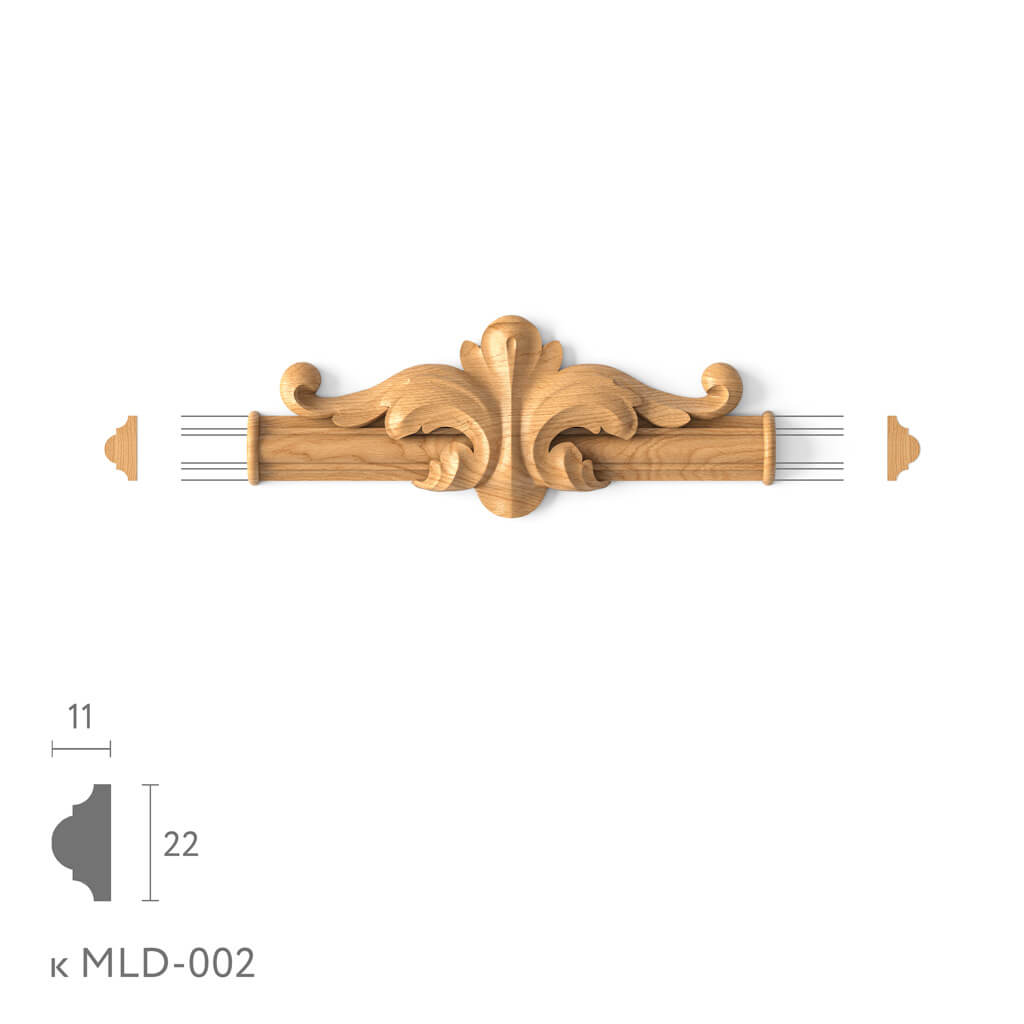
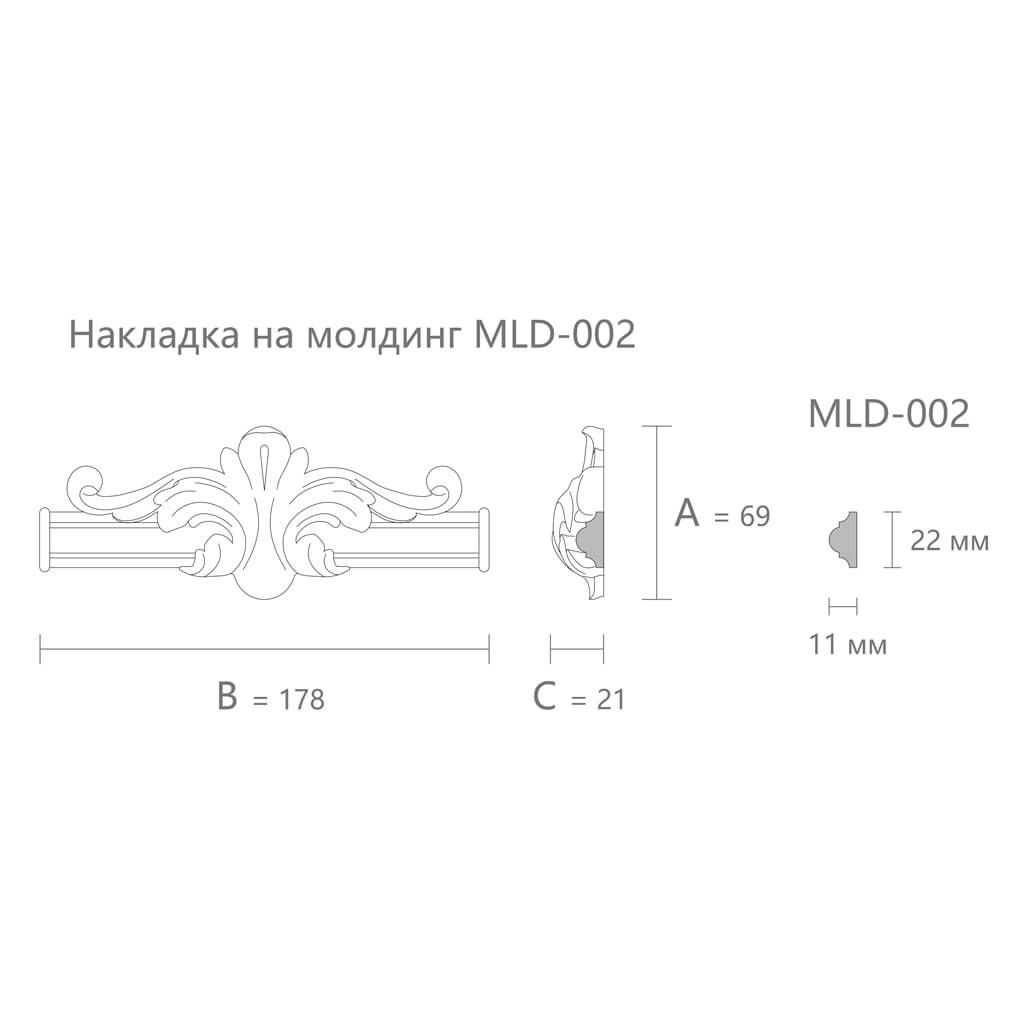
Decorative connecting element N-400.1, 69 × 178 × 21 mm — beech, standard, for enamel or oak
Professional decor on furniture, doors, or wall panels is always a system. Moldings define lines, overlays create accents, finials complete ends. But there is another type of element without which the system remains a set of parts rather than a unified ornamental solution — connecting elements. They link parts of the decor, create nodes at points where decorative lines meet, and turn fragmented design into a cohesive, finished, and professionally looking composition. Decorative connecting element N-400.1 is a large, expressive part of this type. Its task is to unite, connect, and simultaneously enhance the decorative richness of the system in which it operates.
N-400.1 is a wooden connecting decorative element measuring 69 × 178 × 21 mm. It is a noticeable, voluminous part: not a compact insert, but a full-fledged decorative accent that simultaneously performs connecting and ornamental functions. Material — beech in the 'standard for enamel' finish for painting projects, or oak for natural and tinted finishes. Both options are intended for classic and neoclassical decorative solutions, where the natural beauty of wood and the quality of carving are style-defining characteristics.
Decorative elements made of solid woodon the stavros.ru website is a thoughtfully designed collection of system parts for furniture, door, and interior decor. N-400.1 occupies the position of a large connecting element in this collection, intended for significant decorative formats.
What is the decorative connecting element N-400.1 for
The systemic role of connecting decor
In decorative furniture and interior design, there are areas that require special attention. These are points where decorative lines meet, intersect, or change direction. Where a horizontal molding meets a vertical one. Where an ornamental band ends and another decorative element begins. Where the center of a symmetrical composition requires decorative designation.
At these points, you can leave an open joint — and then the system is perceived as unfinished. Or you can install a connecting element — and then the joint turns into a decorative node, an ornamental 'center of gravity' around which the entire decorative system gathers and is read.
N-400.1 was created specifically for this role. It is installed in the area where decorative parts connect, covers the technical joint with an ornamental relief accent, and turns the meeting point of decorative lines from a weak spot in the system into its visual center.
Connecting and ornamental role simultaneously
It is important to understand the dual nature of this product. On one hand, the N-400.1 performs a functional task: it connects, closes, and links. On the other — with dimensions of 69 × 178 × 21 mm, it is no longer a neutral insert but a noticeable decorative object with its own ornamental value.
This is the fundamental difference between the N-400.1 and compact connecting elements: its size allows it to simultaneously serve as the decorative centerpiece of a composition. On a wide furniture front, a large door panel, or a significant wall panel, this element functions not only as a 'bridge' between parts but also as an independent ornamental accent — that visual focal point to which decorative lines converge and from which they diverge.
Feature of the N-400.1: a large connecting element for expressive decor
When scale matters
Within the system of decorative connecting elements, there are products of different scales — for different furniture formats and decorative tasks. The N-400.1 belongs to the large ones: 69 × 178 × 21 mm are parameters that make the product a noticeable participant in the decorative system, not just its technical element.
This is important for tasks where the decorative system has a significant scale: large cabinets and wardrobe walls, wide door leaves with rich ornamentation, decorative portals, representative furniture. In such formats, a compact connecting element 'gets lost' against the backdrop of large moldings and overlays. The N-400.1 maintains the scale: its size corresponds to the size of the system in which it operates.
Central and connecting function
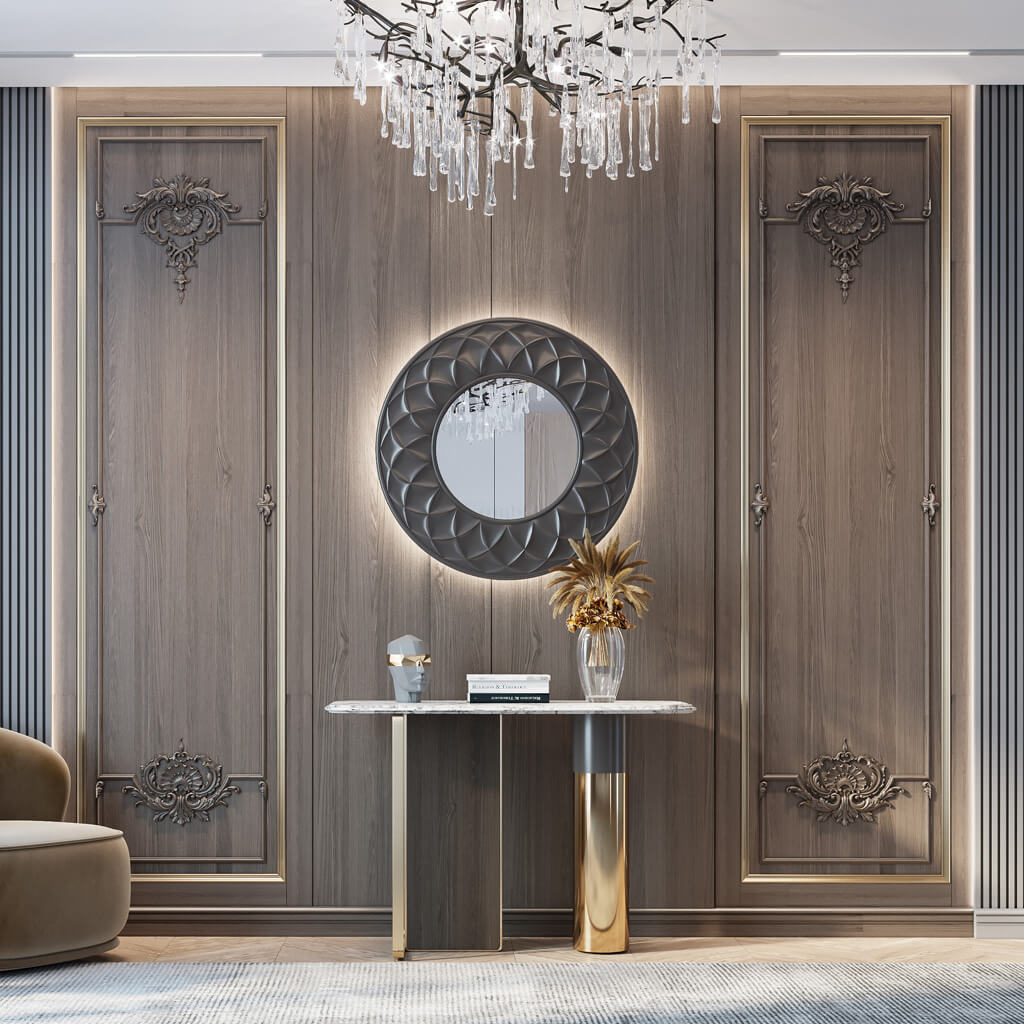
In symmetrical decorative solutions, the N-400.1 often occupies the central position of the entire system. This is the node from which moldings and overlays symmetrically diverge, around which the rhythm of ornamental design is built.Carved solid wood furniture decorIn such a scheme, it works on the principle of an architectural solution: there are support points from which the entire rest of the system is built — and the N-400.1 is precisely such a point.
Material: beech, standard, for enamel or oak
Beech, standard, for enamel: universal base for paintable projects
Beech is a dense hardwood with a fine, uniform, almost neutral porous structure. The grain pattern is subtle, with high and even density. This makes beech an ideal material for decorative parts that will be painted: the surface accepts primer and enamel evenly, without texture 'bleed-through', without the need for additional pore treatment. The result is a smooth, uniform, professional finish in any desired shade.
The 'standard for enamel' finish means the beech element has undergone preliminary processing and is ready for primer and topcoat application. When painted in a single color with other parts of the N-400.1 decorative system, it blends organically into the overall surface—joint boundaries are concealed by the paint, and the entire system is perceived as a single monolithic product.
Beechdecorative connecting elementfor enamel is particularly in demand in the following projects:
-
Kitchen sets in white, cream, and light pastel shades
-
Classic interior doors for white or colored enamel
-
Built-in cabinets and wardrobe systems with painted fronts
-
Custom furniture in custom colors according to RAL, NCS, Pantone palettes
-
Decorative wall panels in classic interiors for painting
Oak: Natural Texture as a Decorative Program
Oak is a material of an entirely different decorative dimension. Open pores, a clear, pronounced wood grain pattern, warm natural shades ranging from honey-amber to golden-beige. The texture of oak is not a background for paint or a technical substrate. It is an independent decorative value that requires not concealment, but emphasis.
Oak N-400.1 is chosen for projects where natural wood is a conscious aesthetic solution: furniture with oil or wax finishes, interiors with wooden floors and solid wood trim, library and study spaces, classic interiors with dark wood as the dominant material.
Oak accepts tinting excellently. The open pore evenly absorbs the tinting composition, creating a rich, deep shade while preserving the natural grain pattern. The tinting range is from light Scandinavian to deep wenge.wooden interior decormade from oak is perceived as a sign of high class and a conscious, professional attitude towards the material.
Comparison of two execution options
| Parameter | Beech for enamel | Oak |
|---|---|---|
| Surface structure | Fine-pored, smooth, neutral | Large pores, pronounced natural grain |
| Optimal finish | Acrylic or alkyd enamel in any shade | Oil, wax, tinting impregnation, varnish |
| For which projects | Painted furniture, enamel-finished doors | Natural furniture, interiors with wood |
| Is the pattern visible under paint | No, the surface is uniform | Moderately, depends on the paint's opacity |
| Stylistic character | Clean, universal, neutral | Warm, natural, expressive |
Size 69 × 178 × 21 mm: a large format with decorative meaning
The N-400.1 parameters are not arbitrary numbers, but meaningful design characteristics, each of which carries a practical meaning.
69 mm — width. This is a significant width for a connecting element. It provides decorative weight to the product in the transverse direction: the N-400.1 overlaps the connection zone with a good width margin, allowing it to work with moldings and overlays of a corresponding scale. The 69 mm width aligns well with large furniture molding profiles designed for representative formats.
178 mm — length. This is the most significant parameter from the functional standpoint of the connecting element. The 178 mm length provides significant overlap in the joint area: the element reliably bridges the gap between decorative parts, secures well to the surface, and creates a decorative 'bridge' of impressive scale. When used in the center of a symmetrical system, 178 mm is the dimension that makes the N-400.1 the main visual accent of the entire composition: it is the first to draw the eye and sets the decorative scale for the entire system.
21 mm — thickness. A 21 mm relief is a full-fledged, voluminous decorative profile with pronounced plasticity. Under side or directional lighting — especially in classic interiors with wall sconces or spot lighting — the N-400.1 relief creates a deep play of shadows. The ornament literally 'comes to life' under the light: protrusions cast shadows, recesses create contrast, and chiaroscuro emphasizes the form of each decorative element of the relief. It is this quality of a voluminous relief decoration that is perceived as a sign of handcrafted work and high product class.
Design and visual effect: how the N-400.1 enhances the decorative system
The ornamental character of the product
The 69 × 178 × 21 mm size gives the N-400.1 ornament space for full expression. This is not a compressed, compact pattern — it is an unfolded ornamental composition with multiple relief levels, symmetrical construction, and an expressive classical silhouette. The character of the ornament belongs to the classical furniture tradition: smooth forms, symmetry, decorative richness without excess.
At this scale, the N-400.1 functions as the dominant decorative object in the system. If moldings and overlays create the 'background' of the ornamental design, then the N-400.1 at the center of the system is its culmination: the point of maximum decorative concentration, around which everything else is structured and interpreted.
Three key visual effects after installation
Decorative integrity of the system. Individual elements on both sides of N-400.1 cease to be perceived as isolated details. The connecting element creates a decorative link between them—a visual 'center of gravity' that all parts of the system gravitate toward. The result is a sense of a unified, cohesive, and ornamentally meaningful decorative structure.
Scale and weight of decoration. A large connecting element sets the scale for the entire decorative system. Moldings and overlays 'orient' themselves to it in terms of proportions—the system acquires decorative proportionality. Without such an anchor element, large-format furniture and doors risk appearing 'decoratively unfilled': too much surface area, too little ornamentation.
Enhancing the visual class of the product. The presence of a large, professionally installed connecting decorative element immediately signals the quality and intentionality of the decorative solution. Such decoration is associated with custom, representative furniture and professional joinery projects.
Where decorative element N-400.1 is used
Large case furniture
Representative cabinets, large wardrobe walls, monumental buffets, classic furniture walls—products of significant scale where the decorative system includes large moldings and rich ornamental solutions. N-400.1 is installed at the connection points of decorative elements on facades: in the centers of symmetrical systems, at the intersections of horizontal and vertical moldings, in transition zones between decorative belts.
Representative doors
Classical formal doors, doors to a study or library, interior doors with rich ornamental decoration—N-400.1 is used in the central points of decorative systems on door panels, at the junctions of horizontal and vertical belts, in large decorative frames.
Decorative portals and architectural frames
Fireplace portals, arched frames, decorative niches, and built-in architectural elements—this is where the large connecting decoration N-400.1 works to its full potential.Carved decoration made of natural woodIn such projects, it is an essential element of the professional outcome, and N-400.1 holds a key position in this system.
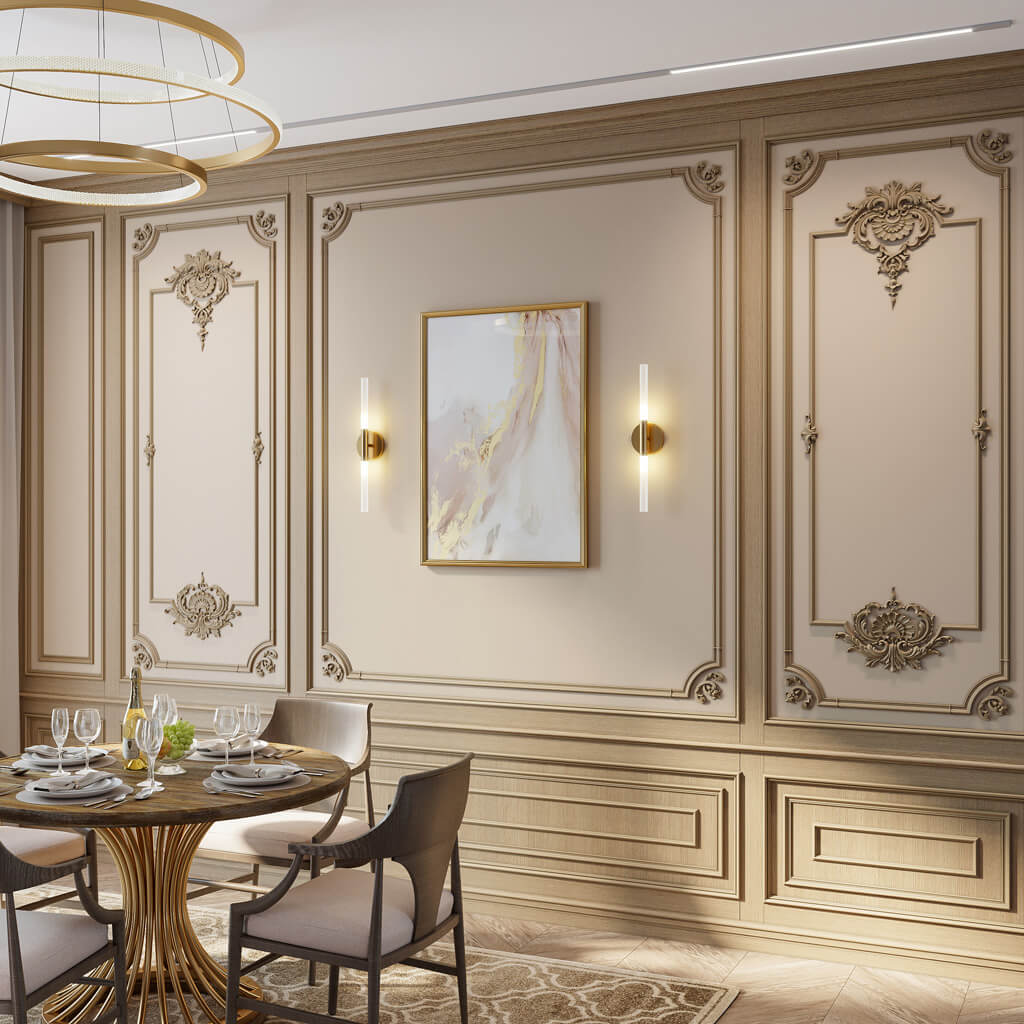
Wall panels in classic interiors
Wall panels with rich classical decor—ornamental bands, frame systems, decorative trims—require connecting elements at the intersections of decorative lines. N-400.1, given its scale, is suitable for panels of significant size and rich decorative programs.
Display and library cabinets
Representative display cabinets in living rooms, library cabinets with glazed fronts, secretary desks—formats where moldings frame glass inserts, and connecting elements finish the joints of these frames. N-400.1 creates decorative focal points in glazed front framing systems, giving the pieces a finished, representative appearance.
For which styles is N-400.1 suitable?
The large scale of N-400.1 defines its stylistic niche with clear precision. It is an element for rich, representative classical and historical decor:
Classical and High Classical—the primary environment. Symmetry, large ornamental systems, natural wood as the dominant material—N-400.1 is organic here at all levels.
Baroque—it is in this style that decorative richness reaches its maximum. Large carved elements, complex ornamental systems, volumetric relief with deep shadows—all these are characteristics of Baroque decor, and N-400.1 fully corresponds to them.
Empire—strictness of form, monumentality, ceremonial grandeur. A large connecting element at the center of a symmetrical system—a decorative solution perfectly matching the Empire aesthetic.
Neoclassical with rich decor—for versions of Neoclassicism with high decorative density, where moldings and overlays form complex ornamental systems.
English Classicism and library style—tall cabinets, dark wood, expressive carved decor—a context where the oak N-400.1 works perfectly.
Formal interiors — reception halls, formal living rooms, studies — are spaces whose scale justifies and demands a large decorative accent.
Installation: professional approach to mounting
Preparation
The mounting area must be level, clean, and dry. When installing in the molding joint area — the molding ends must be level and perpendicular to ensure a tight fit of the N-400.1 from both sides. Perform a dry fit: check the fit of the element in the joint area before applying adhesive, ensure it is level and fits tightly across the entire back plane.
If necessary — lightly sand the mounting area with 180–240 grit sandpaper to ensure a level fit.
Gluing
Woodworking PVA adhesive or PVA-based mounting adhesive is the optimal choice. Apply a thin, even layer to the back surface of the N-400.1 and to the mounting area. Press firmly, maintain pressure for 3–5 minutes. If necessary, secure with painter's tape or temporary clamps. Full curing — 12–24 hours. Remove excess adhesive around the perimeter immediately with a damp cloth.
Final finishing
For the beech enamel version: insulating acrylic wood primer → finish enamel of the desired shade in one or two coats. It is optimal to paint the N-400.1 already as part of the installed decorative system: joints with moldings and overlays are concealed by the paint, the entire surface is perceived as monolithic.
For the oak version: sand along the grain with 220 grit sandpaper → oil or wax, or a tinting impregnation in the desired shade with a finish varnish. The open pore of oak accepts the composition evenly — the final shade is rich, deep, while preserving the natural grain.
Advantages of the decorative connecting element N-400.1
-
Simultaneously a connecting and ornamental function — links parts of the decorative system and creates an expressive decorative accent
-
Large format 69 × 178 × 21 mm — proportionate to significant furniture and architectural decorative systems
-
Volumetric relief 21 mm — expressive play of light and shadow, a sense of expensive handcrafted work
-
Natural wood — beech or oak, high milling quality
-
Two finish options — beech under enamel for paintable projects, oak for natural finish
-
Classical carved ornament — organic in classic, neoclassic, baroque, empire styles
-
System application — works as part of comprehensive decorative systems of moldings, finials, and overlays
-
Suitable for serial and custom production — effective for both industrial and individual applications
Who is the N-400.1 intended for
Manufacturers of executive furniture — for systematic decoration of decorative joints in large classical collections.
Woodworking workshops — for precise detailing of custom large-scale items: executive cabinets, doors, portals.
Interior designers — for equipping classical projects with rich ornamental decorative systems.
Manufacturers of ceremonial doors — for decorating connection zones in decorative systems on panels of executive door collections.
Private clients — when creating expressive classical interiors with decorative walls, portals, and executive furniture.
Order decorative connecting element N-400.1
In large-scale decorative systems, there is no place for small solutions. Where moldings are large and the ornamental program is rich, a connecting element of appropriate scale is needed — noticeable, voluminous, ornamentally expressive. This is exactly what N-400.1 is.
It doesn't just cover the technical joint between parts — it becomes the decorative center of the entire system. The ornamental solution of the facade, door, or panel is built and read around it. With it, the decorative system gains completeness, integrity, and that visual class that distinguishes professional work from simply quality work.
Both finish options—classical wooden decormade of beech under enamel and oak — are available for order on stavros.ru. The full collection is also presented heresolid wood productsfor all decorative tasks: moldings, connecting elements, finials, corner overlays, and other system parts for classic furniture and interior projects of any scale.
Frequently asked questions
What is the decorative connecting element N-400.1 for?
The product is used to combine decorative parts into a single ornamental system. It is installed in areas where moldings join, decorative lines intersect, and in the centers of symmetrical decorative compositions on furniture, doors, facades, and wall panels.
Where can a wooden connecting element be used?
On large furniture facades, representative door panels, display and library cabinets, wall panels with classic decor, fireplace portals, and decorative architectural frames.
Is N-400.1 suitable for furniture facades?
Yes. Large case furniture — cabinets, wardrobe walls, buffets, representative cabinets — is the main area of application. The element is installed in the decorative nodes of the molding system on facades.
Can this element be used for doors?
Yes, this is one of the key application areas. It is especially effective on representative and ceremonial doors with rich classical decor, where the N-400.1 occupies central positions in the decorative systems of the door leaf.
How does beech under enamel differ from oak?
Beech is a fine-pored wood with a neutral texture, ideal for smooth painting in any shade. Oak is a coarse-pored wood with a pronounced natural grain, optimal for oil, wax, or tinted finishes. Both materials ensure high carving quality and durability.
Which interior styles is such decor suitable for?
Primarily for classic, baroque, empire, high neoclassical, and English classicism styles—styles with a rich ornamental decorative program, where a large connecting element is an organic and necessary part of the system.
How does the size 69 × 178 × 21 mm affect the application?
The length of 178 mm creates a significant decorative accent, proportionate to large formats of furniture and doors. The width of 69 mm ensures good overlap of the connection zone. The thickness of 21 mm provides an expressive three-dimensional relief with deep chiaroscuro.
Can the element be used as a central decorative detail?
Yes, and it is in this role that the N-400.1 works most effectively. In symmetrical decorative systems, it occupies the central position—the visual focal point towards which all other decorative elements gravitate.
Is the product suitable for painting projects?
Yes. The beech version 'standard for enamel' is specifically intended for subsequent painting. When enamel is applied in a single tone with the other elements of the system, the joints disappear under the paint, and the entire decorative system looks monolithic.
Why is the connecting element important for a large decorative system?
In large-scale ornamental systems, the connecting element is an anchor detail that holds the entire system together. Without it, individual parts of the decor remain unconnected, and intersection zones appear unfinished. With the N-400.1, the system gains decorative integrity, proportionality, and a professional level of detailing.
Your request has been sent!
Our manager will contact you within 5 minutes