












































































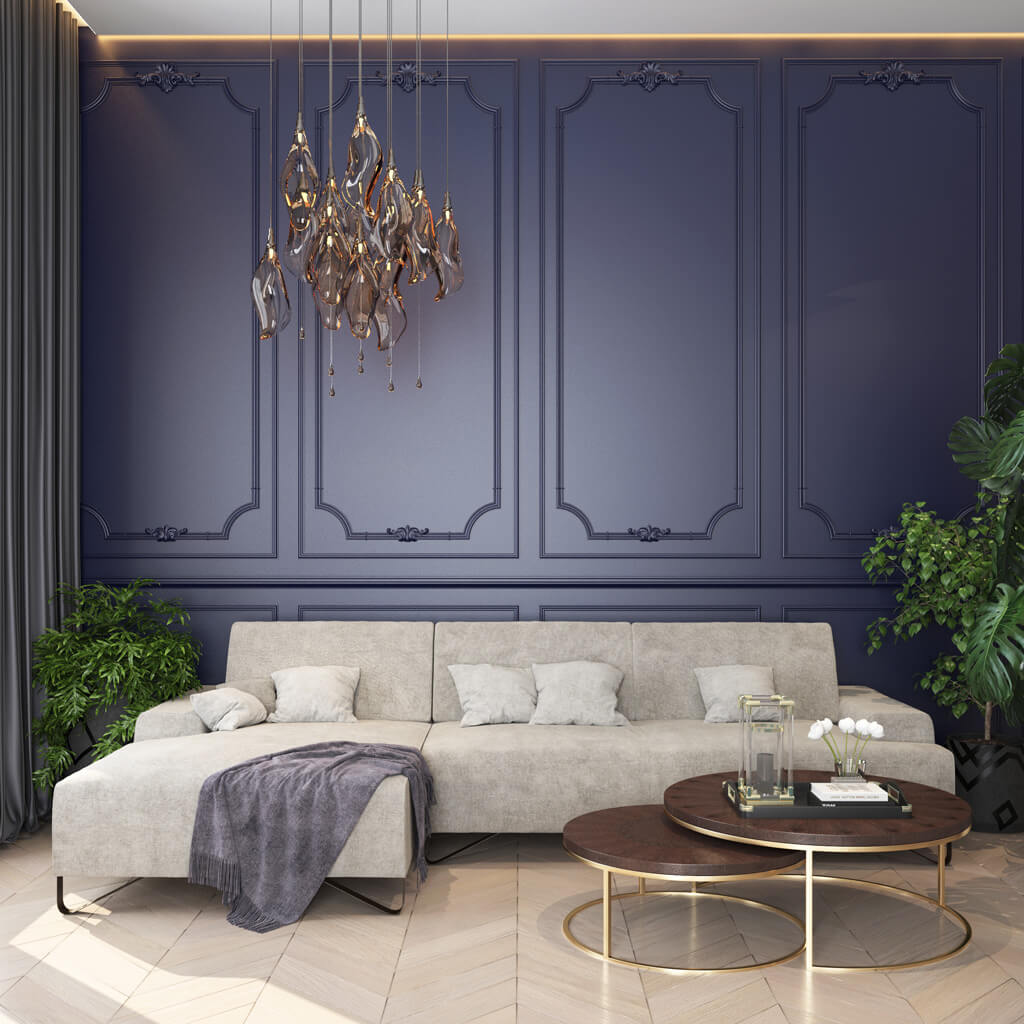

Decorative connecting element N-399.1
Dimensions and Options
Have questions?
Customers also buy




Yulia Kh.
March 24, 2026
I was satisfied with the quality of the products; we purchased furniture legs. I would especially like to highlight the professionalism of manager Oksana—very client-oriented, competent, and precise specialist. She even arranged additional trimming of some elements as an extra service for us. Huge thanks!
Incognito 7.
March 24, 2026
One of the few firms that is pleasant to interact with on renovation matters. Adequate, responsive managers. Adherence to deadlines. Execution of even complex projects. Bravo! May there be more such firms!!
Marina D.
February 15, 2026
The company ordered the pens for us when we ordered furniture. But I decided to write a review personally because they are amazing! Stylish, expensive, high-quality!
More than 20 years on the market
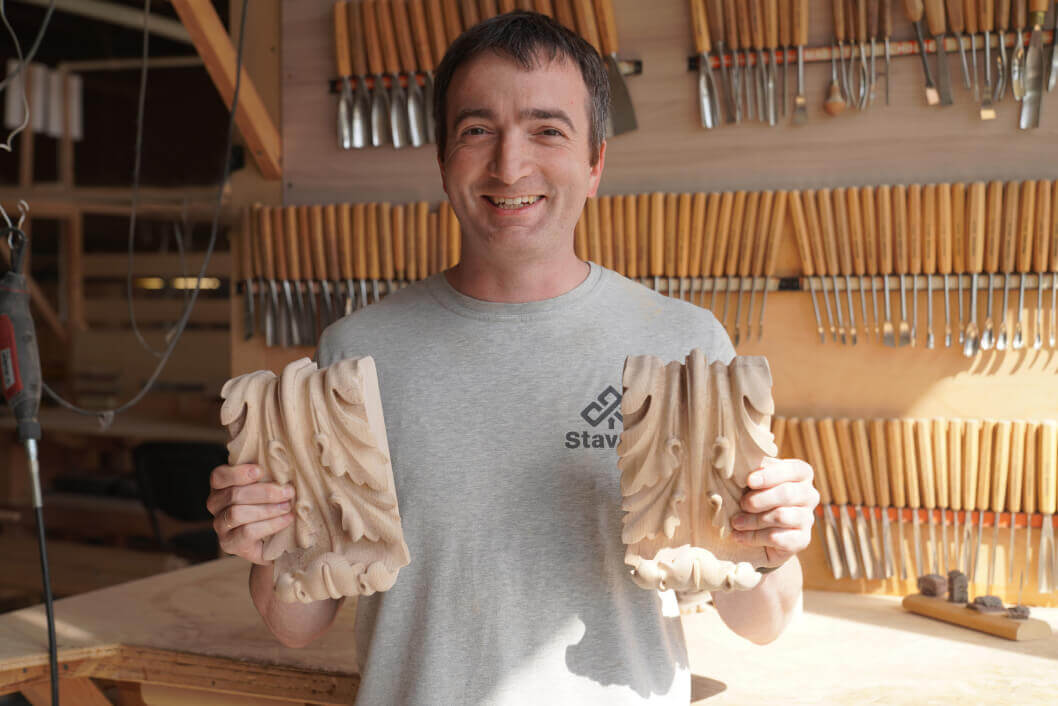
The company's success began in 2002, when two artists — Andrey Ragozin and Evgeny Tsapko — created a small creative workshop for producing wooden carved items. The masters' work was quickly noticed, and within a year they were invited to participate in the reconstruction of the Konstantinovskiy Palace in Strelna.
After the success of this project, the company focused on recreating palace interiors, furniture, church furnishings, and carved decorations in various artistic styles. They worked with cultural heritage sites: The Hermitage, the Alexandrovsky Palace, the Troitsko-Izmaylovsky Cathedral, the Sheremetyevsky Mansion, and many others.
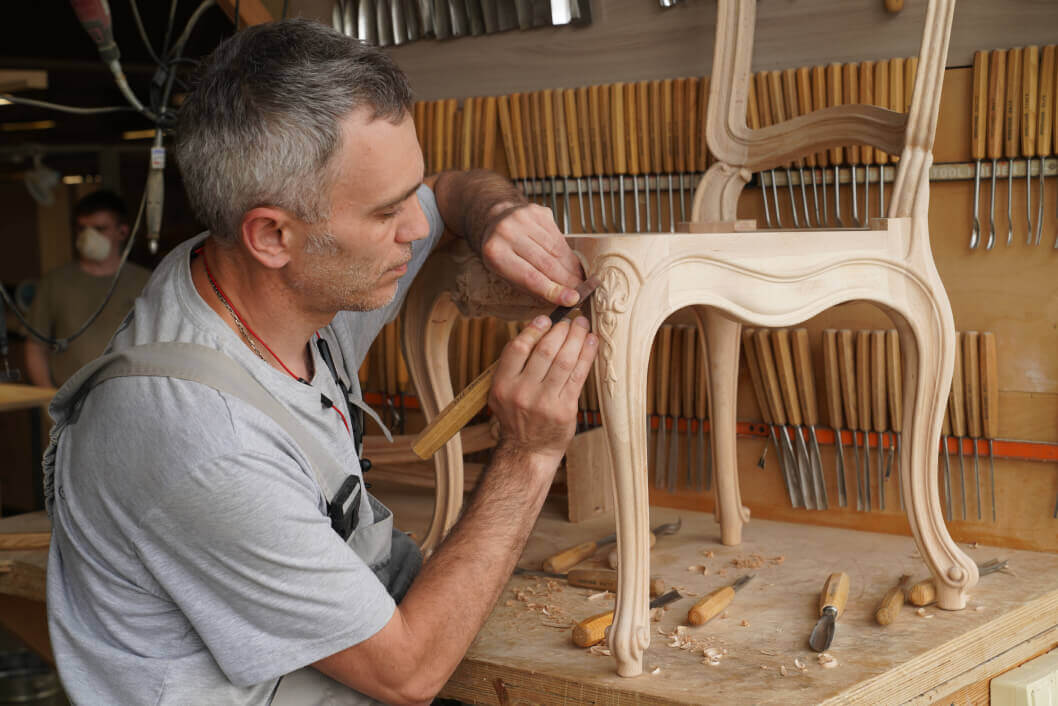
The masters' task — and still is — to create wooden items with the highest level of detail and understanding of every element, based on impeccable knowledge of artistic laws and interior styles.


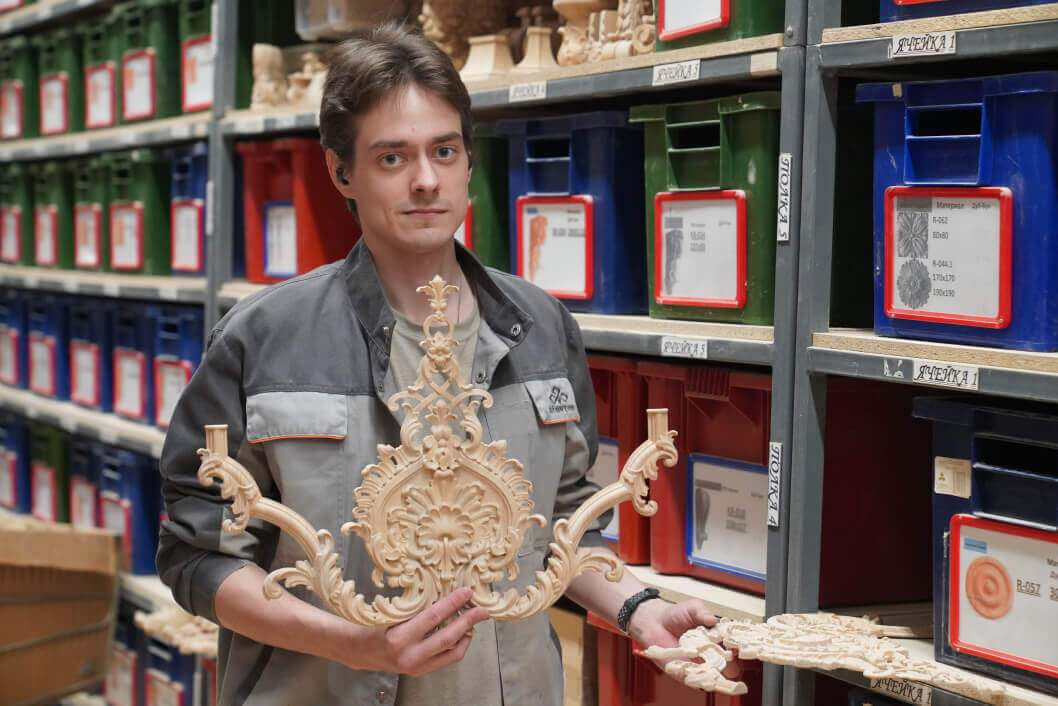
STAVROS Guarantees
Quality of products without complaints
We save your time, peace of mind, and budget
Large warehouse program
We solve your tasks with maximum speed
Adherence to production deadlines
Streamlined process reduces all risks
Delivery from 1 piece throughout Russia
Quality service regardless of order volume
Your positive business reputation
Reliable partner — the foundation of your business
More products in the molding decor category



Frequently asked questions
Our showrooms are located in Saint Petersburg and Moscow. Production is located in Saint Petersburg.
Moscow contacts: https://www.stavros.ru/contacts_all/?tab=msk
Contacts of Saint Petersburg: https://www.stavros.ru/contacts_all/?tab=spb
- Send request by email [email protected]
- Write to us at Telegram
- Write to us at WhatsApp
- Order by phone +7 (800) 555-46-75
- Visit our showroom in Saint Petersburg and Moscow
Yes, we ship orders throughout Russia and to CIS countries.
We cooperate with transportation companies such as СДЭК and DPD.
You can also arrange pickup of your order through any convenient transportation company for you.
Delivery cost depends on the size, weight of the item, and delivery address.
When placing an order, the delivery cost is calculated automatically and displayed as a separate line on our website.
Prices and availability of items on the website are always current. Data is updated daily.
Note: items in stock are stored on the warehouse in unpolished form and shipped within 3 working days.
If the item is not in stock, average production time: 5–10 working days.
This is the quality of polishing of the items.
Standard — machine polishing, at a more attractive price.
Prestige — detailed hand polishing, items do not require further work.
More details: https://www.stavros.ru/information/kachestvo/
This is the type of veneer of the items.
Under enamel: produced by gluing wooden laminates without color and texture matching. Contrast tonal and textural differences are noticeable. This blank should be chosen if the item is intended for opaque coating.
Under tinting: produced by gluing wooden laminates with color and texture matching. Tonal and textural differences may occur. This blank should be chosen if the item is intended for semi-transparent finish.
More details: https://www.stavros.ru/information/kachestvo/
Beech — dense, non-porous wood, most often used for items covered with enamel.
Oak — dense, porous wood with clearly visible natural grain. Due to its strength and decorative properties, it is often used in items with semi-transparent coating, highlighting the wood pattern.
Custom-made, if non-standard items are required, we can produce products from other types of wood, including blanks provided by the customer, manufactured according to our technical specifications.
All our furniture legs can withstand a vertical load of at least 100 kg.
Average production time for custom-made items: 5–10 working days.
Most items are stored on the warehouse in unpolished form. We need time to polish and pack orders.
Yes, we manufacture non-standard items according to individual projects, but we only accept orders with a minimum quantity.
We can manufacture items of the desired size, but we only work with bulk orders. For details, please consult the sales department manager.
Yes, some of our products can be used outdoors. For example, polyurethane items, as well as carved door casings made of pine.
Other items are produced to order using PUR glue, if minimum quantity is available. No warranty is provided for such products, as outdoor conditions are considered aggressive.
Yes, we paint items when ordering products for a total amount of 150,000 rubles or more.
- Dust removal. After sanding, the surface must be dusted.
- Priming. Apply primer in an even layer.
- Matting. After the primer has fully dried, the surface should be matted (lightly sanded for better adhesion).
- Finish coating. Apply finish coating: lacquer or enamel, in 2 layers, with interlayer drying.
More details: https://www.stavros.ru/information/sovety/
Apply adhesive to the decor. Place it on the surface and press briefly. Then, lift the decor from the surface and leave it open for 3–5 minutes. Press the decor firmly onto the surface and hold for 5–10 seconds.
More details: https://www.stavros.ru/information/sovety/
Ideally, you should prepare a design project before placing an order.
You can do this yourself by downloading drawings of our products from our website, or you can order a project from us.
If the number of decorative elements and fittings is small, our company's manager can assist you with selection.
Unfortunately, this service is not provided.
The packaging method depends on the type of items, but in each case, we ensure sufficient protection for safe transportation.
We most often use corrugated cardboard and stretch film. Fragile items are additionally secured on a rigid base to prevent damage during transport.
We ship all items starting from 1 piece.
Room measurements and item installation can be performed by our partners — carpentry companies represented in most regions of Russia.
Often searched in category Wooden and MDF items
7082
2945
2639
1444
1323
1083
858
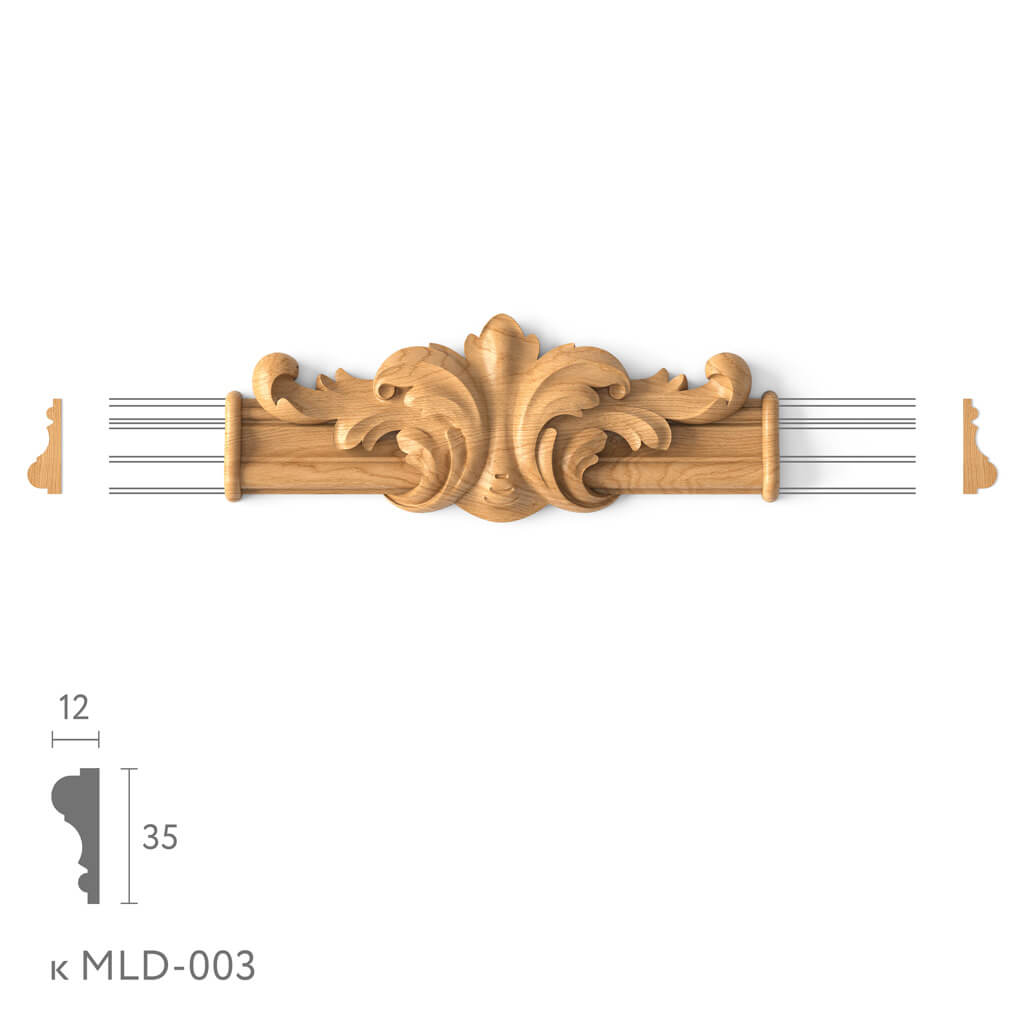
Connecting decorative element N-399.1: a wooden ornament that completes the interior
There are items that go unnoticed at first glance—until they take their place. That's when you realize: without them, the decorative composition would be incomplete, disjointed, lacking the very logic for which a classic interior is created.Decorative connecting element N-399.1—is precisely such an item. It is not just a carved overlay or an ordinary decorative detail. It is a connecting node that unites decorative elements into a single, cohesive, visually complete system.
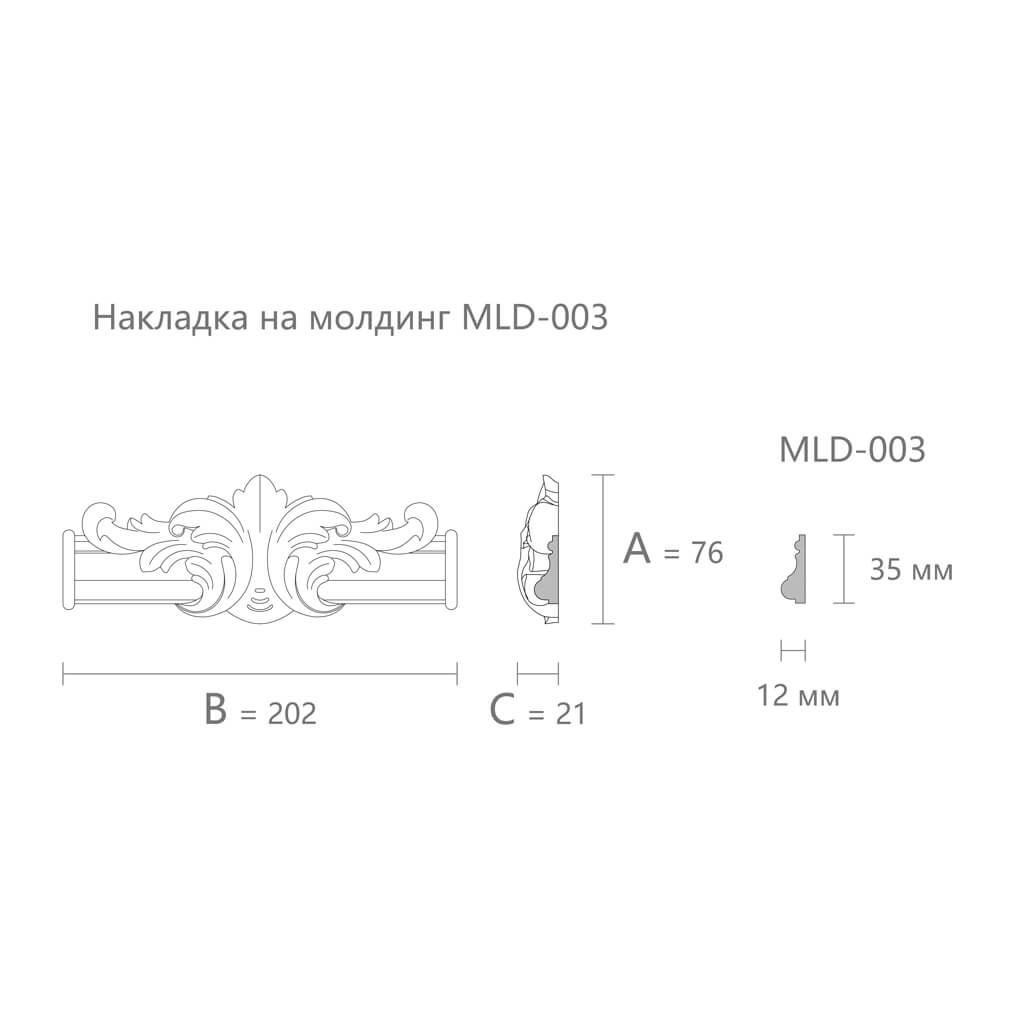
The size of 76 × 202 × 21 mm makes it one of the large ornamental accents capable of setting the tone for an entire facade or door composition. It is available in beech for enamel and oak—two fundamentally different application scenarios, each opening its own palette of possibilities.
What is the connecting decorative element N-399.1 for?
Before discussing sizes and materials, it's worth addressing the key question: what is a connecting decorative element, and how does it fundamentally differ from a regular overlay?
Any decorative composition—whether it's a kitchen cabinet facade, an interior door panel, or an interior panel design—is built from several components. Moldings define the contour. Corner elements frame intersections. Central overlays carry the main ornamental accent. But between all these details, there is often a visual gap—a place where the composition 'breaks,' loses logic, and gives the impression of unfinished work.
This is where the connecting element comes in. Its task is to become that very linking detail that unites individual parts of the ornament into a single whole. The modelN-399.1handles this function not just technically—it does so expressively, with character, with decorative strength sufficient to become an independent accent in the ornamental scheme.
Such an element is used where necessary:
-
carefully combine moldings, overlays, and ornamental details into a single chain;
-
create a smooth decorative transition between sections of the facade;
-
place rhythmic accents in an extended composition;
-
add a central point of the ornament from which the rest of the decor radiates;
-
give the design a professional finish without visual 'seams'.
Such a role in decor is one of the most responsible. And that is precisely why special requirements are placed on the connecting element: it must simultaneously 'work' with adjacent parts while preserving its own decorative value.
Large connecting element for expressive classical decor
When people talk about a 'connecting element,' they often imagine a small, almost functional detail—something like a joining strip that simply covers a gap. Model N-399.1 has nothing in common with such notions.
The size of 76 × 202 × 21 mm immediately sets the scale: this is a full-fledged ornamental object, comparable in significance to a medium-format central overlay. The height of 202 mm—over twenty centimeters—makes the product a noticeable element on any surface. The width of 76 mm and thickness of 21 mm ensure not just a flat image, but a relief, three-dimensional decor with clearly defined plastic forms.
It is the relief that determines the visual value of wooden decor: it creates a play of light and shadow, which, under proper lighting, turns a cabinet facade or door panel into a full-fledged artistic object. The thickness of 21 mm is not an arbitrary number. It guarantees that after installation and finishing, the decor will not 'sink' in relief, lose volume, and will retain the expressiveness for which it is chosen.
In classical and neoclassical decor, such items are typically placed:
-
in the central part of the facade panel — as the main ornamental accent;
-
at the junction of vertical and horizontal moldings — as a unifying node;
-
in the middle of extended decorative strips — as a rhythmic element that sets the visual beat;
-
on door panels — as the dominant detail of the composition, around which all other decor is arranged.
In each of these scenarios, N-399.1 acts not merely as a 'connection,' but as a full-fledged decorative unit with its own artistic weight.
Beech or oak: choosing according to the style and task of the project
The product is available in two versions, and this choice is much more significant than simply preferring one wood species over another. It involves two fundamentally different concepts of finish and two distinct visual narratives.
Beech, standard, for enamel
Beech is a wood with a homogeneous, dense, almost featureless structure in a good sense. It is precisely this 'featurelessness' that makes it an ideal material for decorative items that are planned to be coated with enamel. The beech surface does not have foreign inclusions, almost lacks a pronounced grain pattern, and therefore the paint applies evenly, without spots, without showing through the layers.
The 'under enamel' finish means the product surface is specially prepared: sanded, primed, and brought to a state where applying enamel—white, cream, gray, dark, any color—yields a perfect professional result.
This is an option for projects where:
-
a unified color code is important—the decor must match the color of facades, doors, or moldings;
-
the interior is executed in a classic, Provence, neoclassical, Empire, or modern Art Deco style;
-
the furniture facade is painted entirely—wardrobe, kitchen, wall panels in a unified palette;
-
the decor will be incorporated into the finish, where color works as a style-forming tool.
White enamel combined with relief carved decor is a textbook technique of classic furniture. Such facades are associated with expensive, professionally executed work.
Oak
Oak is a material with a completely different character. Pronounced texture, large pores, the lively pattern of wood fibers—all this makes oak decor a truly natural object, where the species, history, and character are visible.
The oak version of the N-399.1 connecting decorative element is chosen when:
-
a project with an emphasis on the naturalness of materials is being implemented;
-
The interior is designed in a warm palette — stained wood, wax, natural varnish;
-
Furniture or doors retain their natural appearance without solid painting;
-
The style requires 'living' material — rustic, classic with natural tones, loft with wooden accents, country;
-
Durability under temperature and humidity fluctuations is important — oak is significantly denser and harder than beech.
Both options — beech and oak — are made from solid natural wood. This is not veneer, not imitation, not a polymer composite. Real wood that accepts finishing as only a living material can: voluminously, warmly, naturally.
Size 76 × 202 × 21 mm: why it works
Talking about wooden decor without discussing size is like describing a musical piece without mentioning tempo. Size defines the product's role in the composition more precisely than any other parameter.
Width 76 mm — exactly what's needed for confident 'weight' in the transverse direction. Such an element doesn't get lost against wide moldings or large panel surfaces, but also doesn't take up excessive space, leaving room for adjacent parts.
Height 202 mm — that's what makes N-399.1 truly noticeable. Over twenty centimeters vertically — that's full presence on the facade. On a standard furniture door 700–900 mm high, such an element will occupy from a quarter to a third of the visible area. This isn't a background detail — it's an accent. That's why the product works so well as a central connecting ornament: it immediately catches the eye and organizes the other decorative parts around itself.
Thickness 21 mm — a parameter often underestimated. It's precisely this that forms the relief, creates play of shadows, and gives the decor a volume that no milling of the facade material can replace. When lit at an angle, each carving curve casts a shadow, and the entire surface acquires a sculptural character.
This combination of sizes is particularly advantageous:
-
on kitchen cabinet facades with door heights of 700–1000 mm;
-
on interior door panels as a central decorative accent;
-
in display cases and shelving with wide horizontal sections;
-
on interior wall panels in classic living rooms or studies;
-
in decorative portals and fireplace niche frames.
How the N-399.1 connecting element enhances the decorative composition
Here it is appropriate to discuss the visual psychology of decor—how the human eye perceives complex ornamental surfaces and why the connecting element plays a key role in this perception.
When the eye glides over a decorated surface, it seeks rhythm and logic. If the decor consists of a set of unrelated details, the ornament appears random, 'market-like,' lacking intent. But if there is a connecting link between the elements, the eye finds a route, moves along a given path, and ultimately gains a sense of integrity and professionalism.
The connecting ornamental element is precisely that linking component. It:
-
creates rhythm — repeating at equal intervals, it sets the visual beat of the surface;
-
organizes transitions — between horizontal and vertical moldings, between facade sections, between different levels of decor;
-
holds the gaze — acting as a semantic center to which the entire ornamental field is drawn;
-
adds completeness — transforms a set of details into a unified decorative system;
-
enhances the feeling of an expensive solution — because precisely crafted transitions and joints distinguish professional decor from amateur work.
Compare two facades: one with moldings around the perimeter and a central rosette. The second — identical, but with connecting elements at the intersections of moldings and transition points. The difference will be obvious even to someone who has never done design: the second facade looks more expensive, complex, and complete.
This is exactly the difference that model N-399.1 creates. And that is why it is in demand among professional furniture makers, designers, and carpenters who understand well: the final quality of an interior is determined not by one central detail, but by the entire decorative system as a whole.
Where the decorative element N-399.1 is used
The scope of application for this product is wide — and this is logical for a connecting decorative element that performs a universal organizing function. Let's examine the main scenarios in more detail.
Furniture facades
This is the most obvious and common area of application. Cabinet fronts, kitchen unit fronts, dresser fronts, wardrobe system fronts, library wall unit fronts — wherever wood meets decorative molding, the connecting element finds its place.
On kitchen fronts N-399.1 is typically placed at the intersections of horizontal and vertical moldings or in the centers of wide horizontal sections. In cabinets — as a connecting accent between levels of decorative design.
If you are interested in comprehensive furniture solutions, take a look at Decorative overlays for furniture and facades — overlays are presented there that organically complement the connecting decor N-399.1 in unified furniture compositions.
Interior doors
On the door leaf, the connecting element works as an anchor point for the entire ornamental scheme. A classic door with molding framing and connecting accents is a solution that looks expensive and sophisticated regardless of the category of the door's main material.
The size 76 × 202 × 21 mm allows placing N-399.1 on the door leaf without visual overload — the element occupies enough space to be noticeable but does not overwhelm the rest of the decor.
Decorative interior panels
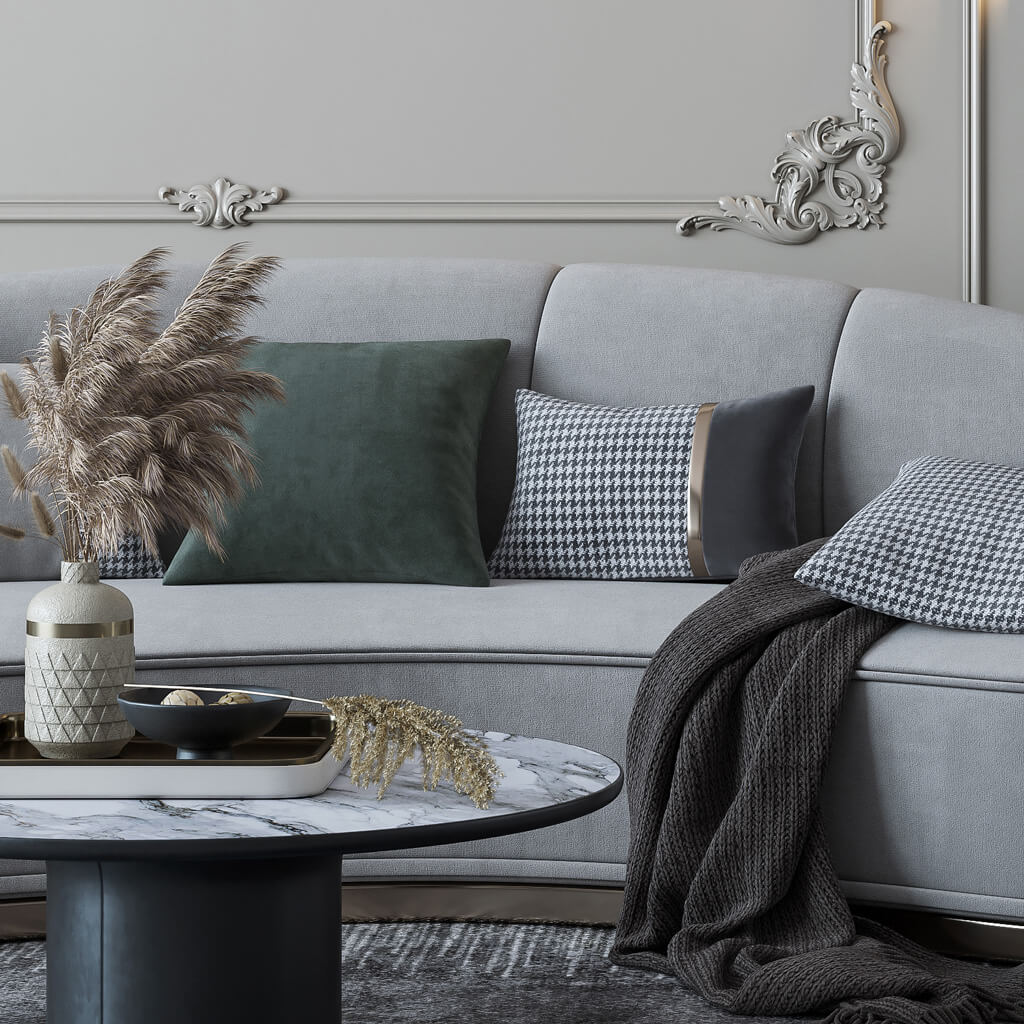
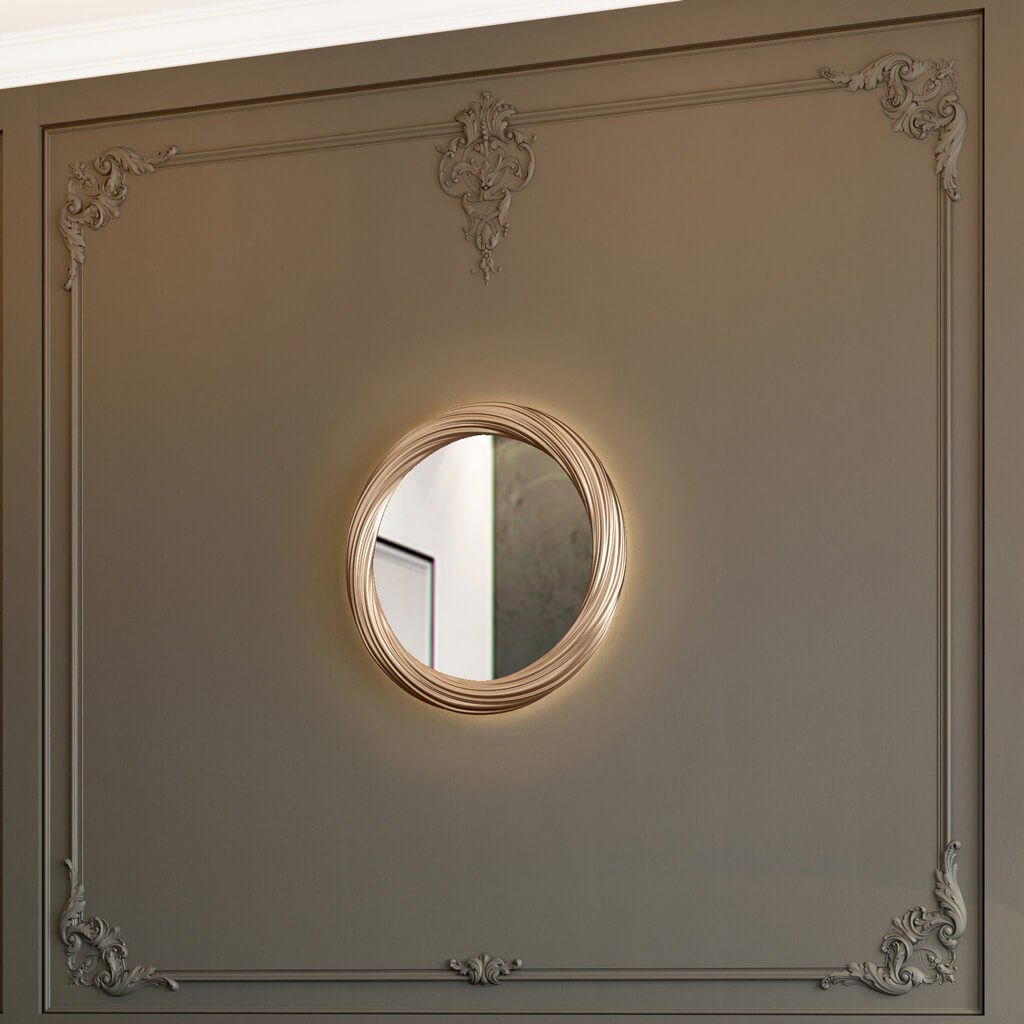
Wall panels in classic living rooms, studies, corridors, and meeting rooms — one of the most favorable areas for applying connecting decor. Long horizontal moldings on panels require rhythmic accents at equal intervals — this is exactly where N-399.1 works to its full potential.
Display cases and glazed sections
Display cabinets, libraries, buffets — products where vertical posts and horizontal shelves form their own geometry, different from solid fronts. Connecting decor in such structures is placed in transition zones between glazed and solid sections.
Decorative portals and trims
Fireplaces, niches, decorative openings — all of these require framing according to the 'frame' principle: moldings around the perimeter and accent elements at key points. N-399.1 in this context becomes a full-fledged part of the architectural decor.
For working with moldings, pay attention to the section Decor for Molding — here are collected connecting, corner, and central elements that work in a unified system with the connecting decor N-399.1.
Advantages of the decorative connecting element N-399.1
A professional choice in favor of a specific product is always based on specific advantages. Let's list those that make N-399.1 popular among furniture makers, designers, and carpenters.
Unifies decor into a single system
The main functional advantage is not decorative, but organizational. This element literally connects disparate parts of the ornament into a cohesive, logically structured composition. A professional furniture maker understands the value of this function: the overall impression of the product depends precisely on the quality of the 'joints'.
Expressive scale
The size 76 × 202 × 21 mm ensures presence in the ornament without the need to compensate for the small format with adjacent parts. A large connecting element works confidently even on surfaces with an active molding system.
Natural wood
Solid beech or oak — this is not just a material, it's positioning the product in the 'premium' category. Natural wood is perceived differently than any polymer analog: it is warm to the touch, alive, and carries the natural uniqueness of each individual piece.
Two design options for different tasks
Beech for enamel and oak for natural finish — two completely independent application scenarios within one model. This means the N-399.1 fits organically into projects with fundamentally different style concepts.
Ease of Installation
The wooden overlay decor is mounted with adhesive — no complex tools, no special skills required. All you need is a degreased surface, good wood glue, and a bit of pressure to secure it in the first few minutes after application. Once the adhesive fully cures, the product holds securely and long-lasting.
Wide compatibility with other decorative elements
The N-399.1 was originally created as part of a system. It is compatible with moldings, corner elements, central overlays, and other parts of decorative collections. This allows building complex multi-level ornamental schemes without compromising on style or scale.
If you are looking forsolid oak and beech wood trim— moldings, baseboards, cornices — for project completion alongside the N-399.1 connecting decor, all these items are available in one catalog.
For furniture, doors, and decorative interior solutions
Let's try to describe a few specific scenarios to answer the question: how exactly does the N-399.1 integrate into a real project?
A classic white kitchen. MDF fronts painted in white enamel, horizontal molding around the door perimeter. At the intersection point of the top molding with the central vertical line — the N-399.1 connecting element in beech for white enamel. Result: the simple geometry of the front gains a recognizable classic accent without being overloaded.
Interior door with ornamental decor. Solid oak door leaf, molding framing of upper and lower panels, in the center — N-399.1 in oak finish. Natural wood tone, uniform texture, relief carved accent in the center. Result: the door looks like an author's carpentry piece.
Library cabinet with glazed sections. Vertical posts separate glazed cells. On each post, at the point of division into horizontal levels — a connecting decorative element made of beech matching the color of lacquered veneer. Result: the cabinet acquires architectural rhythm and a sense of refinement.
Wall decorative panels in the study. Horizontal molding strips divide the wall into levels. Every 80–100 cm — a connecting accent N-399.1 made of oak with natural lacquer. Result: the wall acquires the character of a classic English library or a nobleman's study.
In each of these examples, the product performs the same function, but in different contexts — and each time the result looks different, because wooden decor made of solid wood adapts to the environment organically, without conflicts.
Decorative connecting element in the system of classic furniture decor
To truly appreciate the role of N-399.1, it is useful to look at it in the context of a full-fledged system of classic furniture decor — the very one that distinguishes products of the highest category from standard products.
Classic furniture facade is built on several levels of decor:
-
Molding — sets the contour, geometry, rhythmic basis of the surface.
-
Corner elements — design the intersections of moldings, 'lock' the corners and create visual stability.
-
Central overlays — carry the main artistic message: floral ornament, rocaille, cartouche, acanthus.
-
Connecting elements — link all the listed components into a single continuous decorative fabric.
Remove any component from this system — and it will start to fall apart. Remove the connecting elements — and instead of a cohesive ornamental scheme, you'll get a set of disparate parts that 'look' in different directions.
Therefore, N-399.1 is not an addition to the decor. It is a structural part of the decorative system, without which the system operates at half capacity.
Installation and preparation for finishing
A practical question most buyers ask: how is such an element installed and what needs to be done before applying the finishing coating?
Installation with adhesive. The connecting element is attached to the surface using woodworking or parquet PVA-based adhesive. The work sequence is as follows:
-
the surface is dusted and degreased if necessary;
-
adhesive is applied to the product in a thin, even layer;
-
the decor is applied to the surface, lightly pressed, then removed and allowed to sit for 3–5 minutes to activate the adhesive;
-
after that, the product is firmly pressed against the surface and fixed for 5–10 seconds;
-
Full curing — according to the glue instructions, usually from 30 minutes to several hours.
Preparation for enamel. If the "beech, under enamel" finish is selected, the product surface is already prepared for enamel application. It is recommended to apply a primer coat of enamel, let it dry, sand with fine sandpaper if necessary (grit 320–400), and apply a finish coat. This technique gives a smooth matte or semi-matte surface without bubbles or unevenness.
Oak finishing. The oak version is finished with stains, oils, waxes, or varnishes. Before applying the coating, it is recommended to sand the surface along the grain to open the pores and ensure even absorption of the composition.
Professional perspective: why connecting decor is an investment, not an expense
In furniture and design production, a rule has long been established: the cost of additional decor is disproportionately small compared to the added value it creates for the finished product.
The price of one connecting element N-399.1 — from 1,620 rubles. For professional production or a private project, this is a minor budget item. But it is this element that can become the detail that moves the product from the category of "solid furniture" to the category of "custom carpentry solution."
A customer coming to a showroom or browsing a catalog does not analyze individual details — they react to the overall impression. And it is the connecting decorative element that creates that very impression of completeness, expensive solution, professional execution, which cannot be achieved through material or paint quality alone.
If you are engaged in custom furniture production, door manufacturing, or interior design — try adding a connecting decorative element to your next work. The client's reaction will most likely confirm what professional furniture makers have long known: details decide everything.
Connecting decor in classic interior styles
Classic, neoclassical, baroque, empire, provence, English classic style — all these directions share one thing: decorative complexity. Ornament in these styles is never single-level — it is built on several layers: from large architectural division to small accent details.
Connecting decor is that second or third layer without which high style doesn't come together. That's why N-399.1 has found its place in the arsenal of designers working with classic interiors.
Interestingly, the word 'classic' in interior design long ago ceased to mean only antique forms. Modern classic is a system built on principles of symmetry, proportion, rhythm, and decorative completeness. The connecting element embodies all these principles: it's symmetrical, proportional, creates rhythm, and ensures completeness.
For projects in neoclassical and modern classic styles — whereDecorative overlays for furniture and facadescombined with connecting decor — you can build full-fledged furniture systems using a single catalog of beech and oak products.
Target audience and professional use cases
Custom furniture manufacturers are the primary audience for this product. For carpentry workshops specializing in classic furniture, connecting decor is a working tool used regularly and in large volumes.
Interior designers — those who design classic and neoclassical spaces and want to offer clients a turnkey solution with professional decor.
Door manufacturers — companies and private craftsmen producing interior doors with ornamental design. The connecting decorative element allows offering additional finishing options without creating their own molds and models.
Private clients — people engaged in independent furniture updates or renovations with decorative elements. Installation doesn't require special equipment, and the result is comparable to professional work.
Decorators and designers — those who work with interior panels, display structures, and architectural details in commercial and representative spaces.
Order decorative connecting element N-399.1
When the interior is complete, when every detail is in its place, when the eye effortlessly glides over a solid, rhythmic, precise surface — that is the result of the right decorative choice.
Decorative connecting element N-399.1— it is not a detail noticed separately. It is a detail whose absence makes you notice something important missing. It is such products that define the quality of professional work.
Choose the beech version under enamel if your project involves painting in a specified color. Choose oak if you want to preserve the living texture of natural wood. In both cases, you get a solid product measuring 76 × 202 × 21 mm, made from natural wood, ready for installation and finishing.
Place an order — and your next project will become what classic decor should be: solid, expressive, and flawless.
Frequently Asked Questions (FAQ)
What is decorative connecting element N-399.1 used for?
It is used to combine decorative parts — moldings, overlays, ornamental elements — into a single visually complete composition. Acts as a connecting node in the decorative scheme of furniture, doors, or interior panels.
Where can a wooden connecting element be used?
On furniture fronts, door panels, wall decorative panels, display structures, decorative portals, and fireplace surrounds. Suitable for any surfaces where molding or overlay decoration is applied.
Is N-399.1 suitable for furniture fronts?
Yes, this is one of the main areas of application. The product works well on cabinet fronts, kitchen units, dressers — both as a connecting element and as a central ornamental accent.
Can this element be used for doors?
Absolutely. On interior doors with N-399.1 molding decor, it is placed in the center of the panel or at the intersection points of ornamental lines — and gives the door the character of a custom-made carpentry product.
How does beech under enamel differ from oak?
Beech is a homogeneous wood with a smooth surface, ideal for applying enamel and paint. Oak is an expressive species with a lively texture, better suited for natural transparent finishes. The choice depends on the concept of the project's final finish.
Which interior styles is such decor suitable for?
For classic, neoclassical, baroque, empire, provence, English classic style. Also appropriate in modern classic and any projects where molding decoration is used.
How does the size 76 × 202 × 21 mm affect the application?
A width of 76 mm and a height of 202 mm make the element a noticeable ornamental accent, visible on any surface. A thickness of 21 mm provides expressive relief and depth of decoration.
Can the element be used as a central decorative detail?
Yes. The size and relief of the product allow it to be used not only as a connecting element but also as an independent central accent of the ornamental scheme.
Is the product suitable for painting projects?
Yes — the 'beech, standard, for enamel' version is specially designed for projects with painting. The surface is prepared for applying primer and enamel.
Why is the connecting element important for the decorative composition?
Because without it, the decor looks like a set of unrelated parts. The connecting element creates rhythm, logic, and completeness of the ornamental scheme — this is what turns a set of parts into a professional decorative solution.
Your request has been sent!
Our manager will contact you within 5 minutes