































 5-10 days
There are things that never go out of style. Acanthus leaves on Greek columns, grapevines on the facades of medieval cathedrals, floral garlands in the halls of the classicism era — plant ornament has survived all architectural revolutions, all style changes, and all fashionable reinterpretations because natural form possesses something that no geometry can provide: it lives.
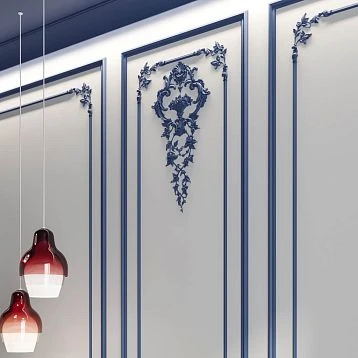
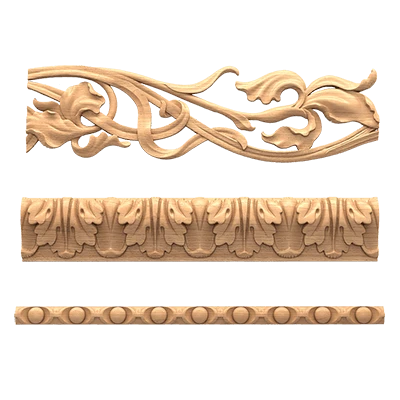
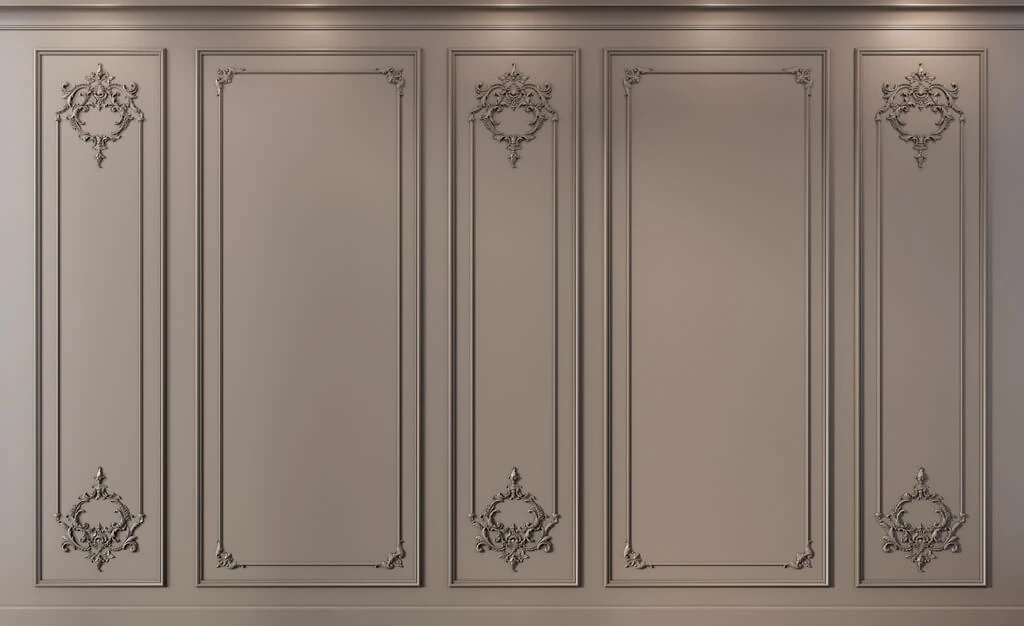
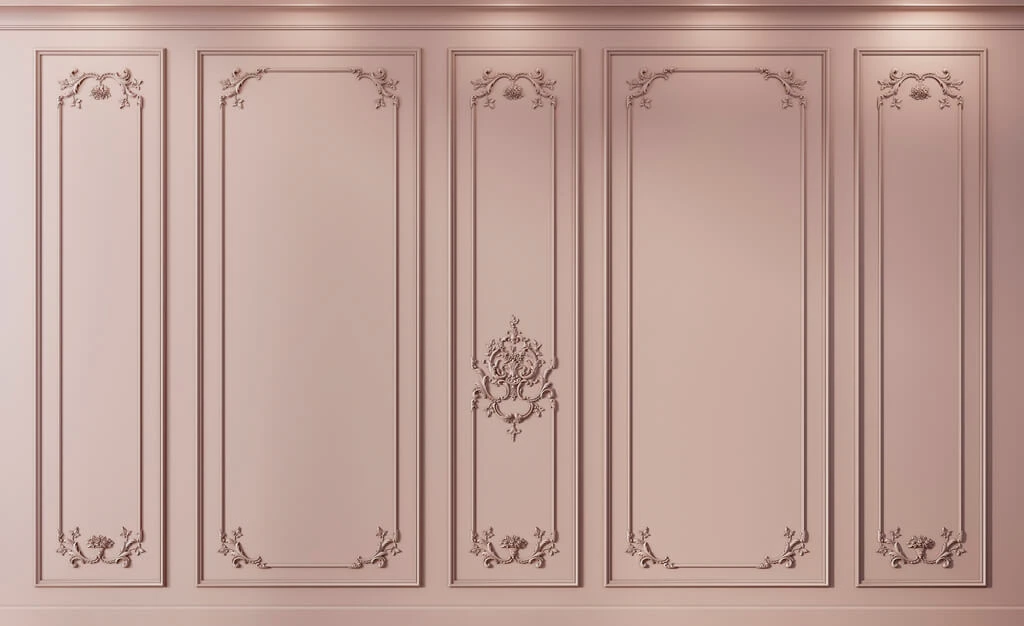
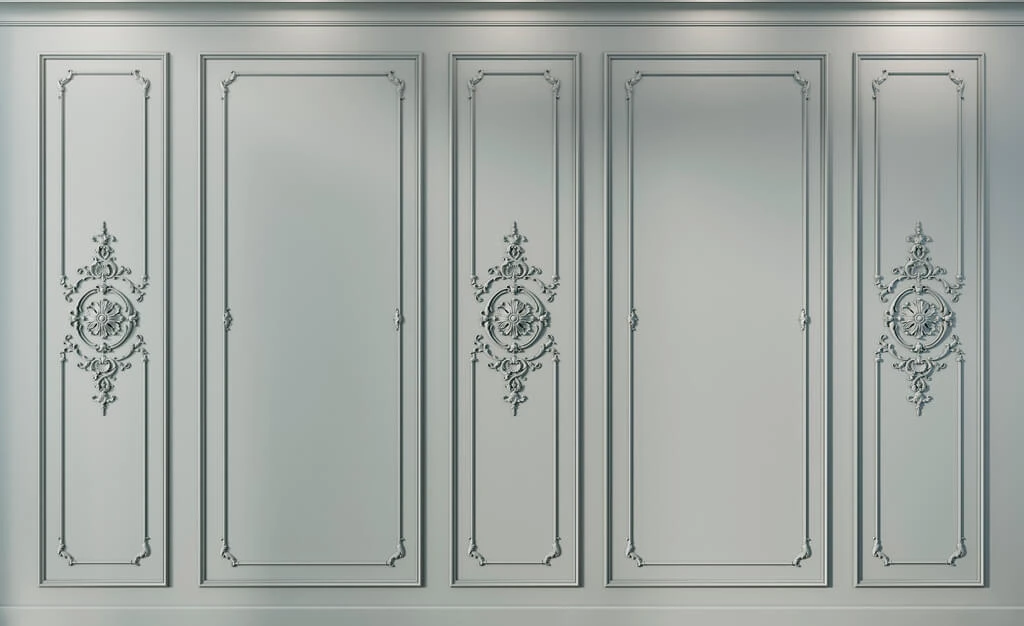
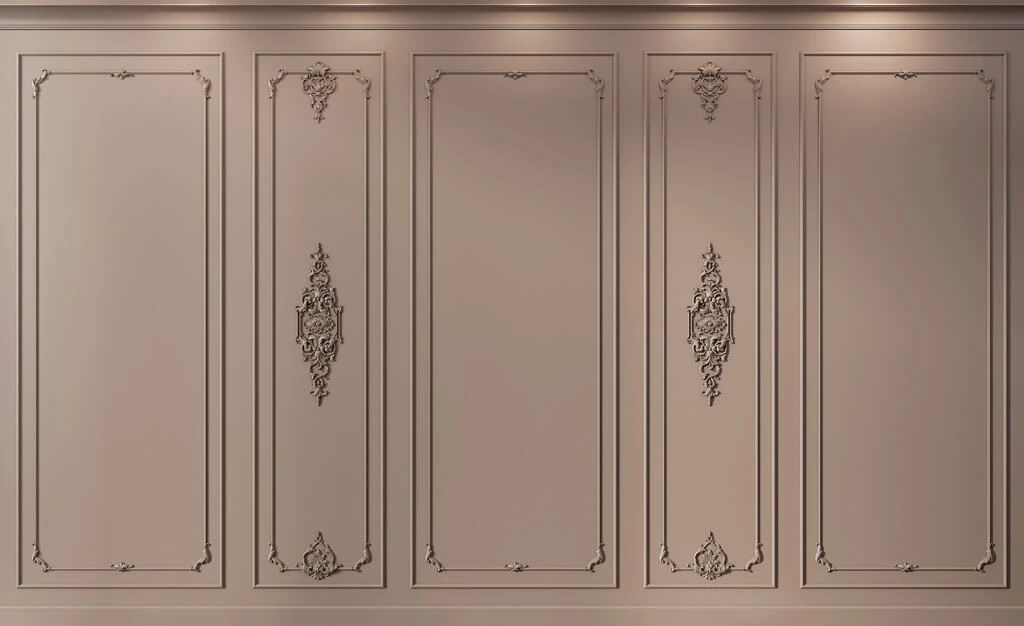
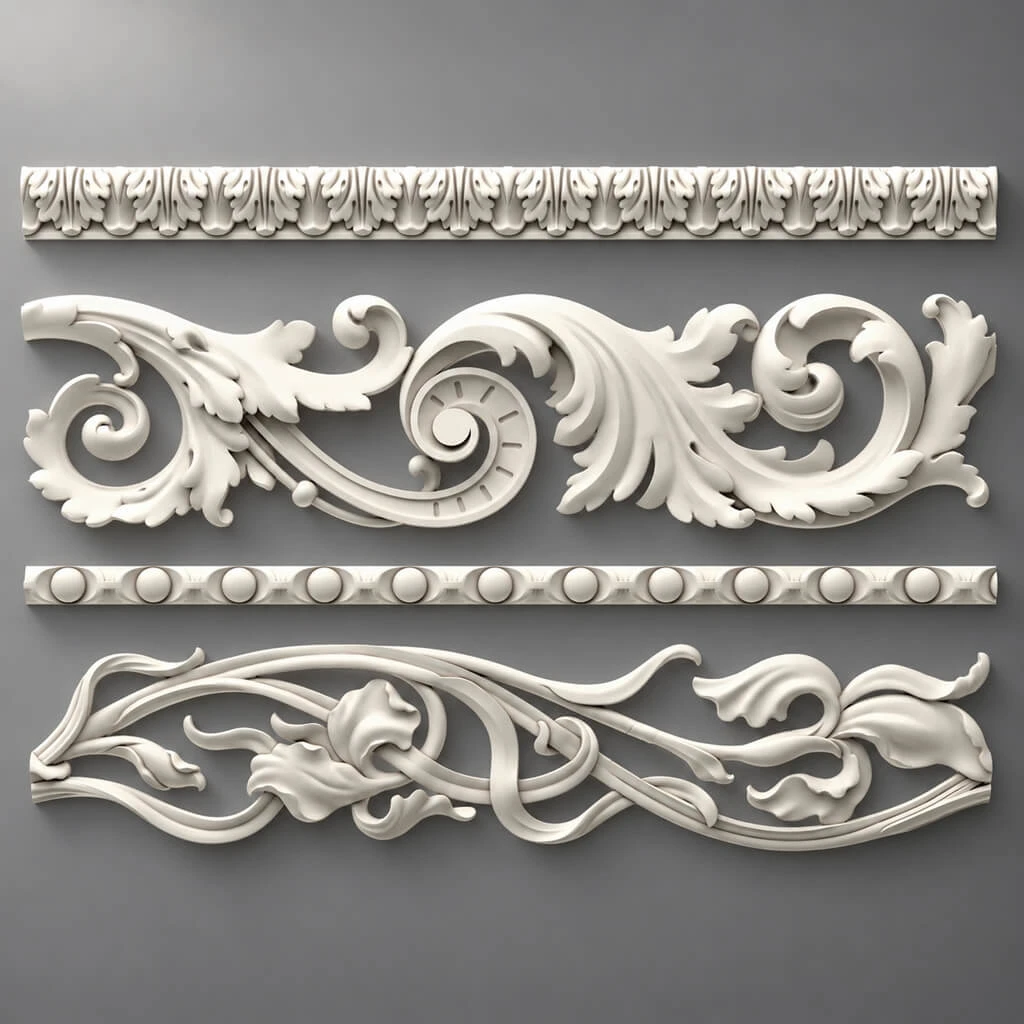
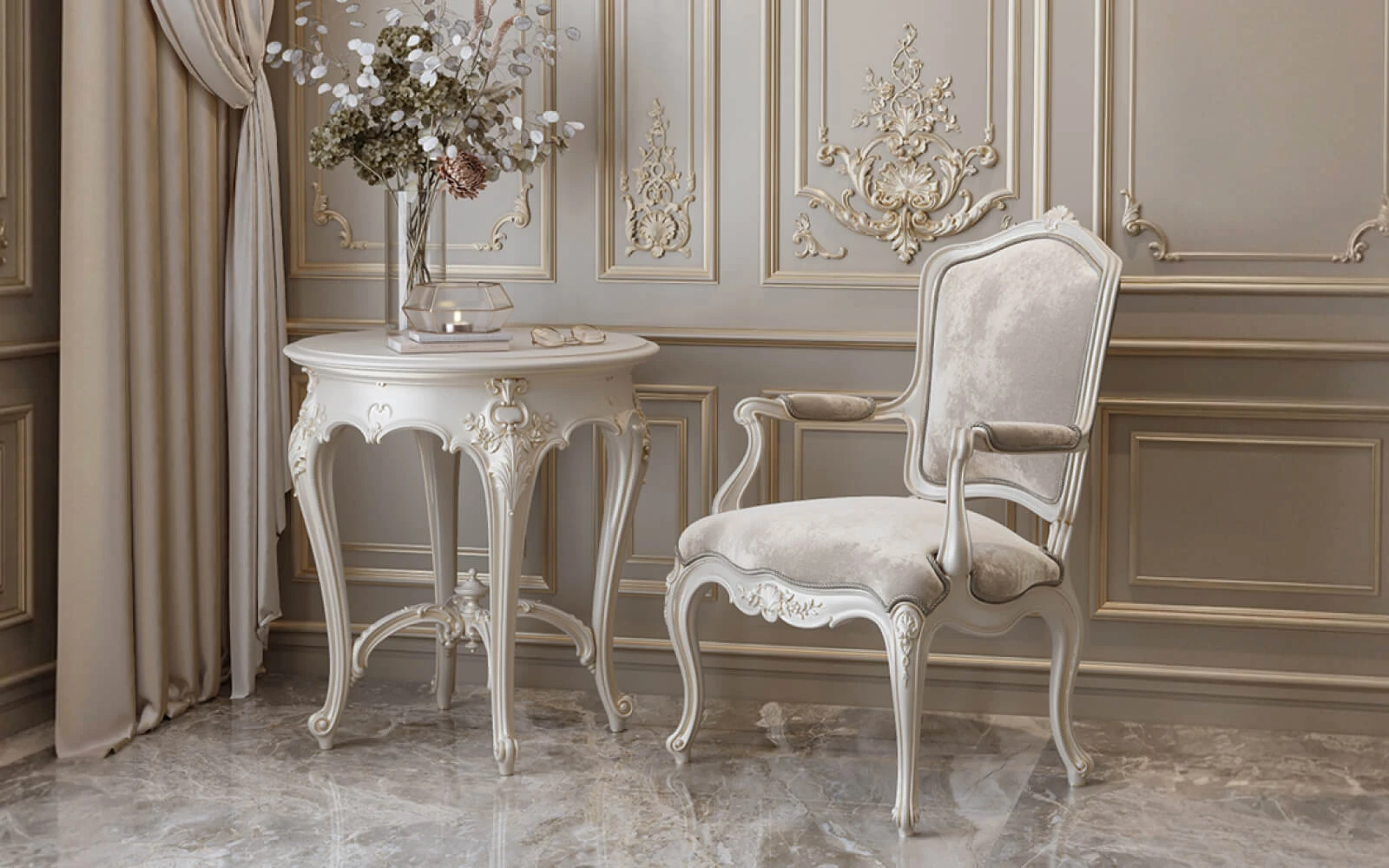
The STAVROS "Botanical Garden" collection is exactly that kind of decor. Here you will find polyurethane stucco decor for walls with leaves, flowers, curls, and natural ornaments designed to make the wall cease to be a plane and become part of a living space. Not an imitation of nature — its architectural interpretation.
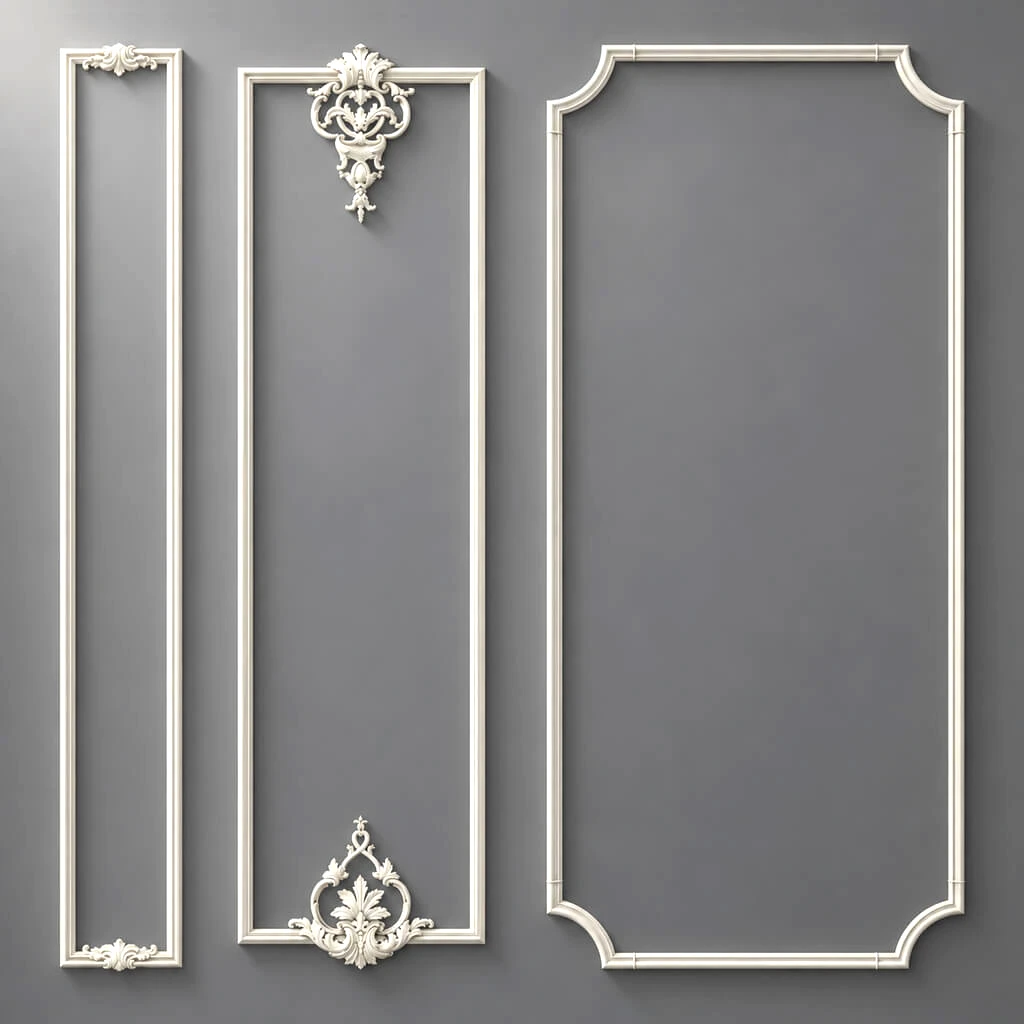
This section gathers decorative polyurethane elements from one series: corner pieces, central medallions, vertical inserts, ornamental overlays, horizontal accents, and ready-made kits for wall panels. All of this can be purchased separately or used as a system, creating finished interior compositions of any complexity from individual parts.
Buying stucco decor from the "Botanical Garden" means getting a tool that works equally convincingly in the living room of a classic apartment, in the bedroom of a country house, in the hallway of a city apartment, and in the hall of a restaurant with character.
Before talking about specific elements and application scenarios, it is worth understanding what makes this collection conceptually cohesive. This is not about a random set of parts with a similar ornament. "Botanical Garden" is a well-thought-out system in which each element was created with compatibility with the others in mind.
The collection's ornament is inspired by the classical European tradition of botanical illustration: precise, observant, admiring the details of living nature. The leaves here are not abstract curls, but forms with recognizable outlines. The flowers are not schematic symbols, but living images with voluminous petals, drawn with respect for the botanical source.
It is this rootedness in real natural form that makesSTAVROS Polyurethane Decor from the "Botanical Garden" collection universal: it does not shout, does not impose itself, does not require a special style around it. It simply lives on the wall — and makes it alive.
The "Botanical Garden" section features several groups of products:
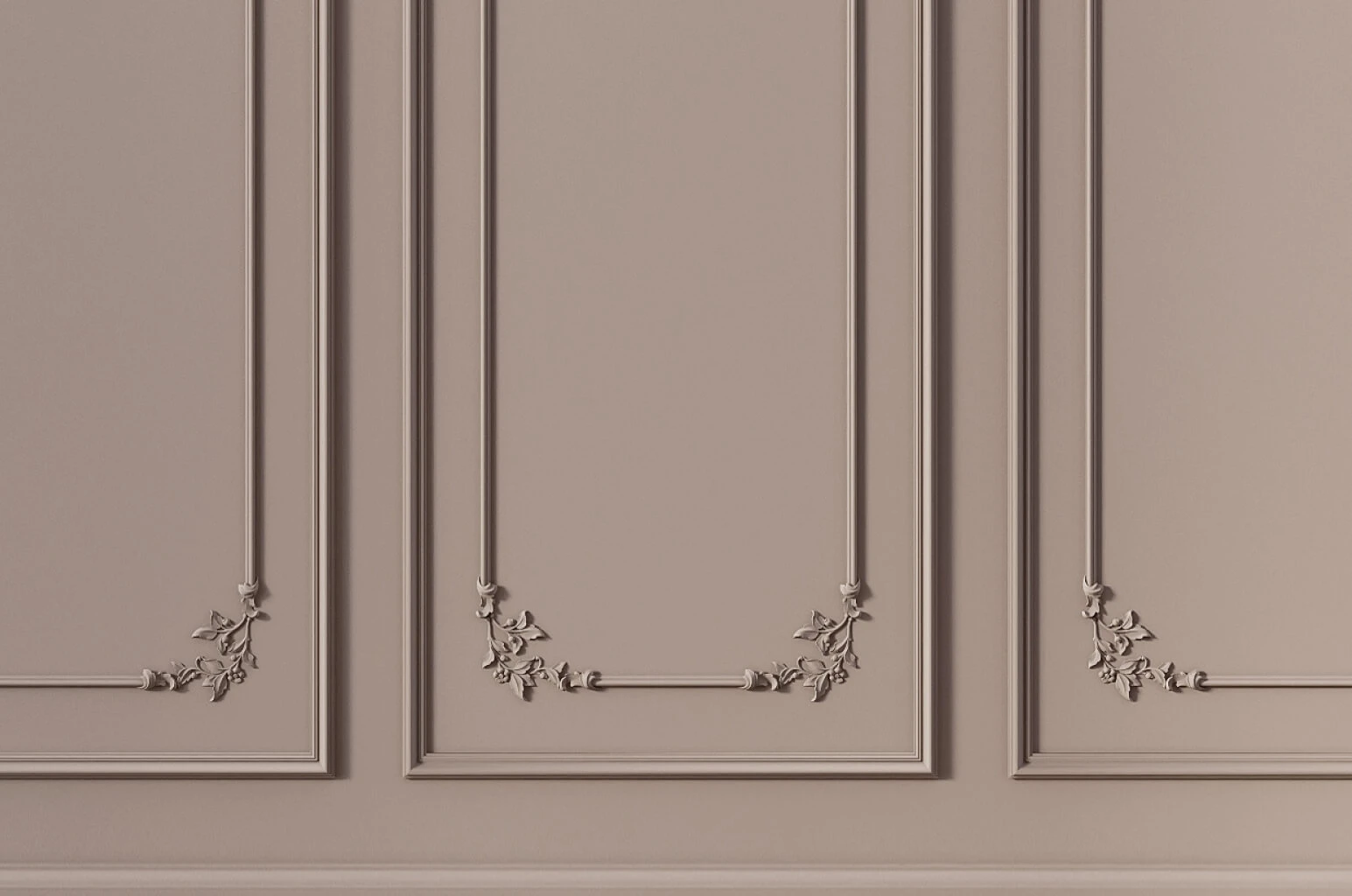
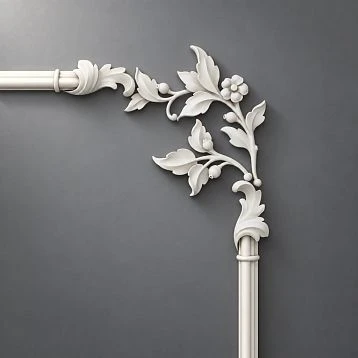
Corner decorative elements — left-handed (L) and right-handed (R), for symmetrical framing of frames and panels
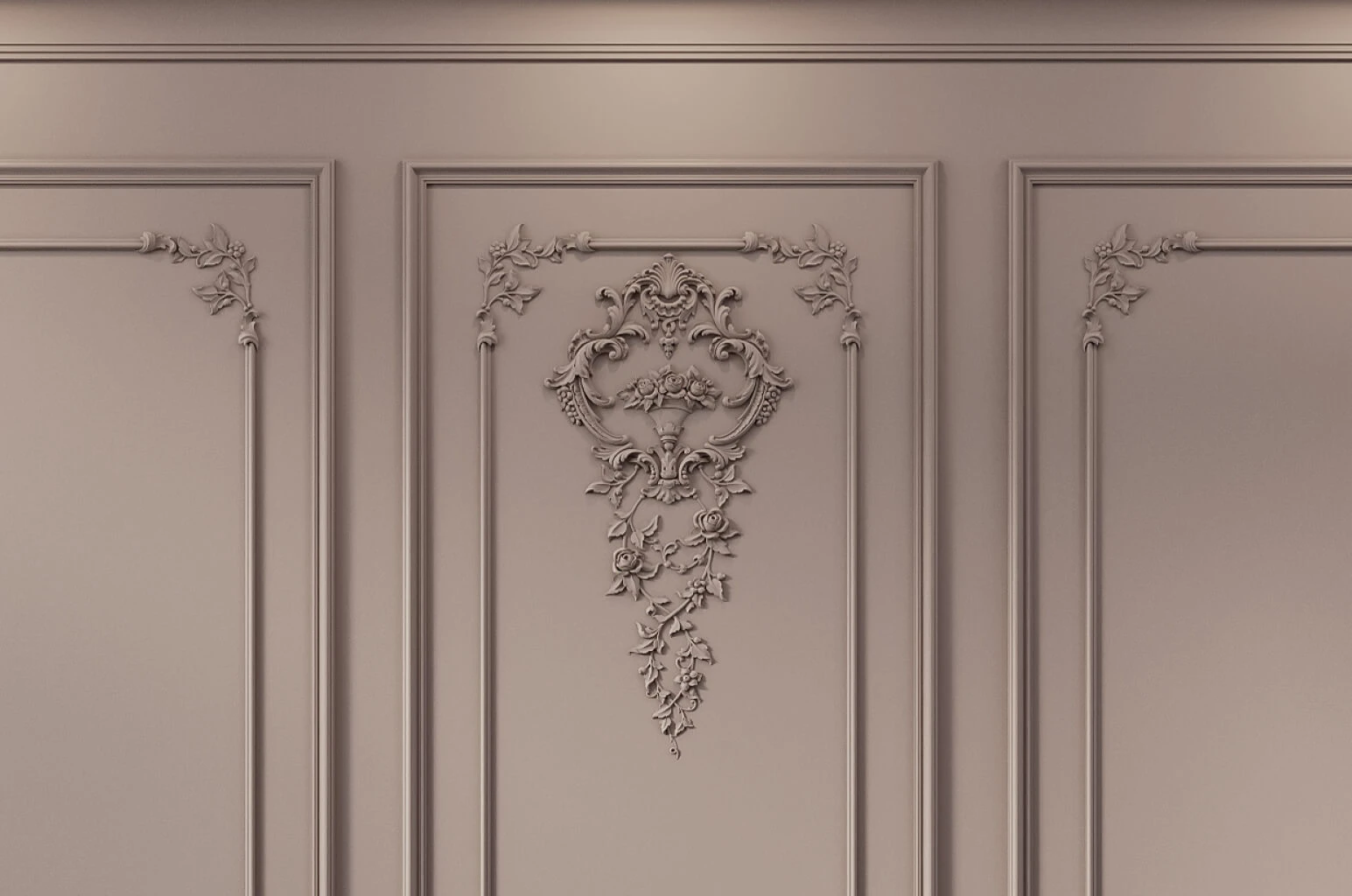
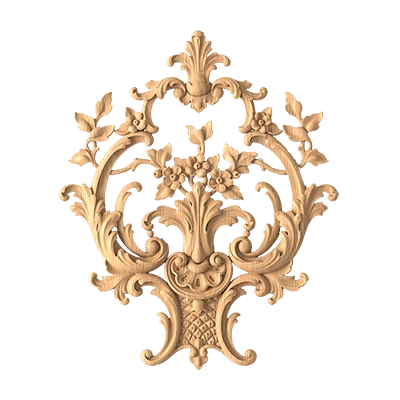
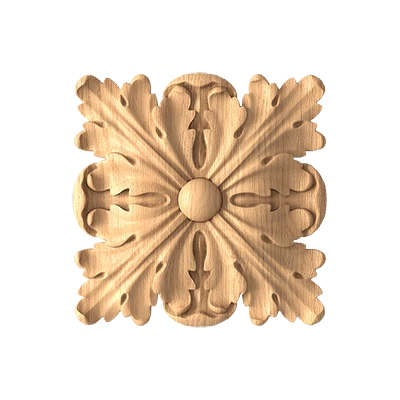
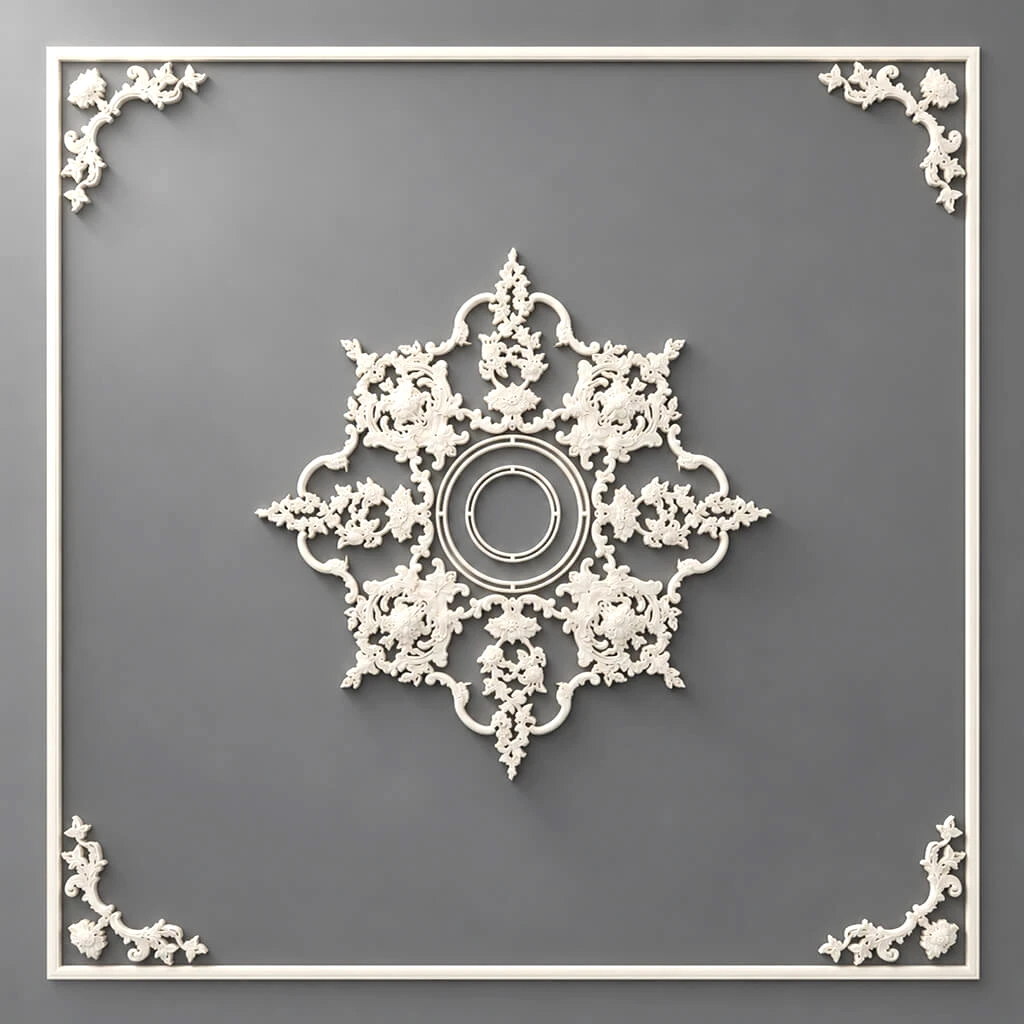
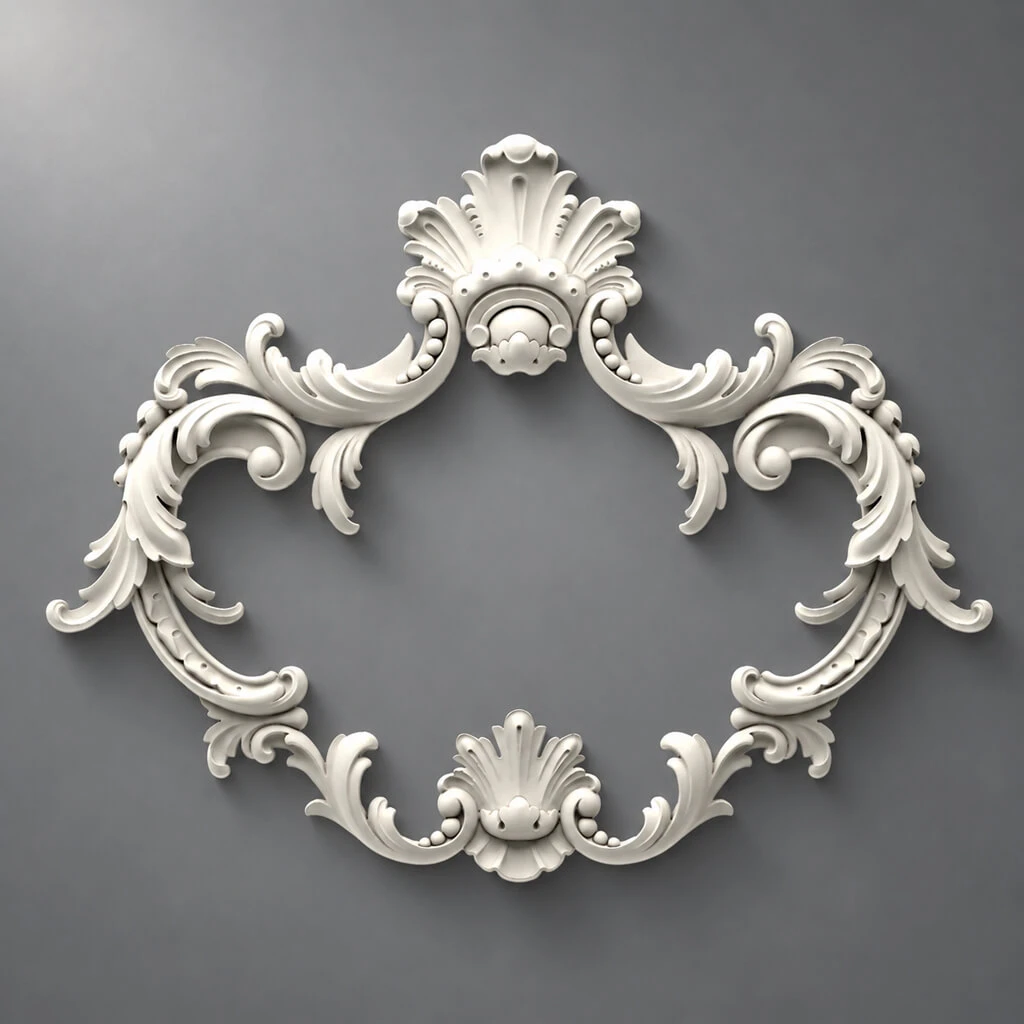
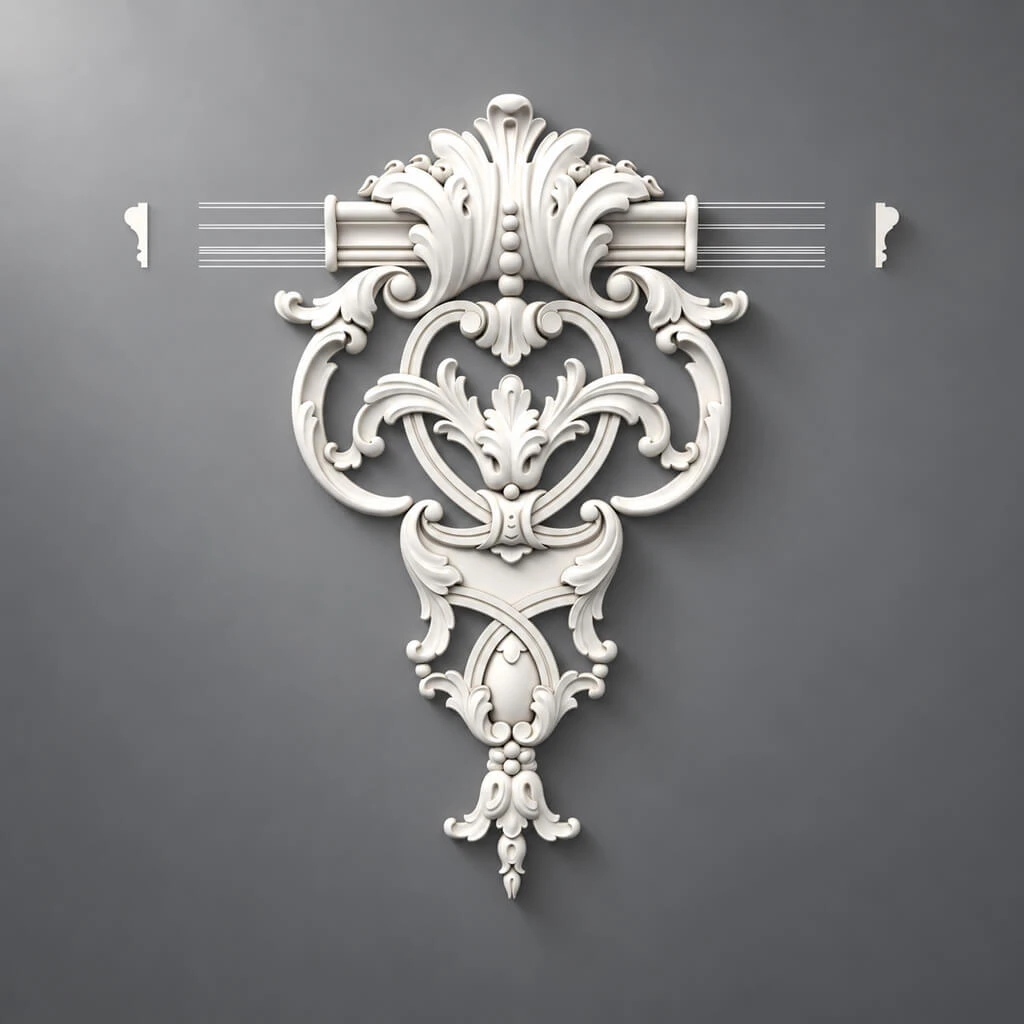
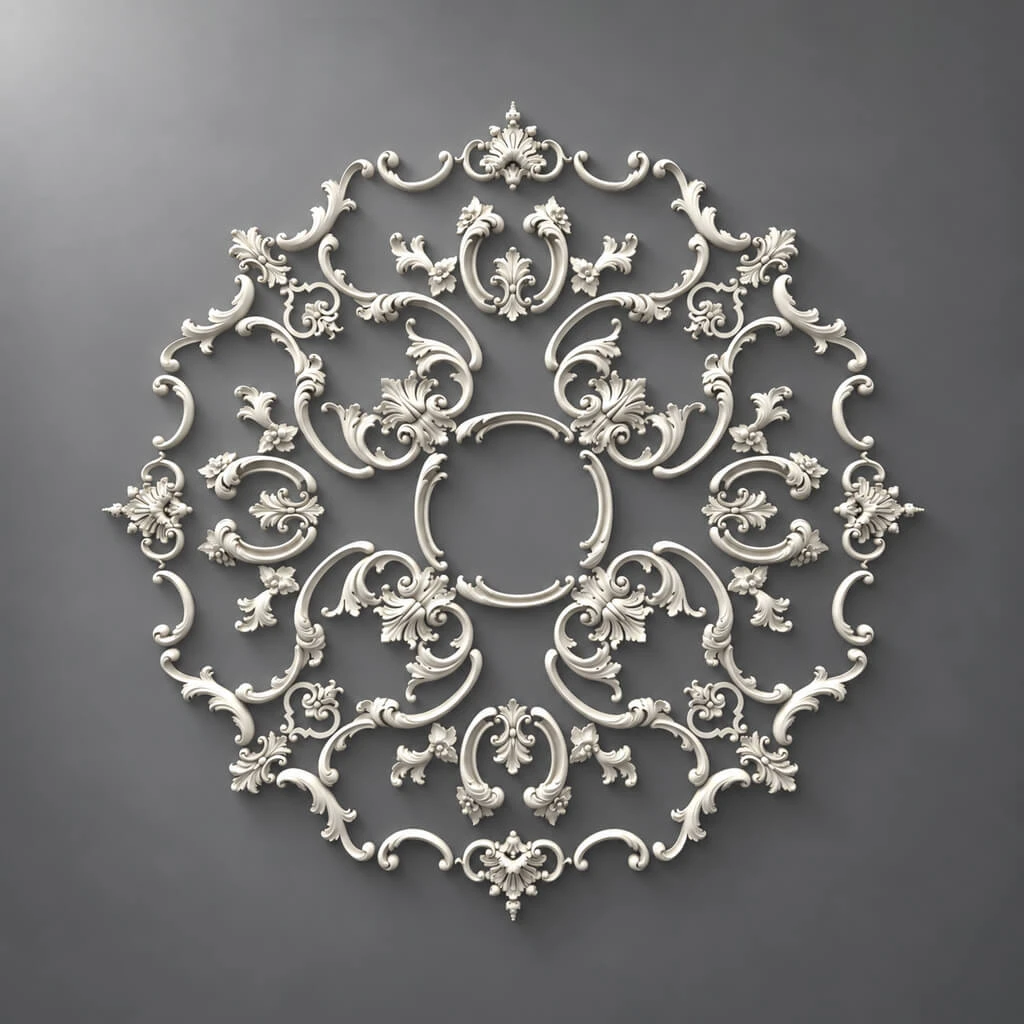
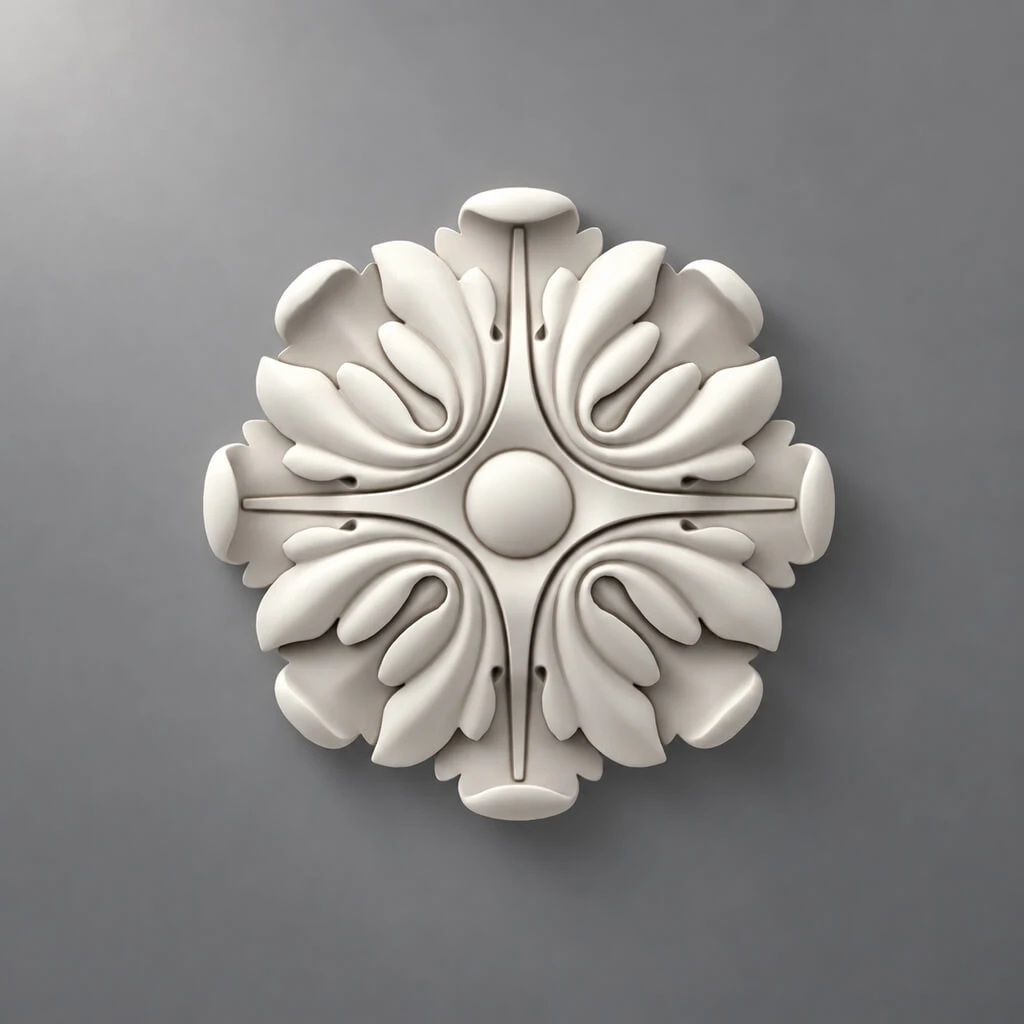
Central ornamental overlays — large medallions and cartouches with an elaborate floral motif
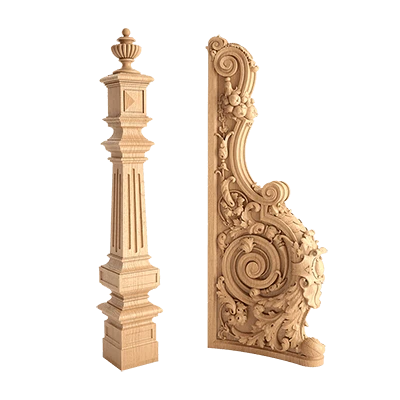
Vertical decorative inserts — for decorating the side sections of the panel and the space between corner pieces
Horizontal accents — lower and upper endings of vertical frames
Ready-made sets of stucco decor — pre-assembled sets of parts with moldings for creating a full wall panel
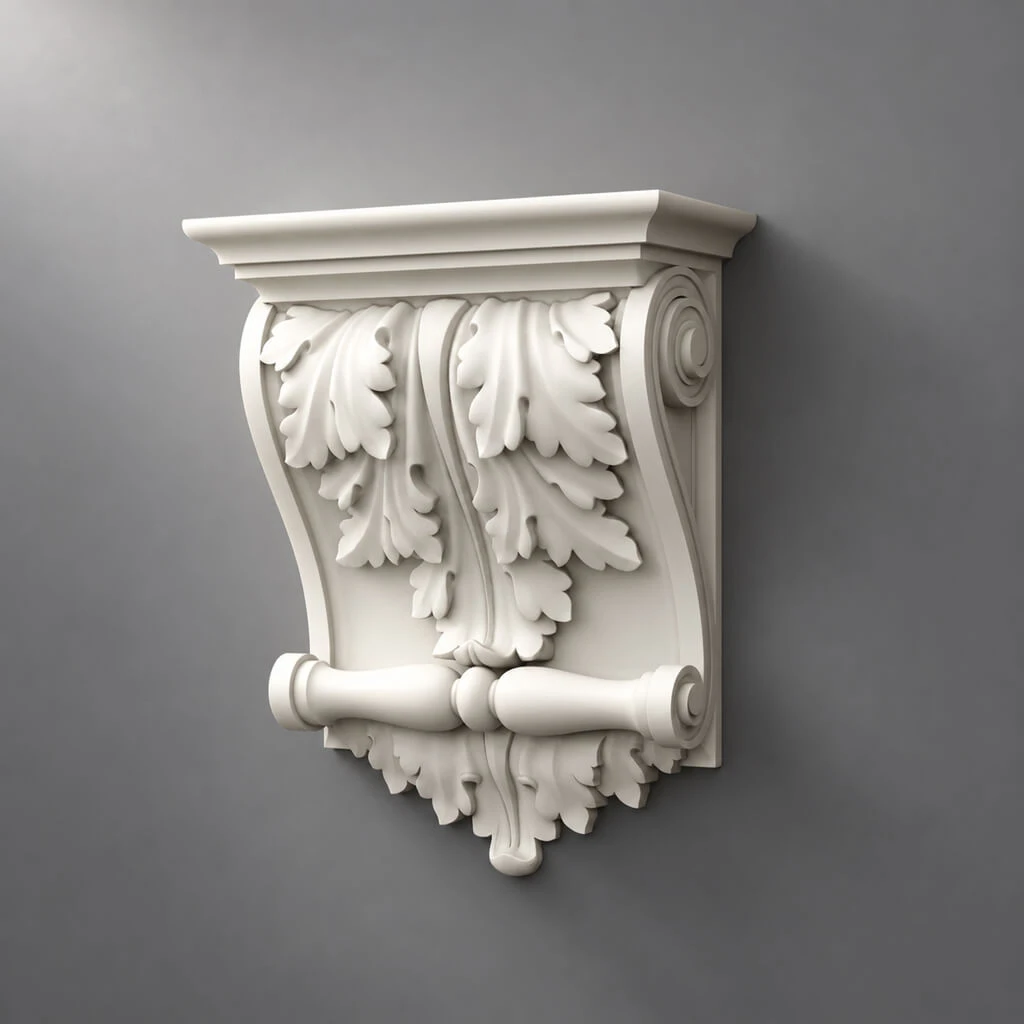
Ornamental overlays are individual elements with leaves, flowers, and curls for spot use or to complement existing compositions
Each group interacts with the others: the corner element complements the central medallion, the horizontal accent completes the vertical, inserts fill the space between the main parts. This is not a random set — it isWall-mounted stucco decorlike a system.
Why polyurethane? This question is asked by every customer who encounters decorative molding not made of plaster for the first time. And the answer here is not just one argument, but a whole chain.
Classic plaster molding is heavy. A large plaster medallion weighs from 2 to 5 kg and requires reliable fastening: dowels, anchors, special adhesive compounds. A polyurethane analog of the same size weighs 5–10 times less and is held with regular construction adhesive without additional fasteners. This fundamentally changes the possibilities of use:polyurethane moldingit can be glued to drywall, wooden panels, MDF boards, painted surfaces — without the risk of collapse and without complex fasteners.
Polyurethane is cast into precise molds and reproduces the smallest details of the ornament without blurring the edges. The petal of a flower, the veins of a leaf, the surface of a curl — all retain sharpness regardless of whether it is the first copy or the hundred-thousandth. Industrial production ensures consistency that manual plaster molding is physically unable to guarantee.
Closed-cell foamed polyurethane does not absorb moisture. This means thatpolyurethane wall decordoes not deteriorate from periodic humidity changes typical of residential spaces. Unlike plaster, it does not crack during seasonal temperature fluctuations within the standard residential range.
The surface of polyurethane elements accepts paint without special primer: a light sanding with fine sandpaper is enough — and interior paint lays evenly, does not absorb into the depth, and does not form streaks. After painting, the relief of the pattern reads as clearly as before — unlike woven and textured wallpapers, which lose their texture when painted.
With proper installation and standard operating conditionspolyurethane wall moldingdoes not yellow, crumble, crack, or require restoration. Decor installed today will look the same in ten years as on the day of installation — unless it is intentionally repainted.
The application area of plant decorative molding is not a narrow niche. It is practically any residential or commercial space where character, details, and architectural quality of finishing are valued.
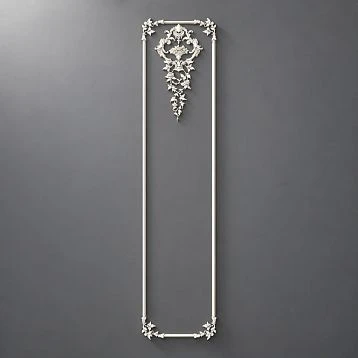
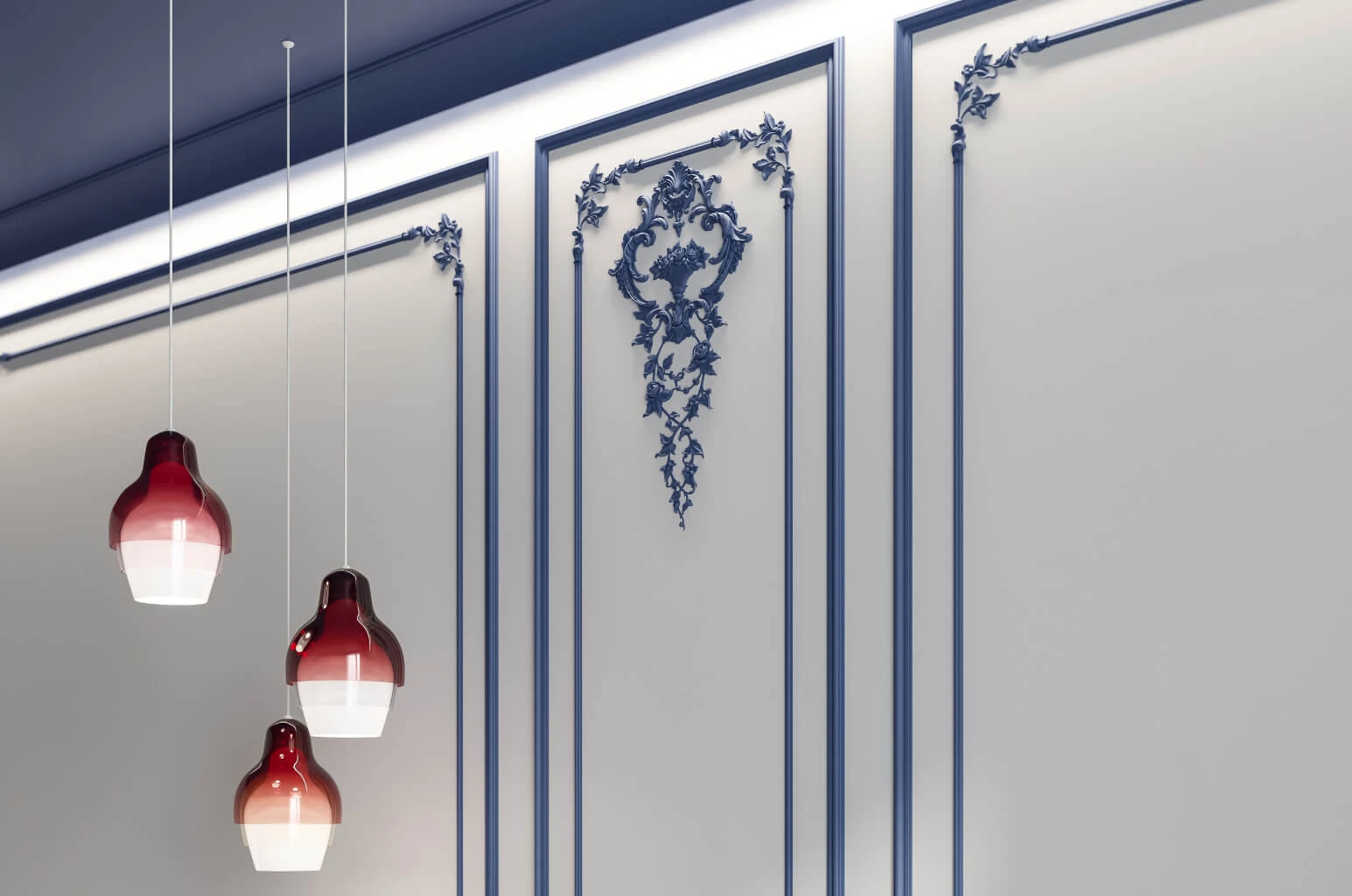
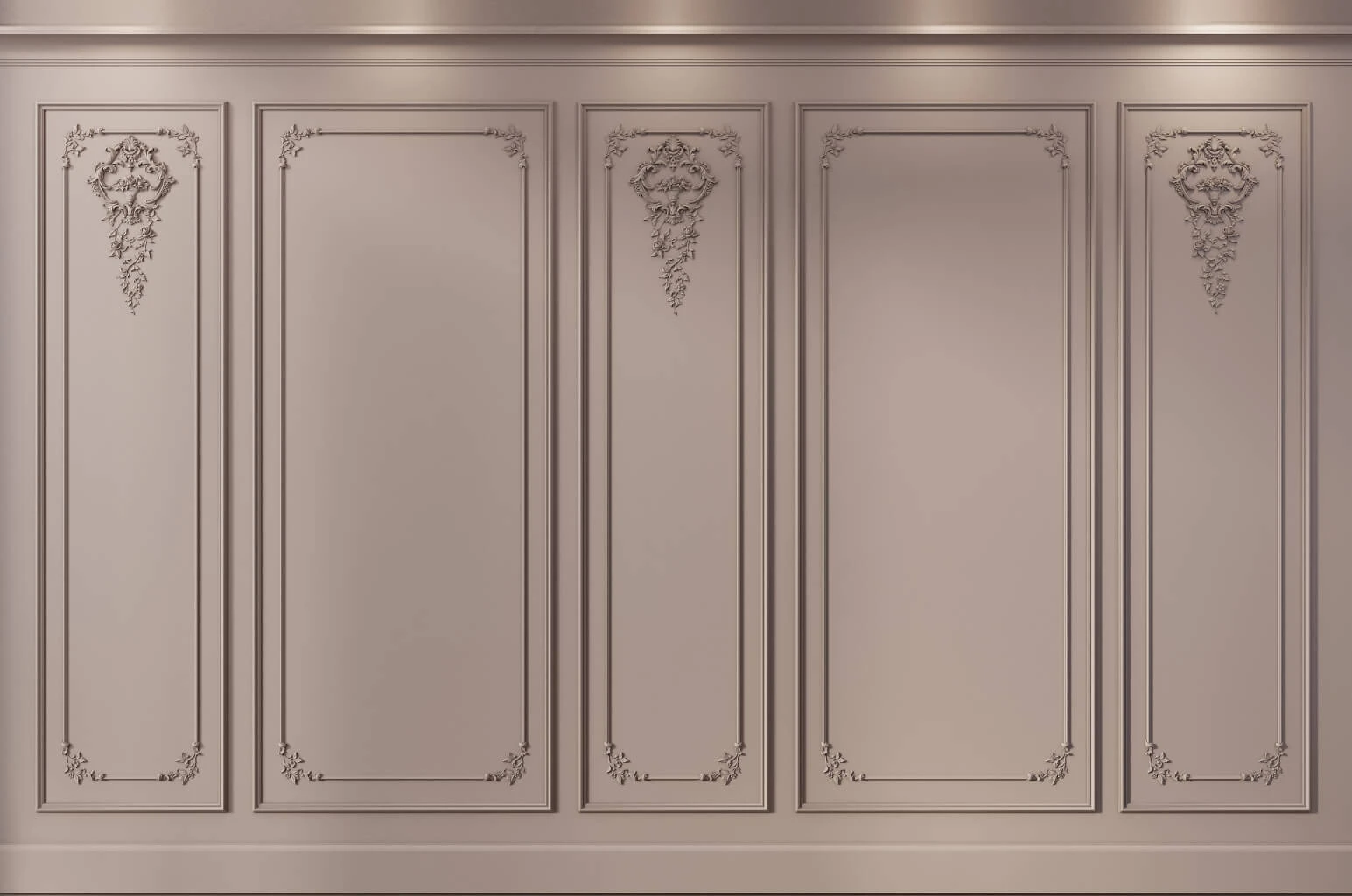
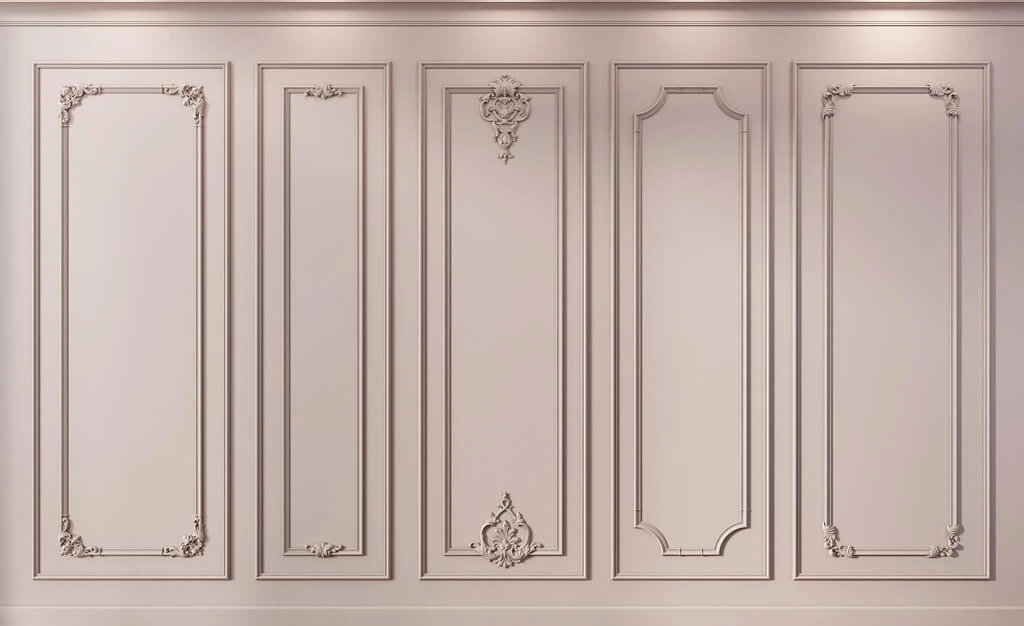
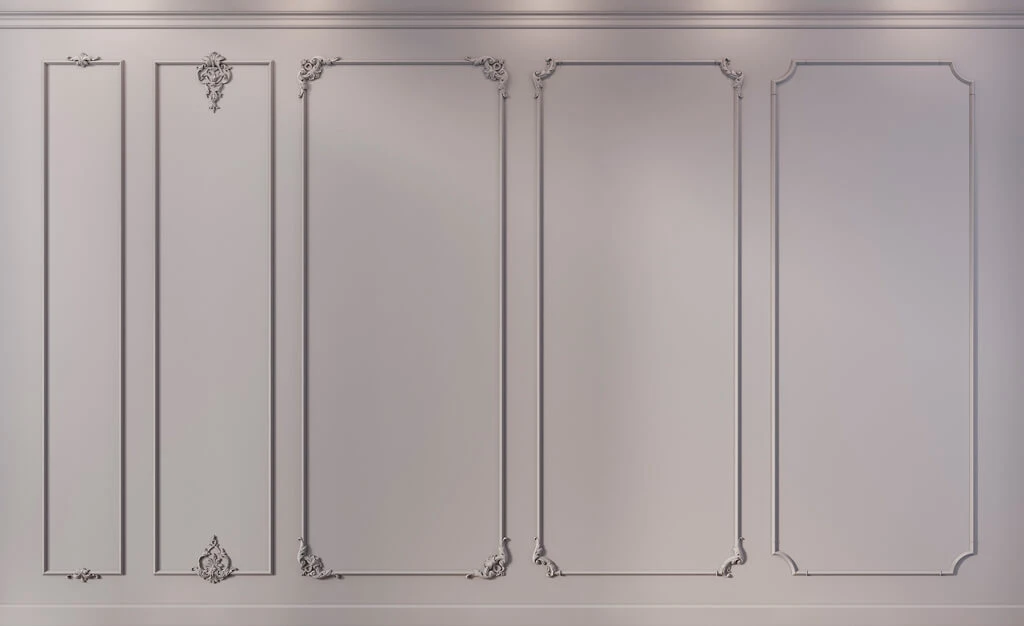
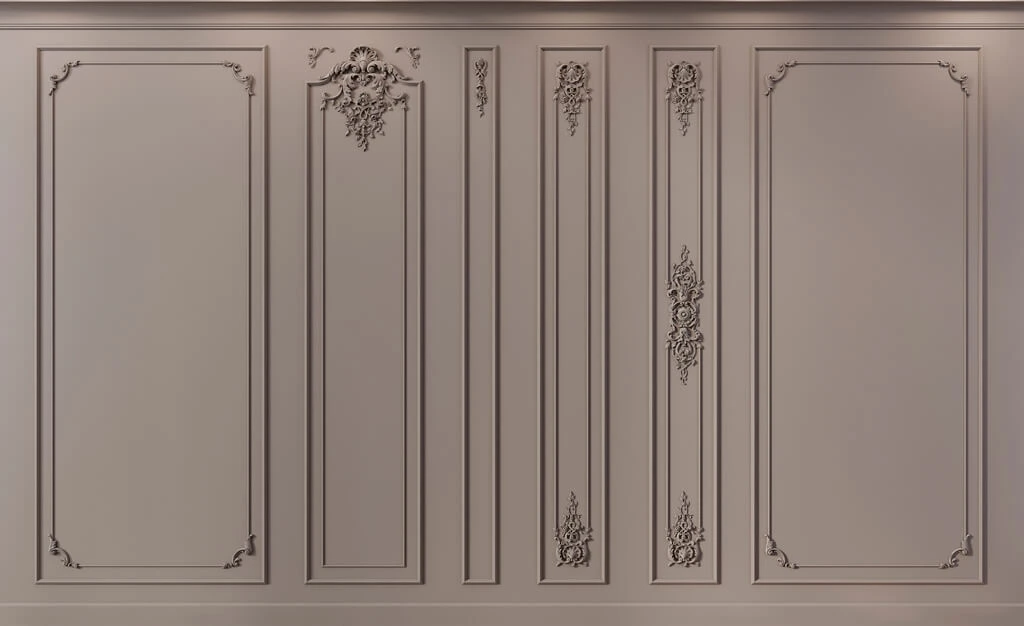
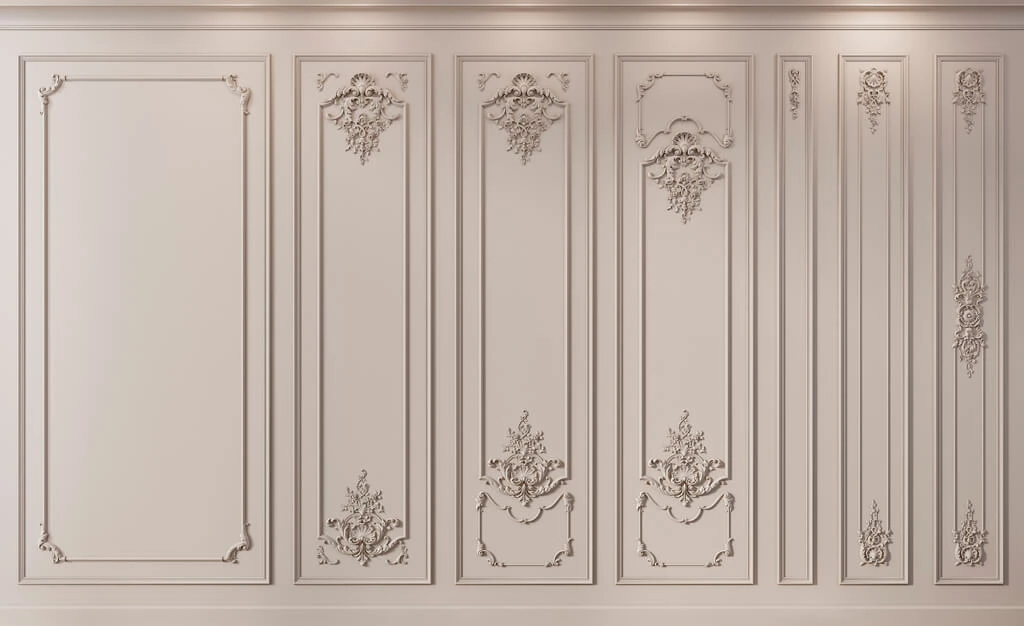
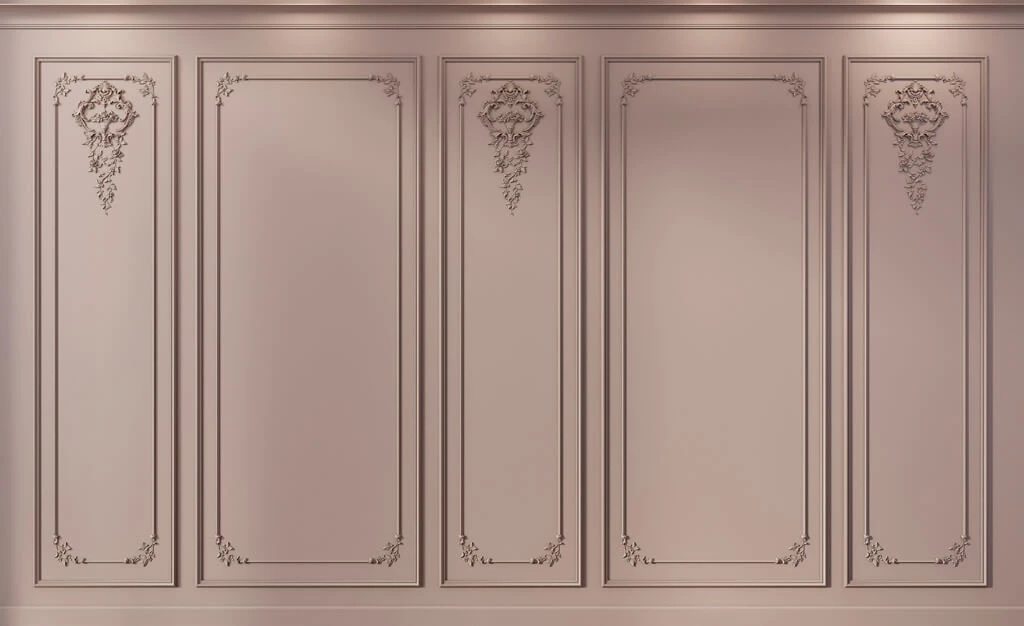
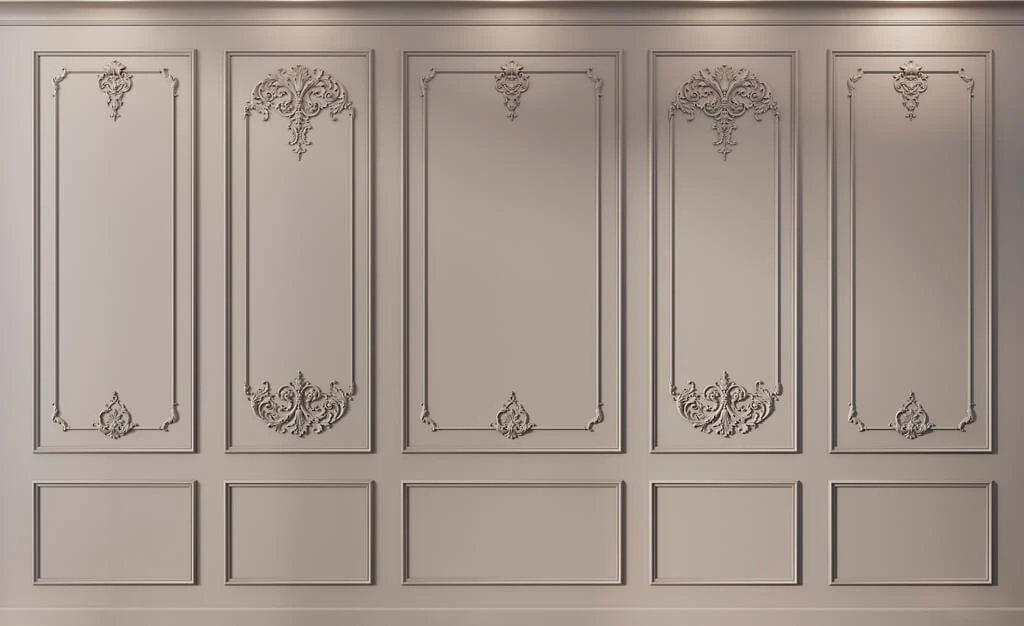
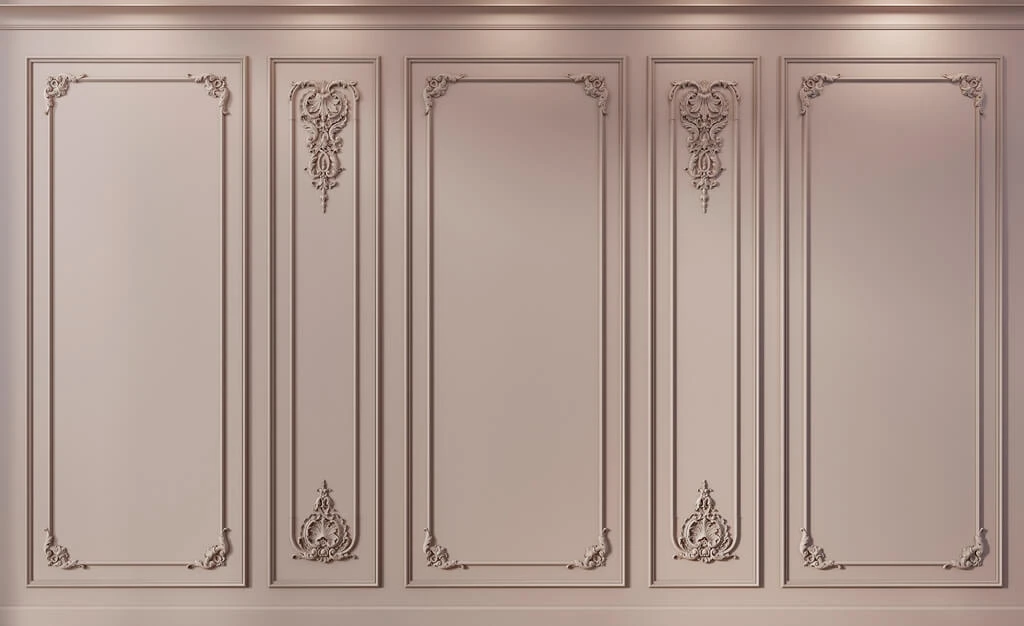
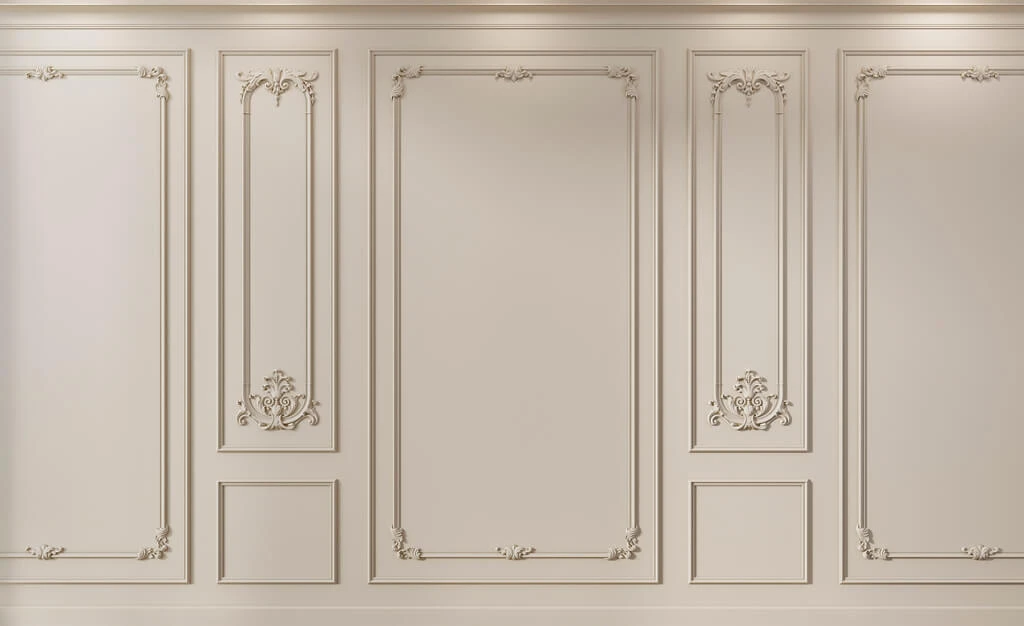
The main application is creatingdecorative frames from moldings on the wall. The elements of the "Botanical Garden" were designed specifically for this task: corner L/R parts frame the corners of the molding frame, central medallions become an accent inside the panel, vertical inserts fill the side posts of the frame with an ornamental rhythm.
Molding sets the geometry —MDF moldings and polyurethane cornices STAVROS provide a strict architectural perimeter, and the elements of the "Botanical Garden" fill this perimeter with life and meaning. The combination of two languages — geometric and ornamental — gives a result that cannot be achieved with pure geometry or pure ornament alone.
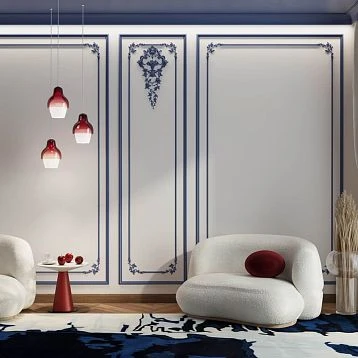
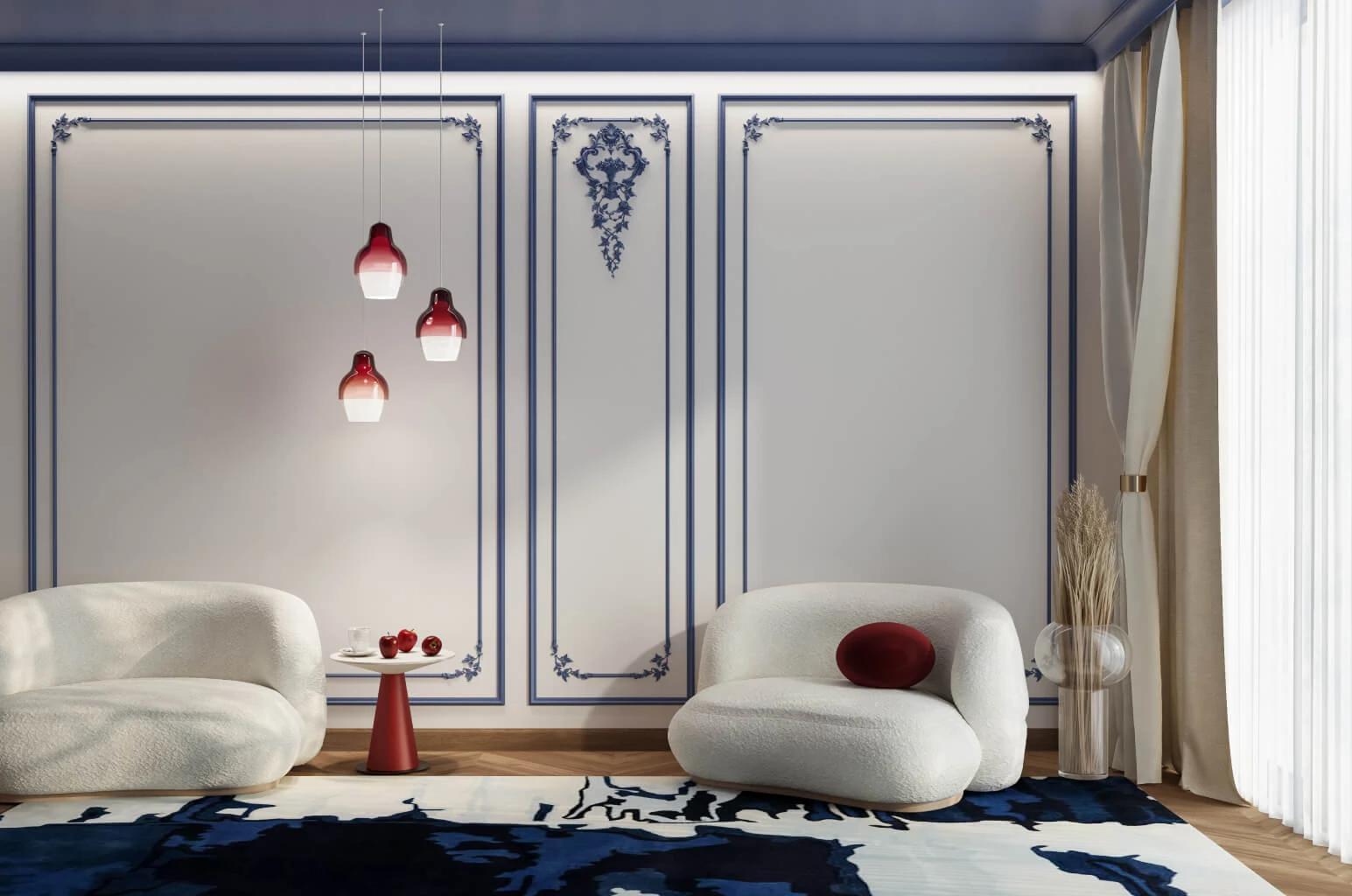
The living room is a space wheremolded decor for the living room works most visibly and convincingly. An accent wall with several vertical frames enriched with elements of the "Botanical Garden" turns from an architectural plane into a full-fledged decorative dominant of the space.
No expensive renovation is needed, no reconstruction is required. It is enough to correctly apply the markings, mount the moldings with plant decor — and the wall begins to speak. Indeed, to speak: it communicates the style of the interior, the taste of the owner, the attitude to details.
In the bedroomMolding decor for wall panels of the "Botanical Garden" collection works as a replacement for expensive facing materials. A panel with a plant ornament at the head of the bed adds intimacy, warmth, and completeness to the bedroom — especially when painted in the color of the wall, when the relief appears only with side lighting from bedside lamps.
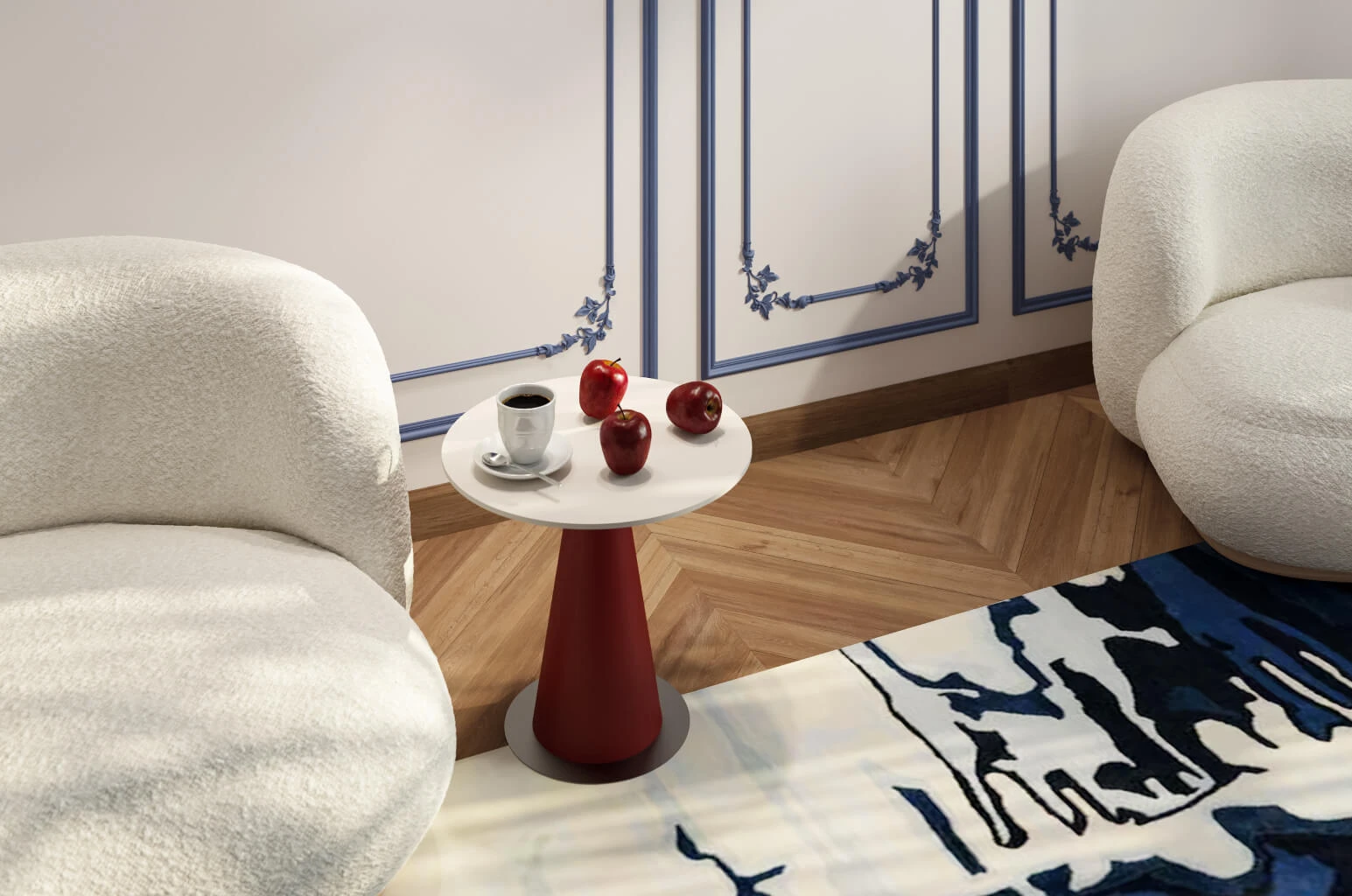
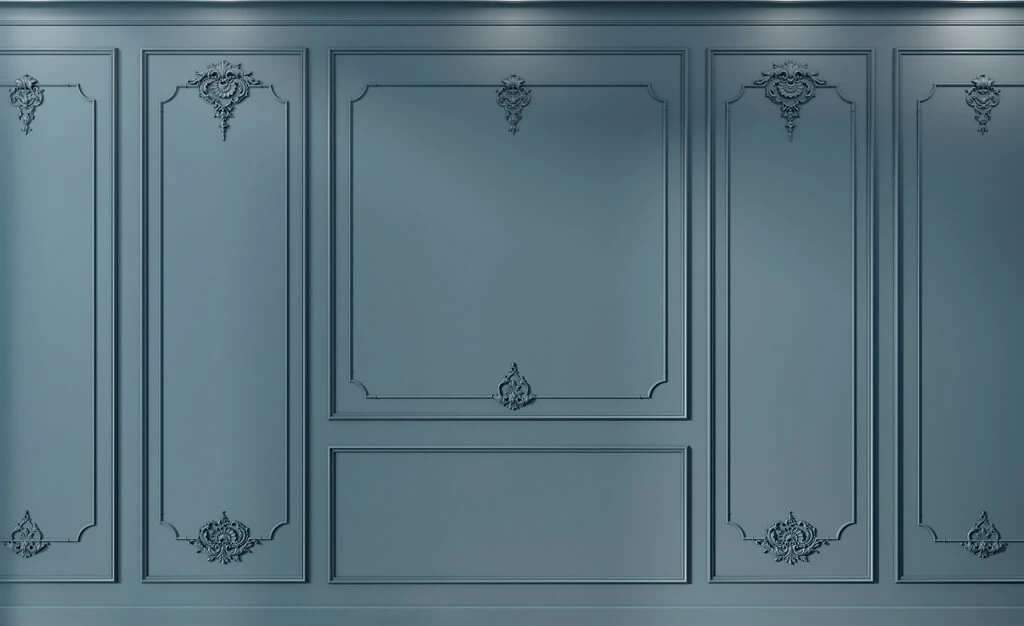
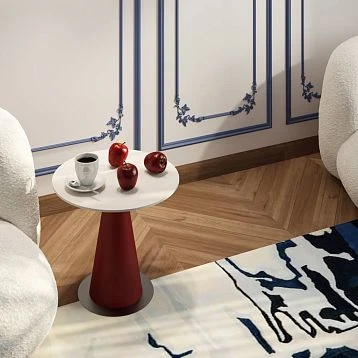
In a contrasting color, the same decor becomes the main statement of the interior: rich blue, deep green, milky or bronze — color on a textured surface works differently than on a flat one. It gains volume, chiaroscuro, and liveliness.
Entryways and corridors are spaces that most often remain architecturally unfinished. The standard answer is to paint or wallpaper. But it is here that decorative stucco for the entryway from the "Botanical Garden" collection works with particular force: it adds vertical rhythm, architectural character, and a feeling that the interior is thought out to the last detail to a narrow space.
In a hall with high ceilings, elements from the "Botanical Garden" can be used on a larger scale: large medallions, complex symmetrical panels, multi-row ornamental belts. The hall is the place of first impressions, and it should be impeccable.
A TV zone with symmetrical ornamental panels on both sides of the screen is a technique that turns the television from a "hole in the wall" into part of the architectural design. The plant-based stucco decor for the TV zone adds dignity and completeness to this zone.
In the office, vertical panels with the "Botanical Garden" ornament create an atmosphere of a library or a study with history — that very sense of academic solidity that inspires serious work.
A commercial interior requires maximum impact at optimal cost.Stucco decor for a restaurantor a salon from the "Botanical Garden" collection solves this problem without bulky renovation work: several vertical panels with plant ornaments create the atmosphere of a place with character even before the guest has time to look at the menu or product.
For a boutique, the "Botanical Garden" elements form a signature decorative language: the walls of the boutique speak of sophistication and attention to detail — exactly what a buyer expects when coming for a quality product.
This is a key question of practical application — and it deserves a detailed answer.
Elements of plant decor are not intended for chaotic placement on the wall. They are designed to work within a structure: the molding sets the architectural framework, the decor fills it.
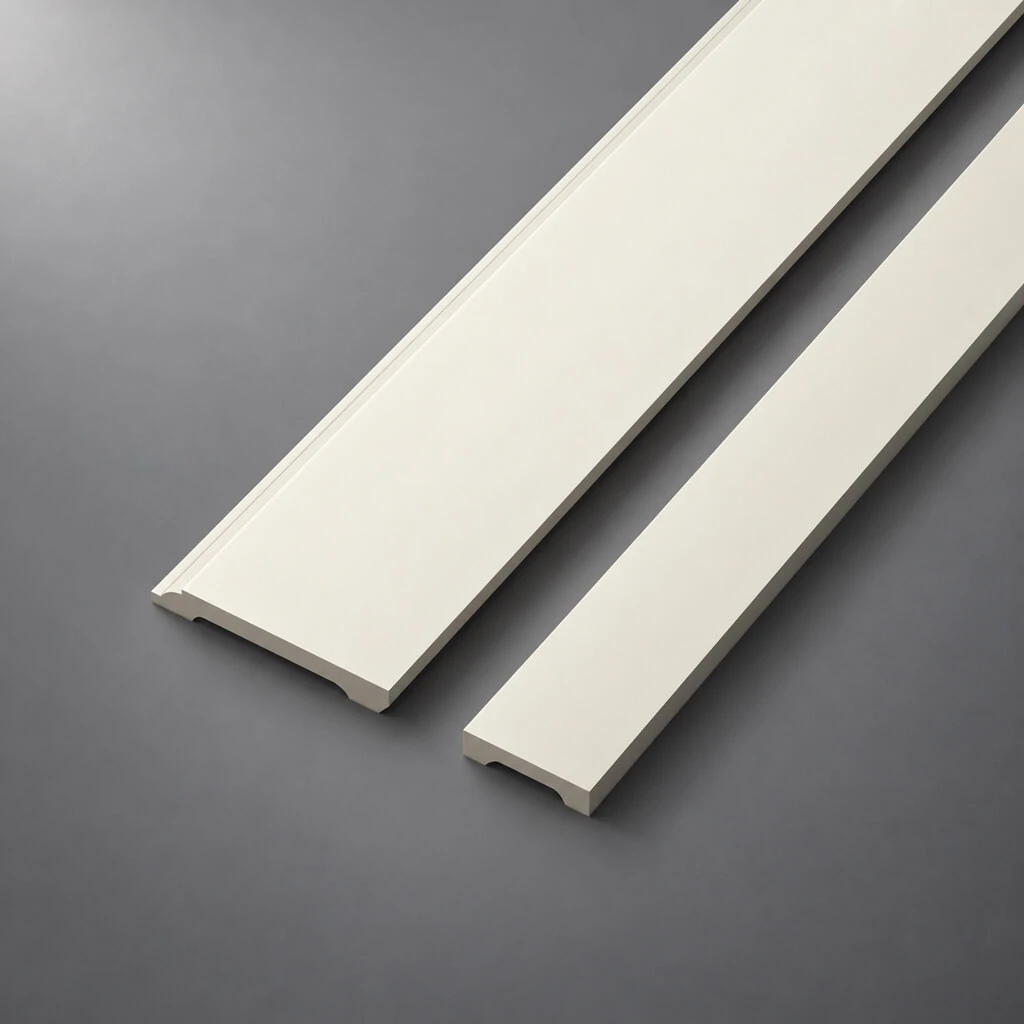
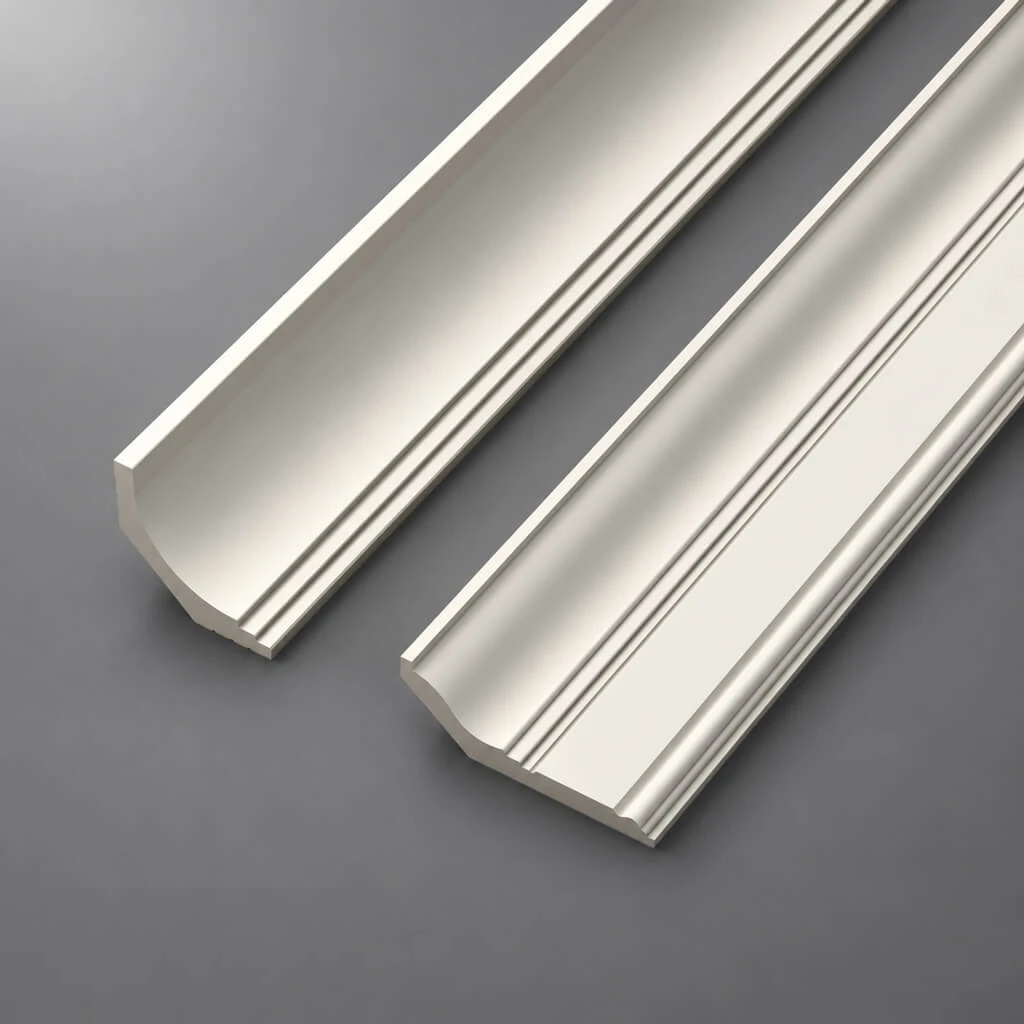
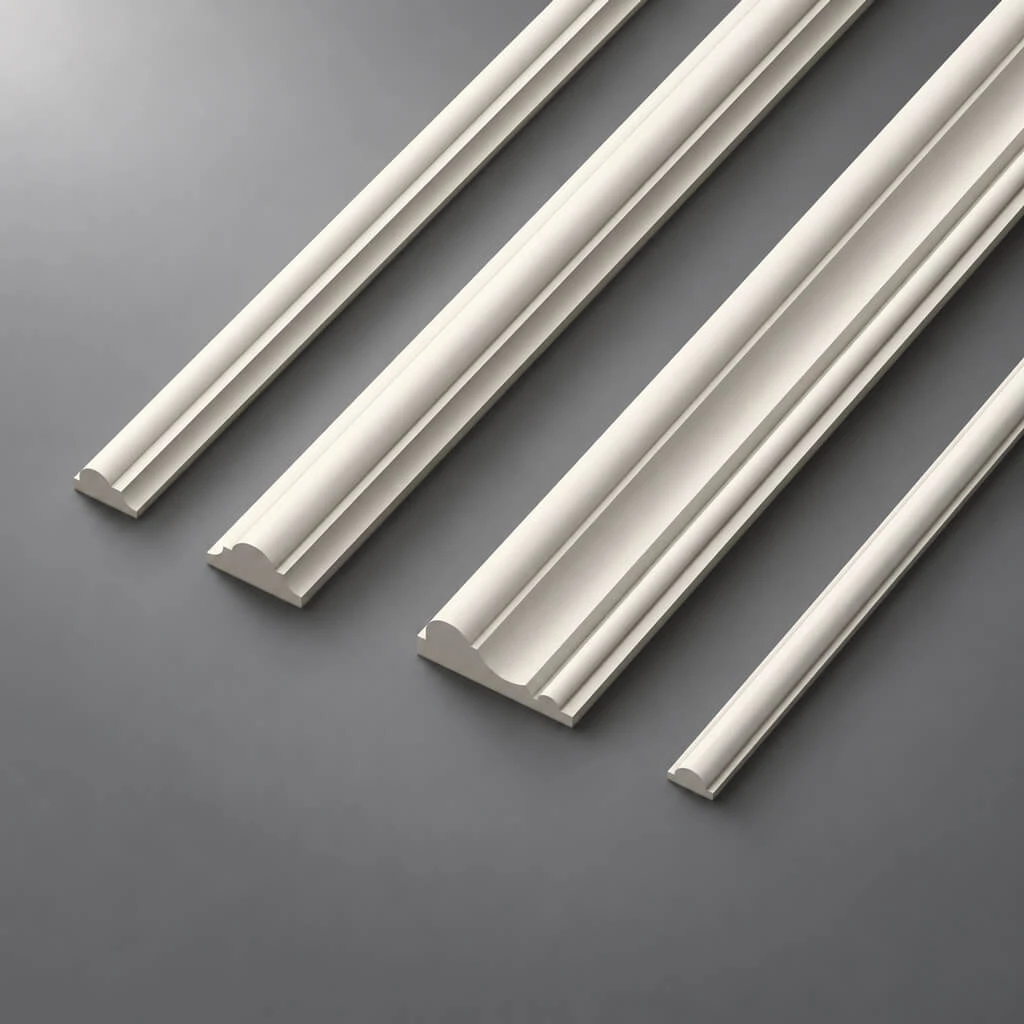
STAVROS Moldings, Cornices, and Baseboardsmade of MDF form the perimeter of a decorative frame. A straight molding with a clear profile is an architectural frame that sets the geometry of the entire composition. It is into this frame that the elements of the "Botanical Garden" are embedded.
The principle is this: molding is the skeleton, decor is the flesh. A skeleton without flesh is dry geometry. Flesh without a skeleton is ornamental chaos. Together they create a living, complete image.
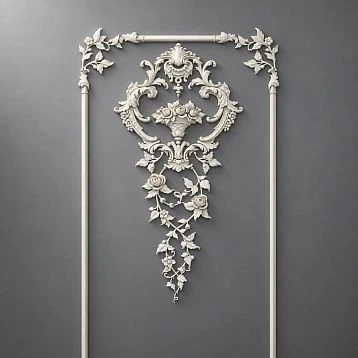
Corner details are the first tier of decor, installed after the molding frame. Left-hand (L) and right-hand (R) versions provide mirror symmetry in each corner of the panel. This is not just aesthetics — it is architectural grammar that all classic interiors followed: a symmetrical decorative frame reads as a deliberate decision, not a random arrangement of details.
When selecting corner elements, it is important to consider their projection (depth of relief) relative to the projection of the molding: the decor should protrude above the molding or be at the same level with it — never sink below the molding plane.
The central element is the heart of the composition. In the "Botanical Garden" collection, these are large square or rectangular overlays with extensive floral ornamentation, placed along the vertical axis of the panel.
It is better to install the central decor before the corner ones: first find and fix the axis, place the medallion on it, then build all other symmetry from it. This ensures that the entire panel is built around the semantic center, rather than a random first nailed detail.
Between the corner details and the central medallion, vertical inserts are placed — decorative elements of a smaller scale, creating an ornamental pulsation along the height of the panel. Their task is to prevent the vertical from "sagging", not to leave the space between the main accents decoratively empty.
The lower horizontal accent is an element without which the vertical panel looks incomplete. It visually "places" the entire structure on a base, creating a sense of a pedestal, foundation, support. In the "Botanical Garden" collection, such horizontal finishes are executed in a single ornamental key with the corner details.
Floral ornament is one of the most versatile decorative languages in architectural history. It adapts to the style without dissolving into it, and enriches the space without overpowering its concept.
A neoclassical interior is built on three pillars: symmetry, architectural scale, and natural ornament.Stucco decor for neoclassicismfrom the "Botanical Garden" collection is not an adaptation, but a direct statement in the right style. Leaves, scrolls, and floral motifs are the vocabulary of neoclassical architecture, familiar since the times of Adam and Jefferson.
In a neoclassical interior, elements of the "Botanical Garden" are painted white or cream — a classic that is always appropriate and never goes out of style. White molding on a white wall is an architectural shadow that reveals itself in the light.
If neoclassicism is direct speech, then modern classicism is a paraphrase. Here are the same motifs, the same symmetry, but in a more restrained, less solemn form. Stucco for modern classicism from the "Botanical Garden" collection works as a delicate accent: it does not dictate the tone, but supports it.
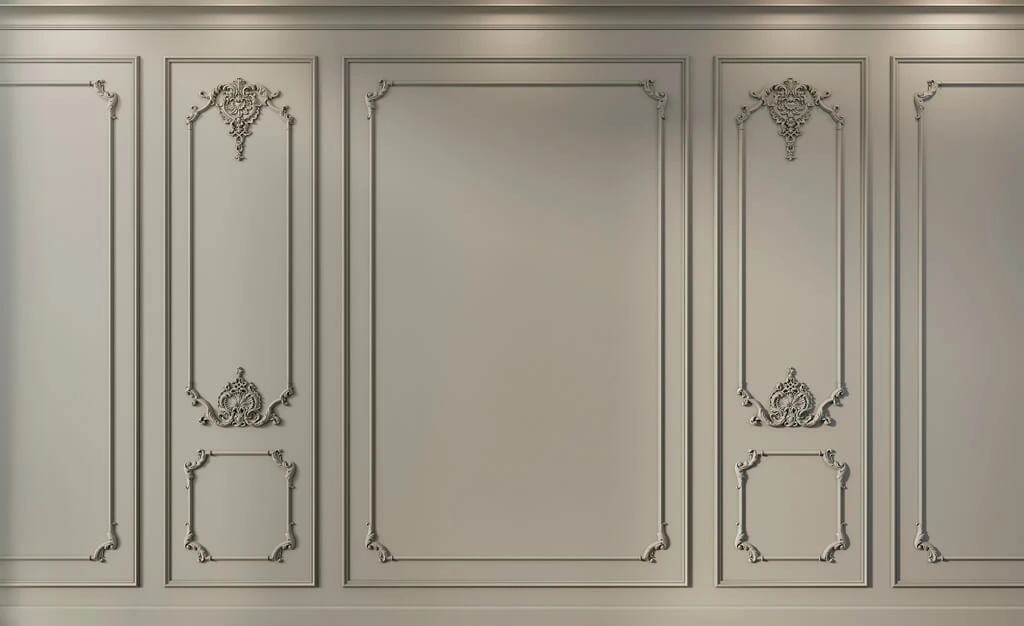
The color palette of modern classicism is gray, taupe, cream, soft green. And each of these colors is organic for painting the polyurethane elements of the collection.
The Art Deco style is a dialogue between geometry and ornament. In this dialogue, the rigid horizontals and verticals of the molding play the role of a geometric voice, while the plant decor of the "Botanical Garden" plays the ornamental one. This combination perfectly captures the aesthetics of Art Deco.
When painted in metallic colors — bronze, gold, copper, anthracite —STAVROS Polyurethane Decorit acquires that very "decorative luxury" that makes Art Deco what it is.
Parisian style is about layering. A wall in such an interior simultaneously carries moldings, paintings, mirrors, sconces, shelves — and yet does not look overloaded because each layer has its own role. The elements of the "Botanical Garden" organically fit into this polyphony: they do not compete with other decorative layers but hold the space, giving it an architectural foundation.
Choosing decor is not just a matter of taste. It is an engineering problem with several parameters. Let's break down each one.
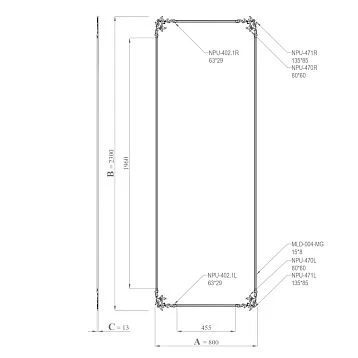
A large wall requires large-scale elements. For walls with a height of 2.7 m and a width of 3 m or more, it makes sense to use large central medallions and expanded corner details. For compact niches and piers 400–600 mm wide, more concise corner elements with a smaller size and elongated vertical inserts are suitable.
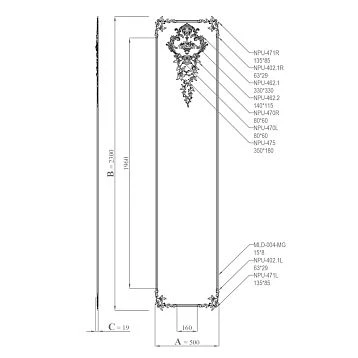
General rule: the size of the decorative element should be proportional to the distance from which it will be perceived. A medallion 330 × 330 mm is readable from 4–5 meters; an element 80 × 60 mm works at a distance of 1–2 meters.
Almost all corner elements of the "Botanical Garden" collection are produced in two versions: L (left-handed) and R (right-handed). These are mirror parts used symmetrically: L in the left corner, R in the right. When purchasing, it is important to order them in pairs, otherwise the symmetry will be broken.
Some central elements are symmetrical in themselves and do not have L/R versions — they can be installed on any axis.
Before purchasing, it is worth determining what role each element will play in the composition:
Corner — frames the corners of the frame, creates transitions between horizontals and verticals
Central — the main accent, medallion or cartouche on the panel axis
Connecting — an intermediate element between corner parts and the center
Accent — additional points of decorative activity, clarifying the rhythm of the ornament
Horizontal finish — lower or upper "pedestal" for a vertical panel
Understanding roles helps avoid overloading the panel with decor or leaving it decoratively empty.
The projection (relief depth) of elements is a critical parameter. In narrow corridors and hallways, elements with a projection of 8–13 mm are preferable: they create sufficient shadow under side lighting but do not create a physical obstacle when moving along the wall. For spacious living rooms and halls, elements with a projection of 14–19 mm can be used — their relief is richer and readable from a greater distance.
The choice of future color influences the selection of elements: when painting in the color of the wall, the detail of the ornament is more important than its size. With contrasting painting, the silhouette and overall scale of the element are more important — they will be read as the form.
Installing plant stucco decor is a task for an attentive craftsman, not just a professional. With basic construction skills, a level, a tape measure, and mounting glue, a home handyman can handle the result.
The surface must be level, dry, and dust-free. Finish putty or decorative plaster is mandatory before starting installation. Installing decor on an untreated wall will lead to uneven adhesion and visible gaps.
Marking is half the success. The central axis of the entire panel is determined first: symmetry is built from it to the left and right. All positions of decorative elements are marked with a pencil before the glue tube is opened.
Remember: pencil is easily erased. Glue is not. The marking you do in 20 minutes saves you from rework that will take several hours.
MDF moldingsare cut to the required size, ends are sanded. Glue is applied in a zigzag pattern to the back side, the part is pressed according to the marking, held for 30–60 seconds. For vertical moldings with a height of 2 m or more, additional fixation with finishing nails is recommended.
Polyurethane decor is glued after the molding — starting from the central medallion and spreading to the corner pieces. The glue is applied pointwise to the back side of the element. Pressure is held for 2–3 minutes for large parts and 30–60 seconds for small ones.
All joints between the molding and the wall, between the molding and decorative elements are filled with acrylic sealant or finishing putty. Sanding after drying — with fine sandpaper. This stage takes 15–20 minutes and dramatically affects the final look: joints disappear, everything looks like a monolithic architectural detail.
Two to three coats of water-based interior paint are applied with a brush to decorative elements and with a small foam roller or brush to moldings. The first coat goes on primed MDF and slightly sanded polyurethane without absorption or streaks.
The question of compatibility with other collections is practically important for those creating complex decorative systems.
"Botanical Garden" is a floral, natural, soft ornament. It pairs well with collections where geometry plays the primary role and organic elements play a supporting one.
If you use Polyurethane wall decorin several rooms of one interior, it is logical to apply "Botanical Garden" in spaces with a warmer, more intimate atmosphere — bedroom, study, living room with soft furniture — and leave more geometric collections for halls and corridors with laconic design.
At the same time, elements from different STAVROS collections are united by the same quality of the injection mold and the same projection standard, making them physically compatible within a single frame — provided a well-thought-out design solution.
STAVROS is a manufacturer with experience in creating architectural decor for interiors. The "Botanical Garden" collection is not a random set of elements, but a well-thought-out system designed for a specific task: to decorate a wall so that it looks architecturally significant without requiring expensive work.
The assortment includes both individual decorative elements and ready-made kits with moldings for creating full-fledged wall panels. This means you can start with one element and gradually assemble the system — or buy a ready-made kit and get the result immediately.
All productsof polyurethane moldings STAVROSare produced in a unified style and with uniform quality standards: the same foaming density, the same relief clarity, the same surface treatment requirements. This ensures that a collection assembled from ten different items will look like a single whole, rather than a selection of incompatible parts.
Before placing an order, we recommend following several steps:
Define the space and task — one panel, a series of frames, an accent wall, or a complex decorative system?
Take measurements — width and height of the panel, room height, distance from floor to ceiling
Choose the roles of elements — corner, central, connecting, horizontal finishes
Select a molding — from the assortmentSTAVROS moldings, cornices, and baseboards, matching in profile and projection
Choose a color — matching the wall or contrasting, metallic or pastel
Order with a margin — when calculating the number of corner L/R elements, consider pairing; when ordering molding, add 10% for trimming and possible defects
Receive and check your order before starting installation, ensuring batch numbers match and pairs are symmetrical
Can elements from the «Botanical Garden» be mixed with elements from other STAVROS collections?
Technically — yes, they are physically compatible. Stylistically — it requires a conscious design decision. It's better to consult with a designer or use ready-made pre-assembled sets.
How do I know if the element size fits my panel?
Measure the panel dimensions (width and height) and the molding projection. Compare them with the dimensions of the selected elements: the corner decor should not extend beyond the outer edge of the molding, and the central element should not overlap the corner pieces.
Is it necessary to use MDF molding, or can I get by with just polyurethane decor?
You can. Polyurethanedecorative polyurethane elementscan be used without molding — as standalone ornamental accents on the wall. But a molding frame significantly enhances the effect and gives the composition architectural completeness.
How many coats of paint are needed for good coverage?
For a rich color without gaps, two coats of interior paint are sufficient. The first coat is the base, the second is the finish. If a dark color is used over a white product, a third coat may be needed.
Can the elements be glued onto wallpaper?
Not recommended. The mounting adhesive must come into direct contact with the wall surface, not with the wallpaper, which may peel off under load along with the decor.
Are there elements in the collection for curved frames (arches, niches)?
The main part of the "Botanical Garden" collection is designed for straight frames. For curved openings and arches, it is better to choose smaller elements that can be arranged along a curved contour.
Is a special primer needed for polyurethane elements before painting?
No. Light sanding with sandpaper (grit 180–220) is enough for the paint to lay evenly. Additional primer is not required, but it won't hurt either.
How to store elements before installation?
In a dry room at room temperature, away from direct sunlight. Polyurethane is UV-sensitive: prolonged exposure to direct sun may cause yellowing of the surface. After installation and painting, this risk disappears: the paint protects the surface.
Can the collection elements be used on wooden surfaces?
Yes. Polyurethanedecor for paintingadheres to any hard, clean surface: painted concrete, drywall, MDF, plywood, natural wood. The main condition is that the surface must be dust-free and degreased.
How to calculate the number of corner elements for a wall?
Each corner of the frame requires a pair: one L and one R. One rectangular frame has 4 corners, so you need 2 L elements and 2 R elements. If frames are repeated, multiply by the number of frames.
Have questions about our products or your project? Leave your contact details and our team will get back to you.
Our manager will contact you within 5 minutes