Article Contents:
- The Art of Choice: Why Material Determines the Fate of a Project
- The Philosophy of Wood in the Context of Creativity
- Economics of Quality: Why Expensive Means Worthwhile
- Psychological Aspect: How Material Influences the Creative Process
- Variety of Forms: Typology of Wooden Blanks for Creativity
- Solid Blanks: The Classic Genre
- Laminated Materials: Stability and Economy
- Profiled Blanks: Time and Effort Saving
- Sheet Materials Based on Wood
- Professional Selection Criteria: What to Pay Attention To
- Species Characteristics: Every Tree Has Its Own Character
- Moisture: Critical Parameter of Stability
- Grading and Surface Quality
- Geometric Accuracy: Foundation of Quality Assembly
- Innovative Technologies: How Modernity Improves Traditions
- Thermal modification: enhancement of natural properties
- Polymer Stabilization: Creating Composite Materials
- High-Pressure Gluing: Creating New Materials
- Practical Tips: How to Avoid Mistakes When Buying
- Visual Assessment: What Can Be Determined 'By Eye'
- Instrumental Check: Measuring What Matters
- Material Testing: Simple Ways to Assess Quality
- Economic Aspects: How to Buy Profitably
- Market Seasonality: When to Buy Cheaper
- Purchase Volumes: Wholesale vs Retail Prices
- Hidden Costs: What Else to Consider Besides Material Price
- Modern Trends: Where the Industry Is Heading
- Ecological Responsibility: Sustainable Forestry
- Digitalization of Production: Precision and Efficiency
- Customization: individual approach to every project
- Storage and preparation: preserving quality until use
- Creating optimal conditions
- Correct storage
- STAVROS: leader in the world of high-quality wooden blanks
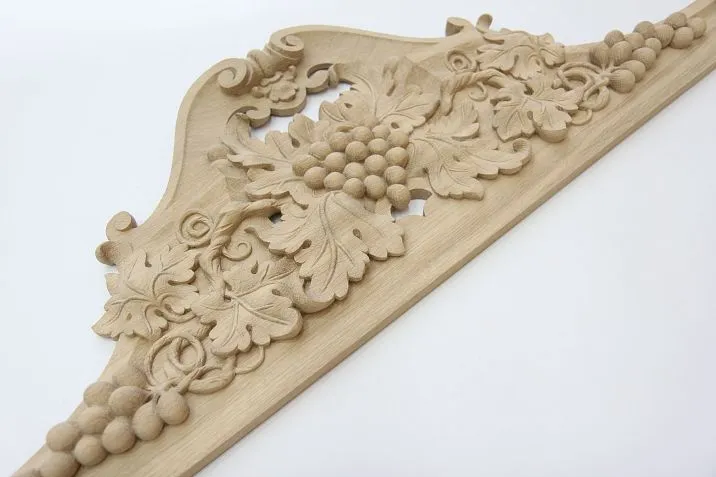
Imagine the moment when an idea literally burns in your hands, demanding immediate realization. You feel the energy of the future masterpiece, see every detail of the finished product, but... you stop before the display of materials, completely lost. Pine or linden? Planed board or unprocessed log? First grade or can you save by choosing third? These questions are familiar to anyone who has ever decided wooden blanks for creativity to buy for your project.
Choosing material is not just a purchase. It is the first and most important step in creating a work that will live its own life, delight the eye, serve its purpose. The quality of the blank affects not only the appearance of the finished product, but also the enjoyment of the working process, the durability of the result, and sometimes even the safety of use.
Over half a century of work in the woodworking industry, I have seen thousands of projects — from simple children's crafts to museum exhibits. And always one rule applied: quality material — half the success. Saving on blanks results in lost time, ruined mood, and the need to redo the work. Investments in good material pay off in the joy of creativity and pride in the result.


The Art of Choice: Why Material Determines the Fate of the Project




Philosophy of Wood in the Context of Creativity
Wood is not just a construction material. It is a living substance that preserves memories of decades of growth, of seasonal changes, of soil and climate. Each blank is unique, like a fingerprint, and requires an individual approach.
When you hold a piece of quality wood in your hands, you feel its potential. The grain suggests the direction of the cut, the density of the material determines possible detail, the natural color hints at future finishing. An experienced craftsman reads wood like a book, extracting maximum information even before starting work.
Poor-quality material, on the contrary, resists the creative process. Non-uniform structure leads to chips in unexpected places, hidden defects appear at the most critical moment, unstable dimensions disrupt the proportions of the item. Working with such material turns creativity into a struggle for the survival of the project.
Our factory also produces:


Economics of Quality: Why Expensive Means Profitable
Many novice craftsmen make the same mistake: trying to save on materials, hoping to compensate for their shortcomings with skill. This misconception costs dearly both financially and morally.
Quality blanks cost more, but their use saves time and nerves. The material is easy to process, does not present unpleasant surprises, allows focusing on creative tasks. Tools stay sharper longer, material consumption decreases due to less waste.
Let's calculate specifically: a cheap blank costs 1000 rubles, a quality one — 2000. But working with cheap material takes 50% more time, the probability of defects is 30%, tools require sharpening twice as often. At a labor cost of 500 rubles per hour, savings turn into losses within just a few hours of work.
Get Consultation
Psychological Aspect: How Material Affects the Creative Process
The quality of the material affects not only the technical aspects of the work, but also the psychological state of the craftsman. A pleasant-to-touch surface, natural aroma, predictable behavior during processing create a positive mood, helping to concentrate attention.
Working with poor-quality material causes stress and disappointment. Constant anticipation of problems, the need to adjust plans due to material defects distract from creative tasks. As a result, not only the quality of the work suffers, but also the enjoyment of the process.
Variety of Forms: Typology of Wooden Blanks for Creativity
Solid blanks: the classic of the genre
Solid Wood Items wood remains the standard of quality in woodworking. Solid wood preserves all natural qualities of the material — strength, beauty, the energy of living wood.
Planks of various thicknesses — a universal material for most projects. Standard sizes 20, 25, 32, 40, 50 mm cover needs from thin decorative panels to massive structures. Quality planks have uniform thickness along the entire length with a tolerance of no more than ±0.5 mm.
Square or rectangular-sectioned beams and boards are used for frame structures, turning, and three-dimensional carving. The size range from 40×40 to 150×150 mm allows selecting the optimal option for any task. Special attention is paid to straightness — deviations should not exceed 2 mm per meter of length.
Slabs — solid cross-sections of tree trunks — open unique opportunities for creating countertops, panels, art objects. Each slab is unique, requiring an individual approach to processing and finishing.
Glued materials: stability and economy
Modern gluing technologies allow creating materials that surpass solid wood in certain characteristics.
Laminated wood panels combine the beauty of natural material with dimensional stability. Mutual compensation of stresses in laminates eliminates warping even in large items.
Glued beams of large cross-section allow creating load-bearing structures from relatively small blanks. The strength of a glued beam is 20-30% higher than solid wood due to removal of defects during laminate manufacturing.
Bent-glued elements open up possibilities for creating curved details without weakening the structure through end joints. The technology requires special equipment, but the result exceeds all expectations.
Profiled blanks: saving time and effort
Ready-made profiled elements significantly speed up work, allowing focus on creative tasks.
Moldings, cornices, baseboards — ready decorative elements for interior design. Modern CNC centers create profiles of any complexity with perfect dimensional repeatability.
Turned blanks — cylinders, cones, spheres of various diameters — form the basis for manufacturing balusters, furniture legs, decorative elements. High dimensional accuracy saves time on rough processing.
Machine-made carved elements feature clear details and perfect repeatability. What a craftsman would take weeks to create, a machine reproduces in hours.
Wood-based sheet materials
High-grade plywood is indispensable for projects requiring a combination of strength and low weight. Birch plywood (FC grade) from 4 to 30 mm thick allows solving the most diverse structural tasks.
Plywood panels with a core of strips and veneer of valuable species offer a compromise between economy and attractive appearance.
Professional selection criteria: what to pay attention to
Species characteristics: every tree has its character
Coniferous species — pine, spruce, larch — are distinguished by accessibility and ease of processing. Pine, with its clearly visible grain, is ideal for country-style items. Spruce, with its uniform structure, is suitable for musical instruments. Larch combines beauty with exceptional durability.
Softwood species — linden, poplar, alder — are chosen for delicate artistic work. Linden cuts cleanly in all directions without splintering and holds fine details. Alder has a beautiful pinkish hue and takes staining well to match valuable species.
Hardwood species — oak, beech, ash — are materials for items designed for intensive use. Oak, with its noble grain, is a classic in furniture production. Beech, with its uniform structure, is ideal for turned items. Ash combines strength with elasticity.
Moisture: critical parameter of stability
Moisture content in wood determines material behavior at all stages of work and use. Freshly cut wood contains 40-80% moisture, making it unsuitable for creative work.
Equilibrium moisture for indoor conditions is 8-12%. Material with this moisture level is stable, does not shrink, and does not crack under changing usage conditions.
Moisture control is performed using electronic moisture meters. Pin-type instruments provide accurate readings but damage material integrity. Non-contact types are less accurate but allow checking entire batches.
Wood drying is a complex technological process requiring special equipment and knowledge. Self-drying is possible, but requires patience and adherence to schedules.
Grade and surface quality
Wood grading system takes into account the quantity and size of defects — knots, cracks, resin pockets, color changes.
Highest grade practically contains no visible defects and is intended for critical facing surfaces. Cost may be 3-4 times higher than standard grades.
First grade allows limited number of healthy knots up to 15 mm in diameter. Optimal choice for most creative projects.
Second and third grades may have more noticeable defects, but are suitable for hidden structures or items where defects can become part of the artistic concept.
Geometric accuracy: foundation of quality assembly
Calibrated materials undergo additional processing to achieve precise dimensions. Tolerances are ±0.2 mm for thickness and ±0.5 mm for width.
Sanded surfaces are ready for coating without additional processing. Quality is determined by absence of tool marks and uniformity of processing.
End-cutting to size ensures precise stock length, which is critical for frame joints.
Innovative technologies: how modernity improves traditions
Thermal modification: improving natural properties
Processing wood at 160-220°C in steam environment dramatically improves its properties. Hemicelluloses partially decompose, reducing the material's hygroscopicity by 3-5 times.
Dimensional stability of thermowood is 5-10 times higher than regular wood. The material practically does not react to changes in ambient humidity.
Biostability increases due to destruction of nutrients for fungi and bacteria. Thermowood does not require additional protective treatment.
Color changes from light brown to dark chocolate expand design possibilities. The color is uniform throughout the entire cross-section of the stock.
Polymer stabilization: creating a composite material
Impregnating wood with polymer compositions under pressure creates a material with unique properties. The polymer fills pores and microcracks, increasing density by 30-50%.
Water absorption of stabilized wood is close to zero. The material can be used in humid conditions without additional protection.
Mechanical properties improve due to the reinforcing effect of the polymer. Hardness increases 2-3 times while maintaining machinability.
Decorative possibilities expand due to the ability to introduce pigments into the impregnating composition.
High-pressure gluing: creating new materials
Pressure gluing technologies up to 1.5 MPa allow creating materials with density unattainable for natural wood.
Layered gluing of thin lamellas creates a material of exceptional strength and stability. Each layer can have a specified fiber orientation.
Curved gluing allows creating blanks of complex shapes without mechanical processing. Material savings reach 30-40%.
Practical tips: how to avoid mistakes when purchasing
Visual assessment: what can be determined 'by eye'
The wood color should be characteristic for the species and uniform across the entire surface. Darkening, spots, or bluish discoloration may indicate fungal infestation.
The smell of healthy wood is pleasant and characteristic for the species. Sour or musty odor indicates the beginning of decay.
Surface defects — cracks, chips, dents — can be removed during processing or become part of the design. It is important to assess their impact on structural strength.
Instrumental inspection: measuring what matters
Moisture is controlled by electronic moisture meters. Readings must match the intended material usage conditions.
Geometric dimensions are checked with a caliper or ruler. Deviations exceeding 2 mm may cause problems during assembly.
Flatness is checked with a straightedge or taut string. Curvature exceeding 3 mm per meter of length requires additional processing.
Material testing: simple ways to evaluate quality
Test cutting a small sample will show how the material behaves under the tool. Quality wood cuts cleanly, without tear-out or chips.
Splitting test — a light tap on the end shows fiber direction and presence of internal defects.
Sound test — tapping the blank may reveal internal voids or delamination. Healthy wood produces a clear, resonant sound.
Economic aspects: how to buy wisely
Market seasonality: when to buy cheaper
The market for wood materials is subject to seasonal price fluctuations.
Winter period (December–February) — time of minimum prices. Construction activity is reduced, supply is at its maximum. Discounts may reach 20–30%.
Spring-summer period (March–August) is characterized by rising prices and reduced availability of quality materials.
Autumn period (September–November) — time of price stabilization and expanded assortment.
Purchase volumes: wholesale vs. retail prices
Minimum order quantities for wholesale prices usually range from 1–3 cubic meters, depending on the species and grade of material.
Group purchases through creative communities allow obtaining wholesale prices when buying small quantities.
Long-term contracts with suppliers can fix prices and ensure priority in delivery of scarce materials.
Hidden costs: what to consider besides material price
Transportation costs may constitute a significant portion of material cost, especially for large-format logs.
Losses during processing depend on material quality and may range from 10% to 30% of the original volume.
Additional processing — drying, planing, sizing — increases material cost, but may be necessary to achieve the required quality.
Modern trends: where the industry is heading
Environmental responsibility: sustainable forestry
FSC certification guarantees that wood originates from responsibly managed forests. Such materials are gaining increasing demand on international markets.
Local species are becoming an alternative to tropical ones. They have a smaller carbon footprint, support local economies, and often do not fall short of exotics in quality.
Secondary processing converts production waste into valuable raw material. Wood waste composites sometimes surpass solid wood in certain characteristics.
Production digitization: precision and efficiency
CNC processing makes previously inaccessible high-grade handcrafted forms available. Positioning accuracy is in hundredths of a millimeter.
3D scanning allows creating accurate blank models for optimizing cutting and processing planning.
Automated sorting by color, texture, and defects improves material quality and uniformity.
Customization: individual approach to each project
Custom manufacturing allows obtaining materials with precisely defined characteristics of size, moisture content, and surface treatment.
Sample matching ensures color and texture uniformity of materials within a single project.
Pre-processing blanks according to customer technical requirements saves time and guarantees quality.
Storage and preparation: preserving quality until use
Creating optimal conditions
Temperature regime must be stable, without sharp fluctuations. Optimal temperature is 18–22°C.
Air humidity is maintained at 45–65%. Deviations cause material deformation.
Ventilation ensures uniform conditions and prevents air stagnation.
Light protection prevents fading of light-sensitive species.
Correct storage
Horizontal placement on spacers with a spacing of no more than 600 mm prevents sagging of long blanks.
Even load distribution on the stack prevents deformation due to the weight of the materials.
Separation of species prevents transfer of odors and moisture between different materials.
STAVROS: leader in the world of high-quality wooden blanks
In the dynamically developing market of wood processing materials, STAVROS has secured a unique position thanks to its unwavering adherence to principles of quality and customer orientation. When the question arises, where wooden blanks for creativity to buy with guaranteed compliance with the highest standards, professional craftsmen and creative enthusiasts turn to STAVROS.
The company's philosophy is built on understanding the uniqueness of each creative project. Here, they know that behind every purchase is a person with a dream, an idea, a desire to create something special. That is why STAVROS invests not only in modern equipment and technologies, but also in a deep understanding of the needs of its clients.
STAVROS's production base represents a unique symbiosis of traditional woodworking methods and innovative technologies. Here, the secrets of craftsmanship, passed down from generation to generation, are carefully preserved, while at the same time, the most advanced industry developments are actively introduced. The result — materials that meet the needs of both adherents of classical techniques and pioneers of new directions in creativity.
STAVROS's quality control system covers all stages of the production cycle — from raw material selection to packaging of finished products. Multi-level inspection ensures that each blank meets the stated specifications. Modern laboratory methods are supplemented by expert assessment by specialists with years of experience working with wood.
STAVROS's assortment impresses with its breadth and thoughtfulness. Traditional Russian species are presented in all varieties of grades, sizes, and processing options. Exotic materials are carefully selected from trusted suppliers around the world. Innovative composite materials appear in the catalog immediately after undergoing comprehensive testing.
STAVROS pays special attention to the development of its own technologies. The company's research center continuously works on improving wood processing methods, studying the potential of new materials, and developing unique solutions for specific client tasks.
STAVROS's customer service is not just technical consultations on material characteristics. It is a partnership in achieving creative goals, support at every stage of project implementation, and willingness to share knowledge and experience. Every client receives personalized attention regardless of the order size.
The company's logistics network covers the entire territory of Russia and the CIS countries. Specialized warehouses are equipped with climate control systems ensuring ideal storage conditions for wood. The company's own fleet and partnerships with leading transport companies guarantee fast and safe delivery of materials to any point within the company's region of presence.
Choosing STAVROS means investing in the success of your creative projects. It is a guarantee of material quality, reliable deliveries, professional support, and confidence that your ideas will receive a worthy material embodiment. This is the choice of those who are not willing to compromise on quality and understand the true value of a professional approach to every detail of the creative process.