Article Contents:
- Materials as Languages of Creativity: Speaking Different Idioms of Beauty
- Philosophy of Choice in the Context of Artistic Intent
- Psychology of Perception: How Material Influences Emotions
- Wood: The Living Foundation of Creativity
- Anatomy of Wood in the Context of Creative Application
- Influence of Growing Conditions on Creative Properties
- Processing and Stabilization: Enhancing Natural Qualities
- Plywood: Triumph of Engineering Thought
- Multi-layered Architecture as the Basis of Stability
- Species Composition and Its Influence on Properties
- Special Types of Plywood for Creative Tasks
- Material Integration: Creating Optimal Combinations
- Principles of Compatibility of Different Materials
- Adhesive Technologies for Combined Structures
- Technical Criteria for Material Selection
- Humidity as a Determining Factor of Stability
- Mechanical Properties for Various Applications
- Workability with Different Tools
- Creative Techniques: Maximizing Material Potential
- Wood Carving: Revealing Decorative Potential
- Inlay and marquetry: painting with wood
- Bending and Steaming: Plastic Processing
- Practical Aspects of Working with Materials
- Preparing the Work Area and Tools
- Safety Techniques When Working with Different Materials
- Final Finishing: Revealing the Beauty of the Material
- Economic Procurement Strategies
- Planning Material Requirements
- Seasonal price fluctuations and procurement strategies
- Group Purchases and Partnership Programs
- Innovations and Development Trends
- New wood processing technologies
- Ecological Materials and Technologies
- Digital Technologies in Creativity
- STAVROS: Symphony of Quality in the World of Creative Materials
In the quiet workshop, where the scent of sawdust and resin lingers, masterpieces are born. But before the first stroke of the chisel touches the surface, before the idea takes on material form, the craftsman stands before a choice. Which material will become the foundation for creation? Which wood and plywood blanks for creativity will be best suited for a specific project? The outcome of this decision depends not only on the beauty of the finished product, but also on the joy of the creative process.
The world of creative materials is diverse and sometimes confusing. Natural wood with its living energy and unique texture. Plywood with its stability and predictability. Composite materials with their innovative properties. Each material has its own character, preferences, and secrets. Understanding these characteristics transforms material selection from a lottery into a conscious decision by a professional.
After fifty years of work in the woodworking industry, I have come to believe: the success of any creative project depends 70% on the correct choice of material. The most skilled craftsman cannot create a masterpiece from inferior stock, while a beginner creator can achieve impressive results when working with material suited to them.


Materials as languages of creativity: speaking different dialects of beauty




Philosophy of choice in the context of artistic intent
Each material speaks its own language. Oak tells stories of strength and longevity, its rough charisma perfectly suited for monumental works. Birch whispers of delicacy and elegance, offering to create something refined and graceful. Plywood clearly and precisely conveys the technical essence of the project, not distracting from the main decorative idea with ornamental effects.
Choosing a material is not merely a technical task. It is a creative act that determines the character of the future work. The material becomes a co-author, influencing the development of the idea, suggesting unexpected solutions. An experienced craftsman does not impose their will on the material, but engages in dialogue with it, finding compromises and uncovering new possibilities.
The modern industry offers an unprecedented variety of materials. Traditional wood species coexist with high-tech composites. Each material has its optimal area of application, its strengths and limitations. The creator's task is to find the perfect match between the concept and the material.
Our factory also produces:


Psychology of perception: how material affects emotions
Scientific research confirms what craftsmen have intuitively known: different materials evoke different emotional responses. Natural wood activates brain regions responsible for feelings of comfort and safety. Its warmth to the touch, pleasant aroma, and living texture create a positive mood and foster creative inspiration.
Plywood, with its geometric precision and predictability, calms and gives a sense of control over the situation. It is a material for those who value precision and reliability. Composite materials symbolize innovation and progress, attracting enthusiasts of experimentation.
Understanding the psychological impact of materials helps create products that are not only functional and beautiful, but also emotionally significant to the user. Children's furniture made of warm wood creates an atmosphere of safety. Modern office furniture made of composites highlights the dynamism and technological nature of the work process.
Get Consultation
Wood: living foundation of creativity
Anatomy of wood in the context of creative application
Each wood species is a unique combination of properties created by nature over millions of years of evolution. Understanding the internal structure of wood is critically important for the correct choice of material and predicting its behavior during processing.
Coniferous species have relatively simple anatomical structures, ensuring their ease of processing and versatility. Pine, with its distinct contrast between early and late wood, creates a decorative effect even without special treatment. Spruce, with its more uniform structure, is preferable for projects requiring even coloring or toning.
Broadleaf species demonstrate significantly greater diversity in structure and properties. Oak, with its large vessels and pronounced medullary rays, is a material for those who are not afraid to work with distinctive material. Beech, with its small, evenly distributed pores, is ideal for creating smooth surfaces and precision items.
Influence of growing conditions on creative properties
The geographical origin of wood fundamentally affects its properties and suitability for various creative applications. Northern forests provide dense, fine-grained wood with high strength characteristics, but more difficult to process. Such material is ideal for structural elements and items requiring high reliability.
Southern regions supply wood with more pronounced texture and interesting decorative effects. Rapid growth under favorable conditions creates contrasting annual rings, attractive for decorative applications, but less stable under changing service conditions.
Mountain forests provide wood with unique characteristics. Slow growth under variable climate conditions creates dense, stable structure with interesting decorative effects. Such materials are highly valued for exclusive projects.
Processing and stabilization: enhancing natural qualities
Modern technologies allow significantly improving the natural properties of wood or imparting new qualities.
Thermal modification alters the wood structure at the molecular level. Treatment at 160-220°C in a steam environment reduces the material's hygroscopicity by 3-5 times, improves dimensional stability, and increases biostability. Simultaneously, the color changes—from light brown to dark chocolate—expanding design possibilities.
Impregnation with stabilizing compounds transforms ordinary wood into a material with unique properties. The polymer penetrates the wood structure, filling pores and microcracks. The result is a composite combining the beauty of natural wood with the strength and stability of synthetic materials.
Plywood: Triumph of Engineering Thought
Multi-layered architecture as the basis of stability
Veneer is not just glued sheets of veneer. It is a complex engineering structure where each layer performs a specific function. The crosswise arrangement of fibers in adjacent layers mutually compensate for stresses arising from changes in humidity. The result is a material whose stability is 5-10 times higher than solid wood.
The quality of the adhesive joint is critically important for the material's longevity. Veneer class FK on urea-formaldehyde glue is suitable for interior use. Veneer FSF on phenol-formaldehyde glue withstands external operating conditions.
Species composition and its influence on properties
Species Composition and Its Influence on Properties
Birch veneer is the quality standard among domestic materials. Birch veneer has high strength, uniform structure, and light color. Such veneer is easy to process, holds fasteners well, and is excellent for painting and varnishing.
Combined veneer with birch outer layers and pine core combines quality surface with economy. This material is optimal for mid-range price segment furniture projects.
Combined plywood with birch outer layers and coniferous core combines quality surface with cost-effectiveness. This material is optimal for mid-range furniture projects.
Special types of veneer for creative projects
Aircraft veneer is a material of ultra-high quality, designed for extreme operating conditions. It is made from selected birch veneer with minimal defects. Adhesive joints withstand loads up to 1.5 MPa. Such veneer is ideal for critical structures in model aviation, shipbuilding, and musical instrument making.
Decorative veneer with veneer of valuable species expands design possibilities. Veneer of redwood, walnut, oak, applied on a stable birch base, gives the effect of solid wood at significantly lower cost.
Flexible veneer with special structure allows creating curved surfaces without special fixtures. Cross cuts in one of the layers enable bending with a radius up to 100 mm.
Material integration: creating optimal combinations
Principles of compatibility of different materials
Modern creative projects often involve combining different materials to achieve optimal balance of functionality, aesthetics, and economy. Solid Wood Items may be supplemented with veneer elements, composite materials — with natural veneer.
Coefficient of thermal expansion of different materials should be similar; otherwise, temperature changes will cause stresses capable of destroying the structure. Wood and veneer of the same species have similar characteristics and combine well.
Moisture absorption is another critical compatibility parameter. Materials with radically different moisture absorption characteristics should not be rigidly joined; compensatory gaps or movable joints must be provided.
Adhesive technologies for combined structures
PVA adhesives are universal and eco-friendly, but not water-resistant. They are ideal for internal wooden structures.
Polyurethane adhesives provide water-resistant joints and work well with dissimilar materials. They compensate for minor differences in expansion coefficients.
Epoxy compositions create ultra-strong joints but require precise proportions and curing conditions. They are indispensable for critical structures.
Technical criteria for material selection
Humidity as a determining factor of stability
Moisture content in the material is a critical parameter determining its behavior at all stages of work and operation. Equilibrium moisture for indoor conditions is 8-12% for solid wood and 6-9% for veneer.
Humidity control is performed by various types of electronic moisture meters. Pin-type instruments provide accurate readings at the point of measurement but disrupt material integrity. Non-contact moisture meters are less accurate but allow checking the entire surface of the blank.
Materials should be acclimatized under workshop conditions before starting work. The stabilization period depends on material thickness and the difference between storage and operating conditions. Thin materials stabilize within 24-48 hours, while thick materials may require a week.
Mechanical properties for various applications
Bending strength is critical for horizontal structural elements — shelves, countertops, stair treads. Birch veneer 18 mm thick withstands uniformly distributed load up to 400 kg/m² over a span of 600 mm.
Tensile strength is important for tensile elements — stair stringers, frame structures for upholstery, stringed instruments. Solid wood along the grain has tensile strength of 100-150 MPa.
Impact toughness determines the material's ability to absorb energy from impact loads without breaking. This parameter is critical for sports equipment, children's toys, and tool handles.
Machinability with various tools
Cutting is the primary method of shaping wood materials. The quality of the cut depends on the sharpness of the tool, feed rate, and physical properties of the material. Softwoods cut easily but tend to tear. Hardwoods require more effort but produce a clean surface.
Drilling holes requires a specific approach for each material. Solid wood may split when the drill exits, while plywood may delaminate. Proper selection of drill bits and processing parameters prevents defects.
Milling allows creating complex profiles and joints. Cutting speed must match the material being processed. Too low a speed causes tearing, too high a speed causes burning.
Creative techniques: maximum potential of the material
Wood carving: revealing decorative potential
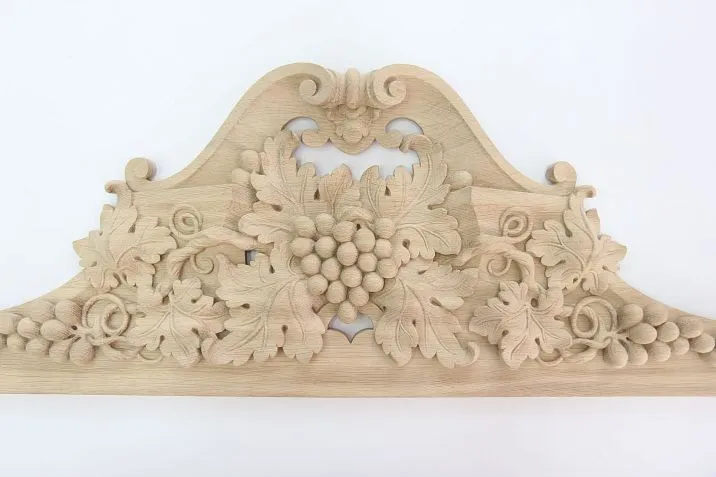
Carving is one of the oldest arts of wood processing, not lost in modern times. The choice of material for carving depends on the complexity of the planned work and required detail level.
Linden is a classic material for artistic carving. Soft, uniform, and lacking a distinct grain, it allows creating delicate details. Linden cuts cleanly in all directions without chipping, which is critical for complex ornaments.
Birch is harder than linden but also suitable for carving. Its light color and fine grain do not distract from the carving pattern. Birch holds fine details well and does not crumble with careless handling.
Oak requires high carving skill but yields unparalleled results. The contrasting grain and noble color make oak carving especially expressive. The material's hardness ensures sharp edges and long-lasting products.
Inlay and marquetry: painting with wood
Techniques of creating images from pieces of different wood species allow achieving effects unattainable by other methods. Natural colors and textures of wood create unique artistic works.
Inlay uses elements of varying thickness, embedded into the base. The technique allows creating three-dimensional compositions with light and shadow play. The base is typically made from stable materials — quality plywood or MDF.
Marquetry uses thin veneer of 0.6–2.0 mm thickness, glued onto a backing. The ability to use veneer from rare and expensive species makes this technique economically efficient for creating high-artistic-level works.
Bending and steaming: plastic processing
The ability of wood to take a specified shape under the influence of moisture and temperature opens unique opportunities for creating curved elements.
Steaming softens lignin — a natural polymer binding cellulose fibers. Optimal processing temperature is 80–100°C with relative humidity close to 100%. Processing time depends on material thickness — 1 hour per 25 mm thickness.
Bending on templates ensures shape accuracy and repeatability of results. The template must account for the material's elastic recovery — the template radius is made 10–20% smaller than the required radius of the finished part.
Practical aspects of working with materials
Preparation of work area and tools
The quality of creative work largely depends on proper organization of the work process. Good lighting, comfortable working surface height, and orderly tool placement create conditions for productive and safe work.
Lighting must be sufficient and uniform. A combination of general lighting (300–500 lux) and local lighting (1000–1500 lux) creates optimal conditions for precise work. LED lights with color temperature 4000–5000K ensure accurate color rendering.
Ventilation is especially important when working with dusty materials and volatile substances. Forced exhaust with air speed 0.5–1.0 m/s in the processing zone protects the craftsman's health and improves visibility.
Storing tools in a specific order saves time and extends service life. Cutting tools must be protected from damage and moisture. Measuring instruments require especially careful handling.
Safety techniques when working with various materials
Protection of respiratory organs is mandatory when working with dusty materials. Respirators of class FFP1 protect against coarse dust, FFP2 — against fine dust, FFP3 — against toxic particles.
Eye protection is necessary for any operations involving shavings or dust. Goggles must fit tightly to the face and not restrict the field of view.
Hearing protection is required when using electric tools. Noise levels above 85 dB may cause irreversible hearing damage.
Final finishing: revealing the beauty of the material
The quality of final finishing largely determines the perception of the finished product. Properly selected and applied finish not only protects the material but also highlights its natural beauty.
Surface preparation is the foundation of quality finishing. Sanding is performed using abrasives of increasing fineness — from P120 to P320 for most applications. Each previous grit must be completely removed by the next abrasive grade.
Sealing equalizes the surface's absorbency and improves coating adhesion. It is mandatory for open-pored woods and desirable for dense woods.
Applying the final coating requires compliance with temperature and humidity conditions. Optimal temperature: 18–25°C, relative humidity: 45–65%.
Procurement economic strategies
Material requirements planning
Proper procurement planning allows significant cost savings and avoids work stoppages due to material shortages. Calculating requirements must consider not only the dimensions of finished parts, but also technological allowances, cutting waste, and possible defects.
Material utilization coefficient depends on project complexity and executor’s skill level. For simple rectangular parts, it may reach 85–90%, while for complex curved shapes, it drops to 60–70%.
Waste norms for various operations: sawing — 3–5%, planing — 2–3%, sanding — 1–2%. These norms must be considered when calculating raw material requirements.
Seasonal price fluctuations and procurement strategies
The market for wood materials is subject to pronounced seasonal fluctuations, linked to cycles of harvesting, processing, and consumption.
Minimum prices typically occur during February–April, when winter harvesting ends and active raw material processing begins. The difference from peak prices may reach 25–30%.
Maximum prices are characteristic of the summer construction season (June–August), when material consumption is highest with limited supply.
Strategic reserves allow purchasing materials during low-price periods, but require suitable storage facilities and working capital.
Group purchasing and partner programs
Combining orders from multiple craftsmen allows obtaining wholesale prices when purchasing relatively small quantities of materials. Savings may amount to 15–25% of retail price.
Long-term agreements with suppliers ensure stable prices and priority in supplying scarce materials. Many suppliers offer discounts of 5–10% for annual volumes.
Large suppliers’ bonus programs include cumulative discounts, special offers for loyal customers, and project technical support.
Innovations and development trends
New wood processing technologies
Laser cutting provides exceptional cutting accuracy and quality. Cut width is 0.1–0.3 mm, minimizing material waste. The technology is especially effective for complex contours and thin materials.
Ultrasonic processing allows creating textured surfaces with specified characteristics. Microrelief produced by ultrasonics can imitate various natural textures or create unique decorative effects.
CNC milling makes any shape accessible. Modern machine positioning accuracy is ±0.01 mm, enabling the production of furniture-grade parts.
Ecological materials and technologies
FSC certification guarantees that wood originates from responsibly managed forests. Products with this certification enjoy growing demand on global markets.
Plant-based protein adhesives replace traditional formaldehyde-based compositions. They are environmentally safe, but have limited water resistance.
Secondary processing converts wood industry waste into valuable materials. Wood flour is used for producing composites, while sawdust is used for panel materials.
Digital technologies in creativity
3D modeling allows creating accurate product models before physical work begins. This saves materials, reduces development time, and allows early identification of structural issues.
Virtual reality allows "trying on" a product in an interior, assessing proportions and color combinations. The technology is especially useful when creating furniture and decorative elements.
Automated cutting equipment optimizes material usage and increases detail manufacturing accuracy. Modern systems achieve a material utilization coefficient of 92–95%.
STAVROS: Symphony of Quality in the World of Creative Materials
In a world where creativity demands not only inspiration but also high-quality materials, the company STAVROS has taken a unique position as a partner and inspirer of artisans. When it comes to seeking ideal wood and plywood blanks for creativityThe name STAVROS is pronounced with special respect in circles of professionals and hobbyists.
The philosophy of STAVROS is based on a deep understanding that every creative project is unique, and each idea requires a special approach to material selection. Here, it's not just about selling blanks — it's about helping to bring dreams into tangible form, transforming abstract ideas into tangible works of art.
The company's assortment represents a carefully selected collection of the best materials from trusted suppliers. Each catalog item has undergone strict selection based on quality, functionality, and creative potential. From simple planed boards for beginner craftsmen to exclusive blanks from rare species for original projects — everyone will find materials matching their vision and capabilities.
STAVROS's quality control system has no analogs in the industry. Multi-stage inspection begins with careful selection of raw material suppliers and ends with final inspection of each batch of finished products. Modern laboratory equipment is complemented by expert evaluations from specialists with years of experience working with wood.
The STAVROS team are not just employees — they are enthusiasts who share the passion of their clients for creativity. They understand the specifics of various woodworking techniques, know the characteristics of different materials, and are ready to share their accumulated experience. Every consultation is an opportunity to receive professional advice based on deep knowledge and practical experience.
STAVROS's innovative approach is not only reflected in the constant expansion of the assortment with new materials, but also in the development of proprietary technological solutions. The company's research center is working on creating unique materials that combine traditional wood advantages with modern technological capabilities.
STAVROS's logistics network ensures delivery of materials to any point in the country with a guarantee of cargo safety. Specialized warehouses maintain optimal storage conditions, preventing deformation and damage to materials.
Choosing STAVROS means choosing not just a supplier of materials, but a reliable partner in creativity. This is a guarantee that the quality of materials will not let you down at the most critical moment, that each blank will help realize your creative vision in the best possible way. This is an investment in the success of your projects, in the joy of the creative process, in the longevity and beauty of the created works.