Article Contents:
- Normative Basis and Safety Standards
- Special Requirements for Childcare Facilities
- Ergonomic Principles of Height Calculation
- Adaptation to Individual Characteristics
- Influence of Architectural Style on Proportions
- Modern design trends
- Materials and Their Impact on Structure Height
- Composite Materials and Innovative Solutions
- Technological aspects of production
- Quality Control and Manufacturing Accuracy
- Installation Features and Precision of Mounting
- Compensation for Irregularities and Deformations
- Height Calculation for Different Types of Stairs
- Features of Multi-Flight Structures
- Influence of Lighting on Height Perception
- Decorative Lighting and Visual Effects
- Psychological Aspects of Height Perception
- Adaptation to Age-Related Characteristics
- Economic Aspects of Height Selection
- Long-Term Economic Efficiency
- Innovative Approaches to Design
- Integration with "smart home" systems
- Conclusion
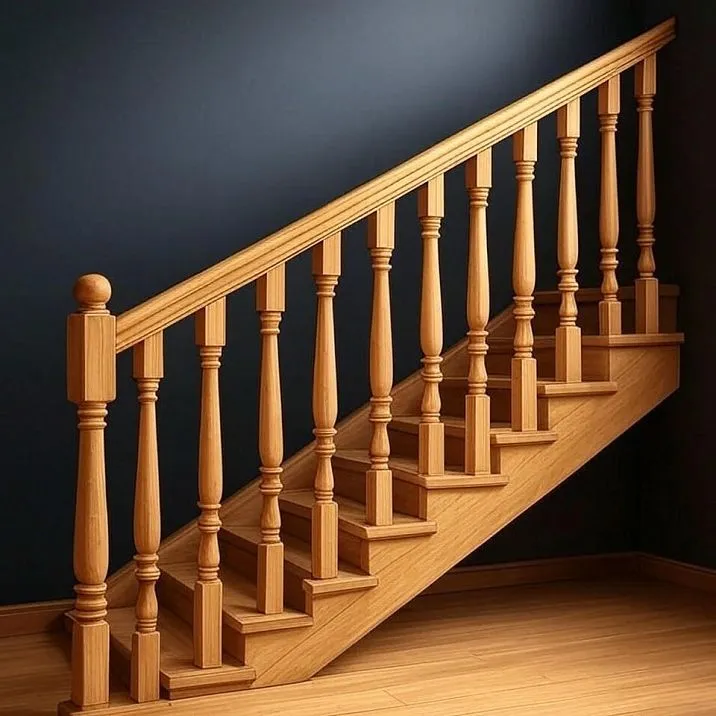
When we ascend stairs, our hand instinctively reaches for the handrail, and our gaze glides along the vertical supports, creating a rhythmic composition. Indeed baluster height for stairs it determines not only the safety of each step but also the aesthetic perception of the entire structure. This parameter is the result of centuries of observations on human ergonomics, mathematical calculations, and architectural canons, embodied in modern building codes.
Correctly calculated baluster height transforms a staircase from a simple functional element into a work of architectural art. Every millimeter here matters: too low supports do not ensure adequate safety, while excessively high ones disrupt proportions and create a sense of bulkiness.
In modern construction, the height of stair balusters is strictly regulated by norms, yet it still allows room for creative interpretation. Understanding the principles of calculating this parameter opens opportunities for designers and builders to create unique solutions where technical precision combines with artistic vision.


Normative Basis and Safety Standards
Modern requirements for baluster height were formed over decades, based on analysis of accidents, ergonomic research, and statistical data on human physical parameters. The basic standard sets a minimum guardrail height of 90 centimeters for internal staircases in residential premises.
This figure is not arbitrary — it corresponds to the level of the center of gravity of an average-height adult, providing effective protection against falls. Meanwhile, height is measured from the upper surface of the tread to the top of the handrail, creating a unified measurement system for all types of structures.
Requirements for public buildings and multi-story buildings are stricter — the minimum height increases to 120 centimeters. This is due to the higher usage intensity of such staircases and the need to ensure safety for people of different ages and physical fitness levels.




Special Requirements for Educational Institutions
Kindergartens, schools, and other educational institutions impose special requirements for guardrail height. Here, a multi-level protection principle applies: the main guardrail at 120 centimeters is supplemented by intermediate handrails at 70 and 50 centimeters.
Such a system takes into account the differences in growth among children of different age groups and prevents the possibility of slipping between railing elements. The distance between balusters in childcare facilities should not exceed 10 centimeters, which excludes the possibility of a child's head getting stuck between supports.
Special attention is paid to the strength of baluster fastening. In childcare facilities, they must withstand increased dynamic loads associated with children's active behavior. This requires the use of reinforced fasteners and thicker cross-sections of support elements.
Our factory also produces:


Ergonomic principles of height calculation
The human body is a complex biomechanical system, and when designing stair railings, numerous anthropometric parameters must be considered. baluster height for stairs Calculated based on average height indicators of the adult population, but it must also ensure comfort for people of different body types.
The optimal handrail height corresponds to the level of the elbow when the arm is in a natural position. This ensures minimal load on the shoulder and forearm muscles when ascending stairs. For people of average height (170-175 cm), this level is at 85-95 centimeters above the step.
Biomechanical studies show that when ascending stairs, a person instinctively seeks support at the level of their center of gravity. Properly calculated baluster height ensures psychological comfort, creating a sense of reliable protection without feeling confined by space.
Get Consultation
Adaptation to individual characteristics
In private construction, it becomes possible to adapt railing heights to specific users. For families with tall members, an optimal height may be 95-100 centimeters, while for elderly people, lower handrails — 85-90 centimeters — are preferable.
It is important to consider not only height but also age-related characteristics of users. With age, a person's center of gravity shifts, gait changes, and coordination of movements alters. For staircases in senior homes or rehabilitation centers, additional handrails at different levels may be required.
Modern technologies allow creating adjustable railing systems, where handrail height can be adjusted according to user needs. Such solutions are especially relevant in public buildings with diverse visitor demographics.
Influence of architectural style on proportions
Classical architectural orders established certain proportional relationships that still influence the perception of staircase structures. In the Doric order, baluster height is approximately 1/7 of the column's total height, which, when converted to modern staircases, yields an optimal height of about 90 centimeters.
Baroque staircases tend toward more massive railings with baluster heights up to 110-120 centimeters. This creates a sense of grandeur and parade, characteristic of this style. Ornately decorated, tall balusters become independent architectural elements that draw attention to the staircase structure.
Modernist movements of the 20th century brought the principle of functionalism, where baluster height is determined exclusively by ergonomic requirements. Minimalist railings at 85-90 centimeters create a sense of lightness and do not overload space with decorative elements.
Modern design trends
Modern architecture strives for individualized solutions, and baluster height becomes a tool for creating a unique interior character. In loft spaces, low railings at 80-85 centimeters are popular, emphasizing industrial aesthetics.
Scandinavian style prefers the golden mean — balusters at 90-95 centimeters made of light-colored wood create a sense of coziness and naturalness. Simple forms and natural materials do not distract attention from the functionality of the structure.
High-tech and modern minimalism experiment with non-standard solutions: glass railings of variable height, metal structures with adjustable elements, combined systems with different handrail levels.
Materials and their influence on structure height
The choice of material for manufacturing balusters directly affects their optimal height. Wooden balusters, due to their relative lightness, can reach a height of 100-110 centimeters without compromising structural stability. However, it is important to consider the type of wood — denser species require reinforced fasteners.
Metal balusters allow creating thinner and taller structures. Steel supports can reach a height of 120-130 centimeters with minimal cross-section, which is especially relevant for modern interiors. However, metal requires additional anti-corrosion treatment and may cause discomfort upon contact during cold weather.
Stone and concrete balusters, traditionally used in classical architecture, have significant weight, which limits their height due to safety considerations. The optimal height for such structures is 85-95 centimeters, provided the staircase foundation is appropriately reinforced.
Composite materials and innovative solutions
Modern composite materials open new possibilities for creating balusters of non-standard height. Carbon fiber structures combine the lightness of aluminum with the strength of steel, allowing the creation of tall and thin supports without compromising safety.
Glass balusters require a special approach to height calculation. Tempered glass 12-15 millimeters thick can be used to create railings up to 110 centimeters high, but requires special fasteners and regular maintenance.
Polymer materials allow creating balusters of complex shapes with variable height. Such solutions are especially popular in childcare facilities, where one can create play elements combining functionality with entertainment aspects.
Technological aspects of production
Modern manufacturing technologies for balusters allow achieving the highest precision in adhering to specified dimensions. CNC machines ensure deviation from nominal baluster height for staircases no more than ±1 millimeter, which is critically important for creating harmonious staircase structures.
The manufacturing process begins with precise calculation of all parameters of the future staircase. The incline angle of the stair run, step height, tread width, and overall room geometry are taken into account. Based on these data, the optimal height of each baluster is determined, taking into account its position on the staircase.
Special attention is paid to the quality of the material. For wooden balusters, wood dried in a chamber with moisture not exceeding 12% is used. This ensures dimensional stability of the finished product and prevents deformation during operation.
Quality control and manufacturing accuracy
Each baluster undergoes multi-stage quality control. The initial inspection is conducted at the stage of preparing blanks — checking compliance with dimensions, absence of material defects, and correct orientation of wood grain.
Intermediate control is performed after each technological operation. Special attention is paid to the accuracy of processing end surfaces, which determine the final height of the baluster. The use of laser measurement systems allows controlling dimensions with an accuracy of 0.1 millimeter.
Final control includes checking all geometric parameters of the finished product. Each baluster is measured at multiple points, checking end perpendicularity, absence of deformations and surface defects. Only products fully complying with technical requirements are delivered to the customer.
Installation features and installation accuracy
Correct installation of balusters requires no less accuracy than their manufacturing. Even minor deviations in installation height can disrupt the overall harmony of the staircase structure and create discomfort during use.
The installation process begins with careful marking of installation locations. Laser levels and special templates are used to ensure precise positioning of each baluster. Special attention is paid to maintaining vertical alignment — deviation from verticality must not exceed 2 millimeters per meter of height.
Balusters are mounted using various methods depending on the material and staircase construction. Wooden balusters are most often mounted on tenons or metal bolts, ensuring secure connection with the base and handrail.
Compensation for unevenness and deformations
In real construction conditions, perfectly flat surfaces do not exist, and installers must be able to compensate for various unevenness and deformations. For this purpose, adjustable fasteners are used, allowing precise adjustment of the height of each baluster.
Installing balusters on curved staircases presents particular difficulty. Here, each support has an individual height calculated based on the curvature of the stair run and the position of the handrail. The use of parametric calculations and specialized software allows achieving ideal installation accuracy.
Temperature deformations of materials must also be considered during installation. Wooden structures may change their dimensions depending on ambient humidity and temperature. Compensation gaps and movable joints allow the structure to adapt to changing conditions without losing functionality.
Calculating height for different types of staircases
Straight staircases present the least complexity for calculating baluster height. Here, all supports have the same height, determined by the slope angle of the stair run and the height of the handrail. The standard formula takes into account step height, slope angle, and required railing height.
Helical staircases require individual calculation of the height of each baluster. The handrail of a helical staircase is a spatial curve, and the height of each support is determined by its position relative to the axis of rotation. Modern CAD systems allow automating these calculations and creating accurate drawings for production.
Staircases with landing steps combine the complexities of straight and helical constructions. In the turning zone, balusters have varying heights, smoothly transitioning from one level to another. This requires special precision in calculating and manufacturing each element.
Features of multi-run constructions
Multi-run staircases with intermediate landings create additional complexity in calculating baluster height. On landings, support posts with increased cross-section are installed, and transitions from the stair run to the landing require special transition elements.
Baluster height on landings is usually equal to the height of the stair run railing, but may be increased to create an architectural accent. Corner balusters are often made higher than standard ones, emphasizing turning points of the staircase structure.
Connecting staircases of different widths also affects baluster height. When transitioning from a wide stair run to a narrow one, the railing height may need to be adjusted to maintain structural proportionality.
Influence of lighting on perception of baluster height
Proper lighting of the staircase significantly affects the perception of baluster height. Under insufficient lighting, even correctly calculated railings may appear too low or too high, creating discomfort during staircase use.
Natural lighting creates a play of light and shadow on baluster surfaces, emphasizing their shape and height. Side lighting from windows makes balusters more prominent, while top lighting may visually "flatten" the structure.
Artificial lighting must be designed taking into account baluster height. Lamps installed at handrail level provide even illumination of steps and do not create sharp shadows. baluster height for stairs Height of 90 centimeters is optimal for placing built-in LED elements.
Decorative lighting and visual effects
Modern LED lighting technologies allow creating striking lighting effects for staircase railings. LED strips embedded in handrails or baluster bases not only ensure safety at night but also create impressive visual effects.
Colored lighting can visually alter the perception of baluster height. Warm tones make the structure appear more grounded and cozy, while cool tones create a sense of height and spaciousness. Dynamic lighting with variable intensity adds a modern, technological character to the staircase.
Projection lighting allows creating various patterns and images on baluster surfaces, transforming the staircase into an art object. Such solutions are especially popular in commercial interiors, where the staircase must attract attention and create a memorable impression.
The psychological aspects of height perception
Human perception of balustrade height is largely determined by psychological factors. Too low railings create a sense of vulnerability and may cause discomfort for people suffering from acrophobia. Conversely, excessively high balustrades may create a feeling of confinement and restriction of movement.
The optimal balustrade height should provide a sense of safety without creating a feeling of being in a 'cell'. Psychological studies show that a height of 85-95 centimeters is perceived by most people as comfortable and safe.
Cultural differences also influence the perception of optimal railing height. In Asian countries, where the average population height is lower than in Europe, lower balustrades are preferred. In northern European countries, conversely, higher railings are popular.
Adaptation to age-related characteristics
Children perceive standard railings as significantly higher, which may create a sense of oppression in them. For children's facilities, it is recommended to use multi-level railings with handrails at different heights.
Elderly people, on the contrary, often prefer higher railings that provide additional psychological support. For them, physical safety is important, but also confidence in the reliability of the structure.
People with disabilities may have specific requirements for railing height. For wheelchair users, the optimal handrail height is 70-80 centimeters, which requires installing additional elements to standard railings.
Economic aspects of choosing height
Balustrade height directly affects the cost of staircase construction. Higher balustrades require more material, increasing the product's cost. At the same time, it is necessary to consider not only the cost of the balustrades themselves, but also the reinforcement required to ensure the stability of high structures.
Transporting high balustrades may also incur additional costs. Standard vehicle dimensions limit the maximum length of transported items, and balustrades over 110 centimeters may require special transport.
Installing high balustrades requires more skilled specialists and special equipment, which also affects the overall project cost. However, these additional expenses are often justified by increased safety and aesthetic appeal of the structure.
Long-term economic efficiency
When evaluating the economic efficiency of different balustrade heights, long-term factors must be considered. Properly calculated railing height reduces the risk of accidents, which can significantly save money on insurance payouts and medical expenses.
Aesthetically pleasing staircases with properly selected balustrade height increase property value. This is especially relevant for commercial properties, where appearance directly affects attractiveness to customers and tenants.
High-quality balustrades of optimal height serve for decades without requiring replacement or major repairs. This makes initial investments in quality construction economically justified in the long term.
Innovative approaches to design
Modern technologies open new opportunities for optimizing balustrade height. Virtual reality systems allow clients to 'walk' through future staircases and evaluate the comfort of different railing height options even during the design phase.
Parametric design allows automatically calculating the optimal balustrade height for specific operating conditions. Algorithms take into account users' anthropometric data, room characteristics, safety requirements, and aesthetic preferences.
Adaptive railing systems with adjustable balustrade height are still in development, but already show promising results. Such systems can automatically adjust to the user's height or change configuration depending on the time of day and intensity of staircase use.
Integration with "smart home" systems
The development of Internet of Things technologies opens new opportunities for integrating staircase railings into smart home systems. Sensors embedded in balustrades can monitor staircase usage intensity, detect potentially dangerous situations, and automatically activate additional lighting.
Machine learning systems analyze staircase usage patterns by different family members and can suggest railing height optimization to improve comfort and safety. Such systems are especially relevant for families with children, where safety requirements change as children grow.
Voice control allows users to request information about the condition of staircase railings, receive recommendations for safe usage, and even control built-in lighting and ventilation systems.
Conclusion
Correct calculation represents a complex engineering task requiring consideration of multiple factors — from building codes and ergonomic requirements to aesthetic preferences and economic considerations. Modern design and manufacturing technologies allow creating staircase railings that perfectly combine safety, functionality, and beauty. baluster height for staircases The future of staircase design is linked to further development of adaptive and intelligent systems capable of adapting to individual user needs. However, the fundamental principles of balustrade height calculation, based on human ergonomics and centuries of construction experience, will remain relevant even in the era of digital technologies.
Investments in properly designed and high-quality balustrades of optimal height pay off not only through increased safety and comfort of staircase use, but also through increased overall property value. This makes careful attention to railing height calculation not just a technical necessity, but also a rational economic strategy.
Investments in properly designed and well-made balusters of optimal height pay off not only through increased safety and comfort of staircase use, but also through increased overall property value. This makes careful calculation of railing heights not just a technical necessity, but also a sound economic strategy.
STAVROS, recognized as a leading company in the production of wooden architectural elements, applies the most modern methods of calculation and manufacturing of balustrades of various heights. Years of experience, use of advanced technologies, and strict quality control enable STAVROS to create products that fully meet both technical requirements and individual customer preferences. Choosing STAVROS products guarantees that each balustrade will be manufactured with perfect precision and will serve for many years, ensuring the safety and beauty of your staircase.