












































































Article Contents:
- Why high baseboards: architectural logic and visual effects
- Historical perspective
- Visual height increase of the room
- Creating proper proportions
- Strengthening stylistic concept
- Practical advantages
- Choosing baseboard height: from 80 to 150 mm
- Baseboards 80-90 mm high: compact elegance
- Baseboards 100-120 mm high: universal solution
- Baseboards 130-150 mm high: accent solution
- Factors influencing height selection
- Joining high baseboards with door casings: harmony of transitions
- Problem with standard door casings
- Classic solution: bevel at 45 degrees
- Using coordinated collections
- The "high casing" approach
- Contrasting solutions
- Practical recommendations for joining
- Hidden cable channel and innovative lighting
- Internal cable channel: order without compromise
- Types of cable channels in baseboards
- LED lighting: magic of light at floor level
- Structural solutions for lighting
- Choosing LED strip
- Installation and connection of lighting
- Wall protection and special features for use in wet areas
- Mechanical protection in high-traffic zones
- Phytopolymer in wet rooms
- Application in bathrooms
- Kitchen Zone: Protection from Grease and Moisture
- Children's Rooms: Safety and Practicality
- Features of Use in Humid Areas
- Painting of High Baseboards: Acrylic and Latex
- Choosing Between Acrylic and Latex
- Surface Preparation for Painting
- Painting Technology
- Matte or Glossy Paint
- Color Matching: Color as a Design Tool
- Care for Painted Surfaces
- Practical Recommendations from STAVROS and Hi Wood Experts
- The Three-Line Rule
- Installation 'Around the Perimeter'
- Taking Radiators into Account
- Pre-Layout and Visualization
- Combination with floor coverings
- Acclimatization and Storage
- Working with Corners
- Combining with Underfloor Heating
- FAQ: Frequently Asked Questions about High Baseboards
- Benefits of Partnering with STAVROS and Hi Wood
- Conclusion

When it comes to interior details, many underestimate the role of baseboards, considering them merely technical elements intended only to conceal the gap between wall and floor. However, professional designers know: a properly chosen baseboard can dramatically alter the perception of space, visually increase ceiling height, add aristocracy and completeness to the interior. And high baseboards play a special role in modern design — elements that have transformed from a humble technical detail into a full-fledged architectural accent.
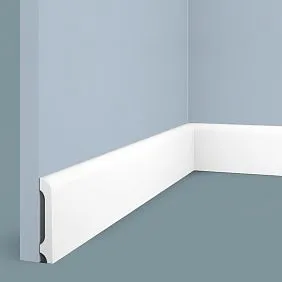
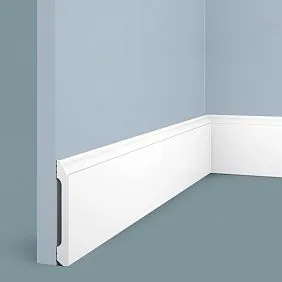
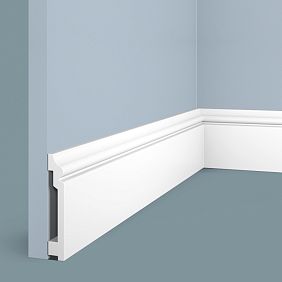
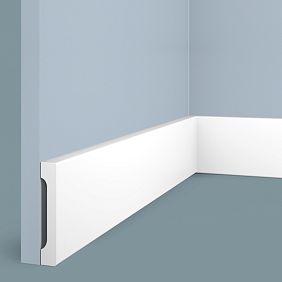
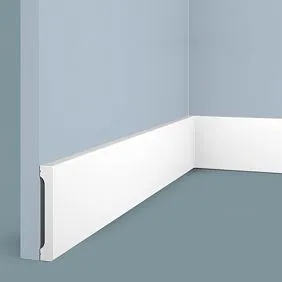
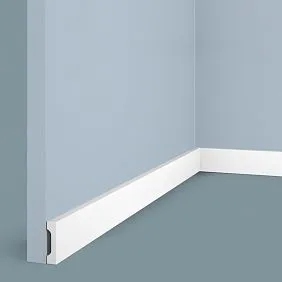
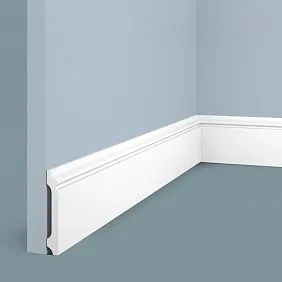
High Baseboard from Phytopolymer 100 mmAnd more — this is not a fashion trend, but a conscious choice of those who understand the language of space. Such profiles create an expressive horizontal line at the lower part of the wall, structure the room, give it depth and volume. At the same time, they remain remarkably practical: they protect walls from damage, conceal utilities, and serve as a base for decorative lighting.
In this article, we will thoroughly examine why high baseboards have become a trend in modern design, how to properly choose their height, integrate them with door casings, and utilize additional functional features. You will learn about the advantages of phytopolymer as a material, specifics of installation and painting, as well as practical recommendations from STAVROS experts — official partners of the leading manufacturer Hi Wood.

Why High Baseboards: Architectural Logic and Visual Effects




Historical Perspective
High baseboards are not a modern invention. Looking into the history of European architecture, we find that in palace interiors of the 18th-19th centuries, baseboards reached heights of 200-300 mm, sometimes even more. This was not accidental: high profiles visually raised ceilings, created a sense of scale and grandeur, emphasized the status of the owners.
During the Soviet era, when standard construction dictated its rules, baseboards 'shrunk' to modest 40-60 mm — this was cheaper and simpler to produce. However, today, as we return to the principles of beautiful architecture, high baseboards are returning to our interiors, bringing elegance and expressiveness.
Our factory also produces:


Visual Increase in Room Height
Paradoxically, but true: a high baseboard visually makes ceilings appear higher, not lower, as one might assume. The mechanism of this effect is simple. When we install a high profile, it creates an expressive horizontal line at the lower part of the wall. This line becomes a kind of starting point for perceiving verticality.
The eye, gliding from the baseboard upward along the wall to the ceiling, fixes the distance between these two horizontals. And the more clearly defined the lower boundary, the longer this path seems. This technique is especially effective when combined with a ceiling cornice of similar width — it creates an effect of framing the wall from top and bottom, visually elongating the space.
Get Consultation
In modern new constructions, the problem of poor proportions often arises: a large floor area with relatively low ceilings (2.6–2.7 m) creates a "low-ceilinged" effect.
A plant polymer skirting board height of 100–150 mm helps solve this problem, balancing horizontal and vertical measurements.Plant polymer skirting board in interior designThe height of the skirting board should be approximately 1/20 of the ceiling height. For standard 2.7 m ceilings, this gives an optimal height of about 135 mm. However, in spacious rooms over 25 sq. m, profiles up to 150–180 mm can be confidently used—they do not overwhelm the space but instead add architectural expressiveness.
There is a proven design rule: the height of the skirting board should be approximately 1/20 of the ceiling height. For standard 2.7 m ceilings, this gives an optimal height of about 135 mm. However, in spacious rooms over 25 sq. m, profiles up to 150–180 mm can be confidently used—they do not overwhelm the space but instead add architectural expressiveness.
Stylistic Enhancement
High skirting boards are a mandatory feature of classical interiors, where they work in conjunction with ceiling cornices, moldings, and other architectural elements. However, even in modern styles—neoclassicism, contemporary, even minimalism—high profiles find their place.
In neoclassical interiors, skirting boards with moderate decoration, 120–150 mm high, painted in neutral tones are used. In minimalism—simple rectangular profiles 100–120 mm high, often matching wall color, creating a graphic line without excessive ornamentation. In Scandinavian style—white skirting boards of medium height (100–110 mm) with a slight rounding of the top edge.
Practical Advantages
In addition to aesthetics, high skirting boards serve an important practical function. They provide more reliable protection for the lower part of the wall from mechanical damage—vacuum cleaner impacts, furniture legs, children’s toys land on the skirting board, not on wallpaper or paint. This is especially relevant in hallways, corridors, and children’s rooms.
The wide upper edge of a high skirting board allows placing decorative elements—small lamps, miniature sculptures, collectibles. This turns the skirting board into a functional shelf, adding individuality to the interior.
Choosing skirting board height: from 80 to 150 mm
Choosing the correct skirting board height is a task requiring consideration of multiple factors: ceiling height, room area, interior style, and room’s functional purpose.
Skirting boards 80–90 mm: compact elegance
Profiles of this height are the minimum threshold for the "high" category of skirting boards. They suit small rooms of 10–15 sq. m with 2.5–2.6 m ceilings, where heavier profiles would appear bulky.
Skirting boards 80–90 mm work well in Scandinavian interiors, where lightness and airiness are important. They are noticeable enough to create a clear horizontal line but do not overload the space. This height is also optimal for bathrooms and toilets, where every centimeter counts.
Skirting boards 100–120 mm: universal solution
High Baseboard from Phytopolymer 100 mmProfiles up to 120 mm are the golden standard for most modern apartments. They are ideal for rooms with 2.6–2.8 m ceilings and 15–25 sq. m area.
This height is sufficient to create an expressive architectural element, yet the profiles do not appear overly bulky. They combine beautifully with most door casings, which have a standard width of 70–90 mm. Cable channels for wiring can easily fit inside profiles of this height, and the top edge is wide enough for installing LED strips.
Manufacturer Hi Wood, whose products are available in the STAVROS assortment, produces a wide range of skirting boards 100–120 mm high in various stylistic solutions—from classic profiles with relief to minimalist rectangular cross-sections.
Skirting boards 130–150 mm: accent solution
Profiles of this height are chosen for spacious rooms over 25 sq. m with ceilings from 2.8 m. They create a strong architectural accent, transforming the skirting board from an auxiliary element into a full-fledged part of the decorative composition.
Skirting boards 130–150 mm are especially effective in classical and neoclassical interiors, where they work in conjunction with wide ceiling cornices of similar dimensions. Such wall framing creates an impression of architectural integrity characteristic of palace interiors.
In modern styles, high skirting boards 140–150 mm are used as graphic elements, especially effective with contrasting coloring. For example, a dark skirting board on a light wall creates a clear horizontal line, visually expanding the space.
Factors influencing height selection
When choosing skirting board height, consider not only room dimensions but also other factors. If the room has a lot of furniture placed tightly against the walls, a high skirting board may cause problems—the furniture will be set back from it, creating gaps. In such cases, it’s better to choose medium sizes 100–110 mm.
If the skirting board is intended to serve as a cable channel for a large number of wires (home theater, computer zone), profiles of at least 100 mm height with sufficient internal volume are required.
In rooms with heated floors, high skirting boards are preferable—they better conceal the expansion joint required to compensate for floor covering thermal expansion.
Joining high skirting boards with door casings: harmony of transitions
One of the most challenging tasks when using high skirting boards is their proper joining with door casings. An incorrect solution to this joint can ruin the impression even of the most beautiful skirting board.
Problem with standard door casings
Most interior doors come with casings that are 70-80 mm wide. When a baseboard 120-150 mm high approaches the wall, the question arises: how to join these elements? If you simply cut the baseboard perpendicular to the casing, you’ll get a visually unpleasant stepped transition.
Classic solution: 45-degree bevel
Traditional method — bevel the baseboard at a 45-degree angle to create a smooth transition to the casing. This cut starts from the top edge of the baseboard and runs down to the floor, ending precisely at the base of the casing. This results in an elegant bevel that visually connects the two elements.
This method requires precision in execution. The bevel angle must be calculated so that the baseboard does not protrude beyond the casing plane and does not sink too deeply. Typically, the bevel line starts at a distance equal to the baseboard height from the corner of the door opening.
Using coordinated collections
A more elegant solution — choose baseboards and casings from the same collection, where the manufacturer has already thought through their combination. Hi Wood and other professional-grade manufacturers produce coordinated series where the casing width matches the baseboard height, and the profiles have the same pattern.
Such collections often include special corner elements — decorative overlays installed at the junction of the baseboard and casing, creating a smooth transition. This is the most professional solution, typical for classic interiors.
The "high casing" approach
Modern solution — using wide casings that match the baseboard height in width. If the baseboard is 120 mm high, the casing is also chosen to be 120 mm wide. With this approach, both elements fit perfectly, creating a unified architectural frame for the opening.
This approach is especially effective in neo-classical and modern interiors, where doors become full architectural accents. Wide casings combined with high baseboards create a striking frame that visually enlarges the door opening.
Contrasting solutions
In minimalist interiors, a contrasting combination is sometimes used: the baseboard is intentionally made higher than the casing and cut perpendicular to it. However, in this case, the casing must be as thin as possible (40-50 mm), and the baseboard should be minimalist, without decoration. The contrast in height becomes part of the designer’s concept.
Practical tips for joining
When cutting the baseboard, use a miter saw capable of setting a precise angle — this ensures a clean cut without chipping. Always sand the cut edge with fine-grit sandpaper and prime it before painting.
If the baseboard and casing are painted the same color, the joint between them becomes practically invisible. If different colors are used, the joint line must be perfectly sharp — use painter’s tape during painting.
Don’t forget about baseboard trim — small decorative overlays installed at the corners where the baseboard meets the casing. They mask possible inaccuracies in the cut and add elegance to the interior.
Hidden cable channel and innovative lighting
Modernbaseboard made of fitopolymer for painting— it is not just a decorative element, but also a functional system that conceals utilities and creates decorative lighting.
Internal cable channel: order without compromise
One of the main problems of modern interiors — excessive wiring. Television, internet router, charging devices, home theater speakers — all of this requires connection to the electrical network. Wires running along walls or lying on the floor inevitably spoil the appearance of any, even the most refined, interior.
High fitopolymer baseboards elegantly solve this problem. Many models have an internal cavity forming a cable channel. Wires are laid inside the profile and become completely invisible. At the same time, access to utilities is preserved — simply remove the decorative strip or open a special cover.
For effective use of the cable channel, choose baseboards at least 100 mm high — they provide enough space for several wires of different diameters. Models 120-150 mm high can even accommodate thick cables for home theater or computer networks.
Types of cable channels in baseboards
There are several structural solutions. The simplest option — a monolithic baseboard with an internal cavity. Wires are installed during assembly, and exits are provided through special slots cut at the required locations.
A more functional option — baseboards with a removable front panel. The profile base is mounted to the wall, wires are laid into the channel, and then the decorative overlay is snapped into place. This construction allows you to add new wires or perform maintenance at any time without dismantling the entire baseboard.
Premium solution — baseboards with integrated outlets. Electrical sockets are embedded into the profile, allowing direct connection of devices. This is especially convenient in living rooms and offices, where many connection points are required.
LED lighting: magic of light at floor level
Baseboard with LED lightingThis is an innovative solution that adds depth and atmosphere to the interior. The LED strip installed in a special groove on the top edge of the baseboard creates soft lighting along the wall, visually separating it from the floor.
Such lighting performs several functions. First, it provides a decorative effect — walls appearing to float create a sense of lightness and modernity. Second, it is a practical solution for night lighting — the soft light does not cause glare but allows safe movement around the house in the dark. Third, it serves as a space zoning tool — lighting along the perimeter highlights a functional zone without the need for partitions.
Construction solutions for lighting
LED strips are installed using baseboards with a special groove at the top. The groove is angled to direct light toward the wall and create a soft glow effect. The depth and width of the groove are designed so that the strip installs flush and does not protrude.
The most effective lighting is in baseboards 120-150 mm high — light spreads sufficiently upward along the wall, creating a striking light accent. In lower profiles, the effect is less noticeable.
Manufacturer Hi Wood offers special baseboard models specifically designed for installing lighting. They have an optimal groove geometry and are often equipped with a diffuser — a semi-transparent overlay that makes the light more even and soft.
Choosing LED strip
LED strips operating at 12 or 24 volts are used for baseboard lighting. This is safe and energy-efficient. The strip’s power is selected based on desired brightness: for soft decorative lighting, 4–6 W per meter is sufficient, while for brighter illumination, 8–12 W per meter is needed.
The color of the glow is a matter of style. Warm white light (2700–3000K) creates a cozy atmosphere and is suitable for bedrooms and living rooms. Neutral white (4000K) is versatile and ideal for hallways and corridors. Cool white (5000–6500K) creates a modern, technological look and is appropriate for minimalist interiors.
RGB strips with color-changing capability — a solution for those who enjoy experimenting with ambiance. However, such a solution is not suitable for classic interiors — it is too technological and modern.
Installation and connection of lighting
The LED strip has an adhesive backing and is installed into the baseboard groove before mounting the baseboard on the wall. The strip is cut to the required length using special markings, and cut ends are connected using connectors or soldering.
Power is supplied via a power supply unit, usually placed in an inconspicuous location — behind furniture or inside a cabinet. Wires from the power supply run to the baseboard and can be concealed within the same baseboard’s cable channel.
Lighting control is performed via a switch, dimmer (for brightness adjustment), or remote control (for RGB strips). Modern systems allow integrating lighting into a "smart home" system for automated control.
Wall protection and special features for use in humid zones
High baseboards — not only beauty, but also practical protection. This function is especially important in humid zones, where walls are subjected to additional stress.
Mechanical protection in areas of active use
In hallways, corridors, and children’s rooms, the lower part of walls is subjected to constant mechanical impacts. Impacts from shoes, furniture legs during rearrangement, children’s toys, suitcase wheels — all of this leaves marks on wallpaper and paint. High baseboards absorb these impacts, protecting the decorative wall covering.
High Baseboard from Phytopolymer 100 mmand provides better protection at height, where most accidental damage occurs. The fitopolymer is resistant to impacts — it does not splinter like wood and does not break like plaster. Minor dents and scratches are easily masked with touch-up paint.
Fitopolymer in humid rooms
One of the main advantages of fitopolymer is absolute water resistance. The material does not absorb water, does not swell, does not deform from steam, does not develop mold or mildew. This makesbaseboard moisture-resistant made of fitopolymeran ideal choice for bathrooms, toilets, kitchens, laundry rooms.
Unlike wooden baseboards, which swell, crack, and lose their shape in high humidity, fitopolymer profiles maintain stability for decades. They do not rot, do not require special waterproofing treatments, and are easily cleaned with any household cleaner.
Application in bathrooms
In bathrooms, high baseboards serve a dual function. They protect walls from water splashes during floor cleaning, shower use, and laundry. Even high-quality tiles have grout lines through which moisture can penetrate — the baseboard acts as an additional barrier.
Baseboards for bathrooms are recommended to be 80–100 mm high — they provide sufficient protection but do not look bulky in small rooms. Profiles should have a simple shape without complex relief, where dirt and moisture can accumulate.
Installing baseboards in bathrooms has specific features. Use moisture-resistant adhesive based on polymer or liquid nails marked "for humid areas". The joint between the baseboard and floor must be sealed with silicone sealant — this prevents water from seeping under the profile.
Kitchen zone: protection from grease and moisture
On the kitchen, the lower part of walls is exposed to grease, moisture, and food splashes. Wallpaper and paint quickly lose their appearance, becoming stained. High baseboards create a protective zone that is easy to clean and maintains a flawless appearance.
For kitchens, use baseboards with smooth surfaces painted with water-resistant latex paint. Raised profiles are undesirable in kitchens — dirt accumulates in recesses and is difficult to remove.
High baseboards painted in the color of the kitchen cabinetry are especially effective. This creates visual unity in the space, making the interior more cohesive and thoughtfully designed.
Children's rooms: safety and practicality
In children's rooms, high baseboards serve as protection for walls from artistic experiments by young creators. Drawings with markers, stickers, and clay inevitably end up on the lower part of the walls. The fitopolymer baseboard easily washes off most stains, and if something doesn't come off, you can simply repaint the affected area.
Important note: fitopolymer baseboards are absolutely safe for children. The material contains no toxic substances, does not emit odors, and is hypoallergenic. If a child hits the baseboard, they won't suffer serious injury — the material is sufficiently elastic to absorb the impact.
Features of use in humid areas
Although fitopolymer is water-resistant, proper painting is critically important for use in humid areas. Use water-resistant latex or acrylic paints marked 'for humid areas'. These formulations create a dense water-repellent coating that protects the material from direct contact with water.
Always apply two coats of paint with full drying time between each — this ensures reliable protection. Semi-gloss and satin paints are preferable to deep matte finishes — they are easier to clean and absorb fewer contaminants.
Regular care includes wiping baseboards with a soft sponge using neutral cleaning agents. Avoid abrasive powders and stiff brushes — they may scratch the painted surface.
Painting high baseboards: acrylic and latex
Proper painting is the final touch, transforming the baseboard from a technical element into a full-fledged part of the interior composition. Let's consider the specifics of working with acrylic and latex paints.
Choosing between acrylic and latex
Acrylic paints are formulations based on acrylic resins, diluted with water. They dry quickly, have no strong odor, and create a durable matte or semi-gloss finish. Acrylic adheres well to primed surfaces, has excellent adhesion, and does not yellow over time.
Latex paints are a type of acrylic paint but with added latex binders. They create a more elastic and water-resistant coating, are easier to clean, and are more resistant to abrasion. Latex is ideal for humid areas and high-traffic zones.
For living rooms, high-quality acrylic paint is suitable. For kitchens, bathrooms, and hallways, latex paint is preferable — it withstands regular washing and higher humidity.
Surface preparation for painting
The quality of painting depends 80% on preparation. After installing the baseboard, all joints are filled with acrylic sealant, which is then sanded with fine-grit sandpaper (180-220 grit). The goal is to achieve a perfectly smooth surface without steps or unevenness.
Then, the surface is cleaned of dust with a dry cloth or vacuum cleaner. Primer is applied in a thin layer with a brush or roller. Deep-penetration acrylic primer creates an even base, reduces material absorption, and improves paint adhesion.
The drying time for primer is 2-4 hours at room temperature. Do not start painting before this — a wet primer will ruin the result.
Painting Technology
Flat brushes with a width of 50-70 mm and synthetic bristles are best for painting high baseboards. They do not leave bristles on the surface, distribute paint evenly, and allow for painting raised profiles.
Paint is applied in a thin, even layer along the profile. Movements should be smooth, without heavy pressure. Excess paint is wiped off with the brush and blended. It is important to ensure no drips or runs form — they will be very noticeable after drying.
The first coat is a base coat that creates the foundation of the finish. After it dries (usually 4-6 hours), all defects become visible: underpainting, tonal unevenness, possible drips. Small defects are sanded with fine sandpaper, and the surface is cleaned of dust.
The second coat is applied only after the first coat is fully dry. It finally even out the color, hides all imperfections, and creates the final finish. The paint for the second coat can be slightly more fluid — this ensures a smooth surface without brush marks.
Matte or glossy paint
Choosing the sheen level is a matter of interior style. Deep matte paints create a velvety surface without glare, visually softening the profile's volume. They are ideal for minimalist interiors, where the baseboard should be an unobtrusive part of the wall.
Semi-gloss and satin paints provide a subtle, elegant sheen that highlights the relief of decorative profiles. This is the best choice for classic and neoclassical interiors, where decorative expression is important.
Glossy paints create a shiny surface that visually increases the baseboard's volume. They are easy to clean but highlight even the smallest surface imperfections. Gloss is suitable for modern, tech-oriented interiors but requires perfect surface preparation.
Coloring: color as a design tool
The traditional choice — white baseboards. They are versatile, visually light, and match any wall or floor color. White baseboards create clear spatial graphics and emphasize architectural lines.
Baseboards in wall color — a modern technique that visually increases room height. The wall appears higher because the baseboard does not interrupt the vertical contrast with a different color. This technique is especially effective when combined with a ceiling cornice of the same color.
Contrasting skirting boards — dark profiles on light walls or vice versa — create a striking accent. A dark skirting board visually 'grounds' the space, making the interior more stable and balanced. A light skirting board on dark walls adds graphic contrast and emphasizes geometry.
Colored skirting boards — a bold solution for unconventional interiors. Grey, beige, pastel tones of skirting boards create soft transitions and add depth to the space. Bright accent colors — a technique for avant-garde interiors, requiring a professional sense of color.
Care for painted surfaces
Painted skirting boards require little maintenance. Regular dry cleaning with a soft cloth or a specialized dust brush will preserve the original appearance for years. For more thorough cleaning, use a slightly damp soft sponge with neutral detergent.
Latex paints allow for wet cleaning without restrictions — they are not afraid of water and cleaning agents. Matte acrylic finishes require more delicate handling — avoid abrasive cleaners and strong rubbing.
Scratches and chips can be easily repaired with local touch-up painting. The damaged area is lightly sanded, dusted, primed, and painted with the same paint in two thin coats. After drying, the repair becomes almost invisible.
Practical tips from STAVROS and Hi Wood experts
STAVROS, as an official partner of the leading manufacturer of phytopolymer decor Hi Wood, has accumulated extensive experience working with high skirting boards. Specialists from the companies share professional tips.
Rule of Three Lines
When using high skirting boards, it is important to maintain horizontal balance. If a room has a high skirting board (120-150 mm), there should also be a matching ceiling cornice of the same width. The third line — a molding at approximately 2/3 wall height — creates a finished composition. Three expressive horizontals structure the space, giving it architectural logic.
Installation 'around the perimeter'
It is not necessary to install high skirting boards throughout the entire room. An interesting approach — highlight only one accent wall with skirting boards, leaving standard profiles on the others. Alternatively — use high skirting boards everywhere except on the wall with panoramic windows, where they would appear excessive.
Considering radiators
High skirting boards require special attention at radiator installation points. If the radiator is mounted to the wall with brackets, the skirting board must pass underneath it. This requires precise profile height calculation — it must not hit the bottom edge of the radiator. An alternative — bypass the radiator with a beveled skirting board at an angle.
Pre-layout and visualization
Before purchasing material, Hi Wood specialists recommend creating an accurate skirting board layout plan. Measure the perimeter of each room, account for doorways, internal and external angles. Calculate the number of profiles based on standard length (usually 2.4 m) and add 15% for trimming and possible defects.
Visualization helps avoid mistakes. Attach a skirting board sample to the wall and see how it looks in your space. Photograph the result — proportions appear differently on photos than in person, and this will help make the right decision.
Combination with floor coverings
Skirting board height should harmonize with the type of flooring. For solid wood planks and engineered wood, high profiles 120-150 mm are suitable — they match the nobility of natural wood. For laminate and vinyl flooring, optimal skirting boards are 100-120 mm. For ceramic tiles in modern interiors — minimalist profiles 100-110 mm.
Acclimatization and storage
After delivery, allow skirting boards to acclimate in the room for at least 48 hours. The material must adapt to the room's temperature and humidity — this prevents deformation after installation. Store profiles horizontally on a flat surface, do not place heavy objects on them.
Working with corners
Corners — the most challenging area when installing high skirting boards. For perfect joints, use a miter saw with precise angle setting. Internal corners are mitered at 45 degrees, but in rooms with old walls, corners are rarely perfectly straight. Measure the actual angle and divide it in half — this gives the exact miter angle.
External corners also require care. After cutting, always dry-fit the pieces — gaps over 1 mm are unacceptable. If necessary, adjust the angle with sandpaper or re-cutting.
Combining with underfloor heating
If underfloor heating is present, leave an expansion gap of 8-10 mm between the floor covering and the wall. High skirting boards perfectly conceal this gap. Use an elastic adhesive that compensates for material thermal expansion.
FAQ: Frequently Asked Questions about High Skirting Boards
What is the optimal plinth height for an apartment with 2.7 m ceilings?
For such ceiling heights, the optimal skirting board height is 100-120 mm. This is a classic proportion that creates a visually balanced space. In spacious rooms over 20 sq.m., profiles 130-140 mm can be used.
Can high skirting boards be used in small rooms?
Yes, but it is important to choose the right height. In small rooms of 10-12 sq.m., use profiles 80-100 mm. Paint them to match the wall color — this visually expands the space. A white or contrasting skirting board in a small room may create a cluttered effect.
Why are phytopolymer high skirting boards better than wooden ones?
Phytopolymer skirting boards do not deform from humidity, do not crack, require no complex processing, and are significantly cheaper than natural wood. They are completely moisture-resistant and can be used in bathrooms. High-quality profiles from Hi Wood look no less noble than wooden ones, especially after professional painting.
How much does installation of high skirting boards cost?
The installation cost depends on the region and the complexity of the work. On average across Russia, installing high baseboards costs 250-400 rubles per linear meter. The work includes marking, cutting, gluing, and sealing joints. Painting is charged separately - 150-250 rubles per linear meter in two layers.
How often should baseboards be repainted?
With quality waterproof latex paint, baseboards retain their appearance for 10-15 years. Repainting is required only when changing the interior color scheme or in case of serious damage. In high-traffic areas (hallways), renewal may be needed every 7-10 years.
Can high baseboards be installed over old ones?
Theoretically possible, but it is an incorrect solution. High baseboards have significant weight, and the old base may not withstand the load. Moreover, doubling the thickness creates problems with fitting door casings. The correct approach is to remove the old baseboards and install new ones on a prepared surface.
What adhesive is best for high baseboards?
For fitopolymer baseboards 100-150 mm high, use quality polymer adhesives such as "liquid nails" based on acrylic or specialized polyurethane formulations. The adhesive should be white, thick, and fast-drying. For baseboards over 150 mm, additional mechanical fastening is recommended.
Is additional ventilation required when using baseboards with a cable channel?
No, additional ventilation is not required. Modern wires do not emit significant heat during operation. However, do not run high-power cables in the cable channel — they require special technical boxes. In the baseboard’s cable channel, place only low-voltage wires: internet, telephone, antenna, speaker wires.
How to care for baseboards with LED lighting?
Standard care — dry or slightly damp wiping. LED strips are well protected and do not fear moisture (if they have an IP44 or higher protection rating). Check the reliability of connections once a year and tighten contacts if necessary. The average service life of quality LED strips is 30,000–50,000 hours of operation.
Can lighting be added to already installed baseboards?
Yes, if the baseboards have a special groove for LED strips. The strip is glued into the groove, and wires are routed through a small hole to the power supply. If there is no groove, you can install a small aluminum profile with a diffuser on the top edge of the baseboard — this will create a similar effect.
How to choose the color for high baseboards?
A universal solution is white. It suits any interior, visually lightens the space, and harmonizes well with any floor coverings. Baseboards in wall color visually increase the room’s height. Contrasting dark baseboards on light walls create a graphic accent but require perfect installation — any mistakes will be very noticeable.
What mistakes are most commonly made during installation of high baseboards?
Main mistakes: incorrect profile height selection, installation on unprepared surfaces, use of weak adhesives, inaccurate mitering of corners, painting without priming. Another common problem is attempting to bend a rigid profile at wall irregularities. The correct solution is to level the wall or use flexible sealant to fill gaps.
Advantages of cooperation with STAVROS and Hi Wood
STAVROS offers a full range of high baseboards from the proven manufacturer Hi Wood. Hi Wood has proven itself as a premium fitopolymer decor manufacturer, combining flawless material quality, thoughtfully designed profile geometry, and wide collections.
STAVROS and Hi Wood partnership guarantees customers several key advantages. First, original product quality — no counterfeits or compromises. Second, full assortment — profiles of all heights from 80 to 200 mm in various stylistic solutions. Third, professional consultations from specialists who will help you select the optimal solution for your project.
baseboard made of fitopolymer for paintingHi Wood’s baseboards feature ideal geometry, dense material structure without voids or imperfections, and clear relief of decorative elements. Each profile undergoes multi-stage quality control, ensuring dimensional stability and absence of defects.
Hi Wood pays special attention to developing functional solutions. Baseboards with cable channels have optimal internal geometry for wire placement. Profiles for LED lighting are designed to ensure even light distribution and maximum decorative effect.
Conclusion
High fitopolymer baseboards are an investment in the beauty and functionality of your interior. They visually transform the space, making it more expressive and architecturally complete. Meanwhile, the practical benefits of high profiles are obvious: wall protection, concealment of utilities, and the possibility of decorative lighting.
Plant polymer skirting board in interior designFitopolymer is a modern material combining the advantages of plastic, wood, and stone. Lightweight, strong, moisture-resistant, easy to install and maintain, it is ideal for implementing any design tasks.baseboard moisture-resistant made of fitopolymerFitopolymer can be confidently used in bathrooms, kitchens, and laundry rooms — it does not fear water and steam, maintaining an impeccable appearance for decades.
Choosing the height of baseboards requires understanding the proportions and characteristics of your space. Follow professional recommendations, consider ceiling height and room area, coordinate baseboards with other decorative elements. And then the result will exceed expectations, transforming ordinary housing into a thoughtfully designed, stylish, and comfortable space.
STAVROS and manufacturer Hi Wood offer not just a material, but a comprehensive solution for creating a perfect interior. Wide selection of profiles, flawless quality, professional support at every stage — from selection to installation. Create interiors that delight the eye and serve for decades, choosing proven solutions from market leaders.


