Article Contents:
- Furniture Hardware: The Invisible Hero of Your Interior
- Why Furniture Hardware Determines the Quality of Life
- Types of Furniture Hardware: From Functional to Decorative
- Functional Hardware
- Decorative Hardware
- How to Choose the Perfect Components for Furniture
- Functionality and Ergonomics: Comfort in Every Movement
- Frame Materials
- Style and Design: Harmony in Every Detail
- Where to Buy Everything Needed for Furniture: An Overview of Options
- Specialized Stores: Professional Approach
- Online Stores: Convenience and Wide Selection
- Construction Markets and DIY Hypermarkets
- Manufacturers and Distributors: Direct Access to the Source
- Leading Manufacturers of Furniture Components
- European Brands: Innovations and Uncompromising Quality
- Asian Manufacturers: Optimal Price-to-Quality Ratio
- Trends and Innovations in the World of Furniture Components
- Technological Innovations: Smart Hardware for Smart Homes
- Eco-Trends: Sustainable Development in Details
- Design Trends: From Minimalism to Individuality
- Practical Tips for Choosing and Installing Furniture Components
- How to avoid common mistakes
- Tools and materials for installation
- Maintenance and Care: Extending Service Life
- Conclusion: Investment in Quality and Comfort

Have you ever wondered why some interiors literally captivate you at first glance? Why in some homes you want to stay longer, while in others you want to leave as quickly as possible? The secret is not only in layout or color scheme. The true magic lies in the details—the very furniture hardware that transforms ordinary interior items into works of art, combining functionality, ergonomics, and aesthetic perfection.
Today we will embark on an exciting journey through the world of furniture components. I will tell you how to properly select hardware that not only will last for years but also highlight the uniqueness of your home. And most importantly, I will share information about how to where to buy for furniture everything necessary to bring even the boldest design ideas to life.


Furniture hardware: the invisible hero of your interior




Why Furniture Hardware Determines the Quality of Life
Imagine this: you come home after a hard day at work, want to open a cabinet, and the drawer sticks. Or the kitchen cabinet door slams shut, waking a sleeping child. Or, even worse, the dresser handle stays in your hand the first time you use it. Familiar situations? All of them are the result of cutting corners on quality hardware.
Furniture hardware is not just 'metal parts'; it is engineering systems that determine your daily comfort. Quality hinges, guides, lift mechanisms, and handles ensure:
- Silent operation — especially important for families with young children or those who value quietness
- Smooth movement — no jerks, sticking, or misalignment
- Durability — premium mechanisms are designed for 80,000–100,000 open/close cycles
- Safety — no sharp edges, protection against pinching fingers
- Ergonomics — minimal effort for maximum comfort
High-quality hardware from leading manufacturers undergoes multi-stage quality control and comes with an extended warranty — up to 25 years on some mechanisms. This is not just a purchase; it is an investment in comfort and peace for many years.
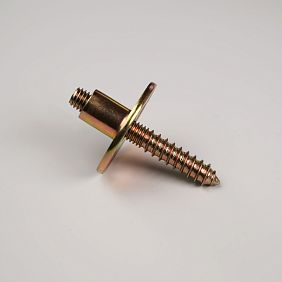
Our factory also produces:


Types of Furniture Hardware: From Functional to Decorative
Furniture hardware is divided into two major categories: functional and decorative. Each plays an indispensable role in creating the perfect piece of furniture.
Get Consultation
Functional Hardware
Hinges — pivot mechanisms that enable door opening and closing. The modern market offers an impressive variety of hinges:
- Surface-mounted hinges — visible from the outside, often used in vintage furniture
- Semi-surface-mounted hinges — for doors partially overlapping the frame
- Inset hinges — for doors fully recessed into the frame
- Hinges with a closer - ensure smooth and silent closing
- Hinges with a damper - soften the impact when closing
- Hinges with push-to-open function - allow easy opening with a light press
Premium hinges feature multi-dimensional adjustment (height, depth, and width), allowing perfect facade alignment even after prolonged use.
Drawer slides - are systems ensuring smooth gliding and correct positioning of drawers:
- Ball-bearing slides - budget-friendly option with partial extension
- Ball-bearing slides - provide smoother operation and withstand greater loads
- Hidden-mount slides - installed under the drawer base, invisible from the outside
- Full-extension slides - allow complete drawer extension, ensuring access to all contents
- Slides with a closer - ensure smooth and silent closing
- Tandem boxes - comprehensive systems with metal sides, providing maximum strength and functionality
High-quality slides withstand loads up to 80 kg, allowing their use even for storing heavy items.
Lift mechanisms - are systems allowing facades to open upward, not sideways:
- Gas lift mechanisms - use compressed gas force for smooth lifting and holding of facades
- Spring mechanisms - more affordable option, but less smooth
- Electric lift mechanisms - open with a button press, ideal for tall cabinets or for people with limited mobility
Lift mechanisms are especially popular in kitchen sets, where space-saving is of primary importance.
Decorative hardware
Handles - are not just functional elements, but also key decorative accents:
- Handle brackets - classic option with two mounting points
- Button handles - compact elements with one mounting point
- Inset handles - recessed into the facade, creating a minimalist look
- Profiled handles - integrated into the facade construction
- Handle rails - long horizontal elements, popular in modern kitchens
Handle materials offer a wide variety: metal (brass, stainless steel, aluminum), wood, glass, ceramic, leather. Each material creates its own unique visual and tactile effect.
Decorative appliqués and moldings - are elements that give furniture a finished look and stylistic expressiveness:
- Cornices and pilasters - for classic furniture
- Decorative corners and appliqués - highlight architectural features
- Carved elements - add luxury and individuality
- Stained glass inserts - create play of light and color
These elements allow transforming simple functional furniture into true works of art.
How to choose ideal furniture hardware
Functionality and Ergonomics: Comfort in Every Movement
When selecting furniture hardware, functionality and ergonomics are paramount. These characteristics determine how convenient the furniture will be in daily life.
Smooth operation is a key parameter for any moving mechanism. Quality hinges and guides ensure even, controlled movement without jerks or sticking. Especially important to pay attention to this parameter for furniture you use daily — kitchen cabinets, wardrobes, work desks.
The opening force should be optimal — not too high to avoid requiring significant effort, but not too low to ensure controlled movement. Modern mechanisms often feature adjustable opening force, allowing customization to individual preferences.
Quiet operation — a feature truly appreciated in daily life. Imagine returning home late at night and wanting to retrieve something from a cabinet without waking up household members. Or preparing breakfast early in the morning while everyone else is still asleep. In such situations, quiet mechanisms with soft-close features become a real lifesaver.
Ergonomics of use determines how naturally and comfortably you interact with furniture. For example, handles should fit comfortably in the hand, have no sharp edges or rough surfaces. The height of handle placement should correspond to the average user height — typically 2/3 of door height from the floor for vertical facades, and center or upper third for horizontal ones.
Safety — a parameter especially important for families with children. Modern hardware offers numerous solutions to enhance safety:
- Soft-close mechanisms preventing sudden closing
- Finger-safety protection systems
- Opening limiters
- Locks and latches for cabinets containing hazardous contents
When selecting hardware, it is important to consider the specific usage of each piece of furniture. For a child’s room, safety is a priority; for the kitchen, resistance to moisture and temperature fluctuations; for office furniture, the ability to withstand intensive use.
Materials and quality: the foundation of durability
Material quality — this is the foundation upon which the durability and reliability of furniture hardware are built. Modern manufacturers use high-tech alloys, composite materials, and innovative coatings, providing exceptional performance characteristics.
Zinc alloys — provide optimal combination of strength, ductility, and corrosion resistance. Widely used for manufacturing hinges, latches, locks.
Stainless steel — guarantees maximum strength and resistance to aggressive environments. Ideal for kitchen furniture, bathroom furniture, outdoor furniture.
Aluminum alloys — combine lightness with sufficient strength. Often used for profile systems, frame facades, decorative elements.
Polymer composites — ensure quiet operation and resistance to wear. Used for manufacturing guides, rollers, dampers.
Special attention should be paid to coatings that not only protect metal from corrosion but also determine the appearance of the hardware:
Galvanic coating — provides corrosion protection and decorative effect. Popular options: chrome, nickel, brass, bronze, copper.
PVD coating (Physical Vapor Deposition) — creates an ultra-thin but exceptionally strong protective film. Features high wear resistance and a wide range of color options.
Powder coating — provides high resistance to mechanical damage and aggressive environments. Eco-friendly and long-lasting.
Anodizing — creates a protective oxide layer on the surface of aluminum. Increases corrosion resistance and surface hardness.
Quality hardware from leading manufacturers undergoes multi-stage quality control and comes with a manufacturer warranty, often reaching 25 years for premium lines. This is not merely a marketing tactic, but a real confirmation of the manufacturer’s confidence in their product.
When selecting hardware, pay attention to the following quality indicators:
- Even, defect-free coating
- Absence of burrs, sharp edges, unevenness
- Smooth, snag-free movement of moving parts
- Precise fit of parts
- Presence of manufacturer marking
- Complete delivery set (including all necessary fasteners)
- Presence of quality certifications and compliance with standards
Investments in quality components pay off multiple times due to their long service life, lack of need for repair or replacement, and above all, daily comfort of use.
Style and design: harmony in every detail
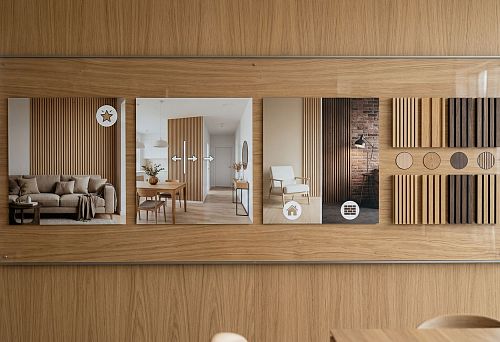
The style of furniture fittings should harmonize with the overall style of the furniture and interior. This does not mean that hardware should be inconspicuous — on the contrary, it can become a striking accent, highlighting the uniqueness of the space.
Classic style implies the use of elegant components made of brass, bronze, or wood. They may be adorned with floral ornamentation, scrolls, or imitation of antique motifs. The color palette is predominantly restrained — gold, bronze, antiqued silver.
Modern style is characterized by minimalist forms, functionality, and use of innovative materials. Geometric shapes — rectangles, squares, cylinders — are popular, with minimal decorative elements. The color palette is diverse — ranging from classic silver and chrome to black, white, and colorful models.
Provence and country styles lean toward natural materials, pastel shades, and botanical motifs. Components may be wooden, ceramic, with painted or patina finishes that create an aged effect.
Industrial style and loft imply the use of rough, heavy metal elements, often with a rust or unfinished surface effect. Popular are handle rails that mimic industrial elements.
Scandinavian style favors natural materials, light tones, and minimalism. Components are often wooden, with simple geometric shapes and no excessive decoration.
Eco-style implies the use of natural materials — wood, stone, leather — with minimal processing that highlights their natural beauty.
When selecting components, it is important to consider not only their appearance but also tactile sensations — handles should feel pleasant to the touch, fit comfortably in the hand, and have no sharp edges or roughness.
The color of hardware can either harmonize with the main color of the furniture, creating a cohesive look, or contrast with it, becoming a striking accent. In modern design, contrasting combinations are popular — black hardware on light furniture, gold elements on dark facades.
Where to buy everything needed for furniture: overview of options
Specialized stores: professional approach
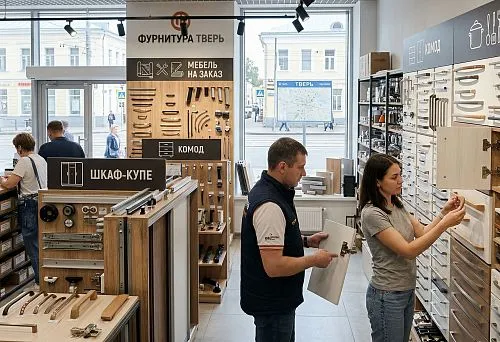
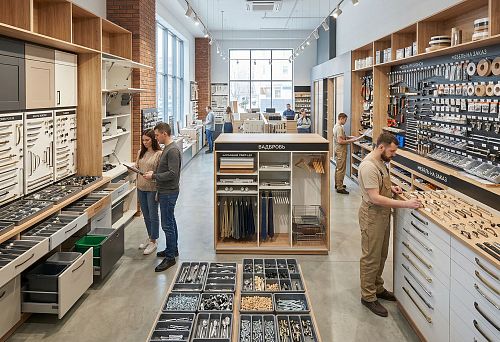
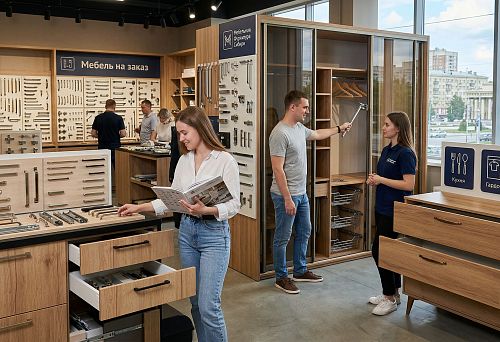
Specialized furniture hardware stores offer a wide variety of components in different styles, materials, and price categories. Here you can find both mass-market models and exclusive designer solutions.
Advantages of specialized stores:
- Ability to see and touch the product before purchasing
- Professional consultation from specialists
- Availability of samples and demonstration stands
- The possibility to purchase everything needed for installation in one place
- Guarantee of product authenticity
Specialized stores often feature collections from leading furniture hardware manufacturers, regularly updated according to the latest design trends. Here you can receive professional consultation on selecting components suitable for a specific furniture and interior style.
For professionals in the furniture industry and demanding private clients, showrooms of leading hardware manufacturers are of special interest, where the latest collections and innovative solutions are presented. Here, one can not only see the products in action but also obtain comprehensive technical information from the manufacturers' representatives.
If you are wondering, where to buy for furniture Quality components with professional consultation, specialized stores — the optimal choice, especially for complex or non-standard projects.
Online stores: convenience and wide selection
Online stores offer a vast assortment of furniture components from manufacturers around the world. Here you can find both mass-market models and rare, collectible items that are difficult to find in regular stores.
Advantages of online purchases:
- Access to catalogs 24/7 without needing to visit a physical store
- Ability to quickly compare prices and features
- Delivery of the order to your home or pickup point
- Access to reviews from other customers
- Often lower prices due to the absence of costs for maintaining retail spaces
When choosing an online store, it is important to pay attention to the seller's reputation, detailed product descriptions and high-quality photos, delivery and return conditions, as well as the availability of technical support that can advise on component selection and installation.
Many online stores offer the option to order samples before purchasing a large quantity. This is especially important when assessing how components will match specific furniture and interior designs.
For those who value their time and prefer to shop from home, online stores — the ideal solution for the question of where to buy for furniture everything needed with maximum comfort.
Construction markets and DIY hypermarkets
Construction markets and large DIY hypermarkets (Leroy Merlin, OBI, Castorama) offer a wide range of basic furniture components at affordable prices. This is the optimal choice for standard solutions and budget projects.
Advantages of DIY hypermarkets:
- Affordable prices
- Availability of product "here and now"
- Ability to purchase accompanying items (tools, fasteners)
- Convenient location in different city districts
- Extended operating hours, often 24/7
In such stores, components are typically presented in the mid-price segment, aimed at the mass consumer. It is difficult to find exclusive designer solutions or specialized hardware for non-standard projects, but for most standard tasks, the assortment is quite sufficient.
DIY hypermarkets often run promotions and sales, allowing you to purchase quality components at reduced prices. In addition, many chains have loyalty programs that provide additional discounts for regular customers.
For those seeking basic solutions at affordable prices and preferring to see the product before purchasing, construction markets and DIY hypermarkets — a good option.
Manufacturers and distributors: direct access to the source
For professionals in the furniture industry and large-scale projects, the optimal solution may be direct cooperation with furniture component manufacturers or their official distributors.
Advantages of working with manufacturers:
- Guarantee of product authenticity
- Access to the full assortment, including novelties and specialized solutions
- Ability to receive technical support from the manufacturer
- Optimal prices without intermediary markups
- Ability to order custom solutions
Many furniture component manufacturers have their own showrooms or online stores where their product range is presented. Here you can obtain comprehensive information about the products, learn about new releases and special offers.
Direct cooperation with manufacturers is especially important when implementing large projects requiring a large quantity of similar components or special solutions tailored to specific tasks.
If you professionally produce furniture or implement a large-scale project, it is worth finding out where to buy for furniture components directly from the manufacturer, bypassing intermediaries.
Leading manufacturers of furniture hardware
European brands: innovations and flawless quality
European manufacturers of furniture hardware set quality and innovation standards in the industry. Their products are distinguished by flawless quality, thoughtful design, and high functionality.
Blum (Austria) - one of the world's leading manufacturers of hinges, lifting mechanisms, and drawer systems. Blum's products are distinguished by innovative technologies, flawless quality, and thoughtful ergonomics. The proprietary BLUMOTION systems ensure smooth and silent closing, while the TIP-ON technology allows opening furniture without handles.
Hettich (Germany) - one of the largest manufacturers of furniture hardware with over 125 years of history. The company offers a wide range of hinges, guides, lifting mechanisms, and decorative hardware. The InnoTech and ArciTech drawer systems, as well as Sensys hinges with integrated soft-close, have gained particular popularity.
Hafele (Germany) - a company with a rich history, offering comprehensive solutions for furniture and interiors. The product range includes not only traditional hardware but also lighting systems, electronic locks, and storage systems. Hafele is known for its innovative solutions for small spaces and transformable furniture.
Grass (Austria) - a company specializing in the production of high-quality drawer systems and hinges. Grass products are distinguished by elegant design, smooth operation, and durability. The Nova Pro and Vionaro drawer systems, as well as Tiomos hinges, have gained particular popularity.
Salice (Italy) - a company known for its innovative hinges and lifting mechanisms. Salice products combine Italian design with high functionality and reliability. Hinges with integrated soft-close and compact lifting mechanisms for small furniture have gained particular recognition.
European manufacturers offer premium segment products that are distinguished not only by high quality but also by innovative solutions that enhance furniture usability comfort. Their components often become industry standards and set the direction for furniture technology development.
Asian manufacturers: optimal price-to-quality ratio
Asian manufacturers of furniture hardware have made significant quality leaps in recent years, offering products that combine affordable pricing with respectable quality.
FGV (China) - one of the largest manufacturers of furniture hardware in Asia, offering a wide range of hinges, guides, and decorative hardware. FGV's products are distinguished by good price-to-quality ratio, making them popular among mid-range furniture manufacturers.
GTV (Poland-China) - a company offering a wide range of furniture hardware produced in factories in Poland and China. GTV is known for innovative solutions in furniture lighting and storage systems. The company's products combine European design with affordable pricing.
Boyard (Russia-China) - a company offering a wide range of furniture hardware produced in Chinese factories according to Russian technical specifications. Boyard is known for stylish handle collections, as well as functional hardware adapted to Russian operating conditions.
Keit (China) - a manufacturer specializing in drawer systems and lifting mechanisms. Keit's products are distinguished by modern design and good technical characteristics at an affordable price.
Asian manufacturers actively adopt modern technologies and quality standards, enabling them to compete with European brands in the mid-price segment. Their products are especially popular among manufacturers targeting the mass market, where optimal price-to-quality ratio is crucial.
Trends and innovations in furniture hardware
Technological novelties: smart hardware for smart homes
Furniture hardware is actively integrated into the smart home ecosystem, offering innovative solutions that enhance comfort and functionality.
Electronic opening systems - mechanisms that allow opening furniture using remote control, smartphone, or voice commands. Particularly relevant for kitchen cabinets and tall wardrobes.
Biometric locks - systems that grant access to furniture contents via fingerprint, eye scan, or facial recognition. Ideal for storing valuables or confidential documents.
Motion-sensor integrated lighting - systems that automatically turn on lighting when a cabinet is opened or approached. Such solutions not only enhance usability comfort but also contribute to energy savings.
Wireless charging - modules embedded into furniture surfaces that allow charging smartphones and other gadgets without cables. Particularly popular in office furniture and bedside tables.
Climate control systems - solutions that maintain optimal temperature and humidity inside cabinets and display cases. Essential for storing wine, cigars, delicate fabrics, and musical instruments.
Modular storage systems with electronic control - complexes that optimize space and provide convenient access to contents. May include pull-out shelves, rotating mechanisms, and electrically powered lift systems.
Technological innovations in furniture hardware not only enhance usability comfort but also open new possibilities for interior design, enabling the creation of more functional and ergonomic spaces.
Ecological trends: sustainable development in details
Ecological awareness is becoming an important factor when selecting furniture hardware.
Use of recycled materials - an increasing number of manufacturers use recycled raw materials to produce components, thereby reducing the ecological footprint of their products.
Elimination of harmful coatings - modern technologies allow creating protective and decorative coatings without using heavy metals or other harmful substances.
Energy-efficient production - leading manufacturers implement technologies that reduce energy consumption during component production.
Biodegradable materials - innovative polymers based on plant raw materials are gradually finding application in the production of certain types of hardware.
Durability as an ecological principle - the longer an item serves, the fewer resources are required to produce new ones. High-quality components made from durable materials with reliable fastening can last for decades, reducing the overall environmental burden.
Certification according to ecological standards - many manufacturers voluntarily undergo certification according to standards such as FSC (for wooden products), GREENGUARD (for materials with low emission of harmful substances), Cradle to Cradle (for products with a closed-loop production cycle).
Ecological trends in the production of furniture hardware reflect society's general inclination toward more sustainable and responsible consumption, where quality and durability are valued more than rapid turnover and disposability.
Design trends: from minimalism to individuality
Design of furniture hardware reflects general trends in interior design.
Minimalism and hidden solutions - systems without visible hardware, with integrated handles or push-to-open mechanisms, are gaining popularity. This creates clean, minimalist lines and highlights the beauty of materials and forms.
Return to naturalness - components made from natural materials or mimicking them, such as wood, stone, leather, are trending. This reflects a general inclination toward natural textures and tactile sensations in interiors.
Individualization - demand is growing for unique, personalized solutions that reflect the owner's individuality. These may include engraved handles, components in non-standard shapes and colors, or elements with history or special significance.
Style mixing - modern designers boldly combine elements from different styles, creating eclectic yet harmonious interiors. For example, classic fronts with contemporary hardware or minimalist furniture with vintage handles.
Bold accents - against neutral interiors, hardware often becomes a striking accent, drawing attention and defining the character of the space. Saturated colors, unusual shapes, and contrasting combinations are popular.
Tactile diversity - it is no longer only visual perception that matters, but also tactile sensations. Hardware with different textures - matte, glossy, rough, smooth - creates a multi-dimensional sensory experience.
Design trends in furniture hardware reflect the general desire to create interiors that are not only functional and aesthetically pleasing, but also individual, reflecting the owner's personality and values.
Practical tips for selecting and installing furniture hardware
How to avoid common mistakes
When selecting and installing furniture hardware, errors are often made that can spoil the appearance of the furniture and reduce the comfort of its use.
Mismatch with style - hardware must harmonize with the overall style of the furniture and interior. Modern minimalist handles will look out of place on a classic buffet, just as ornate bronze handles with patina will look inappropriate on modern glossy furniture.
Incorrect size - small handles on large furniture look disproportionate, and bulky handles on miniature furniture are similarly unsuitable. The size of the hardware must match the size of the furniture.
Uncomfortable placement - hardware must be positioned to ensure maximum ease of use. Handles placed too high or too low create discomfort when opening.
Poor installation - unevenly installed hardware, visible drilling marks, protruding fasteners spoil the appearance of the furniture and reduce comfort of use.
Cutting corners on quality - cheap hardware made from inferior materials quickly loses its attractive appearance, may break or loosen, leading to replacement and additional costs.
Incompatibility with furniture material - some types of hardware require specific material thickness and density for secure mounting. For example, heavy metal handles require deep drilling and are unsuitable for thin MDF fronts.
Ignoring technical specifications - each type of hardware has its own technical limitations: maximum door weight for hinges, maximum load for slides, required space for lift mechanisms. Ignoring these parameters may result in malfunction or improper operation.
To avoid these errors, it is recommended:
- Carefully plan the placement of hardware, considering ergonomics and aesthetics
- Use templates for marking holes
- Choose quality hardware from reputable manufacturers
- Consult specialists if necessary
- Follow installation instructions
Tools and materials for installation
Installing furniture hardware is a process that may seem simple, but requires certain skills and tools to achieve an ideal result.
Required tools:
- Drill or screwdriver
- Drill bits of the appropriate diameter
- Ruler or tape measure
- Pencil or marker
- Template for marking holes (can be purchased ready-made or made yourself)
- Screwdriver or drill bits
- Level for checking horizontal/vertical alignment
- Hammer (for installing certain types of hinges)
- Router (for inset handles and certain types of hinges)
- Sandpaper (for finishing hole edges)
Materials:
- Hardware accessories with the mounting kit
- Additional screws or self-tapping screws (if the included ones are not the right length)
- Washers or gaskets (if needed)
- Wood glue or silicone sealant (for additional fixation)
- Wax pencil or putty (for covering minor defects)
Before beginning installation, it is important to check the completeness of the set, ensure all necessary fasteners are present, and verify that the dimensions and design match the ordered models.
For complex or critical installations, it is recommended to use professional tools and fixtures that ensure high precision and quality of installation. For example, drill guides for hinge holes, special router bits for inset handles, and templates for marking.
If you lack experience installing furniture hardware or the necessary tools, it is advisable to consult professionals. Proper installation ensures not only an aesthetically pleasing appearance but also the long-term durability and reliability of all mechanisms.
Care and maintenance: extending service life
Proper care of furniture hardware extends its service life and maintains its attractive appearance.
General recommendations:
- Regularly clean hardware components of dust and dirt
- Avoid using abrasive cleaning agents that may damage the finish
- Periodically check the tightness of fasteners and tighten screws as needed
- Lubricate moving parts with special lubricants to ensure smooth operation
- Avoid excessive loads exceeding those recommended by the manufacturer
Care for different types of hardware:
Hinges - regularly clean dust and dirt that may accumulate in pivot joints. Lubricate moving parts every 1-2 years with special silicone lubricant or machine oil. Avoid water contact with metal parts to prevent corrosion.
Guides - regularly clean dust and small debris that may enter the mechanism and cause binding. For ball-bearing guides, it is important to maintain cleanliness of the ball tracks. Lubricate moving parts as needed, but no less than once a year.
Handles - wipe with a soft dry or slightly damp cloth, depending on the material. For metal handles, you can use special polishes that not only clean but also create a protective film. Wooden handles are recommended to be periodically treated with wood oils or waxes.
Lift mechanisms - require special attention since they operate under load. Regularly inspect all fasteners, especially at the points of connection to the front panel and cabinet body. Adjust lift force as needed according to the weight of the front panel.
Decorative elements - clean according to the material used. Avoid using aggressive cleaning agents that may damage the finish or change the color.
Proper care of furniture hardware not only extends its service life but also ensures comfortable use of the furniture throughout its entire operational period.
Conclusion: Investment in Quality and Comfort
Furniture fittings are not just functional elements ensuring furniture operation. They are an investment in everyday comfort, interior aesthetics, and furniture durability. Properly selected fittings transform ordinary furniture into ergonomic, functional, and stylish interior pieces that will delight you for years.
When choosing, where to buy for furniture When choosing fittings, it is important to consider not only price but also quality, functionality, and aesthetics. Specialized stores, online platforms, and manufacturer showrooms — each of these options has its advantages and is suitable for solving specific tasks.
Modern technologies and innovations make furniture fittings increasingly functional, ergonomic, and aesthetically pleasing. Soft-close systems, electronic opening mechanisms, integrated lighting — all of this is not just a fashion trend, but real tools that enhance the quality of life and comfort of furniture use.
Remember: in the world of furniture, as in many other fields, it is the details that determine the quality of the whole. Investing in quality fittings from reputable manufacturers means investing in the comfort, functionality, and aesthetics of your living space for years to come.
Create an interior that will delight you every day, where every detail is thoughtfully designed and harmonious, where functionality does not contradict aesthetics but complements it. And