Article Contents:
- What are interior wood panels and how do they differ from exterior ones
- Types of interior wood panels: a complete breakdown of formats
- Smooth Wooden Panels
- Slatted panels
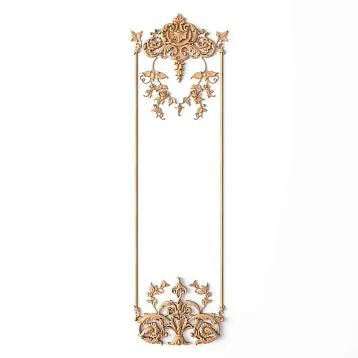
- Relief decorative panels
- Panels for partitions and zoning
- Panels for accent walls
- What materials are interior wood panels made from
- Solid wood: living natural texture
- MDF with decorative finish: color control and shape precision
- Veneered panels: natural look at moderate cost
- Combined Solutions
- Where to use interior wood panels: room-by-room scenarios
- In the living room
- In the bedroom
- In the entryway
- In the study
- In the dining room
- In the TV area
- In niches and partitions
- Interior wood panels for zoning: space without walls
- How to choose wooden panels according to interior style
- Modern style and contemporary
- Minimalism
- Scandinavian Style
- Jatoba
- Neoclassicism and Modern Classicism
- Warm modern interior
- Color, texture, format: how to make the final decision
- Light or dark wood
- Fine or coarse rhythm of slats
- Vertical or horizontal
- Combination with floor and furniture
- What to choose: solid wood, MDF or veneer
- Advantages of interior wooden panels: what this choice provides
- Common mistakes when choosing interior wooden panels
- How to care for wooden panels indoors
- MDF panels for painting
- Solid oak panels with lacquer coating
- Oak panels with oil coating
- Humidity and Temperature
- Tips for Interlinking and a Unified Material Environment
- FAQ: Answers to the Most Popular Questions
- About the Company STAVROS
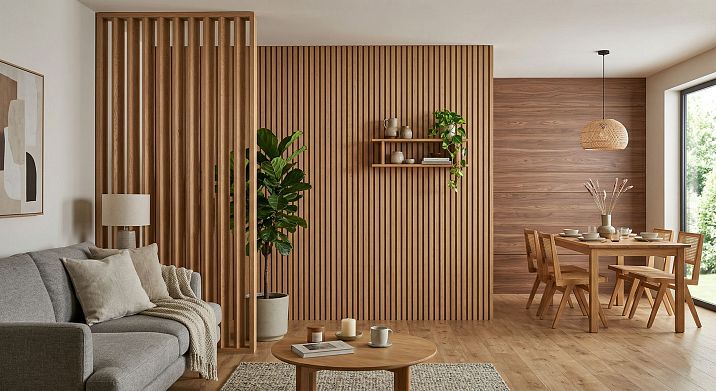
Ask yourself a simple question: why do some interiors instantly make you want to call them beautiful, while others—despite expensive furniture and appliances—leave a feeling of incompleteness? Most often, the answer lies not in the furniture or the floor finish. It's in the walls. It is the walls that shape the atmosphere of a room: its warmth, depth, character. And that is precisely why wooden panels for interior finishing remain one of the most powerful tools for transforming a space—regardless of area, style, or budget.
Interior wooden panels are not just a cladding material. It's an architectural choice. A choice in favor of natural texture, living warmth, durability, and that special quality of presence that you can't buy in a can of paint or a roll of wallpaper. In this article—a systematic, honest, and detailed breakdown: what interior wooden panels are, what types exist, what they are made from, where they are used, and how to choose what will truly suit your space.
What are interior wooden panels and how do they differ from exterior ones
This distinction is more important than it seems at first glance. When people say 'wooden panels for interior finishing,' they mean products specifically designed for use inside buildings: in conditions of stable temperature, controlled humidity, without direct exposure to precipitation or seasonal temperature fluctuations.
Unlike facade panels, which must withstand frost, rain, ultraviolet radiation, and the mechanical loads of the outdoors, interior wooden panels are oriented primarily towards aesthetics and tactile quality. Here, precision of geometry, surface purity, and the ability to accept finishing coatings—paint, oil, varnish, tinting—and hold them for many years without degradation are important.
This is precisely why interior wood panels can have a thinner cross-section, a more refined profile, and a more delicate surface treatment than their 'exterior' counterparts. They operate in an environment without climatic aggression—and this privilege allows for the creation of products of the highest visual and tactile culture.
What do such panels solve in an interior?
-
Create accent zones and visual focal points
-
Give a room depth, rhythm, volume
-
Zone space without building walls
-
Add warmth of natural material
-
Create a sense of expensive, well-thought-out interior
-
Improve room acoustics




What types of interior wood panels exist: a complete breakdown of formats
The market offers several fundamentally different design solutions. It's important to understand them even before you open the catalog.
Our factory also produces:


Smooth wooden panels
Flat sheets or panels made of natural wood or MDF without pronounced relief. Their main advantage is versatility: such a surface has no texture 'noise' or complex geometry. Smooth panels work well where solidity and uniformity are important—for example, as a background for furniture, artworks, or unconventional lighting solutions.
For painting—the perfect surface. Smooth MDF under matte or satin enamel creates an impeccable plane that is hard to distinguish from painted drywall—yet carries the warmth of a wooden base.
Get Consultation
Rack panels
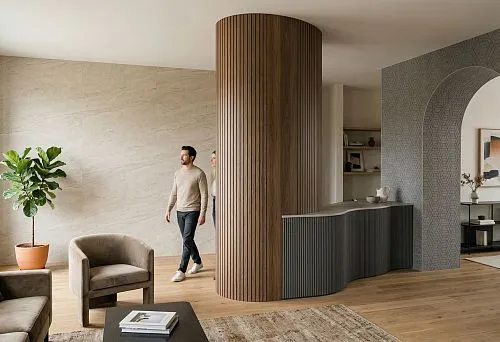
The most expressive format among allwood panels for interior finishingParallel slats with equal spacing create a linear graphic rhythm that actively interacts with light: side lighting produces a play of shadows, transforming a flat wall into a sculptural object.
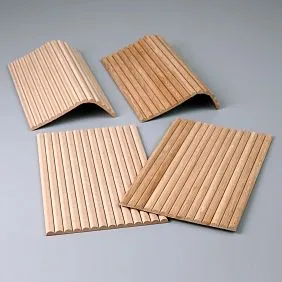
Slatted panels are available in two main constructions:
-
Rigid – slats on an MDF backing, for flat walls and furniture fronts
-
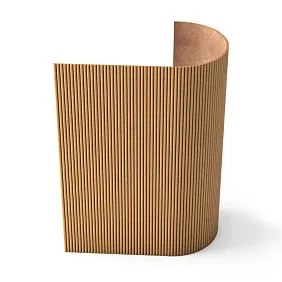
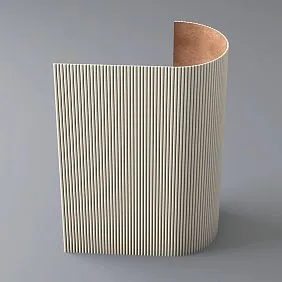
Flexible – slats on a fabric base, for columns, arches, radius niches, and curved surfaces
Both options are available in the STAVROS range: rigid panels PAN-001 and PAN-002 in formats 1010 × 8 × 950 mm and 1010 × 8 × 2700 mm, flexible solutions for radius surfaces, as well as interior slat RK-002 with a length of 2750 mm for custom layouts.
Relief Decorative Panels
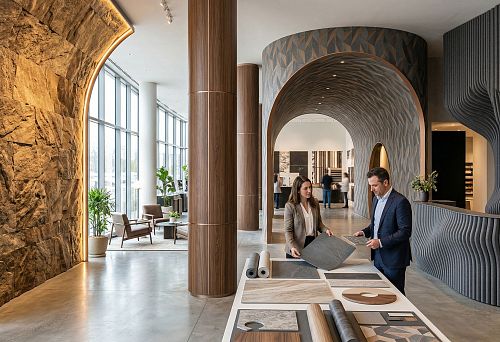
Panels with a pronounced three-dimensional surface pattern – waves, facets, diagonal planes, geometric diamonds. This is a more decorative and complex format used to create expressive accent walls in design projects. The relief actively interacts with lighting: as the angle of light incidence changes, the surface alters its character.
Panels for partitions and zoning
A separate format where slatted constructions are used not as cladding but as an independent spatial structure. A slatted 'partition' is not a wall; it allows light and air to pass through, merely delineating the boundary between zones. This is especially relevant for open-plan layouts: kitchen-living rooms, studios, office spaces.
Panels for accent walls
This is not a separate type of construction but a usage scenario. Any of the listed formats can be used to create an accent wall – one expressive vertical plane that sets the tone for the entire room. The principle: one accent wall in wood + three neutral ones = an interior with character.
What materials are interior wooden panels made from?
Material is the first decision to make. It determines the final appearance, durability, price range, and surface treatment method.
Solid wood: a living natural texture
Solid wood is the most natural and durable base forwooden interior panels. Each solid wood piece carries a unique natural grain pattern that will not be repeated in two different products. This is a living texture — with tactile warmth, character, and changes in tone under different lighting.
The most popular wood species for interior panels:
Oak — the market leader. Density 700–750 kg/m³, high hardness, wear resistance. Expressive grain pattern, warm golden tone in its natural state. Takes stains, oils, and varnishes exceptionally well. One of the most durable materials for interior finishing.
Beech — a more uniform texture, slightly lighter than oak. Easy to work with, takes paint and stain excellently. Used where a delicate, less 'flashy' texture is needed.
Ash — a light-colored species with a beautiful, pronounced grain. Lightweight, strong, organic in Scandinavian and modern interiors.
STAVROS specializes primarily in products made from oak and beech — species with an optimal balance between aesthetics, durability, and dimensional stability. All products are made from properly dried wood in a controlled microclimate: temperature 20–24 °C, humidity not less than 40%. This ensures shape stability during operation.
MDF with decorative finish: color control and shape accuracy
MDF — medium-density fiberboard with a density of 750–850 kg/m³ — is made from finely dispersed wood fibers with a binder under high pressure. The structure is homogeneous, without knots, pores, or random defects.
The main advantage of MDF over solid wood is the absolute predictability of the surface. It is an ideal base for painting: paint applies evenly, does not reveal fibers, and does not create stains. Any color from the RAL or NCS palette is reproduced accurately.
MDF slatted panels for painting PAN-002 — a ready-made solution for the 'monochrome accent wall' request: the surface is already primed, all that remains is to choose a color and apply the finishing layer. This significantly reduces finishing time.
Veneered panels: natural look at a moderate cost
Veneer is a thin layer of natural wood (0.3–3 mm) glued onto an MDF or plywood base. Externally, a veneered panel looks like solid wood — the same grain pattern, the same texture. However, the cost of a veneered product is lower, and its geometric characteristics are more stable than those of solid wood.
Veneer is suitable where the aesthetics of natural wood are important within an optimal budget. An important nuance: the veneered surface is less resistant to mechanical damage than solid wood — and requires more delicate handling.
Combined Solutions
Modern production actively uses material combinations: MDF substrate + solid oak slats. This approach provides precise geometry of the base (advantage of MDF) and the lively texture of the slats (advantage of solid wood). This is exactly the principle behind the rigid slatted panels STAVROS PAN-001 — a combination of engineering precision and natural expressiveness.
Where to use interior wooden panels: scenarios by room
Versatility is the key quality of wooden panels for interior finishing. They are appropriate in almost any residential or commercial space. But each room has its own logic of application, its own priorities, and its own nuances.
In the living room
The living room is the stage where the life of the home unfolds. Here, wooden panels work in several modes simultaneously.
Accent wall. One vertical plane with full-height slatted panels from floor to ceiling instantly structures the space. It becomes the architectural center—not shouting, not overwhelming, but simply organizing. The other three walls remain neutral, and this creates the necessary contrast.
TV zone. A slatted panel behind the television is a practice proven by thousands of completed projects. The rhythm of the slats creates an expressive backdrop for the screen, hides wires, and unites technology and decor into a single system.
Zoning. In open-plan living rooms, slatted panel-partitions mark zone boundaries without physical division. The dining area and lounge area are separated—yet the space remains open, airy, and filled with light.
In the bedroom
The bedroom requires a different approach. Here, the key words are coziness. Intimacy. The feeling that the space 'holds' and 'embraces' you.
The wall behind the bed headboard is a classic place for a slatted panel in the bedroom. It creates a visual anchor—not just a backdrop for the bed, but an architecturally defined rest zone. Oak with a warm oil finish is more appropriate here than any other material: it literally adds warmth and tranquility.
The second scenario is a built-in wardrobe with sliding doors featuring slatted fronts in the same rhythm as the wall panels. This creates an effect of integral architecture: not 'wall plus wardrobe,' but a unified spatial solution.
In the hallway
The hallway is the first to greet guests and greets the owners daily. It is here that wooden panels create that very first impression—instant, subconscious, yet very precise.
In a narrow corridor, horizontal slats expand the space. In a spacious hallway, vertical ones create solemnity. For high-traffic areas—near the coat rack, by the entrance door—coating durability is important: oak with varnish or MDF with hard enamel.
An interesting technique:slatted decorative panelson the lower part of the hallway wall combined withmolding framing— this is a classic 'paneling' technique that gives even a small entrance a noble, finished look.
In the study
A workspace needs an atmosphere of concentration. Wooden panels in a study create it without excessive decorative load: one dark slatted wall—and the space immediately takes on a serious, work-oriented character.
Dark-toned oak or MDF in anthracite, graphite, or cool khaki are the right choices for a study. They add status, reduce visual 'noise,' and create a psychological backdrop that helps with concentration.
In the dining room
The dining room is a place where a meal gathering turns into a ritual. Wooden panels here work to create that very atmosphere of a 'set table' and coziness. An accent wall behind the dining group made of warm oak with an oil finish is one of the strongest design techniques for a dining room.
In the TV area
The TV zone deserves special consideration—even if it is part of the living room. Here, a slatted panel serves a dual function: decorative and technical. Decorative—accent, rhythm, depth. Technical—hidden cable routing in the space between the slats, visual 'absorption' of technology into a single plane.
The PAN-001 panel in the 1010 × 8 × 2700 mm format is ideal for TV zones with ceiling heights up to 2.7 m—it covers the wall floor-to-ceiling without horizontal seams.
In niches and partitions
A niche with slatted finishing on the back wall is a design technique that turns a functional recess into a work of art. Lighting inside the niche + slatted texture on the back wall = the effect of a glowing wooden relief that looks many times more expensive than its actual cost.
Slatted partitions are a separate story. In open-plan layouts, they solve the zoning task fundamentally differently than solid walls: light passes through the gaps between the slats, air circulates freely, the space remains unified—yet the functional zones are clearly perceived.
Internal wooden panels for zoning: space without walls
Zoning is one of the most relevant tasks in modern interior design. Open-plan layouts have become the norm: kitchen-living room, work area in the bedroom, living-dining room. How to divide the space without losing its openness?
Slatted construction is one of the most elegant answers to this question. Here's why:
Light and air. The gaps between the slats allow both to pass through. The space doesn't darken or shrink—it simply becomes structured.
A visual boundary without a physical one. The eye perceives the rhythm of the slats as a zone boundary—even if the same room continues behind them. This is a psychologically comfortable separation: 'here is the kitchen, there is the living room'—without a solid partition.
Combination with lighting. A slatted partition with integrated lighting is one of the most effective techniques in modern interiors. Strips of light between the slats create an almost theatrical visual effect.
Mobility. Unlike stationary walls, slatted constructions can be dismantled or moved if necessary—especially if they are made as self-supporting modules.
For zoning, individualinterior planks made of woodwith custom layouts are particularly suitable: you set the spacing, height, and density yourself—depending on the desired degree of zone separation.
How to choose wooden panels according to interior style
Interior style is a system of values and visual priorities. Wooden panels 'speak' the language of different styles — you just need to choose the right dialect.
Modern style and contemporary
Contrast works well here: a dark slatted panel against a light neutral background. Graphite, anthracite, dark brown — and white walls, light floors. The geometry is clear, the rhythm is pronounced, no patterns.
Minimalism
Minimalism requires wooden panels to work 'quietly'. MDF for painting in the same tone as the wall: there is relief, but it's barely noticeable — only shadow, only a hint of texture. No decorative excess, only architectural honesty of form.
Scandinavian style
Light wood, clear horizontals and verticals, air and simplicity. Oak with transparent oil or ash with light tinting — this particular palette speaks the Scandinavian language. Slats are thin, spacing is small, rhythm is even and calm.
Japandi
Japanese-Scandinavian synthesis is the most organic context for natural wooden panels. What matters here: honest material texture, restrained neutral palette, tactile surface quality. Oak with oil treatment in warm walnut and beige tones is the perfect choice. No bright colors, only nuances of natural shades.
Neoclassicism and modern classicism
Here, slatted panels are replaced with smooth ones with molding framing. Classic 'panel division' of the wall — horizontal division into the plinth zone, main panel, and frieze usingwooden moldings and cornices— this solution appeals to tradition while remaining relevant in modern execution.
Warm contemporary interior
'Warm' style without clear stylistic affiliation is one of the most popular requests. People simply want their home to be cozy and beautiful. Oak tinted like walnut or cognac, warm lighting, soft textiles — all this works as a single ensemble. Slatted panels here add the necessary 'natural warmth'.
Color, texture, format: how to make the final decision
If you've already decided on the material and construction, the main design question remains: which specific type, color, and format to choose?
Light or dark wood
Light panels (natural oak, ash, light beech) visually expand the space and add airiness. Ideal for small rooms and interiors where the main approach is natural lightness.
Dark panels (wenge, dark walnut, graphite, stained oak) create depth and status. This is a material for accents, focal points, a 'visual anchor.' Good for large spaces, for accent walls in light interiors.
Fine or coarse rhythm of slats
Fine rhythm (narrow slats, small spacing) — detail, richness, tactile density. The wall looks richer and 'more expensive' up close. Works well in intimate interiors.
Coarse rhythm (wide slats, large spacing) — airiness, conciseness, scale. Works in large spaces with high ceilings. In small rooms — risk of visual heaviness.
Vertical or horizontal
Vertical slats — height, dynamism, upward aspiration. For standard apartments, this is almost a universal choice.
Horizontal slats – width, calmness, panoramic effect. For narrow corridors and elongated rooms.
Combination with floor and furniture
The rule is simple: the tone of the panels should either match the floor tone or be intentionally contrasting. An accidental 'almost match' looks like a mistake. Oak on walls + oak on floor is a strong solution when the tone is properly maintained. Dark panels + light floor is a classic contrast that always works.
For a complete picture, it's important to considerDecorative InsertsandWooden Picture Frame— they help integrate the panels into a unified system with furniture, mirrors, and doorways.
What is better to choose: solid wood, MDF, or veneer
This question is asked most often – and it deserves an honest, detailed answer.
| Criterion | Solid oak | MDF for painting | Veneer on MDF |
|---|---|---|---|
| Appearance | Live unique texture | Uniform smooth surface | Natural wood texture |
| Durability | Very High | High | Medium |
| Finish | Oil, varnish, tinting | Paint of any color | Varnish, oil, tinting |
| Price | High | Affordable | Medium |
| Best style | Organic, japanandi, classic | Minimalism, Modern | Any |
| Weak spot | Requires acclimatization | Does not like humidity | Vulnerable to scratches |
Solid oak is chosen by those who want real wood — with its life, texture, and character. It's an honest choice without imitations.
MDF for painting is the choice of those who work with color as the main design tool. Precise tone, smooth surface, the ability to repaint — that's what MDF is about.
Veneer is the golden mean: natural appearance at a moderate cost. But it requires careful handling.
Benefits of interior wood panels: what this choice offers
Let's gather in one place everything that makes people choose wood wall finishes again and again:
Timeless aesthetics. Wood in interiors is timeless. It was relevant in the 1970s, in the 2000s, relevant today — and will remain relevant in twenty years.
Tactile warmth. Wood is the only popular finishing material that feels warm to the touch. This is not a metaphor: wood has low thermal conductivity and literally feels more comfortable than stone, metal, or glass.
Visual zoning. One correctly chosen format — and the space becomes structured without partitions or costly remodeling.
Acoustic comfort. The slatted structure reduces reverberation, improving room acoustics. This is especially important in apartments with hard floors and high ceilings.
Durability. High-qualitywood panels for interior finishingwith proper care last for decades. This is not a consumable material, but a long-term investment in space quality.
Feeling of a luxurious interior. The natural texture of wood visually 'elevates' the class of a space — regardless of the budget invested in the rest of the finishing.
Common mistakes when choosing interior wooden panels
Experience with wooden panels has revealed several typical mistakes that are repeated over and over:
-
Buying without a sample. A monitor screen does not convey the real color and texture. Order sample OPAN-001 — this is the only way to see the material in the actual lighting of your room.
-
Ignoring proportions. Too large a rhythm of slats in a small room creates a feeling of pressure. Too small in a large hall gets lost. The scale of the slat must match the scale of the space.
-
Not planning lighting in advance. Slatted panel and lighting are a single system. Without a well-thought-out lighting solution, half the effect is lost.
-
Mixing incompatible materials. Warm oak and cold gray MDF on one wall — this is either a deliberate contrast or an accidental mistake. The difference between these two options lies in intention.
-
Neglecting finishing elements. Panels without moldings, without corner elements, without baseboards — this is unfinished work. Details decide everything.
-
Mounting on a damp base. Wooden panels cannot be attached to undried plaster or damp concrete. The result — deformation, peeling, loss of geometry.
-
Refusing acclimatization. Especially critical for solid wood in rooms with central heating: in winter the air is dry, and without holding the panels for 48–72 hours, deformation is possible.
-
Not linking panels with furniture fronts. If there is built-in furniture in the interior, its fronts must be coordinated with the rhythm and material of the wall panels — otherwise there will be no unity.
-
Overusing one format. Four slatted walls in one room is overkill. The principle of one accent and three neutral surfaces works best.
How to care for wooden panels indoors
One of the most persistent myths is that wood finishes require constant and complex maintenance. The reality is much simpler.
MDF panels for painting
Maintenance is minimal: wipe with a dry or slightly damp soft cloth. Aggressive abrasive cleaners are prohibited. For mechanical damage: local touch-up with a matching color. That's it. Nothing more.
Solid oak panels with lacquer finish
Wet cleaning with a soft cloth without aggressive agents. Every 3–5 years, if necessary, renew the lacquer layer. Thanks to the high hardness of oak, scratches on such panels rarely occur.
Oak panels with oil finish
The most 'living' option—and the most pleasant to maintain. The oil is renewed locally without dismantling the panels: apply a small amount of oil with a cloth, let it sit according to instructions, wipe off the excess. The procedure is done every 1–2 years. Takes less than an hour for a standard wall. At the same time, an oiled surface is easier to restore after accidental scratches than a lacquered one.
Humidity and temperature
For wooden panels indoors, stable humidity is critically important. If the air is too dry (in winter with active heating), the wood may shrink slightly. Recommended indoor humidity is 45–60%. An air humidifier in the winter is a simple and effective solution that extends the life of all wooden interior elements.
Tips for interlinking and a unified material environment
Wooden panels work best not in isolation, but as part of a unified material system for the interior. A few ideas on how to build this system:
Recessed wall panels →solid wood trim pieces (moldings, baseboards, cornices) →Decorative Inserts on furniture fronts →Carved Mouldings on doorways.
When all these elements are made from the same material and in the same tone, the interior acquires that very 'expensive' integrity, which is so hard to describe in words—but you instantly feel it upon entering the room.
FAQ: answers to the most popular questions
What are interior wooden panels?
These are finishing products made from natural wood or MDF, specifically designed for interior use: on walls, ceilings, partitions, and furniture fronts. Unlike facade panels, they are optimized for stable indoor conditions and are primarily intended for high aesthetics and durability.
Where can wooden panels be used indoors?
Practically everywhere: living room, bedroom, hallway, study, dining room, TV area, niches, partitions, ceilings, columns, arches, furniture fronts. Each room has its own most effective application scenarios.
Are interior wooden panels suitable for an apartment?
Absolutely. Apartments are one of the main applications. Slatted panels are especially relevant for TV zones, bed headboards, hallways, and living rooms.
What is better to choose: solid wood, MDF, or veneer?
It depends on priorities. Solid wood — for naturalness and durability. MDF — for precise color and affordability. Veneer — for a balance between natural aesthetics and cost.
Can panels be used for zoning a room?
Yes. Slatted structures are one of the best zoning tools in open-plan layouts: they define zone boundaries while maintaining transparency, light flow, and spatial unity.
Which panels are better for a living room?
For the living room, full-height rigid slatted panels are optimal for an accent wall or TV zone. Material — oak with oil coating for warm interiors or paintable MDF for modern ones.
Are wooden panels suitable for the bedroom?
Perfectly suitable. The wall behind the headboard is a classic spot for a slatted panel in the bedroom. Oak with oil treatment creates coziness and tactile warmth.
Which interior styles do wooden panels go with?
With most modern styles: minimalism, Scandinavian style, Japandi, organic, contemporary, loft, neoclassical, warm modern interior.
How to care for wooden panels inside the house?
Minimally: wipe with a soft cloth. For paintable MDF — periodic touch-ups as needed. For oiled oak — renewing the oil layer every 1–2 years without dismantling.
Which is better: smooth panels or slatted panels?
This is the question. Smooth panels provide a clean, monotone surface in a single color. Slatted panels provide volume, rhythm, chiaroscuro, and architectural expressiveness. In modern interiors, the slatted format dominates in popularity precisely due to its greater visual richness.
About the company STAVROS
If you are looking for wooden panels for interior finishing with proven quality, natural materials, and a wide assortment — STAVROS is exactly the manufacturer with which to begin your selection.
STAVROS has been operating since 2002 and specializes in products made from solid oak and beech for interior finishing and furniture production. The production facility is located in Saint Petersburg. The assortment includes over 4000 models and 20,000 modifications across 39 product groups: rigid and flexible slatted panels, interior battens, moldings, cornices, baseboards, decorative overlays, carved products, capitals, pilasters, columns, and much more.
All products are made from properly dried wood under strictly controlled microclimatic conditions, ensuring geometric stability during use. Shipping is available from a single unit. Delivery throughout Russia and abroad.
CatalogSTAVROS interior wooden panels— the starting point for those who want to create an interior with character, warmth, and genuine material culture.