












































































Article Contents:
- Optical illusions in interior design: how to trick the brain
- Psychology of white color in interior design
- White baseboard: dissolving boundaries
- Installing white baseboard: process nuances
- Combining white baseboard with flooring
- Large mirror opposite window: doubling light
- Mirror placement: reflection strategy
- Mirror frame: wooden or minimalist?
- Full-length floor mirror: vertical accent
- Floor mirror frame: stability and style
- Light wood tones: beech, ash and their magic
- Treating light wood: oil or enamel?
- Minimalism and Scandinavian: perfect styles for small spaces
- Color accents: how not to disrupt light harmony
- Calculating optimal mirror size
- Mirror wall: when appropriate
- Additional visual expansion techniques
- Common mistakes in visually expanding space
- How to care for white surfaces
- Frequently Asked Questions
- Conclusion: space as illusion and reality

Can you cheat geometry? Yes, if you know the laws of perception. A small apartment is not a life sentence. It's a canvas on which a skilled owner creates an illusion of spaciousness.White Wooden BaseboardandLarge framed mirror— two tools capable of turning a cramped room into an airy space where you want to breathe deeply.
The mathematics of illusion is simple: a white baseboard dissolves the boundary between wall and floor, erases clear lines, expands the perimeter. A mirror doubles light, reflects volume, creates depth. Together they provide an effect of at least +20% visual space. The actual square footage doesn't change, but the room's perception—radically. You walk in—and instead of familiar tightness, you feel spaciousness. This is design magic based on the science of visual perception.


Optical illusions in interior design: how to trick the brain
Our brain analyzes space according to certain markers: boundaries, corners, shadows, reflections, color contrasts. Each of these elements tells us about the room's size. But what if we manipulate these signals? What if we erase boundaries, double light, blur corners?
Architects and designers have used optical illusions for centuries. Baroque halls with mirrored walls seemed endless. Japanese interiors with minimalist palettes created a sense of air. Scandinavian rooms with white walls and large windows turned modest homes into bright nests. All these techniques are based on one principle: control perception—and you'll change reality.
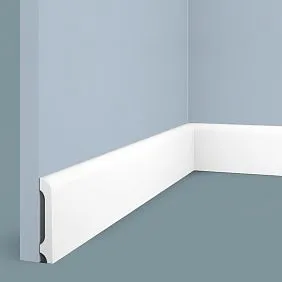
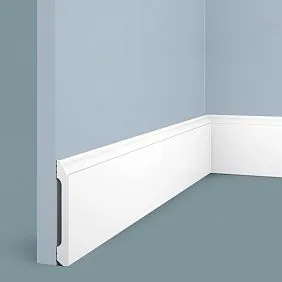
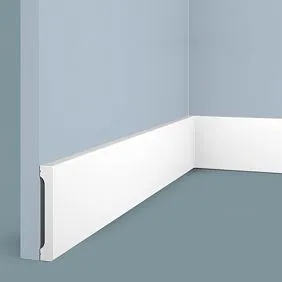
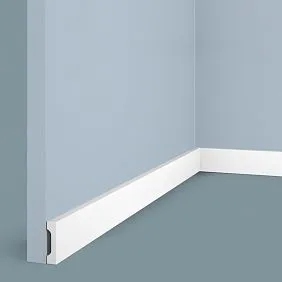
In a small apartment, every detail works either to expand or compress space. A dark baseboard is a clear boundary, a line that tells the brain: 'Here the wall ends, the floor begins.' This line fragments the room, divides it into parts. A white baseboard erases this boundary. The wall smoothly transitions to the floor, the perimeter blurs, the room appears larger.
A mirror is a window into parallel space. The brain perceives the reflection as an extension of the room. If the mirror hangs opposite a window—light doubles, the space becomes brighter. If the mirror is opposite a door—depth increases, the room appears longer. Iflarge wall mirror in a frameoccupies a significant part of the wall — the effect is dramatic, the space visually doubles.




Psychology of white color in interior design
White is not just the absence of color. It is an active tool for expanding space. A white surface reflects maximum light. Unlike dark shades, which absorb light and create heaviness, white scatters rays, filling the room with air. White walls, white ceiling, whiteBaseboards and moldings— this is a unified light shell in which boundaries dissolve.
White color is psychologically associated with purity, freedom, openness. Being in a white room, a person feels calmer, breathes easier, and feels less pressure from the walls. Dark interiors, even spacious ones, can seem heavy. Light interiors, even small ones, give a sense of spaciousness.
But white requires balance. A completely white room without accents looks sterile, hospital-like, cold. Warm textures are needed: wooden floor, natural textiles, living plants. Subtle nuances are needed: cream shade on walls, milk tone on ceiling, ivory on baseboards. These details create depth without destroying the light harmony.
Our factory also produces:


White baseboard: dissolving boundaries
A baseboard is a functional element that covers the joint between the wall and the floor, protects the lower part of the wall from dirt, and hides unevenness. But in a small apartment, the baseboard becomes a tool for optical illusion.
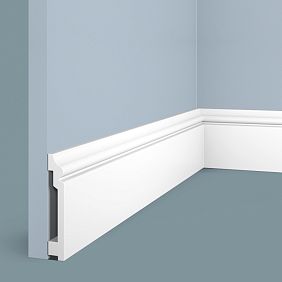
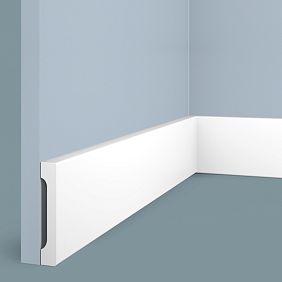
White wooden skirting boardmade of solid beech or ash — this is not a plastic imitation, but a natural material, professionally painted. Such a baseboard has a wood texture (if semi-transparent enamel is used) or a perfectly smooth surface (if multi-layer glossy enamel is applied).
The height of the baseboard for a small apartment is a question of balance. A baseboard that is too narrow (30–40 mm) gets lost and does not perform a decorative function. One that is too wide (150–200 mm) overloads the space and draws attention to the boundaries. The optimal height is 60–80 mm. This is enough for the baseboard to be noticeable but not dominant.
The shape of the baseboard is also important. A simple flat profile or a concise rounding is the best choice for small spaces. A complex shaped baseboard with many steps and curves creates visual noise and fragments perception. Simplicity is the key to visual expansion.
Get Consultation
Installation of white baseboard: process nuances
Installing a white baseboard requires care. Any scratch, dent, or stain on the white surface is noticeable. The baseboard must be protected during transportation and installation.
Fastening — either with adhesive (liquid nails) or with screws with countersunk heads masked with white filler. Adhesive is simpler but requires perfectly even walls. Screws are more reliable but require precision to avoid splitting the wood.
Corners are the most difficult part. Joining the white baseboard in corners must be perfect: gaps are unacceptable, they are immediately visible. Cutting at a 45-degree angle with a miter saw, checking on-site, and if necessary — manual adjustment. The joint is coated with white acrylic sealant, excess is removed immediately.
After installation, the baseboard is inspected: all screw heads (if used) must be filled, joints sealed, surface clean. The white baseboard is the finishing touch; it must be impeccable.
Combining white baseboard with flooring
White baseboard is universal; it combines with almost any flooring. Light laminate or parquet (ash, maple, bleached oak) + white baseboard — a classic Scandinavian scheme, maximum lightness, visual expansion. Dark floor (wenge, stained oak, black laminate) + white baseboard — a contrasting scheme, graphic, modern, also expanding space due to clear horizontal division.
Important: white baseboard works to expand space only in combination with light walls. If the walls are dark (gray, blue, green) and the baseboard is white — it becomes a bright outline that does not dissolve the boundary but emphasizes it. In this case, it is better to choose a baseboard that matches the wall color or is one or two shades lighter.
Large mirror opposite the window: doubling the light
Light is the main resource of a small apartment. The more light, the more spacious the room seems. Natural light from the window is invaluable but a limited resource. How to multiply it? Reflect it.
A large-sized mirror, placed opposite the window, intercepts sunlight and sends it back into the room. The effect — as if there are two windows in the room. The amount of light increases by one and a half to two times. The room fills with light, shadows recede, corners cease to be dark.
The size of the mirror is critical. A small mirror (50×70 cm) gives a minimal effect. A large mirror (100×150 cm or larger) creates a sense of a second space. The ideal option is a mirror covering the entire wall or a significant part of it, from floor to ceiling or from furniture level to ceiling.
Mirror shape: rectangle (vertical or horizontal) — universal, suitable for any interiors. Square — more static, suitable for symmetrical spaces. Round or oval mirror — softens geometry but gives a lesser expansion effect, as it does not fully fill the wall plane.
Mirror placement: reflection strategy
A mirror opposite the window is a classic, but not the only option. A mirror to the side of the window (on an adjacent wall) also reflects light, albeit at an angle. A mirror opposite the entrance door creates a depth effect: you enter the apartment — and see the continuation of the corridor in the reflection, the space seems longer.
Important: the mirror should not reflect chaos. If opposite the mirror — a pile of things, open shelves with clutter, an unmade bed — the reflection will double this chaos. The mirror should reflect beauty: a window with a view, neat furniture, decorative objects, plants. Then the reflection works for the interior, not against it.
Placement height: the lower edge of the mirror — at a level of 20–30 cm from the floor (if it's a wall mirror) or directly from the floor (if it's a floor mirror). The upper edge — as high as possible, ideally almost to the ceiling. The greater the vertical extent of the mirror, the stronger the effect of expanding the room's height.
Mirror frame: wooden or minimalist?
A mirror frame is not just a border, but an element that either enhances the expansion effect or steals space. A massive dark carved frame in a small apartment is a mistake. It draws attention, creates visual heaviness, and reduces the useful area of the mirror.
The ideal frame for a small space is thin, light, and delicate. A white painted solid beech frame 3–5 cm wide is an excellent choice. It accentuates the mirror without dominating. Natural light wood (ash, maple, bleached oak) is also suitable, especially if there are other light wooden elements in the interior.
No frame at all is also an option. A mirror mounted into the wall without a visible frame creates a maximum expansion effect: it seems as if the wall has disappeared, opening up new space. But such installation is more complex: the mirror must be perfectly cut, edges finished (beveled), with hidden mounting.
Full-length floor mirror: a vertical accent
floor mirrors in frames— a trend in recent years, especially relevant for small apartments. Such a mirror does not require wall mounting, it can be moved, the tilt angle changed, and placement experimented with.
The size of a floor mirror is at least 50×150 cm, optimally 60×180 cm or even larger. The taller the mirror, the more it visually 'lifts' the ceiling. The vertical line of the mirror creates a sense of height; the room seems more spacious not only in area but also in volume.
Placement: best — in a corner or along a wall, at a slight angle to the vertical (5–10 degrees tilted back). This tilt expands the reflected zone; the mirror captures more space, enhancing the effect.
A floor mirror can be used as a functional element (to see oneself full-length before going out) and as a decorative one (reflecting light from a window, creating the illusion of an additional opening). In a bedroom, a floor mirror is placed next to a window — it reflects light and the view. In an entryway — opposite the entrance door, creating depth. In a living room — next to a sofa or armchair, visually expanding the seating area.
Frame for a floor mirror: stability and style
A floor mirror requires a sturdy frame: it stands vertically, resting on the floor, and must be stable. A solid wood frame 4–6 cm thick provides the necessary rigidity. Frame width — 5–8 cm, this is the optimal balance: sufficient for strength, not too massive.
Frame color for a small apartment — light: white, cream, natural ash or beech. A dark frame is acceptable if there are other dark accents in the interior (furniture, doors), but it 'eats up' visual space more than a light one.
Some floor mirrors have a stand (legs or a support bar at the back), others rest directly on the frame. The first option is more convenient for moving, the second — visually lighter. For a small apartment, the second option is preferable: fewer structural elements, more airiness.
Light wood tones: beech, ash and their magic
Wood in the interior is warmth, naturalness, tactile pleasantness. But in a small apartment, the choice of wood species is critical. Dark species (wenge, stained oak, walnut) create visual heaviness, 'eat up' light, and reduce space. Light species (beech, ash, maple) work to expand.
Beech — wood of a light pink or beige hue, with a fine, uniform texture. Beech is dense, strong, and does not warp. The surface of beech is smooth, pleasant to the touch. Painted white, beech retains a slight warm undertone, not looking sterile. Beech is used to produceBaseboards, Moldings, mirror frames — everything that requires strength and aesthetics.
Ash — wood of a light gray or cream hue, with a pronounced texture and beautiful annual ring pattern. Ash is even stronger than beech, flexible, resilient, and does not crack. Natural ash without paint is an ideal material for Scandinavian and minimalist interiors. Coated with clear oil or white translucent enamel, ash emphasizes the wood grain, creating visual interest without color overload.
Light wood in a small apartment can be used locally (baseboards, mirror frames,door casings) or on a larger scale (furniture,Wall Panels, floor). The more light wood, the airier the space. But moderation is needed: a completely wooden interior can look monotonous. Combining light wood with white walls, white ceiling, and white textiles gives the optimal effect.
Finishing light wood: oil or enamel?
To preserve the natural light shade of wood, clear oil or clear varnish is used. Oil penetrates the pores, emphasizes the texture, and gives a matte silky sheen. Varnish creates a protective film on the surface, giving a more pronounced gloss. For small apartments, matte or semi-matte finishes are preferable: gloss reflects light in spots, creates glare, and can be intrusive.
To create a white wooden element (baseboard, frame), either white oil (tints the wood while keeping the texture visible) or opaque enamel (completely hides the texture, giving an even white color) is used. The first option is warmer, more natural; the second — cleaner, more graphic. The choice depends on the interior style.
Minimalism and Scandinavian: ideal styles for small spaces
Interior style directly influences the perception of an apartment's size. Overloaded, decorative styles (Baroque, Rococo, Classicism with an abundance of moldings) visually compress space. Laconic, airy styles (minimalism, Scandinavian, Japanese) expand it.
Minimalism — is the absence of the superfluous. Minimum furniture, minimum decor, maximum free space. Colors — neutral, most often white, gray, beige. Lines — clear, simple. Materials — natural, but processed to perfect smoothness. In a minimalist apartment, a white baseboard is not an accent, but a natural part of a unified white shell. A large mirror is not decor, but a functional element that doubles light and space.
Scandinavian style — is minimalism with soul. Light tones (white, gray, beige), natural light wood (beech, ash, pine), simple shapes, coziness. Scandinavians have lived for centuries in conditions of light scarcity (long winters, short days), so they learned to maximize every ray of sunlight. White walls reflect light. Large windows without heavy curtains let in maximum light. Mirrors double the light. Light wood creates warmth without visual heaviness.
In a Scandinavian interior of a small apartmentwhite baseboardsand large mirrors in light wooden frames are essential elements. They don't just decorate; they work to create a sense of spaciousness, light, and air—exactly what is often lacking in small urban apartments.
Color accents: how not to disrupt the light harmony
A white interior with wooden accents can seem boring if there are no color spots. But in a small apartment, accents should be delicate: bright, screaming colors fragment the space and create visual noise.
Ideal accents for a light interior:
-
Live plants (greenery calms, connects the interior with nature, doesn't overload perception)
-
Natural textiles (gray, beige, terracotta throws and pillows)
-
One or two pieces of dark furniture (black metal shelving, dark armchair)—for contrast, but no more
-
Artworks (paintings, posters in thin frames)—color is acceptable, but in limited volume
The main rule: 80% of the interior is light (white walls, light floors, light furniture, white baseboards), 20% is accents. This proportion preserves the feeling of spaciousness without letting the interior become boring.
Calculating the optimal mirror size
How to determine what size mirror is needed for a specific room? There are practical formulas based on perception proportions.
For a wall mirror:
-
The width of the mirror should be at least 1/3 of the width of the wall it is placed on. For example, a wall 3 meters wide—mirror at least 1 meter wide.
-
Mirror height—at least 1 meter for a noticeable expansion effect, optimally 1.2–1.5 meters.
-
The mirror area should be at least 1 square meter for a tangible light-doubling effect.
For a floor mirror:
-
Height—at least 150 cm (to see yourself full-length), optimally 170–180 cm.
-
Width—at least 50 cm, optimally 60–70 cm.
-
A floor mirror should not be wider than 80 cm, otherwise it starts to dominate, turning from an expansion tool into a massive object.
Mirror-to-room area proportion:
-
For a room 10–12 m²—mirror area 1–1.5 m² (e.g., 100×120 cm)
-
For a room 15–18 m²—mirror area 1.5–2 m² (e.g., 120×150 cm)
-
For a room 20 m² and larger—mirror up to 2.5–3 m² (e.g., 150×180 cm or larger)
Important: if the mirror is too small relative to the room—the expansion effect is minimal, the mirror is perceived as a decorative element, not as a tool for changing space. If the mirror is too large—it can feel oppressive, create discomfort (especially if it reflects not the most attractive areas).
Mirror wall: when appropriate
A fully mirrored wall (or a large mirror panel covering the entire wall) is the maximum technique for expanding space. The room visually doubles in size. The effect is dramatic, impressive.
But a mirror wall has drawbacks:
-
Difficulty of maintenance (the mirror needs constant wiping, any smudges and streaks are visible)
-
Psychological discomfort (constant reflection can be irritating)
-
Need for perfect order in the reflection area (a mirror wall doubles not only beauty but also chaos)
A mirrored wall is appropriate in an entryway (creates the illusion of a large hall), in a narrow living room (expands a short wall), in a bedroom (if the mirror is not opposite the bed — many find this psychologically uncomfortable). In a child's room, kitchen, or home office, a mirrored wall is usually excessive.
Additional techniques for visual expansion
White baseboards and a large mirror are powerful tools, but not the only ones. There are other techniques that enhance the effect.
Light-colored floor: The lighter the flooring, the more spacious the room appears. White, light gray, or beige laminate or parquet visually expands the space. A dark floor (wenge, black) creates contrast, which can be stylish, but reduces the feeling of spaciousness.
Glossy surfaces: A glossy floor, glossy furniture fronts reflect light, acting as additional mirrors. But be cautious with gloss: an excess of shine can be intrusive.
Vertical lines: Vertical stripes on walls (wallpaper, paint,wall panels with vertical division) visually raise the ceiling. Vertical mirrors, tall narrow cabinets, vertical light fixtures — all work to increase height.
Minimal furniture: The fewer items in a room, the more spacious it is. Each piece of furniture 'eats up' visual space. In a small apartment, keep only the essentials, store the rest or forgo it entirely.
Transparent furniture: Glass tables, transparent polycarbonate chairs visually disappear, not cluttering the space. This is especially effective for a dining area, a desk.
Light: Plenty of light — artificial and natural. Multiple light sources (ceiling, wall, floor lamps) create uniform lighting without dark corners. A light room always seems larger than a dark one.
Common mistakes in visually expanding space
Mistake 1: Excessive dark accents. One dark item (armchair, painting) — an accent. Many dark items — visual heaviness, space shrinks.
Mistake 2: Small, cluttered decor. Many small items (figurines, frames, souvenirs) on shelves create visual noise, fragment perception, the room seems cluttered and small.
Mistake 3: Heavy curtains. Dense dark curtains block light, visually reduce the window. Better to use light, airy curtains or none at all (if privacy is not an issue).
Mistake 4: Low-hanging chandeliers. A massive chandelier hanging on a long cord visually lowers the ceiling. For a small apartment, flat ceiling lights or recessed spotlights are better.
Mistake 5: Mirror in the wrong place. A mirror opposite an untidy area, chaos, or a dark corner does not expand but doubles the problem. A mirror should reflect beauty, light, order.
Mistake 6: Busy walls. Wallpaper with a large bright pattern, contrasting paint (one wall dark, another light) fragments the space. Solid light-colored walls are the best choice for a small apartment.
How to care for white surfaces
White baseboards, white mirror frames require regular care. Dust, dirt, stains on white are instantly visible.
Baseboard: Wipe with a damp soft cloth once a week. For stubborn stains — soapy water, then wipe with clean water, dry. Do not use abrasive cleaners (scratch the surface), chlorine-containing ones (may leave yellow stains).
Mirror: Wipe with a special glass cleaner or a solution of water and vinegar (1:1). Apply to a soft cloth (not directly on the mirror), wipe in circular motions, then polish with a dry cloth to a shine. Avoid getting cleaning products on the wooden frame.
Mirror frame (white wood): Wipe with a dry or slightly damp cloth. For stubborn stains — soapy water, then wipe with clean water. If scratches or chips appear on the frame — you can touch up with white acrylic paint or enamel, then carefully sand the touched-up area with fine sandpaper.
Regular care (10–15 minutes a week) keeps a white interior fresh, clean, and bright for years.
Frequently asked questions
Does a white baseboard get dirty quickly?
Yes, a white baseboard requires more frequent cleaning than a dark one. But modern enamels are stain-resistant and easy to wipe with a damp cloth. If you have pets or small children — you might consider a light gray or beige baseboard, it's more practical.
Can you paint a wooden baseboard white yourself?
You can, but factory painting is of higher quality. In production, enamel is applied in several layers, each layer is sanded and dried in special chambers. The result is a perfectly smooth, durable surface. DIY painting usually yields a less even finish, with possible drips and unevenness.
Which shade of white to choose?
Cool white (arctic, with a bluish undertone) — for modern interiors, creates a feeling of freshness, cleanliness. Warm white (ivory, with a yellowish or creamy undertone) — for classic interiors, creates coziness. Neutral white (pure white without undertones) — universal, suits any style.
Is a mirror opposite the bed bad?
There is an opinion that a mirror opposite the bed creates psychological discomfort and hinders relaxation. There is no scientific proof, but if you feel discomfort—it's better to place the mirror on another wall. Comfort is more important than design rules.
Can you use several mirrors in one room?
Yes, but with caution. Two or three mirrors of different sizes and shapes can create an interesting composition and enhance the expansion effect. But if there are too many mirrors—chaos arises, the eye doesn't know where to rest, and the room seems fragmented.
Does a cheap mirror differ from an expensive one?
Yes, and significantly. A cheap mirror has a thin amalgam layer that oxidizes quickly, causing black spots to appear. The reflection may be distorted. A quality mirror has a thick amalgam layer, a protective coating, provides a clear, undistorted reflection, and lasts for decades.
Does light wood darken over time?
It depends on the wood species and treatment. Beech and ash, coated with clear oil or varnish, may darken slightly from sunlight, acquiring a warmer hue. This is a natural process; it doesn't ruin the appearance but gives the wood a noble patina. White enamel does not darken and retains its color for years (with a quality coating).
Can you create a sense of spaciousness without mirrors?
You can, but it's more difficult. A mirror provides the most powerful effect of doubling space. Without a mirror, you'll have to maximize all other techniques: lightest tones, minimal furniture, maximum light, vertical lines, glossy surfaces. The result will be good, but a mirror would add +20–30% effect.
Is a large mirror expensive?
It depends on size and quality. A mirror 100×120 cm in a simple wooden frame—from 15,000 rubles. A mirror 150×180 cm in a solid beech frame with white enamel—from 30,000 rubles. It's an investment, but a long-term one: a quality mirror lasts for decades, working daily to expand your space.
Won't a white interior be boring?
No, if you add textures and delicate accents. White doesn't mean empty. White is a canvas on which you create a composition of light, forms, and materials. Natural wood, live plants, textiles, works of art—all of this makes a white interior lively, interesting, and deep.
Conclusion: Space as Illusion and Reality
A small apartment is not a life sentence. It's a challenge that can be solved with competent design. A white skirting board made of natural wood dissolves boundaries, erases hard lines, and expands the perimeter. A large mirror in a wooden frame doubles the light, creates an illusion of depth, turns one window into two, one room—into one and a half.
Together, these two elements provide an effect of at least +20% visual space. The actual square footage remains the same, but the feeling of the room changes radically. You walk in—and feel air, light, spaciousness. This isn't magic; it's the science of perception applied wisely.
Add light wood tones (beech, ash), minimalist furniture, plenty of light, delicate accents—and your small apartment will turn into a space where it's easy to breathe, pleasant to live, and comfortable to host guests. A space that works for you, not against you.
The company STAVROS produces everything necessary to create such an interior:white wooden skirting boardsmade from solid beech and ash with professional painting, frames for mirrors of any sizes and shapes, moldings, casings, cornices—all the elements that turn an ordinary apartment into a thoughtful, harmonious, visually spacious space.
STAVROS production is equipped with modern machinery, allowing the creation of products of the highest quality. Each skirting board undergoes multi-stage control: wood inspection, profile accuracy, painting quality, surface smoothness. Only products meeting the strictest standards receive the STAVROS brand.
Painting in white is performed in special chambers with controlled conditions: temperature, humidity, air purity. Enamel is applied in several layers, each layer is dried and sanded. The result—a perfectly even, durable white surface that does not yellow, crack, and retains its appearance for years.
STAVROS mirror frames are made from solid beech with mortise and tenon corner joints, glued with wood glue. This guarantees structural strength. The frame can be painted in any white shade of your choice or left in the natural light color of beech with clear oil.
STAVROS service includes consultations on choosing sizes and shades, calculating the required amount of materials, and recommendations for installation. The logistics service ensures careful delivery throughout Russia in protective packaging.
By choosing STAVROS, you choose the quality of natural wood, professional processing, and an individual approach. You don't just get skirting boards and frames—you get tools for transforming your space, for creating an interior where it's easy to breathe and pleasant to live.
Contact STAVROS—and we will help turn your small apartment into a spacious, bright, harmonious home where every detail works for your comfort and visual pleasure.


