Article Contents:
- Materials for baseboard manufacturing: detailed classification
- Solid wood baseboards
- MDF baseboards: balance of price and quality
- PVC baseboards: practicality and functionality
- Aluminum baseboards: high-tech solutions
- Dimensional classification of baseboards
- Baseboard height: impact on spatial perception
- Baseboard thickness: impact on strength and aesthetics
- Profiles and shapes of baseboards
- Classic profiles
- Decorative profiles
- Special profiles
- Style classification of baseboards
- Classic style
- Modern style
- Scandinavian Style
- Loft and Industrial Style
- Special types of baseboards
- Flexible baseboards
- Baseboards with lighting
- Corner elements and accessories
- Choosing baseboards based on room type
- Living rooms
- Kitchens and bathrooms
- Commercial spaces
- Installation and operation of various types of baseboards
- Features of installing wooden baseboards
- Processing corners and joints
- Care and maintenance of different types of baseboards
- Care for wooden baseboards
- Restoration and repair
- Care for artificial materials
- Trends and innovations
- Ecological solutions
- Technological Innovations
- Design trends
- Economic aspects of selection
- Cost of various types of baseboards
- Long-Term Economic Efficiency
- Frequently Asked Questions

In modern interior design baseboard for floor plays a key role, performing not only practical but also aesthetic functions. Choosing the right type of baseboard determines the final perception of the room, affects its stylistic coherence and functional completeness. The variety of modern solutions allows finding the ideal option for any interior, from classic to ultra-modern.
Understanding all available types of baseboards becomes critically important for creating a harmonious space. Each material, shape, and size has its own characteristics, advantages, and areas of application, which must be considered when planning finishing work.


Materials for baseboard manufacturing: detailed classification




Solid wood baseboards
Wooden baseboard made from solid wood represents an elite segment of flooring. Made from a single piece of wood, such a baseboard retains all the natural properties of the material: unique texture, natural wood grain pattern, and ability to 'breathe'.
Wood species for solid wood baseboards:
Spruce baseboards are distinguished by their affordable price and beautiful texture with pronounced annual rings. The light color of spruce combines beautifully with Scandinavian style and modern interiors. The resinous aroma creates a special cozy atmosphere in the room.
Oak baseboards are considered the standard of quality. Oak has exceptional hardness, noble texture, and the ability to acquire a more saturated shade over time. Such baseboards are suitable for classic interiors and high-traffic areas.
Beech products occupy an intermediate position between affordability and premium quality. Beech is characterized by uniform structure, high density, and excellent suitability for staining, allowing for diverse color solutions.
Technical characteristics of solid wood baseboards:
The moisture content of finished products is strictly controlled and ranges from 8-12%, ensuring dimensional stability during use. Density varies from 400-500 kg/m³ for coniferous species to 600-800 kg/m³ for hardwoods.
Advantages of solid wood baseboards include ecological purity, the possibility of multiple restorations, unique texture of each item, and a long service life of up to 50 years.
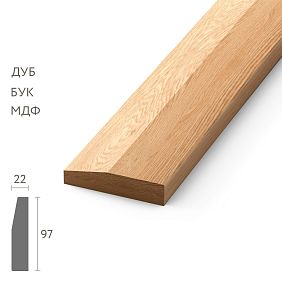
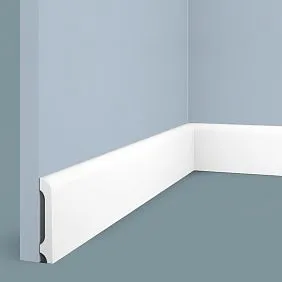
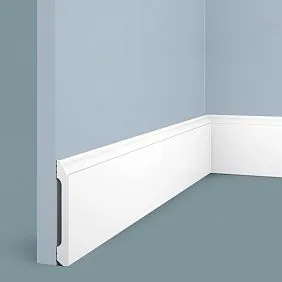
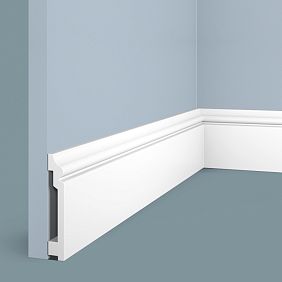
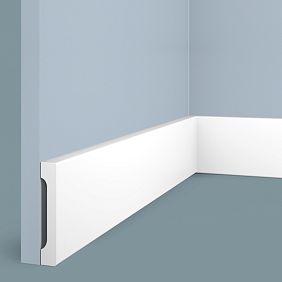
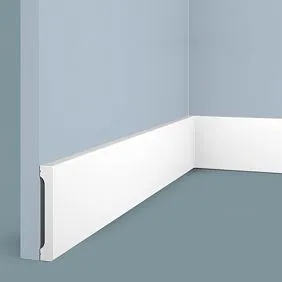
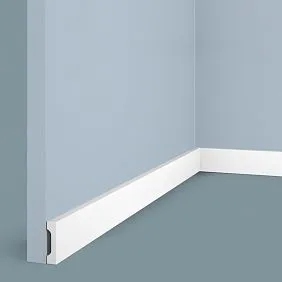
Our factory also produces:
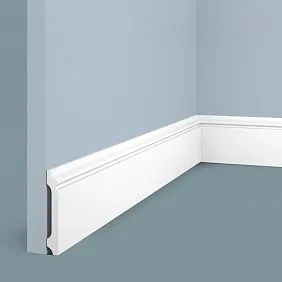
MDF baseboards: balance of price and quality
MDF Skirting Board is made from medium-density fiberboard, covered with decorative film or veneer. This material occupies a significant share of the market due to its optimal price-to-quality ratio.
Structure of MDF baseboards:
The base consists of ground wood fibers pressed at high temperature using binding agents. The density of the finished material is 600-800 kg/m³, providing good strength at relatively low weight.
Decorative coating can be of several types: laminated film imitating various wood species; natural veneer for creating a premium appearance; painted surface for modern interiors.
Technological features:
MDF baseboards are easily machinable, allowing for complex profiles and decorative elements. However, the material is afraid of moisture and may swell upon contact with water, limiting its application area.
The service life of MDF baseboards is 15-20 years with proper use. The cost is significantly lower than solid wood for visually similar results.
Get Consultation
PVC baseboards: practicality and functionality
Plastic baseboards made of polyvinyl chloride have gained popularity due to their practicality, moisture resistance, and ease of installation. Modern technologies allow creating PVC baseboards with high-quality imitation of natural materials.
Structural features of PVC baseboards:
Hollow structure ensures lightness of the product and allows for cable routing inside the baseboard. Wall thickness is 2-3 mm, ensuring sufficient strength at minimal weight.
The color palette of PVC baseboards is virtually limitless. Modern finishes accurately reproduce the texture of wood, stone, metal, and other materials. Glossy, matte, and semi-matte surfaces allow selecting a baseboard to match any interior style.
Functional advantages:
Absolute moisture resistance makes PVC baseboards the ideal solution for bathrooms, kitchens, and other areas with high humidity. The material does not deform, does not rot, and is not susceptible to mold.
Ease of maintenance is another important advantage. PVC baseboards can be easily cleaned with any cleaning agents, require no special care, and retain their original appearance throughout their service life.
Aluminum baseboards: high-tech solutions
Metallic aluminum baseboards represent an innovative direction in finishing materials. They combine modern design with excellent technical characteristics.
Construction of aluminum baseboards:
The profile is manufactured by extrusion from high-quality aluminum alloys. Wall thickness is 1-2 mm, ensuring strength at minimal weight. Hollow profiles allow for housing utilities inside.
The surface can be anodized, painted with powder coating, or covered with decorative film. Anodizing creates a protective layer and imparts a noble metallic sheen.
Areas of application:
Aluminum skirting boards are ideal for office spaces, medical facilities, shopping centers, and other locations with high hygiene and durability requirements.
In residential interiors, such skirting boards are primarily used in high-tech, minimalism, and loft styles, where the metallic sheen becomes an important design element.
Skirting Board Size Classification
Skirting Board Height: Its Impact on Spatial Perception
Wooden Skirting Board Height is one of the key parameters determining interior perception. Properly selected height can visually alter the proportions of the room.
Low Skirting Boards (40-60 mm):
Compact skirting boards 40-50 mm high are suitable for small rooms with low ceilings. They do not visually 'consume' space and create a sense of lightness. Wooden Skirting Board 45 is a popular size for apartments in standard buildings.
Such skirting boards perfectly complement modern interior styles, where preference is given to minimalist forms and simplicity. They are almost invisible and do not distract attention from the main design elements.
Medium Skirting Boards (60-80 mm):
Wooden Skirting Board 60 mm is considered a universal size suitable for most residential spaces. This height provides an optimal balance between functionality and aesthetics.
Wooden Skirting Board 70 и 80 мм are suitable for rooms with standard ceiling heights of 2.7-3.0 m. They are sufficiently noticeable to serve a decorative function, but do not dominate the interior.
High Skirting Boards (100-150 mm):
Wide Wooden Skirting Board height 100 мм and more are used in rooms with high ceilings. Such skirting boards create a sense of luxury and solidity.
Wooden High Skirting Board is especially appropriate in classical interiors, where high skirting boards are a traditional design element. They emphasize the scale of the space and create a sense of grandeur.
Skirting Board Thickness: Its Impact on Strength and Aesthetics
Skirting board thickness affects not only its strength characteristics but also its visual perception. Wooden Skirting Board Sizes vary in thickness from 12 to 25 mm.
Thin Skirting Boards (12-16 mm):
Such skirting boards create a sense of lightness and elegance. They are suitable for modern interiors in a minimalist style, where visual lightness of elements is important. However, thin skirting boards are less durable and require more careful handling.
Standard Thickness (18-22 mm):
Most solid skirting boards have a thickness of 18-20 mm, providing an optimal balance of strength, weight, and appearance. This thickness allows for creating various profiles and decorative elements.
Thick Skirting Boards (25 mm and more):
Heavy, thick skirting boards are used in luxury interiors, where solidity and dignity are important. They can withstand significant mechanical loads and are suitable for high-traffic areas.
Skirting Board Profiles and Shapes
Classic Profiles
Rectangular Profile:
Wooden Straight Skirting Board has the simplest form with a rectangular cross-section. Such skirting boards may have small bevels to soften corners or remain fully rectangular to create sharp lines in modern interiors.
The simplicity of the shape ensures universal applicability and easy installation. Straight skirting boards match well with any floor covering and are suitable for most interior styles.
Flat Profile:
Wooden Flat Skirting Board has minimal thickness and creates a 'floating' wall effect. Such skirting boards are popular in minimalist interiors, where visual lightness is important.
Flat profiles require perfectly flat walls for proper installation, but they create a very modern and stylish appearance.
Decorative Profiles
Decorative Profile:
Wooden Decorative Skirting Board features a complex shape with decorative elements: grooves, protrusions, rounded edges. Such profiles create play of light and shadow, adding volume and dynamism to the interior.
Decorative skirting boards are especially popular in classical and traditional interiors, where decorative elements are an important part of design. They can imitate historical profiles or represent modern design solutions.
Shoe-Shape Profile:
Wooden Shoe-Shape Skirting Board got its name due to its distinctive curved shape resembling shoe profile. This traditional profile is widely used in classical interiors.
Shoe-shaped skirting boards create a smooth transition between floor and wall, visually softening room corners. Such a profile is especially effective in large rooms with high ceilings.
Special profiles
Triangular Profile (Gable):
Wooden Triangular Skirting Board has a triangular cross-section and is primarily used as a ceiling skirting board. In floor version, such a profile creates a very minimalist and modern look.
Triangular skirting boards occupy minimal space and are almost invisible, making them ideal for small rooms or interiors where the skirting board should be as inconspicuous as possible.
Profile with Cable Channel:
Wooden Skirting Board with Cable Channel represents a functional solution for modern interiors filled with electronics. A special groove allows hiding wires and cables, maintaining cleanliness and order in the room.
Such skirting boards are especially relevant in office spaces, home offices, and multimedia zones, where the number of wires may be significant.
Style Classification of Skirting Boards
Classic Style
In classical interiors, skirting boards play an important architectural role, emphasizing the nobility and respectability of the setting. Wooden Skirting Boards in Interior Design of classic style are characterized by complex profiles and significant height.
Characteristics of Classic Skirting Boards:
Height is usually 100-150 mm, corresponding to traditional proportions of classical architecture. The profile includes decorative elements: grooves, moldings, cornices.
Preferred materials are natural: solid oak, beech, ash. Finish may be natural, emphasizing wood texture, or painted in classic colors: white, cream, gold.
Application in Interior Design:
Classic skirting boards perfectly match with parquet, solid wood planks, natural stone. They emphasize the luxury of materials and create a sense of palace grandeur.
In modern interpretations of classic style, skirting boards may be slightly simplified, but they retain basic proportions and noble forms.
Modern Style
Modern interiors prefer minimalism and functionality. Wooden skirting board options for such interiors are distinguished by simplicity of forms and clarity of lines.
Features of modern skirting boards:
Height is usually medium: 60-80 mm. Profile is simple, often rectangular or with minimal bevels. Decorative elements and complex shapes are absent.
Color palette is neutral: white, gray, black, natural wood tones. Surface may be matte or semi-matte; gloss is rarely used.
Functional features:
Modern skirting boards are often equipped with cable channels, hidden fasteners, integrated lighting. Functionality is prioritized over decoration.
Materials can be diverse: from natural solid wood to high-tech composites and metals.
Scandinavian Style
Scandinavian design implies the use of light materials and simple forms. Skirting boards in such interiors should be as inconspicuous as possible and not distract from the overall concept.
Features of Scandinavian skirting boards:
Material preferably light wood: pine, birch, bleached oak. Height is low: 50-70 mm. Profile is simple, without decorative elements.
Color is usually white or very light natural tones. Surface is matte, creating a sense of naturalness and closeness to nature.
Combination with other elements:
Scandinavian skirting boards should harmonize with light floors, white or pastel walls. They create a sense of spaciousness and cleanliness, characteristic of northern interiors.
Loft and Industrial Style
Industrial interiors require a special approach to skirting board selection. Here, both deliberately rough wooden elements and high-tech metal solutions are appropriate.
Wooden skirting boards for loft:
Material may be artificially aged, with emphasized texture and signs of processing. Colors are dark: wenge, black, dark brown. Height may vary depending on room scale.
Metallic solutions:
Aluminum or steel skirting boards with industrial finish: matte metal, rust, patina. Such elements emphasize the brutality of the style and create contrast with soft textiles.
Special types of skirting boards
Flexible skirting boards
Flexible skirting boards represent an innovative solution for rooms with complex geometry. They are made from special polymer materials or composites capable of bending without damage.
Construction of flexible skirting boards:
Base is made of elastic material: thermoplastic polyurethane, modified PVC or special composites. Decorative coating imitates various materials: wood, stone, metal.
Bending radius can reach 30-50 cm, allowing to wrap around columns, bay windows, curved walls without joints or additional elements.
Areas of application:
Flexible skirting boards are indispensable in rooms with non-standard layouts: attics, bay windows, rooms with vaulted ceilings. They allow creating a continuous skirting board line without visible joints.
In commercial interiors, flexible skirting boards are used for decorating retail spaces, exhibition areas, restaurants with complex layouts.
Skirting boards with lighting
Wooden skirting board with lighting represents a modern design solution, creating a "floating" floor effect and adding a futuristic touch to the interior.
Technical features:
An LED strip is embedded into a special groove in the skirting board. Light can be directed downward, creating floor lighting, or upward, illuminating the lower part of the wall.
Lighting color can be constant (warm or cool white) or adjustable using RGB strips. Control is via switches, dimmers, or "smart home" systems.
Effect in the interior:
Lit skirting boards create a levitation effect, visually increasing room height and adding modernity to the interior. They look especially striking in dark rooms and at night.
Corner elements and accessories
Corner for wooden skirting board and other finishing elements play an important role in creating a professional appearance of the finish.
Types of corner elements:
Internal corner for wooden skirting board used for decorating internal corners of rooms. Ready-made elements ensure perfect fit without trimming main planks.
External corner for wooden skirting board required for decorating protruding corners: columns, pilasters, niches. Such elements protect the ends of the skirting board and create a finished look.
Additional accessories:
End cap for wooden skirting board covers ends where the skirting board ends without joining to other elements: at doorways, in niches.
Connecting elements are used to join straight sections of skirting board along the length. They ensure invisible joints and compensate for minor irregularities.
Choosing skirting board depending on room type
Living rooms
In living rooms, bedrooms, and other residential spaces, aesthetics and comfort are prioritized. Wooden skirting boards in an apartment should harmonize with the overall interior style and create a cozy atmosphere.
Recommendations for different rooms:
In bedrooms, skirting boards made of natural materials with calming tones are appropriate. Height is medium (60-80 mm), profile can be simple or decorative depending on style.
In living rooms, skirting boards can be more expressive and taller. Here, elements made of expensive solid wood, complex profiles, integrated lighting are suitable.
Kitchens and bathrooms
In humid spaces, material resistance to moisture and steam is critically important. Wooden skirting board in the kitchen requires special protective treatment.
Materials for humid spaces:
PVC skirting boards are ideal for bathrooms due to absolute moisture resistance. They do not deform, are easy to clean, and retain their appearance.
Aluminum skirting boards are also suitable for humid spaces. They are resistant to corrosion and easily cleaned from dirt.
When using wooden skirting boards in humid spaces, high-quality waterproof treatment is required.
Commercial spaces
In offices, stores, and other commercial spaces, skirting boards must withstand high loads and frequent cleaning.
Requirements for commercial skirting boards:
Increased durability to withstand impacts from carts, furniture, and equipment. Resistance to chemical cleaners and abrasive cleaning.
Aluminum skirting boards are ideally suited for most commercial spaces. They combine strength, hygiene, and a modern appearance.
Installation and operation of various types of skirting boards
Features of installing wooden skirting boards
Installation of wooden baseboards requires professional skills and precision. How to install wooden skirting boards depends on the type of base and requirements for appearance.
Preparation works:
Acclimatizing the material in the room for 24-48 hours prevents deformation after installation. Checking wall flatness and leveling the base if necessary.
Attachment methods:
Mounting wooden skirting boards can be mounted using finish nails, screws, adhesive, or hidden clips depending on the type of base and appearance requirements.
Corner and joint treatment
How to cut wooden skirting at corners – one of the most critical stages of installation. Precise 45-degree beveling requires the use of a miter box or miter saw.
Joining wooden skirting boards must be as tight as possible. Wood glue is used for sealing joints if necessary.
Care and maintenance of different types of skirting boards
Care for wooden skirting boards
Natural wood requires regular but simple care. Dry vacuuming or soft-bristle brush removes accumulated dust. Wiping with slightly damp cloth refreshes the surface.
What to paint wooden skirting boards depending on the original finish type and usage conditions.
Restoration and Repair
The advantage of solid skirting boards is the possibility of local repair. How to fill gaps in wooden skirting boards – an important issue during operation. Minor defects are fixed with wax pencils, while larger ones require patching and re-finishing.
Care for synthetic materials
PVC and MDF skirting boards require less maintenance but have limited repair options. Regular damp cleaning maintains cleanliness, but damaged sections usually require complete replacement of the element.
Trends and Innovations
Ecological solutions
Growing ecological requirements are driving the development of "green" technologies in skirting board production. Use of wood from sustainably managed forests, formaldehyde-free binders, and waste recycling are key development directions.
Technological Innovations
Integration of modern technologies opens new possibilities. Skirting boards with built-in motion sensors, climate control systems, and wireless device charging represent the future of finishing materials.
Design trends
Personalization and individuality are becoming key trends. The ability to create unique profiles, colors, and textures allows each interior to have a distinctive character.
Economic aspects of selection
Cost of different types of skirting boards
Wooden baseboard price depends on wood species, profile complexity, and finish quality. PVC skirting boards are the most affordable, MDF occupies the mid-range, and solid wood represents the premium class.
Long-term Economic Efficiency
When calculating total costs, it is necessary to consider not only the initial cost but also operating expenses, repairability, and lifespan. High-quality materials often prove more economically advantageous in the long term.
Frequently Asked Questions
Which skirting board is better for the kitchen?
For kitchen areas, moisture-resistant materials are recommended: PVC skirting boards or aluminum profiles. If wood is chosen, it requires quality waterproof treatment with waterproof compounds. The skirting board height should be sufficient to protect the wall from splashes – 60-80 mm.
What distinguishes flexible baseboards from standard ones?
Flexible baseboards are made from elastic materials capable of bending without damage. They are designed for rooms with complex geometry: columns, bay windows, curved walls. Standard baseboards have a rigid structure and are suitable only for straight sections.
Which types of baseboards are the most durable?
Baseboards made from solid hardwoods (oak, beech, ash) and aluminum profiles have the longest service life. With proper care, they can last 30-50 years. MDF baseboards last 15-20 years, PVC – 10-15 years. The quality of installation and operating conditions play an important role.
Choosing the right type of baseboard not only determines the interior's appearance but also its functionality, durability, and economic efficiency. Understanding the characteristics of different materials, shapes, and styles allows making the optimal decision for each specific case, creating a harmonious and practical space.