Article Contents:
- 1. Why It's Important to Choose the Right Material
- 2. Classic Materials: Solid Wood and Veneer
- 2.1. Solid wood
- 2.2. Veneer
- 3.1. Laminated Particleboard (Laminated MDF)
- 3.2. MDF
- 3.3. Plywood
- 4.1. Plastic Facades (HPL/CPL)
- 4.2. Acrylic
- 4.3. Laminate, Melamine
- 5.1. Metallic Elements
- 5.2. Glass
- 6.1. Quality of Hardware
- 6.2. Role of Handles
- 10.1. Kitchen
- 10.2. Bathroom
- 10.3. Living Room
- 10.4. Bedroom and Children's Room
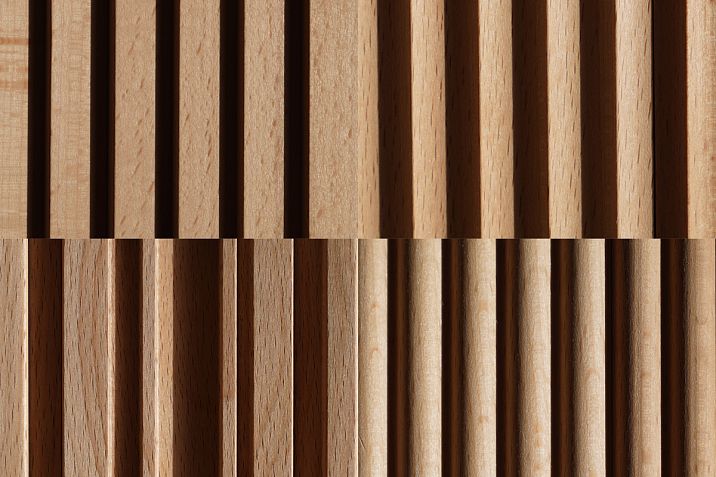
In the modern furniture industry, there is an incredible variety of materials from which diverse items are created — from elegant classic chests to ultra-modern minimalist sets. Whereas craftsmen previously relied primarily on natural wood, today the market offers dozens of materials based on wood, plastic, metal, glass, stone, and their various combinations. Understanding the properties of these materials, their ecological safety, reliability, and accessibility allows you to make an informed decision when purchasing or ordering furniture.
This article will help you understand the main types of furniture materials, their advantages, disadvantages, and areas of application. We will examine both classic (solid wood, veneer, plywood) and more modern, technically advanced solutions (Laminated Particleboard, MDF, acrylic, plastic, glass, metal). We will also pay attention to factors that influence the choice: cost, durability, aesthetics, ease of processing, ecological safety. The text is designed to be over 2000 words to fully cover the topic.


1. Why it is important to choose material correctly
Before examining the types of furniture materials in detail, it is important to understand why choosing the base material for an item is so crucial:
- Durability and reliability. The characteristics of the material directly determine how long the furniture will last without breaking or deforming. Some panels quickly lose their shape under moisture, while others maintain stability for decades.
- Appearance and style. Furniture is a significant part of interior design, shaping the atmosphere of the space. Some materials have natural texture and warm tones, while others feature strict glossy finishes or rugged metallic textures.
- Maintenance and use. Some surfaces are easy to clean and resistant to impacts (e.g., quality plastic), while others require careful handling (polished wooden facades).
- Cost. The difference between premium solid wood and budget-friendly MDF can be enormous. However, within each category, there is also variation in price and quality.
- Ecological safety. Especially relevant for children's rooms and bedrooms. Modern standards require control over formaldehyde and other harmful substance emissions.
- Aesthetic versatility. Some materials (e.g., plywood) are ideal for Scandinavian or eco styles, while luxurious walnut veneer suits classic or art deco. Choosing incorrectly can ruin the overall design concept.
Considering these points, it becomes clear that choosing the right base material is not just a formality, but a step that determines the entire subsequent life of the furniture.




2. Classic materials: solid wood and veneer
Our factory also produces:


2.1. Solid wood
What it is: Solid wood is a whole board or glued-up beam made from natural wood (oak, beech, ash, birch, pine, etc.). This material has been used for centuries and is still considered the standard of quality in producing classic furniture.
Advantages:
- Natural beauty. Each wood species has its own unique texture (growth rings, grain patterns). A surface coated with varnish or oil looks noble and "warm".
- Durability. With proper care, solid wood furniture lasts for decades, and sometimes is passed down from generation to generation.
- Restorability. If scratches or scuffs appear, solid wood can be sanded and re-coated with a finish.
- Ecological safety (provided the wood is treated with safe varnishes and oils).
Disadvantages:
- High cost. Valuable species (oak, walnut, mahogany) are expensive, and the final cost of furniture can be very significant.
- Sensitivity to humidity and temperature fluctuations. Solid wood can "breathe," drying out in dry air or swelling in high humidity.
- Heavy weight. Solid wood furniture may be difficult to move or transport.
Where used: Beds, chests, wardrobes, tables, and chairs — all of these are traditionally made from solid wood. Natural wood looks especially appropriate in classic and country styles. However, in modern designer solutions, solid wood can also serve as an eye-catching accent.
Get Consultation
2.2. Veneer
What it is: Veneer is a thin layer of wood (0.3–0.6 mm), obtained by peeling or planing solid wood. This layer is then glued onto a base (MDF, particleboard, plywood). As a result, the facade or panel gets the "look of solid wood," but costs less and is lighter in weight.
Advantages:
- Natural appearance. The same grains and patterns visible in solid wood are present here.
- Affordability (lower price than 100% solid wood, with nearly identical aesthetics).
- Variety of species: you can choose oak veneer, beech, wenge, exotic varieties (zebrano, palisander).
Disadvantages:
- Thin layer. A strong impact may cause chipping, and "over-sanding" during polishing is also risky.
- Repair complexity. If a veneer section peels off or gets damaged, restoration requires skill and availability of identical veneer pieces.
Where used: Production of facades for kitchens, living rooms, bedrooms, and premium office furniture. Veneer is often selected by species and shade to match the overall design project.
3. Plywood-based materials: Laminated particleboard, MDF, plywood
3.1. Laminated particleboard (Laminated particleboard)
Composition: A particleboard made from wood chips, covered with a protective-decorative layer (melamine or laminate film).
Advantages:
- Price. Laminated particleboard is the most budget-friendly option for furniture, widely used in mass production.
- A wide selection of finishes: from classic 'wood grain' to bright, solid-color, or fantasy options.
- Easy maintenance. The laminated surface is not afraid of minor dirt and can be wiped clean with a damp cloth.
Disadvantages:
- Edge vulnerability. If the edge is of poor quality, moisture quickly penetrates into the panel, causing swelling.
- Low resistance to screwing out. Screws, when repeatedly unscrewed, may "loosen" the hole.
- Cannot be deeply routed: MDF is suitable only for flat facades; complex shapes are difficult to create.
3.2. MDF
Composition: Wood fibers ground into powder are pressed with a small amount of binder.
Advantages:
- More dense structure than particleboard. Easier to process (routing, rounding) and install hardware (screws hold better).
- High moisture resistance (with proper coating, e.g., PVC film, enamel, acrylic).
- Variety of shapes. Suitable for kitchen facades with routing, classic panels.
Disadvantages:
- Higher price compared to particleboard.
- Weight: MDF is denser, hence heavier; large dimensions may cause transportation difficulties.
- With cheaper brands, there may be higher resin content (check emission class: E0 or E1).
3.3. Plywood
Features: Layers of veneer (usually 3 to 9 or more) glued together. Perpendicular layer arrangement ensures rigidity and shape stability.
Advantages:
- Excellent strength for relatively low weight.
- Ecological safety provided that glue and emission standards are met.
- Original appearance (with quality plywood, natural veneer pattern can be displayed).
Disadvantages:
- Requires finishing (lacquer, paint) if you want a "decorative" look.
- Unevenness and voids in cheaper grades.
Used in: Scandinavian style, eco-oriented designs, children's furniture, chair seats, as well as back panels, partitions, and more.
4. Plastic, acrylic, and other artificial coatings
4.1. Plastic facades (HPL/CPL)
Essence: A laminate layer (HPL — high pressure laminate or CPL — continuous pressure laminate) is applied to MDF or particleboard, increasing moisture resistance, abrasion resistance, and heat resistance.
Advantages:
- High strength and durability (HPL kitchen countertops withstand heavy loads and temperature fluctuations excellently).
- Variety of designs: glossy, matte, imitation of stone, metal.
- Hygienic and easy to clean.
Disadvantages:
- Cost: HPL may be more expensive than standard particleboard.
- Processing difficulty: special equipment for post-forming (creating rounded edges) is required.
4.2. Acrylic
Characteristic: Acrylic film provides a deep glossy or matte effect, visually resembling a lacquered surface.
Advantages:
- Mirror shine (for glossy versions), vibrant saturated colors.
- Relative resistance to minor scratches (though nail and ring marks are visible, they are often easily polished out).
- Smooth surface without pores, simplifying cleaning.
Disadvantages:
- Price: Acrylic facades are usually in the mid to high price range.
- Care requirement: Fingerprints are noticeable on glossy surfaces, requiring careful wiping.
4.3. Laminate, Melamine
Variant: thinner films (melamine), applied to MDF/Particle Board under relatively low pressure.
● Pros: inexpensive, practical.
● Cons: fragile top layer, may wear or peel off quickly.
5. Metal and glass: accents in modern design
5.1. Metallic elements
Chair frames, table legs, handles, and other details can be made of aluminum, steel, sometimes brass or stainless steel. Suitable for loft, minimalism, and high-tech styles.
● Advantages: durability, wear resistance, possibility of thin frames (space-saving).
● Disadvantages: cold aesthetic, risk of corrosion (if coating is damaged), weight (steel is heavier than aluminum).
5.2. Glass
In furniture manufacturing, tempered glass (much stronger than regular glass) is used. It can be transparent, matte, printed with photos, or tinted.
● Pros: visual lightness, space-expanding effect, resistant to moisture.
● Cons: fingerprints are visible on glossy glass, requires careful handling during transport, risk of chipping at corners.
6. Importance of hardware and furniture handles
6.1. Hardware quality
Even the best panels and solid wood won't show their best qualities if the hardware (hinges, guides, locks) is low quality. Drawer guides must have smooth operation and support the weight of contents; hinges must allow doors to open without sagging.
6.2. Role of handles
Furniture handles may seem like a minor detail, but they directly affect door opening convenience and create the final style accent. Possible options:
- Hooks: most common, universal.
- Buttons: compact, often found in classic or Provence styles.
- Rails: long "strips," popular in modern interiors (high-tech).
- Integrated handles: inconspicuous, suitable for sliding systems.
- Push-to-open: completely without handles, facade opens by pressing.
7. How to choose material according to interior style
- Classic: solid wood, veneer, brass/bronze handles, routed facades, carving, etc.
- Minimalism, high-tech: glossy acrylic or plastic facades, metal frames, glass, handle-rails or push-to-open.
- Loft: rough wood texture (old, weathered), metal, concrete or brick surfaces, glass doors, open shelves.
- Scandinavian style: plywood, light solid wood (pine, birch), laminate with bleached oak texture, simple shapes, wooden handles.
8. Environmental aspects: emission class, certification
Any particleboard materials contain resins (formaldehyde). It's important to check the emission class (E0, E1). E2 is no longer recommended for living spaces, especially children's rooms. When purchasing, request certificates. Major manufacturers (Egger, Kronospan, etc.) comply with European standards.
Solid wood may be coated with finishes containing volatile organic compounds (VOCs). Ideally, use water-based paints and lacquers without strong odors.
9. Selection criteria and verification upon purchase
- Inspect the surface. Look for chips, cracks, unevenness. It's important that MDF or particleboard panels have no visible defects, and solid wood should not be warped or have large knots.
- Edge. Pay special attention to the ends of panels: quality edge banding (PVC/ABS 2 mm) protects against moisture and chipping.
- Thickness. For shelves bearing significant loads, choose 18–25 mm. 16 mm may suffice for small facades, but not for large openings.
- Style orientation. If you want 'routing for classic style', choose MDF or solid wood. For simple geometry, particleboard is suitable.
- Cost. Compare prices and ensure the difference is not due to lower quality or lack of cutting services.
10. Recommendations for different rooms
10.1. Kitchen
● Requires high moisture resistance, temperature and wear resistance.
● Ideal: MDF facades (under PVC, acrylic, enamel film), plastic countertops (HPL) based on moisture-resistant particleboard.
● Handles: metal rails or push-to-open (when a modern solution is needed).
10.2. Bathroom
● High humidity => better moisture-resistant MDF, plastic coatings, metal elements with anti-corrosion treatment.
● Solid wood with quality protection is also possible, but requires constant microclimate monitoring.
10.3. Living room
● You can show a designer approach: veneer, solid wood, glass cabinets, decorative routing.
● Particleboard is suitable for a wardrobe or bookshelf, but for a more substantial look, choose MDF or solid wood.
10.4. Bedroom and children's room
● Environmental safety is paramount. Solid wood, high-quality plywood, particleboard E0/E1, safe finishes.
● Furniture for children's rooms is often made of plywood or solid wood because they emit fewer harmful substances.
11. How to combine multiple materials in one item
Designers often combine different materials: for example, MDF facades with acrylic coating and particleboard body, solid wood countertop, and metal handles. This allows for an eye-catching result and balanced budget. Key to success:
- Pay attention to color balance: if the body is dark, facades can be lighter, and handles — contrasting metal.
- Choose materials of similar quality: it is not advisable to 'attach' expensive details to a clearly inferior base.
- Consider style: minimalism prefers neutral tones and minimal textures, classic style — rich details, carving, warm wood tones, high-tech and loft — combination of metal, glass, and raw textures.
12. Care for furniture made of different materials
● Solid wood: avoid sudden changes in humidity, wipe with a soft cloth. For polishing, use special waxes or oils.
● Veneer: gentle cleaning, damp cloth without aggressive cleaners, watch for possible delamination.
● Laminate/MDF: wipe with a damp sponge, avoid abrasives. Important: water must not reach the edges.
● Acrylic, glossy plastic: use special polish or soft microfiber cloth to avoid scratching the surface.
● Metal: wipe moisture immediately to avoid stains, polish if necessary with special cleaners.
● Glass: glass cleaning agents, soft cloths.
13. Finishing: the art of selecting materials correctly
As seen, furniture materials are so diverse that there is always an option suitable for any style, budget, and usage requirements. The key is to approach selection responsibly, considering key characteristics: durability, moisture resistance, eco-friendliness, and aesthetic suitability in interior design.
Some prefer "solid" classic furniture made of solid oak to serve their family for decades, while others prefer affordable and easy-to-maintain laminate-faced furniture for modern offices or living rooms. Kitchens can get vibrant acrylic fronts resistant to moisture, while children’s rooms can have plywood furniture with minimal harmful emissions.
When ordering or purchasing materials, it is important to determine the project in advance and calculate required volumes. If you plan to do everything yourself, ensure that selected panels are easy to work with and that tools are accessible. In cases requiring more complex elements (routing, flexible parts, carved details), it is advisable to consult professionals (designers, carpenters) who will help bring your idea to life.
And don’t forget about hardware: without good hinges, handles, and guides, any furniture may disappoint in use. Quality mechanisms and furniture handles allow you to enjoy smooth door opening and aesthetic perfection. After all, furniture is not just household items, but part of our everyday environment and reflection of taste. Proper materials turn it into a comfortable, reliable "companion" for many years.