Article Contents:
- Introduction
- Ancient Traditions and the Origins of Craftsmanship
- Middle Ages: Crafts and Artistic Processing
- Industrial Revolution: Mechanization and Standardization
- Digital Revolution: New Horizons in Woodworking
- Digital Revolution: New Horizons in Woodworking
- 1. Hand Tools
- 1.1 Chisels and Gouges
- 1.2 Saws and Hand Saws
- 1.3 Screwdrivers, Hammers, and Chisels
- 1.4 Hand Sanding Tools
- 2. Power Tools
- 2.1 Electric Saws
- 2.2 Electric Jointers and Sanders
- 2.3 Router and Drill Presses
- 2.4 Laser Cutters and Engravers
- 3. Mechanized Tools
- 3.1 Automated Processing Lines
- 3.2 Robotic Systems
- 4. Special Tools and Measuring Instruments
- 4.1 Measuring Tapes, Rulers, and Protractors
- 4.2 Gauges and Micrometers
- 4.3 Precision Measuring Instruments
- Ergonomics and Ease of Use
- Appearance and Aesthetics of Tools
- Combining traditions and innovations
- Ecological Sustainability and Production Efficiency
- Economic Efficiency of Modern Technologies
- Choosing Tools: What to Pay Attention To
- Tips for Operation and Maintenance
- Training and Professional Development
- Traditional Craft Workshops
- Modern Production Lines
- Innovative Projects Using Digital Technologies
Working with wood is an ancient craft that has been refined over centuries to transform raw material into works of art, functional household items, and architectural masterpieces. From the first simple saws and chisels to modern high-tech electric tools — woodworking tools have evolved, reflecting both technological progress and the cultural traditions of different eras. This article offers a detailed overview of types of woodworking tools, their historical development, application specifics, modern innovations, and practical recommendations for craftsmen. If you want to learn more about current trends and get inspiration for your projects, visit %sSTAVROS website.


Introduction
Woodworking is not only a craft, but also a philosophy in which every detail matters. Choosing the right tools for working with wood directly affects the quality of the final product, the efficiency of the craftsman’s work, and even the aesthetic value of the product. In this article, we will examine the main types of tools used in woodworking, from traditional hand tools to modern electric and mechanized devices.
We will discuss the following key questions:
● History of Development of Woodworking Tools.
● Main Types of Hand and Mechanized Tools.
● Modern Technologies Used in Woodworking.
● Advantages and Disadvantages of Different Types of Tools.
● Recommendations for Selecting, Operating, and Maintaining Tools.
● Ecological and Economic Aspects of Using Modern Tools.
This article is intended for craftsmen, designers, students, and anyone interested in the world of woodworking. We will strive to cover the topic in great detail, combining in-depth analysis with practical recommendations. Read on to immerse yourself in the world of woodworking tools, understand their design and functionality, and see how tradition and innovation go hand in hand in this noble craft.




History of Development of Woodworking Tools
Our factory also produces:


Ancient Traditions and the Birth of Craftsmanship
Since ancient times, humans have used wood to create household items, tools, and ornaments. The first woodworking tools were primitive: stone and bone saws, teeth, and knives, handcrafted. These simplest tools allowed early humans to cut, plane, and process wood, which became the foundation for building shelters, making weapons, and creating ritual objects.
In ancient civilizations such as Egypt, Mesopotamia, India, and China, craftsmen refined their skills, developing specialized tools for carving, planing, and polishing wood. At that time, the first traces of crafts emerged, passed down from generation to generation. These tools carried not only utilitarian functions but also artistic value, as every detail of the product reflected the craftsman’s creative vision.
Get Consultation
Middle Ages: Crafts and Artistic Processing
In the Middle Ages, woodworking became a more complex and highly developed craft. Masters created wooden furniture, carved doors, architectural elements, and decorative panels for churches and castles. Wood carving reached the highest level of artistic expression. The use of hand tools such as chisels, gouges, knives, and saws allowed craftsmen to create intricate patterns, ornaments, and sculptural elements.
At this time, other techniques also developed, such as inlay, where other materials (e.g., precious wood, bone, mother-of-pearl) were inserted into carved elements. Handwork achieved incredible precision, and each item became not only a functional object but also a work of art conveying the spirit of the era.
Industrial Revolution: Mechanization and Standardization
With the advent of the Industrial Revolution in the 19th century, the first mechanized machines appeared, enabling standardization and acceleration of the wood processing process. Mechanical saws, planers, and sanding machines significantly increased labor productivity, allowing the mass production of items with more consistent quality.
However, mechanization brought its own drawbacks. Mass production often led to the loss of individuality of items, reduced attention to details, and decreased artistic value. Nevertheless, it was during this period that the foundations of modern woodworking technologies were laid, enabling the later integration of traditional crafts with new production methods.
Digital Revolution: New Horizons in Woodworking
The end of the 20th – beginning of the 21st century marked the introduction of digital technologies into woodworking. Modern CAD systems, 3D modeling, laser cutting, and automated production lines have fundamentally changed the approach to working with wood. Now artisans can create virtual prototypes of products, test various construction options, and optimize design even before actual production begins.
Digital technologies allow achieving unprecedented precision and complexity of patterns, as well as ensuring consistent product quality in mass production. Thanks to this, traditional methods such as carving and inlaying can be supplemented with modern technologies, opening up boundless creative possibilities and enabling satisfaction of the growing demands of the modern market.
For additional information about modern technologies and innovative solutions in wood processing, we recommend visiting STAVROS website.
Main types of tools for wood processing
Woodworking tools can be divided into several groups depending on their functional purpose, method of use, and technological orientation. Let's consider the main groups of tools used in woodworking.
1. Hand tools
Hand tools are the foundation of craftsmanship and are still widely used in artistic wood processing, especially where an individual approach and high level of detail are required.
1.1 Chisels and gouges
Chisels and gouges are among the most important tools for wood carving. They are used to create patterns, ornaments, sculptural elements, and other decorative details.
● Chisels come in various shapes and sizes, allowing the craftsman to work with both large and small details.
● Gouges differ in width and sharpening angle, enabling both rough shaping and fine decorative carving.
These tools require high precision from the craftsman and the ability to feel the material. Hand carving in wood conveys the individuality and creative concept of each piece, making it unique.
1.2 Saws and hacksaws
Saws and hacksaws are basic tools used for cutting wood.
● Hand saws, such as frame saws, are used for cutting blanks to required sizes.
● Hacksaws allow for more precise work, especially when forming curved contours and details.
These tools remain indispensable in situations requiring maximum precision and care, as well as when performing tasks where mechanical saws may damage the material.
1.3 Screwdrivers, hammers, and chisels
Screwdrivers, hammers, and chisels are often used for assembling, fastening, and processing wood.
● Screwdrivers are necessary for installing fasteners such as screws and bolts, ensuring secure connections.
● Hammers are used both for driving nails and for lightly fitting parts.
● Chisels are used for carving slots, creating relief elements, and preparing blanks for carving.
These tools are often auxiliary, but their quality and ease of use directly affect the outcome of the work.
1.4 Hand sanding tools
Hand sanding blocks, sanding pads, and abrasive paper are used to smooth the wood surface, remove roughness, and prepare the material for applying finishing coatings. Sanding is an important stage that allows highlighting the natural wood texture and creating an ideal base for further processing.
2. Power tools
Power tools significantly speed up and simplify the wood processing process, ensuring high precision and efficiency. They are widely used both in professional workshops and in home settings.
2.1 Electric saws
Electric saws are among the most popular tools for cutting wood. They come in various types:
Circular saws are used for straight cutting of large blanks.
● Saws are suitable for making curved cuts and performing more complex contour work.
● Panel saws are used for rough processing and dismantling old structures.
These tools allow significantly reducing working time and ensuring stable cutting quality.
2.2 Electric planers and sanders
Electric planers and sanders automate planing and sanding processes, ensuring uniform and precise surface treatment.
● Electric planers allow quickly and accurately leveling workpiece surfaces, creating an ideal base for further processing.
● Electric sanders provide a smooth and even surface, which is especially important for items intended for decorative finishing.
These machines significantly increase productivity and processing quality, allowing craftsmen to focus on creative aspects of their work.
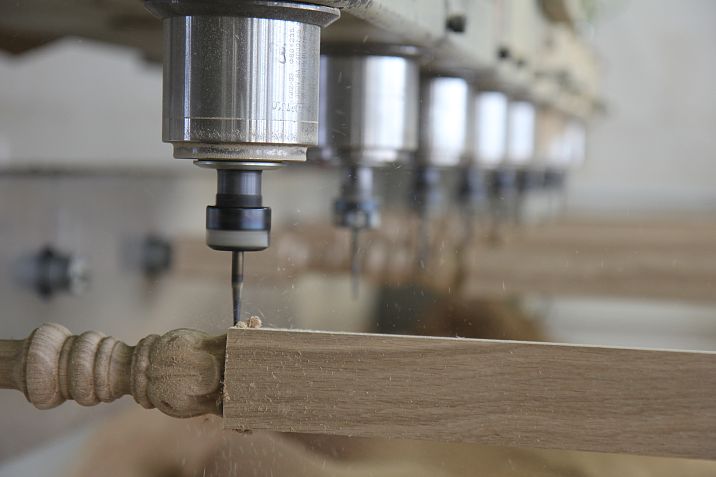
2.3 Milling and drilling machines
Milling machines are used to create complex decorative profiles, patterns, and recesses in wood. They enable precise and repeatable work, which is especially important in mass production of items.
Drilling machines are used to create holes necessary for installing fasteners, mounting decorative inserts, and other tasks.
These tools ensure high precision and stable results, allowing the creation of items with ideal parameters.
2.4 Laser cutters and engravers
Laser technologies have become revolutionary in wood processing. Laser cutters allow cutting complex patterns and shapes with maximum precision, while laser engravers apply fine decorative elements and logos.
● Laser cutting is used to create decorative panels, complex ornaments, and custom designs.
● Laser engraving allows precisely applying patterns, text elements, and artistic motifs, making each item unique.
For additional information about modern laser technologies, visitSTAVROS website.
3. Mechanized tools
Mechanized tools combine the advantages of manual labor and advanced technologies, ensuring high productivity and precision.
3.1 Automated processing lines
Automated lines are used in large-scale production facilities for processing wood in large volumes. They include combined systems capable of performing cutting, planing, sanding, milling, and finishing on a single conveyor.
● Such lines allow reducing time costs and ensuring stable product quality.
● Automation minimizes the influence of human factors and reduces the likelihood of errors, which is especially important in mass production of items.
3.2 Robotic systems
Robotic systems are increasingly used in woodworking to perform complex and repetitive operations. Robots can perform precise movements, ensuring the highest level of detail and stable operation.
● They are used for cutting, sanding, applying coatings, and even assembling items.
● Integration of robotics allows creating products that meet the highest standards of quality and precision.
4. Special tools and measuring instruments
Special measuring and precision tools are used to ensure accuracy and quality control during wood processing.
4.1 Rulers, straightedges, and protractors
These tools are the primary means for measuring and controlling the accuracy of processing.
● Rulers and straightedges allow precise measurement of the length, width, and height of blanks.
● Protractors and angle gauges are used to check angles and ensure the geometry of the product.
4.2 Gauges and micrometers
Gauges and micrometers are used to measure the smallest deviations in size and thickness of wood. They allow controlling the accuracy of processing and ensuring that products meet specified parameters. Such tools are especially important when manufacturing parts that require high precision and repeatability.
4.3 Precision measuring instruments
Modern digital measuring instruments, such as laser measuring systems and digital micrometers, allow achieving even greater accuracy and controlling product quality at every stage of production. These devices are integrated with computer systems for automatic data collection and control of processing parameters.
Design and ergonomics of woodworking tools
Ergonomics and ease of use
Woodworking tools must be not only functional but also easy to use. Ergonomic design reduces fatigue, improves work accuracy, and contributes to the safety of the craftsman.
● Hand tools are designed with consideration for hand shape, weight distribution, and ease of grip, to minimize load on muscles and joints.
● Power tools and mechanical devices are often equipped with additional safety systems, vibration dampers, and adjustable handles, making their use more comfortable and safe.
Appearance and aesthetics of tools
Do not underestimate the importance of the appearance of tools. Modern manufacturers strive to create not only functional but also aesthetically pleasing devices. This is especially relevant for professional craftsmen, for whom the tool is an extension of the creative process.
● Use of high-quality materials, stylish design, and attention to detail allow tools not only to perform their primary function but also to please the eye.
● Many brands strive for their tools to become symbols of quality and innovation in woodworking, positively impacting the company's image.
Combining traditions and innovations
One of the features of modern woodworking tools is the skillful combination of traditional craft methods with innovative technologies.
● Hand tools made with modern materials such as high-strength steels and composites preserve the spirit of tradition while offering increased durability and longevity.
● Power tools and automated systems integrate the latest achievements in digital technology, ensuring high precision and stable work quality.
This combination allows craftsmen to work with maximum efficiency, maintaining respect for centuries-old craft traditions while opening new horizons for creativity.
Ecological and economic aspects of tool usage
Ecological and sustainable production
In today's world, ecological responsibility has become one of the key factors when choosing tools and technologies. Manufacturers increasingly focus on environmentally friendly materials and energy-efficient technologies.
● Use of recycled materials and eco-friendly coatings reduces negative impact on the environment.
● Energy-efficient equipment and automated lines help reduce energy consumption, positively affecting the company's economy and contributing to sustainable development.
Ecologically clean tools and working methods also attract consumers who value naturalness and product safety, becoming an important competitive advantage.
Economic efficiency of modern technologies
Modern woodworking technologies allow significantly reducing time and effort expenditures, increasing productivity, and ensuring consistent product quality.
● Automation and robotization of processes allow minimizing human factors, reducing the likelihood of errors and improving processing accuracy.
● Investments in modern tools pay off through increased production volumes and expanded product range, contributing to sales growth and strengthening market position.
Economic efficiency is closely linked to the quality of tools used. Properly selected equipment allows optimizing production processes, reducing the cost of products, and ensuring their competitiveness in the market.
Practical Recommendations for Choosing and Operating Woodworking Tools
Choosing Tools: What to Pay Attention To
When choosing tools for woodworking, it is important to consider several key factors:
● Material Quality: Tools must be made from strong and durable materials capable of withstanding intensive use. Pay attention to the quality of steel, composites, and other materials from which the tools are made.
● Manufacturing Accuracy: Especially important for electric tools and automated systems. High accuracy ensures stable processing quality and minimizes the likelihood of errors.
● Ergonomics and Comfort: Tools should be easy to use, reducing fatigue and risk of injury. Check the comfort of handles, balance, and weight of the tool.
● Availability of Service Support: Choose brands and suppliers that provide quality service, repair options, and regular tool updates.
● Compatibility with Modern Technologies: Tools must easily integrate into modern production processes, supporting digital control and automation.
For additional recommendations and reviews of modern tools, visitSTAVROS website.
Operating and Maintenance Tips
Proper operation and regular maintenance of tools allow extending their service life and maintaining high-quality performance:
● Regular Technical Maintenance: Conduct timely technical maintenance of tools, including cleaning, lubricating moving parts, and inspecting cutting elements.
● Storage in Optimal Conditions: Tools should be stored in dry, dust-free, and temperature-stable environments to avoid corrosion and material damage.
● Use According to Instructions: Follow the manufacturer's recommendations for operation, setup, and safety. This helps avoid improper use, which may lead to malfunctions or injuries.
● Periodic Replacement of Worn Parts: Cutting elements, saw blades, abrasive belts, and other consumables should be regularly inspected and replaced as needed.
Training and professional development
To achieve the best results when working with tools, craftsmen are advised to continuously improve their skills:
● Participation in Seminars and Workshops: Learning from experienced specialists helps master new techniques and methods of work.
● Reading Specialized Literature and Online Courses: Continuous updating of knowledge will keep you informed about the latest technologies and trends in woodworking.
● Exchanging Experience with Colleagues: Attending professional forums, exhibitions, and conferences promotes experience sharing and helps find solutions for complex tasks.
Examples of Successful Application of Tools in Artistic Woodworking
Traditional Craft Workshops
Many craft workshops preserving ancient woodworking traditions demonstrate how hand tools can create true works of art. Chisels, gouges, knives, and hand saws allow artisans to create unique items with individual character. Traditional carving and inlay techniques are often complemented by modern sanding and finishing methods, making each piece unique.
Modern Production Lines
Large-scale production facilities use automated lines and robotic systems that ensure high-precision processing and consistent product quality. Modern electric tools such as circular saws, jigsaws, routers, and sanders allow faster and more efficient work. This is especially important for mass production of furniture and decorative elements, where consistency and repeatability of results play a key role.
Innovative Projects Using Digital Technologies
Modern technologies such as laser cutting, 3D modeling, and digital engraving allow creating items with incredible detail and pattern complexity. These methods enable designers to realize even the most daring ideas, combining traditional crafts with innovative approaches. Successful project examples show that integrating digital technologies with woodworking opens new horizons for creativity and allows producing products capable of competing on the international market.
Conclusion
Woodworking is a multifaceted art that combines ancient crafts, modern technologies, and creative approaches. Types of woodworking tools, from hand chisels and gouges to modern power tools and automated lines, play a key role in creating products with unique aesthetic value and high functionality.
We have reviewed the historical stages of tool development, characteristics of traditional and modern methods, as well as practical recommendations for selecting, operating, and maintaining tools. Modern craftsmen and manufacturers must be able to combine traditional crafts with innovative technologies to create products that will delight the eye, serve for many years, and meet the highest demands of the modern market.
If you aim for every wooden item to be not just interior decor, but a true work of art, pay special attention to the quality of tools and processing methods used. VisitSTAVROS website for additional information, latest technologies, and current trends in woodworking.
Let your creativity be bold, experimental, and inspiring, and let each project become a step toward creating unique items that reflect the richness of traditions and the latest achievements of modern technology. Woodworking art is a path full of discoveries, continuous growth, and refinement, where every detail matters and every tool becomes your faithful companion in this noble craft.