Article Contents:
- Introduction
- Historical Overview of Wood Processing
- Middle Ages and the Renaissance
- Industrial Revolution and Mechanization
- Digital Revolution
- Digital Revolution and Modern Technologies
- 1. Mechanical Processing
- 1.1 Cutting and Planing
- 1.2 Sanding and Milling
- 2. Chemical Processing
- 2.1 Lacquering and Painting
- 2.2 Staining and Patination
- 3. Thermal Processing
- 3.1 Thermal Treatment
- 3.2 Burning and Thermal Patination
- Laser cutting and engraving
- 3D Modeling and Digital Design
- Automation and Robotics
- Wood Carving
- Inlay
- Pyrography
- Ecological responsibility
- Economic efficiency
- Work Process Planning
- Training and Experience Exchange
- Equipment Selection and Investment in Technology
- Combining Traditions with Modern Technologies
- Work Process Optimization
- Ecological Approach
Wood processing is an ancient craft rooted in love for nature, the desire to convey its beauty through art, and the wish to create high-quality, durable items. Today, the world of wood processing unites age-old traditions with modern technologies, enabling the transformation of raw material into unique works of art, functional furniture, architectural elements, and decorative items. In this article, we will examine various types and methods of wood processing, define key concepts, discuss the history and evolution of technologies, and share practical tips and ideas for artisans, designers, and anyone interested in this noble craft. If you wish to learn more about modern trends in wood processing and find inspiration for your projects, visitSTAVROS website.


Introduction
Working with wood is not merely a technological process but a philosophy in which every crack, every pattern, and every texture has its own story. Wood processing encompasses both traditional hand methods and the latest mechanized technologies, allowing for high precision, speed, and quality. Modern specialists skillfully combine ancient crafts with digital innovations, enabling the creation of items that delight the eye, serve for many years, and reflect the individuality of their owner.
In this article, we will examine the main types of wood processing, their characteristics, and purposes. We will discuss mechanical, chemical, and thermal methods of processing, as well as pay attention to artistic wood treatments such as carving, inlay, and pyrography. Additionally, we will discuss modern innovative technologies, ecological and economic aspects of production, and provide practical recommendations for artisans and manufacturers.




Woodworking – an art rooted in ancient times. Even in the earliest periods, people used wood to create dwellings, tools, weapons, and ritual objects. The first woodworking tools were made from stone, bone, and other natural materials. Hand saws, knives, and chisels enabled primitive craftsmen to cut, plane, and carve wood, creating the first prototypes of furniture and decorative elements.
Our factory also produces:


Ancient Traditions and Crafts
Over time, woodworking techniques improved. In ancient civilizations such as Egypt, Greece, Rome, and China, artisans developed the arts of carving, painting, and inlaying, creating refined ornaments and intricate patterns that reflected the cultural traditions and beliefs of their time. These crafts were passed down from generation to generation, forming the foundation for the subsequent development of wood processing technology.
During the Middle Ages, woodworking reached its peak. Artisans created furniture, carved doors, architectural elements, and church altars, paying special attention to decorative details. Wood carving became an essential part of the interior decoration of castles and churches, while inlay techniques allowed craftsmen to embed precious materials such as mother-of-pearl, bone, and other types of wood into objects to create unique and luxurious ornaments.
Get Consultation
Middle Ages and the Renaissance
The Renaissance brought new trends to woodworking art. Artisans began using more precise methods of processing, employing improved saws and planing machines, which allowed them to achieve high accuracy and detail in carving. During this period, wood painting also developed, giving products additional aesthetic value.
With the advent of the Industrial Revolution in the 19th century, traditional hand methods of processing gave way to mechanized production. The introduction of steam and electric machines allowed for a significant increase in production volumes and a reduction in the cost of products. Mechanical saws, planers, and sanding machines made the processing process more standardized, but this also led to the problem of losing the individuality of the products.
Industrial Revolution and Mechanization
With the advent of the Industrial Revolution in the 19th century, traditional hand methods of processing gave way to mechanized production. The introduction of steam and electric machines allowed for a significant increase in production volumes and a reduction in the cost of products. Mechanical saws, planers, and sanding machines made the processing process more standardized, but this also led to the problem of losing the individuality of the products.
Nevertheless, many masters continued to apply traditional craftsmanship, combining it with new technologies to create exclusive products. This marked a new stage in the development of woodworking, where both mass production and the uniqueness of each item were valued.
Digital Revolution and Modern Technologies
A true revolution in wood processing occurred with the advent of digital technologies. Modern CAD systems, 3D modeling, laser cutting, and automated production lines have fundamentally changed the approach to working with wood. Now, masters can create virtual models of products, test various design options, and optimize structures even before production begins.
Digital technologies allow achieving unprecedented precision, complex patterns, and detailed refinement of every detail. Thanks to this, traditional processing methods such as carving and inlaying can be supplemented with modern technologies, opening up boundless creative possibilities. Today, masters are able to realize even the most daring design ideas, combining age-old traditions with innovative solutions.
For additional information on modern wood processing technologies and innovative solutions, we recommend visiting STAVROS website.
Main types of wood processing
Wood processing encompasses a wide range of technologies, each with its own characteristics and applied depending on the final goal and material properties. Below are the main types of wood processing.
1. Mechanical Processing
Mechanical processing includes physical alteration of the shape and dimensions of wood using various machines and tools. This type of processing is a basic stage for preparing blanks for further processing and finishing.
1.1 Cutting and Planing
Cutting is the primary stage of processing, during which wood is sawn into blanks of the required size. There are several types of saws:
● Circular saws – use a round disc for fast and even cutting.
● Band saws – allow for both straight and curved cuts, which is especially important when working with large blanks.
● Jigsaw saws – used for rough processing and dismantling.
Planing is the process of leveling wood surfaces, allowing for smooth and even blanks. Planing machines, both stationary and portable, help remove excess material, correct irregularities, and prepare the wood for further processing.
Tips:
● When selecting cutting equipment, pay attention to motor power, type, and quality of the saw blade.
● Regularly inspect and maintain cutting elements to maintain high cutting quality.
● Use planing machines to achieve perfectly even surfaces, especially if the item is intended for further finishing.
1.2 Sanding and Milling
Sanding is a necessary stage for creating a smooth and even wood surface. This process removes minor defects and prepares the material for applying finishing coatings.
● Belt sanders provide even sanding of large areas.
● Rotary sanders are used for processing complex and curved surfaces.
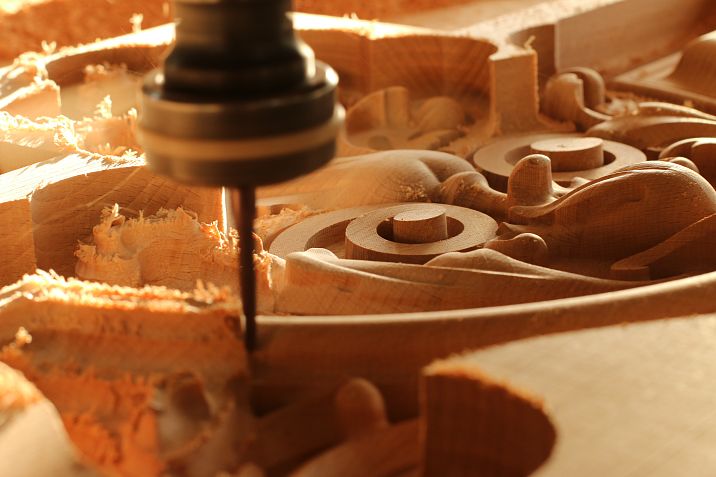
Milling is a process aimed at creating decorative profiles, grooves, and complex patterns on the wood surface. Milling machines allow achieving high precision and repeatability of patterns, which is especially important for manufacturing furniture facades and decorative panels.
Tips:
● Use sanders with adjustable speed to achieve optimal results.
● Milling is ideal for creating decorative elements, so experiment with different attachments and cutting angles.
● Keep equipment clean to avoid dust and debris on the work surface.
2. Chemical Processing
Chemical processing involves applying various compositions to protect wood, change its color, or impart a special texture. This type of processing not only improves the appearance of products but also significantly increases their durability.
2.1 Lacquering and Painting
Lacquering is the application of a protective and decorative coating that highlights the natural wood texture and protects it from moisture, ultraviolet rays, and mechanical damage.
● Modern lacquers can be solvent-based or water-based, allowing you to choose the optimal option depending on the purpose of the item.
Staining is a process that allows changing the color of wood, creating a depth effect, and highlighting decorative elements.
● Water-based or alkyd paints are used for staining, providing even coverage and high resistance to fading.
Tips:
● Before applying varnish or paint, it is important to properly prepare the surface—sand and clean it.
● Use eco-friendly compounds to preserve the naturalness of the material and minimize harmful impact on the environment.
● To achieve an ideal result, apply multiple layers of coating with intermediate sanding.
2.2 Staining and Patination
Staining is a process of treating wood with compounds that penetrate its structure, altering the tone and emphasizing the texture. Staining helps create an "aged" effect or, conversely, vividly highlight the natural tones of the wood.
Patination is a technology that allows wood to appear as an antique item. Using special compounds, you can achieve an aged effect, give the wood a vintage charm, or, conversely, make it more modern and stylish.
Tips:
● Experiment with different staining compounds to find the optimal shade for a specific project.
● When patinating, it is important to control the duration of compound exposure on the wood surface to avoid excessive color change.
● Use patination to create unique decorative effects that highlight the individuality of the item.
3. Thermal Treatment
Thermal treatment allows changing the physical and chemical properties of wood, increasing its strength and resistance to external influences, as well as giving it a distinctive aesthetic appearance.
3.1 Thermal Treatment
Thermal treatment is a process of heating wood to certain temperatures followed by cooling. This technology improves the mechanical properties of the material, makes it less susceptible to moisture, and increases the durability of products.
Tips:
● Use thermal treatment for creating items intended for use in harsh climatic conditions.
● Control the temperature regime to avoid overheating and damage to the wood.
● Thermal treatment can also be used to create decorative effects, for example, changing the material's tone.
3.2 Burning and Thermal Patination
Burning is a method in which the wood surface is subjected to controlled exposure to high temperatures, creating characteristic textured patterns and tones. This method allows achieving an aged effect, emphasizing the natural wood structure, and creating unique decorative elements.
Tips:
● Burning is used to create items with a unique vintage appearance, so experiment with the duration and temperature of exposure.
● Use burning in combination with other finishing methods to achieve a more complex decorative effect.
● Burning combines well with staining and varnishing, allowing to create a harmonious and expressive finish.
Modern innovative wood processing technologies
Laser cutting and engraving
Laser technology has opened a new era in artistic wood processing.
● Laser cutting allows cutting complex patterns and shapes with high precision.
● Laser engraving is used for applying fine decorative elements, logos, and custom designs, making each item unique.
Ideas and Tips:
● Use laser technologies to create decorative panels and exclusive details.
● Integrate laser engraving into furniture manufacturing projects to achieve a modern and stylish look for the items.
● For additional information on modern wood processing technologies, visitSTAVROS website.
3D modeling and digital design
Digital technologies allow creating virtual models of products, significantly simplifying the design and optimization processes.
● 3D modeling enables testing various design options before starting production.
● Digital design allows precisely calculating dimensions, shapes, and other parameters, enhancing the accuracy and quality of the final product.
Ideas and Tips:
● Use 3D modeling to develop complex structures and unique decorative elements.
● Modern CAD systems allow easily modifying projects to adapt them to the client's individual requirements.
● Integrate digital technologies with traditional craftsmanship to combine age-old traditions with innovative solutions.
Automation and robotics
Modern automated lines and robotic systems significantly speed up and simplify wood processing procedures.
● Automated lines include machines capable of performing cutting, planing, sanding, and milling on a single conveyor.
● Robotic systems are used to perform repetitive operations with high precision, which is especially important in mass production.
Ideas and Tips:
● Invest in automated equipment to increase productivity and ensure consistent quality.
● Use robotic systems to perform complex and labor-intensive operations to reduce the influence of human factors.
● Automation helps optimize production processes and reduce the time required to manufacture items.
Design and artistic woodwork
Wood carving
Wood carving is one of the oldest and most expressive methods of artistic processing.
● Carving allows creating complex ornaments, patterns, and sculptural elements that give products a unique character.
● Traditional carving techniques are passed down from generation to generation, preserving the richness of cultural heritage.
Tips and Ideas:
● For creating fine details, use high-quality chisels and gouges that ensure maximum precision.
● Experiment with various styles and motifs, drawing inspiration from historical samples and modern trends.
● Combine hand carving with modern processing methods, such as laser engraving, to achieve unique effects.
Inlay
Inlay is a technique allowing decorative materials (other wood species, stones, mother-of-pearl, metals) to be inserted into wood, creating bright and contrasting patterns.
● This technique requires high precision and attention to detail, as each insert must fit perfectly into the shape and size of the recess.
● Inlay gives the item an exclusive appearance and highlights its artistic value.
Tips and Ideas:
● Select inlay materials so they harmoniously complement the base material.
● Use modern technologies, such as laser cutting, to create ideal recesses and achieve maximum precision.
● Experiment with combinations of different materials to create unique decorative solutions.
Pyrography
Pyrography (wood burning) is a technique in which a design or pattern is created by heating the surface of wood using a special tool or laser.
● Pyrography allows achieving remarkable effects: from fine lines and patterns to deep relief designs that mimic aging and patina.
● This technique highlights the natural wood texture, creating artworks with a "vintage" effect.
Tips and Ideas:
● Control temperature and exposure time to avoid damaging the wood.
● Experiment with different pyrography styles, combining traditional motifs with modern artistic trends.
● Use pyrography to create personalized items with unique patterns and inscriptions.
Ecological and economic aspects of wood processing
Ecological responsibility
In modern ecology, using natural wood and eco-friendly processing methods has become an important competitive advantage.
● Natural wood is a renewable resource, and its use does not harm the environment when sustainable forestry practices are followed.
● Eco-friendly processing methods, such as using water-based paints, natural oils, and biodegradable varnishes, help preserve the natural beauty of wood and minimize negative environmental impact.
Tips:
● Prefer environmentally clean processing methods when selecting technologies.
● Collaborate with suppliers who adhere to sustainable forestry principles.
● Use eco-friendly materials for finishing and protecting wood to create products meeting modern environmental safety standards.
Economic Efficiency
Modern wood processing technologies allow significantly reducing production costs, optimizing processes, and improving product quality.
● Automation and robotics reduce human factor influence, decreasing error likelihood and increasing processing accuracy.
● Digital design reduces development and preparation time for products, making production more flexible and efficient.
Tips:
● Invest in modern equipment to increase productivity and reduce costs.
● Optimize working processes using automated lines and digital quality control systems.
● Stay updated on new technologies and innovative solutions to remain competitive in the market.
Practical recommendations for craftsmen and manufacturers
Work process planning
Proper organization of the workspace and planning of wood processing procedures are key to successful production.
● Create a comfortable and functional workspace: Arrange tools and equipment so they are easily accessible and in good condition.
● Develop a work schedule: Plan each stage of work, from raw material preparation to final finishing, to ensure consistent quality and reduce production time.
● Control quality at every stage: Use measuring instruments and digital control systems to verify processing accuracy.
Training and experience exchange
Continuous skill improvement and exchanging experience with colleagues are key factors of success in woodworking.
● Attend master classes and seminars: Learn from experienced craftsmen, study new technologies and working methods.
● Read specialized literature and online courses: Continuous knowledge updating will keep you informed about the latest industry trends.
● Participate in professional forums and exhibitions: Communication with colleagues and experience exchange contribute to developing creative potential and finding innovative solutions.
Equipment selection and technology investment
Efficient production is impossible without proper selection of tools and equipment.
● Analyze the market: Study equipment reviews and tests to select optimal models matching your requirements.
● Invest in innovative technologies: Modern CNC machines, laser cutters, and 3D modeling allow improving quality and productivity.
Maintain equipment: Regular technical maintenance and timely replacement of consumables will help preserve high-quality performance and extend the lifespan of machinery.
Ideas for creativity and process optimization
Combining traditions with modern technologies
Modern masters successfully combine classical craftsmanship methods with the latest technological solutions, enabling the creation of items with unique design and high precision.
● Blend manual methods and automation: Use manual tools for fine decorative finishing, and machine tools for preparation and sanding.
● Experiment with digital design: Use 3D modeling to create unique patterns and optimize product construction.
● Implement innovative finishing methods: Apply laser engraving and digital cutting to create complex decorative elements.
Process optimization
Work efficiency directly depends on the organization of the workflow.
● Automate routine operations: Use automated lines for mass production to reduce the likelihood of errors and increase processing accuracy.
● Invest in software: Modern CAD systems and digital tools will help optimize design and reduce preparation time for products.
● Create a quality control system: Implement digital measuring devices and monitoring systems to track product parameters at every stage of production and promptly adjust processes.
Ecological approach
Environmental responsibility is becoming an increasingly important aspect of modern woodworking.
● Use eco-friendly materials and coatings: Choose natural oils, water-based paints, and biodegradable varnishes to preserve the natural beauty of wood and minimize negative impact on the environment.
● Adhere to sustainable forestry principles: Work with suppliers who follow responsible forest management principles to ensure the sustainability and long-term use of wood.
● Develop eco-friendly technologies: Implement energy-efficient equipment and waste recycling methods to reduce costs and improve brand image.
Conclusion
Types and methods of wood processing — this is a multifaceted topic covering both ancient crafts and modern technological innovations. From cutting and planing to laser cutting, from traditional carving to digital modeling — each technology and method of processing holds the potential to create unique, high-quality, and durable products.
Artistic and technical wood processing require not only professional skills but also a creative approach, continuous learning, and a pursuit of perfection. The tools, equipment, and technologies used in woodworking are constantly improving, opening new horizons for craftsmen and designers.
If you want your wooden products to stand out not only for high quality but also for originality, pay attention to modern technologies, experiment with finishing methods, and don't be afraid to combine traditional crafts with innovative solutions. Remember, every detail matters, and it is precisely this detail that determines the success of your project.
For additional information, ideas, and inspiration, as well as to acquaint yourself with the latest innovations in woodworking, we recommend visitingSTAVROS website.