Article Contents:
- Introduction: The significance of natural wood in design
- 1. Wooden Baseboards
- Historical aspect and functional purpose
- Manufacturing technology and materials
- Application in Interior Design
- Maintenance and Durability
- Functional and aesthetic value
- History and development of crown molding design
- Manufacturing technology and material characteristics
- Application in Interior Design
- Practical care recommendations
- Significance of boards in construction and design
- Manufacturing technology and processing characteristics
- Application in Interior Design
- Advantages and care
- Functional purpose of angles
- Design possibilities and execution variants
- Manufacturing technology and application
- Care recommendations
- Purpose and functional capabilities of planks
- Manufacturing technology and processing
- Application in Interior Design
- Advantages and care recommendations
- Role of moldings in interior decoration
- Historical overview and modern trends
- Manufacturing technology and processing characteristics
- Application in Interior Design
- Care and recommendations
- Practical Aspects of Application
- Ecological and aesthetic value
- Modern trends and innovative solutions
- Care recommendations
- Final Thoughts
- Trends in Design and Architecture
- Innovative Technologies and Their Impact
- Ecological Advantages and Sustainable Development
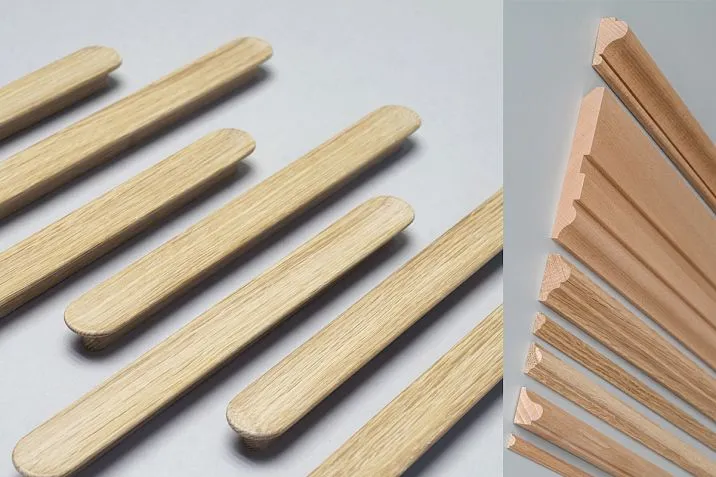
Wood has remained one of the most sought-after materials in interior and exterior design for centuries. Its natural beauty, warmth, and eco-friendliness make it indispensable for both classic and modern design solutions. In this article, we will thoroughly examine the types of wooden materials used for finishing spaces and creating architectural accents. We will pay special attention to the following elements:
Each of these elements performs both functional and decorative tasks, allowing you to create interiors filled with natural beauty, coziness, and harmony. In this article, we will discuss the historical aspect, manufacturing technology, current trends, practical recommendations for application and maintenance of each element. The article contains more than 3000 words to ensure you gain a comprehensive understanding of how to use wooden materials in interior design.


Introduction: The Significance of Natural Wood in Design
Natural wood has always symbolized warmth, reliability, and a connection to nature. Wood possesses unique characteristics — texture, shades, natural patterns — that cannot be replicated with artificial materials. In the last decade, there has been a growing interest in eco-friendly materials, and wood has once again taken center stage due to its naturalness, durability, and aesthetic appeal.
Below, we will examine each of these types of wooden materials in detail, focusing on their functional purpose, manufacturing characteristics, application in interior design, and maintenance recommendations.
Below, we will examine each of these types of wooden materials in detail, focusing on their functional purpose, manufacturing characteristics, application in interior design, and care recommendations.




1. Wooden skirting boards
Our factory also produces:


Historical Aspect and Functional Purpose
Wooden skirting boards are one of the oldest elements of interior finishing. From the very beginning of house construction, skirting boards were used to protect the lower part of walls from mechanical damage, conceal gaps between the floor and the wall, and create an aesthetically finished look of the room. Historically, skirting boards played an important role in architecture, emphasizing the style of the building and its internal harmony.
Modern skirting boards made of natural wood preserve traditions of the past but also receive new design solutions. They can have various profiles — from classic carved to ultra-modern minimalist variants. The use of skirting boards is not limited to protective functions: they help visually "complete" the space, making the transition between the wall and the floor smooth and neat.
Get Consultation
The technology of manufacturing skirting boards begins with careful selection of wood. Most often, hardwoods such as oak, beech, ash, or walnut are used, thanks to their strength and distinctive texture. After selecting the wood, the material undergoes drying, sanding, and treatment with antiseptics to protect it from moisture, insects, and fungi. Modern technologies allow for the creation of skirting boards with high precision, which is especially important when installing on uneven surfaces.
The production of skirting boards begins with careful selection of wood. Hardwood species such as oak, beech, ash, or walnut are most commonly used due to their strength and distinctive texture. After selection, the material undergoes drying, sanding, and treatment with antiseptics to protect it from moisture, insects, and fungi. Modern technologies allow for the creation of skirting boards with high precision, which is especially important when installing on uneven surfaces.
Wooden skirting boards can be made as single pieces or consist of several parts, allowing them to be easily adapted to the features of the room. The variety of profiles and textures allows you to choose an item perfectly suited to the interior concept.
Application in Interior Design
Skirting boards also often serve practical purposes: they conceal technological seams, protect walls from damage, and facilitate cleaning. Due to their versatility,
Skirting boards are also often used to solve practical tasks: they conceal joints, protect walls from damage, and facilitate cleaning. Thanks to their versatility,Wooden skirting boards they become an indispensable element in both residential and commercial spaces.
Care and Longevity
To ensure skirting boards retain their original appearance for many years, it is recommended to regularly clean them with a soft cloth, avoiding aggressive chemical agents. Periodic treatment with varnish or oil helps protect the wood surface and preserve its natural texture. With proper care, wooden skirting boards can last for decades, remaining unchanged in their beauty.
2. Wooden Cornices
Functional and Aesthetic Value
Wooden cornices are decorative elements traditionally used to finish window and ceiling structures. Their main task is to conceal seams between the wall and ceiling, create an effect of lightness and airiness, and provide mounting for decorative elements such as valances, draperies, or fabric blinds.
Historically, wooden cornices were used in palace and country house interiors, where they served not only decorative but also symbolic functions. Rich carving, inlay, and use of precious wood species made cornices true works of art. In modern design, cornices continue to play an important role — they become the finishing touch that ties the entire room composition together.
they are universally applicable. In classical interiors, they are often adorned with elegant carving, giving the room an aristocratic and elegant feel. In modern minimalist solutions, preference is given to simple, clean lines that harmoniously blend with other decorative elements. Skirting boards help visually expand the space, creating an effect of higher ceilings and interior unity.
As with skirting boards, high-quality wood species are selected for manufacturing cornices. Special attention is paid to surface treatment: careful sanding, application of protective compounds, and lacquer coatings allow achieving perfect smoothness and longevity of the product. Cornices can be made from solid wood or composite materials, which allows reducing cost without compromising quality or appearance.
are versatile in application. In classic interiors, they are often adorned with elegant carving, giving the room an aristocratic and elegant feel. In modern minimalist solutions, preference is given to simple, clean lines that harmoniously blend with other decorative elements. Cornices help visually expand the space, creating an effect of ceiling height and interior unity.
Application in Interior Design
Wooden beams Versatile in their application. In classic interiors, they are often adorned with elegant carving, which gives the room an aristocratic and elegant feel. In modern minimalist solutions, preference is given to simple, clean lines that harmoniously blend with other decorative elements. Cornices help visually expand the space, creating an effect of higher ceilings and interior unity.
For maintaining the aesthetic appearance of cornices, it is necessary to periodically clean them from dust and dirt using a dry or slightly damp cloth. Special wood protection compounds will help preserve color saturation and prevent scratches. Thanks to proper use,
they remain visually appealing and durable over time.Wooden beams can serve for many years, remaining unchanged in their beauty and functionality.
3. Wooden Lumber
Significance of Lumber in Construction and Design
Wooden lumber are universal elements used both in structural solutions and in decorative interior finishes. They serve as the basis for creating frames, casings, moldings, and other structural elements, and are also used to form decorative inserts and surface finishes.
Technology of Manufacturing and Processing Features
Lumber is made from high-quality solid wood, ensuring its strength and resistance to mechanical loads. Before use, the wood undergoes drying, sanding, and treatment with antiseptic agents, ensuring the longevity of the product. Thanks to modern processing technologies, lumber can have an ideal geometry and smooth surface, which is especially important when used in decorative elements.
Application in Interior Design
in InteriorsWooden planks find wide application. They can serve as a basis for manufacturing furniture, picture frames, casings around windows and doors, and are also used to create decorative wall panels. Due to their versatility, lumber allows for the realization of the most daring design ideas and creates elements that highlight the individuality of the interior.
Advantages and Care
The main advantages of lumber are their high strength, natural texture, and the ability to create complex decorative patterns. To care for lumber, it is sufficient to periodically wipe them with a soft cloth, and when necessary, use wood protection products. Such care helps preserve the original appearance of the material and extend its service life.
4. Wooden Angles
Functional Purpose of Angles
Wooden angles play a key role in connecting and reinforcing structural elements. They are used to protect corner joints, preventing cracks and deformations. In addition, angles perform an important decorative function—they can complete the appearance of an item, emphasize its style, and give it a finished look.
Design Possibilities and Execution Variants
Angles can be made in various styles. In classic interiors, they are often adorned with carved elements, giving the structures a particular elegance and charm. In modern minimalist solutions, preference is given to smooth, minimalist forms, where emphasis is placed on the simplicity of lines and the purity of design. Thanks to the variety of execution variants,Wooden angles can be selected almost for any interior style.
Technology of Manufacturing and Application
During the manufacturing of angles, special attention is paid to the quality of connections and precision of material processing. Modern technologies allow creating angles with perfect geometry, ensuring their strength and longevity. They are widely used in furniture production, wall, door, and window frame finishing. Proper application of angles not only improves the structural characteristics of the item but also adds decorative flair.
Care recommendations
Like other items made of natural wood, angles require careful care. It is recommended to clean them with a soft dry cloth and periodically treat them with special wood protection products. This helps preserve the natural texture and richness of color, as well as extend the service life of the angles.
5. Wooden Planks
Purpose and Functional Capabilities of Planks
Wooden rails are thin strips of wood used for wall cladding, creating decorative panels and structural elements. They can be used as standalone decorative elements or as part of more complex compositions, where even load distribution and visual accents are important.
Technology of Manufacturing and Processing
Planks are manufactured with special attention to detail. Modern processing methods allow achieving perfect smoothness and dimensional accuracy. Sanding, polishing, and applying protective coatings make planks not only aesthetically appealing but also resistant to external influences. High processing accuracy ensures that planks easily integrate into interior structural elements while retaining their decorative qualities.
Application in Interior Design
in InteriorsWooden rails are used to create striking decorative inserts, wall finishes, frames, and partitions. They allow achieving multi-layered compositional solutions, adding depth and dynamism to the room's design. Planks can be combined with other elements—baseboards, cornices, and moldings—to create a unified harmonious space.
Advantages and Care Recommendations
The main advantage of planks lies in their versatility and adaptability to any design concept. To care for planks, it is sufficient to regularly clean them from dust using a soft cloth. When necessary, it is recommended to treat them with special wood protection products, which helps preserve the natural texture and extend the service life of the item.
6. Wooden Moldings
Role of Moldings in Interior Design
Wooden moldings are decorative elements that add elegance and completeness to a space. They are used to finish walls, ceilings, furniture, and other structural elements. Moldings can add depth, volume, and elegance to an interior, transforming even the simplest solutions into true design masterpieces.
Historical Overview and Modern Trends
In historical architecture, moldings have always played an important role. They adorned palaces, churches, and country houses, becoming a symbol of luxury and high status. Modern moldings combine traditional motifs with the latest design solutions, allowing them to remain relevant and in demand in any interior. From rich carving to minimalist lines — wooden moldings can satisfy the most diverse aesthetic preferences.
Technology of Manufacturing and Processing Features
The production of moldings begins with careful selection of wood. Then the material undergoes drying, sanding, and treatment, ensuring its ideal smoothness and durability. The use of modern technologies allows for the creation of moldings with high levels of detail and various profiles, making them universally suitable for use in different interior styles.
Application in Interior Design
Wooden moldings They are used for finishing joints between walls and ceilings, creating decorative inserts in furniture, and for decorating doors and windows. Their use helps create a unified composition, where each element emphasizes the overall style and character of the room. Moldings can serve as independent decorative elements or harmoniously complement other items made of natural wood.
Care and Recommendations
To maintain the appearance of moldings, it is recommended to regularly clean them with a soft cloth and periodically treat them with special compositions to protect the wood. This helps preserve the color saturation and natural texture of the material, extending the lifespan of the item.
Conclusion: The Full Use of Wooden Materials in Interior Design
Modern interiors require a harmonious combination of functionality, aesthetics, and ecological safety. Natural wood in the form ofwooden baseboards, wooden cornices, wooden beams, wooden corners, wooden planks andwooden moldings is an ideal solution for creating a warm, cozy, and harmonious space. Each element performs its function — from protecting surfaces and creating clear lines to adding refined decorative accents.
Practical Aspects of Application
When selecting wooden materials, it is important to consider not only the aesthetic aspect but also practical aspects of use. For example, skirting boards help conceal joints and protect walls from damage, moldings create a smooth transition between ceilings and walls, while planks and moldings emphasize structural features and give the interior a finished look. Planks and angles, in turn, ensure the reliability of structures and help form a stable foundation for further design solutions.
Ecological and Aesthetic Value
Natural wood is a material with indisputable ecological advantages. It is not only a renewable resource but also creates a favorable microclimate in the room, helping regulate humidity and temperature. The natural texture, warm tones, and unique patterns of wood give the interior a distinctive character and allow you to create an atmosphere where every detail speaks of refined taste and care for the health of the inhabitants.
Modern Trends and Innovative Solutions
Modern wood processing technologies allow not only to preserve traditional methods but also to introduce innovative solutions into design. This enables the creation of items with high levels of detail, perfectly suited for any interior — from classical to ultra-modern. The ability to combine various wooden elements, such as skirting boards, moldings, planks, and moldings, allows designers to create unique compositions that highlight the individuality of each space.
Care recommendations
To ensure wooden items retain their original beauty and functionality for many years, it is necessary to follow care rules. Regular dust cleaning, treatment with special protective compositions, timely polishing — all these measures help preserve the natural wood texture and extend the lifespan of the items. Such care does not require significant effort but significantly affects the longevity and appearance of wooden elements.
Final Thoughts
In the end, using wooden materials in interior design is not just a fashionable trend, but a conscious choice in favor of ecology, aesthetics, and durability. Each element — whetherWooden skirting boards, Wooden beams, wooden planks, Wooden angles, Wooden rails orWooden moldings— contributes to creating an interior that reflects individuality, respect for traditions, and a pursuit of perfection. Natural wood is capable of combining practicality and beauty, creating a space where every detail speaks of your commitment to quality.
A modern designer, relying on a rich arsenal of wooden materials, has the opportunity to realize the most daring projects, where functionality and aesthetics go hand in hand. Integrating elements made of natural wood into the overall interior concept allows achieving a harmonious blend of tradition and innovation, transforming any space into a work of art.
Prospects and Future of Wooden Materials
Design and Architecture Trends
With the development of ecological awareness and the desire to create healthy living spaces, natural wood is becoming an increasingly popular material for interior finishes. In the future, we can expect further integration of innovative technologies in wood processing, enabling the creation of even more refined and functional items. Modern trends focus on minimalism, naturalness, and ecological safety, making wooden elements indispensable in decorating both residential and commercial spaces.
Innovative Technologies and Their Impact
The development of digital technologies and computer modeling enables designers to create complex architectural forms and decorative elements from natural wood. Modern CNC machines allow achieving the highest precision in manufacturing, expanding creative possibilities and enabling the realization of non-standard projects. Such technologies allow using wood not only in its traditional form but also in combination with other materials, creating unique hybrid constructions.
Ecological advantages and sustainable development
Natural wood is a renewable resource, making it attractive from the standpoint of sustainable development. The use of wooden materials contributes to reducing environmental impact and creates a favorable microclimate indoors. This is especially important given the growing attention to ecological issues and occupant health. Modern technologies allow maximizing the potential of wood, minimizing waste, and improving the energy efficiency of production processes.
Conclusion
The use of wooden materials in interior design is not only a nod to tradition but also a modern solution that combines ecological properties, aesthetic expressiveness, and functionality. Each element, whetherWooden skirting boards, Wooden beams, Wooden planks, Wooden angles, Wooden rails orWooden moldings, contributes its unique note to the overall spatial composition. With proper selection and care, wooden items serve for decades, remaining true to their original appearance and providing a sense of warmth and coziness.
We have reviewed the history, manufacturing technology, modern trends, practical recommendations for application and maintenance of each type of wooden material. This information will help you make an informed choice when creating an interior based on natural materials. Thanks to the variety of options, wood allows you to realize any design ideas — from classic to ultra-modern.
In the context of striving for ecologically clean and healthy living spaces, natural wood becomes not just a finishing material, but a true artistic element capable of transforming any room and giving it individuality. May each element — from baseboards to molding — become a reflection of your love for quality, traditions, and modern design.
Thus, wooden materials represent a universal solution capable of combining functionality and aesthetic expressiveness. They give interiors a natural charm, creating an atmosphere of coziness, warmth, and harmony. Modern processing technologies and innovative design solutions open up boundless creative possibilities, allowing even the simplest structures to become works of art.
May the choice of wooden materials become your source of inspiration, and each item — a small masterpiece that will delight the eye and provide warmth for many years.