Article Contents:
- History of Half Columns: From Ancient Temples to Modern Apartments
- Birth of Architectural Perfection
- Evolution Through Eras
- Modern Interpretation of Classic Design
- Anatomy of Perfection: What Makes Up a Half Column
- Structural Elements
- Orders of Half Columns
- Materials for Half Columns: From Classic to Innovations
- Traditional Materials
- Modern solutions
- Functional Aesthetics: The Role of Half Columns in Modern Interiors
- Architectural Zoning
- Concealing Structural Elements
- Adjusting Room Proportions
- Creating a Stylistic Foundation
- Half Columns in Different Rooms: Specific Applications
- Grand Hall and Foyer
- Living Room: Center of Composition
- Bedroom: Intimacy and Elegance
- Kitchen and Dining Room: Functionality and Style
- Bathroom: Luxury of Water Procedures
- Stylistic Solutions: Half Columns in Different Interior Styles
- Classic and neoclassic: eternal elegance
- Art Deco: Geometric Luxury
- Minimalism: Concise Expressiveness
- Eclecticism: Creative Synthesis
- Loft and Industrial Style: Unexpected Context
- Practical Aspects: Selection, Installation, and Maintenance
- How to Choose Ideal Half Columns
- Installing Half Columns: Professional Approach
- Care and restoration
- Designer Tricks: How to Maximize the Effectiveness of Half Columns
- Playing with Light
- Color solutions
- Combining with Other Architectural Elements
- Non-Standard Solutions
- Conclusion: Timeless Elegance of Vertical Accents

In the world of interior design, there are elements capable of transforming an ordinary space into a work of art. Among such architectural gems, special attention is given to half columns in interiorThese majestic vertical accents do more than just decorate the space—they tell a story, set the mood, and shape the unique character of the room. Today, we will dive into the amazing world of architectural decoration and reveal all aspects of using half-columns in modern and classical design.

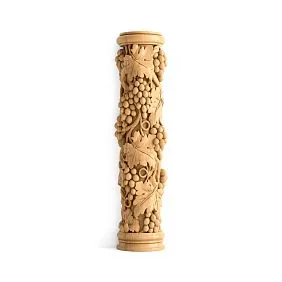
History of half-columns: from ancient temples to modern apartments




Birth of architectural perfection
Half-columns are not merely a fashion trend or random decorative element. Their history spans millennia, tracing back to ancient architecture of ancient Greece and Rome. Initially, these elements served not only decorative but also crucial structural functions—they acted as supports for heavy ceilings and arches. Half-columns were columns partially embedded in walls, allowing space-saving while preserving the visual power and grandeur of full columns.
In ancient Greek temples, half-columns were often used in interior spaces where space was limited. The Romans developed this idea, applying half-columns in public buildings, baths, and villas of the nobility. They were the first to actively use this element as a means of zoning space and creating architectural rhythm within interiors.
Our factory also produces:


Evolution through epochs
Over time half columns in interior underwent significant changes, adapting to the aesthetic preferences of various eras:
- Middle Ages: half-columns became more slender and elongated, often adorned with carvings featuring religious motifs
- Renaissance: returned to classical proportions, enriched with complex capitals and bases
- Baroque and Rococo: became ornate and intricate, often gilded and decorated with ornamental moldings
- Classicism: returned to the strictness of forms and purity of lines
- Modernism: acquired smooth, organic outlines and botanical decoration
Each era brought its own understanding of beauty to this architectural element, but one thing remained unchanged—half-columns have always been a symbol of status, taste, and nobility.
Get Consultation
Modern interpretation of classicism
In the 21st century half columns in interior they are experiencing a true renaissance. Designers are rediscovering this classical element, adapting it to modern spaces and styles. Today, half-columns are not only an attribute of classical interiors but also an unexpected accent in minimalism, loft, or Scandinavian styles.
Modern production technologies allow creating half-columns from the most diverse materials—from traditional marble and wood to innovative polyurethane, glass, and even composite materials. This opens boundless opportunities for experimenting with shape, texture, and color.
Anatomy of perfection: what makes up a half-column
Structural elements
To truly appreciate the beauty and functionality of half-columns, it is necessary to understand their anatomy. A classical half-column consists of three main parts:
- Base (plinth) – the lower part serving as support for the entire structure. Often has a widening toward the bottom and decorative profiles.
- Shaft (fust) – the central, longest part of the half-column. Can be smooth or fluted (with vertical grooves), cylindrical or conical, tapering toward the top.
- Capital – the topmost part, most decorative and expressive. The capital is often used to determine the architectural order of the half-column.
Depending on the style and era, half-columns may have additional elements: antabлемент, architrave, frieze, cornice, and other decorative details that enhance their expressiveness and architectural significance.
Half-column orders
Architectural order is a system of proportions and forms defining the appearance of a column or half-column. In classical architecture, five main orders are distinguished:
- Doric – the most strict and minimalist, with a simple capital and often without a base
- Ionic – more elegant, with characteristic volutes (spiral curls) on the capital
- Corinthian – the most ornate and decorative, with a capital in the form of stylized acanthus leaves
- Tuscan – a simplified version of the Doric order, common in Roman architecture
- Composite – combines elements of the Ionic and Corinthian orders
Order selection for half-columns in interior Directly affects the overall perception of space. Doric and Tuscan half-columns create a sense of solidity and reliability, Ionic – elegance and harmony, Corinthian and Composite – luxury and abundance.
Materials for half-columns: from classics to innovations
Traditional Materials
Historically, half-columns were made from natural materials, each imparting unique qualities:
- Marble – symbol of luxury and durability. Marble half-columns, with their unique veining patterns, become true works of art. They feel cool to the touch but evoke a sense of eternal beauty.
- Limestone and sandstone – more affordable alternatives to marble, allowing for intricate carved details. Over time, these materials develop a noble patina that only enhances their appeal.
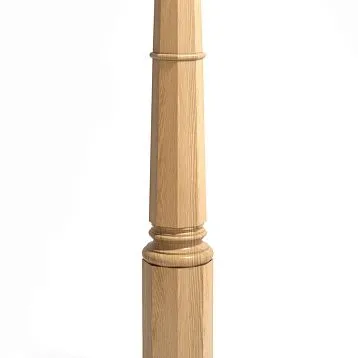
- Wood – a warm, living material that brings coziness and naturalness into the interior. Wooden half-columns can be simple and minimalist or richly adorned with carving.
- Gypsum – a traditional material for creating decorative interior elements. Gypsum half-columns are lightweight, malleable, and allow for the realization of the most complex design ideas.
Modern solutions
Today, the market offers numerous innovative materials for manufacturing half-columns, combining aesthetic appeal with practicality:
- Polyurethane – lightweight, moisture-resistant material that perfectly imitates plaster molding. Polyurethane half-columns are easy to install, resistant to moisture and mechanical damage.
- Fiber concrete – a composite material based on cement with added fibers. It has high strength at low weight, enabling the creation of thin and elegant details.
- Fiberglass – a material combining lightness with exceptional strength. Fiberglass half-columns can imitate any traditional material, from marble to bronze.
- Artificial stone – a modern composite material that looks like natural stone but lacks its drawbacks: weight, porosity, and high cost.
Material selection for half-columns depends on many factors: interior style, budget, usage conditions, and personal preferences. However, regardless of the material, well-crafted half-columns always become a focal point of attention and a key design element.
Functional aesthetics: the role of half-columns in modern interiors
Architectural zoning
One of the most important functions half-columns in interior – delicate division of space without using massive partitions. This technique is especially valuable in modern interiors with an open-space concept, where it is important to maintain airiness and freedom, yet still define functional zones.
When placed in pairs or in rhythmic sequences, half-columns can visually separate:
- Living room from dining room
- Kitchen from dining area
- Sleeping area from workspace
- Entrance from main space
At the same time, they do not create physical barriers for movement and do not obstruct light, making them an ideal tool for 'soft' zoning.
Masking structural elements
In modern construction, there is often a need to conceal load-bearing columns, utilities, or other technical elements that disrupt the interior’s aesthetics. Half-columns turn this necessity into a design advantage.
By framing load-bearing columns with decorative half-columns, one can not only mask the structural element but also create a striking architectural accent. Similarly, half-columns can conceal:
- Ventilation shafts
- Heating risers
- Electrical cables and distribution panels
- Joints of structural elements
Such an approach allows solving the technical task with maximum aesthetic benefit.
Adjustment of room proportions
Half-columns are a powerful tool for visual correction of space. They can radically change the perception of room proportions:
- Vertical half-columns visually raise the ceiling, making the room higher and more majestic
- Wide half-columns with horizontal divisions can visually expand a narrow room
- A rhythmic row of half-columns creates a sense of order and harmony in overly spacious rooms
- Paired half-columns on either side of an opening draw attention to important interior elements
By skillfully using this technique, designers can compensate for architectural shortcomings of a room and highlight its advantages.
Creating a stylistic foundation
half columns in interior Often become a key element that sets the tone for the entire design. They form the stylistic foundation upon which the rest of the decor is built:
- Classical half-columns with Corinthian capitals create an atmosphere of palace luxury
- Minimalist half-columns without excessive decoration support modern minimalism
- Half-columns with floral ornamentation refer to the Art Nouveau style
- Rough, deliberately unfinished half-columns become an accent in loft interiors
By choosing a specific style of half-columns, designers obtain a clear guideline for selecting other interior elements—from furniture to lighting and textiles.
Half-columns in different rooms: specific applications
Grand hall and foyer
The first impression of a home is formed in the foyer or hall, and half-columns here play the role of a calling card. In these rooms, they can be used for:
- Framing the entrance door, creating a majestic portal
- Decorating mirrors, transforming them into architectural compositions
- Supporting arched openings leading to main rooms
- Creating niches for sculptures, vases, or other decorative elements
In spacious halls, full-height half-columns from floor to ceiling look striking; in compact foyers, more modest versions up to the height of the door frame or even half-height are preferable.
Living room: center of composition
The living room is an ideal place to showcase architectural sophistication. Here, half-columns can become the central element of the entire composition:
- Surrounding the fireplace with half-columns turns it into a majestic portal
- Half-columns around the room create the feeling of a classic salon
- Paired half-columns can highlight an area for placing a television or home theater
- Half-columns supporting decorative arches form cozy niches for relaxation
In the living room, both monumental half-columns with rich decoration and more restrained versions harmonizing with the overall interior style are appropriate.
Bedroom: Intimacy and Elegance
In the bedroom, half-columns acquire a special intimacy and elegance. Here, they are often used for:
- Creating a headboard – half-columns on both sides with decorative tops
- Decorating a dressing table or mirror
- Highlighting a wardrobe area or entrance to the bathroom
- Decorating niches for night lighting
In the bedroom, more delicate and refined half-columns are preferred, possibly with romantic motifs in decoration. Materials should be warm and pleasant to the touch—wood, plaster, or polyurethane with a soft texture.
Kitchen and Dining Room: Functionality and Style
In the kitchen and dining room, half-columns must combine decorative appeal with practicality. In these rooms, they may:
- Decorate a kitchen island, giving it solidity and stability
- Frame a range hood, turning it into an architectural focal point
- Decorate a bar counter separating the kitchen from the dining room
- Create an eye-catching frame for a wine cabinet or display case with tableware
For the kitchen and dining room, it is important to choose materials resistant to moisture and stains—polyurethane with a moisture-resistant coating, artificial stone, or ceramic.
Bathroom: luxury of water procedures
The bathroom is a space where half-columns can create an atmosphere of ancient thermal baths or palace luxury. Here, they effectively:
- Frame the bathtub, turning it into the central element of the composition
- Decorate the mirror above the sink, creating an illusion of a portal
- Support decorative arches or niches for storing bathroom accessories
- Camouflage utilities, turning technical elements into decorative features
Material selection in the bathroom is critically important—it must be completely moisture-resistant. Ideal options include polyurethane with a moisture-resistant coating, artificial marble, ceramic, or fiberglass.
Stylistic solutions: half-columns in various interior styles
Classic and neoclassic: eternal elegance
In classical and neoclassical interiors, half-columns are not merely decorative elements but an essential part of the architectural ensemble. Here, they appear in all their historical grandeur:
- Strict proportions based on classical canons
- Clear division into base, shaft, and capital
- Use of traditional orders – most often Corinthian or Ionic
- Richly decorated capitals and bases, often with gilding or patina
In classical interiors, the color palette is usually restrained—white, cream, or light gray half-columns that may imitate marble or be solid-colored. In neoclassicism, bolder color solutions are permitted—pastel shades or even contrasting combinations.
Art Deco: geometric luxury
The art deco style reinterpreted classical architectural elements, giving them geometric clarity and exotic charm. Half-columns in this style are characterized by:
- Simplified, geometric forms
- Stepped capitals and bases
- Contrasting color combinations—black with gold, white with silver
- Use of exotic materials or their imitations—black marble, onyx, rare wood species
In art deco interiors, half-columns often become part of a complex composition including mirrors, metallic details, and geometric ornamentation.
Minimalism: concise expressiveness
It seems that minimalism and classical architectural elements are incompatible, but modern designers prove the opposite. In minimalist interiors, half-columns acquire a new sound:
- Extremely simplified forms without decorative details
- Absence of pronounced capitals and bases or their minimalist interpretation
- Monochromatic color palette, often matching wall tones
- Emphasis on proportions and rhythm, rather than decoration
Such half-columns create subtle play of light and shadow, adding depth and architectural character even to the most minimalist interiors.
Eclecticism: creative synthesis
The eclectic style allows the most free experimentation with half-columns in the interior. Here, the most unexpected solutions are possible:
- Combining classical forms with modern materials
- Use of non-traditional colors – bright, saturated, or metallic
- Combining different orders within one space
- Decorating half-columns with atypical elements – mosaic, mirrored inserts, textiles
Eclecticism allows creating unique, personalized interiors where half-columns become an expression of the owner’s individuality.
Loft and industrial style: unexpected context
In lofts and industrial interiors, half-columns create a striking contrast with the brutal aesthetic of exposed utilities and unfinished surfaces. In this context, they may be:
- Intentionally aged, with scratches and chips
- Unfinished, as if discovered during renovation
- Painted in industrial colors—graphite, rust, metallic
- Combined with industrial materials—metal, concrete, rough wood
This approach creates an intriguing dialogue between classical architecture and modern industrial aesthetics.
Practical Aspects: Selection, Installation, and Maintenance
How to choose ideal half-columns
Choosing half-columns for the interior is a responsible step requiring consideration of many factors:
- Room proportions. The height and diameter of half-columns must correspond to the room size. Too massive columns will 'consume' space, while too thin ones will look unconvincing.
- Interior style. Half-columns must harmonize with the overall style of the room. Traditional orders are suitable for classical interiors, while more minimalist options suit modern interiors.
- Functional purpose. Determine the role half-columns will play – decorative, zoning, or masking. This affects their placement and structural features.
- Material and finish. Choosing the material affects not only the appearance but also the durability, weight of the structure, and installation complexity. The finish should coordinate with other surfaces in the interior.
- Budget. The cost of half-columns can vary significantly depending on the material, size, and complexity of decoration. Determine your acceptable budget in advance.
Installing half-columns: professional approach
Installing half-columns requires precision and care. Main installation stages:
- Surface preparation. The wall must be flat, clean, and strong. Leveling and priming may be required if necessary.
- Marking. Accurate marking will ensure perfect symmetry and verticality of half-columns.
- Mounting. Depending on the material and weight, half-columns may be mounted on:
- Adhesive (for lightweight polyurethane items)
- Screws and anchors with subsequent covering of mounting sites
- Mounting plates (for heavy stone or wooden half-columns)
- Final finishing. After installation, joints are spackled, primed, and painted (if half-columns do not have a final finish).
For complex and heavy structures, it is recommended to consult professional installers who will ensure the safety and longevity of the installation.
Maintenance and restoration
Proper care will extend the lifespan of half-columns and maintain their attractive appearance:
- Polyurethane half-columns should be regularly cleaned of dust with a soft cloth. For removing stains, a mild soap solution can be used.
- Wooden half-columns require periodic treatment with protective compounds — varnishes, oils, or waxes — that protect wood from moisture and ultraviolet light.
- Stone and plaster half-columns are sensitive to moisture, so they should be cleaned only with dry methods or minimal water.
- Metal decorative elements of half-columns require protection against oxidation — they are regularly treated with special metal compounds.
In case of damage, most modern half-columns can be restored. Small chips and cracks can be filled with spackle and then painted. In case of serious damage, replacement of individual elements may be required.
Design tricks: how to use half-columns most effectively
Playing with light
Proper lighting can significantly enhance the expressiveness of half-columns:
- Directional lighting creates dramatic shadows that highlight relief and texture
- Hidden backlighting behind half-columns creates a glowing effect and visually separates them from the wall.
- Spotlights placed between half-columns create a rhythmic light pattern.
- Decorative wall sconces mounted on half-columns turn them into functional lighting elements.
Experimenting with different types of lighting can create various moods and change the perception of the interior depending on the time of day or occasion.
Color Solutions
The color of half-columns can either support the overall color scheme of the interior or create striking accents:
- Matching the wall color — creates subtle play of light and shadow, emphasizes shape rather than color
- Contrasting color — highlights half-columns as a standalone architectural element
- Metallic finishes — gold, silver, bronze — add luxury and reflect light
- Gradient coloring — creates an illusion of material or lighting change
Modern technologies allow creating complex decorative effects on half-columns — patina, craquelure, Venetian plaster — expanding the designer’s palette of possibilities.
Combining with other architectural elements
Half-columns are rarely used in isolation — they are usually part of a comprehensive architectural solution:
- Half-columns and arches — classic combination creating a portal effect
- Half-columns and cornices — form a complete architectural composition
- Half-columns and moldings — create cohesive wall finishes
- Half-columns and niches — functional solution for storage and display of items
Skillful combination of various architectural elements allows creating complex, multi-level interiors with rich play of forms and volumes.
Non-standard solutions
Modern design does not limit itself to traditional approaches to using half-columns. Creative solutions include:
- Transformer half-columns with built-in functional elements – shelves, lights, mirrors.
- Asymmetric compositions of half-columns of different heights and diameters.
- Half-columns with inlays of unusual materials – glass, metal, ceramic.
- Interactive half-columns with changing lighting or even built-in media surfaces
Such non-standard solutions allow creating unique, memorable interiors reflecting the owner's individuality.
Conclusion: Timeless elegance of vertical accents
half columns in interior This is not merely homage to classical architecture or a fleeting trend. It is a timeless element that has proven its aesthetic and functional value for millennia. From ancient temples to modern minimalist apartments, half-columns continue to create vertical rhythm, structure space, and imbue it with architectural meaning.
Modern production and installation technologies make half-columns accessible for interiors of any scale and style. They can be monumental and majestic or elegant and minimalist, luxurious or restrained, traditional or avant-garde. The key is to correctly choose their proportions, style, and placement so that they harmoniously fit into the overall concept of the space.
Half-columns are an investment in the beauty and status of your interior, immune to fleeting fashion trends. They create a sense of solidity, thoughtfulness, and cultural continuity, linking your modern home with great architectural traditions of the past.
STAVROS Company has been specializing for many years in creating and installing architectural elements of the highest quality, including half-columns of various styles and sizes. The professionalism of STAVROS craftsmen, attention to detail, and use of premium materials guarantee that half-columns will become not just a decorative element, but a true ornament of your home, delighting you and your guests for many years.
Entrust the creation of vertical harmony in your interior to STAVROS experts — and the classic elegance of half-columns will transform your space, filling it with architectural nobility and refined style.