Article Contents:
- What is a wooden plank: detailed analysis of the material
- What is a decorative plank: in-depth analysis of the material and technologies
- Fundamental differences between wooden and decorative planks
- The variety of applications of decorative planks in modern interior design
- Detailed guide to installing decorative planks
- Detailed guide to making decorative planks yourself
- Comprehensive guide to purchasing decorative planks
- Comprehensive comparative analysis and professional recommendations

in the world of finishing materialsWooden plankremains one of the most sought-after elements for creating functional and aesthetically pleasing interiors. This versatile material has undergone a long evolutionary journey from a simple construction element to an elegant decorative solution capable of transforming any space.
Many builders, designers, and property owners ask a fundamental question: what distinguishes a simple wooden plank fromdecorative plankand what role each of them plays in modern construction and interior design? A plank is a basic finishing element that has various types and purposes depending on specific construction and design tasks.
decorative panelsplay an important role not only in the functional but also in the aesthetic aspect of space design. They can radically change the perception of an interior, adding depth, texture, and character. Modern wood processing technologies allow creating unique decorative elements that combine the beauty of natural material with practicality and durability.
Understanding the differences between these types of materials will help make the right choice for a specific project and avoid mistakes when planning the budget and purchasing materials. The right material choice affects not only the final result of the project but also its economic efficiency, implementation timeline, and quality of work execution.
In this article, we will consider all aspects of usingwoodenand decorative planks, their technical characteristics, areas of application, mounting features, and selection criteria. Special attention will be given to practical recommendations for using each type of material under various operating conditions.


What is a wooden plank: detailed analysis of the material
Wooden plankrepresents a planed or sawn element made from solid natural wood of various species. This material is the result of centuries of evolution in wood processing technologies and represents an optimal combination of functionality, economy, and eco-friendliness.
Various types of wood are used in producing wooden planks, each with its unique characteristics of strength, durability, and appearance. The most popular species include oak, beech, pine, spruce, birch, and linden. The choice of a specific species depends on the intended use of the plank, requirements for strength, operating conditions, and budget constraints.
Oak planks are considered the standard of quality and durability.Decorative wooden stripmade from oak has exceptional strength, beautiful wood texture, and the ability to withstand significant mechanical loads. The density of oak wood is 700-800 kg/m³, providing high resistance to deformation and wear.
Beech planks are distinguished by uniform wood structure and excellent mechanical properties. Beech has a density of about 650-700 kg/m³ and is characterized by even fiber distribution, making it an ideal material for manufacturing structural elements requiring high dimensional accuracy.
Pine planks represent the most economical option, while still providing sufficient strength for most construction tasks. Pine has a density of 450-500 kg/m³ and contains natural resins that provide additional protection against moisture and biological degradation factors.
Standard sizes of wooden planks vary depending on their intended use and construction code requirements. The most common sizes include cross-sections of 20×40 mm, 16×40 mm, 25×50 mm, 30×50 mm, 40×60 mm, with standard lengths ranging from 2.4 to 6 meters. These parameters ensure an optimal balance of strength, material economy, and ease of transportation.
Decorative oak plankis especially valued for its strength, beautiful wood texture, and versatility in finishing. Oak planks have high resistance to mechanical impacts, changes in humidity and temperature, making them an ideal choice for creating reliable, long-lasting structures.
Applications of standard wooden planks cover a wide range of construction and production tasks. They are used to create structural frameworks of various purposes, from lightweight partitions to load-bearing elements of roofing systems. In furniture manufacturing, planks serve as the basis for making sofa, chair, bed, and cabinet frame structures.
Decorative battens are often used as a base for more complex decorative elements. They can serve as a substrate for veneering, a base for carving, or a component of assembled decorative structures. This versatility makes them an indispensable material in the toolkit of carpenters and furniture makers.In construction, wooden battens are used for installing substructures under various finishing materials, creating guides for drywall installations, manufacturing formwork for concrete work, and assembling temporary structures. Their light weight, ease of processing, and eco-friendliness make them a preferred choice for many construction tasks.
Wood used for producing battens undergoes special multi-stage processing, including drying to a certain moisture level. The optimal moisture content of finished products is 8-12%, ensuring dimensional stability and preventing deformation during use. The drying process can be carried out either naturally over 6-12 months or in specialized drying chambers with controlled temperature and humidity parameters.
Quality wooden battens should have a smooth surface without cracks, knots, wormholes, or other defects that may reduce their strength or degrade their appearance. Permissible deviations from specified dimensions are strictly regulated by standards and typically do not exceed ±1-2 mm for primary cross-sectional dimensions.
The technology of producing wooden battens includes several key stages: selection and sorting of raw materials, sawing logs into boards, drying lumber, planing to specified dimensions, quality control, and packaging of finished products. Each stage is controlled by specialists to ensure high-quality finished products.
In construction practice, wooden battens are often used as temporary fastening elements during finishing work, as guides for installing various structures, for creating markings, and as auxiliary elements during installation of complex systems. Their versatility, accessibility, and ease of processing make this material indispensable in the toolkit of any builder, carpenter, or craftsman.
In construction practice, wooden planks are often used as temporary fastening elements during finishing work, as guides for installing various structures, for creating layouts, and as auxiliary elements during the installation of complex systems. Their versatility, accessibility, and ease of processing make this material indispensable in the toolkit of any builder, carpenter, or craftsman.




What is decorative batten: a deep analysis of the material and technologies
Decorative railIt is a specially designed and carefully processed element intended exclusively for finishing work and creating aesthetically pleasing high-quality interior solutions. Unlike ordinary construction battens, decorative battens are created with consideration for the most modern design requirements and visual perception, making them an indispensable tool in contemporary interior design.
The main and most noticeable difference of decorative battens lies in the presence of high-quality multi-stage surface sanding and application of special protective-decorative coatings.form the architecture of walls and ceilings, creating a play of light and shadow.They can be coated with various finishes: transparent lacquers on water or polyurethane bases, colored stains, enamels of various shades, or have a veneered surface made from valuable wood species.
Lacquer coatings protect wood from moisture, ultraviolet radiation, mechanical damage, and contamination, while preserving and enhancing the natural beauty of the wood's texture. Modern lacquer systems can provide various gloss levels — from deep matte to high-gloss finishes — allowing selection of the optimal option for any interior design.
The dimensional range of decorative battens is significantly more diverse and precise compared to standard construction battens. Standard sizes include a wide range of cross-sections: 16×40 mm, 20×40 mm, 25×50 mm, 30×60 mm, 40×40 mm, 50×50 mm, with lengths from 2.4 to 3 meters. Some manufacturers offer non-standard sizes upon individual order, enabling the realization of the most daring and unique design projects.
Decorative oak planksDecorative oak battens are particularly popular among designers and architects due to the noble and expressive texture of this wood species, as well as the exceptional strength and durability of the material. Oak decorative battens create a sense of luxury, solidity, and longevity in interiors, highlighting the high status of owners and their refined taste.
The texture of oak wood is characterized by clearly visible annual rings and large medullary rays, which create a unique pattern on the surface. Natural oak shades range from light yellow to dark brown, allowing the material to be matched to any interior color scheme.
They represent a more affordable, yet equally high-quality alternative to solid wood battens. They are manufactured based on high-quality particleboard (MDF) or other composite materials, followed by applying a thin layer of natural veneer from valuable wood species.The veneering technology allows achieving the appearance of natural wood at significantly lower cost compared to solid wood products. Meanwhile, the quality of modern veneer is so high that only an experienced specialist, upon close inspection, can visually distinguish a veneered surface from solid wood.
They can imitate various wood species and even other materials thanks to modern digital printing and laminating technologies. High-quality decorative films can reproduce not only the color and pattern of wood, but also its texture, creating tactile sensations closest to the natural material.
Decorative MDF railsModern technologies enable creating realistic imitations of such valuable species as wenge, padauk, black wood, red wood, and other exotic wood types, which in their natural form have very high cost and limited availability.
Modern technologies allow creating realistic imitations of valuable species such as wenge, padauk, black wood, red wood, and other exotic woods, which in their natural form have very high cost and limited availability.
The production of decorative battens includes several important stages of special processing, each strictly controlled to ensure high quality of the finished product. The process begins with careful selection of raw materials — only wood of the highest grades without defects is allowed for producing decorative items.
After shaping the blanks to the required form and dimensions, the product undergoes multi-stage sanding using abrasive materials of different grits. Initial coarse sanding removes traces of mechanical processing, while final fine sanding creates an ideally smooth surface ready for coating application.
Priming is a mandatory stage of surface preparation before applying the final coating. Primer ensures better adhesion of the coating to the wood, equalizes the surface's absorbency, and prevents resins and other substances from the wood from penetrating into the final layer.
The application of the final coating is carried out in special chambers with controlled parameters of temperature, humidity, and air contamination. Modern automated lines ensure uniform coating application and stable quality of the finished product.
Quality control at each production stage includes checking dimensions, surface quality, coating adhesion, color characteristics, and other parameters affecting the consumer properties of the finished products.
Our factory also produces:

Fundamental differences between wooden batten and decorative batten
Functional purpose is the first and most important criterion determining the differences betweenwooden battenanddecorative battenThese differences fundamentally affect the areas of application, production methods, and ultimately, the cost of the material.
A standard wooden plank is primarily intended for structural purposes and can withstand certain mechanical loads. It can be used as a load-bearing element in light structures, as a base for attaching other materials, or as a temporary supporting structure. The strength characteristics of such planks are designed for use in various construction and furniture assemblies.
In contrast,Decorative railperforms exclusively an aesthetic role and is not intended to withstand significant mechanical loads. Its main task is to create a visual effect, establish a certain interior style, and solve design tasks related to zoning and decorating space.
The level of surface treatment differs fundamentally between these types of materials and determines their final cost and areas of application. A wooden plank may be supplied in an untreated state, with minimal processing, or simple planing, making it more cost-effective but requiring additional processing when used in visible parts of the structure.
Decorative interior planksalways have a high-quality sanded surface of 'finish' class and mandatory protective-decorative coating. This coating not only ensures an attractive appearance but also protects the wood from adverse environmental factors.
Accuracy of dimensions is another important distinction between standard and decorative planks.Decorative plank sizesare maintained with high precision, tolerances are usually ±0.5 mm, ensuring perfect element alignment and a professional appearance of the finished structure.
Standard construction planks are manufactured with larger tolerances, which is acceptable for their functional purpose, but may cause problems when used for decorative purposes. Inconsistency in dimensions may result in noticeable gaps or unevenness in the finished structure.
Variety of design and color solutions is significantly higher for decorative planks. Manufacturers offer numerous finishing options: various stain shades, colored enamels, wood species imitations, matte and glossy coatings. This allows selecting material to match any design concept.
Decorative planks to buycan be available in numerous versions, including non-standard sizes and individual finishing solutions. This approach enables implementing unique design projects using exclusive materials.
The price category of these materials differs significantly and may vary by 3-5 times depending on the wood species, type of coating, and complexity of processing. Decorative planks are significantly more expensive than standard construction planks due to additional processing, use of quality materials, more complex manufacturing process, and smaller production volumes.
The economic justification for using a particular type of plank should consider not only the initial cost of the material but also expenses for additional processing, finishing, and installation. In some cases, using ready-made decorative planks may be more economically advantageous than processing standard construction planks manually.
Requirements for installing decorative planks are stricter and require higher qualifications from installers, as any installation defects will be clearly visible on the finished surface. Accuracy of marking, quality of fastening, and final fitting must meet high standards of finishing work.
Standard wooden planks may allow minor installation inaccuracies if they are subsequently concealed by subsequent finishing or do not affect the functionality of the structure. This allows using them in projects where installation speed is more important than perfect appearance.
Decorative planks have greater durability and resistance to external influences due to high-quality protective coatings. Modern lacquer systems provide protection against ultraviolet radiation, moisture, contamination, and mechanical damage for up to 10-15 years with proper use.
They better withstand changes in humidity and temperature, which is especially important for interior applications under central heating and air conditioning. Dimensional stability and absence of deformation ensure maintaining an attractive appearance throughout the entire service life.
Get Consultation
Variety of applications for decorative planks in modern interiors
Decorative louvered panels on the wallopen up limitless possibilities for creating unique interior solutions and have become one of the most popular tools for modern interior designers. This versatile material allows implementing numerous creative ideas, from minimalist solutions to complex decorative compositions.
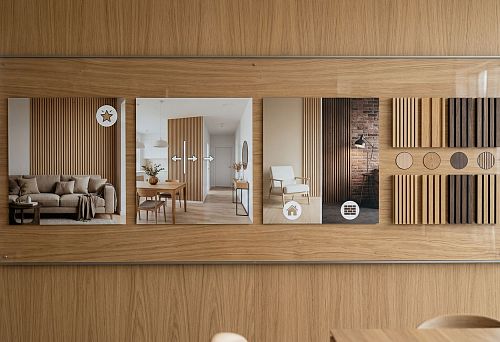
Modern designers increasingly use plank structures to create accent zones, which become the central element of interior composition. Properly placed accent wall made ofwall decorative plankscan fundamentally change the perception of space, making it more dynamic and modern.
Visual zoning of space using plank partitions has become a popular trend in modern interior design, especially in open-plan and studio layouts. Such partitions allow dividing a room into functional zones without disrupting the overall perception of space or creating a sense of enclosure or crampedness.
Decorative strips for furnitureallow creating original furniture solutions or updating existing furniture. They can be used to decorate cabinet facades, create original headboards, decorate countertops, or create unique shelves and racks.
Zoning of space usingdecorative planks for zoning roomsis especially effective in studio layouts, where it is necessary to visually separate the sleeping area from the living room, the work area from the relaxation zone, or the kitchen from the dining area. At the same time, the feeling of a single space, natural air circulation, and penetration of natural light are preserved.
Different arrangements of planks create different visual effects. Vertical placement visually increases the height of the room and creates an impression of slenderness and elegance. Horizontal placement can visually expand narrow spaces and add a sense of solidity.
Diagonal placement of planks creates a dynamic, modern effect and can be used to create accent elements or artistic compositions. Combined placement (combination of vertical and horizontal elements) allows creating complex geometric patterns and unique design solutions.
Accent wall decoration is one of the most popular directions for using decorative planks in modern design. An accent wall made of planks can become the central element of a room, attracting attention and defining the style of the entire space.
Different ways of mounting planks on a wall create different visual and tactile effects. Planks can be mounted flush with the wall, creating a smooth surface with pronounced texture, or with a small gap from the wall, which creates a play of light and shadow and adds volume to the structure.
Decorative plank installation for TV zones allows creating a stylish and modern focal point in the living room, which not only hides the TV when turned off but also integrates it into the overall design concept of the room. Planks can be arranged vertically or horizontally, creating different visual effects and emphasizing horizontal or vertical lines in the interior.
Integrating storage systems into plank structures allows creating a functional TV zone where decorative and practical functions combine. Shelves for equipment, books, or decorative items can be placed between planks, making the structure not only beautiful but also useful.
decorative beams on the ceilingUsed for creating coffered ceilings, concealing utilities, or creating original ceiling compositions. Such a solution adds volume to the room, creates an interesting play of light and shadow, and may visually alter the proportions of the space.
Ceiling plank structures can be integrated with lighting systems, creating unique lighting effects. LED strips placed between planks create soft diffused lighting that highlights the wood texture and creates a cozy atmosphere.
Decorative inserts in furniture using planks allow updating the appearance of old furniture or creating unique original interior items. Planks can be used to decorate cabinet facades, create original door panels, headboards, or decorative panels for countertops.
Surface-mounted decorative finishing allows quickly and relatively inexpensively updating the appearance of furniture without full replacement. Properly selected planks can radically change the style of furniture, transforming simple items into designer interior elements.
Ceiling accents using decorative planks help visually alter the proportions of the room and create a unique atmosphere. Horizontally placed planks can visually expand a narrow room, while properly placed vertical elements can increase the perceived height of the ceiling.
Combining planks of different sizes and shades allows creating complex compositions that become true works of art. Such an approach requires professional design thinking, but the result may exceed all expectations.
Detailed guide for installing decorative planks
Mounting decorative beamsIs a responsible process requiring careful preparation, precise calculations, and adherence to technological requirements at every stage of work. The quality of installation directly affects the appearance of the finished structure, its durability, and compliance with the designer's concept.
Pre-planning and design are critically important stages determining the success of the entire project. It is necessary to create a detailed plan for plank placement indicating exact dimensions, distances, and mounting methods. Such a plan will help calculate the required materials and avoid errors during installation.
How to mount decorative rails on wallsIs one of the most frequent questions when performing work independently. The choice of mounting method depends on many factors: wall material, plank weight, operating conditions, aesthetic requirements, and possibility of future disassembly.
Surface preparation is a mandatory stage determining the quality and durability of mounting. The surface must be cleaned of dust, dirt, remnants of old coatings, and degreased. If necessary, wall leveling or additional framing is performed.
Surface flatness is checked using a long level or straightedge. Deviations from the plane exceeding 2-3 mm per meter of length may result in uneven plank fitting and noticeable gaps or misalignments in the finished structure.
Adhesive mounting is the most aesthetic method of mounting, as it provides invisible connections without visible fasteners. This method is suitable for lightweight decorative planks and requires an ideally flat and clean base surface.
The choice of adhesive depends on the materials of the plank and the base. For wooden planks on gypsum board or plastered surfaces, polyurethane or silicone adhesives are recommended, providing elastic connections and compensating for temperature deformations.
The adhesive mounting technology includes applying adhesive evenly to the back of the plank, pressing it against the base while controlling position with a level, and temporary fixation until the adhesive fully sets. Setting time may range from several minutes to several hours depending on the type of adhesive.
Mechanical mounting with self-tapping screws is used for heavy planks, under increased loads, or when adhesive mounting is not advisable. In this method, it is important to correctly select the length and type of screws, and to consider the possibility of concealing or decorating the heads of fastening elements.
Hidden mounting is performed by pre-drilling holes for screw heads, followed by filling with wood putty or decorative plugs. This method ensures reliable mechanical connection while maintaining an aesthetic appearance.
Installing decorative planks on wallsUsing mounting strips is the most professional and technologically advanced method. Mounting strips are metal profiles that are mounted to the wall, and planks are then hung on these profiles.
Advantages of the mounting strip system include ensuring perfectly even plank placement, the ability to adjust position, ease of disassembly if needed, and compensation for base irregularities. This system is especially effective when installing large-area plank structures.
Spacing of decorative planksIs a critically important parameter affecting the visual perception of the finished structure and determining the overall character of the interior. Properly selected spacing creates a harmonious composition; incorrect spacing may ruin the entire design concept.
The standard spacing for interior applications is usually 30 to 60 mm, but the exact value should be determined based on room dimensions, the proportions of the battens, and the overall design concept. In smaller rooms, a smaller spacing is recommended to create a denser structure.
Distance between decorative railsIt affects not only the aesthetics but also the functionality of the structure. A smaller distance creates a denser structure, provides better privacy when used as partitions, but may reduce light penetration and air exchange.
A greater distance between battens provides better light penetration, creates a sense of airiness and lightness of the structure, but may reduce its decorative qualities and effectiveness in zoning space.
Marking is one of the most important and responsible stages of installation, determining the quality of all subsequent work. Accurate marking ensures even placement of battens, uniform gaps between them, and compliance of the finished structure with project dimensions.
Marking tools include a laser or bubble level, metal tape measure, marking string, pencil, and square. The quality of tools directly affects marking accuracy, so it is recommended to use professional measuring instruments.
The marking sequence begins with defining base lines (horizontal and vertical), from which all other dimensions will be laid out. Base lines must be checked for level and fixed with a marking string or laser plane builder.
Quality control of installation is performed at each stage of work and includes checking dimensions, position of battens, quality of connections, and overall appearance of the structure. Timely detection and elimination of defects allows achieving a professional-quality result.
Detailed guide for DIY decorative battens
How to make decorative strips yourselfIt is possible with the necessary tools, quality raw materials, and basic woodworking skills. DIY production allows obtaining unique elements precisely to the dimensions of a specific project, significantly saving on material costs, and implementing non-standard design solutions.
Project planning is the first and most important stage of DIY production. It is necessary to create a detailed drawing of future battens, indicating exact dimensions, cross-section profile, type of wood, and finish. Such a drawing will help calculate the required materials and plan the sequence of operations.
The choice of wood is a critically important decision, affecting the quality, appearance, and longevity of the finished products. The best species for manufacturingdecorative strips for furnitureare hardwoods: oak, beech, ash, maple, and walnut.
Oak provides maximum strength, durability, and elegant appearance. Its dense structure holds fasteners well, and its pronounced grain creates an attractive pattern on the surface. However, oak is one of the most expensive species and requires quality tools for processing.
Beech has a uniform fine-grained structure, which ensures a smooth surface after processing and even coloring. Beech is well-suited for various finishes and has a pleasant light tone. A drawback of beech is its tendency to warp with changes in humidity.
Spruce is the most accessible and economical option, while still providing sufficient quality for most decorative applications. Spruce is easy to process, has a pleasant resinous aroma, and offers natural protection against biological degradation factors.
The quality of wood must meet requirements for furniture manufacturing: moisture content not exceeding 8-12%, absence of knots, cracks, insect damage, and other defects. Boards must be flat, without warping or internal stresses.
Required tools for manufacturing decorative battens include a circular saw or jigsaw for cutting, a hand plane or router for surface processing, a sander for final finishing, measuring tools, and fixtures for holding blanks.
Cutting wood into battens of required dimensions requires precision, care, and adherence to safety rules. It is important to use sharp, quality tools and make clean cuts without chips or unevenness.decorative planks themselves?They must have identical dimensions along the entire length with deviations not exceeding ±0.5 mm.
Marking blanks is done using a metal ruler, square, and sharp pencil. All dimensions must be checked several times, as correcting an error after cutting will be impossible or require additional material costs.
The cutting technology depends on the tool used. When working with a circular saw, use guiding fixtures to ensure a straight cut. When using a jigsaw, select the appropriate blade and maintain a constant feed rate.
Surface planing is performed to achieve a smooth, even surface and precise cross-section dimensions. Manual planing requires skill and physical effort, but allows obtaining a high-quality surface. An electric hand plane speeds up the process but requires caution and experience.
Surface sanding is a mandatory stage in manufacturing decorative battens and determines the quality of the final finish. The process begins with coarse sandpaper of 80-100 grit to remove sawing and planing marks.
The sanding sequence includes moving from coarse to finer grit: 80-100, 120-150, 180-220, 320-400 grit. Each stage must completely remove scratches from the previous stage. Final sanding is performed with abrasive grit 400-600 to achieve a perfectly smooth surface.
Quality control of sanding is performed visually under good lighting and by touch. The surface must be uniformly matte, without scratches, dents, or other defects. A well-sanded surface is a guarantee of a good final finish appearance.
Making decorative battenTaking into account specific project requirements and operating conditions. It is possible to manufacture battens of various sizes and profiles, create shaped elements using a router, and combine different wood species to achieve unique decorative effects.
Protective treatment of wood extends the service life of finished products, improves their appearance, and protects against adverse environmental influences. The choice of protective treatment depends on operating conditions and desired appearance.
Antiseptic treatment prevents wood from fungal, mold, and insect damage. Modern antiseptics can be colorless or tinted, allowing to combine protection with decorative treatment.
Priming ensures better adhesion of the final coating to the wood, equalizes the wood’s absorption capacity, and prevents resin and other substances from the wood from penetrating into the final layer.
Staining allows you to change the wood's color, highlight its texture, or imitate more valuable species. Stain can be water-based, alcohol-based, or oil-based; each type has its own application features and visual effects.
Lacquering is the final stage of finishing and provides protection for wood against moisture, dirt, and mechanical damage. Modern lacquers allow you to achieve various levels of gloss and create different visual effects.
Comprehensive guide to purchasing decorative planks
Buy decorative planks for interior designcan be found in various retail outlets and through different sales channels, each of which has its own advantages, features, and suits different situations and buyer requirements.
Specialized manufacturers and their branded stores offer the widest selection, high-quality products, and professional consultation support. STAVROS is one of the leading Russian manufacturers of decorative wooden items and offers a full range of solutions for interior design.
Decorative planks Moscowfrom the manufacturer STAVROS provide optimal price-to-quality ratio, guaranteed compliance with standards, and the possibility of obtaining custom solutions for special orders.
Advantages of purchasing directly from the manufacturer include quality control at all production stages, the ability to order non-standard sizes and finishes, professional consultations on material selection and application, warranty obligations, and after-sales service.
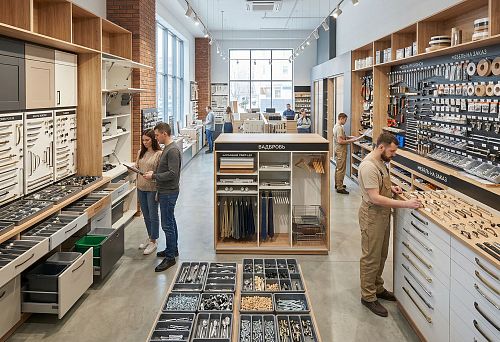
Large construction hypermarkets and retail chains offer a wide selection of decorative planks from various manufacturers, allowing you to compare different options by price, quality, and characteristics.Buy decorative planks at Leroy Merlincan be found in a convenient format with the option to inspect the material before purchase.
Advantages of purchasing in hypermarkets include the ability to compare different options, availability of stock, convenient payment and delivery conditions, regular promotions and discounts. However, the assortment may be limited to popular items, and consultations may not always be at a professional level.
Online stores and e-commerce platforms provide maximum convenience for selection and ordering with delivery to your door.Decorative strips on Ozonare presented in a wide variety with detailed descriptions, photos, technical specifications, and customer reviews.
Online purchases allow you to compare offers from multiple suppliers, find the best prices, study reviews from other customers, and receive the product with delivery. However, you cannot directly assess the material's quality, color, and texture.
Regional distributors and sales representatives allow you to purchase high-quality products from leading manufacturers in various cities across Russia.Decorative planks SPBare available through the official STAVROS distributor network with guaranteed quality and professional support.
Working with regional distributors ensures a personalized approach, the opportunity to receive consultations tailored to local conditions, fast delivery, and convenient payment terms. Distributors often have stock of popular items and can ensure prompt delivery.
Buy decorative planks for wallsare best purchased from reputable suppliers with a good reputation, long market experience, and positive customer reviews. This guarantees receiving high-quality material, professional support, and resolution of any issues.
Criteria for selecting a supplier include the quality of the offered products, the breadth of the assortment, pricing levels, delivery and payment terms, warranty obligations, market reputation, and customer reviews.
The cost of decorative planks depends on many factors and can vary significantly. Key pricing factors include the material used (solid wood is more expensive than MDF), wood species (oak is more expensive than pine), product dimensions, type and quality of finish, profile complexity, order volume, and manufacturer reputation.
Solid wood planks are significantly more expensive than MDF or composite materials, but they offer a longer service life, prestigious appearance, and the possibility of restoration. When choosing, consider the overall project budget and quality requirements.
Delivery and logistics conditions vary among suppliers and can significantly affect the total purchase cost. Many companies offer free delivery for orders above a certain amount, which can be advantageous for large purchases.
Transportation of long items requires special transport and may increase delivery costs. When planning a purchase, consider these factors and, if necessary, arrange for self-pickup from the supplier's warehouse.
Payment terms may include advance payment, payment upon receipt, installment, or credit. Choosing optimal terms depends on the buyer's financial capabilities and the specific supplier's policy.
Warranty obligations are an important factor when selecting a supplier and indicate product quality and manufacturer responsibility. Reliable manufacturers provide warranties on their products for 1 to 5 years and are ready to resolve any issues within warranty terms.
Comprehensive comparative analysis and professional recommendations
decorative panelsand regularWooden planksThey represent two fundamentally different approaches to solving construction and design tasks. Understanding their specific characteristics, areas of application, and limitations will help make an informed decision for a particular project and achieve the optimal result within existing budget constraints.
The practicality and multifunctionality of ordinary wooden planks make them an indispensable material for a wide range of structural tasks. They are ideal for creating frame structures of various purposes, from simple shelves to complex furniture frames, temporary fastenings during construction work and rough operations, where appearance is not a priority.
The economic efficiency of ordinary wooden planks is ensured by the simplicity of production, use of lower-grade wood, and the absence of costly finishing operations. This allows their use in large quantities without significantly affecting the overall project budget.
Decorative RailIt is oriented towards creating aesthetically perfect interior solutions and represents a ready-to-use high-quality finishing material. It provides an excellent finish appearance, durability under interior use conditions, and compliance with the highest quality standards.
The investment attractiveness of decorative planks is due to their ability to dramatically improve the appearance of interiors, enhance their status, and increase the market value of real estate. High-quality decorative elements can serve for decades, maintaining an attractive appearance and functionality.
form the architecture of walls and ceilings, creating a play of light and shadow.They combine the ecological and natural properties of wood with modern requirements for design, functionality, and durability. They create a cozy atmosphere, emphasize the connection with nature, and demonstrate the high taste of the owners.
The psychological impact of natural materials on humans is scientifically proven: they promote relaxation, reduce stress, and create a comfortable atmosphere for living and working. This makes investments in high-quality wooden decorative elements not only aesthetically but also practically justified.
Criteria for choosing between different types of planks should be based on a comprehensive analysis of specific project tasks, operating conditions, budget constraints, and long-term plans for space usage. The right choice can significantly influence the success of the entire project.
For wall finishing, creating decorative elements, and interior accents, the optimal choice are specialized decorative planks with appropriate surface treatment. They ensure a professional result, durability, and compliance with modern quality standards.
For frame structures, load-bearing elements, and auxiliary work, ordinary wooden planks are a more rational choice, providing the necessary strength and functionality at significantly lower cost. In such cases, the appearance of the material is not a critical factor, and primary attention is given to strength characteristics.
Combined use of different types of planks within a single project can be an economically advantageous and technically justified solution. Hidden structural elements that do not affect the appearance are made from ordinary construction planks, while visible decorative parts are made from specially treated high-quality materials.
This approach allows optimizing the project budget by directing main resources toward elements directly affecting the appearance and user characteristics of the finished object, without compromising the functionality and reliability of the structure.
Project budget planning must consider not only the initial cost of materials but also installation costs, additional materials (fasteners, glue, finishing compounds), possible need to involve specialists, and long-term operational expenses.
Decorative planks require significant initial investments but provide high-quality and durable finishing, which may be economically justified in the long term. Ordinary planks with subsequent DIY finishing may be cheaper but require additional time and effort.
Professional consultation with experienced specialists will help select the optimal solution for a specific project, taking into account all technical requirements, aesthetic preferences, budget constraints, and usage characteristics. Consultations may include project analysis, calculation of required materials, and recommendations on installation technology.
Experienced designers and architects can propose alternative solutions to the tasks, help optimize costs without compromising the quality of the result, and avoid typical mistakes that may lead to additional expenses or unsatisfactory outcomes.
Material quality is a decisive factor in the success of any project and directly affects its durability, appearance, and performance characteristics. Choosing proven manufacturers with a good reputation, such as STAVROS, guarantees high-quality products with appropriate technical support and warranty obligations.
decorative planks and strips
Modern marketdecorative battens and stripsIt is characterized by high competition, variety of offers, and continuous improvement of production technologies. This creates favorable conditions for consumers, allowing them to choose the optimal solution from a wide range of available options.
Market development trends include increased requirements for material quality and eco-friendliness, expanded range of sizes and finishes, adoption of new production technologies, and improved consumer properties of products. Manufacturers continuously work on creating new products that meet changing market needs.
Correct material selection, professional approach to planning and execution of work, use of quality components, and adherence to technical requirements will ensure the creation of a unique and durable interior that will delight its owners for many years and become a source of pride in the work done.