Article Contents:
- 1. What are narrow wooden strips and why are they popular
- 3.1. Walls and ceilings
- 3.2. Furniture and door structures
- 3.3. Creating partitions and screens
- 3.4. Shelves, wall panels, and decor
- 4.1. Surface preparation
- 4.2. Mounting Methods
- 4.3. Cutting and fitting
- 5.1. Finishing coatings
- 5.2. Care recommendations
- 7.1. Advantages
- 7.2. Possible limitations
- Conclusion: why narrow wooden strips are the ideal tool for transforming space

In today's world, where natural materials are gaining increasing popularity, wooden products occupy a special place. Natural texture, unique wood grain patterns, eco-friendliness, and warmth — all of this makes wood a sought-after and beloved choice for decorating both residential and public spaces. However, many mistakenly believe that wood can only be used in the form of large panels or beams. In reality, sometimes it is preciselynarrow wooden strips that become the key and most expressive element capable of transforming an interior beyond recognition.
In this article, we will examine the advantages of narrow strips, where they are applied, what features to consider when selecting and installing them, as well as offer ideas for implementing various design concepts. You will see that even small-sized details can perform significant tasks — it only takes a bit of imagination and a thoughtful approach.


1. What are narrow wooden strips and why are they popular
Narrow wooden strips are strips or blanks made from solid wood, characterized by small width (usually from several millimeters to several centimeters). They can have different thickness and length, depending on specific tasks. Such strips not only give space a unique charm but also allow implementing various design ideas:
- Accent elements. Using thin strips, you can easily set visual accents in a room. You can create an eye-catching wall, emphasize ceiling height, or design an original ornament that stands out against standard finishes.
- Zoning and decoration. Narrow strips are often used to divide space into functional zones without erecting heavy partitions. They are also used as decorative inserts — whether for door or furniture design, or for picture and mirror frames.
- Unique geometry. Strips can be arranged horizontally, vertically, at an angle, or in a combined manner, forming interesting patterns and adding extra depth to walls and ceilings.
- Ecological component. Natural wood is a safe material that 'breathes' and does not accumulate harmful substances. For many people, this is a crucial issue, especially when it comes to furnishing a home or apartment.
Thus,narrow wooden strips They become an excellent solution for those who value style, naturalness, and opportunities for experimentation in interior design.
2. Materials and wood species: what to choose
When producing wooden strips, different types of wood are used, each with its own characteristics:
- Spruce and pine
- Most affordable and easy to process;
- Suitable for rooms with normal humidity levels;
- Have a pleasant light tone, but require more careful maintenance due to the relative softness of the wood.
- Larch
- Strong, resistant to moisture and rot;
- Rich color spectrum, from light golden to deep brown;
- Ideal for finishing terraces, bathrooms, and kitchens — areas where temperature and humidity fluctuations are possible.
- Oak
- Traditional species for upscale, sophisticated interiors;
High wear resistance, can withstand significant loads;
Rich color and expressive annual ring structure add nobility.
- Ash and beech
Distinguished by uniform structure and yet sufficiently hard;
Ash has a more expressive pattern, beech has a more even color;
Add elegance and durability to the interior, but cost more than coniferous wood.
When choosing, it is important to consider where the planks will be used: in dry rooms (living room, bedroom), in the kitchen, bathroom, on a balcony, or in facade cladding. Additionally, the desired visual effect and budget play a role. Sometimes it is worth using combined solutions — more expensive wood in areas requiring special attention and more affordable materials where the load on the material is low.
3. Application areas of narrow wooden planks




3.1. Walls and ceilings
● Accent Wall
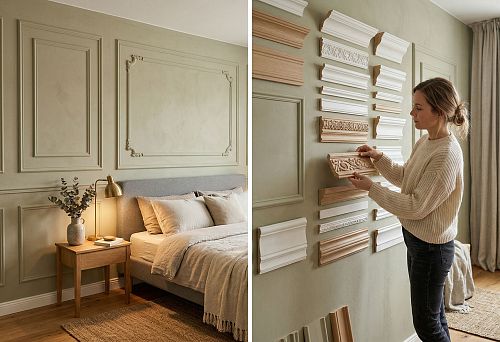
Arrange thin planks in a checkerboard pattern or diagonally to create a dynamic and unusual pattern. Vertical placement 'pulls' the room upward, visually increasing ceiling height, while horizontal placement expands the space.
● Panel cladding
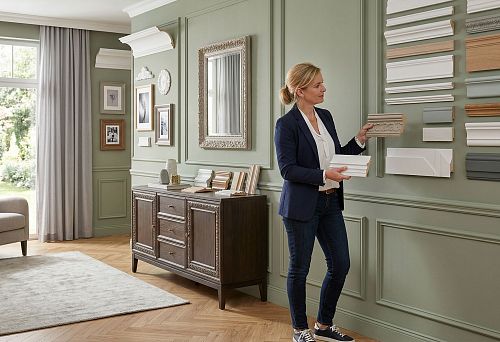
Narrow planks can be attached to an existing substructure, concealing wiring, cables, and wall irregularities. This approach is used for decorating corridors, halls, as well as spaces with high acoustic requirements.
Our factory also produces:


3.2. Furniture and door structures
● Furniture facades
Thin planks are ideal for decorating cabinet doors, drawers, and shelves. This will give furniture an expressive look while maintaining its functionality.
● Decorative inserts
By cutting out specific shapes or creating an ornament, you can insert narrow planks into a door panel or into the partition of interior doors, thereby adding an element of individuality to the interior.
Get Consultation
3.3. Creating partitions and screens
● Zoning
Using several planks arranged vertically or diagonally, you can divide a room into functional zones (kitchen-living room, work area-bedroom) without burdening the space with solid walls.
● Screens and movable partitions
Narrow wooden planks are easy to join together, creating lightweight yet sturdy structures that can be rearranged as needed.
3.4. Shelves, panels, and decor
● Shelves and railings
It is easy to create a shelf or lightweight cantilever from narrow planks, which will complement the overall style of the room. The material can be leftover pieces from the main project.
● Decorative panels
If arranged in the form of a pattern, ornament, or logo, you will get a unique art solution for home or office. Alternatively, planks can be painted in different colors, forming interesting compositions.
4. Installation technology
4.1. Surface Preparation
Before beginning the installation of narrow planks, it is necessary:
- Clean and level the surface (if there are many irregularities, it is better to use a substructure).
- Apply antiseptic and primer (especially in wet areas).
- Run utilities and insulation if necessary.
4.2. Mounting Methods
- Using adhesive
- Suitable for flat walls and ceilings;
- Provides a clean appearance as fasteners are not visible;
- Choose adhesive compatible with wood (usually special construction or carpentry adhesives).
- With Screws or Nails
- Universal option, allowing easy removal or replacement of planks if needed;
- Fasteners should be concealed or painted to avoid spoiling aesthetics.
- Using clips
- Special fasteners to which each plank is fixed;
- Speed up installation and allow easy disassembly if needed.
4.3. Cutting and Fitting
● Use a circular saw or fine-toothed jigsaw to minimize chipping.
● Measure the length of each plank several times, as even small errors may result in uneven joints.
● When joining 'at the corner,' it is important to maintain the correct cutting angle, especially if the planks create a geometric pattern.
5. Finishing and Maintenance
5.1. Final Coatings
To ensure wood lasts long and retains its attractiveness, apply protective coatings:
- Varnish
Forms a strong film on the surface, protecting it from mechanical damage and moisture. Can provide either glossy or semi-matte finish.
- Wax-based oil
Enhances texture while gently protecting wood. Surface feels natural and 'warm' to the touch. However, the coating will need periodic renewal.
- Paint
If you need to create a bright accent, you can paint narrow planks in contrasting colors. It is important to choose paints specifically designed for wood to preserve its structure and avoid deformation.
5.2. Maintenance Recommendations
● Regular cleaning: remove dust with dry or slightly damp cloth.
● Avoid sudden humidity changes: wood may dry out or swell.
● Minor repairs: if scratches or scuffs appear, lightly sand the surface and reapply protective coating.
6. Design Ideas and Concepts with Narrow Planks
- Scandinavian minimalism
Use light-colored woods (pine, spruce) and cover them with semi-transparent paint or oil to preserve natural texture. Add accents using individually painted planks in pastel tones.
- Loft
For an industrial atmosphere, use darkened or weathered planks, combining wood with concrete, brickwork, and metal. Horizontal stripes will create a cozy effect contrasting with rough materials.
- Classic and neoclassic
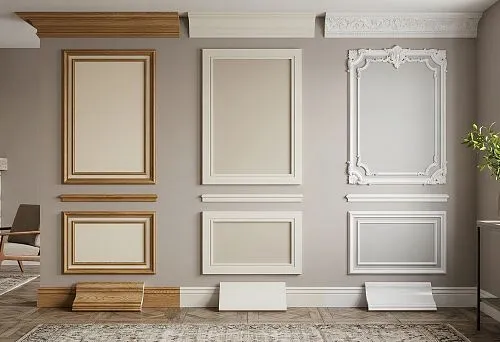
Narrow planks can serve as rich moldings and decorative inserts. Choose oak or beech, and apply a varnished or lightly tinted finish to emphasize wood grain structure.
- Eco-style
Wood with minimal processing, preserving knots and natural color transitions. Emphasis on natural harmony and eco-friendliness of the entire interior.
- Eclecticism
Try creating contrasts using planks of different colors and textures. Combine wood with tiles, stone, fabric panels — resulting in bold and creative solutions.
7. Advantages and Possible Limitations
7.1. Advantages
● Universality. Narrow planks suit any interior, from modern high-tech to vintage shabby chic.
● Material savings. Short pieces can be used to achieve interesting effects by combining different wood remnants.
● Quick replacement. If one board is damaged, it can be easily replaced without dismantling the entire surface.
● Easy installation. Compact dimensions simplify transportation and installation.
7.2. Possible Limitations
● Requires careful handling. For large areas covered with narrow boards, more time and effort will be needed to avoid visible gaps or uneven joints.
● Regular maintenance. Natural wood requires reapplication of protective coating every few years, especially in rooms with high humidity.
8. Conclusion: Why narrow wooden boards are the ideal tool for transforming space
Narrow wooden boards are an example of how small details can profoundly affect the perception of interior space. Their advantages are obvious: they are inexpensive, eco-friendly, easy to install, and the result looks stylish and original. The natural wood grain fills the room with a sense of warmth and coziness, while the ability to vary color and layout offers endless opportunities for experimentation.
In skilled hands, even a small fragment of wall decorated with narrow boards transforms into an expressive art composition. By combining different wood tones, choosing unique installation patterns, using contrasting finishes and carved details, you can make your interior unique, reflecting your individuality and creative approach.
Thus, if you are looking for a way to bring something original into space, yet practical and long-lasting, pay attention tonarrow wooden stripsThey will give you freedom of self-expression while remaining true to the traditional qualities of natural wood. Let your interior become harmonious, stylish, and truly cozy — because achieving this is very easy if you trust the beauty and naturalness of materials.