Article Contents:
- Philosophy of Modern Exterior Design
- Historical Roots of Decorative Traditions
- Modern Interpretation of Classical Canons
- Materials as the Basis of Decorative Impact
- Natural Stone: Eternity and Status
- Wood: Nature's Warmth in Architecture
- Modern Composite Solutions
- Metal in Modern Decor
- Systematic Approach to Facade Decoration
- Compositional Principles of Facade Design
- Facade Zoning
- Interaction with Building Architecture
- Stylistic Directions in Modern Decor
- Neoclassicism: eternal values in modern interpretation
- Modern minimalism: beauty of simplicity
- Ethnic Motifs: Cultural Originality
- Industrial Style: Brutalist Aesthetics
- Technological Aspects of Decor Creation
- Traditional Processing Methods
- Modern Digital Technologies
- Innovative materials and coatings
- Climate Factors and Their Impact on Decor Choice
- Materials' Frost Resistance
- Ultraviolet Protection
- Wind Loads
- Installation and Mounting of Decorative Elements
- Load Analysis
- Types of Mountings
- Features of mounting to various bases
- Technologies of the Future in Decorative Arts
- Pricing factors
- Budget-friendly solutions
- Premium Solutions
- Modern Trends in Outdoor Decor
- Ecological Trend
- Technological Innovations
- Personalization and uniqueness
- Frequently Asked Questions
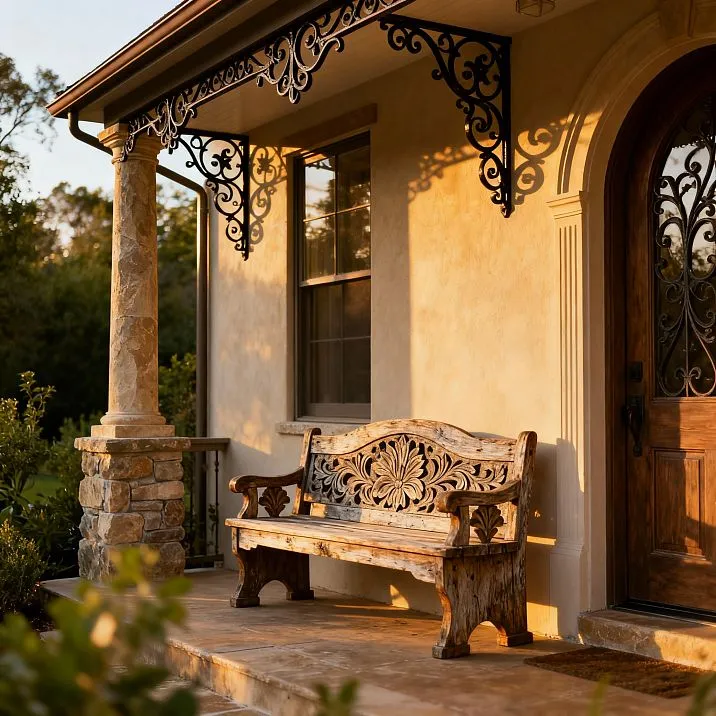
Modern private home architecture is experiencing a true renaissance of decorative styling.Outdoor home decorationIt has transformed from mere ornamentation into a powerful tool for creating a unique architectural image capable of radically transforming the appearance of any building. In an era when every homeowner strives to distinguish their residence among uniform developments, the thoughtful application of decorative elements has become not a luxury, but a necessity.
What makes us pause and look at some houses, while passing by others without interest? The secret lies in the details — those very architectural accents that turn an ordinary box into a work of art. Every cornice, every window casing, every pilaster tells a story about the owner’s taste, their understanding of beauty, and their pursuit of perfection.
Modern technologies and materials open unprecedented possibilities for creativity in exterior design. From classical moldings to avant-garde composite solutions — the palette of expressive means is astonishing in its diversity. However, the richness of choice also gives rise to new challenges: how not to get lost in the variety of proposals and create a truly harmonious image?




Philosophy of Modern Exterior Design
The foundation of a successful facade decoration project lies in understanding the deep principles of architectural aesthetics.Facade Decoration— this is not merely a set of ornaments hung on walls, but a thoughtfully designed system of visual elements, each playing a specific role in creating the overall impression.




Historical Roots of Decorative Traditions
Humanity has adorned its dwellings since ancient times. From prehistoric cave drawings to intricate ancient temple reliefs — the pursuit of beauty has always been an inseparable part of human nature. Each historical epoch has contributed to the development of decorative art.
Ancient Greek orders laid the foundations of classical architectural composition. Doric, Ionic, and Corinthian styles continue to influence the modern understanding of proportions and rhythm in architecture. The strict mathematical basis of Greek canons of beauty continues to inspire architects of the 21st century.
Gothic architecture of the Middle Ages gifted the world with an understanding of verticality as a means of creating a lofty mood. Pointed arches, rosettes, intricate carvings — all these elements have found their place in the modern arsenal of decorative means.
Baroque and Rococo demonstrated how richness of decoration can create an atmosphere of luxury and theatricality. Ornate scrolls, gilding, abundance of fine details — these techniques are still used in creating representative interiors and exteriors.
Modernism revolutionized the approach to decoration, introducing natural motifs and asymmetrical compositions. Botanical ornaments, flowing lines, integration with the natural environment — principles that remain relevant today.
Our factory also produces:


Modern Interpretation of Classical Canons
Modern Approach toarchitectural facade decorationis characterized by freedom in interpreting historical styles. Designers do not blindly copy past examples, but creatively reinterpret them, adapting them to modern needs and possibilities.
Neoclassicism, in its modern interpretation, preserves the basic principles of composition, but employs new materials and technologies. Polyurethane columns look no less imposing than marble ones, yet are significantly more practical in use.
Minimalism, seemingly rejecting decoration, actually offers its own approach to facade ornamentation. Play of light and shadow created by simple geometric forms, material textures, color accents — all these are means of the modern decorative language.
Eclecticism allows combining elements of different styles into a single composition. The main condition for success — a sense of proportion and understanding of general principles of harmony.
Get Consultation
Materials as the Basis of Decorative Impact
The choice of materials for exterior decoration determines not only the appearance, but also the durability, cost-effectiveness, and ecological soundness of the project. The modern market offers a wide range of solutions — from traditional natural materials to high-tech composites.
Natural stone: eternity and status
Natural stone remains the unrivaled material for creating prestigious facades.decor for exterior wallsMade of natural stone creates a sense of solidity, nobility, and connection to history.
Granite — the king among decorative stones. Its exceptional strength, resistance to atmospheric effects, variety of colors and textures make granite an ideal material for creating durable decorative elements. Polished granite surface creates mirror-like reflections, matte finish — elegant restraint.
Marble traditionally associates with luxury and refinement. Its ability to convey the finest details of carving makes marble indispensable for creating complex sculptural compositions. However, marble requires more careful maintenance and protection from aggressive influences.
Tufa and limestone offer a softer, warmer aesthetic. These materials are easier to work with, allowing for detailed decorative elements. Natural pores and surface irregularities create a picturesque play of light and shadow.
Sandstone attracts with its rich hues and relative accessibility. Its layered structure creates interesting visual effects, especially under certain lighting conditions.
Wood: warmth of nature in architecture
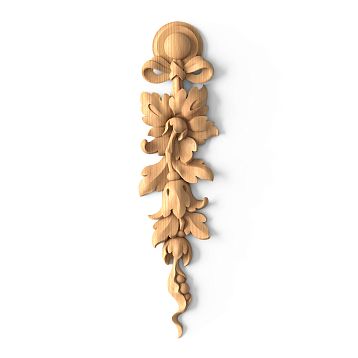
Outdoor wooden decorationcreates a unique atmosphere of coziness and closeness to nature. Modern wood processing technologies have significantly extended the service life of wooden decorative elements in outdoor conditions.
Oak — the benchmark of strength and beauty among decorative species. Its pronounced texture, high density, and natural resistance to rot make oak an ideal material for creating durable decorative elements. Patina of time only enhances the nobility of oak surfaces.
Larch naturally contains resins that protect wood from moisture and pests. This material is ideal for regions with harsh climates. Over time, larch acquires a noble silver hue.
Cedar combines beauty with exceptional protective properties. Cedar's natural oils repel insects, prevent decay, and create a pleasant aroma.
Exotic species — teak, ipe, kumaru — offer unique colors and textures but require a special approach to processing and installation.
Thermally modified wood combines the beauty of natural wood with increased resistance to external influences. The thermomodification process alters the wood's structure at the cellular level, increasing its density and reducing its hygroscopicity.
Modern composite solutions
Facade decoration made of polyurethaneRevolutionized the decorative materials industry. This material combines ease of processing with exceptional performance characteristics.
Polyurethane is not afraid of moisture, frost, or ultraviolet radiation. It does not crack, deform, or suffer from microorganisms. At the same time, polyurethane is easy to cut, glue, and paint, opening up boundless creative possibilities.
Modern molding technologies allow creating polyurethane elements with exquisite detail. High-quality molds capture every detail of the original, whether classical moldings or modern geometric ornamentation.
The ability to color polyurethane in any shade expands design possibilities. Special paints create patina effects, metallic sheen, and imitation of various materials.
Fiberglass offers exceptional strength at minimal weight. This material allows creating large-scale elements of complex shapes that cannot be achieved with traditional materials.
Wood-plastic composites (WPC) combine the aesthetics of wood with the practicality of plastic. This material does not require painting, does not rot, does not fade, while retaining a pleasant wood grain texture.
Metal in modern decor
Metal decorative elements give facades a modern, technological look. Advances in metalworking techniques have opened new possibilities for creating complex decorative compositions.
Stainless steel provides maximum durability with minimal maintenance. Various surface treatments — polishing, matte finishing, embossing — create diverse visual effects.
Corten steel is specifically designed for outdoor use. It develops a protective rust layer that prevents further corrosion and creates a distinctive industrial appearance.
Aluminum alloys combine lightness with corrosion resistance. Anodizing aluminum allows obtaining exceptionally durable colored coatings.
Artistic forging remains a popular method for creating exclusive decorative elements. Modern blacksmiths use traditional techniques combined with new technologies.
Systematic approach to facade decoration
Creating a harmonious decorative solution requires a systematic approach.Outdoor decoration elementsDecorative elements should not merely adorn individual areas of the facade, but create a unified composition subordinate to a common artistic concept.
Compositional principles of facade design
A successful facade composition is built on classical principles of harmony: proportionality, rhythm, symmetry or asymmetry, hierarchy of elements, color coordination.
Proportionality determines the relationships between the sizes of various facade elements. The golden ratio, classical orders, modular systems — all are tools for creating harmonious relationships.
Rhythm is created by repeating similar elements at certain intervals. Rhythmic placement of windows, columns, decorative panels creates dynamism and structure in the facade.
Symmetry is traditionally associated with classical architecture, but can be effectively used in modern projects. Asymmetric compositions require a more refined sense of balance, but allow for more dynamic solutions.
Hierarchy of elements implies distinguishing main from secondary elements. The entrance group is usually the compositional center, while other elements complement and support the main theme.
Facade zoning
Proper facade zoning helps create a clear, readable composition. Traditionally, the facade is divided into the plinth, main wall section, and cornice section.
The plinth zone requires special attention as it is the most functionally loaded and exposed area. Cladding the plinth with stone, decorative plaster, or special panels not only protects the wall but also forms the basis of the composition.
The main wall surface provides maximum opportunities for decorative treatment. Here, window casings, pilasters, decorative panels, and moldings are placed. It is important not to overload the wall with details, leaving enough 'air' for the perception of the composition.
The cornice section — cornices, parapets, gables — completes the composition and defines the building's silhouette. Properly designed finishing can radically change the perception of the building's proportions.
Interaction with the building's architecture
Decorative elements should harmoniously integrate into the architectural concept of the building, highlighting its strengths and concealing its weaknesses.Facade decoration elementsThey can radically change the perception of architecture.
Vertical elements — columns, pilasters, vertical moldings — visually increase the height of the building, giving it elegance and grandeur. This technique is especially effective for single-story structures, which appear low and grounded.
Horizontal elements — eaves, window sills, horizontal moldings — emphasize the building's length, creating a sense of stability and solidity. Tall buildings can be visually 'grounded' using active horizontal divisions.
Corner elements — rusts, pilasters, decorative panels — highlight the building's structural logic, creating an impression of strength and reliability.
Window frames serve not only a decorative but also a functional role, protecting joints from moisture. Different types of window casings can radically alter the character of the facade.
Stylistic directions in modern decoration
The choice of stylistic direction determines the overall concept of decorative treatment. Each style has its distinctive features, material preferences, and compositional principles.
Neoclassicism: eternal values in modern interpretation
Neoclassical style remains one of the most popular in private home construction. It combines grandeur and elegance with domestic comfort, tradition with modernity.
Columns and pilasters are the main elements of neoclassical decoration. Modern technologies allow creating columns from various materials — from traditional stone to lightweight composites. Properly chosen proportions and finishes make polyurethane columns indistinguishable from stone.
Antabлемент — the horizontal part of the classical order — includes architrave, frieze, and cornice. In modern interpretation, antablement can be simplified but retains its basic proportional relationships.
Gables add grandeur and completeness to the entrance area. Triangular, segmental, or broken gables — each type creates its own mood.
Balustrades, rosettes, garlands, meanders — a rich arsenal of classical decorative motifs allows creating diverse compositions within a single style.
Modern minimalism: beauty of simplicity
A minimalist approach to facade decoration implies maximum form simplicity with the highest quality of execution. Here, every detail counts, and any inaccuracy immediately stands out.
Geometric forms dominate in minimalist design. Clear lines, right angles, simple proportions create a strict yet expressive composition.
The play of light and shadow, created by simple volumetric forms, replaces traditional ornamentation. Projecting and recessed planes, consoles, niches create a dynamic chiaroscuro effect.
Materials in minimalism must be of perfect quality. Any surface defects or connection inaccuracies are unacceptable. Concrete, glass, metal, natural stone — materials with ideal texture.
The color palette is built on nuances — white, gray, black with occasional color accents. The importance lies not in brightness but in the quality of color, its depth and saturation.
Ethnic motifs: cultural uniqueness
Using ethnic motifs in decoration allows highlighting cultural affiliation and creating a unique, distinctive image.
Russian style implies the use of carved elements, bright colors, plant ornaments. Casings, cornices, and panels — traditional elements of Russian wooden architecture find new life in modern interpretations.
Scandinavian style is characterized by simplicity and naturalness. Light wood, simple forms, functionality — the main principles of northern design.
Mediterranean style brings warmth from southern countries. Terracotta colors, arched forms, ceramic elements create an atmosphere of eternal holidays.
Eastern motifs impress with refinement and symbolism. Complex Islamic geometric patterns, refined Japanese forms, luxurious Chinese dragons — each culture offers its unique decorative language.
Industrial style: brutal aesthetics
Industrial aesthetics transforms structural elements into decorative ones. Open communications, rough textures, contrasting materials create a brutal yet expressive image.
Brick, concrete, metal — primary materials of industrial style. Their authenticity is important, with no attempts at imitation or ornamentation.
Functional elements — staircases, railings, gutters — become decorative accents. The main requirement — honesty of material and construction.
The color palette is built on contrasts of black and white with bright color accents. Red brick, rusty metal, green communications create a characteristic palette.
Technological aspects of creating decoration
Modern technologies have radically changed approaches to creating and installing decorative elements.Production of facade decorationToday combines traditional craftsmanship skills with high-tech processes.
Traditional finishing methods
Hand-carved stone remains unmatched in quality of detail and artistic expression. Each piece is unique and bears the mark of the artisan. Modern carvers use both traditional tools and pneumatic and electric equipment.
Casting in molds allows for reproducing complex decorative elements. High-quality silicone molds capture the finest details of the original. Different materials — plaster, concrete, polymers — require specific casting technologies.
Forged elements are created using traditional hot forging methods or modern cold deformation technologies. Each method has its own advantages and limitations.
Modern digital technologies
CNC milling allows creating the most complex decorative elements with micron-level precision. Three-dimensional models created in CAD software are automatically converted into machine control programs.
Laser cutting provides perfectly clean edges and enables creation of incredibly complex lace-like elements. Different types of lasers are suitable for processing metal, wood, plastic, and composites.
3D printing opens up possibilities for creating elements impossible with traditional manufacturing. Complex internal cavities, variable material density, integrated mechanisms — all of this is achievable with additive technologies.
Waterjet cutting allows processing almost any material without thermal impact. Stone, metal, glass, ceramic — all are suitable for this method of processing.
Innovative materials and coatings
Nanocoatings radically change surface properties. Self-cleaning coatings, antibacterial surfaces, memory-effect coatings — possibilities are limitless.
Photocatalytic coatings clean air from pollutants by breaking down organic compounds under light. Titanium dioxide in nanoparticle form provides this effect.
Thermochromic materials change color depending on temperature. Facades can change color during the day, reacting to sunlight.
Piezochromic materials change color under mechanical stress. Walls can respond to touch, wind, vibrations.
Climate factors and their influence on decoration choice
Russian climate conditions impose special requirements on exterior decorative elements. Sharp temperature fluctuations, high humidity, aggressive precipitation — all these factors must be considered in design.
Freeze resistance of materials
Freeze-thaw cycles are the main destructive factor in the Russian climate. Water entering the material's pores expands upon freezing and creates cracking stresses.
The freeze resistance coefficient indicates how many freeze-thaw cycles a material can withstand without damage. For exterior elements, it should be at least F50, preferably F100–F200.
Capillary water absorption determines the rate at which moisture penetrates the material. The lower this value, the higher the freeze resistance.
Pore structure affects freeze resistance. Large pores are less dangerous than small capillaries. Special additives in concrete create reserve pores for water expanding upon freezing.
Protection against ultraviolet radiation
Ultraviolet radiation destroys many organic materials. Polymers become brittle, wood loses color, paints fade.
UV stabilizers are added to polymer materials to protect against ultraviolet radiation. They absorb or reflect harmful radiation, preventing material degradation.
Protective varnishes and paints with UV filters extend the service life of wooden and other organic materials. Periodic renewal of the coating maintains protective properties.
Facade orientation affects the intensity of UV exposure. South-facing facades require more reliable protection from solar radiation.
Wind Loads
Protruding decorative elements are subjected to significant wind loads. The mounting calculation must consider the aerodynamic properties of the elements.
Streamlined shapes reduce wind impact. Sharp angles and flat surfaces create turbulence and increased loads.
Perforated elements allow airflow, reducing wind pressure. Lacy decorative panels are less loaded by wind than solid ones.
Dynamic loads from gusty winds can be more dangerous than static loads. Resonance can lead to fastener failure even with moderate wind.
Installation and mounting of decorative elements
The reliability of attaching decorative elements is not only an aesthetic issue, but also a safety one. Falling heavy parts may cause serious damage to people and property.
Load Analysis
The self-weight of the element is the main permanent load. The density of the material and the dimensions of the part determine the mass of the element.
Wind loads depend on the shape of the element, its position on the facade, and the climatic zone. The calculated wind speed varies significantly across different regions of Russia.
Snow loads are relevant for horizontal and sloped surfaces. Eaves, canopies, and decorative ledges accumulate snow, creating additional load.
Thermal deformations occur due to differences in the coefficients of thermal expansion of materials. Fasteners must compensate for these deformations.
Seismic loads are considered in regions with high seismic activity. Dynamic effects require special fastening methods.
Types of fasteners
Mechanical fasteners provide maximum reliability. Anchors, dowels, and screws create a strong connection with the base.
Chemical anchors use special compounds to fill holes. Upon polymerization, the compound forms a monolithic connection with the base.
Adhesive connections are suitable for lightweight elements on flat surfaces. Special construction adhesives ensure the strength and elasticity of the connection.
Combined systems combine different types of fastening to increase reliability. Mechanical fastening is supplemented by adhesive connections.
Features of mounting to different bases
Brick walls require special attention when selecting fasteners. Solid brick allows using any type of anchor, while hollow brick requires special solutions.
Concrete foundations are the most reliable for attaching heavy elements. Quality concrete withstands significant loads from anchors.
Gas concrete and aerated concrete have a lower density structure, requiring special fasteners. Frame dowels and chemical anchors ensure reliable connections.
Wooden structures limit the weight of attached elements. Distributing the load over a larger area increases the reliability of fastening.
Economic aspects of decorative finishing
The cost of decorative finishing may vary within very wide limits.Facade decoration priceIt depends on many factors; understanding these will help optimize the project budget.
Pricing Factors
The material used is the main factor in cost. Natural stone and hand-carved elements cost significantly more than polymer molds, but they provide uniqueness and prestige.
The complexity of elements directly affects manufacturing cost. Simple geometric shapes are produced on automated lines, while intricate moldings require manual labor.
The quantity of elements affects the unit cost. Large series allow reducing the share of fixed costs related to mold production and equipment setup.
Urgency of manufacturing may increase cost by 50-100%. Deviating from production schedules requires additional resources.
Installation complexity affects the overall project cost. Work at great heights, in confined spaces, requiring special equipment, is more expensive.
Budget Solutions
Using standard elements instead of custom manufacturing can reduce cost several times. Many manufacturers offer a wide range of standard elements.
Polyurethane elements provide excellent cost-to-quality ratio. Modern technologies allow creating items visually indistinguishable from expensive materials.
Combining materials allows setting accents with minimal costs. Main areas can be finished with economical materials, while accents can be highlighted with expensive elements.
Phased implementation distributes costs over time. One can start with basic elements and gradually add decorative details.
Premium solutions
Natural materials — stone, precious wood, artistic forging — create an atmosphere of exclusivity, but require corresponding investments.
Custom manufacturing according to exclusive sketches ensures project uniqueness. Author-designed elements cannot be copied or replicated.
Handcrafted work by highly skilled artisans creates works of art. Each item bears the mark of the creator’s personality.
Using rare materials — exotic woods, precious metals, unique minerals — creates a special aura of prestige.
Modern trends in exterior decoration
The trend for decorative facade treatments constantly evolves, reflecting general trends in architecture, art, and social preferences.
Ecological Trend
Growing attention to ecological issues influences the choice of materials for decoration. Renewable resources, recycled materials, low carbon footprint — new selection criteria.
Natural materials are experiencing a renaissance. Wood, stone, clay are not only beautiful but also environmentally safe. Modern processing technologies enhance their durability.
Living systems — vertical greening, integrated planters, trellises for climbing plants — create a symbiosis between architecture and nature.
Recycled materials find new applications in decoration. Plastic from post-consumer waste, reclaimed wood, recycled metal — ecology can be beautiful.
Technological Innovations
Smart materials with changeable properties open new possibilities for dynamic decoration. Color, transparency, shape can change according to a programmed schedule or in response to external stimuli.
Integrated lighting transforms decorative elements into light sources. LED technologies allow creating complex lighting scenarios.
Interactive elements respond to human presence, weather conditions, time of day. Motion, light, and temperature sensors control the behavior of decoration.
Augmented reality allows creating virtual decorative elements. Mobile applications can display additional information, animations, or changes to the decoration.
Personalization and uniqueness
Mass production is giving way to individualized solutions. Clients strive to create a unique look for their homes.
Custom design has become the norm, not the exception. Designers develop unique elements specifically for a particular project.
Cultural references allow creating decoration with deep meaning. References to history, literature, art make facades intellectually engaging.
Family symbols, coats of arms, monograms personalize decoration, creating a connection with family and lineage history.
Frequently asked questions
What materials are best suited for the Russian climate?
For Russian conditions, frost-resistant materials with low water absorption are optimal. Polyurethane, quality ceramics, dense natural stone, properly treated coniferous wood show excellent results. Quality waterproofing and UV protection are also important.
How long does it take to manufacture decorative elements?
The timeframe depends on complexity and material. Standard polyurethane elements can be delivered within a week, natural stone items require 2–4 weeks, exclusive hand-carved pieces may take several months. Delivery times increase during peak seasons.
Is special permission required for installing decor?
In most cases, decorative elements that do not alter the building’s structure do not require separate permits. Exceptions include historic city centers and protected zones around architectural monuments. Large protruding elements may require coordination with architectural authorities.
How to calculate the required amount of fasteners?
Fastener calculation must be performed by a specialist based on element weight, regional wind loads, and foundation type. General rule — at least 4 mounting points for each element larger than 1 meter. Heavy elements require redundant fasteners.
Is it possible to install decor in winter?
Installation is possible at temperatures no lower than -10°C. Adhesive joints require positive temperatures, so in winter mechanical fasteners are predominantly used. Some materials become brittle in cold. The best time for installation is late spring and summer.
How to care for decorative elements?
Maintenance depends on the material. Polyurethane elements require periodic washing with water. Wooden elements need protective coatings renewed every 3–5 years. Metal elements require corrosion monitoring. Stone surfaces may require special cleaning for contaminants and biological damage.
Creating an expressiveexterior decoration of a house— it is an art that combines knowledge of traditions with understanding of modern possibilities. Properly selected and professionally installed decorative elements not only beautify the facade but also increase property value, create a comfortable living environment, and reflect the owner’s individuality.
Modern materials and technologies open boundless opportunities for creativity. From classical moldings to avant-garde installations — everyone can find a solution matching their tastes and budget. The key is not to forget practical aspects: climate resistance, reliable mounting, material durability.
Investments in quality decoration pay off not only in aesthetic pleasure but also in real property value increase.catalog of facade decorationmodern manufacturers offer solutions for any architectural tasks and financial capabilities.
STAVROS has been a leader in the Russian architectural decoration market for many years. Our extensive experience, modern production technologies, and wide product range enable us to solve any complexity of tasks. From standard elements to exclusive custom works — we bring the boldest design concepts to life in material.Facade Decoration MoldingsSTAVROS products are distinguished by their exceptional quality and durability, proven by years of operation in various climatic conditions across Russia.