Article Contents:
- Ceiling Revolution: Reimagining Upper Space
- Psychology of Ceiling Perception
- Historical Evolution of Ceiling Decoration
- Technological Foundation of Modern Ceiling Decoration
- Materials Science: From Classic to Innovation
- Manufacturing Technologies: Precision to the Micron
- Classification of Ceiling Corner Elements
- Functional Typology
- Stylistic Differentiation
- Designing Ceiling Systems: The Art of Mathematics
- Calculating Proportions and Scale
- Lighting as a Design Factor
- Installation Technologies: Precision Mounting
- Preparation stage: foundation of quality
- Fastening Technologies: Reliability for Decades
- Finishing Treatment: Invisible Perfection
- Stylistic Solutions: From Baroque to Minimalism
- Classic Traditions in Modern Interpretation
- Modern Aesthetics: Function as Beauty
- Eclecticism: Blending Styles as Art
- Functional Aspects of Ceiling Systems
- Acoustic Properties: Comfort of Sound Environment
- Climate Functions: Regulating Microclimate
- Psychological Impact: Atmosphere of Space
- Economic Aspects of Ceiling Decoration
- Investment Appeal of Quality Decoration
- Operating Costs: Savings in the Long Term
- Innovations and development prospects
- Digital technologies in design
- New materials and technologies
- Eco-Trends
- Practical Recommendations from Professionals
- Criteria for Choosing Optimal Solutions
- Design Errors and Ways to Prevent Them
- Maintenance and Care: Extending Service Life
- Conclusion: Investment in Space Perfection
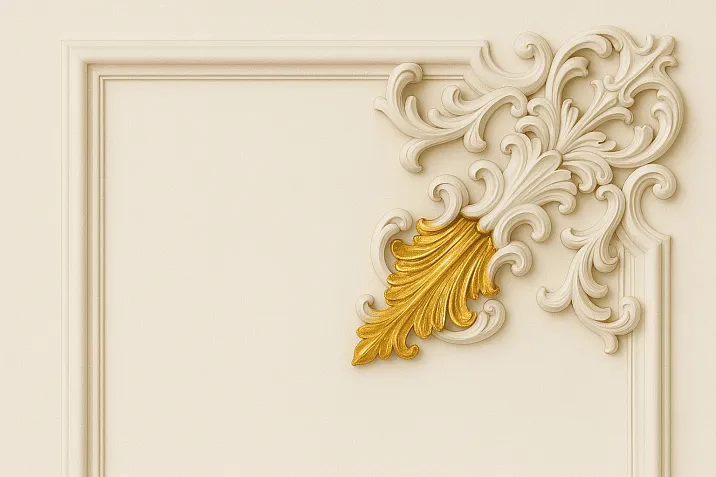
Look at the ceiling of any room. Do you see there perfect lines of transition, flawless joints, elegant contours? Or does your gaze encounter uneven edges, rough connections, unfinished corners? Corner element for ceiling — this is not just a decorative detail, it is the key to creating an interior that speaks of impeccable taste and professional approach to space design.
In the modern world of design, the ceiling has ceased to be merely a functional surface. It has become the fifth wall of the room, defining the character of the entire interior. Ceiling molding is experiencing a true renaissance today, and corner elements are becoming central figures in this architectural theater.


Ceiling Revolution: Reimagining the Upper Space
The ceiling is a canvas on which masters of interior art create their masterpieces. Unlike walls, which can be furnished or adorned with paintings, ceiling space remains open for contemplation in all its glory. That is why every detail here is of immense importance.




Psychology of Ceiling Perception
The human brain is structured in such a way that we subconsciously evaluate the quality of space based on the condition of its upper boundary. Unfinished ceiling corners create a sense of incompleteness, even if the rest of the finishing is flawless. Corner element for ceiling solves this problem fundamentally, transforming technical joints into elegant architectural accents.
Studies show that well-finished ceiling corners visually increase the height of a room by 15-20%. This occurs due to the creation of clear lines that direct the gaze upward and create a sense of spaciousness. Corner Ceiling Element works as an optical illusion, expanding the boundaries of space.
Our factory also produces:
Historical Evolution of Ceiling Decoration
The history of ceiling decoration spans millennia. From the simplest beam structures of ancient dwellings to the luxurious coffered ceilings of Roman palaces, from Gothic vaults of cathedrals to Baroque medallions of aristocratic residences — each era brought its own understanding of the beauty of upper space.
ceiling molding rosette in classical interiors served not only decorative but also functional purposes — it concealed the mounting point for chandeliers and created a compositional center of the ceiling composition. Modern technologies allow recreating historical forms with unprecedented accuracy.
Get Consultation
Technological Foundation of Modern Ceiling Decoration
Material Science: From Classic to Innovations
The choice of material for ceiling corner elements is determined not only by aesthetic but also technical considerations. Ceiling elements operate under constant exposure to warm air currents from heating systems, which imposes additional requirements for material stability.
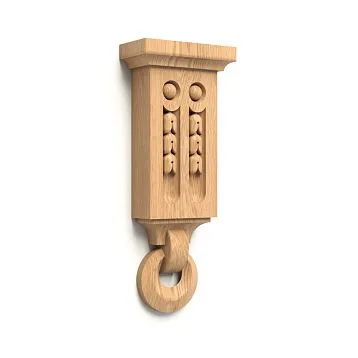
Natural wood remains the gold standard for ceiling molding elements. Wood has an optimal coefficient of thermal expansion, allowing it to avoid deformation under temperature fluctuations. Moreover, wood 'breathes,' regulating humidity in the room and creating a healthy microclimate.
Polyurethane Ceiling Moldings represents a high-tech alternative to natural wood. Modern polyurethane compositions have high density, moisture resistance, and the ability to accurately imitate the texture of any material. Especially important is that polyurethane is significantly lighter than wood, reducing the load on ceiling structures.
Production Technologies: Precision to the Micron
Manufacturing of high-quality corner elements for ceilings requires the use of high-precision equipment. Modern multi-axis CNC milling centers ensure processing accuracy down to 0.01 mm, which is critically important for creating flawless joints.
The characteristic of ceiling elements is that they must join at various angles — from standard 90 degrees to complex polygonal configurations in rooms with non-standard layouts. This requires mathematically precise calculation of each profile and flawless processing quality.
Quality control includes checking geometric parameters, surface quality, material moisture content, and compliance with technical requirements. Buy ceiling molding high-quality products can only be produced by manufacturers who invest in modern measuring and control equipment.
Classification of Ceiling Corner Elements
Ceiling corner elements are divided into several main categories by their purpose. Structural elements ensure technically correct junctions of different ceiling planes. Decorative elements create artistic finishes at transitions. Combined elements combine both functions.
Corner junctions require a special approach to design. The socket must harmoniously integrate into the overall ceiling decoration system while ensuring secure mounting of the lighting fixture.
Ceiling molding for chandelier Corner elements for multi-level ceilings solve complex geometric problems of junctions between planes located at different levels. Here, special design and manufacturing skills are required, as standard solutions are inapplicable.
Stylistic differentiation
Each historical style has developed its own canons for decorating ceiling corners. Classicism prefers strict geometric forms with clear proportions. Baroque leans toward lavish, richly decorated elements. Empire uses military and antique symbolism.
Modern styles — minimalism, high-tech, Scandinavian — require concise solutions where form follows function.
In such interiors, they should be as inconspicuous as possible, ensuring technical perfection without drawing attention to themselves. Decorative corner elements Eclectic styles allow mixing of different historical forms, opening wide opportunities for creative exploration. The key is to maintain a sense of proportion and avoid turning the ceiling into a museum of decorative styles.
Ceiling system design: the art of mathematics
Calculation of proportions and scale
Correct design of a ceiling system begins with analyzing the architectural features of the room. Ceiling height, room dimensions, window and door placement — all these factors influence the selection of sizes and proportions of decorative elements.
For rooms with standard height of 2.7–3.0 meters, optimal width
is 50–80 mm. In rooms with high ceilings, these dimensions can be increased proportionally, reaching 120–150 mm and more. corner elements for ceilings The ratio of corner element sizes to other ceiling decorative details is of great importance.
They must harmoniously complement corner elements, creating a unified composition. Ceiling moldings for painting They should harmoniously complement corner elements, creating a unified composition.
Lighting as a design factor
Interaction of decorative elements with lighting is a key aspect of ceiling system design. The relief surface of the corner element creates a play of light and shadow, which can either accentuate the beauty of the form or distort it under improper lighting.
Directional lighting reveals the material texture and emphasizes the volume of elements. Diffused light smooths contrasts and creates soft transitions. Ceiling decoration It must take into account all features of the room’s lighting design.
Modern LED systems open new possibilities for illuminating ceiling elements. Hidden LED strips can create a floating ceiling effect, while spot lighting can highlight individual decorative details.
Installation technologies: precision mounting
Preparation stage: foundation of quality
The quality of installing ceiling corner elements depends 90% on the preparation of the base. The ceiling surface must be perfectly flat, clean, and dry. Any unevenness exceeding 1 mm per linear meter will result in visible deformations of the elements.
Special attention is paid to room corners — this is where deviations from a right angle are most often encountered. Professional installers use special measuring tools to accurately determine actual angles and adjust elements to match the room’s real geometry.
Ceiling marking is performed using laser levels and precise measuring systems. Each element must be placed in a strictly defined location, as even minor deviations will prevent quality jointing.
Fastening technologies: reliability for decades
Choice of fastening method corner elements for ceilings depends on the ceiling material, weight of elements, and operating conditions. Lightweight polyurethane elements can be mounted using special adhesives that provide joint strength exceeding the material’s own strength.
Large-section wooden elements require combined fastening — adhesive joints are supplemented with mechanical fastening. Modern concealed fastening systems allow ensuring reliable connections without compromising the surface’s aesthetics.
Mounting elements to suspended ceilings presents particular difficulty. Special anchor systems are required here, transferring loads to load-bearing structures. Improper mounting may result in deformation of the suspended ceiling or falling elements.
Finishing: Invisible Perfection
The quality of ceiling element joints determines the overall impression of the work. Modern joint-filling materials allow creating completely invisible connections. Special sealants and putties have expansion coefficients similar to the base material.
Finishing includes sanding joints, priming the surface, and applying protective-decorative coatings. Corner decorative elements can be painted in any colors, patinated, or gilded depending on the designer's intent.
Stylistic Solutions: From Baroque to Minimalism
Classic Traditions in Modern Interpretation
Classic styles never go out of fashion due to their harmony and time-tested proportions. Corner element for ceiling In the classical style, it features strict geometry, clear lines, and noble restraint of forms.
The classical architecture's order system provides ready-made solutions for ceiling corners. The Doric order leans toward simple, masculine forms. The Ionic — toward more elegant and decorative ones. The Corinthian — toward richly ornamented, luxurious elements.
Color solutions in classical interiors are based on noble neutral tones. White highlights the purity of forms and creates a sense of solemnity. Cream and golden hues add warmth and coziness. Patination creates an effect of noble aging.
Modern Aesthetics: Function as Beauty
Modern interior design styles impose different requirements on ceiling elements. Here, simplicity, technological sophistication, and functionality are valued. Each element must have a clear justification for its presence in the interior.
Minimalist ceiling systems use simple geometric forms, monochromatic color solutions, high-quality materials and execution. Beauty arises from perfect proportions and flawless finishing.
High-tech and techno styles may use non-traditional materials — metal, glass, composites. Such solutions require a special approach to design and installation, but create impressive, contemporary interiors.
Eclecticism: Mixing Styles as Art
An eclectic approach allows combining elements of different styles, creating unique interior solutions. The main condition for success — understanding compositional principles and a sense of proportion. Uncontrolled mixing of styles may lead to chaos rather than harmony.
Successful eclectic solutions are based on highlighting a dominant style and carefully adding elements from other directions. Ceiling molding can combine classical forms with modern materials and manufacturing technologies.
Functional Aspects of Ceiling Systems
Acoustic Properties: Comfort of Sound Environment
Ceiling decorative elements significantly influence the acoustic characteristics of a room. A textured surface disrupts regular reflection of sound waves, preventing the formation of standing waves and echoes.
A properly designed ceiling decoration system can improve room acoustics by 20-30%. This is especially important for rooms with hard finishing materials — stone, ceramic, glass. Corner element for ceiling acts as an acoustic diffuser.
The material of the elements also affects acoustic properties. Wood has optimal acoustic characteristics — it absorbs excessive high frequencies and resonates in the mid-frequency range, creating a warm, natural sound.
Climate Functions: Microclimate Regulation
Wooden ceiling elements actively participate in regulating air humidity in a room. Wood absorbs excess moisture when humidity increases and releases it when humidity decreases. This creates a natural climate system, especially valuable in modern airtight buildings.
Ceiling molding elements Polyurethane elements do not possess such properties, but can be modified with special additives. Modern technologies allow creating "breathable" synthetic materials.
A properly designed ceiling decoration system can contribute to natural room ventilation, creating microcirculation of air in wall-adjacent zones.
Psychological Impact: Atmosphere of Space
The ceiling exerts a strong psychological effect on people in the room. A high ceiling with quality decor creates a sense of spaciousness, freedom, and grandeur. A low ceiling may feel oppressive and cause discomfort.
Quality ceiling elements can visually correct architectural shortcomings. Horizontal elements visually expand the space. Vertical elements increase height. Diagonal elements create dynamism and movement.
Ceiling color solutions affect people's emotional state. Light tones create a sense of lightness and airiness. Dark tones evoke coziness and intimacy. Warm shades add comfort, while cool tones convey strictness and professionalism.
Economic aspects of ceiling decoration
Investment attractiveness of quality decor
Investing in quality ceiling finishing is one of the most effective ways to increase property value. Statistics show that professionally installed ceiling systems can increase property value by 15-25%.
Potential buyers or tenants primarily focus on the overall impression of the room. Corner element for ceiling High-quality finishes create an impression of expensive, professionally executed decoration.
Commercial real estate is especially sensitive to the quality of ceiling finishing. Offices, stores, and restaurants with quality ceilings attract more financially capable clients and allow setting higher prices.
Operating costs: savings in the long term
Quality ceiling elements serve for decades without losing their aesthetic or functional properties. Initial investments are spread over a long period of use, making them economically justified.
Cheap alternatives require replacement every 5-7 years, ultimately costing more than quality products. Additionally, replacing ceiling elements involves compromising the integrity of the finish, necessitating cosmetic repairs and temporary inconvenience.
Maintenance of quality elements is minimal. Periodic dust cleaning and protective coating renewal every 15-20 years is all that is required to maintain the original appearance. Savings on preventive maintenance far exceed the initial cost difference.
Innovations and Development Prospects
Digital technologies in design
Virtual reality revolutionizes the process of designing ceiling systems. Clients can "enter" a virtual model of the future interior, evaluate how decorative elements will look at real scale, under different lighting, from various viewpoints.
Parametric design allows creating families of interrelated elements with automatic scaling to fit various room sizes. This is especially important for large projects with multiple rooms of different configurations.
Artificial intelligence is beginning to be used to optimize ceiling compositions. Machine learning algorithms analyze thousands of successful projects and propose optimal solutions for specific conditions.
New materials and technologies
Nanotechnologies introduce entirely new properties into ceiling elements. Self-cleaning coatings based on titanium dioxide break down organic contaminants under light exposure. Antibacterial coatings ensure hygienic safety.
Photocatalytic coatings not only self-clean but also purify the air in the room by breaking down harmful organic compounds. This is especially relevant for large cities with unfavorable environmental conditions.
New-generation composite materials combine the advantages of various components. Reinforcing fibers provide strength, polymer matrix ensures lightness and water resistance, functional additives provide special properties.
Ecological trends
Rising consumer environmental awareness stimulates the development of "green" technologies in the production of decorative elements. Certified wood from sustainable forestry, formaldehyde-free binders, water-soluble coatings — a new industry standard.
The concept of a circular economy is applied in the production of ceiling elements. Wood processing waste is used to manufacture composite materials, and old elements are recycled into secondary raw materials.
Biodegradable polymers open prospects for creating environmentally safe synthetic materials. Such elements can be disposed of without harming the environment after their service life.
Practical recommendations from professionals
Criteria for selecting optimal solutions
When choosing corner elements for ceilings It is necessary to consider a complex set of factors. Architectural features of the room determine the size and proportions of elements. Stylistic concept of the interior — their shape and decorative qualities.
Operating conditions influence material selection. For dry heated rooms, natural wood remains optimal. For humid zones — polyurethane. For rooms with aggressive environments, specialized materials may be required.
The project budget determines the quality and complexity level of elements. It is important to understand that cutting costs on materials and manufacturing will result in higher expenses in the future for repairs and replacements.
Design errors and ways to prevent them
The most common mistake is incorrect calculation of element sizes relative to room scale. Too large elements in a small room create a sense of pressure. Too small elements in an open space become lost and fail to fulfill their compositional role.
Underestimating the complexity of installation is another common problem. Installing ceiling elements requires special skills, tools, and equipment. Attempts at self-installation often result in damage to expensive materials.
Ignoring the features of existing architecture may lead to a dissonance between decorative elements and the overall character of the room. Each element must fit organically into the architectural context.
Maintenance and care: extending service life
Proper care of ceiling elements begins with regular dust cleaning. Dust not only damages appearance but can also be absorbed into material pores, causing degradation. Use soft brushes and specialized cleaners.
Regular inspection of fasteners should be conducted, especially in the first years of operation. Temperature and humidity deformations in the building may weaken connections. Timely tightening of fasteners prevents serious problems.
Updating protective coatings extends the life of decorative elements several times over. Modern paint and coating materials not only protect against external influences but also highlight the beauty of the material.
Conclusion: investments in perfecting space
The ceiling is the final touch in creating a perfect interior. It can become the crown of the entire composition or its weakest link. Corner element for ceiling plays a key role in creating this impression, transforming technical joints into elegant architectural solutions.
Modern technologies open up boundless opportunities for creativity in ceiling design. From classic forms to avant-garde solutions — every style can find its embodiment in high-quality decorative elements. The key is understanding compositional principles and attention to detail.
Investments in quality ceiling design pay off many times over. This is an investment in personal comfort, image, and property value. Each day spent in a room with a well-finished ceiling brings aesthetic pleasure and confirms the correctness of the choice made.
STAVROS offers a full range of solutions for creating perfect ceiling systems. Our long-standing experience in producing decorative elements from solid wood, modern processing technologies, and strict quality control guarantee results that will delight for decades. STAVROS is the synthesis of traditional craftsmanship and innovative technologies, embodied in every product. Choosing our products means investing not only in the beauty of your home but also in a legacy for future generations.