Article Contents:
- Anatomy of a perfect corner joint
- Technical essence of the problem
- Geometry and mathematics of the ideal angle
- Material science aspects of production
- Typology of corner solutions in modern design
- Classification by Functional Purpose
- Stylistic Differentiation
- Constructive features of various types
- Production technologies of the 21st century
- Digital design methods
- Precision manufacturing technologies
- Quality control at the molecular level
- Practical Aspects of Application
- Preparation stage for installation
- Professional installation technology
- Final finishing and refinement to perfection
- Economic efficiency of solutions
- Cost of Ownership Analysis
- Optimization of Design Solutions
- Industry development trends
- Ecological innovations
- Digital transformation of production
- Personalization and Mass Customization
- The future of corner elements in architecture
- Integration with smart technologies
- New materials and their possibilities
- Conclusion: investments in the perfection of details
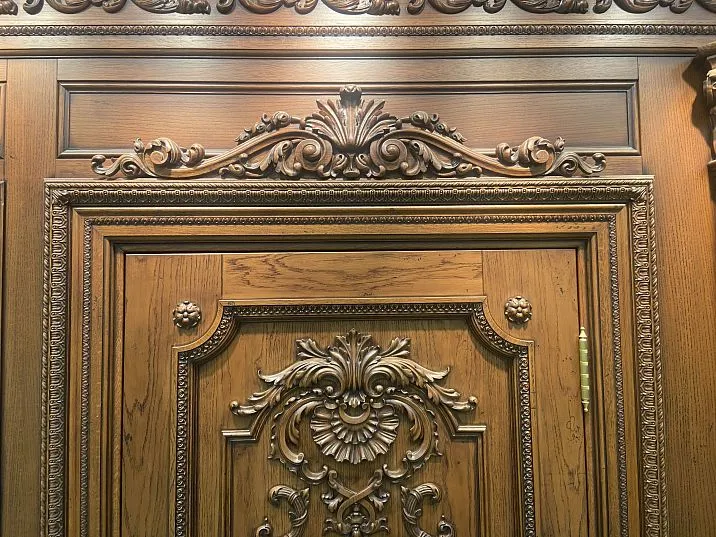
How often, admiring an exquisite interior, do we fail to notice the small details that create its perfection? Corner Element for Molding — such a detail that may remain unnoticed, but without which any, even the most expensive, finishing will appear unfinished and unprofessional.
Imagine a musical composition in which the connecting chords between themes are missing. Technically everything is correct, but harmony is disrupted. Similarly, in interior design — the absence of quality corner molding joints creates dissonance, which is subconsciously perceived as a defect, even if everything appears visually fine.
In an era when every interior element must contribute to a cohesive whole, corner elements have transformed from a technical necessity into a full-fledged design tool. They do not merely conceal joints — they create rhythm, emphasize architecture, and add nobility and completeness to space.


Anatomy of a perfect corner joint




Technical essence of the problem
Anyone who has ever tried to join two moldings at an angle knows: it is not just a technical operation, it is true art. It is not only about cutting accuracy — it is important to understand how the material behaves under different conditions, how stresses are distributed in the corner joint, and how to ensure the longevity of the joint.
The classic 'on the edge' joint at a 45-degree angle seems a simple solution, but practice shows its vulnerability. Linear deformations of materials due to changes in temperature and humidity create stresses precisely in the corner zones. Over time, microcracks appear, ruining the appearance of the entire finish.
and frames create a home atmosphere, making it truly cozy and individual. This is an investment in beauty, which pays off every day through aesthetic pleasure from admiring the beautiful. Complex shapes exacerbate the problem — aligning patterns, ensuring smooth transitions, preserving ornament integrity become tasks of extreme complexity. That is why professionals use special corner elements that comprehensively solve all these issues.
Our factory also produces:
Geometry and mathematics of the ideal angle
Behind the apparent simplicity of a corner element lies complex mathematics. Every curve, every edge is calculated with consideration of the peculiarities of human perception, laws of optics, and principles of materials science. The radius of internal rounding, the angle of edge inclination, proportions between different parts of the element — all of this is the result of centuries of evolution of architectural forms.
Modern technologies allow creating corner elements with mathematical precision, but the fundamentals remain unchanged. The golden ratio, classical proportional systems, laws of visual perception — all of this is reflected in every quality product.
Corner decorative elements High-class designs are conceived not only according to aesthetic but also engineering requirements. Material distribution, shape optimization to reduce internal stresses, ensuring maximum contact area with the base — all of this affects the durability and reliability of the joint.
Get Consultation
Material aspects of production
Choosing material for corner elements is a compromise between multiple requirements. Strength, dimensional stability, workability, aesthetic qualities, durability — each factor is important, and finding the optimal combination is not easy.
Solid wood remains the benchmark material for luxury items. Oak, beech, and ash possess the necessary density and strength to create the finest details without risk of breakage. But wood lives its own life — it reacts to humidity, temperature, may deform and crack.
High-quality MDF lacks many drawbacks of natural wood, but requires special processing technologies. Paintable Molding MDF allows for any color solution, but corner elements must be made from high-quality boards with density not less than 750 kg/m³.
High-density polyurethane has opened new possibilities in producing complex decorative elements. Injection molding allows reproducing the finest details with perfect accuracy, and the chemical resistance of the material ensures durability under any operating conditions.
Types of corner solutions in modern design
Classification by functional purpose
Internal corners solve the task of connecting moldings at room corners, niches, and openings. This is the most common type, requiring special precision in manufacturing — any defects here are highly noticeable. The geometry of the internal corner must precisely match the profile of the main molding, ensuring seamless connection.
External corners are used to decorate projecting architectural elements — pilasters, columns, bay windows. They are subjected to increased mechanical loads, therefore requiring special material strength and reliable fastening.
Universal elements can work in both internal and external corners due to their symmetrical design. This is an economical solution for simple profiles, but it has limitations in application for complex decorative forms.
Transition elements ensure connection of moldings with different profiles or sizes. Such situations arise during the reconstruction of historical interiors, where new elements must be matched with old ones, or when creating complex compositional solutions.
Each historical style has developed its own canons for decorating ceiling corners. Classicism prefers strict geometric forms with clear proportions. Baroque leans toward lavish, richly decorated elements. Empire uses military and antique symbolism.
Classic corner elements follow the canons of classical architecture, where each detail has a strictly defined shape and proportions. Corner Element for Molding In the classical style, it may contain traditional motifs — acanthus leaves, rosettes, Ionic capitals, executed with jewel-like precision.
Baroque interpretations are characterized by dynamic forms, rich plastic development, theatrical expression. Corner elements in the Baroque style are often asymmetrical, contain complex curved surfaces, and are abundant in small details.
Modernist solutions strive for simplification of forms while preserving functionality. Geometric purity of lines, absence of excessive decoration, emphasis on material quality and processing perfection — characteristic features of modern corner elements.
Avant-garde interpretations may radically reinterpret traditional forms, creating unexpected artistic effects. Asymmetry, contrasting material combinations, non-traditional geometry — all means are suitable for creating a unique artistic statement.
Constructive features of various types
Solid corner elements are cut from a single piece of material, ensuring maximum strength and durability of the connection. However, such an approach requires significant material consumption and limits the possibility of creating complex forms.
Composite elements are assembled from several parts, allowing material optimization and creation of more complex geometric forms. Assembly quality is critically important — any defects at component joints will be noticeable in the finished product.
Flexible elements made of elastic materials can adapt to inaccuracies in the geometry of main moldings. This is a compromise solution that simplifies installation but may be inferior in durability compared to rigid constructions.
Adjustable systems allow adapting the corner element to various angles of molding joints. This is especially important in old buildings, where angles often differ from standard 90 degrees.
Production technologies of the 21st century
Digital design methods
Parametric modeling has revolutionized the process of creating corner elements. Modern CAD systems allow creating accurate 3D models taking into account all constructive features, automatically calculating optimal shape parameters, and simulating material behavior under various conditions.
Topological optimization helps find the optimal material distribution in the element's construction. Algorithms automatically remove excess material from low-stress zones and reinforce the most heavily loaded areas, creating structures of maximum efficiency.
Simulation of various influences — thermal, humidity, mechanical — allows predicting the behavior of the product under real operating conditions even during the design stage. This eliminates costly revisions and ensures high reliability of finished products.
Precision manufacturing technologies
CNC milling centers provide processing accuracy down to hundredths of a millimeter, which is critically important for the quality of element joints. Modern systems of automatic tool wear compensation maintain stable processing quality throughout the entire production cycle.
Laser cutting allows creating complex openwork patterns and perforations with previously impossible precision. Non-contact processing eliminates mechanical deformation of the material, which is especially important for thin and delicate elements.
Additive technologies open up fundamentally new possibilities in creating corner elements with complex internal structures. 3D printing allows creating hollow structures with internal channels for utilities, impossible with traditional processing methods.
Hybrid technologies combine the advantages of various processing methods. For example, the main shape can be created by milling, while thin decorative details can be produced using laser engraving or 3D printing.
Quality control at the molecular level
Modern non-destructive testing methods allow detection of defects invisible to the naked eye. Ultrasonic testing detects internal voids and cracks, while radiography reveals structural material inhomogeneities.
Optical measurement systems control the geometry of parts with micron-level accuracy. 3D scanning creates a complete digital model of the finished product, which is compared with a reference model to identify any deviations.
Spectroscopic analysis methods control the chemical composition of materials and coatings. This is especially important for polymer materials, where minor changes in composition can significantly affect operational characteristics.
Climate testing simulates the effects of various environmental factors throughout the product's entire lifecycle. Accelerated tests allow modeling decades of service in just a few weeks.
Practical aspects of application
Preparation stage for installation
The success of installing corner elements is established already during the planning stage. Precise measurements of room angles are critically important — even minor deviations from 90 degrees can cause problems when installing standard elements.
Checking wall and ceiling flatness reveals unevenness that may prevent tight fitting of elements. Ceiling molding elements are especially sensitive to geometric defects of the base.
Selection of fastening materials depends on the type of base, weight of elements, and operating conditions. Heavy wooden elements may require chemical anchors, while lightweight polyurethane elements require only quality adhesive.
Surface preparation includes cleaning, dust removal, and priming to improve adhesion. Skipping these operations may lead to element delamination during operation.
Professional Installation Technology
Marking the position of elements must be performed using precise measuring tools. Laser levels ensure ideal horizontal and vertical alignment, which is critically important for perceived work quality.
Pre-fitting elements allows identifying problems before starting final installation. Casings require especially careful fitting to ensure tight joints.
Application of adhesive compositions must be uniform, without gaps or excess. Modern polyurethane adhesives provide joint strength exceeding the strength of the materials themselves, but require precise adherence to application technology.
Fixation of elements during adhesive curing can be performed in various ways — clamps, temporary supports, weights. It is important to ensure even pressure across the entire contact area.
Final finishing and refinement
Sealing joints is one of the most critical stages of installation. Quality sealants are selected according to the materials of the elements and operating conditions. Silicone compounds provide joint elasticity, while acrylics allow for painting.
Grinding of joint seams must be performed delicately, without damaging the base material. Fine-grit abrasives and special grinding blocks, replicating the profile of the elements, are used.
Priming prepares the surface for applying finish coatings and ensures their durability. Modern primers contain antiseptic additives that prevent biological damage.
Painting or varnishing is the final stage, determining the appearance of the finished finish. Quality coatings not only protect the material but also highlight the beauty of its texture and form.
Economic efficiency of solutions
Analysis of ownership cost
Initial costs for high-quality corner elements may seem significant, but a full cost-of-ownership analysis shows their economic justification. Inexpensive alternatives require replacement every 5-7 years, while quality items last for decades.
Installation costs also depend on the quality of elements. Precisely manufactured items are installed quickly and without adjustments, reducing labor costs. Low-quality elements require fitting, increasing time and cost of work.
Operating expenses include periodic maintenance, repairs, and possible replacement of elements. Sandrok cornice made from quality materials practically require no maintenance, while inexpensive alternatives need constant attention.
Impact on property value is an important, yet often underestimated factor. Quality finishing with professionally executed details increases the market value of a property by 15-25%, which more than offsets additional costs.
Optimization of design solutions
Standardizing elements reduces cost through mass production, but limits design possibilities. Individual solutions are more expensive but allow for a unique interior.
Modular systems represent a compromise between standardization and individuality. Basic elements can be supplemented with various decorative inserts, creating numerous options from a limited set of components.
Material optimization includes selecting the optimal material for specific application conditions. Using expensive materials where simpler alternatives suffice is uneconomical.
Technological optimization aims to reduce labor costs in production and assembly. Using modern equipment and progressive technologies allows reducing cost without compromising quality.
Industry Development Trends
Ecological Innovations
Biodegradable materials are becoming increasingly popular among environmentally conscious consumers. Polymer-based on plant raw materials approach traditional materials in performance but fully degrade under natural conditions.
Waste recycling from production allows creating high-quality materials with reduced environmental impact. Composites from recycled wood and polymers combine eco-friendliness with excellent performance characteristics.
Carbon-neutral production offsets CO2 emissions by using renewable energy sources and reforestation programs. Many manufacturers have already achieved carbon neutrality in their production.
Life Cycle Assessment (LCA) — a comprehensive evaluation of a product's environmental impact across all stages of its life cycle — is becoming a standard tool for assessing material eco-friendliness.
Digital transformation of production
The Internet of Things (IoT) enables real-time monitoring of equipment status, preventing failures and optimizing production processes. Predictive analytics forecasts maintenance needs before problems arise.
Artificial intelligence optimizes production process parameters, improves product quality, and reduces defects. Machine learning analyzes large data sets to uncover hidden patterns.
Blockchain technologies ensure traceability of material origins and product authenticity. This is especially important for luxury items, where counterfeits can seriously damage the manufacturer's reputation.
Virtual and augmented reality are changing the ways of designing and presenting products. Clients can see the future interior in real scale even before production begins.
Personalization and mass customization
Product configurators allow customers to create unique combinations of elements from standard components. Automated systems calculate cost and production timelines in real time.
Additive manufacturing (3D printing) makes it economically viable to produce single items with complex shapes. This opens new opportunities for creating truly individual solutions.
Market micro-segmentation allows creating products for very narrow consumer groups with specific needs. Corner Element for Molding can be adapted to a specific interior style or historical era.
Direct communication with consumers through digital channels eliminates intermediaries and allows manufacturers to better understand market needs. User feedback accelerates product improvement.
The future of corner elements in architecture
Integration with smart technologies
Built-in sensors can monitor the condition of structures, humidity, temperature, and vibrations. This allows timely detection of problems and prevents serious damage.
Wireless monitoring systems transmit data to cloud services for analysis and decision-making. Artificial intelligence can predict the need for maintenance or replacement of elements.
Integration with "smart home" systems allows automatic regulation of microclimate for optimal conditions for decorative elements. This is especially important for wood and other materials sensitive to humidity.
Augmented reality can provide information about interior elements — creation history, material characteristics, care recommendations — simply by pointing a smartphone.
New materials and their possibilities
Nanomaterials open up fundamentally new possibilities. Nanostuctured surfaces may have self-cleaning properties, change color depending on lighting, or possess antibacterial properties.
Smart materials with shape memory can autonomously compensate for thermal deformations, maintaining ideal joint geometry under any conditions.
Photochromic and thermochromic materials change their properties depending on external conditions, creating dynamic decorative effects.
Biomaterials grown from fungal mycelium or bacterial cellulose combine eco-friendliness with unique decorative properties.
Conclusion: Investment in the perfection of details
Corner Element for Molding This is not just a technical detail, it is the embodiment of quality philosophy in interior design. In a world where attention to detail has become a criterion of professionalism, it is precisely such elements that distinguish a true master from an amateur.
Quality corner elements are an investment in the longevity and beauty of your interior. They serve for decades without losing their aesthetic and functional qualities, creating a sense of stability and reliability.
In an era of mass production, items created with an understanding of traditions and respect for craftsmanship are especially valued. Each element must be thought out, every detail refined, and every connection flawless.
When choosing corner elements, remember: you are creating a space where you will live for many years. Saving on details may lead to disappointment, while investing in quality will delight you every day.
Modern technologies open up boundless opportunities for creativity, but the fundamentals remain unchanged — quality of materials, precision of manufacturing, professional installation. Only the combination of advanced technologies with traditional craftsmanship yields results worthy of the most discerning clients.
Trust professionals, choose proven solutions, and don't compromise on quality. Your home deserves the best, and high-quality corner elements are an essential part of that best.
For more than two decades, the company STAVROS has been a recognized leader in the Russian architectural decor market, offering solutions of the highest quality for the most discerning clients. Extensive experience working with various materials and technologies, deep understanding of market needs, and a commitment to perfection in every detail — these are the principles that make STAVROS a reliable partner in creating dream interiors.
An extensive range of corner elements, from classic wooden pieces to innovative polyurethane compositions, allows you to find the perfect solution for any project. Our own production, equipped with modern high-precision equipment, guarantees consistent quality and timely delivery.
STAVROS's professional team of designers and technologists is ready to develop individual solutions for the most complex projects, ensuring full alignment of the products with the architectural concept of the interior. Choosing STAVROS means choosing quality, reliability, and beauty, proven over time.