Article Contents:
- Anatomy of Pricing: Factors Determining Cost
- Material Basis of Price
- Technological Complexity of Manufacturing
- Regional pricing characteristics
- Moscow Market: Benchmark of High Prices
- Regional specifics
- Size Grading and Its Impact on Cost
- Standard Sizes: Optimal Ratio
- Non-standard Solutions: Premium for Individuality
- Decorative Finishing: Art Has a Price
- Simple Precision Forms
- Milled Elements
- Artistic Carving: Peak of Mastery
- Quality Characteristics and Their Value
- Wood Grade
- Moisture and Stability
- Final finishing: protection and beauty
- Basic Finishes
- Premium Finishes
- Seasonal Fluctuations and Market Conditions
- Construction Cycles
- Logistical Factors
- Volume Discounts and Cost Optimization
- Discount Grading
- Complex Deliveries
- Additional Services and Their Cost
- Assembly and fitting
- Installation and mounting
- Comparative Analysis of Alternative Materials
- Metal Balusters
- Composite materials
- Economic efficiency of investments
- Return on Investment for Quality Items
- Comparison of Total Ownership Cost
- Practical Recommendations for Selection
- Determining optimal budget
- Finding a Reliable Supplier
- Market Trends and Forecasts
- Impact of Technological Progress
- Ecological trends
- Conclusion
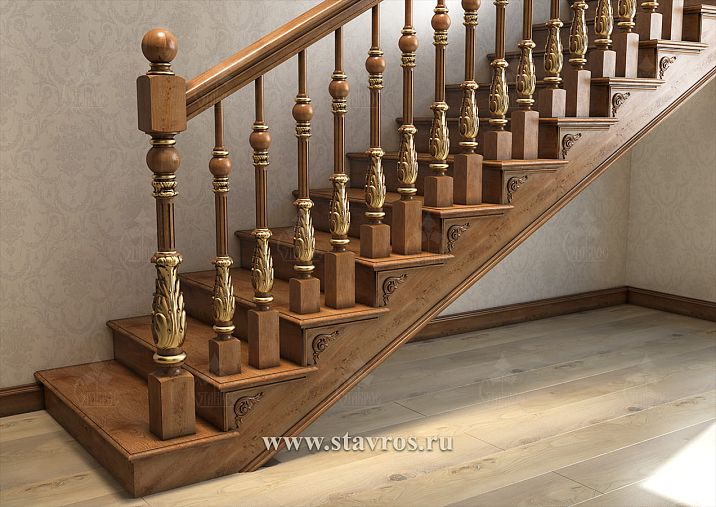
Planning to build a staircase of dreams but unsure how much high-quality balusters will cost? Baluster Price for Staircases Depends on many factors: from wood species to the complexity of decorative processing. In this comprehensive guide, we will cover all aspects of pricing so you can make an informed decision and get maximum value for your money.
The cost of staircase balusters ranges from modest 250 rubles for the simplest pine items to impressive 15,000 rubles for exclusive carved elements made of oak. Understanding what influences pricing will help you choose the optimal balance of quality, beauty, and budget for your project.


Pricing Anatomy: Factors Determining Cost




Material Basis of Price
Wood species is the main pricing factor when selecting balusters. Coniferous species represent the budget segment of the market. Standard-sized pine balusters (50×50×900 mm) cost from 250 to 400 rubles each. Their accessibility is explained by the rapid growth of trees and the ease of processing softwood.
Larch occupies an intermediate position in the price hierarchy. Balusters from this species cost 500-800 rubles each. The higher price is justified by the unique properties of the material: high density, natural moisture resistance, and attractive texture with distinct growth rings.
Hardwood species form the premium segment. Oak balusters start at 1,000 rubles and can reach 5,000-7,000 rubles for complex carved items. Ash elements cost similarly to oak, offering comparable strength characteristics with a lighter wood tone.
Our factory also produces:


Technological Complexity of Manufacturing
The method of processing significantly affects the final cost of the items. Simple turned balusters, made on a lathe, represent the most affordable option. Their price for staircase balusters starts at the minimum values in each price category.
Milled elements with grooves, slots, or complex profiles cost 30-50% more than turned counterparts. Additional processing requires specialized equipment and increases manufacturing time.
Carved balusters represent the top of the pricing pyramid. Hand-carved work can increase the cost by 3-5 times compared to simple turned items. Each carved element is unique and requires high craftsmanship from the artisan.
Get Consultation
Regional pricing features
Moscow Market: Benchmark for High Prices
The capital region traditionally demonstrates the highest prices for wooden items. Here, a simple pine baluster costs 350-450 rubles, which is 20-30% higher than the average Russian level. Premium oak items can reach 8,000-12,000 rubles each.
High prices in Moscow are explained by several factors: higher rental rates, higher wages for specialists, logistics costs, and the prestige of Moscow brands. However, product quality often matches the requested prices.
Regional Specificity
In regions rich in forest resources, prices are traditionally lower. Siberian manufacturers offer larch balusters for 400-600 rubles each, which is significantly more advantageous than Moscow prices.
Northwestern regions specialize in producing items from Karelian birch. The unique texture of this material justifies the price of 2,500-4,000 rubles per baluster, despite the regional location of production.
Size Grading and Its Impact on Cost
Standard Sizes: Optimal Ratio
The most popular baluster sizes — 50×50×900 mm and 60×60×900 mm — represent the optimal price-to-quality ratio. Mass production of such elements allows manufacturers to offer competitive prices.
Cost of staircase balusters in standard sizes from various species:
- Pine 50×50×900: 250-350 rubles
- Larch 50×50×900: 500-700 rubles
- Oak 50×50×900: 900-1,200 rubles
- Ash 50×50×900: 950-1,300 rubles
Increasing the cross-section to 60×60 mm adds 20-25% to the cost, due to greater material consumption and more complex processing.
Non-standard Solutions: Premium for Individuality
Manufacturing balusters to custom sizes always costs more. The markup for non-standard dimensions is 40-80% of the base price. This is due to the need to reconfigure equipment and create special programs for machines.
Large balusters with a cross-section of 80×80 mm and above belong to the premium segment. Their price may exceed the cost of standard elements by 2-3 times due to higher requirements for wood quality and processing complexity.
Decorative Processing: Art Has a Price
Simple Polished Forms
Classic polished balusters with simple profiles represent the basic level of decorative processing. Their manufacture is refined down to the smallest details, allowing us to offer affordable prices while maintaining high-quality execution.
The standard profile includes a base, a central section with smooth diameter transitions, and an upper section. This configuration ensures an attractive appearance at minimal production costs.
Milled Elements
Grooves — vertical grooves on the baluster surface — add 200-400 rubles per element to the cost. This processing requires additional milling and increases manufacturing time.
Complex profiles with multiple transitions, grooves, and protrusions may increase the price by 50-100%. However, such elements create a unique visual effect and emphasize the staircase’s status.
Artistic Carving: The Peak of Mastery
Carved balusters are works of art, their price corresponding to the level of craftsmanship. Simple carved elements add 1500-3000 rubles to the base cost. Complex narrative carving may increase the price by 5-10 times.
Prices for balusters for staircases with different types of carving:
- Simple geometric carving: +2000-4000 rubles
- Plant ornamentation: +3000-6000 rubles
- Complex narrative compositions: +8000-15000 rubles
Quality Characteristics and Their Value
Wood Grade
The quality of the raw material directly affects the cost of finished products. Extra-class wood without defects costs 2-3 times more than third-grade material, but ensures a flawless appearance and longevity.
First-grade wood with minimal small knots represents the optimal price-to-quality ratio for most projects. This material provides an attractive appearance at a reasonable cost.
Moisture and stability
Properly dried wood with a moisture content of 8-12% costs 15-25% more than naturally dried material. However, these costs are fully justified by dimensional stability and the absence of deformation during use.
Kiln drying in special installations is a costly process, but it guarantees the quality of finished products. Cutting costs on drying may lead to serious problems in the future.
Finish Processing: Protection and Beauty
Basic Coatings
The simplest processing includes sanding and applying a transparent lacquer. Such finishing adds 50-100 rubles per baluster to the cost, but provides basic protection against moisture and mechanical damage.
Staining with a dye allows changing the wood color and creating uniformity across a batch of products. The staining cost is 80-150 rubles per element, depending on the complexity of the desired shade.
Premium Coatings
Oil-based coatings create a more natural appearance and provide better wood protection. Their cost is 30-50% higher than standard lacquers, but the result justifies the expense.
Waxing — a traditional protection method, creating a noble matte sheen. Quality waxes add 150-250 rubles per baluster to the cost, but provide exceptional aesthetics.
Seasonal Fluctuations and Market Conditions
Construction Cycles
The price of balusters for staircases is subject to seasonal fluctuations. Demand peaks during the spring-summer period, when private construction becomes active. During this time, prices may increase by 10-20%.
The winter period is characterized by reduced demand and more attractive prices. Many manufacturers offer discounts of up to 15-25%, aiming to maintain production capacity.
Transportation of wooden products during the winter period is associated with additional risks and costs. The need to protect against moisture and temperature fluctuations may increase the final cost by 5-10%.
Volume Discounts and Cost Optimization
Discount Grading
Most manufacturers offer a discount system depending on the order volume:
10-20 pieces: discount 5-10%
- 50-100 pieces: discount 15-20%
- 200+ pieces: discount 25-35%
- Wholesale prices may be 40-50% lower than retail prices, making bulk purchases economically advantageous.
Wholesale prices can be 40-50% lower than retail prices, making bulk purchases economically advantageous.
Comprehensive Deliveries
Ordering a complete set of stair elements allows additional discounts. Manufacturers are interested in comprehensive orders and are willing to offer discounts up to 20% of the total cost.
Additional Services and Their Cost
Design and Planning
Custom baluster design adds 3000-15000 rubles to the cost depending on project complexity. Creating a 3D model and developing a manufacturing technology require highly qualified specialists.
Installation and Mounting
Professional baluster installation costs 200-500 rubles per element. Complex structures with non-standard fastenings may require additional costs of 800-1000 rubles per baluster.
Comparative Analysis of Alternative Materials
Metal Balusters
Steel balusters can be cheaper (from 400 rubles) or more expensive (up to 8000 rubles) than wooden counterparts. Simple items made of regular steel are affordable, but hand-forged elements cost very high.
Stainless steel is a premium segment material with prices ranging from 1500-2500 rubles per baluster. Durability and minimal maintenance requirements justify the high cost.
Composite materials
Modern composites offer an interesting alternative to natural wood. Prices for composite stair balusters are comparable to wooden ones, but they provide better performance characteristics.
Investment economic efficiency
Return on Investment for Quality Items
Investments in quality wooden balusters are recouped through their longevity. The service life of oak items may exceed 50-100 years, making their annual cost very attractive.
The increase in property value due to an attractive staircase may significantly exceed the cost of balusters. Experts estimate the value increase at 3-8% of the total property value.
Comparison of Total Ownership Costs
When evaluating economic efficiency, it is important to consider not only the initial cost but also maintenance expenses. Quality wooden balusters require minimal care and rarely need replacement.
Low-quality, inexpensive items may require replacement after 5-10 years, making them economically unviable in the long term.
Practical Recommendations for Selection
Determining the Optimal Budget
Budgeting for balusters should account for 20-30% of the total staircase cost. For a staircase costing 200,000 rubles, it is reasonable to allocate 40,000-60,000 rubles for quality balusters.
The cost of stair balusters should match the overall project level. Saving on balusters in an expensive staircase may spoil the overall impression.
Finding a Reliable Supplier
Choosing a manufacturer is a key factor in a successful purchase. It is recommended to review the portfolio, customer reviews, and quality certificates. Visiting the production facility in person allows assessing the technological level.
It is important to pay attention to warranty obligations and manufacturing timelines. Serious manufacturers provide a warranty of at least 2-3 years and are willing to take responsibility for quality.
Market Trends and Forecasts
Impact of Technological Progress
Production automation gradually reduces the cost of standard items. Modern CNC machines allow producing high-quality balusters with reduced labor costs.
However, handcrafted and exclusive items continue to increase in price due to growing demand for individual solutions.
Ecological trends
Growing attention to ecology stimulates demand for products made from certified wood. Such materials cost 10-15% more than ordinary ones but ensure ecological purity.
Conclusion
Baluster Price for Staircases Is influenced by multiple factors, each of which is important for understanding the overall market picture. From the choice of wood species to the complexity of decorative processing — all elements affect the final cost.
Choosing balusters correctly requires a balance between aesthetic preferences, functional requirements, and financial possibilities. Investments in quality items pay off through longevity, beauty, and increased property value.
The modern market offers solutions for any budget — from affordable pine items to exclusive carved masterpieces. The key is to find a reliable partner who will help you turn your dreams into reality.
Remember: quality balusters are not an expense, but an investment in the beauty and comfort of your home. They will delight you and your descendants for many years, justifying every dollar invested.
For many years, STAVROS has remained a leader in producing high-quality wooden items. Offering a wide range of balusters at competitive prices, STAVROS combines traditional craftsmanship with modern technologies. Choosing STAVROS means not only receiving quality products but also professional support at every stage of the project — from consultation to installation.