Article Contents:
- What makes slat panels a wall solution: architectural mechanics
- Materials of wall slat panels: two worlds, two characters
- MDF with density 750–850 kg/m³: precision and color freedom
- Kiln-dried oak solid wood: natural expressiveness
- Slat profile: architectural character of surface
- Rectangular profile: strictness and clarity
- Semicircular profile: softness and organicity
- Trapezoidal profile: volume and decorative richness
- Batten spacing in wall panels: rhythm and spatial scale
- Batten orientation: free architectural correction
- Color and tinting: the language of surface
- Strategies for paintable MDF
- Oak tinting options
- Wall batten panels in different interior styles
- Scandinavian style: nature as the main argument
- Japandi: meditation in details
- Minimalism: the power of absence
- Modern classic: history with a contemporary accent
- Loft with a warm accent
- Organic Modern: Nature as a Concept
- Wall Slat Panels in Different Rooms
- Living room: accent wall as architectural centerpiece
- Bedroom: Headboard Wall as a Natural Shelter
- Entryway: First Impression
- Kitchen: Slat Backsplash and Zoning
- Children's Room: Natural Material as an Educational Environment
- Office and Meeting Room: Brand Architecture
- Coherent System: Architectural Monolithicity
- Moldings and Cornices: Upper Architectural Boundary
- Floor skirting: the lower boundary of the system
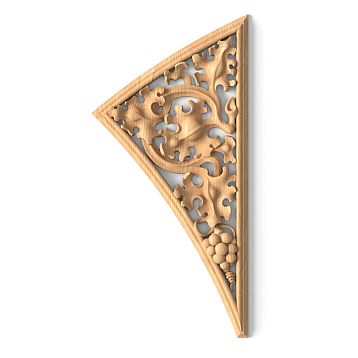
- Decorative Overlays: Classic Interior with Architectural Weight
- Elements for Stairs
- Furniture handles as the finishing touch of the system
- Lighting for wall slat panels: light as a structural element
- Technical parameters: what to check before purchase
- Seven mistakes when choosing wall slat panels for interiors
- About the Company STAVROS
- FAQ: wall slat panels in interiors
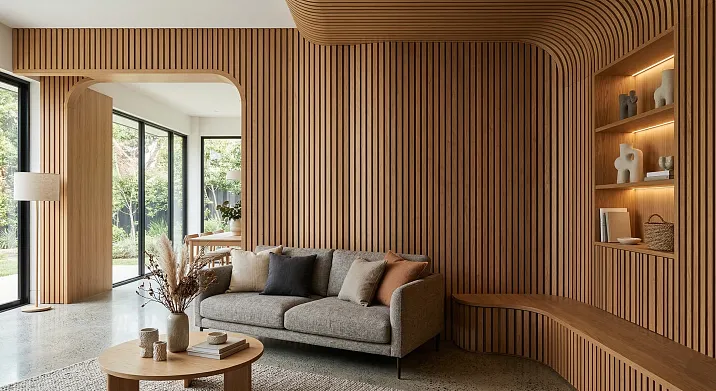
Walls are the first thing we see when entering a room. And the last thing we notice when the space is truly well-designed: in a perfect interior, walls don't 'shout', they work. They create scale, set rhythm, manage light, and define atmosphere—quietly, imperceptibly, but with absolute precision. This is exactly the role that wall slat panels perform in interiors better than any other solution for vertical surfaces.
A relief surface with parallel slats is not just decoration. It's an architectural system where every element contributes to the result: material defines tactility, profile manages light and shadow, spacing determines rhythm, orientation—the proportions of space. All together—it's a way to speak to the viewer in the language of architecture without uttering a word.
If you look at spaces you like—hotels with character, restaurants you want to return to, apartments you can't take your eyes off—there's almost certainly a slatted surface there. It might be on an accent wall behind a sofa, in a niche behind a headboard, along a corridor, on all walls of a restaurant hall. Recognizable, self-sufficient, alive.
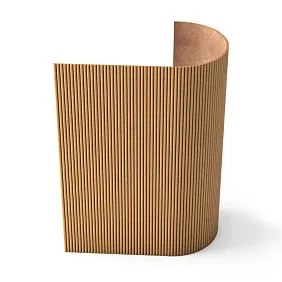
What makes a slat panel a wall solution: architectural mechanics
Before discussing applications and styles, we need to understand the mechanics. Why does a slat panel on a wall work better than wallpaper, paint, or tile?
The answer lies in surface physics.Wall slatted panelscreate volume on a plane. The batten—a physically protruding element—interacts with light: under side or directional lighting, each batten casts a shadow into the gap, and the surface gains depth. This is not an imitation of three-dimensionality, not printed texture, not a sticker—it is real chiaroscuro, living and changing.
Add to this a material with natural texture—solid oak—and the surface begins to 'breathe': the grain pattern on each batten is unique, and under conditions of directional warm light, the wall becomes a natural ornament that cannot be replicated in any other material.
For MDF for painting—a different mechanics: perfect geometry, precise color, monochrome monolith. The surface exists only through shadow. This is high architectural restraint, which requires good lighting design—and delivers impeccable results.




Wall batten panel materials: two worlds, two characters
Our factory also produces:


MDF with density 750–850 kg/m³: precision and color freedom
MDF is a pressed wood fiberboard with a homogeneous structure, free from natural defects and variations. It is the basis for precise batten geometry and an unlimited color program: any RAL or NCS, from pure white to deep anthracite.
Why is density 750–850 kg/m³ a mandatory requirement? At densities below 700 kg/m³, MDF is loose: ends swell with humidity, fasteners weaken, battens deform. 25% cheaper in price—a problem after six months of operation. Correct density—stable batten geometry for decades.
MDF panels can be repainted without dismantling: sanding, priming, new RAL—and the surface is renewed after 7–10 years. This is an important advantage for those who understand: the interior changes along with life.
Get Consultation
Solid oak with climate drying: natural expressiveness
Oak with a density of 700–750 kg/m³ is a hardwood species with a rich grain pattern, long service life, and natural tactility. Each slat carries a unique natural ornament. No printing, no printing, no imitation reproduces what wood creates under real lighting conditions.
Key technological parameter: moisture content of 8–10%, achieved in climate-controlled drying chambers. Unseasoned oak deforms after installation — slats warp when adjusting to the room's humidity. This is irreparable. Ask the manufacturer: are there drying chambers?
Oak slat toning: from natural honey to deep graphite — while preserving the natural grain. This is a fundamental difference from painting: toning reveals the texture, not hides it.
Slat profile: architectural character of the surface
There is no universal answer to the question 'which profile to choose'. There are three profiles — three different architectural statements.
Rectangular profile: strictness and clarity
Sharp straight edges. The shadow is hard, contrasting, with a clear boundary. Under side lighting — a strong graphic rhythm. The surface reads as architectural, structural, disciplined. For minimalism, office spaces, modern classic in a restrained interpretation — a flawless solution.
Semi-circular profile: softness and organicity
Rounded edges. The shadow is smooth, diffused. The surface is natural, alive, warm. It is with the semi-circular profile that oak reveals itself maximally: a soft bead with a living grain — an organic sculpture on the wall. For living spaces — living room, bedroom, children's room — this is the most 'human' profile.
Trapezoidal profile: volume and decorative richness
Extension to the base creates multi-level shadowing. The surface is dynamic, decoratively rich. For restaurants, lobbies, boutiques — wherever high decorative intensity and a visual 'wow' are needed.
Slat spacing in wall panels: rhythm and spatial scale
Spacing is one of those characteristics rarely discussed in reviews, yet it defines the final perception no less than color or material.
| Step | Rhythm character | For which spaces |
|---|---|---|
| 15–20 mm | Frequent, active | Large rooms from 25 sq.m |
| 25–35 mm | Balanced, universal | Housing, offices, any area |
| 40–50 mm | Airy, monumental | Small rooms, Japandi |
| 60 mm and more | Rare, sculptural | Accent niches, individual walls |
A rule that always works: the smaller the room, the wider the spacing. Dense rhythm in a small room creates visual tightness. Wide spacing in a large hall creates monumentality and airiness.
Slat orientation: free architectural correction
Orientation is set during installation — it's a free space management tool that must be considered before ordering panels.
Vertical slats direct the gaze from bottom to top. The ceiling appears higher. For standard apartments with 2.7 m ceilings — the most valuable technique.
Horizontal slats guide the gaze along the wall. The room appears wider. For narrow corridors and small rooms with width deficiency.
Diagonal slats create kinetics, movement, dynamism — for non-standard spaces with an author's concept.
Color and tinting: the language of surface
Color selection is not a final detail, it is a conceptual decision. It is made before ordering, with physical samples in hand, under the actual lighting conditions of your space.
Strategies for MDF for painting
Monochrome. The panel in the same RAL as the wall. The relief exists only through shadow. This is architectural restraint of the highest level—nothing superfluous, nothing accidental, only light and form.
Tonal accent. Walls are light, the panel is 2–3 tones deeper. The relief is perceived both through color and through shadow. A safe, elegant strategy.
Saturated accent. Neutral walls + deep RAL on the panel: RAL 7016 Anthracite, RAL 6005 Moss Green, RAL 5011 Steel Blue, RAL 3005 Wine Red. One wall—a complete transformation of the space.
Two-color system. Slats and substrate—in different colors. White slats on a black substrate—maximum graphic contrast. Beige slats on a terracotta base—warm natural complexity.
Oak toning
-
Natural—warm honey, a classic of Scandinavian interior
-
Whitewashed (fumed)—ashy, Nordic look
-
Light gray—Japandi, restrained cold naturalness
-
Dark brown — classic, traditional depth
-
Graphite — loft, modern classic with character
Wall slat panels in different interior styles
Scandinavian style: nature as the main argument
Light oak with oil finish. Vertical slats. Semi-circular profile. Warm light 2700 K.Wall slat panels in interiorThe Scandinavian style is primarily a natural narrative: wood on the wall engages in dialogue with linen textiles, whitewashed floors, natural ceramics. No material participates in this dialogue as organically as real oak.
Molding made from the same oak along the upper boundary of the panel field.solid wood baseboardFrom below. A unified natural system from floor to ceiling — Scandinavian monolithicity without unnecessary accents.
Japandi: meditation in details
Oak with gray tint. Horizontal slats — a meditative horizon, a nod to natural landscapes. Rare spacing of 40–45 mm. Rectangular profile. In the Japandi style, wall slat panels are not decor but philosophy: emptiness and simplicity as an intentional choice, not economy.
Nothing extra nearby. White walls, one slatted plane, natural textiles, the only living element — a flower or branch. It is this ascetic dialogue that creates a sense of peace, which people seek in Japanese ryokans and Scandinavian cottages.
Minimalism: the power of absence
MDF for painting, monochrome — panel matching the wall color. Rectangular profile. Relief through shadow, no color contrast. In this style, the slatted surface works as architectural texture: it exists but does not dominate. With proper side lighting — a delicate play of parallel shadows that enlivens the wall without a single decorative gesture.
wooden moldingin the same RAL around the perimeter.MDF Skirting Boardat the bottom. Monochrome monolith from floor to ceiling — minimalism without compromises.
Modern classic: history with a contemporary accent
Dark oak with classic brown or chocolate tint. Rectangular profile.Decorative Insertsas a frame for the slatted field — vertical and horizontal frames turn a beautiful wall into an architectural panel system.wooden cornicealong the upper boundary — the classic 'roof' of the system.
This solution has historical roots and a modern embodiment. The boiserie of the 18th century — paneled walls with frame moldings — were revived in the 21st century as slatted paneling with decorative frames. The form is different, the essence is the same: the wall as an architectural object.
Loft with a warm accent
MDF in anthracite RAL 7016 or oak with a dark stain. A large rectangular profile. Metal light fixtures, concrete, brick nearby. A wooden slatted wall in a loft — a 'warm' natural accent in a cold industrial context. The contrast of materials works for expressiveness: the warmth of wood against the cold of metal and concrete.
Organic Modern: nature as a concept
Oak with a natural stain. A semicircular profile. Massive natural surfaces. Stone, natural textiles, live plants nearby. In organic modern, wall slatted panels are not one of many elements, but a key material statement: 'nature lives in this house.'
Wall slatted panels in different rooms
Living room: an accent wall as an architectural center
An accent wall behind the sofa — the classic and most effective application for slatted panels in a living room interior. The area of a typical accent wall: 10–14 sq.m, 7–10 modules. Molding along the top border, baseboard at the bottom, directional spotlights at a 35–40° angle.
Material choice for the living room: oak, if a natural atmosphere is the priority. MDF, if a precise color to match the design project is needed. Both options give an impeccable result with proper lighting.
An additional technique: a slatted partition for zoning — separating a relaxation area from a work area or an entryway.Wall slatted panelsAs a partition, they let light through and preserve the visual openness of the space.
Bedroom: the headboard wall as a natural shelter
The bed headboard is the most intimate application. 3–4 modules. Honey-toned oak, semi-circular profile. LED strip along the lower perimeter of the panel — upward warm light in the gaps. Falling asleep in such a space is a physically different experience: natural material, warm light, and a rhythmic surface create a sense of a natural shelter, a den — that very intimacy which no other finish can provide.
Important: in the bedroom, the slat spacing is wide (35–45 mm). A delicate rhythm, not an active saturation.
Entryway: first impression
The hallway is the first thing a guest sees. And the first thing you see when returning home. A slatted wall in the hallway is an architectural greeting.
For a narrow corridor — horizontal slats (visually widen). MDF for painting in a neutral warm tone. Or oak for natural warmth.wooden plankIn corner transitions and junctions with the ceiling — an organic trim made from the same wood species.
Practical point: in the hallway — use moisture-resistant coating for MDF or lacquered oak (not oiled — oil does not protect against accidental wet footprints at the entrance).
Kitchen: slatted backsplash and zoning
A slatted backsplash is a non-standard solution that requires caution. Only MDF with a waterproof two-component lacquer or oak with the same coating. The area above the work surface is subject to direct splashes and steam. Open-pore oak with oil finish is not advisable here.
A slatted wall in the dining table or island area is a different story. Here there is no direct contact with moisture, and the full spectrum of materials and finishes can be used.
Children's room: natural material as an educational environment
Oak or MDF in neutral RAL (white, beige, soft green). Semi-circular profile — no sharp edges. Wide spacing. Vertical slats — visually 'raise' the ceiling. Natural material in a child's room is not only beautiful but meaningful: the child grows in contact with real, non-synthetic surfaces.
Office and meeting room: brand architecture
MDF in corporate RAL. Rectangular profile. Reception area + meeting rooms. A slatted wall in the corporate color is a branding statement through architecture: the company is serious, precise, with character. Acoustic filling in the frame for meeting rooms — reduces reverberation, improves speech intelligibility.
Coordinated system: architectural monolithicity
Wall slatted panels in an interior work maximally only as part of a coordinated system. This is the key principle that distinguishes a professional result from 'just a beautiful wall'.
Moldings and cornices: the upper architectural boundary
wooden moldingfrom the same production program — a horizontal line completing the slatted field from above. Without it, the upper edge of the panel looks unfinished. An oak molding of the same tint — natural coordination. In classic interiors —Wooden cornicewith a profiled front surface: a full-fledged architectural 'roof' for the slatted field.
Behind the molding with a 20–30 mm gap — LED strip: downward warm glow along the slatted surface. Function and architecture in one element.
Floor baseboard: the lower boundary of the system
Solid oak wooden skirting boardnext to oak slatted panels — the lower natural boundary. One wood species, one tint, one production.MDF Skirting Boardin the same RAL — for MDF systems. Monolithicity from floor to ceiling — this is precisely the difference between 'done' and 'designed'.
Decorative overlays: classic interior with architectural weight
Decorative Insertscreate frame-like borders for slatted panels in modern classic and neoclassical styles. Vertical posts + horizontal crossbars = classic panel system where the slatted field becomes the 'filling' of an architectural frame. This is the most direct path to historical boiserie in a modern interpretation.
Elements for stairs
In a country house, slatted walls in the stairwell +balusters for staircasesmade from the same solid oak = architectural wooden theme accompanying a person from the first floor to the top. A slatted wall and wooden staircase made from the same wood species — this is not a coincidence, it's an architectural concept.
Furniture handles as the finishing point of the system
Furniture Handlesmade from coordinated material on built-in furniture, kitchen fronts, doors — the final tactile point of the wooden system. Not a single random detail.
Lighting for wall slatted panels: light as a structural element
Ask yourself right now: does your project have side or directional lighting for the slatted wall? If not — the surface won't reveal its potential. This is more important than color, more important than material, more important than profile.
Directional spotlights at 30–45° to the surface — basic tool. Create contrasting shadows in the gaps. Warm light 2700 K for living spaces.
LED strip above the top molding — downward light on the slatted surface. One of the most 'cinematic' techniques for an accent wall.
LED in gaps — the strip is mounted on a substrate before panel installation. Warm light 2700 K + oak = 'burning forest' effect. Indispensable for the bedroom.
A lighting parameter often overlooked: angle. At 30° — sharp, contrasting shadow. At 60° — soft, diffused. The same profile at different angles gives a fundamentally different character to the surface.
Technical parameters: what to check before purchase
Knowing technical parameters protects against buying unsuitable or low-quality material.
MDF density: 750–850 kg/m³ — normal. Below 700 — risk of deformation.
Slat pitch accuracy: ≤ 0.5 mm. With unstable pitch, joints between modules are visible — irreparable.
Solid oak moisture content: 8–10%. Demand climate drying data.
MDF edge treatment: primed or with edge film. Open edges swell with humidity.
Module format: standard 0.6 × 2.4 m = 1.44 sq.m.
Allowance for calculation: 15% for cutting. Reordering from another batch — risk of shade mismatch.
Seven mistakes when choosing wall slat panels for interior design
Mistake 1. Buying without physical samples. Color on screen and in reality are different things.
Mistake 2. Cheap MDF with density below 700 kg/m³. Warping after 6–12 months.
Mistake 3. Unstable slat spacing. Visible joints — unfixable.
Mistake 4. Lack of coordinated linear footage. Molding and baseboard from different sources — visual mismatch.
Mistake 5. No lighting plan. Slat texture without directional light — flat surface.
Mistake 6. Buying without 15% allowance. Reordering from another batch — shade mismatch.
Mistake 7. Solid wood without climate drying. Slat warping after installation.
About the company STAVROS
Wall slat panels in interior design — this is a solution that requires precision at every stage: from material selection to installation of the final molding. That's why the manufacturer matters — and this is not a marketing claim, but a practical fact.
STAVROS is a Russian manufacturer of MDF and solid wood products for interior finishing and furniture production. All structural types of slatted panels: rigid on MDF backing, flexible on fabric base for curved surfaces. All profiles: rectangular, semicircular, trapezoidal. MDF from European suppliers with density of 750–850 kg/m³. Solid oak with climatic drying to 8–10%.
Step accuracy control ≤ 0.5 mm in each batch. Two-level quality control system. Manual processing of decorative elements. Complete coordinated system: moldings and cornices, solid wood and MDF skirting boards, extension slats, decorative overlays, stair balusters, furniture handles, classic furniture.
Over 4000 models. 20,000 modifications. 39 product groups. Shipping from one piece. Delivery across Russia. Professional consultation before placing an order.
FAQ: wall slatted panels in interior
What are wall slatted panels and how do they differ from other panels?
Slatted panels feature parallel battens (slats) that create physical volume on a plane. Unlike smooth decorative panels, they interact with light, forming dynamic chiaroscuro. This is a fundamentally different visual result.
Which material is better — MDF or oak — for wall panels in interior?
Depends on the task. MDF — precise color, perfect geometry, repainting capability. Oak — natural texture, unique grain pattern, tactile quality. For minimalism and corporate style — MDF. For Scandinavian style, japandi and natural interiors — oak.
Can I install slatted wall panels myself?
Adhesive installation on straight walls with deviation up to 5 mm — accessible for a careful DIYer. Frame installation and installation on curved surfaces — better with a professional.
Is special wall preparation needed before installing slatted panels?
For adhesive installation — the wall must be clean, dry, without peeling coating. Surface deviation — up to 5 mm. More than 5 mm — frame installation or leveling.
How often do oak slatted wall panels need maintenance?
Oiled oak — oil renewal every 3–5 years (wiping with oil without dismantling). Lacquered oak — practically maintenance-free, re-lacquering after 7–10 years. Painted MDF — does not require maintenance, repainting when changing the concept.
What kind of lighting is needed for slatted wall panels in the interior?
Directional spotlights at a 30–45° angle to the surface — the minimum necessary condition. LED strip behind the top molding — for downward accent lighting. Without side or directional lighting, the slatted relief is not revealed.
Can slatted panels be used in the bathroom?
Yes, only MDF with two-component waterproof lacquer or oak with waterproof lacquer. Open pore under oil is not recommended in the bathroom. Installation only frame-based on galvanized profile.