Article Contents:
- White is not one color: RAL shades for slatted panels
- Main white RAL colors for slatted wall panels
- How to choose a white shade: a practical algorithm
- Profiles of white slatted panels: how light reveals form
- Rectangular profile: graphic purity
- Semi-circular profile: soft glow
- Trapezoidal profile: volume and sculptural quality
- Slat spacing in a white system: perception features
- Recommendations for white panel spacing
- Two-tone systems with white battens: depth through contrast
- White battens + black substrate
- White battens + dark green substrate (RAL 6005)
- White battens + anthracite substrate (RAL 7016)
- White battens + pastel substrate
- White batten wall in different interior styles
- Minimalism: white as absolute language
- Scandinavian style: white as natural foundation
- Japandi: white as silence
- Modern classic: white with architectural weight
- Loft: white on gray
- White slatted wall panels in different rooms
- Living room: white accent wall behind the sofa
- Bedroom: white wall behind the headboard — purity and tranquility
- Hallway: white for maximum light
- Children's room: white as a neutral developmental environment
- Office: white as a professional neutral
- Bathroom: white in humid conditions
- Cohesive white system: architectural monolith
- White molding: top border of the system
- White baseboard: bottom border
- Decorative overlays in white
- Extension strips for corners and junctions
- Balusters: natural accent to the white system
- Furniture handles in the system
- Lighting for white slatted panels: five scenarios
- Installation of white MDF slatted panels: what to consider
- Acclimatization is strictly mandatory
- First panel — according to laser level
- Solvent-free adhesive
- Final painting: if not factory-applied
- About the Company STAVROS
- FAQ: white slatted wall panel
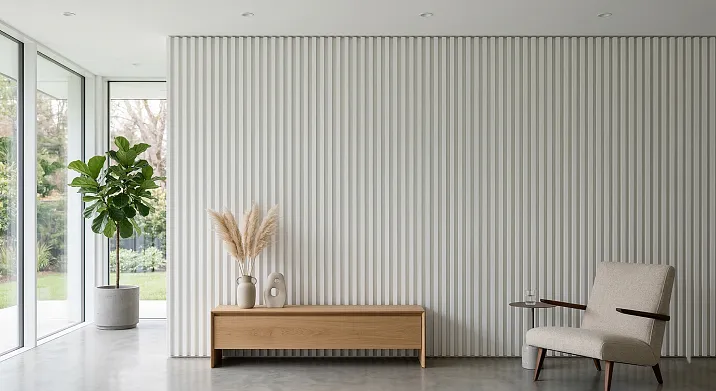
White in interior design is the most discussed, the most controversial, and perhaps the most complex. Some consider it 'empty' and 'cold.' Others see it as the only possible backdrop for any design idea. But when it comes to white slatted wall panels, the debate ends: this is no longer just a color. It's an architectural system where white becomes light, the rhythm of the slats becomes movement, and the shadow in the gaps becomes depth.
Consider this: why are most iconic interiors you've seen in magazines and saved in bookmarks white or nearly white? Because white is not the absence of color. It's the maximum sensitivity of a surface to light. A white slatted wall under directed warm lighting is alive, changing, unpredictably beautiful. The same solution without lighting is a neutral backdrop. Control the light—and the white slatted panel will play for you in a new way every time.
Exactly thereforewhite slatted wall panelholds the leading position among the most requested solutions for wall finishing in contemporary interiors. This is not a trend—it's a fundamental architectural tool.
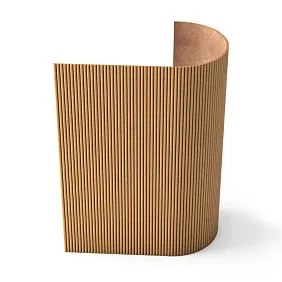
White is not one color: RAL shades for slatted panels
The first question to resolve before anything else: which specific white? This is not rhetoric—it's a practical task, the solution of which determines the entire character of the interior.




Main white RAL shades for slatted wall panels
RAL 9010 — pure white. The most neutral, most common. A slight warm undertone, almost imperceptible in daylight. Under warm artificial light at 2700 K, it has a slight 'yellowish' tint, creating a cozy atmosphere. Versatile for any style.
RAL 9003 — signal white. Colder and brighter than RAL 9010. Pure, without any yellowness. Combined with neutral daylight at 4000 K — maximum visual purity. For modern, strict interiors, minimalism with a cold atmosphere.
RAL 9001 — cream white. A noticeable warm creamy undertone. Soft, natural, 'Scandinavian'. Under warm light at 2700 K — almost honey-like. For Scandinavian and Japandi interiors — the perfect choice: neither bright white nor yellow, but something alive, organic.
RAL 7047 — telegrey 4. Not white in the strict sense, but a warm light gray close to it. For those who want white, 'but not so bright'. Creates a feeling of soft, natural neutrality.
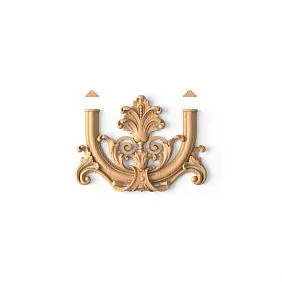
Our factory also produces:



How to choose a white shade: a practical algorithm
-
Determine the color temperature of the main lighting: 2700 K (warm) — RAL 9010 or 9001. 4000 K (neutral) — RAL 9003.
-
Obtain physical samples from the manufacturer. Look at them in your space at different times of the day.
-
Place the sample next to existing surfaces: floor, furniture, textiles. The white shade must be coordinated with the surroundings.
-
Do not make a decision based on a monitor screen. Never.
Get Consultation
White slatted panel profiles: how light reveals form
In a white monochrome system, the slat profile is the primary and only tool controlling the expressiveness of the surface. Color does not help—only form and light.
Rectangular profile: graphic purity
Sharp vertical edges. With side-directed light—a sharp, contrasting shadow with a clear boundary in each gap. The white wall becomes a graphic work: parallel black stripes of shadows on a white plane. Strict, precise, architecturally powerful.
It is the rectangular profile in white RAL 9010—the classic of minimalism. Maximum expressiveness through minimal means.
Semicircular profile: soft glow
Rounded edges create a smooth, diffused shadow. A white surface with semicircular slats under warm light 'glows' from within—creating the illusion of a soft material glow. Tactilely and visually, this is the 'warmest' version of a white slatted wall.
For living rooms, bedrooms, children's rooms—a semicircular profile in RAL 9001 with warm lighting at 2700 K. A surface you don't want to leave.
Trapezoidal profile: volume and sculpturality
Multi-level shadow in white—the most saturated, voluminous surface of the three options. A white trapezoidal slatted wall under side light is sculptural, weighty, monumental.
For large, bright spaces: living rooms with high ceilings, lofts with white walls, halls and lobbies.
Batten spacing in white systems: perception features
In a white monochrome system, batten spacing works differently than in colored ones. Without color contrast, relief is created only by shadow—meaning the spacing should be slightly wider than in colored solutions to keep shadows legible.
Spacing recommendations for white panels
| Step | Character of white surface | Application |
|---|---|---|
| 15–20 mm | Active, almost ornamental | Large rooms, powerful side lighting |
| 25–30 mm | Rhythmic, balanced | Offices, corridors, modern classic |
| 35–45 mm | Airy, light | Apartments, standard ceiling heights |
| 50–60 mm | Delicate, architecturally restrained | Japandi, bedrooms, small rooms |
The golden rule of a white monochrome system: with a spacing of less than 25 mm and warm diffused light, the surface reads as uniform — shadows blend. You need either wider spacing or more directional and contrasting light.
Two-color systems with white slats: depth through contrast
white slatted wall panelreveals one of the most striking techniques in modern interiors — a two-color system where the slats and backing are painted in different RAL colors.
White slats + black backing
Absolute graphic contrast. White battens on a black background in the gaps — an uncompromising black-and-white statement. This solution is for spaces that require maximum visual energy: lofts, modern offices, photo studios, showrooms. With vertical slats — sharp white verticals on a black background, visually 'lifting' the ceiling to infinity.
White slats + dark green backing (RAL 6005)
A natural, organic system. White slats — light. Dark green in the gaps — earth, vegetation, depth. This combination works in all natural styles: organic modern, biophilic design, Scandinavian.
White slats + anthracite backing (RAL 7016)
Softer than 'white on black,' but no less striking. For modern classics, restrained commercial spaces, offices with architectural ambitions.
White battens + pastel backing
Soft pink, powdery lilac, mint — in the gaps. A delicate color play: a white surface with a gentle 'breath' of color from the gaps. For children's rooms, bedrooms, women's studies.
White batten wall in different interior styles
Minimalism: white as the absolute language
In minimalism, a white batten wall is the only possible option. No color, no natural texture, only geometry, light, and shadow. Rectangular profile. Narrow spacing of 20–25 mm. Monochrome: walls, molding, baseboard — all in RAL 9010.
One rule: lighting must be designed so that the shadow in the gaps is visible. Without this, a minimalist batten wall is just a white wall.
The key element of the system is wooden molding for painting in the same RAL 9010 along the top edge. A monolithic color line from floor to ceiling without a single break.
Scandinavian style: white as a natural foundation
In Scandinavian interiors, white is snow, the turquoise of ice, the northern sky. RAL 9001 — a warm creamy white — is more organic here than the cool RAL 9003. Semi-circular profile. Spacing 35–40 mm. Warm light 2700 K.
Nearby — natural textiles (linen, cotton, wool), light oak flooring, living plants. A white slatted wall is a background that unites natural materials into a single Scandinavian system.
Skirting board:Solid oak wooden skirting board— a warm, natural 'grounding' for the white system. White slats + oak skirting + oak floor — the classic Scandinavian triangle.
Japandi: white as silence
In Japandi, white is not brightness, but silence. RAL 9001 or even RAL 7047 (warm light gray). Horizontal slats — a meditative horizon. Wide spacing 45–55 mm. Semi-circular or rectangular profile.
Nothing superfluous. A white slatted wall in Japandi is a monolithic screen of silence, on which every object and every ray of light appears thoughtful, intentional, perfect.
Modern classic: white with architectural weight
White slatted panels +Decorative Inserts in framing. Vertical posts + horizontal crossbars in RAL 9010 create a classic frame system — a modern boiserie in white.wooden corniceon the ceiling. This is a white interior with historical roots — light and monumental at the same time.
Loft: white on gray
In a loft with concrete walls, metal, and brick, a white slatted wall works as a 'bright spot,' a counterpoint to industrial heaviness. Rectangular profile, spacing 25–30 mm. RAL 9003 — a cool white, coordinated with the cool tones of concrete. Black metal reinforcement nearby — and the white slatted wall becomes the architectural center of attraction.
White slatted wall panels in different rooms
Living room: white accent wall behind the sofa
An accent wall behind the sofa in white slatted panels is a bold solution. It might seem, why create an accent in white if accents are usually made with color? The answer lies in lighting and relief. With proper directional lighting, a white slatted accent wall is more expressive than any flat colored surface.
7–10 modules. Rectangular profile. Two directional spotlights at a 35–40° angle on each side. LED strip behinda wooden moldingalong the upper edge. Result: a white surface with a lively rhythm of shadows, changing as the light source moves throughout the day.
Bedroom: white wall behind the headboard — purity and tranquility
White behind the headboard is a psychologically 'clean' space that promotes rest. RAL 9001 — warm, creamy. Semi-circular profile. Spacing 40–45 mm. LED strip along the lower perimeter of the panel in warm 2700 K.
Falling asleep by a white slatted wall with warm upward lighting is an experience that's hard to put into words. The space doesn't feel oppressive, doesn't distract, doesn't 'speak'—it simply exists, quietly and purely.
System: white molding along the top edge +MDF Skirting Boardin the same RAL. A monochrome monolith from floor to ceiling.
Entryway: white as the maximum of light
The entryway is often a dark, narrow space without natural light. A white slatted wall panel here is a strategic solution: it reflects light from sources, visually expands the space, and creates a feeling of cleanliness and order at the home's entrance.
Horizontal slats in a narrow hallway. RAL 9010. Warm directional light 2700 K. Every guest, upon entering, sees a bright, clean, rhythmically structured space—and the first impression of the home is formed right here.
Important: moisture-resistant coating for the entryway. Dampness can occur at the entrance. MDF with moisture-resistant 2K varnish in white RAL will withstand everyday wear without losing its whiteness or geometry.
Children's room: white as a neutral developmental environment
A children's room with white slatted panels is a space where the child creates the color accents themselves: toys, bedding, books, drawings on the wall. The white slatted surface is a neutral, developmental background that doesn't impose a specific image on the child.
Semi-circular profile—no sharp edges. Wide spacing. Vertical slats—'raise' the ceiling. RAL 9001—warm white, not sterile. The children's room in this version grows with the child: today—a neutral background for play, tomorrow—a stylish teenage room, the day after—a youthful minimalist interior.
Office: white as a professional neutral
A white slatted wall in the office is a neutral professional background against which any corporate element looks advantageous. Reception area: white panels + company logo as the only color accent = maximum branding effect.
Meeting room: white slatted panels + acoustic infill in the frame. A white acoustic slatted meeting room is a space where thinking comes easier.
Bathroom: white in humid conditions
White slatted panels in the bathroom are beautiful and technically feasible with the correct coating choice. Only two-component water-resistant varnish (2K) or special moisture-resistant polyurethane in RAL 9010. Closed-type panel (without gaps or with a narrow gap) – less steam penetration into the frame. Frame – only galvanized metal profile.
A white slatted bathroom creates a 'spa effect': a clean, bright, structured volume where a hot shower becomes a ritual, not just a hygiene procedure.
Coordinated white system: architectural monolith
A white slatted wall panel requires maximum precision in coordinating all accompanying elements. In a white system, a mismatch of RAL shades on panels and molding is instantly noticeable – unlike dark or saturated colors, where a difference of 2–3 delta-E units is imperceptible.
Critically important: all system elements – panel, molding, skirting, overlays – must be produced within a single manufacturing program and painted from the same batch of enamel. Only this guarantees shade matching.
White molding: the upper boundary of the system
wooden moldingor MDF molding along the upper edge of the panel field — in the same RAL. The molding 'seals' the system from above. Without it, the upper edge feels incomplete. With it — the color line continues uninterrupted from floor to ceiling.
Technical technique: a 20–30 mm gap behind the molding + 2700K LED strip. With white slats, the descending warm light creates a 'golden glow' effect on the surface — the white wall literally shines.
For classic interiors:Wooden cornicein RAL 9010 with a profiled surface — the classic 'roof' of a white slatted field.
White skirting: lower boundary
— is a horizontal element that frames the room at the bottom of the walls where the wall meets the floor. Skirting boards perform several functions: they hide the technological gap between the wall and floor covering (necessary for thermal expansion), protect the lower part of the wall from mechanical damage, create visual completion, and may conceal wiring.in RAL 9010 — the lower boundary of the white system. A monochrome monolith from floor to ceiling.
Alternative:Solid oak wooden skirting boardof natural tint — 'grounds' the white system with a warm natural base. White slats + oak skirting — Scandinavian classic.
Decorative overlays in white
Decorative Insertsin RAL 9010 create a framed architectural system around the white slatted field. In modern classic style — this is white boiserie: panel fields in white frames. Strict, clean, with historical dignity.
Additional slats for corners and junctions
wooden plankMDF for painting in RAL 9010 for corner transitions. White system continuity — no gaps in complex junctions.
Balusters: a natural accent to the white system.
balusters for staircasesSolid oak next to white slatted walls — a natural warm element contrasting with precise white geometry. White wall + oak staircase = Scandinavian architectural dialogue.
Furniture handles in the system.
Furniture HandlesMade from coordinated material on built-in furniture under white slatted walls — the final tactile point of the system. White furniture + white slatted walls + oak handles = flawless Scandinavian monolith.
Lighting for white slatted panels: five scenarios.
In the white system, lighting is not an auxiliary element but a constructive one. By controlling the light, you control the character of the white slatted surface.
Scenario 1 — Side directional spotlights (30°): maximum contrast shadow in the gaps. Sharp, architecturally strong look. For minimalist spaces.
Scenario 2 — Side directional spotlights (45°): soft, balanced shadow. Universal scenario for living spaces.
Scenario 3 — LED strip behind molding (downward): the entire slatted surface is evenly lit from above. Warm 'glow' along the white slats. For bedrooms and living rooms.
Scenario 4 — LED strip in gaps (substrate): light from within the gaps. With white battens + warm strip — glowing surface effect. For two-tone systems (white battens + dark substrate) — maximally effective.
Scenario 5 — Combined: LED strip behind molding + directional spotlights. Base diffused light from above + accent side lighting. For spaces where the batten wall is the main architectural element.
Installation of white MDF batten panels: what to consider
Acclimatization — strictly mandatory
48 hours horizontally at operating temperature and humidity. Especially important for white panels: any batten deformation after installation on a white surface is significantly more noticeable than on a dark one — white color enhances shadow contrast.
First panel — by laser level
White monochrome system does not forgive first module alignment errors. On a colored surface, a 1–2 mm deviation may be unnoticeable. On a white monochrome one — noticeable after 3–4 modules under any lighting.
Solvent-free adhesive
Mounting adhesive MS-polymer or acrylic-urethane. Solvent-based adhesive damages MDF and causes yellowing of the white surface at contact points — after 6–12 months the stain shows through the paint.
Final painting: if not factory-applied
Matte or satin water-based VOC-free paint. Two coats with intermediate P400 sanding. With white color, the topcoat must be as even as possible—any texture irregularity on a white surface is visible under side lighting.
About the company STAVROS
White slatted wall paneling is a solution where the cost of error is especially high: mismatched RAL shades, inconsistent spacing, poor-quality MDF—all of this is instantly and irreparably noticeable on a white monochrome surface. That's why the manufacturer is doubly important for a white system.
STAVROS is a Russian manufacturer of MDF and solid wood products for interior finishing and furniture production. White slatted wall panels made of MDF with a density of 750–850 kg/m³. Spacing accuracy control ≤ 0.5 mm. Factory painting in any RAL—including the full spectrum of whites: RAL 9010, 9003, 9001, 9002. Guarantee of RAL color match for reorders from the same color batch.
A fully coordinated white system from a single production program:Moldings and cornices, MDF skirting boards for paintingandBaseboards made of solid oak, Decorative Inserts, additional slats, balusters for staircases, Furniture Handles.
Over 4000 models. 20,000 modifications. 39 product groups. Shipping from a single piece. Delivery across all of Russia. Physical color samples before ordering—mandatory.
FAQ: white slatted wall panel
Which white RAL to choose for slatted wall panels?
Depends on the color temperature of the lighting. At 2700 K—RAL 9010 or 9001 (warm). At 4000 K—RAL 9003 (cool pure). Always view a physical sample in your space under your lighting—a monitor screen does not convey the difference between white shades.
Why should a white slatted wall be made of high-density MDF?
Because on a white surface, any deformation of the slat is more sharply visible under side lighting than on a dark one. MDF 750–850 kg/m³ maintains the slat's straightness. MDF 630 kg/m³ develops micro-bends after 6–12 months—on a white wall, this is a catastrophe.
Can white slatted panels be repainted a different color?
Yes. Sanding with P240, primer, new RAL color. Changing from white to a dark color requires an intermediate primer layer to cover the white base—1–2 additional coats.
Do white slatted panels in a small room expand or narrow the space?
They expand and elevate with correct orientation: vertical white slats + warm light from gaps = visually higher ceiling. Wide spacing (40–50 mm) + neutral RAL 9001 = visually 15–20% more spacious.
Do white panels require special preparation before installation?
48-hour acclimatization is mandatory. For white panels—especially strict: deformation is more noticeable. Mounting adhesive—only solvent-free, otherwise yellowing of the white surface within 6–12 months.
How to care for white MDF slatted panels?
Dry or slightly damp soft cloth. Abrasives—prohibited. For stains: neutral water-based cleaner, no alcohol. Grease stains: mild soap solution. Every 3–5 years as needed—refreshing paint without dismantling.
How resistant are white slatted panels to yellowing over time?
With proper factory 2K varnish or acrylic-urethane coating—no yellowing for up to 10–15 years. Yellowing is accelerated by: direct UV sunlight, tobacco smoke, solvent-based adhesives. When choosing a coating—check for UV stabilizers in the varnish composition.