Article Contents:
- Revolution of perception: psychology of wooden surfaces in interior
- Neurophysiology of comfort
- Visual ecology of space
- Material science: characteristics of species for wall coverings
- Oak — unshakable classic
- Ash — dynamic elegance
- Walnut — aristocratic nobility
- Exotic species: exclusivity in every detail
- Technological solutions: from raw material to installation
- Innovative wood preparation
- Precision surface processing
- Mounting and fastening systems
- Design concepts: styles for every interior
- Classic Luxury
- Scandinavian philosophy
- Modern eclecticism
- Functional features: more than decoration
- Concealment of utilities
- Thermoregulation and microclimate
- Technology integration
- Regional application specifics
- Climate factors
- Architectural traditions
- Environmental Aspects and Certification
- Sustainable forestry
- Secondary recycling and disposal
- Carbon footprint and climate
- Economic Considerations
- Investment attractiveness
- Impact on property value
- Operating costs
- Trends and innovations
- Digital technologies in design
- Smart Coatings
- Personalization and customization
- Maintenance and Care: Preserving Beauty for Decades
- Daily care
- Protection against damage
- Restoration and renewal
- Psychology of color and texture
- Influence of shades on mood
- Tactile sensations
- Combination with other materials
- Natural materials
- Modern materials
- Conclusion: investment in beauty and harmony
Imagine the moment when you enter a room and instantly feel the incredible harmony of the space. What creates this magic? The secret lies in the wooden wall — an element capable of radically transforming any interior, filling it with the nobility and warmth of living material. In an era of artificial finishes and synthetic wood imitations, wooden walls remain the standard of authentic beauty and eco-friendliness.
Each wooden panel carries a unique story of the tree's growth, captured in the distinctive patterns of its annual rings. This is not merely a decorative material — it is living nature art, transformed by human craftsmanship into a functional interior element. Modern technologies allow us to reveal the full beauty of natural wood, creating walls that become true works of art.


Revolution of perception: psychology of wooden surfaces in interior




Neurophysiology of comfort
Why does a person instinctively reach for wooden surfaces? The answer lies deep within our subconscious. For millennia, ancestors lived surrounded by wood, and this genetic memory is activated upon contact with natural material. Touching a wooden wall triggers a cascade of positive neurochemical reactions, reducing stress levels and increasing serotonin production.
Scientific studies confirm: the presence of wooden elements in interior normalizes heart rhythm, improves attention concentration, and promotes better sleep quality. This effect is especially pronounced in bedrooms, where a wooden wall becomes not only decorative but also therapeutic.
Our factory also produces:


Visual ecology of space
Natural wood tones create optimal visual load for the human eye. Unlike bright synthetic colors, the natural palette of wood does not strain the eyes, creating a sense of visual comfort. The texture of natural material offers numerous details for contemplation, which is especially important in the age of digital minimalism.
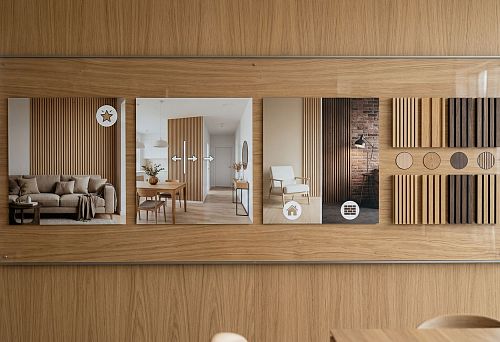
Wooden walls possess a unique ability to alter the perception of space. Vertical panel placement visually increases ceiling height, while horizontal placement expands the room. The play of light and shadow on the textured surface creates dynamism, enlivening static interiors.
Get Consultation
Wood Science: Characteristics of Species for Wall Coverings
Oak — Unshakable Classic
Oak walls embody strength and dignity. Wood density up to 700 kg/m³ ensures exceptional panel strength capable of withstanding significant loads. High tannin concentration provides natural protection against moisture, fungi, and pests.
Oak's color palette is strikingly diverse — from light golden hues to deep chocolate tones. Characteristic large grain with prominently visible growth rings creates an expressive decorative effect. Thermal treatment allows achieving unique shades unavailable in other species.
Ash — Dynamic Elegance
Ash panels demonstrate an amazing combination of strength and visual lightness. Light base tones with contrasting dark streaks form a dynamic texture capable of revitalizing even the most austere interiors.
Ash's unique feature is its ability to bend without losing strength. This allows creating curved wall elements that seamlessly integrate into unconventional architectural solutions. The species easily accepts various staining methods while preserving its characteristic striped structure.
Walnut — Aristocratic Elegance
Walnut walls — choice of true connoisseurs of luxury. Rich color palette ranging from light brown to deep chocolate tones, wavy wood grain structure create unique decorative compositions. Each panel becomes a unique piece of natural art.
Stability of dimensions and excellent workability of walnut allow creating complex profiles and decorative elements. Natural oily sheen gives the surface a noble appearance even without additional treatment.
Exotic Species: Exclusivity in Every Detail
Wenge, zebrawood, teak, mahogany — these names sound like magical incantations for admirers of unique interiors. Wenge impresses with its contrasting black-brown texture and exceptional hardness. Zebrawood surprises with striped pattern resembling African zebra coloring.
Using exotic species transforms the wall into the centerpiece of the interior, an object of admiration and a collectible item. Limited resources make such finishes especially valuable from an investment standpoint.
Technological Solutions: From Raw Material to Installation
Innovative Wood Preparation
Modern production of wooden walls begins with high-tech preparation of raw material. Kiln drying under strictly controlled parameters reduces wood moisture to optimal 6-8%. This eliminates subsequent deformations and ensures panel geometry stability.
Thermal modification alters wood structure at the molecular level, enhancing its resistance to moisture and biological damage. Vacuum impregnation with protective compounds ensures deep penetration of active substances into the material structure.
Precision Surface Processing
Creating an ideal wooden wall surface requires multi-stage processing. Precision planing on high-accuracy machines ensures perfect panel geometry. Gradual reduction of abrasive grit during sanding creates a silky surface.
Brushing — a special processing technique revealing natural wood structure. Soft fibers are removed, hard ones remain, creating a textured relief surface. This method is especially effective on coniferous species and oak.
Mounting Systems and Fastening
Modern wooden walls Use sophisticated mounting systems ensuring reliability and aesthetic installation. Concealed mounting eliminates visible fasteners, creating an impression of a monolithic surface.
The 'tongue-and-groove' system ensures tight panel connection without gaps. Adjustable brackets allow compensating for wall irregularities, creating a perfectly flat surface. Damping gaskets prevent vibration and sound transmission.
Design Concepts: Styles for Every Interior
Classic Luxury
Classic wooden walls embody centuries-old traditions of interior art. Strict vertical or horizontal lines, symmetrical compositions, noble decorative elements create an atmosphere of aristocratic dignity.
Carved moldings, three-dimensional panels, patinated surfaces — every element of a classic wall is meticulously detailed. Gold or silver finish on decorative elements emphasizes the status and respectability of the interior.
Scandinavian Philosophy
Northern aesthetics introduced principles of functionality and naturalness into design. Scandinavian wooden walls feature minimalist forms, light wood tones, and absence of excessive decoration.
Birch, pine, and ash panels are minimally processed, preserving the maximum natural beauty. Matte finishes highlight the material's naturalness and create a tactile comfort upon touch.
Modern Eclecticism
Current design trends open up boundless opportunities for experimentation. Wooden walls can be combined with metallic elements, glass inserts, LED lighting, creating amazing visual effects.
Geometric patterns from boards of different sizes, asymmetrical compositions, texture play — modern style allows creating unique interior solutions without analogs.
Functional features: more than decoration
Acoustic properties
Wooden walls have excellent sound-absorbing properties. The porous structure of wood effectively absorbs sound waves, creating a comfortable acoustic environment. This is especially important in bedrooms, where quality sleep critically depends on the absence of external noise.
The textured surface enhances the sound-absorbing effect, breaking up reflected sound waves. Combining different wood species allows creating acoustic systems with specified characteristics.
Thermal regulation and microclimate
Natural wood is a natural regulator of humidity and temperature. In dry air, it releases stored moisture; in humid air, it absorbs excess. This process occurs continuously, maintaining an optimal microclimate in the room.
The thermal insulation properties of wood create an additional barrier against heat loss. Solid wood wall can reduce heating costs by 10-15%, which is especially relevant in the context of rising energy carrier tariffs.
Integration of technologies
Modern wooden walls can integrate various technological solutions. Concealed wiring allows embedding lighting systems, audio equipment, and "smart home" elements. At the same time, all communications remain invisible, not disrupting the aesthetics of the natural material.
Wireless charging for mobile devices, built into wooden panels, makes the interior not only beautiful but also functional. Touch panels for control, disguised as wooden surfaces, open up new possibilities for creating futuristic interiors.
Regional application specifics
Climate factors
The choice of wood species for walls should consider regional climatic conditions. In high-humidity conditions, it is preferable to use durable species — oak, teak, larch. In dry climates, any species is suitable provided proper treatment is applied.
Temperature fluctuations affect the stability of wood. Quality kiln drying and material stabilization minimize these issues, but local conditions should still be considered when choosing a specific solution.
Architectural traditions
Different regions have their own traditions of using wood in interiors. Alpine style implies using rough-sawn coniferous species while preserving the natural texture. Japanese minimalism requires perfectly smooth surfaces with fine, barely noticeable seams.
Russian traditions of wooden architecture are distinguished by rich carved elements and variety of processing techniques. Modern interpretations of folk motifs create a unique style recognizable worldwide.
Ecological Aspects and Certification
Sustainable Forestry
Modern production of wooden walls is inseparably linked to principles of ecological responsibility. FSC certification guarantees that wood is sourced from managed forests, where harvesting volumes do not exceed natural growth.
Preferring local species reduces the product's carbon footprint by reducing transportation costs. Developing regional production supports traditional crafts and local economies.
Secondary recycling and disposal
One of the main advantages of wooden materials is the possibility of complete recycling at the end of their life cycle. Old panels can be ground and used to produce composite materials or fuel pellets.
The biodegradability of wood ensures safe disposal without harm to the environment. This fundamentally distinguishes natural materials from synthetic analogs, which create problems with waste recycling.
Carbon Footprint and Climate
Wood is the only building material that actively absorbs carbon dioxide from the atmosphere during growth. Wooden walls continue to store this carbon for decades, contributing to the fight against climate change.
The production of wooden materials requires significantly less energy compared to metals, plastics, and ceramics. This makes choosing wood an ecologically responsible solution.
Economic considerations
Investment Appeal
Quality walls made of natural wood is a long-term investment in the beauty and comfort of the home. With proper care, wooden finishes last 25-50 years, significantly exceeding the lifespan of most synthetic analogs.
The prestige of natural materials ensures the stability of their prices. High-quality wooden panels rarely depreciate and often even increase in value, especially items made from rare wood species.
Impact on property value
The presence of quality wooden elements in the interior significantly increases the attractiveness of real estate to potential buyers. The price difference may amount to 15-25% compared to properties with standard finishes.
For commercial real estate, this effect is even more pronounced. Offices and public spaces with wooden finishes are perceived as more prestigious, allowing the establishment of premium rates.
Operating costs
Properly treated wooden walls require minimal maintenance. Periodic cleaning and renewal of protective coating every few years — that's all the necessary procedures. Operating costs are significantly lower than those of many modern finishing materials.
The ability for local repair is another economic advantage of wooden finishes. A damaged panel can be replaced or restored without dismantling the entire wall.
Trends in development and innovation
Digital Technologies in Design
Virtual and augmented reality revolutionize the design process of wooden interiors. Clients can "try on" various wall options in their space before work begins, assess the visual effect, and make adjustments.
3D printing with wooden composites opens new possibilities for creating complex decorative elements. Although the technology cannot yet fully replace traditional solid wood processing, it expands designers' creative horizons.
Smart coatings
The development of "smart" finishes for wooden surfaces opens fantastic prospects. Nanoparticles in protective agents can create self-cleaning surfaces that react to contamination.
Integrating sensors into wooden panels allows monitoring the room's microclimate, automatically regulating humidity and temperature. Such systems are especially relevant for museums, galleries, and libraries.
Personalization and Customization
Modern consumers increasingly value uniqueness and the possibility of personalization. Laser engraving allows applying individual patterns, logos, even photographs onto wooden panels.
Modular systems allow creating unique compositions from standard elements. Combining various species, textures, and sizes opens practically limitless creative possibilities.
Care and Maintenance: Preserving Beauty for Decades
Daily Care
Proper care of wooden walls does not require special knowledge or expensive products. Regular cleaning with a soft dry cloth removes dust and prevents its accumulation in wood pores.
Microfiber is especially effective for caring for wooden surfaces — it leaves no scratches or lint, gently removing dirt. Wet cleaning is done with special wood cleaning agents or simply slightly damp cloth.
Protection against damage
Placing furniture and other items near wooden walls should exclude the possibility of mechanical damage. Sharp corners and metal elements may leave scratches or dents on the surface.
Controlling humidity in the room is critically important for preserving wooden finishes. The optimal level is 45–60%. Using humidifiers during heating season and dehumidifiers during periods of high humidity will help avoid deformations.
Restoration and renewal
The ability to restore is one of the main advantages of wooden materials. Minor scratches and scuffs are easily removed by sanding and applying a new finish. More serious damage requires professional intervention.
Periodic renewal of protective coatings extends the service life of wooden walls. Oil-based finishes are renewed every 3–5 years, varnish-based ones less frequently. Modern formulations are easy to apply and dry quickly, minimizing inconvenience for residents.
Psychology of color and texture
Influence of shades on mood
Different wood species affect a person's psycho-emotional state differently. Light tones — birch, maple, beech — create a sense of freshness, cleanliness, and energy. They are especially suitable for northern rooms with insufficient natural light.
Dark species — walnut, wenge, mahogany — promote relaxation, creating a sense of security and stability. Such walls are ideal for bedrooms, offices, and libraries — places intended for rest and focused work.
Tactile sensations
The texture of wooden surfaces plays an important role in the perception of space. Smooth, polished panels create a sense of luxury and grandeur. Rough, brushed surfaces encourage informal interaction and relaxation.
Surface temperature also affects perception. Wood always feels warm to the touch due to its low thermal conductivity. This creates psychological comfort, especially important in climates with long, cold winters.
Harmony with wooden elements
Natural materials
Wood combines beautifully with other natural materials. Combining wooden panels with natural stone creates a contrast of textures and highlights the natural origin of both materials.
Textiles, especially from natural fibers, complement wooden walls, adding softness and coziness. Linen, cotton, wool in natural shades create harmonious compositions with wood of any species.
Modern materials
Combining wood with metal, glass, plastic can create interesting design effects. Chrome or matte metallic elements highlight the warmth and softness of wooden surfaces.
Glass inserts in wooden panels create play of light and space, making massive walls visually lighter. Backlighting behind glass creates an effect of internal illumination.
Conclusion: Investment in beauty and harmony
Choosing a wall made of natural wood is a decision in favor of genuine values: material quality, connection with nature, care for family health. In a world of rapidly changing trends and artificial materials, wooden finishes remain a symbol of constancy and true beauty.
Each wooden panel is unique due to the natural wood grain pattern. Nature does not create copies — each wall has its own character, unique texture, individual energy. This makes interiors with wooden elements exclusive and personalized.
Modern production technologies allow us to fully reveal the potential of natural materials. Precise processing, high-quality finishes, thoughtfully designed mounting systems transform traditional craftsmanship into high-tech production while preserving the soul and warmth of handcrafted work.
The ecological advantages of wooden materials are becoming increasingly relevant. Choosing natural wood supports sustainable forestry, contributes to biodiversity conservation, and invests in a healthy planet’s future.
The psychological impact of wooden surfaces on humans is scientifically proven. Natural materials create a healthy atmosphere, reduce stress, and improve quality of life. This is especially important in modern conditions, when people experience an acute need for contact with nature.
The economic justification for investing in high-quality wooden walls is evident in long-term planning. High initial costs are repeatedly offset by durability, restoration potential, and positive impact on property value.
STAVROS embodies the best woodworking traditions in every project. Decades of experience working with natural materials, deep understanding of properties of various wood species, use of advanced processing technologies, and individual approach to each order make STAVROS a reliable partner in creating unique interiors.
STAVROS philosophy is based on respect for natural materials and understanding that wooden interior elements are not just decoration, but a way to create a harmonious living space. Each wall is created with understanding of its role in people’s lives, with care for comfort and well-being of clients.
STAVROS masters work exclusively with carefully selected wood that has undergone strict quality control. Modern equipment combined with traditional processing techniques allows creating items that will become a decoration of any interior and delight owners for many years.
Choosing STAVROS means choosing quality proven over time, ecological responsibility, and limitless possibilities for creating a dream interior. This partnership with professionals who transform ordinary wood into works of art, creating spaces where inspiration is born and beauty lives.