Article Contents:
- Philosophy of minimalism in the sleeping space
- Soft wall panels: coziness through tactility
- Thin ceiling cornice: elegance of restraint
- Rejecting massive molding: why less is more
- Color palette of tranquility
- Lighting: layers of light instead of a single chandelier
- Materials: quality over quantity
- Functional advantages of a minimalist approach
- Practical Implementation: From Idea to Realization
- Questions and Answers
- Conclusion: a space for living, not for show

The bedroom requires a special design approach. This space is not for demonstrating status, not for impressing guests, but for rest, recovery, and intimacy. Excessive decor here becomes visual noise that hinders relaxation. The eye finds no point of rest, the brain continues to process decorative information instead of switching to rest mode. The modern philosophy of bedroom design is built on the principle of 'less is more' — a few quality elements create a deeper impression than an abundance of mediocre decor.
Soft wall panels and a thin ceiling cornice are two key elements that form a calm, refined atmosphere without decorative overload.Wall PanelsThey create an architectural accent, add tactility, improve acoustics — while remaining visually restrained. The thin cornice completes the wall composition with an elegant horizontal line, without attracting excessive attention. Together, they form a space where beauty lies not in ornamental excesses, but in the quality of materials, precision of proportions, and thoughtfulness of every detail.



Philosophy of minimalism in the sleeping space
Why has the bedroom become a territory of minimalism? The answer lies in the pace of modern life. A person spends the day in an informationally overloaded environment — computer screens, smartphone notifications, advertising billboards, crowded offices. By evening, the brain is exhausted from processing visual information. The bedroom becomes a place of visual relief, where the eyes can rest on calm surfaces, simple forms, and muted colors.
Minimalism in the bedroom does not mean ascetic emptiness. It is thoughtful simplicity, where each element is chosen with special attention to quality and functionality. One expressivesoft panelbehind the bed headboard replaces a dozen decorative pillows and paintings. One qualityCeiling cornicecreates compositional completeness instead of multi-tiered molding with rosettes and coffers.
The color palette of a minimalist bedroom is built on muted natural shades. Instead of bright saturated colors — complex shades of white with warm or cool undertones, layered grays from pearl to graphite, soft beiges and sandy tones, dusty pastel colors. These colors do not shout about their presence but create a calm backdrop for life. Accents are added through the texture and finish of materials, not through contrasting color spots.
Light in a minimalist bedroom is layered and adjustable. Instead of one bright chandelier — several light sources of different characters. Soft general lighting creates a basic level of comfort, bedside lamps provide functionality for reading, hidden lighting behind the cornice adds atmosphere in the evening. Dimmers allow adjusting the light intensity depending on the time of day and mood.
Functionality prevails over decorativeness. Every element must have practical application or create comfort. Soft panels are not just beautiful — they improve acoustics, protect the wall from damage, create a pleasant-to-touch surface. The cornice does not just finish the wall — lighting can be placed behind it, it visually increases the room's height. Even a decorative vase on the dresser should carry emotional value, not just fill space.




Soft wall panels: coziness through tactility
Tactility is an underrated aspect of interior design. Most interiors are created for the eyes, but a person perceives space with all senses. Soft wall panels appeal to the sense of touch, creating physical comfort that enhances the psychological feeling of security and coziness. Touching a warm textile surface is more pleasant than touching a cold painted wall. This difference seems insignificant, but it shapes the overall impression of the space.
Structurally, soft panels consist of three layers: a rigid base of plywood or MDF, a soft filler of foam or synthetic padding, and an outer upholstery of fabric or leather. The filler thickness varies from thin two to three centimeters, creating light volume, to deep five to seven centimeters, forming expressive relief. The upholstery can be smooth or with decorative stitching — tufted, diamond, square — which adds visual structure to the soft surface.
The upholstery material determines the character of the panel and care requirements. Natural fabrics — linen, cotton, wool — create an organic, breathable surface with noble matte finish. Velvet and velour add luxury and color depth due to the pile, which reflects light differently. Leather and faux leather are more practical than textiles — easier to clean, do not absorb odors, last longer. Modern technical fabrics combine the aesthetics of natural materials with increased wear resistance and ease of care.
Placement of soft panels in the bedroom most often occurs behind the bed headboard. This is logical: here the panel is maximally functional — you can lean your back against it while reading, it protects the wall from stains, creates a visual headboard without massive furniture. The size of the panel behind the headboard usually exceeds the bed width by twenty to forty centimeters on each side, creating a visual frame. Height varies from seventy centimeters, starting from mattress level, to two hundred centimeters, reaching almost the ceiling.
Alternative placement — an accent wall is entirely covered with soft panels. Instead of one large panel, a modular system of several elements of the same or different sizes is used. Panels can be placed flush, forming a continuous soft surface, or with intervals, creating a rhythmic structure. A fully soft wall maximally improves acoustics — this is a solution for rooms where sound insulation is critical or where a chamber acoustic atmosphere is required.
The color of soft panels in a minimalist bedroom tends toward calm shades. A monochrome palette — panels matching the wall color, differing only in texture — creates visual unity. A tonal strategy — panels two to three tones darker or lighter than the wall — adds delicate depth. Contrasting dark panels on a light wall or vice versa creates graphic quality but requires caution not to disrupt the space's tranquility. Pastel shades — dusty pink, gray-blue, soft olive — add color without brightness.
Tufting is a classic technique for decorating soft panels, where fabric is pulled by buttons into a regular grid of diamonds or squares. This technique adds visual interest, creating a play of light and shadow in the depressions of the tufting. However, for a minimalist bedroom, tufting may be excessive—a smooth surface or delicate horizontal stitching creates a calmer visual effect. The choice depends on the overall concept: if the bedroom leans towards classic style, tufting is appropriate; if towards modernity, smooth upholstery is better.
Installation of soft panels is done using hidden fasteners. Panels are manufactured in a workshop to precise dimensions, with hanging loops or brackets installed on the back. Corresponding mounting hardware is installed on the wall. The panel is hung on the wall like a picture, with no visible fasteners. This allows the panel to be removed for cleaning or reupholstering if necessary. An alternative method is to glue panels to the wall with a special adhesive, creating a more monolithic structure but making removal difficult.
Acoustic properties of soft panels are a crucial functional characteristic. The soft filler absorbs sound waves, reducing reverberation and echo. In a bedroom, this creates an intimate acoustic environment—voices sound softer, music doesn't resonate, and street noises are muffled. For maximum acoustic effect, special acoustic fabrics and higher-density fillers are used. A wall fully covered with soft panels can reduce noise levels by fifteen to twenty decibels.
Our factory also produces:


Thin ceiling cornice: the elegance of restraint
A cornice is an architectural element that finishes the wall and creates a transition to the ceiling. In classic interiors, cornices are massive, multi-profiled, with rich decoration—modillions, dentils, ovolos. Such cornices attract attention, create solemnity, and form a palatial atmosphere. For a minimalist bedroom, this approach is excessive. Here, what's required isa thin cornicethat performs an architectural function without becoming an independent decorative object.
The size of a cornice for a bedroom with standard ceiling heights of 2.70–2.90 meters is optimal in the range of 5–8 centimeters in width of the projection from the wall. Narrower cornices of 3–4 centimeters get lost, failing to create a visually noticeable transition. Wider ones of 10–15 centimeters begin to attract excessive attention, visually lowering the ceiling. A thin 7-centimeter cornice creates a delicate boundary between the wall and ceiling that is perceptible but not dominant.
The profile of a thin cornice is extremely simple. It can be a simple cove—a concave rounding that softens the right angle between the wall and ceiling. Or a minimal two-line profile—a small shelf on top and a smooth curve below. No ornaments, carvings, stepped transitions—only pure geometry creating a smooth transition. Such a profile doesn't steal the visual height of the room and doesn't create visual noise.
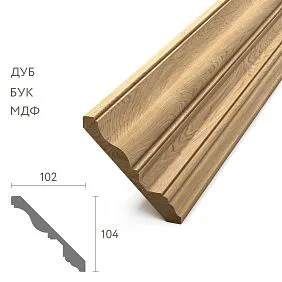
The material of the cornice determines its weight, cost, and finishing options. Polyurethane cornices are the most practical for a bedroom. They are lightweight, don't create load on the walls, completely moisture-resistant, and don't deform from temperature and humidity fluctuations. Polyurethane is easily painted any color, allowing the cornice to be integrated into the bedroom's color scheme.Wooden cornicescreate the warm organic feel of natural material but are heavier and require more complex installation.
The color solution for a thin cornice follows the principle of inconspicuousness. A cornice in the color of the ceiling—usually white or very light—creates a visual continuation of the ceiling plane without attracting attention. This solution makes the ceiling appear visually higher. A cornice in the color of the wall blends with the vertical plane, remaining discernible only through the relief of the profile. A contrasting cornice—white on a colored wall or vice versa—is more noticeable, but for a minimalist bedroom, this may be excessive.
Hidden lighting behind the cornice is a function that transforms the architectural element into part of the bedroom's lighting scenario. The cornice is installed with a 5–7 centimeter offset from the ceiling. An LED strip is placed in the resulting niche. The light is directed upward, creating a soft glow on the ceiling. This technique visually separates the ceiling from the walls, creating a floating surface effect. The brightness of the lighting is adjustable with a dimmer—from barely noticeable glow to soft primary lighting.
Installing a thin cornice requires precision. The cornice is attached to the wall directly under the ceiling using adhesive and additional dowels for reliability. Corner joints are made at a 45-degree angle with precise fitting. Gaps in the joints ruin the sense of quality—the cornice should form a continuous line around the entire perimeter of the room. After installation, joints are filled, and the cornice is painted or coated with a finishing compound.
An alternative to a traditional cornice is a shadow gap profile, creating a visual gap between the wall and ceiling. This is an aluminum or plastic profile installed under the ceiling with a 1–2 centimeter gap. A shadow line forms, visually separating the ceiling from the walls. This technique is maximally minimalist—there's no decorative profile, only pure geometry and play of light. The shadow gap profile is especially effective combined with hidden lighting.
The proportion of the cornice to the room height is critical. The rule states: the width of the cornice should be two to three percent of the ceiling height. For ceilings of 2.70–2.90 meters, this gives a cornice of 5–8 centimeters, corresponding to a thin profile. For higher ceilings of 3–3.20 meters, the cornice can be 7–10 centimeters. It's important that the cornice relates to other architectural elements—moldingson the walls, baseboards—creating visual harmony.
Get Consultation
Rejecting massive moldings: why less is more
Moldings—rosettes, medallions, coffers, multi-tiered cornices—are traditionally associated with luxury and status. Rich interiors of the past abounded with plaster moldings, which demonstrated the owner's wealth and the decorators' skill. However, in a bedroom, this tradition works against comfort. An abundance of decorative moldings creates visual overload that hinders relaxation.
The psychology of decorative perception shows that the brain processes visual information continuously, even when a person isn't consciously focusing attention. Complex moldings with many small elements require subconscious processing of all these details. The eye wanders over the ornaments, the brain reads the information, expending attentional resources. In a living room or dining room, where activity and social interaction are required, this is appropriate. In a bedroom, where relaxation is needed, this is counterproductive.
Modern aesthetics values visual purity. Instead of complex decorative compositions—quality of materials and precision of execution. One perfectly executed detail is more valuable than ten mediocre ones. A thin cornice made of quality polyurethane with impeccable painting creates a greater impression than a multi-tiered composition of cheap material with visible joints. A soft panel of noble velvet with professional upholstery surpasses a dozen decorative rosettes.
The practical advantages of rejecting moldings are significant. Fewer elements—easier cleaning. Decorative moldings collect dust in recesses and carvings, requiring regular cleaning. Smooth surfaces and minimal decor can be wiped in minutes. Fewer elements—cheaper renovation. Complex moldings are expensive to install and require professional craftsmen. Simple thin cornices are installed faster and cheaper. Fewer elements—easier updating. Changing wall color in a minimalist bedroom can be done in a day. Repainting a room with abundant moldings is a multi-day project.
Visual space increases when decor is reduced. An abundance of moldings visually fragments space, making it smaller and tighter. Clean surfaces, minimal elements create a sense of spaciousness even in a small bedroom. A ceiling without massive cornices and rosettes appears higher. Walls without many moldings appear wider. Visual air—empty space between elements—is as valuable as the elements themselves.
The temporal relevance of a minimalist approach is higher than that of richly decorated interiors. Fashion for specific molding styles changes. What seemed luxurious ten years ago may be perceived as outdated today. A minimalist approach is beyond fashion—quality materials, pure forms, and well-proportioned elements remain relevant for decades. Investing in simplicity pays off with long-term relevance.
Color palette of tranquility
Color is the most powerful tool for creating atmosphere in a bedroom. Bright, saturated colors activate, excite, and demand attention. Muted, complex shades calm, relax, and create a background for rest. The color palette of a minimalist bedroom is built on natural shades with low saturation and medium or high lightness.
White in all its variety of shades remains the base. But not a dazzling white, rather complex shades with a slight undertone. Warm white with a hint of ochre or sepia creates a cozy, intimate atmosphere. Cool white with a bluish undertone forms freshness and purity. Creamy white with a beige undertone is a classic that creates softness. Soft panels and cornices in different shades of white form a monochromatic composition where difference is created through texture, not color.
The gray range from light pearl to graphite offers a wide spectrum for a minimalist bedroom. Light grays with a warm undertone (greige—gray-beige) create a neutral background that pairs with any accents. Medium grays form a denser atmosphere, suitable for spacious bedrooms with good natural light. Dark graphite is used as an accent—for one wall, for soft panels on a light background, creating contrast without brightness.
The beige and sandy palette creates a warm, enveloping atmosphere. Light beige is almost indistinguishable from white but adds warmth. Medium beige with a gray undertone is a modern interpretation of classic beige. Sandy with a yellow undertone brings sunniness. Terracotta with a red undertone adds earthy warmth. Beige soft panels on white walls with a white cornice create a tonal composition of visual depth.
Pastel shades of the classic palette receive a muted interpretation for the bedroom. Instead of bright blue—dusty blue with a gray undertone, reminiscent of morning sky. Instead of pink—dusty pink, almost lilac. Instead of green—gray-green, sage, olive. Instead of lilac—lavender, washed-out. These complex shades create color without brightness, adding individuality without visual noise.
Monochromatic schemes, where the entire bedroom is designed in shades of a single color, create maximum calm. All white — walls, ceiling, soft panels, cornice, furniture — differs only in texture and shades of white. This creates visual unity, expands the space, and forms an atmosphere of purity. All gray — from light to dark — creates sophisticated restraint. All beige — warm coziness. Monochrome is not boring if various textures and finishes are used.
Accent color is added in measured doses through textiles and accessories, not through architectural elements. Soft panels and cornices remain neutral — white, gray, beige. Color is introduced through bedding, decorative pillows, bedspreads, curtains. This allows for easy changes to color accents with a change in mood or season without remodeling the interior. Summer — fresh blue and green shades, winter — warm terracotta and chocolate.
Lighting: layers of light instead of one chandelier
Lighting in a minimalist bedroom is multi-layered and flexible. Instead of one powerful central fixture — several sources of different types, which create various lighting scenarios. Morning requires bright light for waking up, evening — soft light for relaxation, night — minimal light for orientation. The lighting system must provide all these modes.
General lighting creates a base level of light. This can be a flat ceiling light of minimalist design that does not attract attention. Or recessed spotlights evenly distributed across the ceiling. Or hidden lighting behind a thin cornice, directed at the ceiling — the light reflects off the ceiling, creating soft, diffused illumination without visible sources. The brightness of the general lighting is adjustable with a dimmer from bright daytime levels to subdued evening levels.
Functional lighting provides light for reading, working, dressing. Bedside lights — wall sconces or table lamps — create directional light on each side of the bed. They can be turned on independently so one person can read without disturbing a sleeping partner. Mirror or wardrobe lighting provides necessary light for morning routines. Functional lighting should be bright enough for the task but not create visual discomfort.
Accent lighting highlights architectural elements or decorative objects. Lighting soft panels from below or the side creates an expressive play of light on the textured surface. Narrow spotlights directed at artworks or plants create focal points. LED strip behind the cornice, directed at the wall, creates a light strip emphasizing the transition from wall to ceiling. Accent lighting works in the evening, creating atmosphere.
Night orientation lighting provides minimal light for safe movement in the dark. This can be built-inBaseboardsLEDs creating a light path along the walls. Or recessed floor lights illuminating the path to the door. Or a motion-sensor nightlight that turns on automatically. Night lighting should be of a warm hue and minimal brightness, not disturbing sleep.
The color temperature of light affects the atmosphere. Cool white light (5000-6500K) activates, suitable for morning. Neutral white (3500-4500K) is universal for daytime. Warm white (2700-3000K) relaxes, ideal for evening. A lighting control system can change the color temperature depending on the time of day, supporting the body's natural circadian rhythms.
The control system integrates all light sources. The simplest option — several switches for different groups of lights and dimmers for brightness adjustment. An advanced option — a smart home system controlling lighting via an app or voice commands. You can create lighting scenes — 'Morning', 'Reading', 'Evening', 'Night' — activating with one command the required combination of lights with preset brightness.
Materials: quality over quantity
Minimalism does not mean cheapness. On the contrary, by reducing the number of elements, you can afford higher quality materials for the remaining ones. One square meter of premium velvet for a soft panel creates a greater impression than ten square meters of budget fabric. One meter of high-quality polyurethane cornice with perfect painting surpasses five meters of cheap plastic.
Fabrics for soft panels determine their character and durability. Natural linen creates an organic matte surface with a noble texture variation characteristic of natural materials. Cotton velvet adds depth of color due to the pile. Wool provides tactile warmth and durability. Silk forms a luxurious iridescent surface but requires delicate care. Modern blended fabrics combine the aesthetics of natural fibers with the practicality of synthetics.
Leather and faux leather for soft panels are a practical alternative to textiles. Genuine leather creates a premium feel, ages nobly, acquiring a patina, and lasts for decades. Faux leather is visually close to genuine but cheaper and more available in a variety of colors. Care for leather panels is simpler — they do not absorb dust and odors, and are wiped with a damp cloth. Leather is especially suitable for bedrooms in a contemporary style, where conciseness and durability are valued.
Polyurethane for cornices is the optimal material for a minimalist bedroom. Absolute moisture resistance allows the use of cornices even in bedrooms with an adjoining bathroom. Lightweight simplifies installation — the cornice is attached with adhesive without the need for heavy-duty fasteners. Dimensional stability — polyurethane does not deform from temperature and humidity fluctuations. The ability to paint in any color allows integration of the cornice into the color scheme.
MDF for the base of soft panels ensures structural stability. High-density MDF does not deform, creates a flat plane for upholstery, and is easy to work with. An alternative is plywood, which is stronger but heavier and more expensive. For large panels, plywood twelve to fifteen millimeters thick is used. For small panels, ten-millimeter MDF is sufficient.
Filler for soft panels determines their volume and resilience. Foam with a density of twenty-five to thirty-five kilograms per cubic meter is a budget solution that creates softness. Latex is denser and more durable, retains resilience for decades, and does not sag. Hollow fiber is a synthetic filler that does not absorb moisture, does not cause allergies, and easily regains its shape. For maximum sound insulation, special acoustic fillers are used.
Paint for the cornice and walls must be of high quality. Cheap paint applies unevenly, fades, and requires frequent renewal. Premium water-based paints create a perfectly smooth surface, retain color for decades, and are easy to clean. Matte paint hides minor wall imperfections, creating a noble surface without glare. Semi-matte reflects light delicately, visually expanding the space. Glossy is rarely used in a minimalist bedroom — shine creates visual activity.
Functional advantages of the minimalist approach
A minimalist bedroom is not only aesthetic but also practical. The functional advantages of a restrained approach to decor are significant and manifest in daily use.
Cleaning is simplified many times over. Smooth surfaces without an abundance of decor are wiped down in minutes. Soft panels are vacuumed with a soft attachment once a week. A thin cornice has no recesses where dust collects. There are no numerous decorative objects that need to be wiped individually. A minimalist bedroom is maintained in cleanliness with minimal time investment.
Acoustics improve thanks to soft panels. Textile upholstery and soft filler absorb sound waves, reducing reverberation. A bedroom with soft panels sounds quieter — street noises are muffled, sounds inside the room do not resonate. This creates a comfortable acoustic environment for sleep and rest. For rooms with acoustic problems, soft panels are an effective and aesthetic solution.
Tactile comfort is created by soft surfaces. It is pleasant to touch a warm textile panel, to lean against it with your back while reading. Cold, hard walls are less physically comfortable. Tactility influences the overall sense of coziness — soft surfaces are subconsciously associated with security and comfort.
Flexibility of changes is an important advantage of minimalism. Changing the color scheme of a minimalist bedroom can be done by repainting the walls and replacing textiles. Repainting a thin cornice is a one-day job. Changing the upholstery of soft panels takes two to three days. Updating an interior with an abundance of moldings and complex decor is a multi-week project. Minimalism gives freedom to experiment without major investments.
Visual space increases with a minimum of decor. The bedroom seems larger when the eye does not encounter an abundance of elements. Clean walls visually recede, creating a sense of spaciousness. A high ceiling without massive cornices seems even higher. Minimalism is especially valuable in small bedrooms, where every visual centimeter counts.
Practical implementation: from idea to realization
Creating a minimalist bedroom with soft panels and a thin cornice is a process that requires planning and precision execution.
Design begins with determining the accent zone. Usually, this is the wall behind the bed headboard, which receives a soft panel. The wall dimensions, location of outlets, and switches are measured. The panel size is determined — usually it is wider than the bed by twenty to forty centimeters on each side, height from seventy to two hundred centimeters depending on the concept. Fabric is chosen, and quilting or its absence is determined.
Choosing the color scheme follows the panel design. The base wall color is determined — white, gray, beige, pastel. The color of the soft panel is chosen to match or contrast. The cornice color usually follows the ceiling or wall color. A color palette sample is created with fabric swatches, paint samples, and a visualization of the overall impression.
Wall preparation includes leveling and painting. Walls are plastered to a smooth surface, sanded, and primed. They are painted in the chosen color with high-quality paint in two to three coats. For the wall with the soft panel, perfect leveling is not critical, as the panel will hide imperfections. The remaining walls must be perfectly level for minimalist aesthetics.
It's best to entrust the production of soft panels to professionals. Panels are manufactured to exact dimensions in the workshop. The MDF base is cut out, and foam of the required thickness is glued onto it. The fabric is stretched and secured on the back side with a stapler. If quilting is planned, buttons are pulled into the fabric, creating relief. Hanging loops for wall mounting are attached to the back side.
Cornice installation is performed after painting the walls and ceiling. Mounting adhesive is applied to the wall under the ceiling using a notched trowel. The cornice is pressed against the wall and additionally secured with dowels every fifty centimeters. Corners are cut at forty-five degrees with precise fitting. Joints are filled with acrylic putty. After drying, the cornice is painted in the chosen color.
Installing soft panels is the final stage. Corresponding fasteners—metal strips with hooks—are mounted on the wall. The panel is hung on the fasteners and leveled. The reliability of the fixation is checked. The panel should fit snugly against the wall without gaps or distortions. The position is adjusted if necessary.
Lighting integration occurs in parallel with finishing. Wires are laid for backlighting behind the cornice, for bedside lamps, and for recessed ceiling lights. LED strips, fixtures, switches, and dimmers are installed. The operation of all lighting scenarios is checked.
The project implementation timeline depends on complexity. For a standard bedroom with one soft panel and a thin cornice—seven to ten working days. Wall preparation and painting—three days, panel production—two to three days, cornice and panel installation—one day, lighting integration—one day, finishing work—one day. Parallel execution of some tasks reduces the overall timeline.
Questions and answers
What is the cost of creating a minimalist bedroom with soft panels and a thin cornice?
The cost depends on the bedroom size and chosen materials. For a fifteen-square-meter bedroom with one soft panel measuring two by one meter made of medium-weight velvet and a thin polyurethane cornice around the perimeter—eighty to one hundred twenty thousand rubles including materials and labor. Premium fabrics and custom execution increase the cost to two hundred to three hundred thousand rubles.
How long do soft wall panels last?
With quality execution and proper care—fifteen to twenty years. The fabric may require replacement sooner due to intensive use or a desire to update the color. The panel structure—the base and filler—lasts for decades. Re-upholstering is cheaper than creating a new panel.
Can soft panels be used in wet areas?
Not recommended for areas with direct water contact. In a bedroom with an adjacent bathroom, panels are placed away from the wet zone. For wet areas, special moisture-resistant fabrics and fillers exist, but it's better to use other materials—ceramics, stone, moisture-resistant wood panels.
How to care for soft panels?
Regular dry cleaning with a vacuum cleaner and a soft brush attachment once a week. For stains—spot cleaning with specialized upholstery cleaners. Once a year—professional on-site dry cleaning using extractors. Leather panels are wiped with a damp cloth and treated with leather conditioner every six months.
Is hidden backlighting behind the cornice mandatory?
No, it's an optional feature. A thin cornice serves an architectural role without backlighting. Hidden backlighting adds functionality and ambiance but requires additional costs for materials and electrical work. The decision depends on budget and desired lighting scenarios.
Can such a bedroom be created independently?
Partially. Wall painting and cornice installation can be done independently with basic skills. Manufacturing soft panels requires special tools and upholstery experience—it's better to order from a workshop. The quality of the final result heavily depends on execution precision—professional installation guarantees a perfect outcome.
Is this approach suitable for a small bedroom?
Perfectly suitable. Minimalism visually expands the space. Light wall and panel tones, a thin cornice, and the absence of bulky decor make a small bedroom appear larger. One expressive soft panel creates a focal point without clutter. This is an optimal strategy for small rooms.
How thick should a soft panel be?
Depends on the desired effect. Thin panels of three to four centimeters create subtle volume, suitable for modern minimalist interiors. Medium panels of five to seven centimeters form expressive relief, suitable for most bedrooms. Deep panels of eight to ten centimeters create maximum softness and acoustic effect but require more space.
How to choose the color of a soft panel?
Follow the overall color scheme of the bedroom. Monochromatic approach—panel matching the wall color, distinguishable only by texture. Tonal—panel two to three shades darker or lighter than the wall. Contrasting—light panel on a dark wall or vice versa. Accent—neutral walls, panel in a saturated color. Choose a color that personally calms you.
Is a baseboard needed in a minimalist bedroom?
Yes,SkirtingA baseboard completes the wall composition, creating a transition to the floor. For minimalism, choose a thin baseboard of sixty to eighty millimeters with a simple profile. Color matching the wall or white. The baseboard also protects the lower part of the wall and conceals the gap between the wall and floor.
Conclusion: A space for living, not for show
A bedroom without excessive decor is not a rejection of beauty, but a reinterpretation of it. Beauty lies not in the abundance of elements, but in the quality of materials, precision of proportions, and thoughtfulness of every detail.Soft wall panelscreate tactile comfort and acoustic intimacy.a thin cornicecompletes the architectural composition with elegant restraint. Rejecting massive moldings frees visual space for rest.
A minimalist approach to the bedroom creates an environment conducive to quality sleep and restoration. Calm colors do not overstimulate the psyche, clean surfaces do not distract attention, and soft materials provide physical comfort. This is a space for living, not for displaying status. A space that serves its inhabitant, not external observers.
The practical advantages of a restrained approach manifest in daily use. Ease of cleaning, flexibility for changes, durability of quality materials, and visual expansion of space — these functional qualities make minimalism not just an aesthetic choice, but a rational solution.
The company STAVROS offers a complete set of solutions for creating premium-level minimalist bedrooms. The range includesDecorative wall panelsvarious configurations,Moldings and cornicesmade from wood and polyurethane in all necessary profiles, and hidden lighting systems. In-house full-cycle production guarantees the highest quality of each element, dimensional accuracy, and the possibility of custom manufacturing.
The professional team of STAVROS designers develops bedroom concepts considering the room's features, the client's lifestyle, and aesthetic preferences. A detailed visualization of the future interior is created, materials and color schemes are selected, and an accurate estimate is calculated. Experienced craftsmen perform professional installation of all elements with a quality guarantee.
By turning to STAVROS, you receive not just materials, but a comprehensive turnkey solution. From the initial consultation to the final handover of the project — every stage is supervised by professionals. The result is a bedroom where minimalist form combines with maximum comfort, where every detail serves to create a space for quality rest and recovery.
Investment in quality materials and professional execution pays off over decades of comfortable use. A minimalist bedroom with soft panels and a thin cornice does not become outdated — quality materials, precise proportions, and restrained elegance remain relevant regardless of changing trends. This is a long-term investment in quality of life, in a space that will bring joy every day, creating conditions for full rest and harmonious living.