Article Contents:
- Project Planning: From Concept to Technical Solution
- Conceptual Development of the Item
- Technical design
- Material Selection: The Foundation of Quality and Durability
- Solid Wood: The Nobility of Natural Timber
- Wood Panels: Practicality and Economy
- Hardware and Fasteners
- Tooling Equipment: The Toolkit of a Home Craftsman
- Measuring and Marking Tools
- Cutting Tools
- Drilling and Sanding Tools
- Basic Technological Operations
- Material Cutting
- Surface Treatment
- Joining Parts
- Specifics of Manufacturing Different Types of Furniture
- Cabinet Furniture: Tables and Chairs
- Cabinet Furniture: Cabinets and Sideboards
- Soft Furniture: Sofas and Chairs
- Finishing processes: beauty and protection
- Surface Preparation
- Primer Formulations
- Finish Coatings
- Assembly and Adjustment: The Final Touch
- Preparation for Assembly
- Assembly Process
- Final Adjustment
- Quality Control and Safety
- Strength Testing
- Ecological safety
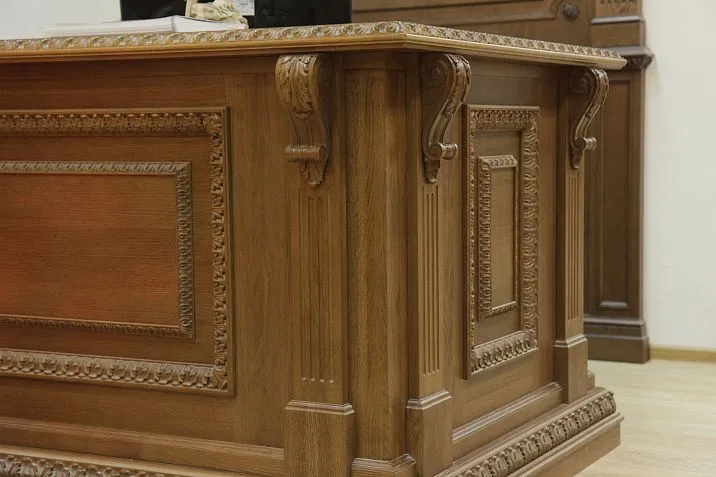
Home furniture making is experiencing a true renaissance, transforming from a hobby of enthusiasts into a serious passion for thousands of people striving to create unique interior items. Knowledge of how to make home furnitureopens the door to a wonderful world of creativity, where practical skills merge with artistic vision, and economic benefit intertwines with moral satisfaction from creating items by hand.
DIY furniture making allows you to bring the most daring design ideas to life, creating pieces that perfectly fit a specific space and reflect the owner's individuality. In an era of mass production, handcrafted work gains special value, becoming a symbol of quality, uniqueness, and personal involvement in creating home comfort.


Project Planning: From Concept to Technical Solution
Each successful furniture project begins with careful planning, where the creative concept takes on a technical form and practical feasibility. This stage determines not only the appearance of the future product but also its functionality, durability, and cost.




Product Concept Development
Functional analysis of requirements forms the basis of any reasonable project. Before creating sketches, clearly define the purpose of the future furniture, its operating conditions, and size requirements. A work desk requires different parameters than a coffee table, and a bookcase must withstand significant loads from the weight of books.
Ergonomic requirements dictate the main dimensions and proportions of furniture. The height of a work desk is usually 72-75 cm, the depth of a chair seat is 40-45 cm, and the height of the backrest is 80-90 cm. These parameters have been developed over decades of studying human anatomy and should only be adjusted for specific needs.
Stylistic concept determines the visual language of the project. Classical forms require adherence to canonical proportions, while modern styles allow greater freedom of interpretation. It is important to define the stylistic direction from the outset to ensure all elements work within a unified artistic logic.
Our factory also produces:


Technical Design
Creating detailed drawings transforms an artistic idea into a technical specification for implementation. Drawings must include precise dimensions of each part, methods of connecting elements, material and fastener specifications. Modern computer-aided design programs significantly simplify this task.
Material calculation includes not only main structural elements but also consumables — glue, fasteners, finishing compounds. Provide a reserve of materials for errors or damage during work. Usually, add 10-15% to the calculated amount.
Planning the sequence of operations helps optimize the workflow and avoid technological errors. Determine which parts should be manufactured first, which operations require special equipment, and where technological pauses are needed for glue or finishing compounds to dry.
Get Consultation
Material Selection: The Foundation of Quality and Durability
Materials determine not only the appearance of the finished product but also its performance characteristics, durability, and cost. A thoughtful choice of materials is half the success of the project.
Solid Wood: The Nobility of Natural Wood
Hardwood species are characterized by high density and beautiful texture. Oak provides maximum strength and durability, beech — excellent workability, ash — expressive texture. Hardwood species require more powerful equipment for processing, but the result justifies the effort.
Coniferous species are more affordable and easier to process. Pine and spruce are suitable for making frames and invisible structural elements. Larch has high moisture resistance and can be used in rooms with increased humidity.
Exotic species add exclusivity to the project but require a special approach to processing and finishing. Teak, wenge, and zebrawood have unique properties and incomparable beauty, but their high cost is justified only in premium projects.
Wood Panels: Practicality and Economy
Plywood combines the strength of solid wood with dimensional stability. Birch plywood is of high quality and suitable for making load-bearing elements. Coniferous plywood is cheaper but less strong and requires additional finishing.
MDF provides an ideally smooth surface and is excellent for routing. This material is indispensable for manufacturing facades with profiled surfaces. Moisture-resistant MDF grades are suitable for kitchen furniture.
Particleboard remains the most economical material for cabinet furniture. Laminate particleboard does not require additional finishing and offers a wide range of decorative options. When working with particleboard, pay special attention to the quality of edge banding.
Hardware and Fasteners
Hinges determine the functionality of doors and drawers. Surface-mounted hinges are easy to install, recessed hinges provide an aesthetic appearance. Hinges with closers prevent slamming and extend the lifespan of furniture.
Drawer slides must match the weight of the contents. Ball-bearing slides are economical but less durable. Ball-bearing slides withstand heavy loads and provide smooth operation.
Fasteners affect the strength of connections. Dowels provide disassemblable connections, while dowels create strong, non-disassemblable connections. Choose the appropriate fastener for each type of connection.
Tooling: The Home Craftsman's Arsenal
Quality tools are the foundation of a professional result. It is not necessary to buy the most expensive equipment, but saving on key tools inevitably affects the quality of work.
Measuring and Marking Tools
Accuracy of measurements determines the quality of assembly of the finished product. A 1-meter metal ruler, a 300×200 mm square, and a 5-meter tape measure cover basic measurement needs. A caliper is necessary for precise measurements of thickness and diameter.
Marking tools include pencils of different hardness, a center punch for drilling holes, and a marking gauge for drawing parallel lines. Quality marking is the foundation of precise part processing.
Checking tools control the geometry of the product. A level ensures horizontal and vertical alignment of elements, while a square ensures right angles of connections. Simple checks at each stage prevent the accumulation of errors.
Cutting tools
Saws of various types perform primary cutting operations. A hand hacksaw with fine teeth provides a clean cut, a jigsaw allows for curved cuts. A circular saw is indispensable for precise cutting of sheet materials.
Planers create flat surfaces and remove allowances. An electric planer speeds up processing large surfaces, a hand planer ensures high-quality finishing. A dado planer creates perfectly straight board ends.
Chisels of various widths are necessary for cutting grooves, fitting joints, and finishing curved surfaces. Quality chisels serve for decades with proper care.
Drilling and grinding tools
Drills and impact drivers perform drilling holes and driving fasteners. Network drills are more powerful, battery-powered ones are more convenient to use. An impact driver is necessary for working with stone materials when mounting heavy furniture to walls.
Drills of various types and diameters ensure quality drilling in different materials. Spiral drills are suitable for metal and wood, spade drills — for drilling large holes in wood, Forstner bits — for holes for furniture hardware.
Grinding machines create smooth surfaces for finishing. A belt grinder quickly removes large allowances, a vibratory grinder ensures quality finishing. Delta grinders process corners and hard-to-reach areas.
Main technological operations
Furniture manufacturing technology includes several key operations, each requiring specific skills and adherence to technological requirements.
Material cutting
Cutting layout planning optimizes material usage and minimizes waste. Create a cutting layout indicating the dimensions and placement of all parts. Consider the direction of wood grain and decorative finishes.
Marking parts on material must be extremely precise. Use a metal ruler and a sharp pencil. Mark not only part outlines but also locations of holes, grooves, and other structural elements.
Cutting is performed with a small allowance for subsequent processing. When using electric tools, ensure secure workpiece clamping. Use guides to achieve straight cuts.
Surface processing
Sanding creates flat surfaces and precise part dimensions. Start with rough sanding to remove major irregularities, finish with fine sanding for a smooth surface. Sanding direction should match the grain direction.
Sanding removes tool marks and prepares the surface for finishing. Use abrasives in decreasing grit sizes from 100-120 to 220-240. Dust removal between grit changes is mandatory.
Profiling creates decorative elements and functional profiles. Hand-profile planers provide high quality, routers — high productivity. Complex profiles are created step-by-step using multiple tools.
Joining parts
Dowel joints provide maximum strength. Marking must be perfectly accurate — even small inaccuracies weaken the joint. Use special fixtures for precise marking and cutting dowels.
Adhesive joints require proper surface preparation and precise glue dosage. Glued surfaces must be clean and dry. Holding time under pressure depends on glue type and environmental conditions.
Mechanical joints complement adhesive ones and ensure disassemblability of the structure. Self-tapping screws, dowels, and eccentric clamps each have specific applications. Pre-drilling prevents wood splitting.
Specifics of manufacturing different types of furniture
Each type of furniture has its own structural features and technological requirements. Understanding these features is critically important for achieving quality results.
Cabinet furniture: tables and chairs
Tables experience significant loads and must have high structural rigidity. The table base is a load-bearing frame — weak joints are not allowed here. Top rails are joined to legs with blind dowels, additional rigidity is provided by aprons and braces.
Table tops require special attention to surface quality. Panel tops are assembled from individual boards with alternating grain directions — this prevents warping under humidity changes. Edges are veneered with veneer or solid wood.
Chairs combine high strength requirements with weight limitations. Seats are attached to the frame via top rails, backrests must withstand significant bending loads. All joints are glued with additional reinforcement using dowels or screws.
Cabinet furniture: cabinets and drawers
Frame construction consists of separate frames connected to each other. This scheme ensures high strength with relatively low material consumption. Frame corners are joined with dowels, intermediate elements may be secured in a groove or mortise.
Frameless construction uses the panels themselves as load-bearing elements. Connections are made using dowels or eccentric bolts. It is important to ensure structural rigidity by installing a back panel and internal partitions.
Hanging doors require precise marking and installation of hinges. Gaps between doors and the frame should be uniform. Adjustable hinges allow fine-tuning the door position after installation.
Soft furniture: sofas and chairs
The frame of soft furniture must withstand not only static but also dynamic loads. Joints are assembled using adhesive with additional metal fasteners. Special attention is paid to attaching armrests and backrests.
Spring blocks provide comfortable seating. Springs are attached to the frame via elastic straps or metal frames. A layer of wool or synthetic sponge is laid over the springs to even out the surface.
Upholstery is the final stage of manufacturing. Fabric is cut with allowances for folding and attached to the frame using brads or special nails. Corners and complex areas require special skill to achieve a quality result.
Finishing processes: beauty and protection
Finish coating determines the appearance of furniture and protects wood from external influences. Quality finishing can transform a simple structure into an elegant interior piece.
Surface preparation
Sanding is the foundation of quality finishing. Sequentially use abrasives of decreasing grit until achieving a perfectly smooth surface. Remove all dust between changing abrasive grades.
Defect repair includes filling knots, cracks, dents with special putty. Choose putty to match the wood tone or finish color. After drying, repaired areas are sanded flush with the main surface.
Dust removal is the final operation of preparation. Use sticky cloth or anti-static wipes to remove microscopic particles. Even microscopic dust particles create surface roughness on the finish.
Primer coatings
Primers ensure adhesion of the finish and equalize the absorbency of different surface areas. Primer selection depends on the wood species and type of finish.
Blocking primers prevent resin and tannin penetration into the finish. This is especially important when working with coniferous species and certain exotic woods.
Pore fillers are used for porous woods to achieve a perfectly smooth surface. The compound is worked into the wood pores and sanded after drying.
Finish coatings
Lacquers create a durable protective film on the wood surface. Polyurethane lacquers offer maximum resistance to abrasion, nitrocellulose lacquers dry quickly and are easy to polish. Water-based lacquers are eco-friendly and have no strong odor.
Oils highlight the natural beauty of wood while preserving its tactile qualities. Oil finish is easily repairable upon damage but requires regular reapplication. Hard waxes create a silk-like surface with natural gloss.
Stains change the color of wood while preserving its texture visibility. Water-based stains dry quickly and do not raise fibers, alcohol-based stains penetrate deeply into wood, and oil-based stains ensure even coloring.
Assembly and adjustment: the final chord
Quality assembly transforms a set of parts into functional furniture. This stage requires patience, precision, and understanding of the operational sequence.
Preparation for assembly
Checking the completeness of parts and hardware prevents delays during assembly. Verify the presence of all elements against specifications, check dimensions and quality of each part.
Preparing the work area includes ensuring sufficient space for assembly, good lighting, and protecting the floor from damage. Lay out tools in order of use.
Dry-fit assembly without glue reveals potential problems and allows practicing the operational sequence. Check the fit of all joints and make adjustments if necessary.
Assembly process
Assembly sequence should ensure accessibility of all joints. Typically, flat assemblies — frames, panels — are assembled first, then connected into a three-dimensional structure.
Geometric control at each stage prevents accumulation of errors. Check for squareness, flatness, diagonal measurements. Correcting errors early is easier than redoing a finished item.
Open time for glue is limited, so all operations must be performed quickly and precisely. Prepare everything in advance and practice the sequence of actions.
Final adjustment
Mechanism adjustment includes tuning hinges, guides, and locks. Doors should open and close smoothly, drawers should slide without sticking, and gaps should be uniform.
Functional testing covers all movable elements and load-bearing joints. Test the furniture under various usage modes, ensuring there are no squeaks, play, or other defects.
Final finishing may require local repair of the surface damaged during assembly. Use repair compounds compatible with the main finish.
Quality Control and Safety
DIY furniture must meet the same safety and quality requirements as industrial products. Systematic inspection at all stages of production ensures reliability and longevity.
Strength Testing
Static loads test the structure's ability to withstand calculated loads. Tables are tested with distributed load on the tabletop, chairs with vertical load on the seat and horizontal load on the backrest.
Dynamic tests simulate real usage conditions. Repeated opening and closing of doors, loading and unloading of shelves reveal structural weaknesses.
Stability tests are especially important for tall furniture. Cabinets and shelves must not tip over when drawers are pulled out or upper doors are opened.
Ecological safety
Formaldehyde emission is characteristic of some wood panels and adhesives. Use materials of class E1 or E0, ensuring a safe emission level.
Volatile organic compounds may be emitted from coatings. Prefer water-based products and ensure good ventilation during finishing work.
Mechanical safety includes absence of sharp edges, secure fastening of all elements, and structural stability. These requirements are especially important for children's furniture.
Creating home furniture is an exciting journey from idea to finished product, where each stage reveals new facets of craftsmanship. Patience, attention to detail, and continuous skill improvement lead to results you can be proud of.
Quality furniture made by hand serves for decades, becoming a family heirloom and a source of pride. Economic benefits are complemented by moral satisfaction from creating unique interior pieces.
Technological advancements make home furniture making more accessible. Modern tools, materials, and informational resources open new creative possibilities.
Environmental aspects of DIY furniture making are becoming increasingly relevant. Using natural materials, minimizing waste, extending product lifespan — all contribute to environmental preservation.
Passing woodworking skills to the next generation ensures tradition preservation and craft development. Collaborative work unites families and creates valuable memories.
STAVROS understands the needs of home craftsmen striving to create quality furniture by hand. Our extensive range of high-quality woodworking materials includes everything needed to realize the most ambitious projects. From traditional woodworking adhesives to modern protective-decorative finishes — we provide materials that help achieve professional results at home. STAVROS's long experience in woodworking and deep understanding of craftsmen's needs allow us to offer solutions that make the furniture-making process more efficient and productive. Choosing STAVROS products means investing in quality, reliability, and enjoyment of the creative process of making unique furniture.