Article Contents:
- Introduction
- Trends and Innovations in Wood Processing
- High-Precision Technologies and Digital Modeling
- Innovative Protective Coatings
- Combining Traditions with Modernity
- 1. Wooden Baseboards
- 2. Wooden Beams
- 3. Wooden Planks
- 4. Wooden Angles
- 5. Wooden Moldings
- 6. Wooden Cornices
Wood has always been and remains one of the most sought-after materials in construction and design. Today, modern wood materials combine centuries-old craftsmanship traditions with advanced processing technologies, enabling the creation of items with unique aesthetic and functional qualities. In this article, we will thoroughly examine current trends in wood usage, discuss the advantages of modern materials, and their application in interior and exterior design. Special attention will be given to key finishing elements, such asWooden skirting boards, Wooden planks, Wooden rails, Wooden angles, Wooden moldings andWooden beams.


Introduction
Natural wood has always been associated with warmth, comfort, and durability. Under modern requirements for ecological safety, energy efficiency, and aesthetics, wood returns to the pedestal as the primary material for interior finishing and structural construction. Modern wood materials are distinguished by high processing quality, variety of textures and shades, allowing them to easily adapt to any style—from classic to minimalism and high-tech.
Thanks to innovative technologies, today it is possible to implement complex decorative solutions using wooden elements that not only decorate the space but also enhance its functional characteristics. Let's examine in detail how modern wood materials are applied in various fields.




Trends and Innovations in Wood Processing
Our factory also produces:


High-Precision Technologies and Digital Modeling
Modern wood processing methods include the use of CNC machines, laser cutting, and computer modeling. These technologies allow:
● Create complex decorative patterns and profiles. Thanks to digital modeling, designers can realize the most daring ideas, obtaining products with perfect geometry.
● Improve processing quality. High precision in cutting and sanding ensures smooth surfaces, which is especially important for decorative elements.
● Optimize production processes. The latest technologies reduce waste and allow faster and more efficient production.
Get Consultation
Innovative Protective Coatings
Modern protective wood coatings significantly extend the service life of products. Lacquers, oils, waxes, and water-based paints not only highlight the natural beauty of the material but also protect it from moisture, ultraviolet rays, and mechanical damage. Such coatings ensure the preservation of wood color and texture even under intensive use.
Combining Traditions with Modernity
Despite the use of the latest technologies, modern wood materials retain a connection with centuries-old traditions. Wood carving, inlay, and other craft techniques remain in demand, but now they are integrated into digital production processes, allowing the combination of authenticity with flawless quality.
Key Elements of Finishing: Details That Give Interiors Their Unique Character
1. Wooden skirting boards
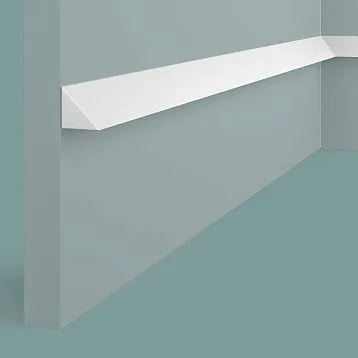
Baseboards are a classic finishing element used to protect the lower part of walls, conceal technological joints, and create a finished look for interiors. Modern wooden baseboards are made from high-quality solid wood, undergo multi-stage sanding, and are treated with protective coatings. They can have various profiles—ranging from minimalist to intricately carved designs—allowing the selection of the optimal solution for any room style.
Application and Care:
● Used in residential, office, and commercial spaces.
● Regular cleaning with soft cloth and periodic treatment with protective compounds will help maintain their original appearance.
2. Wooden planks
Beams are universal elements used in both structural and decorative solutions. They are used to manufacture frames, moldings, decorative panels, and other structural components. Modern wooden beams are characterized by high strength and aesthetic appeal, and can also be used to create accent elements in interiors.
Technology and Features:
● Made from high-quality solid wood.
● Carefully processed to ensure perfect smoothness and wear resistance.
● Can be combined with other decorative elements to create complex decorative compositions.
3. Wooden rails
Racks are thin wooden strips used for wall, ceiling, and furniture cladding. They add additional structure and depth to the interior, creating visual lines and accents. Modern wooden racks are manufactured using high-precision technologies, allowing for products with perfectly flat surfaces and various profiles.
Advantages of use:
● Easy installation and the ability to create complex compositional solutions.
● The natural wood texture highlights the individuality of the interior.
● Regular cleaning and treatment with protective compounds preserve their aesthetic qualities for a long time.
4. Wooden angles
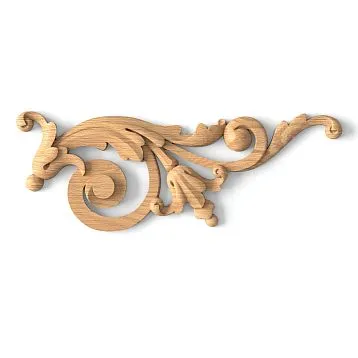
Corners are elements that ensure strong connections between different structural parts and protect corner joints from damage. They play an important role in enhancing the durability of finishes and can serve as both functional and decorative elements. Modern wooden corners are available in various styles — from classic carved to contemporary minimalist designs — allowing them to seamlessly fit into any interior.
Features:
● Manufactured with high precision, ensuring perfect joint alignment.
● Can be used as a standalone decorative element, emphasizing the room's style.
● Regular cleaning and treatment with protective compounds are recommended to maintain their appearance.
5. Wooden moldings
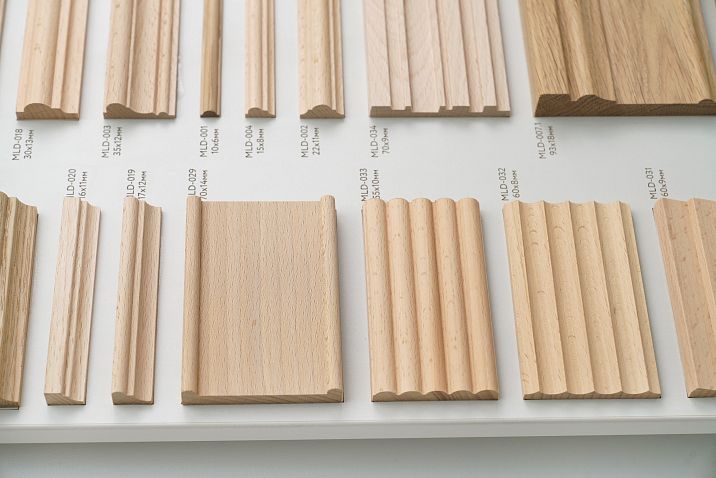
Moldings are decorative elements used to finish joints between walls, ceilings, and furniture. They add elegance, depth, and completeness to the interior. Modern wooden moldings can have the most diverse profiles and ornaments, allowing them to be adapted to any style — from classic to ultra-modern.
Features and Applications:
● Manufactured using advanced wood processing technologies, ensuring high precision and rich decorative details.
● Used to create expressive transitions and accent zones in the interior.
● Regular maintenance helps preserve their decorative appearance and protect against external influences.
6. Wooden beams
Crown mouldings are decorative elements that conceal joints between ceilings and walls, creating a smooth transition and visual unity of space. They serve not only for decorative purposes but also for attaching various textile elements, such as drapes or valances. Modern wooden crown mouldings are manufactured with high precision, allowing them to harmoniously fit into any interior and emphasize its elegance.
Functional and aesthetic advantages:
● Help visually increase the height of the room by creating smooth lines.
● Available in a variety of styles — from richly carved classic to strict modern minimalist designs.
● Installed using high-quality fasteners and require regular maintenance to preserve their appearance.
Conclusion
Modern wooden materials are the perfect combination of traditional craftsmanship and innovative technologies. The natural beauty, warmth, and eco-friendliness of wood make it an indispensable material for finishing both residential and commercial spaces. Each decorative element — whether it beWooden skirting boards, Wooden planks, Wooden rails, Wooden angles, Wooden moldings orWooden beams, contributes to creating a unique interior filled with natural aesthetics and functionality.
Choose high-quality wooden materials for finishing, paying attention to processing technologies, protective coatings, and product design. Proper care and regular renewal of protective layers will help preserve the beauty and longevity of wood, making your home cozy, stylish, and environmentally safe.
Let modern wooden materials become your source of inspiration and help you realize the boldest design ideas, creating a space where every detail speaks to your commitment to quality, tradition, and innovation.