












































































Article Contents:
- The philosophy of minimalism: less is more precise
- Hidden cornices: the architecture of light
- Geometric battens: rhythm and structure
- Thin moldings: lines without excess
- Integrating decor with modern furniture
- Materials: tactility in minimalism
- Color: from monochrome to accents
- Lighting: invisible architecture
- Decor functionality: more than just decoration
- Zoning: delicate boundaries
- The evolution of minimalism: from cold to warm
- Practical aspects: installation and maintenance
- Minimalism mistakes: what to avoid
- Frequently Asked Questions
- Can minimalist decor be combined with classic furniture?
- How to add color to a minimalist interior?
- How much does decor for a minimalist interior cost?
- Is minimalism suitable for small apartments?
- How to make a minimalist interior cozy?
- Do you need a designer to create a minimalist interior?
- Conclusion
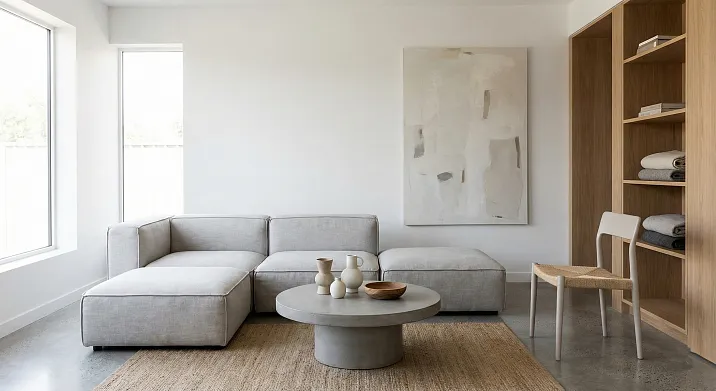
Minimalism is not absence, but selectivity.Modern Furniturerequires a different approach to decor than classic interiors: here, lavish moldings, baroque overlays, and an abundance of ornaments don't work. The space must breathe, preserve air, light, and purity of lines—while simultaneously possessing character, individuality, without turning into a sterile box. How to find this balance between functionality and aesthetics, between restraint and expressiveness?
The answer lies in the details—precisely calibrated, laconic, thought out to the millimeter. Hidden cornices creating the effect of floating ceilings, geometric battens setting the rhythm for walls, thin moldings emphasizing architectural lines without excess.interior wall decorin a modern space works like punctuation in a text—inconspicuous at first glance, but defining the structure, meaning, and perception of the entire composition.


The philosophy of minimalism: less is more precise
Minimalism is often misunderstood, perceived as a rejection of decor altogether. In reality, it is a rejection of the random, the superfluous, of what serves no function or meaning. Every element in a minimalist interior must be justified—either by practical necessity or by a visual role in the composition. Decor here is not an ornament, but an architectural tool shaping the space.
Modern Furniturealready possesses expressiveness in itself—clean lines, thoughtful proportions, quality materials. A table with laconic legs, a chair with a geometric back, a sofa with a minimalist silhouette—none of these require additional embellishment, but they do need architectural support. Walls should not be empty, but they should not compete with furniture for attention either. The task of decor is to create a background, structure, context in which the furniture is revealed to its fullest.
Color in minimalism gravitates towards a neutral palette—white, gray, beige, black, natural wood. This is not a limitation, but a conscious choice, allowing focus on forms, textures, proportions. When color doesn't distract, light, shadow, and relief begin to work. A thin molding on a white wall creates a barely noticeable line that nevertheless structures the plane, making it meaningful.
Texture acquires special importance. In the absence of ornament and color variety, it is the materials that create visual interest. Wood with a pronounced grain pattern, concrete with a rough surface, metal with a matte or glossy finish—all of this works as decor without violating minimalist purity. Wooden battens on a wall create rhythm, depth, tactility, while remaining extremely laconic.




Hidden cornices: the architecture of light
One of the most effective techniques in modern interiors is hidden lighting behind cornices. The ceiling cornice is installed so that a niche remains behind it for an LED strip. The light is directed upward, onto the ceiling, creating a soft, diffused glow. The ceiling appears to float, separated from the walls, the space visually expands and becomes more airy.
The profile of a cornice for hidden lighting should be minimalist — simple geometry, no decorative elements, clean lines. The width is chosen so that the light source is not visible from any point in the room, yet the cornice does not look bulky. Typically, this is 5-10 cm from the wall, depending on ceiling height and lighting power.
The material of the cornice is also important. Polyurethane is easy to install, moisture-resistant, and can be easily painted any color. Wooden cornices forof modern interiorare more expressive due to their texture but require quality treatment and a protective coating. Aluminum profiles are the most technological solution, ideal for high-tech and industrial spaces.
Hidden lighting works not only on the ceiling. Cornices with lighting are installed above cabinets, behind bed headboards, along staircases, in niches. This creates multi-level lighting, where each zone has its own light source and its own atmosphere. At the same time, the fixtures themselves remain invisible — the purity of lines is not disrupted, and the space retains its minimalism.
Our factory also produces:


Geometric battens: rhythm and structure
Decorative battens made of wood or MDF are one of the main trends in modern design. Vertical, horizontal, less often diagonal — they create a rhythmic structure on the wall, add depth, texture, visual interest, while remaining extremely laconic. Battens do not carry ornamentation, do not have a complex profile — they are simple slats installed at a certain interval.
Vertical battens visually raise the ceiling, creating a sense of height. They are especially effective in rooms with low ceilings, where a lack of verticality needs to be compensated. The spacing between battens determines the character of the composition — closely spaced battens create a dense texture, widely spaced ones create a more airy, graphic structure. Typical spacing is 5-15 cm, depending on room size and desired effect.
Horizontal battens expand the space, making a room visually wider. Suitable for narrow spaces — hallways, elongated living rooms, where it is important to correct proportions. Horizontal rhythm is also more relaxing, calm, suitable for bedrooms, relaxation areas. Battens can run along the entire wall or only on a specific section, creating an accent zone.
The material of the battens determines the character of the interior. Natural wood — oak, ash, walnut — adds warmth, tactility, and organicity to a minimalist space. Painted MDF battens are more versatile, can match the wall color or be contrasting — black on a white background, white on gray. Metal battens suit industrial interiors, where technology and modernity are important.
Battens work not only as decor but also as a functional element. Wiring, wall irregularities, and insulation can be hidden behind them. Light fixtures are installed between the battens, creating interesting lighting effects. Battens serve as a base for mounting shelves, hooks, and other elements, turning into a modular storage system.
Get Consultation
Thin moldings: lines without excess
Moldings in a modern interior are radically different from classical ones — no curls, floral motifs, or complex profiles. Only pure geometry — straight lines, rectangular or square cross-sections, minimal relief. Such moldings do not attract attention on their own but structure the space, create visual frames, and highlight zones.
Minimalist decorationworks as a coordinate grid upon which the entire interior composition is built. Moldings frame door and window openings, creating clear boundaries. They divide walls into sections, forming panels without internal filling — simply a contour of thin slats on a monochrome surface. This creates structure without overloading the space.
The width of molding in a modern interior rarely exceeds 3-5 cm. The thinner the profile, the more delicately it works, the less it attracts attention. The relief height is also minimal — 0.5-1 cm, enough to cast a light shadow, creating a barely noticeable boundary between elements. At the same time, the molding remains visible, performs its function, but does not dominate.
The color of the molding usually matches the wall color or differs slightly — half a tone lighter or darker. This creates a soft contrast, readable under certain lighting, but not loud. Contrasting solutions are also possible — black moldings on white walls, white on gray — but they are more expressive and require careful elaboration to avoid turning minimalism into a graphic poster.
Moldings in a modern space are often used for zoning without physical partitions. Vertical slats installed from floor to ceiling at the boundary between the living room and kitchen create a visual barrier without blocking light and air. Horizontal moldings at different heights structure the wall, making it not flat but multi-layered, while preserving purity and laconicism.
Integration of decor with modern furniture
Modern Furnitureand decor should work as a single ensemble, where each element complements the other but does not compete for attention. A table with geometric legs can echo the vertical battens on the wall behind it. A chair with straight lines — with horizontal moldings. A sofa with a low silhouette — with a thin baseboard, emphasizing the connection of the furniture with the floor.
The installation height of decorative elements is determined by the furniture. A horizontal molding line can run at the level of the sofa back, creating a visual connection. A panel of battens — behind the bed headboard, highlighting this zone, making it the focal point of the bedroom. Vertical slats along a cabinet — continuing its lines to the ceiling, integrating the furniture into the wall architecture.
The color palette should also be coordinated. Wooden furniture requires wooden decor — battens made of the same species, the same shade or a contrasting but natural one. Furniture with metal elements — legs, handles, frames — harmonizes with metal profiles, industrial light fixtures, industrial details. Upholstered furniture in neutral-toned fabric — with painted moldings and cornices in the same palette.
The proportions of the furniture determine the scale of the decor. A massive sofa with wide armrests requires battens of corresponding scale — not too thin, so as not to get lost. An elegant table with thin legs — delicate moldings that will not overwhelm it. A full-wall modular storage system — large cornices capable of balancing its mass.
Materials: tactility in minimalism
When ornament and color are minimized, materials come to the forefront. The texture of wood, the coldness of metal, the roughness of concrete, the softness of fabric — all this becomes decor, creates visual and tactile interest.furniture appliquésmade of natural wood on cabinet fronts, wooden battens on walls, wooden countertops — all this adds warmth, organicity, and liveliness to a minimalist space.
Wood is the most versatile material for a modern interior. It combines with any other materials — concrete, glass, metal, ceramics. The natural texture of wood creates visual interest without ornamentation, color accents, or excessive decor. Oak with a pronounced grain pattern, ash with contrasting layers, walnut with a noble shade — each species has its own character.
The treatment of wood determines the degree of its presence in the interior. Matte oil or wax preserves naturalness, tactility, and emphasizes texture. Varnish creates a more technological, modern surface, protects the wood, but makes it less warm to the touch. Staining allows changing the shade, adapting the wood to a specific interior color scheme, while preserving the grain pattern.
Metal in a modern interior is used as an accent — furniture legs, mirror frames, profiles for battens, light fixtures. Matte black steel, stainless steel, brass, copper — each metal creates its own atmosphere. Black metal adds industrialism, brutality. Stainless steel — technology, modernity. Brass and copper — warmth, sophistication, connection with classicism.
The combination of materials is the key to creating a deep, interesting minimalist interior. Wooden battens on a concrete wall, a metal table frame with a wooden top, glass doors in a wooden frame — the contrast of textures creates visual tension, dynamism, without violating the overall restraint of the composition.
Color: from monochrome to accents
A minimalist palette gravitates towards an achromatic range—white, gray, black. This is not lifelessness, but a platform on which forms, textures, and light work. White walls with thin white moldings create an almost invisible structure that is nevertheless perceptible thanks to the play of light and shadow. Gray walls with gray battens slightly darker or lighter than the main tone—the same principle of delicate contrast.
Black in minimalism works as a graphic accent. Black battens on a white wall create a sharp, expressive rhythm. Black moldings frame doorways, turning them into graphic elements of the composition. Black furniture against a light background becomes a sculptural object, attracting attention with its form, not its decor.
Natural wood tones are also part of the minimalist palette—beige, brown, russet, taupe. They add warmth, coziness, and organic quality to the space without violating its restraint. Wooden battens in their natural color on a white wall create a soft contrast, more friendly than black-and-white graphics.
Color accents in minimalism are used sparingly and deliberately. One bright piece of furniture—a deep blue armchair, a sofa in a terracotta shade—becomes a focal point around which the entire composition is built. The decor remains neutral, does not compete with the color accent, and serves as a background, frame, or context.
Lighting: Invisible Architecture
Light in a minimalist interior is not just a function, but a full-fledged architectural element shaping the space on par with furniture and decor. Concealed lighting behind cornices, in niches, under furniture creates a floating effect, visually expands the space, and raises the ceilings. Track lights on the ceiling or walls direct light onto specific objects, creating accents.
Recessed spotlights in the ceiling or battens create diffused lighting without visible light sources. This is the principle of minimalism in its pure form—function without visual presence. There is light, but the fixtures are not seen. The space is illuminated but not cluttered with lighting fixtures.
Linear light fixtures are another tool of modern design. Thin light lines on the ceiling or walls create a graphic structure, complementing or continuing the lines of moldings and battens. Light becomes part of the composition, a visual element, not just a source of illumination.
Natural light is maximized in minimalist interiors. Large windows without heavy curtains, light fabrics that do not block light, transparent partitions—everything is aimed at filling the space with light and air. Decor should not obstruct light—thin moldings, laconic battens allow light to pass through, do not create harsh shadows, and preserve an airy feel.
Functionality of Decor: More Than Decoration
In a minimalist interior, every element must have a function. Decor is no exception. Battens on a wall can serve as a base for mounting shelves, hooks, a TV—resulting in a modular system that is both decorative and functional. Moldings hide material joints, mask gaps, and protect corners from damage.
Concealed cornices not only create a lighting effect but also mask ceiling imperfections, hide wiring, and serve as a base for mounting curtains or acoustic panels. Baseboards protect the lower part of walls, hide the gap between wall and floor, and serve as a channel for wires. Every element works on multiple levels—practical and aesthetic.
Batten panels can conceal storage systems, sliding doors, technical utilities. A wall appears as a solid decorative surface, but behind it lies functional space—a closet, walk-in wardrobe, pantry. This is the principle of hidden functionalism, where technical solutions are addressed through architectural means, and the decorative serves the practical.
Acoustics is another function of modern decor. Wooden panels and battens improve room acoustics by diffusing sound waves and reducing echo. This is especially important in large open spaces—studios, lofts—with many smooth, reflective surfaces. Decor solves an acoustic problem without turning into a specialized sound-absorbing structure.
Zoning: Delicate Boundaries
Open-plan layouts—a characteristic feature of modern spaces—require visual zoning without physical partitions. Decor handles this task by creating delicate boundaries that structure the space but do not block light and air. Vertical battens installed floor-to-ceiling at zone boundaries create a visual barrier through which the rest of the space remains visible.
Changing the direction of battens also zones a room. In the living area—vertical battens; in the dining area—horizontal. This creates a visual difference, denotes functional zones, while maintaining stylistic unity. The color of battens can change—natural wood in one zone, painted in another—but the profile and spacing remain the same.
Moldings on walls also work as zoning elements. A wall section framed by moldings stands out, becoming a background for a specific functional zone—a desk, sofa, dining set. This creates a visual frame, structures the space, making it clear and convenient.
Suspended elements—battens, panels, partitions hung from the ceiling—create aerial zoning. They do not touch the floor, are visually lighter than conventional partitions, and preserve a sense of openness. Light passes underneath, creating an interesting effect of floating elements separating one zone from another.
Evolution of Minimalism: From Cold to Warm
Early minimalism was often criticized for coldness, sterility, lack of coziness. Modern minimalism has evolved, becoming more humane, warm, and livable. This is achieved by introducing natural materials—wood, stone, textiles—which add tactility and organic quality while preserving purity of form and line.
Warm minimalism uses a neutral but not cold palette—beige, cream, terracotta, olive instead of pure white and gray. Wooden battens in natural shades, oak moldings, furniture with wooden elements create a sense of homeliness without destroying the minimalist structure. Textiles—throws, pillows, rugs in natural textures and shades—soften the space, making it suitable for living, not just for photoshoots.
Plants are another element of warm minimalism. Large plants in simple pots add vitality, color, and movement to a static space. They work as organic sculptures, visual accents that do not require excessive decor. Vertical greening—plants on battens or special panels—integrates nature into wall architecture.
Personal items, books, art objects in a minimalist interior must be carefully selected and neatly placed. A few expressive objects on shelves, one large painting on a wall, a collection of ceramics on a console—this is acceptable and even desirable if the items are of quality, meaningful, and fit the overall aesthetic. Minimalism does not mean rejecting the personal, but requires selectivity in its display.
Practical aspects: installation and maintenance
Installing minimalist decor requires precision and care. Any unevenness, gap, or misalignment of lines immediately catches the eye, ruining the impression of purity and precision. Moldings must be perfectly miter-cut, joints invisible, surfaces flawlessly smooth. Battens are installed level, with uniform spacing, without deviations.
The method of attaching battens depends on the wall material and element weight. Light battens are attached with adhesive; more massive ones require additional fixation with screws, which are then filled and painted. A frame system—battens attached to a substructure—is used when needing to hide wall imperfections or create a gap for wiring or insulation.
Decor is painted after installation, allowing joints and fasteners to be hidden, creating a unified surface. Acrylic or latex paints in matte or satin finishes are used—gloss is rarely used in minimalism, as it creates excessive glare and distracts attention. For wooden elements—oil or wax to emphasize texture, or staining followed by varnishing.
Maintenance of minimalist decor is simple due to the absence of complex reliefs and patterns. Smooth surfaces are wiped with a damp cloth; battens are dusted with a soft brush or vacuum. Wooden elements are refreshed with oil or wax every few years to preserve protective properties and appearance. Painted surfaces are touched up with the same paint as needed.
Minimalism Mistakes: What to Avoid
The main mistake is confusing minimalism with emptiness. A complete absence of decor makes a space unfinished, cold, and unwelcoming. Minimalism requires not the rejection of details, but their careful selection and precise placement. One correctly chosen decor element is worth more than a dozen random ones.
The second mistake is scale mismatch. Oversized elements in a small room overwhelm the space, while too-small items in a large room get lost and fail to serve their purpose. The scale of decor should correspond to the room size, ceiling height, and furniture dimensions.
The third mistake is excess. Even minimalist elements, when used in large quantities, turn into visual noise. Battens on all walls, moldings on every surface, numerous light fixtures—all of this overloads perception and undermines the idea of restraint. It's important to know when to stop, to leave air, pauses, and emptiness.
The fourth mistake is ignoring textures. A monochrome space without textural diversity looks flat and boring. Even in minimalism, contrasts are needed—smooth and rough, matte and glossy, warm wood and cold metal. Texture creates visual interest without compromising the purity of lines.
The fifth mistake is lack of individuality. Catalog minimalism, where all elements are standard and typical, looks like a showroom rather than a living space. It's important to add personal accents—custom furniture, authorial decor, unique details that make the interior yours, not just minimalist.
Frequently asked questions
Can minimalist decor be combined with classic furniture?
Yes, but it requires a subtle approach. Classic furniture with simple forms, without excessive ornamentation, can organically fit into a minimalist space with laconic decor. The main thing is to avoid stylistic conflict, to find common lines, proportions, and materials.
How to add color to a minimalist interior?
Color is introduced in a targeted way—one colored armchair, sofa cushions, a rug, a painting. The decor remains neutral, not competing with the color accent. Natural shades can also be used—terracotta, olive, deep blue—which add warmth without destroying restraint.
How much does decor for a minimalist interior cost?
Minimalist decor can be either budget-friendly or expensive. Simple wooden battens, thin polyurethane moldings are affordable. Custom elements made of solid oak, metal profiles, hidden lighting systems will cost more. The main thing is the quality of execution, not the cost of materials.
Is minimalism suitable for small apartments?
Yes, minimalism is ideal for small spaces. The absence of excessive decor, clean lines, and a light palette visually expand the room. Functional decor—battens with built-in storage, hidden cornices—saves space, making it more airy and convenient.
How to make a minimalist interior cozy?
Add natural materials—wood, textiles, plants. Use warm shades—beige, cream, terracotta. Introduce soft multi-level lighting. Leave room for personal items—books, photographs, favorite objects. Minimalism does not mean coldness; it requires a balance between restraint and a lived-in atmosphere.
Is a designer needed to create a minimalist interior?
Minimalism seems simple but requires precision, a sense of proportion, and an understanding of materials. A professional designer will help avoid mistakes, select the right scale, and create a harmonious composition. For small projects, you can manage on your own by studying examples and following the principles of restraint and functionality.
Conclusion
The balance between function and aesthetics is the essenceof modern interior. Modern Furniturerequires appropriate decor—laconic, precise, thoughtful. Hidden cornices create an architecture of light, geometric battens set a rhythm for the walls, thin moldings structure the space without excess. Every element has a function, every detail is justified.
Minimalism is not a rejection of decor, but its conscious use. Not emptiness, but selectivity. Not coldness, but purity of forms, complemented by the tactility of natural materials, the warmth of wood, the softness of textiles.interior wall decorin a modern space works like punctuation—unnoticeable but critically important for understanding the composition.
Creating a harmonious minimalist interior means finding the point where functionality does not contradict beauty, where restraint does not kill character, where the space breathes but is not empty. This requires an understanding of proportions, materials, light—all the tools that modern interior architecture operates with.
The company STAVROS offers a full range of solutions for modern spaces—fromfurniturewith clean lines and thoughtful functionality to minimalist decor that emphasizes architecture without excess. Solid oak and ash wooden battens, thin moldings for modern interiors, cornices for hidden lighting, skirting boards with a laconic profile—every element is created with attention to detail and an understanding of the principles of modern design. In-house production allows for quality control at all stages, creating custom solutions for specific projects, and quickly responding to the requests of designers and architects. Natural materials, precise geometry, impeccable execution—all this makes STAVROS products a reliable choice for those who create spaces where function and aesthetics exist in harmony. Let your home become a place where every detail works, where decor does not overload but frees up space for life, for light, for air.


