Article Contents:
- Ergonomic Modernization: Comfort as Priority
- Adjustable Elements: Adaptation to the User
- Anatomical Modifications
- Functional Additions: Maximizing Utility
- Storage systems: organizing space
- Transformable Elements
- Technological Integration: Furniture of the Future Today
- Furniture Electrification
- Smart Control Systems
- Aesthetic Improvements: Beauty in Details
- Decorative overlays and moldings
- Artistic finishing
- Material Improvements: Quality and Durability
- Wear-Resistant Finishes
- Updating hardware
- Specialized Solutions for Different Rooms
- Kitchen Furniture: Practicality and Hygiene
- Bedroom Furniture: Comfort and Functionality
- Work Furniture: Ergonomics and Productivity
- Ecological Aspects of Furniture Enhancement
- Eco-Friendly Materials
- Energy-efficient solutions
- Economic Aspects of Furniture Enhancement
- Budget Planning
- Impact on property value
- Modern Trends in Furniture Enhancement
- Minimalism and Functionality
- Personalization and uniqueness
Modern furniture is not just an interior item, but a living system capable of development and transformation. The question of how to improve furniture, how to improve furnitureconcerns everyone who strives to create an ideal space for living and working. Improving furniture is the art of transforming ordinary items into multifunctional masterpieces that not only serve their primary purpose but also become a distinctive feature of the interior.
In an era of rapidly changing design trends and growing demands for living space functionality, the ability to modernize existing furniture becomes an invaluable skill. This allows not only to save money, but also to create unique items that perfectly fit a specific interior and meet the individual needs of the owner.


Ergonomic Modernization: Comfort as Priority
True furniture improvement begins with analyzing how comfortable it is to use. Ergonomics — the science of adapting workspaces and tools to the capabilities of the human body — should become the foundation of any modifications.




Adjustable Elements: Adaptation to the User
Adding adjustment mechanisms transforms static furniture into an adaptive system. Tables with adjustable height become universal, suitable for both standing and sitting work. Modern gas lifts and screw mechanisms allow smooth height adjustment within a 20-30 cm range.
Chairs and stools with adjustable backs provide proper spinal support. Built-in lumbar cushions, adjustable backrest tilt angle, and seat depth adjustment — all these elements can be added to existing furniture.
Shelves with adjustable height maximize the use of cabinet and shelf space. Special brackets allow moving shelves without tools, adapting the internal space to various items.
Our factory also produces:


Anatomical Modifications
Ergonomic seat and backrest cushions improve body support and reduce spinal load. Memory foam, gel inserts, and specialized orthopedic cushions — modern materials ensure maximum comfort.
Armrests of the correct shape and height reduce strain on the shoulder area. Soft pads prevent rubbing, and adjustable mechanisms allow customization to individual body characteristics.
Headrests with adjustable height and tilt angle ensure proper head and neck positioning. This is especially important for office chairs and lounge chairs.
Get Consultation
Functional Additions: Maximizing Utility
Modern life demands multifunctionality from furniture. Each item must perform not one, but several functions, saving space and enhancing usability.
Storage Systems: Organizing Space
Drawers can be added to almost any furniture. Hidden drawers under chair and sofa seats, pull-out shelves deep inside cabinets, additional compartments in tables — all of this increases the useful volume of furniture.
Organizers and dividers structure the internal space of drawers and shelves. Special inserts for cutlery, jewelry, documents, tools — each category of items gets its own place.
Vertical storage systems maximize the height of furniture. Pull-out columns, rotating mechanisms, multi-tiered shelves — modern solutions allow placing more items on a smaller area.
Transformable elements
Fold-out tabletops increase working or dining surface as needed. Butterfly mechanisms, telescopic guides, flip-out consoles — various systems ensure quick and convenient size adjustment.
Foldable seats save space in compact rooms. Wall- or furniture-mounted folding chairs, transformer stools, pull-out benches — smart solutions for modern homes.
Modular systems allow changing furniture configuration depending on the situation. Sofas made of separate sections, shelves from independent blocks, tables from connectable elements — flexibility in space usage.
Technological Integration: Furniture of the Future Today
Digital technologies radically change the perception of furniture capabilities. Integration of electronic devices transforms ordinary items into elements of a "smart home."
Furniture Electrification
USB ports and outlets in tables and side tables solve the problem of device charging. Built-in power blocks, retractable cables, wireless charging surfaces — modern solutions for connecting electronics.
Built-in lighting is not only functional but also decorative. LED strips in niches and under shelves, spotlights in cabinets, task lighting — proper lighting improves visibility and creates an atmosphere.
Ventilation systems in furniture ensure air circulation and prevent unpleasant odors. Particularly relevant for cabinets and wardrobes.
Smart Control Systems
Touch-sensitive switches react to touch or hand proximity. Automatic lighting activation when opening cabinet doors, brightness adjustment, programmable scenes — technologies make furniture use maximally convenient.
Remote-controlled actuators allow changing the position of furniture elements by pressing a button. Height adjustment of tables, bed incline angle, shelf positioning — automation enhances comfort.
Integration with smart home systems turns furniture into part of a unified ecosystem. Voice control, automation scenarios, synchronization with other devices — possibilities are limitless.
Aesthetic Enhancements: Beauty in Details
The appearance of furniture plays a key role in the perception of the entire interior. Thoughtful aesthetic modifications can radically transform even the simplest furniture.
Decorative overlays and moldings
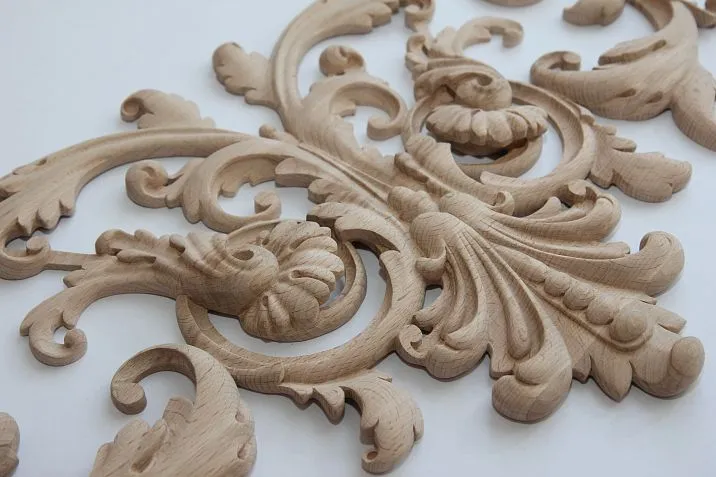
Front panel overlays change the style of furniture without major reconstruction. Classic latticework transforms modern fronts into traditional ones, geometric panels create a modern look, carved elements add luxury.
Moldings and profiles emphasize furniture lines and create visual completeness. Various profile cross-sections — from simple rectangular to complex shaped — allow creating unique compositions.
Decorative inserts made of contrasting materials create accents. Metal strips, glass panels, leather inserts, natural stone — combinations of different textures enrich the appearance.
Artistic Finishing
Painting and decoupage transform furniture into works of art. Stencil designs, original painting, decorative stickers — everyone can find a suitable decoration method.
Patina and aging create an effect of noble antiquity. Various techniques allow mimicking natural aging of wood, metal, and stone.
Inlay and marquetry — the highest level of decorative finishing. Inlays of precious woods, mother-of-pearl, and metal create unique patterns and compositions.
Material upgrades: quality and durability
Replacing or supplementing existing materials with new, more advanced ones significantly improves the furniture's operational characteristics.
Wear-resistant coatings
Protective films protect surfaces from scratches, stains, and abrasion. Modern polyurethane films are virtually invisible but provide reliable protection.
Laminating increases resistance to moisture and mechanical impacts. Special films mimic various materials — from wood to stone — at significantly lower cost.
Finishing with varnish creates a durable and beautiful surface. Modern varnishes provide high wear resistance and a wide range of shades.
Hardware update
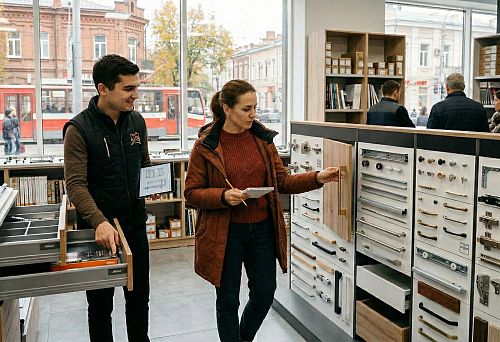
Quality hardware dramatically improves furniture functionality. Soft-close mechanisms ensure smooth door closure, push-to-open systems allow opening without handles, telescopic guides withstand heavy loads.
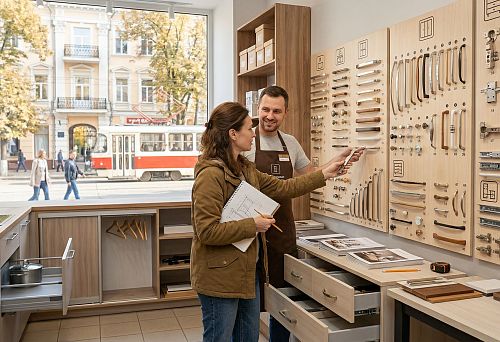
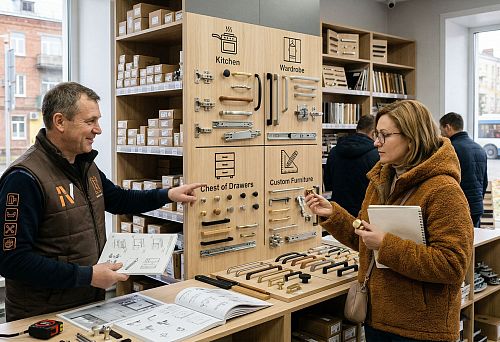
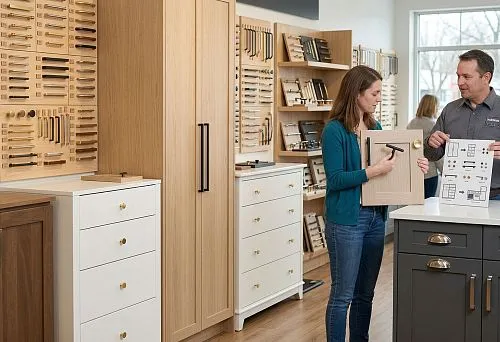
Decorative hardware changes the furniture's style. Vintage handles create a retro atmosphere, modern hardware emphasizes minimalism, classic elements add elegance.
Hidden hardware creates an effect of "invisible" connections. Hinges not visible from the outside, recessed handles, hidden locks — technical perfection serving design.
Specialized solutions for different rooms
Each room imposes specific requirements on furniture. Upgrades must consider the particularities of use in specific conditions.
Kitchen furniture: practicality and hygiene
Countertops made of artificial stone or stainless steel replace worn surfaces. Seamless joints prevent moisture and contamination ingress.
Soft-close systems for drawers and doors reduce noise levels and extend furniture lifespan. Especially important in the kitchen, where furniture is used intensively.
Built-in lighting for work zones improves visibility while preparing food. LED strips under overhead cabinets create even lighting without shadows.
Bedroom furniture: comfort and functionality
Orthopedic bed bases provide proper mattress support. Adjustable slats adapt to weight and sleeper preferences.
Built-in storage systems in beds maximize space. Pull-out drawers, flip mechanisms, hidden niches — every centimeter adds value.
Headboards with additional functions transform beds into multifunctional centers. Book shelves, built-in lighting, soft upholstery — comfort and practicality.
Workplace furniture: ergonomics and productivity
Cable management organizes wires and cables. Special channels, plugs, organizers maintain order at the workstation.
Monitor stands adjust screen height for proper posture. Additional shelves create a multi-level work surface.
Personalizing the workspace increases motivation. Photo holders, stationery organizers, personal decorative elements — the workspace should inspire.
Ecological aspects of furniture improvement
Care for the environment has become an important factor when selecting materials and technologies for furniture improvement.
Eco-friendly materials
Natural finishing materials are safe for health and the environment. Linseed oil, beeswax, natural dyes create beautiful and safe coatings.
Recycled materials give waste a second life. Panels made from recycled wood, fabrics from secondary fibers, metal from scrap — an ecologically responsible choice.
Minimizing synthetic material use reduces environmental impact. Preferring natural materials — a contribution to preserving nature.
Energy-efficient solutions
LED lighting consumes significantly less energy than traditional lamps. Long lifespan and lack of heating make LEDs an ideal choice for built-in lighting.
Solar panels can power standalone furniture lighting. Particularly relevant for garden and patio furniture.
Energy-saving drives with energy recovery return part of the consumed energy back to the system.
Economic aspects of furniture improvement
Properly planned improvements not only enhance quality of life but are also a worthwhile investment.
Budget planning
Phased modernization allows spreading expenses over time. Start with the most important improvements, gradually adding additional options.
Price-to-quality ratio should be the primary criterion for selection. Expensive materials do not always mean better results — it is important to find the optimal solution.
Considering payback period helps make informed decisions. Energy-saving systems, durable materials, and multifunctional solutions pay off over time.
Impact on property value
Quality furniture increases the attractiveness of a property to potential buyers or renters. Investments in furniture improvements often pay off when selling real estate.
Unique design solutions create individuality in interior spaces. This is especially valued in the luxury real estate market.
Functionality and ergonomics are important factors when evaluating a property. Thoughtful solutions increase living comfort and, consequently, the property's value.
Modern trends in furniture improvement
The furniture industry is constantly evolving, offering new materials, technologies, and design solutions.
Minimalism and functionality
Hidden storage systems support clean interior lines. Built-in drawers, concealed compartments, and discreet hardware — functionality without compromising aesthetics.
Multifunctionality is a key trend in modern furniture. One item performs multiple functions, saving space and money.
Quality of materials is becoming more important than quantity of items. It is better to have fewer pieces of furniture, but of high quality.
Personalization and uniqueness
Customization allows adapting furniture to individual needs. Adjustable sizes, colors, configurations — each creates a unique solution.
Handmade elements add individuality to mass-produced furniture. Handcrafted handles, decorative elements, artistic painting — soul in every detail.
Interactive elements transform furniture into part of the digital space. Touch-sensitive surfaces, built-in displays, smart mirrors — technologies of the future are already here today.
Improving furniture is a path to creating an ideal living space, where each item not only performs its function but also contributes to enhancing quality of life. Modern technologies and materials open up limitless possibilities for transforming ordinary furniture into highly functional and aesthetically perfect pieces.
Properly planned improvements pay off not only financially but also in terms of increased comfort, ease of use, and aesthetic satisfaction. Each modification should be justified and aimed at solving specific tasks.
The future of furniture lies in smart, adaptive systems that adjust to user needs and evolve alongside them. Investing in furniture improvements today is an investment in comfort and quality of life for many years to come.
Environmental aspects are becoming increasingly important when selecting materials and technologies. A responsible approach to furniture modernization is care not only for one’s own comfort but also for future generations.
Personalization and uniqueness are the main trends of modernity. In a world of mass production, items reflecting the owner’s individuality and created according to their specific needs are especially valued.
STAVROS Company offers a wide range of materials and solutions for furniture improvement. Our long-standing experience in woodworking and deep understanding of modern human needs allow us to propose innovative products that help create furniture of the next generation. From traditional varnishes and paints to modern functional coatings — we provide everything necessary to realize the boldest ideas for furniture improvement. Entrust your projects to professionals — choose STAVROS quality.