Article Contents:
- Natural advantages of pine wood
- Unique structure and physical properties
- Resin as a protective factor
- Technological aspects of production
- Modern pine processing methods
- Decorative Processing and Carving
- Aesthetic qualities and design possibilities
- Natural beauty of pine texture
- Stylistic versatility
- Practical Advantages of Using
- Economic efficiency
- Ease of installation and maintenance
- Technical Specifications and Standards
- Dimensional parameters and tolerances
- Strength characteristics
- Protective Treatment and Finishing Coatings
- Antiseptic Protection
- Decorative finishes
- Applications and limitations
- Interior staircases
- Outdoor structures
- Comparison with alternative materials
- Pine versus hardwoods
- Wood versus metal and plastic
- Innovations and modern technologies
- Thermal Modification
- Pressure impregnation
- Ecological Aspects
- Resource Renewability
- Waste disposal and recycling
- Conclusion
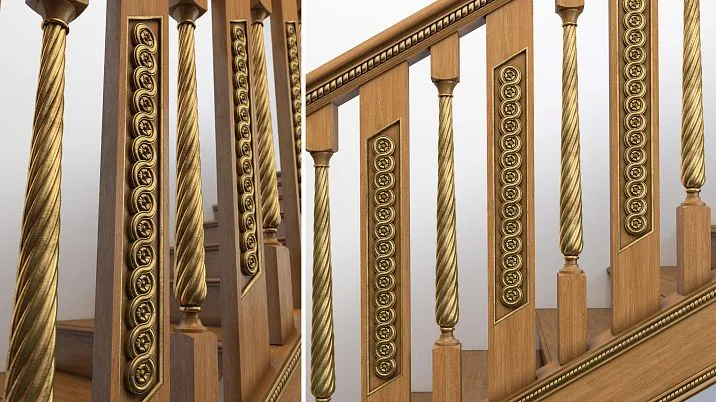
When it comes to creating a staircase railing that combines reliability, beauty, and reasonable cost, pine balusters become the optimal choice for most homeowners. This coniferous wood species has earned the recognition of builders and designers due to its unique combination of practical and aesthetic qualities, making it indispensable in modern staircase construction.
Pine staircase elements open up the possibility for homeowners to create a safe and attractive railing without significant financial expenditure. At the same time, the quality and durability of such items remain at a high level, as confirmed by years of experience in use under various climatic conditions.


Natural advantages of pine wood




Unique structure and physical properties
Common pine possesses several characteristics that make it an excellent material for manufacturing balusters. The density of the wood is 480-520 kg/m³, providing an optimal balance of strength and weight. This feature is critically important for staircase structures, where each element must withstand significant loads without creating excessive mass.
The fibrous structure of pine is characterized by straight grain and even distribution of annual rings. This wood structure ensures predictable material behavior under load and minimizes the risk of sudden failure. Resin canals penetrating the wood structure create natural protection against moisture and biological damage.
The natural moisture content of freshly cut pine is 50-60%, but after proper drying, this figure drops to 8-12%. This moisture level guarantees dimensional stability of finished products and prevents deformation during use.
Our factory also produces:


Resin as a protective factor
High resin content in pine wood is not a drawback but an important advantage ensuring the longevity of products. Resinous substances create a natural barrier against moisture penetration, fungal infections, and damage by insects.
Modern processing technologies allow controlling resin exudation and directing its protective properties to benefit the structure. Proper drying and thermal treatment stabilize resin canals, preventing undesirable exudation during use.
The aromatic properties of pine resin create a special atmosphere in the room, filled with phytoncides — natural antiseptics beneficial to human health. This effect persists for many years after installing balusters.
Get Consultation
Technological aspects of production
Modern pine processing methods
Production of high-quality pine balusters The process begins with careful selection of raw material. The best logs come from trees growing in northern regions, where slow growth forms dense wood with minimal spacing between annual rings.
Drying is carried out in special chambers with controlled temperature and humidity regimes. Gradual reduction of moisture from 50% to 8-10% occurs over 2-3 weeks, preventing cracking and deformation of logs. Modern drying complexes are equipped with monitoring systems ensuring uniform processing.
Turning pine logs requires a special approach due to the different density of early and late wood. Experienced turners use special cutters and processing modes to achieve a smooth surface without chips or scratches. Cutting speed is 180-220 m/min with feed rate of 0.3-0.5 mm/rev.
Decorative finishing and carving
The softness of pine wood opens up wide possibilities for creating decorative elements. Carving pine is easier than hard woods, allowing for complex ornaments and artistic compositions with less time and effort.
Turning pine logs is performed on CNC machines ensuring high precision and repeatability of shapes. Special cutters for softwoods create a clean cut surface without fuzz. Feed rate is 3-6 m/min with spindle speed of 12000-15000 rpm.
Hand carving remains a popular method for creating unique balusters. Pine easily accepts processing with traditional tools — chisels, gouges, and knives. Master carvers value this species for its predictable behavior during cutting and ability to create fine details.
Aesthetic qualities and design possibilities
Natural beauty of pine texture
Pine wood has an expressive texture created by the contrast between light sapwood and darker heartwood. Annual rings form a beautiful wavy pattern, especially noticeable on tangential cuts. Resin canals add additional expressiveness in the form of dark streaks and lines.
The toning possibilities of pine are virtually limitless. The porous structure of the wood readily absorbs stains and dyes, allowing any desired shade to be achieved. From light Scandinavian tones to rich dark hues — pine adapts to any design solution.
Pine balusters fit organically into various interior styles. In Russian folk style, they emphasize the connection to traditional wooden architecture. Simple turned forms create the atmosphere of a cozy country house, while carved elements add artistic expressiveness.
Stylistic Universality
Scandinavian minimalism finds the ideal partner in pine. Light wood tones, simple geometric shapes, and natural texture create a sense of purity and freshness. Pine balusters in Scandinavian style are often painted white or stained with light stains.
Modern interiors also successfully use pine elements. Clean lines, high-quality surface finishing, and modern protective coatings make pine balusters suitable for contemporary and high-tech styles.
The availability of pine wood in Russia makes balusters from this material one of the most cost-effective solutions. Widespread pine forests ensure stable supplies of quality raw material at reasonable prices. The cost of pine balusters is 2-3 times lower than those made of oak or ash, with comparable performance characteristics.
Practical advantages of using
Economic Efficiency
The ease of processing pine reduces production labor costs, positively affecting the final product price. High productivity of turning and milling operations allows producing large batches of balusters in short timeframes.
Transportation of pine balusters is cheaper due to their relatively low weight. This is especially important when delivering to remote regions or sites with limited access.
Ease of installation and maintenance
The light weight of pine balusters simplifies installation and reduces load on stair structures. A standard baluster of 50×50×900 mm weighs about 1.2 kg, which is 1.5-2 times less than a similar item made of hardwood.
The softness of pine facilitates drilling holes for fasteners and fitting elements during installation. The risk of cracking when installing self-tapping screws or dowels is minimal when proper technology is followed.
Maintenance of pine balusters does not require special skills or expensive materials. Regular dust cleaning and periodic renewal of protective coatings — that’s all the care required. Local damage can be easily repaired using putty and paint.
pine balusters
Technical Specifications and Standards
Dimensional parameters and tolerances
Standard sizes are determined by safety and ergonomics requirements. The most popular cross-sections are 40×40 mm, 50×50 mm, and 60×60 mm at a standard height of 900 mm. These dimensions ensure sufficient structural strength with optimal material usage. Tolerance for finished product dimensions is ±2 mm for linear dimensions and ±1 mm for thickness. This precision is achieved through the use of modern equipment and strict quality control at all production stages.
The moisture content of finished balusters should not exceed 12% to ensure dimensional stability during operation. Moisture control is performed using electronic moisture meters with accuracy ±1%.
The compressive strength of pine along the grain is 43-49 MPa, ensuring reliable performance of balusters under calculated loads. The modulus of elasticity of 9000-11000 MPa guarantees minimal deformation under load.
Strength characteristics
The hardness of pine by Brinell is 1.6-2.2 kgf/mm² for cross-section and 3.2-4.0 kgf/mm² for end grain. These values ensure resistance to mechanical damage under normal use.
The impact toughness of pine wood reaches 4-6 kJ/m², indicating good ability of the material to absorb dynamic loads without destruction.
Modern antiseptic compositions provide reliable protection for pine balusters against biological damage. Deep-penetration impregnation creates a protective barrier up to 5-8 mm deep from the surface, guaranteeing long-term protection even if the coating is mechanically damaged.
Protective Treatment and Final Coatings
Antiseptic protection
Fire-retardant treatment increases the fire resistance class of pine wood from G4 to G1-G2. Modern fire-retardant compositions do not alter the appearance of the wood and do not hinder the application of decorative coatings.
Comprehensive protective compositions combine antiseptic and fire-retardant properties, simplifying the treatment process and reducing overall protection costs. The service life of such compositions is 10-15 years for indoor use.
Lacquered coatings highlight the natural beauty of pine texture and provide reliable surface protection. Polyurethane lacquers create a durable film resistant to abrasion and household chemicals. Acrylic lacquers are eco-friendly and dry quickly.
Decorative coatings
Oil-based coatings penetrate the wood structure, emphasizing its texture and creating a natural appearance. They are easily restored in case of local damage and do not form a thick film on the surface. Linseed and tung oils provide maximum protection and longevity.
Wax compositions give pine balusters a silky surface and pleasant tactile sensations. Wax is easy to apply and polish, creating a uniform matte sheen. Beeswax additionally possesses antiseptic properties.
Areas of application and limitations
Interior staircases
Pine balusters are ideal for interior staircases in residential homes, offices, and public buildings. Stable operating conditions — constant temperature, controlled humidity, absence of direct exposure to precipitation — ensure longevity and preservation of the appearance of the products.
Pine balusters are ideally suited for interior staircases in residential buildings, offices, and public buildings. Stable operating conditions — constant temperature, controlled humidity, absence of direct exposure to precipitation — ensure longevity and preservation of the appearance of the products.
Pine balusters are especially valued in children's facilities for their ecological safety. The soft surface of the wood reduces the risk of injury from accidental impacts, while the natural antiseptic properties of pine create a healthy microclimate.
Cottage and country houses are the traditional application area for pine stair elements. Here, they fit organically into the overall concept of wooden construction and create an atmosphere of harmony with nature.
Outdoor structures
Using pine balusters outdoors requires a special approach to protective treatment. Quality impregnation with antiseptics and application of weather-resistant coatings ensure a service life of 15–20 years with regular maintenance.
Terraces and verandas are popular areas for applying pine railings. Here, protection against moisture is important, as well as resistance to ultraviolet radiation. Special UV filters in coatings prevent fading and degradation of the wood.
Pavilions and garden gazebos are adorned with pine balusters, creating a cozy atmosphere for relaxing outdoors. Carved elements add artistic expressiveness and highlight the uniqueness of the architectural solution.
Comparison with alternative materials
Pine vs. Hardwoods
Compared to oak, ash, and beech, pine is inferior in strength and hardness, but superior in ease of processing and availability. For most applications, pine's strength characteristics are sufficient, and cost savings allow investment in quality protective treatment.
The textural expressiveness of pine does not fall short of many hardwoods, especially with proper processing and finishing. The contrasting pattern of annual rings creates an attractive decorative effect, requiring no additional decoration.
The repairability of pine products is higher due to the material's availability and ease of processing. When replacing individual elements, there are no problems finding a similar material.
Wood vs. Metal and Plastic
Metal balusters surpass wooden ones in strength and durability, but are inferior in aesthetic qualities and comfort of use. The cold surface of metal is unpleasant to the touch, especially in winter.
Plastic analogs differ in moisture resistance and ease of maintenance, but cannot compare with wood in ecological safety and natural beauty. Artificial materials do not provide the warmth and coziness that natural wood offers.
Combined solutions combining wooden elements with metal frames allow combining the advantages of different materials. Pine overlays on a metal base create an attractive appearance while maintaining high structural strength.
Innovations and modern technologies
Modern thermal modification technologies allow improving the performance characteristics of beech timber. Treatment at 160-200°C in a steam environment reduces hygroscopicity by 40-50%, increases biostability, and imparts a noble dark tone to the wood.
Thermo-treatment of pine wood at 160–220°C alters its structure at the molecular level. The process occurs in a steam environment without oxygen access, preventing material combustion.
Thermally modified pine acquires increased dimensional stability, moisture resistance, and resistance to biological damage. The wood color becomes darker and more uniform, expanding design possibilities.
The service life of thermo-treated balusters increases 2–3 times compared to regular wood. This makes investments in thermomodification economically justified for demanding applications.
Pressure Impregnation
Autoclave impregnation ensures deep penetration of protective compounds into the wood structure. The process occurs in a sealed chamber under 8–12 atmospheres of pressure, guaranteeing uniform distribution of the impregnation.
The depth of penetration of protective substances reaches 15–20 mm, ensuring long-term protection even with significant surface mechanical damage. The service life of impregnated wood increases to 25–30 years.
Modern impregnating compounds do not contain toxic substances and are safe for use in residential spaces. They do not alter the natural color of the wood and do not hinder the application of decorative coatings.
Ecological aspects
Renewable resource
Pine belongs to fast-growing wood species, making its use ecologically justified. The rotation period for pine plantations is 60–80 years, significantly less than for hardwoods.
Sustainable forestry ensures continuous regeneration of pine forests without harming the ecosystem. FSC certification guarantees compliance with ecological standards during wood harvesting.
The carbon footprint of pine products is minimal due to the wood's ability to absorb carbon dioxide from the atmosphere. Throughout the product's life cycle, carbon remains bound within the wood structure.
Disposal and recycling
At the end of their service life, pine balusters can be fully recycled or disposed of without harming the environment. Wood undergoes composting or incineration to produce thermal energy.
Secondary use of pine elements is possible after dismantling stair structures. Quality items retain their properties and can be used in other projects after appropriate processing.
Waste from pine baluster production finds application in various industries — from fuel briquette manufacturing to composite material production. Waste-free production has become a standard in modern wood processing.
Conclusion
pine balusters They represent an optimal solution for creating quality stair railings at reasonable financial costs. The unique combination of pine wood's natural properties, modern processing technologies, and affordable pricing makes these products attractive to a wide range of consumers.
The natural beauty of pine texture, pleasant pine scent, and ecological safety create a cozy and harmonious atmosphere with nature in the home. Proper protective treatment and quality coatings ensure the longevity of products and preservation of their original appearance for many years.
Modern production technologies allow creating pine balusters of any complexity — from simple turned forms to intricate carved compositions. Design flexibility makes pine a universal material for various architectural styles.
The economic efficiency of pine balusters is especially important under limited construction budgets. The ability to obtain a quality product at an affordable price without compromising safety and functionality makes pine the leader in the mass stair construction segment.
The ecological advantages of pine wood comply with modern requirements of sustainable development. Use of renewable resources, minimal carbon footprint, and full recyclability make pine balusters a responsible choice for environmentally conscious consumers.
STAVROS offers a wide range of high-quality pine balusters, manufactured using modern technologies and strict quality control. Years of experience working with pine wood, deep understanding of its properties and customer needs enable STAVROS to create products that exceed expectations in terms of quality, durability, and aesthetic appeal. Choosing STAVROS products means investing in the reliability, beauty, and comfort of your home.