Article Contents:
- Anatomy of Pricing: What Forms the Cost
- Material Basis of Price
- Technological Component
- Regional pricing characteristics
- Moscow Market: Benchmark of Quality and Price
- Regional specifics
- Size Grading and Its Impact on Cost
- Standard Sizes and Base Prices
- Non-Standard Solutions
- Design Solutions and Their Price Category
- Classic Forms
- Modern Interpretations
- Carved Masterpieces
- Quality Characteristics and Their Impact on Price
- Wood Grade
- Moisture and Drying
- Final finishing and protective coatings
- Basic Covering Options
- Premium Finishes
- Seasonal price fluctuations
- Construction Cycles
- Logistical Factors
- Volume Discounts and Wholesale Prices
- Discount Grading
- Complex Deliveries
- Additional Services and Their Cost
- Assembly and fitting
- Installation and mounting
- Economic Factors and Forecasts
- Impact of Currency Exchange Rates
- Inflationary Processes
- Comparative Analysis of Alternative Materials
- Metal Balusters
- Composite materials
- Investment attractiveness
- Return on investment
- Antique Value
- Practical Recommendations for Selection
- Budget determination
- Finding the Optimal Supplier
- Conclusion
Planning to furnish a staircase in your home and wondering: how much does a baluster costThis question concerns everyone who aims to create not just a functional structure, but a true work of architectural art. The cost of balusters varies widely — from modest 250 rubles for the simplest items to tens of thousands for exclusive hand-carved masterpieces.
Understanding pricing for balusters is an art requiring deep immersion into the world of materials, manufacturing technologies, and design solutions. Every kopek in the price has its justification: wood quality, processing complexity, artisan skill, design uniqueness. We will examine these nuances in detail so your choice is informed and justified.


Anatomy of Pricing: What Forms the Cost




Material Basis of Price
Wood species — the first and determining factor in forming the price of balusters. Pine items start at 250-300 rubles per piece, representing an affordable solution for budget projects. This coniferous species has sufficient strength for most tasks, is easy to process, and has a pleasant natural texture.
Larch occupies an intermediate position in the price range — from 500 to 800 rubles per standard-sized baluster. Its unique properties — high density, natural resistance to moisture and insects — make this species an ideal choice for rooms with variable humidity.
Oak balusters represent the premium segment of the market. The cost of oak balusters starts at 1000 rubles and can reach 5000-7000 rubles for complex-shaped items. Oak is an investment in longevity, status, and unmatched natural texture beauty.
Our factory also produces:


Technological Component
The method of manufacturing significantly affects the final cost. Simple turned balusters made on a lathe are considerably cheaper than milled items with complex profiles. Hand-carved work is already a work of art, where each element is created individually by the master.
Modern CNC technologies allow creating items of the highest precision and complexity at relatively affordable prices. Laser engraving, 3D milling, multi-axis processing — these methods open new design possibilities but require corresponding investments in equipment.
Get Consultation
Regional pricing features
Moscow Market: Benchmark of Quality and Price
The capital region traditionally demonstrates the highest prices for wooden items. Here, how much does a baluster cost is determined not only by material quality and workmanship, but also by brand prestige, production location, and logistics costs. A simple pine baluster in Moscow costs from 300-400 rubles, while in regions a similar item can be purchased for 200-250 rubles.
Premium oak items with hand-carved designs in Moscow showrooms can cost 15,000-25,000 rubles per piece. These prices are justified by the exclusivity of design, flawless execution quality, and individual approach to each order.
Regional Specificity
In forest-rich regions, prices for wooden balusters are traditionally lower. Siberian manufacturers offer larch items at very attractive prices — from 400-500 rubles for a quality standard-sized baluster.
Northwestern regions are renowned for producing items from Karelian birch — a unique material with an unmatched texture. The price of Karelian birch balusters can reach 3,000-5,000 rubles per piece, justified by the rarity and beauty of the material.
Size Grading and Its Impact on Cost
Standard Sizes and Base Prices
Classic baluster sizes — 50×50×900 mm and 60×60×900 mm — represent the most affordable price segment. Items of these sizes are produced in large quantities, allowing cost optimization and attractive pricing for consumers.
Spruce balusters 50×50×900 mm cost from 250-300 rubles, larch — from 500-600 rubles, oak — from 900-1200 rubles. Increasing the cross-section to 60×60 mm adds 20-30% to the cost, due to greater material consumption and more complex processing.
Non-standard solutions
Custom sizes always cost more than standard ones. Manufacturing balusters according to individual drawings requires reconfiguring equipment, creating special CNC machine programs, and additional quality control. The markup for non-standard sizes may be 50-100% of the base price.
Large balusters with a cross-section of 80×80 mm and more belong to the premium segment. Such items require select wood without defects, special drying, and precise processing. The cost of large balusters may exceed the price of standard items by 2-3 times.
Design Solutions and Their Price Category
Classic Forms
Traditional turned balusters with a simple profile represent the basic price segment. Their production is perfected down to the smallest details, allowing high-quality items to be offered at affordable prices. Classic shapes never go out of style and suit most interior solutions.
Balusters with grooves — vertical channels — require additional milling, which increases the cost by 30-50%. However, these items have special expressiveness and create an interesting play of light and shadow.
Modern Interpretations
Minimalist balusters with simple geometric forms can be either budget or expensive — it all depends on the quality of execution and material. The apparent simplicity requires flawless manufacturing precision, as any defects become noticeable.
Avant-garde shapes, created using modern 3D modeling and CNC processing technologies, belong to the premium segment. Such items are made in single copies and may cost from 5000 to 20000 rubles per piece.
Carved masterpieces
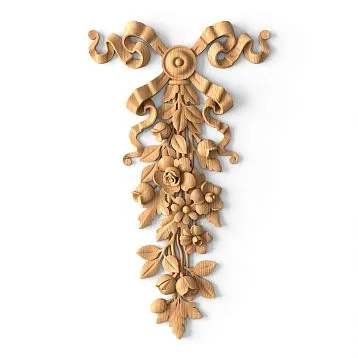
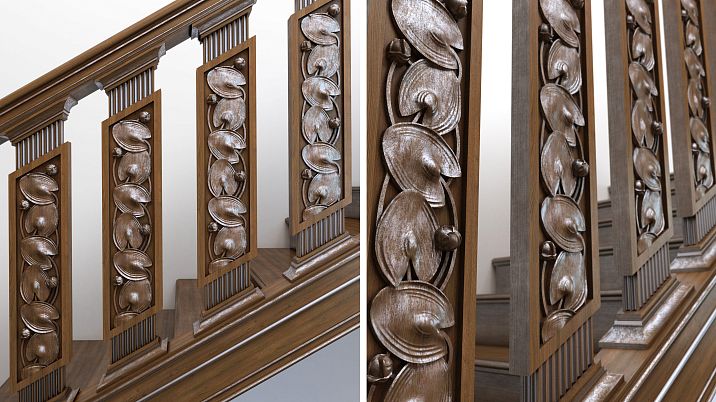
Hand-carved balusters are the pinnacle of craftsmanship and, accordingly, the top of the price pyramid. Carved balusters are created by experienced master carvers, each of whom puts a part of their soul into the item. How much does a hand-carved baluster cost? Prices start from 3000-5000 rubles for simple ornaments and may reach 50000-100000 rubles for complex narrative compositions.
Quality Characteristics and Their Impact on Price
Wood Grade
Wood of different grades differs significantly in price. Extra-class material without knots, cracks, or other defects costs 2-3 times more than third-grade wood. However, for producing quality balusters, using high-grade wood is justified — the resulting items are beautiful, strong, and long-lasting.
First-grade wood allows a minimal number of small knots, which practically does not affect strength but may create interesting decorative effects. Such material represents the optimal price-to-quality ratio for most projects.
Moisture and Drying
Properly dried wood with a moisture content of 8-12% costs more than naturally moist material, but these expenses are fully justified. Quality drying prevents deformation, cracking, and dimensional changes in finished items.
Kiln drying in special installations with controlled temperature and humidity regimes is an expensive process, but it guarantees the stability of baluster geometric parameters throughout the entire service life.
Finishing and protective coatings
Basic Coating Variants
Basic baluster treatment includes sanding and applying transparent lacquer. This finish highlights the natural beauty of wood and provides basic protection against moisture and dirt. The cost of basic finishing is 10-15% of the baluster’s price.
Staining with dye allows changing the wood color, imitating more expensive species, and creating uniformity in a batch of items. Quality staining followed by lacquering increases the cost by 20-30%.
Premium Coatings
Oil-based finishes create a more natural appearance, highlight wood texture, and provide breathable protection. Such finishes cost more than lacquers but offer more comfortable tactile sensations and are easier to restore.
Waxing is a traditional wood protection method, creating a noble matte sheen. High-quality waxes based on carnauba or beeswax are expensive but provide excellent protection and aesthetics.
Seasonal Price Fluctuations
Construction Cycles
Baluster prices are subject to seasonal fluctuations linked to construction market activity. Peak demand occurs during the spring-summer period, when private construction and renovation activities intensify. During this time, prices may increase by 15-25%.
The winter period traditionally features reduced demand and, consequently, more attractive prices. Many manufacturers offer winter discounts, aiming to maintain production capacity utilization.
Transportation of wooden products during the winter period is associated with additional risks and costs. The need to protect against moisture and temperature fluctuations may increase the final cost by 5-10%.
Transporting wooden items during winter involves additional risks and costs. The need to protect against moisture, temperature fluctuations, and special packaging requirements all affect the final product cost.
Volume Discounts and Wholesale Prices
Most manufacturers offer a discount system depending on the order volume:
Most manufacturers offer discount systems depending on order volume. Purchasing 10-20 balusters may yield a 5-10% discount, ordering 50-100 pieces — 15-20%, and large batches of 200 or more — up to 30-40% discount.
Wholesale prices differ significantly from retail prices. How much does a baluster cost at wholesale? Savings may reach 50% of the retail price, making wholesale purchases very attractive for construction companies and design offices.
Comprehensive Deliveries
Ordering a complete set of staircase elements — steps, treads, handrails, balusters — allows additional discounts. Manufacturers are interested in comprehensive orders, as this ensures better production utilization and reduces logistics costs.
Additional Services and Their Cost
Design and Planning
Custom baluster design based on the client’s sketches is a separate service, costing from 5000 to 50000 rubles depending on project complexity. Creating a 3D model, developing a manufacturing technology, preparing CNC machine programs — all this requires highly skilled specialists.
Design project support, optimal solution selection, visualization creation — these services are valued by clients and accordingly paid for. The work of an experienced designer may cost 3000-10000 rubles per consultation.
Installation and Mounting
Professional baluster installation — guarantee of durability and safety of the structure. Installation costs amount to 30-50% of the cost of the items themselves. Complex structures with non-standard fastenings may require additional expenses.
Warranty service, adjustment of fastenings, replacement of individual elements — these services are usually included in the installation cost or paid separately by agreement.
Economic Factors and Forecasts
Impact of currency exchange rates
The cost of imported equipment, tools, and consumables directly depends on the exchange rate. Fluctuations in the dollar and euro exchange rates may affect the cost of balusters, especially in the premium segment, where imported varnishes, stains, and waxes are used.
Domestic manufacturers strive for import substitution, developing their own technologies and materials. This allows stabilizing prices and reducing dependence on external factors.
Inflationary processes
General inflation in the economy inevitably reflects on the prices in the wood processing industry. Rising costs of electricity, fuel, wages, and raw materials — all these factors affect the final product cost.
Manufacturers strive to optimize costs, implementing energy-saving technologies, automating production processes, and improving logistics. This allows controlling price increases and offering consumers competitive products.
Comparative Analysis of Alternative Materials
Metal Balusters
Steel and aluminum balusters may be cheaper or more expensive than wooden counterparts. Simple steel items cost from 500-800 rubles, but hand-forged balusters may cost 5000-15000 rubles each.
Stainless steel — material of the premium segment, balusters from it cost from 2000-3000 rubles. However, their durability and minimal maintenance requirements make them economically advantageous in the long term.
Composite materials
Modern composites based on wood fibers and polymer binders offer an interesting alternative to natural wood. The price of composite balusters is comparable to that of natural wood products, but they have improved performance characteristics.
The absence of need for regular maintenance, resistance to moisture and temperature fluctuations, dimensional stability — these advantages of composites may justify their higher initial cost.
Investment Appeal
Return on investment
Quality wooden balusters are a long-term investment in the beauty and functionality of your home. The service life of oak balusters may exceed 50-100 years, making their cost per square meter per year very attractive.
The increase in property value due to a beautiful staircase with quality balusters may significantly exceed the cost of their purchase. Experts estimate the value increase at 5-15% of the total property cost.
Antique value
Unique carved balusters may acquire antique value over time. Works by renowned masters, executed in specific styles or made from rare wood species, become collectible items.
Practical Recommendations for Selection
Budget Determination
Planning the budget for balusters should consider not only the cost of the items themselves, but also delivery, installation, and additional materials. It is recommended to allocate a reserve of 20-30% of the main amount for unforeseen expenses.
How much does a baluster cost for a specific project — a question requiring a comprehensive approach. It is necessary to consider the architectural features of the staircase, interior style, usage intensity, and climatic conditions.
Finding the Optimal Supplier
Choosing a reliable supplier is a key factor in successfully implementing the project. It is recommended to study the company’s portfolio, customer reviews, and quality certificates. Visiting the production facility personally allows assessing the technological level and quality of the products.
It is important to pay attention to warranty obligations, manufacturing timelines, and delivery terms. Serious manufacturers provide warranties on their products and are ready to take responsibility for quality.
Conclusion
Question how much does a baluster cost There is no single answer — the cost depends on many factors, each of which affects the final price. From simple pine items for 250 rubles to exclusive carved masterpieces for tens of thousands — the price range reflects the diversity of customer needs and possibilities.
Choosing the right balusters is a balance between aesthetic preferences, functional requirements, and financial possibilities. Investments in quality items pay off through durability, beauty, and increased property value.
The modern market offers solutions for any budget and style. The key is to find a reliable partner who will help you turn your dreams into reality, creating a staircase that will delight you and your descendants for many years.
For many years, STAVROS has remained a leader in producing high-quality wooden items. Combining traditional wood processing methods with modern technologies, STAVROS offers a wide range of balusters at competitive prices. Choosing STAVROS means investing in quality, reliability, and beauty, proven over time and by thousands of satisfied customers.