Article Contents:
- Philosophy of Scandinavian interior: more than just a style
- Light as the main resource
- Nature in the Home
- Functionality without compromise
- Light wood: ash and whitewashed oak
- Ash: texture and strength
- Whitewashed oak: Scandinavian classic
- Pine: an affordable alternative
- Thin baseboard 60–70 mm: minimalism in details
- Profile shape: simplicity of lines
- Installation and finishing
- Round mirrors: softness of forms
- Why exactly a circle?
- Mirror size
- Frame: wood or white paint
- Mirror placement
- White accents: purity and light
- Shades of white
- Combination of white and wood
- Textiles and accents
- Functionality and simplicity: less is more
- Storage: hidden and organized
- Furniture: quality, not quantity
- Light: multiple sources
- Natural materials: the foundation of Scandinavian aesthetics
- Wood everywhere
- Textiles: natural and simple
- Ceramics and Glass
- How to assemble a Scandinavian interior: step-by-step plan
- Step 1: Define the color base
- Step 2: Choose the wood species
- Step 3: Install baseboards
- Step 4: Hang mirrors
- Step 5: Select furniture
- Step 6: Add textiles
- Step 7: Green the space
- Step 8: Organize light
- Frequently Asked Questions
- Conclusion: hygge as a lifestyle

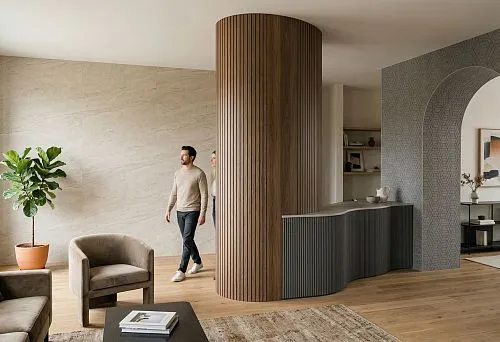
What is hygge? Danes would say it's an indescribable feeling of coziness, warmth, and calm. It's the moment when you sit with a cup of tea by the window, with snow outside, and the room is warm and bright. It's the feeling of home, where everything is in its place, where there is nothing superfluous, but everything necessary is present.Wooden baseboardmade of light ash,round mirror in a framemade of the same wood, minimalist furniture, white walls — these are not just design choices. They are tools for creating hygge, a philosophy of life that Scandinavians have developed over centuries of dealing with long winters and lack of light.
Scandinavian interior is instantly recognizable: light tones, natural wood, simple shapes, plenty of air. But behind this apparent simplicity lies deep thoughtfulness in every detail. Every element has meaning, function, and place. Nothing random, nothing decorative for the sake of decoration. Everything works to create a space where it's comfortable to live, easy to breathe, and pleasant to be.




Philosophy of Scandinavian interior: more than just a style
Scandinavian styledid not emerge out of nowhere. The climate of Scandinavia is harsh: long winters with short daylight hours, cold, snow for months. Under such conditions, the home becomes a refuge, a fortress, a place to escape the darkness and cold. And the interior of this home must compensate for what is lacking outside: light, warmth, coziness.




Light as the main resource
Scandinavians have learned to maximize every ray of sunlight. Large windows without heavy curtains let in maximum natural light. White or very light walls reflect light, disperse it throughout the room, making the space brighter. Light wood — ash, birch, pine — does not absorb light like dark woods, but reflects it, adding warmth without visual heaviness.
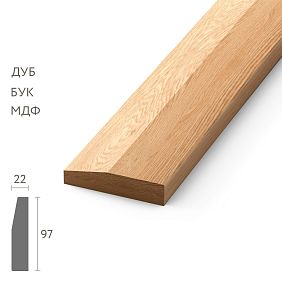
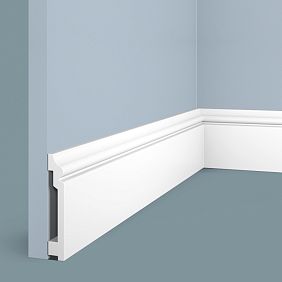
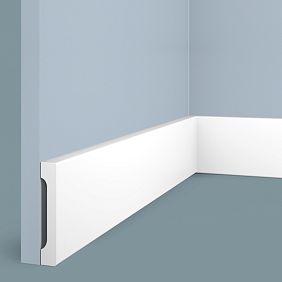
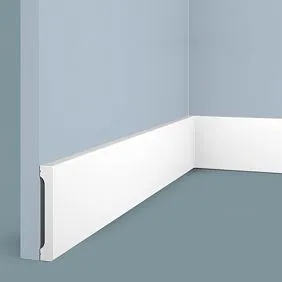
Baseboards made of light woodare not just a functional element. They are part of the light-reflecting system of the interior. A thin baseboard, 60–70 mm high, made of ash or whitewashed oak, blends into the background of light walls, does not create a visual boundary, and does not fragment the space. It performs its function — covering the joint between the wall and floor — but does so delicately, without drawing attention.
Our factory also produces:


Nature in the Home
Scandinavians live surrounded by nature: forests, lakes, fjords. But the climate does not allow them to enjoy this nature for most of the year. Therefore, nature is invited into the home. Natural materials — wood, stone, linen, wool — create a sense of connection with the natural environment even in a city apartment.
Wood in Scandinavian interior is not a finish, but the essence. Wooden floor, wooden furniture, woodenmoldings and baseboardsbaseboards, wooden mirror frames. Wood is everywhere, but unobtrusively. It is in its natural state or slightly tinted, with visible texture, preserved grain pattern. No imitations, no plastic pretending to be wood — only genuine solid wood.
Get Consultation
Functionality without compromise
Every item in a Scandinavian interior must be functional. Decoration for decoration's sake is alien to this philosophy. If around mirror in a wooden framehangs on the wall — it's not just a decoration. It reflects light, visually expands the space, and is used functionally. If a ceramic vase sits on a shelf — it holds fresh flowers; it's not just a beautiful object.
Furniture is simple, without excess, but comfortable and high-quality. A table — to work or eat at. A chair — to sit on comfortably. A shelf — to store necessary things. No meaningless figurines, no decorative pillows that get in the way of sitting on the sofa. Only what is used, what has meaning.
Light wood: ash and whitewashed oak
The choice of wood species in Scandinavian interior is critical. Dark woods (walnut, wenge, bog oak) are visually heavy, absorb light, and create a sense of pressure. Light woods (ash, birch, whitewashed oak, pine) provide lightness, airiness, and reflect light.
Ash: Texture and Strength
Ashis the perfect wood for Scandinavian style. Color — light, ranging from creamy white to light brown with a slight pinkish or olive undertone. Texture is expressive: clear annual rings, a wavy pattern that creates visual interest without color overload.
Ash has high density, comparable to oak. This means strength, wear resistance, and durability. A baseboard made of ash will withstand decades of use, will not lose its shape, and will not deform. The elasticity of ash makes it easy to work with: it does not split when nails are driven in, mills well, and can be sanded to perfect smoothness.
Ash is easily tinted. If even more lightness is desired — it is treated with whitewashing oil, which lightens the wood while preserving the visibility of the texture. If a neutral gray shade is needed (popular in modern Scandinavian aesthetics) — ash is tinted with gray oil, and the expressive texture becomes graphic and modern.
Whitewashed oak: Scandinavian classic
Whitewashed oak— is natural oak treated with special compounds that lighten the wood, giving it a grayish-white hue. The oak texture (pronounced pores, annual ring pattern) remains visible, but the contrast is reduced, the wood becomes light and calm.
A baseboard made of bleached oak is an element that combines the strength of oak (the hardest European species) with the visual lightness of a light tone. Such a baseboard is practically eternal: oak does not deform, does not rot, is not afraid of moisture (within reasonable limits), and serves for decades without losing its appearance.
Bleached oak harmonizes with white walls, light laminate, and natural textiles. It creates a feeling of cleanliness, air, northern lightness—everything that characterizes Scandinavian interior.
Pine: an affordable alternative
Pine is light, warm, with amber hues and characteristic resin pockets. It is softer than ash and oak, less dense, more vulnerable to mechanical damage. But for baseboards (an element that is not subjected to heavy loads), pine is quite suitable.
The advantage of pine is availability and price. A pine baseboard costs significantly less than ash or oak, while looking decent, especially if coated with quality oil or white semi-transparent enamel. For a Scandinavian interior on a limited budget, pine is an excellent choice.
Thin baseboard 60–70 mm: minimalism in details
The height of the baseboard is an important parameter that affects the perception of space. In classic interiors, baseboards are high—100–150 mm, sometimes more. They create visual solidity, emphasize the verticality of walls, and add decorativeness.
inScandinavian minimalism— the philosophy is different. The baseboard should be noticeable just enough to perform its function, but not dominate, not draw attention. The optimal height is 60–70 mm. This is sufficient to cover the joint between the wall and the floor, protect the lower part of the wall from dirt, but not so much that the baseboard becomes an independent decorative element.
Profile shape: simplicity of lines
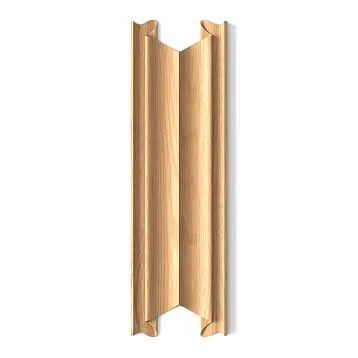
The profile of a baseboard for a Scandinavian interior is as simple as possible. No complex curved bends, multi-step forms, or carved details. The ideal option is a flat rectangular profile or a very slight rounding of the top edge.
Such simplicity is not accidental. A complex profile creates visual noise, fragments perception, and distracts attention. A simple profile dissolves, becomes part of the wall, and does not compete with other interior elements. It performs its function silently, delicately, effectively.
Mounting and Finishing
A solid wood baseboard is mounted on screws (with countersinking and masking of the heads) or on glue (liquid nails, if the walls are perfectly even). It is important that the fastening is reliable but invisible. The screw heads are filled with wood putty to match the baseboard, sanded, and become unnoticeable.
Corners are joined at 45 degrees. The quality of cutting is critical: in a Scandinavian interior, where everything is laconic, any inaccuracy catches the eye. A perfect joint is when two parts of the baseboard form a single corner without gaps, steps, or profile misalignment.
Finishing treatment—clear oil (preserves the natural color of the wood, emphasizes the texture) or white oil (lightens, creates the effect of bleached wood). Glossy varnishes are not used in Scandinavian interiors—preference is given to matte or semi-matte coatings that look natural and do not create glare.
Round mirrors: softness of forms
The geometry of a Scandinavian interior is based on straight lines: rectangular furniture, rectangular windows, rectangular doors. To soften this strictness, add warmth, round shapes are used. Andround mirror— is one of the main tools.
Why exactly a circle?
A circle is a shape without corners, without aggression, without tension. A circle is associated with the sun, the moon, harmony, completeness. In an interior built on straight lines, a round mirror becomes a soft accent that balances geometric strictness.
A round mirror does not fragment space like a rectangular one. A rectangular mirror creates clear boundaries; it can be 'read' as a separate object. A round mirror is perceived more organically; it seems to float on the wall without creating a sense of massiveness.
Mirror size
For a Scandinavian interior, round mirrors of medium size are suitable: diameter 50–80 cm. A mirror that is too small (less than 40 cm) gets lost and does not provide the functional effect of reflecting light. One that is too large (more than 100 cm) begins to dominate, turning from an accent into the center of the composition, which contradicts the philosophy of restraint.
A mirror with a diameter of 60 cm is a universal choice. It is large enough to reflect light, visually expand the space, and be used functionally (to look into). And it is modest enough not to draw attention, remaining part of the overall composition.
Frame: wood or white paint
The frame of around mirrorin a Scandinavian interior should be simple. No carving, no decorations, no complex profiles. The ideal frame is thin (width 3–5 cm), round in cross-section or flat, made of light wood (ash, bleached oak) or painted white.
Mirror in a white frame— is a classic of Scandinavian style. A white frame dissolves against a white wall, the mirror seems to hang without a frame, creating an effect of lightness, weightlessness. At the same time, the frame performs its function: it protects the edges of the mirror, provides fastening, and adds completeness.
A frame made of natural light wood (ash with transparent oil, bleached oak) adds warmth and tactility. The visible wood grain creates a connection with other wooden interior elements: baseboards, furniture, flooring. This establishes a material unity of space.
Mirror Placement
In Scandinavian interiors, a round mirror is typically hung opposite a window or to the side of it. This allows the mirror to reflect natural light, double it, and make the room brighter. The effect is especially noticeable on cloudy days or in winter when every ray of light is valued.
The hanging height is at eye level for a standing person, with the mirror's center approximately 160–170 cm from the floor. If the mirror is hung in an entryway, it can be slightly lower (150 cm) for convenience when checking one's appearance before leaving. In a living room or bedroom, the standard height applies.
Compositionally, the mirror can be a single accent on an empty wall or part of a gallery wall (several round mirrors of different diameters, but no more than three to avoid creating chaos). Important: the mirror should not reflect clutter, open shelves in disarray, or untidy corners. It should reflect beauty: a window, a plant, neat furniture.
White accents: purity and light
In Scandinavian interiors, the color white is not just a background but an active player. White walls, white ceiling, whitedoor casings, white mirror frames—all of this creates a unified light shell in which boundaries dissolve, space expands, and light is maximized.
Shades of white
White comes in different varieties. Cool white (with a bluish undertone) creates a sense of freshness, cleanliness, and modernity. Warm white (with a creamy or yellowish undertone) adds coziness, softness, and a homely feel. Neutral white (pure white without obvious undertones) is versatile and suitable for any lighting.
Scandinavian interiors most often use neutral or slightly warm white. Too cool a white can look sterile, clinical, and unwelcoming. A subtle warm note makes white feel alive, pleasant, and homely.
Combination of white and wood
White + light wood is the classic Scandinavian formula. White walls + ash flooring + ash baseboards + white mirror frame + wooden furniture made from the same ash. This is a balance: white provides light and spaciousness, wood provides warmth and a natural feel.
The proportion is approximately 70% white, 30% wood. This creates a light, airy interior that doesn't look boring thanks to the presence of natural wood with its texture and color nuances.
Textiles and accents
A white interior requires textural accents to avoid being flat. This is achieved through textiles: natural linen (white, gray, beige), cotton, wool. Pillows, throws, curtains, rugs—all made from natural materials, all in calm tones.
Color accents are minimal: greenery from live plants, perhaps one or two pillows in muted terracotta or mustard colors. But accents should not shout or draw excessive attention. They delicately enliven the white space without disrupting the overall harmony.
Functionality and simplicity: less is more
Scandinavian interior design is a triumph of functionalism. Every item has a purpose. Nothing decorative, nothing meaningless. If there's a table, it's for working or eating at. If there's a shelf, it holds necessary books or beautiful functional objects (ceramics that store something, baskets for small items).
Storage: hidden and organized
Clutter kills Scandinavian aesthetics. Therefore, storage is a key issue. Built-in wardrobes, closed shelves, drawers—everything that can be hidden, is hidden. Open shelves are acceptable, but they must be orderly: a few books, a couple of beautiful objects, a plant. No more.
Furniture with closed fronts is preferable to open shelving. A wardrobe with white or light wooden fronts blends into the interior, creating no visual noise. An open shelf unit crammed with items fragments the space and creates chaos.
Furniture: quality, not quantity
Scandinavian interiors have little furniture. Only the essentials: a bed, a table, chairs, a wardrobe, a sofa (if it's a living room). No extra armchairs 'for beauty,' no unnecessary side tables, no decorative consoles.
However, each piece of furniture is of high quality. Solid wood, not particleboard. Thoughtful ergonomics, not just a beautiful shape. Durability, not a fashionable, short-lived item. Scandinavians buy furniture for decades, so they choose the best they can afford.
Light: multiple sources
Lighting in Scandinavian interiors is layered. A central ceiling fixture provides general light. Table lamps, floor lamps, and sconces create local zones of light and add coziness. Candles (real or LED imitations) create a hygge atmosphere, especially in the evening.
Light fixtures are simple, laconic, often made from natural materials (wood, ceramic, textile). No crystal chandeliers, no complex structures. A simple pendant with a fabric or paper shade is the perfect choice.
Natural materials: the foundation of Scandinavian aesthetics
Synthetics, plastic, and imitations are alien to Scandinavian style. Only natural materials: wood, stone, glass, ceramic, linen, cotton, wool, leather. These materials create a sense of connection with nature, tactile pleasantness, and eco-friendliness.
Wood everywhere
We've already talked about wooden baseboards and mirror frames. But wood in Scandinavian interiors also includes flooring (parquet, solid wood planks, wood-look laminate), and furniture (tables, chairs, beds, cabinets), andDecorative wall slats, and wooden cutting boards in the kitchen, and wooden coat racks in the hallway.
Wood creates warmth that cold materials (metal, glass, stone) cannot provide. Touching wood is pleasant, wood has a scent (especially fresh, untreated with harsh chemicals), wood is alive — it reacts to humidity, temperature, changes over time, acquiring a noble patina.
Textiles: Natural and Simple
Linen is the main textile in Scandinavian interiors. Linen curtains (light, semi-transparent, letting light through), linen bedding, linen tablecloths. Linen has a characteristic texture, a slightly crumpled surface, a natural sheen. It is durable, long-lasting, and becomes softer with each wash.
Cotton — for pillows, throws, blankets. Natural cotton (not synthetic blends) is pleasant against the skin, breathable, and doesn't create static electricity. Wool — for winter throws, rugs. Natural sheep's wool is warm, cozy, and creates a sense of security during cold months.
Ceramics and glass
Handmade ceramics are a typical element of Scandinavian interiors. Vases, cups, plates with simple shapes, matte surfaces, in natural shades (white, beige, gray, terracotta). Such ceramics don't shout, don't attract excessive attention, but add tactility and a handmade feel.
Glass is used for light fixtures, vases, tableware. Clear or slightly frosted, without stained glass, without engraving. Simple, honest glass that lets light through without distorting it.
How to Assemble a Scandinavian Interior: A Step-by-Step Plan
Step 1: Define the Color Base
Start with white. Paint the walls and ceiling white or a very light shade (cream, light gray). This is the base on which the entire interior will be built.
Step 2: Choose wood species
Decide which wood will dominate: ash, whitewashed oak, light pine. All wooden elements (floor, baseboards, furniture, mirror frames) should be from the same species or visually match. Mismatched wood tones disrupt harmony.
Step 3: Install Baseboards
Thin wooden baseboards 60–70 mm made from the chosen wood species are mounted around the perimeter of the room. Simple profile, light tone, neat installation with perfect corner joints.
Step 4: Hang Mirrors
One or two round mirrors in simple wooden or white frames are placed opposite windows or on empty walls. Mirrors should reflect light and beauty, not chaos.
Step 5: Select Furniture
Minimum items, maximum functionality. Simple shapes, light wood or white fronts, quality craftsmanship. Better one good table than three cheap ones.
Step 6: Add Textiles
Linen curtains, cotton throws, wool rug. All natural, all in calm tones. Textiles create coziness, soften the strictness of lines, add tactility.
Step 7: Greenery the Space
Live plants are a must. Ficus, monstera, succulents — the choice depends on your care capabilities. Greenery enlivens the white interior, creates a connection with nature, improves air quality.
Step 8: Organize Lighting
Multiple light sources: ceiling, table lamps, candles. Warm light (2700–3000K), avoid cold white. The light should create coziness, especially on winter evenings.
Frequently asked questions
Is Scandinavian style only suitable for large apartments?
No, Scandinavian style is ideal precisely for small spaces. Light tones, minimal furniture, functionality — all of this visually expands even a cramped room, making it airy and comfortable.
Won't a white interior be too cold?
No, if you use warm shades of white and add natural wood, textiles, plants. Coldness arises when white is combined with metal, glass, cold lighting. White + wood + warm light = coziness.
Can colored accents be used?
Yes, but very sparingly. One or two color accents (a pillow, a throw, a painting) in muted natural tones (terracotta, mustard, gray-blue) are acceptable. But bright, acidic colors disrupt Scandinavian harmony.
Is it expensive to furnish an apartment in Scandinavian style?
Depends on the choice of materials. Natural wood, quality furniture — more expensive than particleboard and mass-market goods. But Scandinavian style implies a minimum of items, so the total amount can be reasonable. It's better to buy little, but of good quality.
How to care for light wood?
Wipe with a dry or slightly damp cloth to remove dust. Renew the oil finish every 1–2 years. Avoid puddles of water, aggressive cleaning agents. Light wood is less prone to showing dirt than it seems: dust and light stains are not as visible on it as on dark wood.
Is a round mirror mandatory?
No, but it is desirable. The round shape softens the strictness of rectangular furniture and architecture. If you don't like round mirrors — use rectangular ones, but in simple frames, without excess.
Can Scandinavian style be combined with others?
Yes, Scandinavian style pairs well with minimalism (they share common roots), Japanese style (similar philosophy of simplicity), loft (provided wood and textiles are added to soften the industrial feel).
Are they needed fromMoldingsin a Scandinavian interior?
Usually not. Scandinavian style prefers clean walls without extra decor. But very thinlaconic moldingscan be used for zoning or hidden lighting, if it is functionally justified.
Does Scandinavian style go out of fashion?
Scandinavian style is beyond fashion, because it is based not on trends, but on timeless principles: functionality, naturalness, simplicity. What was relevant 50 years ago is relevant now and will be relevant in 50 years.
Where to buy quality elements for a Scandinavian interior?
Turn to manufacturers of natural wooden products, such as STAVROS. The quality of material and craftsmanship is critical for Scandinavian style, where every detail is visible.
Conclusion: hygge as a way of life
Scandinavian interior is not just a design style, but a life philosophy. A philosophy that values simplicity over excess, quality over quantity, function over decorativeness, nature over synthetics.Light ash skirting board, round mirror in a wooden frame, minimalist furniture, white walls — all these elements work together, creating a hygge space where it's easy to breathe, pleasant to be, comfortable to live.
Hygge cannot be bought ready-made. It is created gradually, thinking through every detail, choosing every item consciously. It is a process, not a result. And in this process, it is important to work with those who understand the philosophy of Scandinavian style, who value natural materials and honest craftsmanship.
The company STAVROS has been creating solid wood products for interiors where quality and naturalness are valued for over two decades.STAVROS productionis equipped with European machinery, allowing wood to be processed with precision to tenths of a millimeter, while preserving the natural beauty of the material.
Skirting boards made of ash and whitewashed oakfrom STAVROS are made from selected wood that has undergone kiln drying to a moisture content of 8–10%. This guarantees stability: the skirting board will not warp, crack, and will maintain its geometry for decades. Profiles are developed with modern trends in mind: thin, laconic, without excess — perfect for Scandinavian and minimalist interiors.
STAVROS mirror frames are made from solid wood with mortise and tenon joints, ensuring strength and durability. Round frames are a complex task for a joiner, requiring precise fitting of segments, a perfect circle. STAVROS craftsmen master this technique perfectly: the frame turns out perfectly round, without irregularities, without visible seams.
The finishing of STAVROS products is done with eco-friendly water-based compositions or natural oils. No toxic solvents, no aggressive chemicals. Only safe coatings that highlight the wood grain, protect it, and preserve its naturalness.
The STAVROS quality control service inspects every product before shipment: geometry, surface smoothness, coating uniformity, absence of defects. Only products meeting the highest standards receive the STAVROS mark and are shipped to customers.
The STAVROS consulting service helps select optimal solutions for your project: which wood species is suitable, what skirting board height, what mirror diameter, what coating. STAVROS specialists understand Scandinavian philosophy, know how to create an interior where everything is correct, everything in its place, everything works for hygge.
STAVROS logistics ensures careful delivery of products to any point in Russia. Every skirting board, every frame is packaged in protective film and corrugated cardboard that prevents damage during transportation. You receive products in perfect condition, ready for installation.
STAVROS is not just a manufacturer of wooden products. It is a partner in creating your dream interior, an interior where Scandinavian simplicity combines with Russian craftsmanship, where natural wood lives and breathes, creating an atmosphere of hygge—that inexpressible coziness that makes a house a home.
Contact STAVROS—and we will help create your space of light, warmth, and harmony, where every detail of natural wood contributes to comfort, where minimalism does not mean emptiness, and light tones do not create coldness, where Scandinavian philosophy becomes the reality of your home.