Article Contents:
- What is modern sandrik and why choose it
- Materials of manufacture: from traditional to innovative solutions
- Natural wood: classic and warmth
- Polyurethane: technologies of the future
- MDF for painting: versatility and practicality
- Stylistic Directions and Design Solutions
- Classic style: Eternal elegance
- Baroque: luxury and theatricality
- Ceiling Molding: Framing the Upper Surface
- Technical specifications and selection criteria
- Dimensional parameters and proportions
- Load-bearing capacity and mounting methods
- Climate resistance and durability
- Purchase process: from selection to receiving the finished product
- Defining requirements and preparing a technical specification
- Choosing a manufacturer and quality assessment
- Manufacturing process and quality control
- Installation and integration into architectural composition
- Preparation work and marking
- Mounting systems and sealing
- Finishing work and final fine-tuning
- Cost Aspects and Economic Efficiency
- Pricing factors
- Calculation of economic efficiency
- Trends in development and innovative solutions
- Digital design and customization
- Eco-friendly materials and sustainable development
- Integration of smart technologies
- Regional Characteristics and Adaptation to Local Conditions
- Climate factors
- Seismic and wind loads
- Maintenance and longevity
- Preventive maintenance
- Repair and restoration
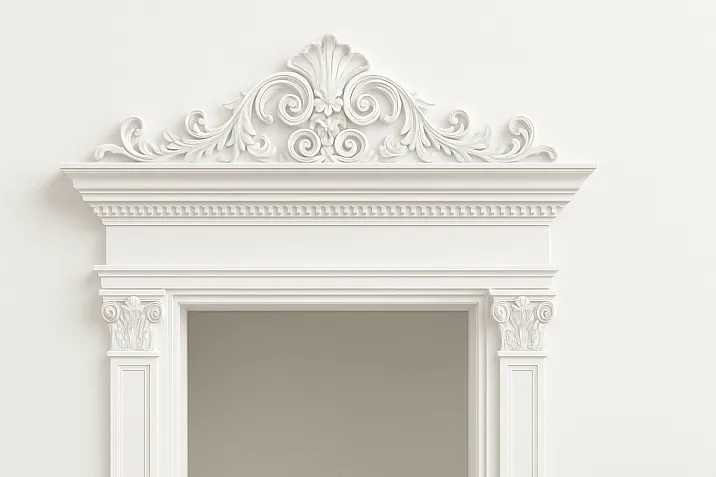
When it comes to creating a truly elegant facade, every detail matters. And if you plan SANDRIK buy for your home or commercial property, you stand before a choice that will determine not only the aesthetic appeal of the building, but its status for decades to come. Sandrik is not just a decorative element, it is an architectural statement, a symbol of taste and understanding of classical proportions.





What is modern sandrik and why choose it
In modern understanding, architectural sandrik is a horizontal projecting element crowning door and window openings, combining protective function with decorative role. This element creates visual protection for the entrance area, simultaneously giving the facade completeness and respectability.
Modern homeowners and architects choose sandriks not by chance. First, these elements dramatically transform the appearance of even the simplest building, adding architectural expressiveness. Second, correctly installed Sandrok cornice performs an important practical function — protects the entrance area from atmospheric precipitation, extending the service life of doors and finishing materials.
The psychological aspect also plays a significant role. An entrance area with a beautifully designed sandrik is subconsciously perceived as more prestigious and reliable. This creates a positive first impression of the house and its owners, which is especially important for commercial properties.
Real estate with quality architectural decoration has significantly higher investment attractiveness. Buildings with thoughtfully designed exteriors and classical architectural elements enjoy steady demand in the real estate market, making purchasing sandriks not just an expense, but an investment in the future value of the property.




Materials for manufacturing: from traditional to innovative solutions
Choosing material for a sandrik is a compromise between aesthetic preferences, project budget, and regional climatic conditions. Each material has unique characteristics determining the appearance, durability, and cost of the finished product.
Our factory also produces:


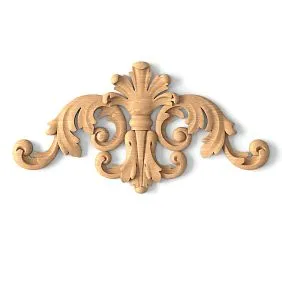


Natural wood: classic and warmth
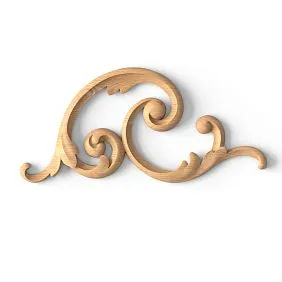
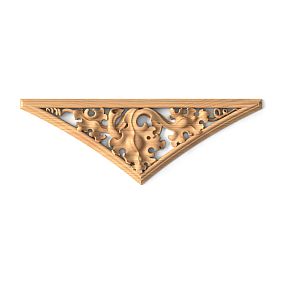
Wooden sandriks remain a popular choice due to their natural beauty and ability to create intricate carved compositions. Modern wood processing technologies allow creating items resistant to moisture, temperature fluctuations, and biological factors. Oak, larch, pine — each wood species has its own decorative and operational features.
The advantages of wooden sandriks lie in their eco-friendliness, repairability and restorability, as well as the unique texture of each item. Cornice elements Wood can be coated with various finishes — from transparent varnishes highlighting the natural beauty of wood to any color covering paints.
Get Consultation
Polyurethane: technologies of the future
Polyurethane sandriks revolutionized the architectural decor market, offering consumers items combining lightness, strength, moisture resistance, and affordable cost. Modern polyurethane compositions do not fall short in appearance compared to traditional materials, while significantly surpassing them in performance characteristics.
The production technology of polyurethane decor allows creating items of any complexity — from simple geometric forms to intricate carved compositions with minute details. The polyurethane surface is easily painted, opening up limitless possibilities for facade color decoration.
MDF for painting: versatility and practicality
Moldings for painting MDF sandriks represent an optimal solution for those who value the possibility of changing the facade’s color scheme without replacing decorative elements. MDF panels have a smooth surface, ideally suited for applying any lacquer coatings.
The advantages of MDF sandriks include dimensional stability, absence of cracks and deformations typical of solid wood, as well as affordable cost. Properly processed and painted MDF items will serve for many years, retaining their original appearance.
Stylistic directions and design solutions
The modern market offers sandriks in various stylistic solutions, from strictly classical to ultra-modern avant-garde forms. The choice of style is determined by the overall architectural concept of the building, the client’s personal preferences, and the surrounding context.
Classic style: eternal elegance
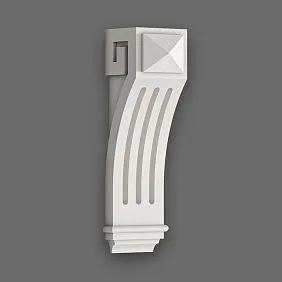
Classical sandriks are characterized by strict proportions, symmetrical compositions, and use of traditional architectural elements. Such items include consoles with volutes, smooth or profiled shelves, decorative rosettes, and other elements of the order system.
Sandrok moldings In classical style, pilasters are often added, creating a complete architectural composition of the entrance group. Color solutions tend toward noble tones — white, ivory, natural wood tones.
Baroque: luxury and theatricality
Baroque sandriks impress with rich decorative ornamentation and plasticity of forms. Sinuous lines, plant motifs, putti, and cartouches create a sense of festivity and grandeur. Such items are suitable for representative buildings, country mansions, hotels, and premium-class restaurants.
Manufacturing baroque sandriks requires high craftsmanship and application of modern 3D modeling technologies to create complex spatial forms. Color solutions may vary from classic gilding to modern metallic coatings.
Modern: natural forms and asymmetry
The modern style introduced a fundamentally new understanding of beauty in architectural decor, based on natural forms and asymmetrical compositions. Sandriks in the modern style can imitate plant motifs, waves, clouds, or other natural phenomena.
Such items look especially effective when combined with appropriate window frames around door openings, creating a unified artistic facade composition. Modern technologies allow realizing the most daring design fantasies in the field of architectural decor.
Technical characteristics and selection criteria
When selecting a sandrik, it is necessary to consider numerous technical factors determining not only the aesthetic qualities of the item, but also its functionality, durability, ease of installation, and subsequent maintenance.
Dimensional parameters and proportions
Correct selection of sandrik dimensions is critically important for creating a harmonious architectural composition. The height of the element is usually 100 to 400 mm, the width is determined by the opening width plus 200–600 mm on each side, and the overhang varies from 80 to 300 mm depending on the opening size and climatic conditions.
The proportionality of the sandrik relative to the overall building dimensions is a key factor for the success of the entire composition. A too small element will be lost on the facade of a large building, while a too large one will look disharmonious on a modest house. Professional designers use classical proportional systems to determine optimal dimensions.
Load-bearing capacity and mounting methods
The structural characteristics of the sandrak must ensure reliable mounting to the building wall throughout its service life. The weight of the item, wind loads, and temperature deformations — all these factors are considered during the design of the mounting system.
Modern mounting systems include anchor bolts, metal brackets, chemical anchors, and other elements ensuring secure connection of the decorative element to the wall. The choice of mounting system depends on the wall material, the weight of the sandrak, and climatic loads.
Climate resistance and durability
Outdoor decorative elements are exposed to all climatic factors — temperature fluctuations, humidity, ultraviolet radiation, wind loads. Quality sandraks must retain their aesthetic and functional properties for many years of operation.
Modern materials and coatings provide high resistance to climatic influences. Polyurethane products are not afraid of moisture and temperature fluctuations, high-quality paint coatings protect against UV radiation and atmospheric pollution.
Purchase process: from selection to receiving the finished product
Purchasing a quality sandrak is a multi-stage process requiring careful attention to every detail. The final result of the entire project depends on the correctness of selection and manufacturing quality.
Defining requirements and preparing a technical specification
The first stage of purchasing a sandrak is clearly defining the requirements for the future product. It is necessary to determine the style, material, dimensions, color scheme, and special technical requirements. Photos of the object, architectural drawings, and examples of desired style will help the manufacturer better understand the client's wishes.
The technical specification must include exact dimensions of openings, building wall characteristics, regional climatic conditions, requirements for manufacturing and installation timelines. The more detailed the technical specification, the more accurately the finished product will meet the client's expectations.
Manufacturer selection and quality assessment
Choosing a reliable manufacturer is a critically important stage of purchasing. Company reputation, portfolio of completed projects, customer reviews, presence of own production and qualified specialists — these are the main selection criteria.
A quality manufacturer provides material samples, detailed product drawings, product warranties. The opportunity to visit the production facility, communicate with craftsmen, and inspect finished products gives a full understanding of product quality and service level.
Manufacturing process and quality control
Modern architectural decoration production combines traditional craftsmanship skills with advanced technologies. Computer modeling, CNC machines, modern materials and coatings ensure high quality and precision in manufacturing.
The manufacturing process includes several stages: creating working drawings, preparing materials, mechanical processing, manual finishing of details, assembly, coating application, packaging. Quality control is performed at each stage, ensuring the finished product meets the technical specification.
Installation and integration into architectural composition
Correct installation of the sandrak is no less important than the quality of the product itself. Errors during installation may nullify all the work done in designing and manufacturing the decorative element.
Preparatory work and marking
Installation begins with careful preparation of the base. The wall must be cleaned of contaminants, leveled if necessary, and treated with primer compounds. Accurate marking of mounting locations is essential for correct installation geometry.
Special attention is paid to the horizontal alignment of the sandrak installation and its centering relative to the opening. Even minor deviations from the design position may negatively affect the overall appearance of the composition.
Mounting systems and sealing
Modern mounting systems ensure secure fixation of the sandrak with minimal visible mounting elements. Hidden fasteners, adjustable brackets, temperature deformation compensators — all this allows creating a high-quality and long-lasting connection.
Sealing joints is a critically important installation stage. All joints must be carefully sealed with weather-resistant sealant, preventing moisture penetration and ensuring thermal protection of the enclosing structures.
Finishing work and final refinement
After installing the main elements, finishing work — joint spackling, priming, painting — is performed. Quality painting not only protects the item from external influences but is also an important element of the architectural composition.
Final stage — detailed quality check of installation, elimination of minor defects, final cleaning of the item. Properly installed Buy a Door Sondrik which is planned in advance, should appear as an integral part of the building's architecture.
Cost aspects and economic efficiency
Investments in quality architectural decoration are a long-term investment, paying off through increased property value, reduced facade maintenance costs, and aesthetic enjoyment from admiring beautiful architecture.
Pricing factors
The cost of a sandrik consists of multiple components: complexity of form, material of manufacture, dimensions of the item, production run, production timelines, transportation, and installation. Custom-made items based on original designs are more expensive than standard models, but they allow creating a unique architectural image.
Savings on material quality or workmanship may result in significant additional costs in the future — for repairs, replacements, or restoration of damaged facade elements. High-quality items from reputable manufacturers serve for decades without additional maintenance.
Economic efficiency calculation
When assessing the economic efficiency of purchasing a sandrik, one must consider not only initial costs but also long-term benefits. Buildings with high-quality architectural decoration have higher market value, sell or lease faster, and create a positive image for the owner.
Functional advantages of a sandrik — protection of the entrance area from atmospheric precipitation — also have an economic expression in the form of reduced costs for maintenance and repair of doors, glazing, and finishing materials.
Trends in development and innovative solutions
The modern market of architectural decoration is dynamically developing, offering new technological and design solutions. Digital design technologies, new materials, and automated production open up boundless opportunities for creativity.
Digital design and customization
Modern CAD systems and 3D modeling technologies allow creating unique sandrik designs precisely adapted to a specific object and client's preferences. Virtual reality enables evaluating the future appearance of the item even during the design stage.
Parametric design allows creating families of items with different sizes and proportions based on a single algorithm, significantly accelerating the development process and reducing the cost of individual solutions.
Eco-friendly materials and sustainable development
Growing attention to ecological issues stimulates the development of new materials and production technologies for architectural decoration. Recycled materials, biodegradable polymers, wood from sustainably managed forests — all of this has become a reality in modern production.
Energy-efficient production technologies, waste minimization, and localized production to reduce transportation costs — important directions for industry development.
Integration of smart technologies
Smart technologies are gradually entering the field of architectural decoration. Sandriks with built-in lighting, heating systems to prevent ice formation, and climate condition sensors — all of this is no longer science fiction but accessible technological solutions.
Integration with "smart home" systems allows controlling the lighting of decorative elements, creating various lighting scenarios for different life situations.
Regional characteristics and adaptation to local conditions
The selection and design of a sandrik must take into account local climatic conditions, construction traditions, availability of materials, and skilled labor. Regional specifics can significantly influence the construction, materials, and manufacturing technologies.
Climate factors
Northern regions require special attention to thermal protection properties of the structure, elimination of cold bridges, and resistance to freeze-thaw cycles. Southern regions impose higher requirements for material resistance to ultraviolet radiation and high temperatures.
Marine climate dictates the need to use corrosion-resistant materials and coatings capable of resisting salt fog. Continental climate with large daily and seasonal temperature fluctuations requires materials with high thermal stability.
Seismic and wind loads
In seismically active areas, the sandrik structure must have sufficient plasticity to accommodate deformations of the main building without destruction. Special damping elements are used, eliminating rigid connections between the decorative element and the wall.
Regions with high wind loads require reinforced mounting systems, aerodynamically optimized shapes, and elimination of elements that create additional wind loads on the building.
Maintenance and longevity
Proper maintenance of a sandrik is the guarantee of its long service life and preservation of its original appearance. Regular inspections, timely repair of minor damages, and renewal of protective coatings significantly extend the service life of architectural decoration.
Preventive maintenance
Regular inspection of the sandrik's condition allows identifying initial stages of damage and taking timely measures to eliminate them. Special attention should be paid to the condition of joints, fasteners, and paint coatings.
Climate-related effects may lead to the formation of microcracks, coating delamination, and weakening of fasteners. Timely detection and elimination of these issues prevent their development into serious damage.
Repair and restoration
In case of damage, it is important to use compatible materials and technologies that do not compromise the integrity of the item. Repair compounds must match the main sandrik material in physical and chemical properties.
Serious damage may require partial or complete replacement of elements. In such cases, it is important to accurately reproduce the shape and dimensions of the replaced parts to preserve the architectural integrity of the composition.
When you make a decision SANDRIK buyYou are investing not just in a decorative element, but in the long-term architectural value of your object. The correct choice of material, design, manufacturer, and installation contractor determines the success of the entire project and satisfaction with the result for many years.
Modern technologies and materials open up boundless opportunities for creating unique architectural solutions. From classic forms to avant-garde concepts — every project can achieve its unique architectural expression through thoughtful use of decorative elements.
STAVROS Company offers a full range of services for designing, manufacturing, and installing premium architectural decoration. Our long-standing experience, modern production equipment, and team of highly qualified specialists guarantee exceptional quality of each item. We understand that architectural decoration is an investment in beauty, status, and longevity, so we offer only the best solutions for the most discerning clients.