












































































Article Contents:
- Roots of tradition: what forms the Russian soul of interior design
- Three pillars of Russian aesthetics
- Materials as carriers of meaning
- Wood — the living soul of the home
- Polyurethane as a modern alternative
- Metal and stone as accents
- Color palette of the Russian home
- Natural palette as the basis
- Bright accents as symbols of life
- Layout of the Russian home: space for living
- Center as the basis of composition
- Zoning through decor
- Living room: the heart of the Russian home
- Furniture group
- Decorative finishing
- Kitchen: the place of birth of family traditions
- Layout specifics
- Decorative solutions
- Bedroom: kingdom of rest
- Bed as the central element
- Textile furnishings
- Children's room: upbringing in traditions
- Safety Above All
- Educational function
- Modern technologies in Russian interior
- Smart home in the Russian style
- Multimedia technologies
- Lighting: play of light and shadow
- Natural light
- Artificial Lighting
- Plants in the Russian home
- Traditional plants
- Culinary herbs
- Seasonal changes
- Winter Furnishings
- Summer decor
- Practical tips for creating a Russian interior
- Start with the basics
- Invest in Quality
- Don't be afraid to mix
- Psychology of Russian interior
- Sense of stability
- Connection with Nature
- Family values
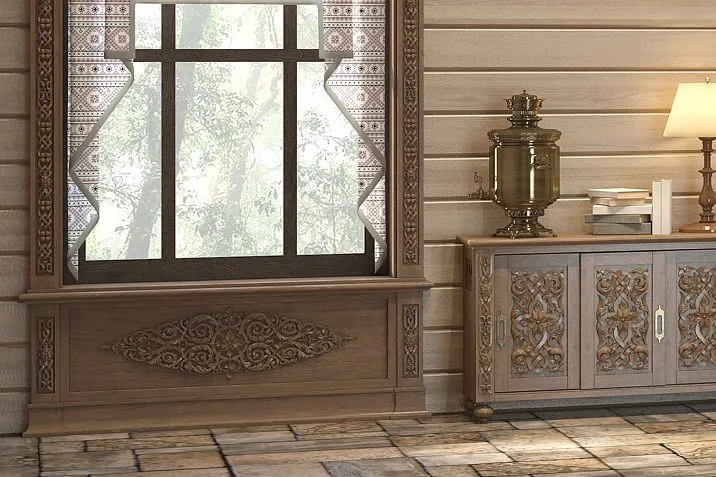
What makes a home truly Russian? Which elements can transform an ordinary dwelling into a space imbued with the spirit of great culture? Russian style in home interior — this is not just a passing trend, but a return to roots, to that deep understanding of beauty and comfort passed down from generation to generation.
In today's world, where globalization erases cultural boundaries, many strive to preserve their national identity through the design of their home spaces. Russian style offers a unique opportunity to create an interior that is both recognizable and contemporary, traditional and functional.


Roots of tradition: what shapes the Russian soul of interior design
The Russian home has always been more than just a dwelling. It was a sacred space, where every element carried deep meaning. The stove — the heart of the home, the red corner — the spiritual center, the table — the place of family unity. These principles remain relevant today, as we create interiors in the Russian style.
The foundation of Russian interior design is harmony with nature. Our ancestors lived in close connection with the surrounding world, and this was reflected in the choice of materials, colors, and forms. Wood, stone, linen, clay — all these materials are not only practical but also energetically rich, creating a special atmosphere of warmth and security.
Modern decor in Russian style preserves this philosophy, adapting it to the needs of the 21st century. This is not blind copying of historical interiors, but a creative reinterpretation of traditions, creating a space that reflects the Russian soul in a modern context.




Three pillars of Russian aesthetics
The first pillar — functional beauty. In a Russian home, there was never room for useless decorations. Every item had to serve practical purposes, but also please the eye. Decorative solid wood overlays — a bright example of this approach: they not only decorate furniture but also protect it from damage, extending its service life.
The second pillar — intergenerational continuity. A Russian interior is created not for one season, but for centuries. Furniture is passed from parents to children, each generation adds its own touch, but the foundation remains unchanged. This creates a unique atmosphere of stability and continuity of cultural tradition.
The third pillar — hospitality. The Russian home was always open to guests. This is reflected in the layout (spacious public areas), in furniture (large tables, spacious sofas), in decor (abundance of details creating an atmosphere of celebration and warmth).
Our factory also produces:


Materials as carriers of meaning
In Russian interior design, materials are not just structural elements, but carriers of cultural meanings and historical memory. Each material has its own symbolism and energy.
Get Consultation
Wood — the living soul of the home
Wood in the Russian home is not just a material, but a living substance that breathes, lives its own life, and influences the atmosphere of the space. Different types of wood carry different energies and are intended for different purposes.
Oak — symbol of strength, masculinity, longevity. Oak furniture creates a sense of reliability and solidity. Pine — a tree of protection and purification, it fills the home with healthy energy. Birch — symbol of purity and renewal, birch elements bring light and joy into the home.
Modern technologies allow us to fully reveal the beauty of natural wood. Solid wood products are today created using innovative processing methods that preserve the natural structure and texture, but at the same time make the material more durable and resistant to external influences.
Polyurethane as a modern alternative
Innovative materials also find their place in Russian interior design. Polyurethane decorative appliques — a modern interpretation of traditional wood carving. They accurately reproduce classic ornaments but have improved performance characteristics: they are not afraid of moisture, do not deform, and are easy to install.
This is especially important for rooms with high humidity — kitchens, bathrooms, where traditional wood may suffer from temperature and humidity fluctuations. Polyurethane elements allow you to create an authentic Russian interior even in the most challenging conditions.
Metal and stone as accents
Metal elements in Russian interior design traditionally serve as accents and functional details. Wrought iron items, copper tableware, brass fittings add elegance and historical depth to the interior.
Stone was primarily used for stoves and foundations, but in modern interiors it can play a broader role — countertops, window sills, decorative panels create a sense of connection to the earth, stability, and durability.
Color palette of the Russian home
Colors in Russian interiors are not merely aesthetic choices, but a language of symbols, each shade carrying a specific meaning and emotional weight.
Natural Palette as the Foundation
The base of the color palette consists of tones drawn from Russian nature. Warm wood tones — from light birch to dark oak — form the foundation upon which the entire color composition is built. These colors soothe, create a sense of protection and coziness.
White color in Russian interiors is the color of purity and light. Whitewashed walls, white stoves, linen fabrics create a sense of spaciousness and freshness. In modern interpretations, white is used more actively, making the space visually larger and brighter.
Gray tones of stone and metal add nobility and calmness to the interior. They serve as an ideal backdrop for bright accents and create a sense of stability.
Bright accents as symbols of life
Red color in Russian tradition is the color of life, health, joy. Red details — cushions, tablecloths, tableware — enliven the interior, making it more emotional and expressive. But red should be used sparingly, like a precious gem in a setting.
Blue and turquoise — colors of sky and water, symbols of purity and spirituality. They create a sense of coolness and freshness, especially relevant in hot seasons. Blue tiles, turquoise tableware, cornflower fabrics — all these are classic elements of Russian interiors.
Green color — symbol of nature, growth, renewal. It can be present in the interior both as live plants and as decorative elements — fabrics, ceramics, paintings.
Layout of the Russian home: space for living
Layout in Russian style reflects a unique approach to organizing living space. There is no clear division between formal and private zones — the entire house lives as one unified life.
Center as the basis of composition
In a traditional Russian home, the hearth was the center, around which all space was organized. In modern interiors, this role can be played by a fireplace, a large dining table, or a lounge area with a large sofa. The key is to create a focal point that unites all interior elements into a single composition.
Furniture and interior items In Russian style, furniture is arranged not along the perimeter of the room, as in European interiors, but in groups around the center. This creates a more intimate, cozy atmosphere, promoting communication and family unity.
Zoning through decor
Modern Russian interiors often use zoning not through architectural elements, but through decor and furniture. Decorative elements of various forms can visually separate one zone from another without disrupting the overall space.
Textiles also play an important role in zoning. Rugs define zone boundaries, curtains create privacy, blankets and cushions form cozy corners for relaxation.
Living room: the heart of the Russian home
The living room in a Russian home is not just a room for receiving guests, but the center of family life, the place where the whole family gathers, where important conversations take place, where family traditions are formed.
Furniture group
The central element of the living room remains a large sofa or group of chairs arranged so that everyone seated can see and hear each other. This reflects the Russian tradition of collective communication and family councils.
The coffee table should be large enough to accommodate a tea set, refreshments, books, and crafts. In Russian tradition, the table is not just furniture, but a symbol of abundance and hospitality.
Storage system in a Russian living room — it is not only a functional element, but also a way to display family values. Open shelves allow you to show books, collections, family heirlooms, creating a personalized atmosphere.
Decorative finishing
Capitals and architectural elements can transform an ordinary living room into a festive space reminiscent of the grandeur of Russian palaces and estates. These elements not only decorate, but also create a sense of height and grandeur.
Lighting in a Russian living room should be multi-level. The central chandelier provides general illumination, while table lamps and floor lamps create local lighting zones; candles add romance and coziness. It is important that the light be warm, creating the atmosphere of a home hearth.
Kitchen: the place of birth of family traditions
Russian cuisine is not just a place for preparing food, but the center of family life, where traditions are born and passed on, where the most important conversations take place, where the atmosphere of home warmth is formed.
Layout features
Traditional Russian kitchens were always spacious, with a large table that could accommodate the entire large family. In modern interpretations, this can be a kitchen-dining area or a kitchen with an island that serves both as a work surface and a place for quick snacks.
The storage system should be maximally functional. Buffets, cabinets, and open shelves not only solve practical problems but also provide opportunities to display beautiful tableware, provisions, and cookbooks.
Decorative solutions
Special attention is paid to the design of the backsplash. It can be tiled with ceramic tiles featuring traditional patterns, decorated with ornamental tiles or modern materials imitating old-style painting. This is the element that sets the tone for the entire kitchen interior.
The range hood can be styled to resemble a Russian stove or adorned with decorative elements reminiscent of traditional cooking methods. Even modern appliances can fit organically into a Russian interior if properly styled.
Bedroom: Kingdom of Peace
A Russian-style bedroom is a refuge from the outside world, a place where one can restore strength and find inner balance. Here, natural materials, calm colors, and a sense of security are especially important.
Bed as the central element
The bed in a Russian bedroom is not just a place for sleeping, but a symbol of the family hearth, continuation of the lineage, and intimacy. A massive wooden bed with a high headboard creates a sense of security and stability.
The headboard can be adorned with carvings, inlays, or decorative appliqués. Modern technologies allow creating complex compositions that become true works of art.
Textile decoration
Textiles in the bedroom play a special role. Bedding made of natural linen or cotton creates comfortable conditions for sleep and rest. Blankets, throws, and pillows with traditional patterns add coziness and create an atmosphere of home warmth.
In a Russian bedroom, curtains are often made of heavy fabrics that provide quality blackout. They can be decorated with embroidery, lace, or executed in patchwork technique.
Children's room: upbringing in traditions
A Russian-style children's room is an opportunity to introduce a child to national culture from an early age, creating an environment where cultural values and aesthetic preferences are formed.
Safety above all
In a children's room, ecological and safety of materials are especially important. Natural wood treated with safe compositions creates a healthy environment for the child's development. All decorative elements must be securely fastened, have no sharp edges or small parts.
Educational function
Decor in a child's room can serve an educational function. Wall paintings with scenes from Russian fairy tales, maps of Russia, and images of folk crafts broaden the child's horizons and introduce them to cultural heritage.
Toys should also match the style. Wooden Matryoshka dolls, Bogorodskaya toys, and Dymkovsky whistles not only entertain but also introduce children to folk culture.
Modern technologies in Russian interior design
Modern Russian interiors do not reject technology, but integrate it organically without disrupting the overall stylistic concept.
Smart home, Russian style
Automation systems can be hidden behind decorative panels, with controls styled to resemble traditional elements. Even the most high-tech solutions should not disrupt the atmosphere of a Russian home.
Multimedia technologies
Televisions can be hidden behind sliding panels with carvings, and audio systems can be built into the ceiling or walls. It is important that technology serve family comfort without dominating the interior.
Lighting: Play of Light and Shadow
Lighting in a Russian interior has special significance. Our ancestors valued every ray of light during long winter evenings, so modern Russian interiors are built on the principles of multi-level, warm lighting.
Natural light
Windows in a Russian house have always been large, allowing maximum daylight. Modern technologies allow for panoramic windows that do not disrupt the stylistic integrity, thanks to proper framing, shutters, and decorative grilles.
Artificial lighting
The central chandelier remains an important element, but is supplemented by multiple sources of local lighting. Wall sconces, floor lamps, and table lamps create cozy zones for reading, crafting, and conversation.
Candles occupy a special place in a Russian interior. They not only provide light but also create a unique atmosphere reminiscent of times when candles were the primary source of light during dark hours.
Plants in a Russian home
Live plants in the Russian interior are not only decoration, but also a connection with nature, which is so important to the Russian mentality.
Traditional plants
Geraniums on the windowsill — a classic of the Russian home. They are not only beautiful but also beneficial — they purify the air and repel insects. African violets, traditionally grown by Russian women, create an atmosphere of coziness and care.
Culinary herbs
On the kitchen, you can grow parsley, dill, mint, and lemon balm — they not only decorate the interior but are always within reach for cooking. This reflects the Russian tradition of rational space use.
Seasonal Changes
One of the distinctive features of Russian domestic life is changing the interior depending on the season. This tradition remains relevant today.
Winter decor
In winter, the house becomes more closed and cozy. Warm blankets, fur pillows, and an increased number of candles are added. Modern Furniture can be enhanced with traditional elements — paths, throws, creating a winter atmosphere.
Summer decoration
In summer, the house 'breathes' — windows are opened, light fabrics and live flowers appear. Heavy winter elements are removed, making room for freshness and light.
Practical tips for creating a Russian interior
Creating an authentic Russian interior is a creative process requiring understanding of traditions and knowledge of modern possibilities.
Start with the basics
Do not try to do everything at once. Start with basic elements — choose the right color palette, add a few key pieces of furniture, use natural materials. Gradually add details to complete the interior.
Invest in quality
Russian style is a style for centuries. It is better to purchase a few quality items than many cheap imitations. Quality materials and items not only last longer, but also create a genuine atmosphere.
Do not be afraid to mix
A modern Russian interior allows for blending with other styles. The key is to preserve core principles: natural materials, functionality, connection to traditions.
Psychology of the Russian interior
An interior in Russian style has a special effect on a person's psychological state.
Sense of stability
Solid furniture, natural materials, traditional forms create a sense of reliability and stability. In a rapidly changing world, this is especially valuable.
Connection with nature
Using natural materials and nature-inspired motifs in decor helps urban residents maintain a connection with nature, which positively affects mental health.
Family values
A Russian interior is oriented toward family life, communication, and shared time. This contributes to strengthening family bonds and creating an atmosphere of mutual understanding.
Creating an interior in Russian style is not just decorating our home — we are creating a space for a full, meaningful life imbued with cultural values and family principles. This is a home that remembers the past, lives in the present, and is ready to meet the future, preserving its unique identity.
In conclusion, it is important to note that creating a genuine interior in Russian style is a task for true professionals in the field. The company STAVROS has specialized in producing high-quality decorative elements and furniture for over two decades, embodying the best traditions of Russian decorative and applied arts in their products. Every STAVROS item is not just an interior piece, but a work of art capable of becoming the foundation for creating a unique space. STAVROS masters carefully preserve traditional manufacturing techniques while using the most modern technologies and materials. Choosing STAVROS products means choosing quality, reliability, and authentic Russian style beauty for your home.


