Article Contents:
- Evolution of Russian ornament from izba to modern architecture
- Symbolism of lines, forms, and motifs
- Application of ornaments in wooden facades
- How STAVROS preserves artistic traditions
- Modern interpretations of classical motifs
- Color and shadow in carved patterns
- Questions and Answers
- Conclusion - ornament as a living history of the house

Russian wooden ornamentIt is not just facade decoration, but a coded message from ancestors, a visual chronicle of folk culture, a protective shield against evil forces and simultaneously a manifesto of beauty. Every carving line, every plant motif swirl, every geometric sign carries deep meaning, rooted in pre-Christian beliefs and intertwined with Christian symbolism. In the era of globalization and homogenization, Russian ornament becomes a way to preserve cultural identity, declare the continuity of traditions, and create a link between generations through the language of wooden patterns.
The history of Russian ornament spans over a thousand years. From the simplest geometric incisions on wooden idols of pagan Rus to the lavish baroque of merchant mansions in the 19th century, ornament evolved, absorbing influences of Byzantine culture, Scandinavian woven styles, and Eastern refinement. Yet, despite all borrowings, it retained a unique Russian character — the combination of monumentality with jewel-like detail, restraint with fantasy, geometric strictness with natural organicism. Modernwooden ornamentcontinues this tradition, adapting ancient motifs to contemporary architectural concepts.
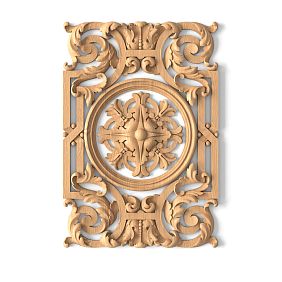
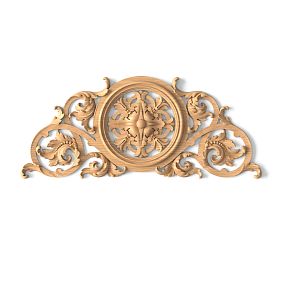


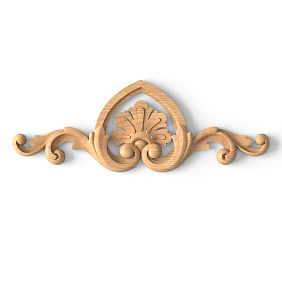

Evolution of Russian ornament from izba to modern architecture
The earliest examples of Russian wooden ornament date back to the 9th–10th centuries. Archaeological finds in Novgorod, Pskov, and Staraya Ladoga demonstrate simple geometric carving — triangles, rhombuses, circles, zigzags. These elementary forms are not random — they reflect Slavic cosmogonic concepts of the world’s structure. An upward-pointing triangle symbolized the masculine principle, fire, and aspiration toward heaven. A downward-pointing triangle represented the feminine principle, water, and earth. A rhombus denoted a sown field, fertility. A circle symbolized the sun, eternity, and the cyclical nature of time.
Christianization of Rus in the 10th century enriched ornament with new motifs. Byzantine influence brought plant patterns — grapevines, palmettes, acanthus. The grapevine became a symbol of Christ and communion. Plant motifs seamlessly merged with pagan ones — solar signs coexisted with Christian crosses, ancient talismans intertwined with Orthodox symbolism. This syncretism became a defining feature of Russian ornament.
The Mongol yoke of the 13th–15th centuries paradoxically contributed to the development of wooden architecture. Stone construction practically ceased, while carving flourished. Eastern motifs — woven patterns, arabesques, stylized plant designs — entered Russian ornament. Woven ornament — interlacing ribbons creating complex geometric patterns — became popular in church carving.
The 15th–17th centuries — the golden age of Russian wooden architecture. Regional schools of carving with recognizable styles emerged. The Volga region developed lavish plant carving with abundant flowers, leaves, and fruits. Russian North created monumental geometric carving with solar signs. Siberia developed zoomorphic motifs with bears, reindeer, and birds. Each region speaks in its own dialect of the ornamental language.
The 18th century brought European influence. Baroque and Rococo transformed Russian ornament — lavish cartouches, asymmetrical scrolls, complex multi-layered compositions appeared. Yet Russian masters adapted European forms while preserving national character. Woodcarving from the Vologda region of this period demonstrates an amazing synthesis of Baroque opulence and Russian solidity.
The 19th century — the peak of domestic carving. The development of sawmilling industry and new tools made carving more accessible. Every affluent home was adorned with carved window frames, cornices, friezes, and decorative moldings. Urban development in Kostroma, Vologda, Tomsk, and Irkutsk became open-air museums of wooden ornament. The classic appearance of the Russian wooden house with rich decoration emerged.
The 20th century brought dramatic changes. The 1917 Revolution declared carved decoration a relic of bourgeois past. Typical Soviet-era construction almost destroyed the tradition of domestic carving. Only in remote regions — Russian North, Siberia — masters continued working. The 1960s–1970s brought renewed interest in folk crafts — woodworking schools opened, and restoration of wooden architecture monuments began.
The 21st century — the rebirth of Russian ornament in a new quality. Modern technologies — CNC machines, laser cutting — allow reproducing the most complex ornaments with perfect precision. At the same time, the handcrafted work of masters preserving traditional techniques is valued. Designers create minimalist interpretations of classical motifs, adapting them to modern architecture.Wooden ornament in Russian stylebecomes a way to declare cultural identity in a globalized world.
Evolution does not mean breaking with tradition. A modern carver creating ornament for a facade uses the same basic motifs as his ancestor a thousand years ago — solar signs, plant patterns, geometric shapes. The technique of execution, scale, and level of detail change, but the symbolic language remains understandable. This is continuity — the ability to preserve essence while adapting form.
Regional diversity is preserved today. A client from the Vologda region will prefer lavish plant carving characteristic of the region. A Siberian will choose geometric carving with zoomorphic elements. This is not conservatism, but respect for local tradition, creating a cultural landscape.
Synthesis of traditions and innovations — the path of Russian ornament’s development in the 21st century. Ancient symbols are reproduced using modern technologies. Classical forms are painted in contemporary colors. Sacred motifs become elements of secular decoration. This flexibility ensures the tradition’s viability.




Symbolism of lines, forms, and motifs
Russian ornament is not a random collection of beautiful patterns, but a complex symbolic system where each element has meaning. Solar signs — circles with rays, rosettes, wheels — are the oldest and most important symbols. The sun was revered as the source of life, warmth, and light. A solar sign on a window frame protected the house from darkness — not only physical, but also spiritual. A central rosette on the window frame’s top must contain a solar element.
Thunder signs — six-pointed rosettes, wheels with six spokes — protected against lightning and fires. Slavs believed that the thunder god Perun struck with lightning to destroy impure forces. His symbol on the house diverted heavenly fire. A six-pointed rosette often adorned the highest point of the facade — the roof ridge, gable — where the risk of lightning strike was greatest.
Sown field — a rhombus with dots inside — symbolized fertility, abundance, continuation of the family line. This oldest agricultural sign decorated houses associated with grain storage — granaries, barns. On residential houses, rhombuses were placed at the bottom, in the zone symbolically linked to the earth. Multiple rhombuses forming a belt created a powerful fertility talisman.
Tree of Life - a vertical composition with a central trunk and symmetrical branches - a universal symbol of the connection between earth and sky, ancestors and descendants, past and future. The tree was placed in central compositions - above the entrance, on the gable. Roots descended downward into the world of ancestors, while the crown ascended toward the sky, the realm of gods. Humans live between them, connecting the worlds.
Bereginya - a stylized female figure with raised arms - protector of the home, family, and hearth. This image originates from the cult of Rodanitsa - a pagan goddess of fertility and motherhood. After Christianization, the Bereginya merged with the image of the Virgin Mary, retaining its protective function. The figure of Bereginya adorned the central part of the window lintel, especially on windows in the female half of the house.
Horse - a solar symbol associated with the movement of the sun across the sky. Paired horses on the lintel or horse-shaped roof ridge pull the solar chariot. The horse also symbolized strength, nobility, and prosperity - owning a horse was a sign of wealth. Stylized horse figures often decorated the ends of the fronton boards.
Birds - symbols of the soul, connection with the sky, messengers of the gods. Paired birds, symmetrically arranged, signified marital fidelity. The Siren bird with a female face - a heavenly bird singing songs of joy. The Alkonost bird - a messenger of sorrow. Their paired depiction symbolized the completeness of life with both joys and sorrows. Birds adorned the upper parts of lintels, gables, and eaves.
Water symbols - wavy lines, meanders, serpents - symbolized water as a source of life and purification. Horizontal waves denoted rivers and lakes. Vertical waves - rain. Serpent - underground waters, springs. Water motifs were placed in the lower parts of decoration, symbolically linked to the earth and the underworld.
Plant motifs appeared later than geometric ones but became dominant. Grapevine - a Christian symbol representing Christ and communion. Oak leaves with acorns - strength, longevity, courage. Birch branches - purity, light, femininity. Roses - beauty, love. Hop - festivity, celebration. Each plant carried its own meaning.
Geometric ornaments - triangles, rhombuses, squares, circles - the oldest. They preceded plant and zoomorphic motifs. Geometry is linked to cosmogonic concepts - the square symbolized the earth, the circle - the sky, the triangle - fire or mountain. Combinations of geometric shapes created complex cosmological schemes.
Numerical symbolism permeated the ornament. Three - the sacred number of the Trinity, the triune world (sky-earth-underworld). Four - cardinal directions, seasons. Six - days of creation, thunder symbol. Seven - days of the week, sacred number of completeness. Eight - beginning of a new cycle, eternity. Twelve - months, apostles. Carvers consciously used these numbers in compositions.
Color symbolism complemented the ornament. Red - color of life, sun, fire, beauty. White - purity, light, truth. Black - earth, peace, mystery. Green - nature, youth, rebirth. Blue - sky, water, loyalty. Gold - divine light, wealth, glory. The traditional palette of Russian ornamentation was built upon these colors.
Our factory also produces:


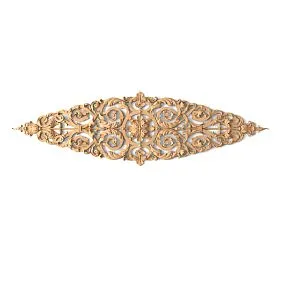

Application of ornaments on wooden facades
Window lintels - the main field for ornamentation. The upper part of the lintel - the ocher - received the richest decoration. Here, solar symbols were placed in the center, plant motifs on the sides, protective symbols. The shape of the ocher varied - kokoshnik, teremok, triangular gable, semicircular arch. Each shape created its own character, but necessarily included protective symbolism.
Side posts of lintels were decorated with vertical ornamentation - climbing plants, woven patterns, chains of rhombuses. Vertical lines emphasized the height of the window, creating movement upward - from earth to sky. Plant vines symbolized vital force, woven patterns - connection between worlds, rhombuses - fertility. Symmetry of the side posts relative to the central axis was mandatory.
Sill board completed the lintel composition at the bottom. Here, earthly symbols were placed - sown fields, water signs, animal images. The wavy edge of the sill board imitated water - protection against underground evil forces. Carving on the sill part was often simpler than on the ocher - symbolic hierarchy of top and bottom.
Fronton boards - boards framing the gable along the roof slopes - were decorated with carving, emphasizing roof lines. Ends of fronton boards were shaped like horse heads - hence the names "oxlupen" or "konk". Paired horses on fronton boards pulled the solar chariot across the sky. Fronton carving was often pierced - the board was cut through, creating a lace-like effect.
Eaves - decorative boards under the roof overhang - created a lace-like edge to the roof. Pierced carving of eaves was the most virtuosic - delicate elements, complex interweavings, lace-like quality. Plant motifs - climbing vines, chains of leaves, garlands of flowers. Eaves protected the junction between wall and roof from precipitation, simultaneously decorating the facade.
Gable - triangular or trapezoidal field above the facade - the central location for large compositions. Here, the Tree of Life, central rosette with solar symbol, complex plant panels were placed. The gable was visible from afar, its decoration created the house's calling card. The richness of gable carving spoke to the owner's status.
Eaves under the roof framed the transition from wall to roof. Carved eaves had a complex profile with scrolls and protrusions. Eave ornamentation was often geometric - meander, woven pattern, chains of rhombuses. Repeating rhythm of ornament emphasized the horizontal, creating a wall's completion. Eaves also had a protective function - diverting water from the wall.
Corner boards - vertical elements at the corners of the building - emphasized the edges of volume. Carving on corner boards was vertical - climbing plants, vertical woven patterns, chains of rosettes. Corner - a vulnerable spot in terms of protection, so corner boards necessarily had protective symbolism - solar symbols, thunder rosettes.
Veranda - the formal entrance to the house - received especially rich decoration. The veranda's canopy was supported by carved columns with capitals. Railing was adorned with carved balusters. The canopy's gable had a central composition with welcoming symbolism - sun, Tree of Life, birds. Veranda steps were sometimes decorated with carving on the risers.
Window shutters were also decorated with carving. Applied carved elements on shutter panels repeated motifs from lintels, creating stylistic unity. Protective symbolism on shutters is especially important - a window closed at night must be protected from nocturnal evil spirits. Solar symbols on shutters protected even in darkness.
Downspouts - boards under windows, diverting water - also received carved decoration. Simple carving - teeth, waves - not only adorned but also improved water runoff. Drops falling from carved teeth did not trickle onto the wall. Function and beauty are unified.
Balconies and galleries of wooden houses were richly decorated. Balcony railings - carved balusters or pierced boards with ornamentation. Console supports for balconies - carved brackets with plant or zoomorphic motifs. Balcony canopy was adorned with eaves. Balcony - an intermediate space between house and street, requiring special protection.
Get Consultation
How STAVROS preserves artistic traditions
STAVROS considers Russian ornament not as a museum exhibit, but as a living tradition capable of development and adaptation. Preserving tradition begins with studying historical samples. STAVROS designers analyze museum collections, architectural monuments, old ornamentation albums. Vologda, Kostroma, Arkhangelsk, Siberian schools of carving are studied in detail - characteristic motifs, proportions, execution techniques.
Creating a digital library of ornaments - an important part of the work. Each historical motif is digitized, systematized by region, period, type. This database contains thousands of elements - from the simplest geometric figures to complex multi-figure compositions. A designer can combine elements, creating new compositions based on traditional forms.
Working with master carvers who master traditional techniques ensures the continuity of craftsmanship. STAVROS collaborates with hereditary carvers from Vologda, Kostroma, Arkhangelsk, Tomsk. These masters pass on not only carving techniques, but also understanding of symbolism, sense of proportion, traditional compositional methods. Their experience is invaluable for creating authentic ornaments.
CNC technologies allow reproducing the most complex ornaments with perfect accuracy. A digital model, created based on a historical sample, is translated into a control program. The machine cuts any ornament with precision down to the millimeter. This democratizes carved decoration - what used to take weeks for a handful of masters, the machine does in hours.
Combining CNC cutting and manual finishing creates an optimal balance. The machine performs rough carving, the master manually refines details, adding individuality. This approach combines the advantages of technology - precision and speed - with the soul of handcraft. The result is technological, but not mechanical.
Creating original ornaments based on traditional motifs - a creative task for STAVROS designers. A traditional motif is taken - for example, Vologda plant carving. It is simplified for modern perception - unnecessary details are removed, main elements are enlarged. It is adapted to modern window and facade proportions. The result is an ornament recognizably traditional, yet contemporary.
An individual approach to each project takes regional affiliation into account. A client from the Vologda region receives proposals for Vologda-style ornaments - respect for local tradition. Siberians are offered Siberian motifs. A Moscow resident may choose any regional tradition or eclectic combination. Understanding context is crucial.
Educational work is part of the STAVROS mission. Consultants explain clients the symbolism of ornaments, history of motifs, regional characteristics. The buyer must understand that they are not purchasing just decorative elements, but a part of cultural heritage. This education fosters conscious demand for traditional ornaments.
Cooperation with architects and designers specializing in wooden architecture expands the application of ornaments. STAVROS provides catalogs, consultations, and custom design services. Joint projects create modern buildings with traditional decoration, proving the viability of Russian ornamentation.
Participation in the restoration of wooden architectural monuments is a social responsibility of the company. STAVROS reproduces lost carving elements based on preserved samples or historical photographs. Restoration projects require maximum historical accuracy, which enhances the skills of craftsmen and enriches the knowledge base.
Quality of materials is the foundation of ornament longevity. STAVROS uses durable wood species — larch, oak, cedar. Deep protective treatment is mandatory — impregnation with antiseptics, coating with oils or lacquers with UV filters. Quality ornament serves for decades, physically passing the tradition to future generations, not just visually.
Price accessibility is important for popularizing traditional decoration. CNC technologies have reduced the cost of carved decoration by 2-3 times compared to fully handcrafted work. This makesRussian wooden ornamentaccessible to the middle class, not only to the elite. Democratization of beauty — the path to preserving tradition.
Modern interpretations of classical motifs
Minimalist interpretation simplifies traditional motifs to basic forms. Complex floral ornament is reduced to stylized leaves. Multi-element cornice composition is simplified to a central rosette. Deep carving is replaced by shallow relief. The result is an ornament recognizably Russian, yet restrained, matching modern minimalist aesthetics.
Geometrization of plant motifs creates a modern graphic look. Organic curves of vines become broken lines. Realistic leaves become geometric shapes. Smooth waves are simplified to zigzags. Such interpretation preserves motif recognizability while adding contemporary relevance.
Enlargement of element scale adapts ornament to modern architecture. Traditional ornament consisted of many small details. Modern buildings require large, expressive elements visible from afar. Central cornice rosette is enlarged, side decoration is simplified. A few large elements replace many small ones.
Monochromatic color solution instead of traditional polychromy creates modern graphicness. White ornament on dark facade or dark on light — clean contrast without color variety. This restraint matches modern tastes avoiding clutter.
Asymmetric placement of ornament breaks traditional symmetry, creating modern dynamism. Central rosette is shifted from the window axis. Side elements differ. This compositional freedom is characteristic of modern architecture avoiding academic rigidity.
Combination with modern materials creates unexpected contrasts. Wooden carved ornament on concrete facade, glass wall, metal cladding. Traditional motif in non-traditional context creates artistic tension, attracting attention.
Abstract interpretation deconstructs traditional motif to unrecognizability. Take a solar rosette, isolate individual rays which become independent compositional elements. Or plant vine breaks into individual leaves scattered chaotically across the surface. Connection to tradition exists, but requires knowledge to interpret.
Fragmentary use of ornament — only a hint of tradition. Not a full carved cornice, but only a small applied piece in the corner of a window with a traditional motif. Not an ornate cornice, but a delicate strip of carving above the window. This delicacy suits ultra-modern buildings where full ornament would be excessive.
Large-scale enlargement of ornament to monumental dimensions creates an impression. Motif occupying 20 cm on traditional cornice is enlarged to 2 meters on modern facade. Large rosette on gable becomes dominant feature of the entire building. This technique works well on large public buildings.
Digital processing of ornament allows creating complex variations. Traditional motif is mirrored, multiplied, overlaid on itself with offset, creating moiré effect. Digital technologies open transformation possibilities inaccessible to traditional carvers.
Luminodynamics transforms static ornament into dynamic. Carved ornament with internal lighting creates light pattern on facade. In darkness, ornament glows, transforming perception of the building. Day and night facade appears differently. This dynamism is characteristic of modern architecture.
Ornament interactivity — avant-garde approach. Ornament elements are movable — rotate with wind, change color with temperature, react to touch. Traditional static ornament becomes alive, interacting with environment and viewer. This is experimental direction exploring boundaries of tradition.
Color and shadow in carved patterns
Natural wood color — classic solution, demonstrating material beauty and carving skill. Light species — pine, birch — create delicate ornament, distinguishable through shadow relief. Dark species — oak, walnut — form expressive contrast with light facade. Transparent oil or lacquer highlights wood texture, making relief readable.
Traditional polychromy used bright colors. Red, green, blue, yellow — these colors are characteristic of northern traditions. Brightness compensated for gray northern sky, creating festive atmosphere. Each color carried symbolism — red meant beauty and life, green — nature and youth, blue — sky and loyalty, yellow — sun and wealth.
White ornament creates classic elegance. White carving on white facade is distinguishable only through shadow relief — delicate solution. White ornament on colored facade creates clear contrast. White is universal, suitable for any style from traditional to ultra-modern.
Contrasting coloring highlights carving details. Main cornice background one color, carving recesses another — contrasting or nuanced. This technique reveals ornament complexity, making fine details readable. Traditionally, recesses were gilded or silvered.
Patination creates effect of noble antiquity. Base paint layer partially wears away, revealing wood in areas of natural wear. Artificial wear marks, traces of time make new ornament resemble antique. This is popular technique in styles valuing vintage aesthetics.
Gradient coloring — smooth color transition — creates modern effect. From light top to dark bottom, from saturated center to pale edges. Technically difficult, requires skill, but result is unique. Gradient adds dynamism to static ornament.
Shadow relief — main expressive means of carved ornament. Depth of carving determines depth of shadow. Shallow carving 5-10 mm creates delicate tonal play, visible only under side light. Deep carving 20-40 mm forms dramatic light and shadow contrast under any lighting.
Direction of light critically affects perception of ornament. Side light maximally reveals relief — protrusions light, recesses dark. Frontal light smooths relief — shadows minimal. Backlight — light from behind — turns carved element into silhouette. When designing ornament, direction of sunlight on facade must be considered.
Seasonal changes in light transform perception. In summer, high sun creates short shadows, carving appears flat. In winter, low sun forms long shadows, ornament achieves maximum expressiveness. Spring and autumn light at medium angle is optimal for perceiving relief.
Artificial lighting of ornament creates nighttime facade appearance. Directional lights from below or side reveal carving relief. Hidden backlighting inside pierced ornament creates light pattern. Colored lighting transforms perception, making ornament a dynamic element.
Snow and frost highlight the ornament's relief in winter. Snow lies on horizontal surfaces, creating white lines that reveal the carving's structure. Frost settles in recesses, making the ornament appear white against the dark wood background. These natural effects create a unique winter beauty of carved decoration.
The time of day changes the perception of color and shadow. Morning light is cold, bluish, casting sharp shadows. Midday light is bright, white, bleaching colors. Evening light is warm, golden, deepening shadows and enriching colors. The ornament lives in the rhythm of the day, constantly transforming.
Questions and answers
What is the main difference between Russian ornament and other national traditions?
Russian ornament uniquely combines pagan symbolism with Christian, geometric strictness with organic plant motifs, monumentality with jewel-like detail. Solar signs coexist with crosses, ancient talismans intertwine with Orthodox motifs. Regional diversity — Vologda's lushness, Kostroma's elegance, northern restraint — creates a richness of variations while preserving a common symbolic language.
Can Russian ornament be used on a modern house made of modern materials?
Not only can it be used, but it is recommended to create cultural identity. Wooden carved ornament beautifully complements concrete, brick, plaster, creating a striking contrast. It is important to adapt the scale and complexity of the ornament to modern architecture — simplify motifs, enlarge elements, use modern colors. STAVROS helps find a balance between tradition and relevance.
How to choose a regional ornament style for your home?
It is optimal to choose the style of the region where the house is built — this is respect for local tradition and cultural landscape. Vologda carving with lush plant motifs suits Central Russia. Northern geometric carving — for Arkhangelsk region and Karelia. Siberian with zoomorphic elements — for Siberia. If you are not connected to a region, choose a style that resonates with your taste and home concept.
How expensive is high-quality Russian carved ornament?
CNC technologies have significantly reduced the cost. A set of carved window casings from pine costs from 8,000 to 15,000 rubles. From oak — 20,000 to 35,000 rubles. Complex hand carving is 2-3 times more expensive. Full facade decoration of a house (10-12 windows, cornices, pediment) will cost from 200,000 to 500,000 rubles depending on complexity. This is an investment in uniqueness and cultural value.
Does carved ornament require complex maintenance?
Maintenance is simple: annual dust cleaning, checking the condition of the coating, renewing protective oil/lacquer every 3-5 years. Minor damages are immediately touched up. With proper initial treatment — deep impregnation with antiseptics — and regular care, the ornament lasts 30-50 years. It is simpler than it seems, and becomes a pleasant ritual of caring for your home.
Can I order ornament with individual symbolism?
Yes, STAVROS performs custom projects. You can add family monogram, house construction date, symbols significant to owners. The designer creates ornament, organically incorporating individual elements into traditional composition. This turns decoration into family heirloom, telling your family’s story through ornament language.
How to protect wooden ornament from destruction?
Comprehensive approach: choosing durable species (larch, oak), deep pressure impregnation with antiseptics, surface treatment with oils/lacquers with UV filters, structural protection (eaves, gutters), regular care. When all conditions are met, wooden ornament lasts decades, acquiring noble patina of time.
Does Russian ornament combine with other decoration styles?
Traditional Russian ornament is difficult to combine with Eastern or Mediterranean styles — aesthetic conflict. But eclecticism is possible with unifying elements: color, scale, execution technique. Modern minimalist interpretation of Russian ornament combines well with Scandinavian style — shared northern aesthetics. With classicism and neoclassicism, combination is natural — common European roots.
How to understand the symbolism of ornament elements on an old house?
STAVROS consultants will help decode symbolism, determine regional origin, date the ornament. Main symbols are known: circle with rays — sun, rhombus with dots — sown field, tree — tree of life, birds — souls and messengers, horses — solar symbol. Regional characteristics are determined by carving style and characteristic motifs.
Can I reproduce the lost ornament of a historic house?
Yes, this is restoration work performed by STAVROS. Based on preserved fragments, historical photographs, and analogs, a digital model of the ornament is created. Then it is reproduced on a CNC machine or by hand with maximum historical accuracy. Restoration preserves cultural heritage, returning the building to its authentic appearance.
Ornament as living history of the house
Russian wooden ornamentIt is not a frozen form of the past, but a living tradition capable of evolving and adapting. From pagan geometric signs through Christian plant symbolism to modern minimalist interpretations — ornament has undergone a thousand-year evolution, preserving its symbolic core. Each generation contributed its motifs, techniques, meanings, enriching the tradition.
The symbolic language of ornament remains relevant. Solar signs protect not only from mystical but also existential darkness — despair, hopelessness. The tree of life connects generations, reminding of roots and branches of the family. Plant motifs create a connection with nature, especially important in an urbanized world. Symbols work on a subconscious level, creating psychological comfort.
Applicationornament from woodon facades creates cultural identity of the building. In an era of globalization, when architecture becomes international and faceless, Russian ornament is a way to declare national affiliation, preserve local specificity, resist homogenization. A house with traditional decoration becomes a carrier of cultural code.
STAVROS preserves tradition through studying historical samples, working with master carvers, creating a digital library of ornaments, applying modern technologies to reproduce classic forms. This is not conservation of tradition in an unchanged form, but its development with respect to roots. Tradition is alive as long as it can adapt while preserving its essence.
Modern interpretations prove the viability of tradition. Minimalism, geometric simplification, scaling up, monochromaticity — these techniques adapt Russian ornament to current aesthetics. Traditional motifs in a modern context create a bridge between past and present, between tradition and innovation.
Color and light animate the ornament, making it dynamic. Natural wood color, traditional polychromy, modern monochromaticity — each solution creates its own atmosphere. The shadow relief of carving, changing with the movement of the sun, makes the ornament alive. Artificial lighting creates a nighttime image, transforming perception.
The durability of quality carved ornamentation is measured in decades and centuries. Wooden churches in Kizhi with preserved carvings have stood for 300 years. Modern wood protection technologies extend the life of the ornament. Properly manufactured and installedWooden ornament in Russian stylebecomes a family treasure, passed down through generations.
Style continuity is not blind copying of past forms, but understanding their meaning and adapting them to the present. A modern carver creating ornament stands in a chain of masters stretching across centuries. He uses the same symbols, techniques, and proportions, but creates for his own time. This connection across eras is continuity.
The ornament tells the story of the house — when it was built, who its owner was, what its values were, to which tradition it belongs. Solar symbols speak of reverence for light and life. Plant motifs — of connection with nature. Geometric patterns — of order in the world. Carved window casings — a visual chronicle, readable by those who know.
A house with traditional Russian ornamentation is a statement of the owner’s cultural position. It is a choice in favor of traditions over fashion, individuality over uniformity, meaning over empty form. It is a house with history, even if built yesterday. The ornament links it to a thousand-year tradition.
The future of Russian ornament lies in the balance between preservation and development. Studying historical samples, understanding symbolism, mastering traditional techniques — this is preservation. Creating modern interpretations, using new technologies, adapting to current architecture — this is development. Balance ensures the viability of the tradition.
Russian ornament in facade decoration: a living history of the house, told through the language of carving. A story of ancestors who created symbols. A story of masters who embodied symbols in wood. A story of owners who chose ornament for their homes. A story of continuity, linking past, present, and future through the beauty of carved patterns on wooden facades.