Article Contents:
- Philosophy of Tactile Perception: Why Wood is Special
- Thermodynamic properties of wood
- Wood species: character in every fiber
- Oak — The Aristocrat Among Wood Species
- Ash — elegant strength
- Walnut — Luxury of Natural Color
- Birch — Northern Softness
- Manufacturing technologies: from rough cut to masterpiece
- Wood preparation: foundation of quality
- Shaping: Art and Precision
- Sanding: The Path to Perfection
- Design Diversity: Form Follows Function
- Classic Forms: Time-Tested
- Modern trends: minimalism and functionality
- Custom Solutions: Uniqueness in Every Detail
- Ergonomics and Comfort: The Science of Convenience
- Anthropometric Data in Design
- Surface Treatment for Comfort
- Ecological Advantages: Choice of Conscious Consumer
- Carbon Footprint and Sustainable Development
- Biodegradability and secondary recycling
- Stylistic Compatibility: Harmony in Details
- Classic Interiors: Traditions and Elegance
- Modern Styles: Clean Lines
- Ethnic Directions: Cultural Codes in Wood
- Technical Compatibility: Dimensions and Standards
- International Size Standards
- Load-bearing characteristics
- Care and maintenance: preserving beauty for years
- Daily Care: Simple Rules
- Periodic Coating Renewal
- Economic aspects: investment in quality
- Long-term perspective
- Impact on Furniture Cost
- Psychological Aspects: Emotional Connection with Material
- Cultural Identity and Psychological Comfort
- Tactile Memory
- Production Innovations: Traditions and Technologies
- Computer Numerical Control Machines
- Innovative Finishes
- Russian traditions of wooden architecture
- European traditions
- Eastern Traditions
- Conclusion: touch of perfection
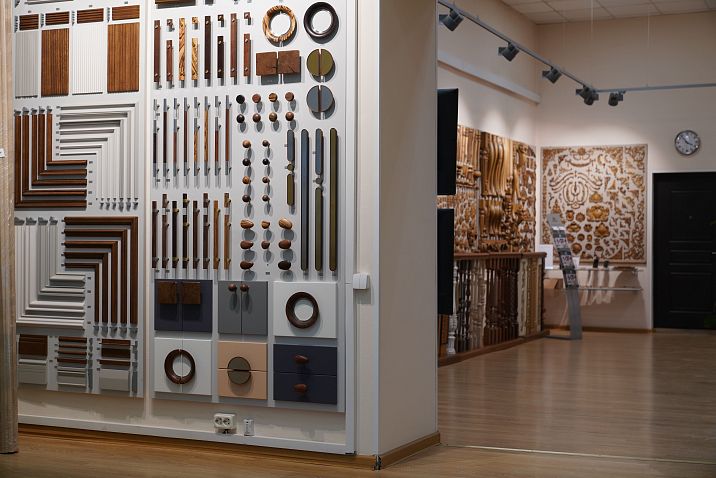
When it comes to creating a truly harmonious interior, we often overlook the details that lie right under our fingertips. After all, it is precisely these small things that shape our daily interaction with the surrounding space. Wooden Handles — it is not just a functional element of furniture, but a bridge between human and nature, a tactile reminder of authenticity and quality in a world of synthetic materials.
Imagine waking up in the morning, when your fingers touch the warm surface of a wooden handle — it seems to come alive under your touch, transmitting the energy of the wood fibers accumulated over the years of growth of a mighty tree. Every movement becomes a meditation, every touch — a return to the roots of natural beauty.


Philosophy of Tactile Perception: Why Wood is Special
In the modern world of plastic and metal, humans instinctively reach for natural materials. This is not coincidence, but an evolutionary memory of our species, interacting with wood for millennia. Scientific studies confirm: touching natural wood activates the parasympathetic nervous system, reduces cortisol levels, and improves overall well-being.
Wooden surfaces are never perfectly smooth — this is their magic. The microtexture of wood fibers creates a unique massage effect for fingertip pads, stimulating nerve endings and enhancing tactile sensitivity. Each solid wood handle has its own "fingerprint" — an unmistakable pattern of growth rings and texture.




Thermodynamic properties of wood
Why does a wooden handle always feel warm? The secret lies in the unique thermal conductivity of wood. Unlike metal, which instantly takes on the temperature of its surroundings, wood slowly absorbs and equally slowly releases heat. This creates a sense of comfort regardless of season or room temperature.
The porous structure of wood acts as a natural thermostat — it provides pleasant coolness in summer and retains warmth in winter. These properties make solid wood handles an ideal choice for any climate and season.
Our factory also produces:



Wood Species: Character in Every Fiber
Choosing the wood species for making furniture handles is not just an aesthetic question — it defines the character of the future product. Each species has unique physical and visual characteristics that affect durability, appearance, and tactile sensation.
Get Consultation
Oak — the aristocrat among wood species
Oak handles embody the strength and nobility of millennia-old traditions. The density of oak wood is 680-720 kg/m³, providing exceptional strength and resistance to mechanical impacts. A distinctive feature of oak is its pronounced growth rings, creating a unique pattern on the surface of each handle.
The color palette of oak wood ranges from light yellow to dark brown, with a natural tendency to darken over time. This process is called patination and gives oak products the charm of vintage furniture. Oak handles become even more beautiful with age, gaining depth of color and richness of tones.
Ash — Elegant Strength
Ash combines high strength characteristics with an elegant appearance. Its wood features light tones and contrasting texture, where light early wood areas alternate with dark late wood stripes. The density of ash reaches 650-680 kg/m³, which is only slightly less than oak.
Ash's distinctive feature is its ability to be flexible while maintaining high strength. This makes ash handles practically unbreakable when properly manufactured. The light color of ash harmonizes beautifully with modern interiors, creating a sense of purity and freshness.
Walnut — luxury of natural color
Hazelnut — the king among valuable wood species for furniture production. Its rich color palette includes shades from light brown to deep chocolate, often with purple or reddish hues. The density of walnut wood is 600-650 kg/m³, providing an optimal balance of strength and workability.
Walnut's texture is remarkable for its variety: from calm straight grains to dynamic wavy patterns. Each walnut solid wood handle is a small work of art created by nature. Walnut polishes exceptionally well, achieving a mirror-like gloss and accentuating the depth of the wood grain.
Birch — northern delicacy
Birch — a symbol of the Russian forest, possessing a special energy and purity. Its wood has a uniform structure with fine pores and a light, almost white color. The density of birch is 620-650 kg/m³, providing sufficient strength for manufacturing durable handles.
Birch's main advantage is its exceptional ability to be stained and tinted. Birch handles can be made any color while preserving the natural wood texture. The light tone of natural birch fits beautifully into Scandinavian interiors and minimalist styles.
Manufacturing technologies: from rough cut to masterpiece
Creating a quality wooden handle is a multi-stage process requiring deep knowledge of wood properties and masterful tool handling. Each production stage affects the final product's quality and longevity.
Wood preparation: the basis of quality
The process begins with careful selection of wood raw material. Only healthy sections of the trunk, free of knots, cracks, and other defects, are used for furniture handles. The initial material's moisture content must not exceed 8-10% — this is a critical indicator affecting the stability of the finished product.
Wood drying is conducted in special chambers with controlled temperature and humidity. The process may take from several weeks to several months depending on the species and size of the blank. Properly dried wood does not shrink or crack during use.
Shaping: art and precision
Giving shape to a wooden blank requires combining traditional carpentry skills with modern technologies. Turning on a lathe allows creating perfectly symmetrical round handles, while milling produces complex profiled shapes.
Each type of handle requires individual processing. Button handles are turned on a lathe in one pass, ensuring ideal geometry and surface smoothness. Bar-shaped handles are made from rectangular blanks using milling followed by sanding.
Sanding: the path to perfection
Quality sanding is the soul of a wooden item. The process begins with coarse sanding using 120-150 grit abrasive to remove marks from mechanical processing. Gradually, grit increases to 400-600 to achieve an ideal surface smoothness.
Intermediate sanding between layers of finishing materials ensures maximum quality of the final coating. Each layer of varnish or oil must be sanded with fine sandpaper to remove raised fibers and create a base for the next layer.
Design diversity: form follows function
The modern market offers incredible variety of design solutions for wooden furniture handles. From strict geometric forms to intricate carved elements — every interior style will find its perfect embodiment in natural wood.
Classic forms: time-tested
Round button handles are the classic of the genre, suitable for any interior. Their diameter ranges from 25 to 50 mm, allowing selection of the optimal size for specific furniture. The button height is usually 20-35 mm, ensuring comfortable finger grip.
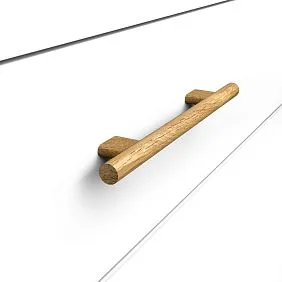
Bar-shaped handles are distinguished by elegant lines and functionality. The distance between mounting holes is standardized and equals 64, 96, 128, 160, or 192 mm. This standardization allows easy replacement of old handles with new ones without additional drilling.
Modern trends: minimalism and functionality
Hidden integrated handles are gaining popularity in modern interiors. They are embedded into the end of a door or drawer, creating a minimalist appearance without protruding elements. Such handles are especially relevant for kitchen furniture, where every centimeter of space counts.
Long wooden handles combine functionality and style. Their length can reach 500-1000 mm, allowing use on wide cabinet and chest facades. Wooden handles are often combined with metal elements, creating interesting design accents.
Custom solutions: uniqueness in every detail
Hand-carved handles are the pinnacle of a master carpenter's skill. Each piece is unique and carries a part of the master's soul. Carved elements may include floral ornaments, geometric patterns, or stylized depictions of animals and birds.
Inlaid handles combine different wood species or include elements made from other materials — metal, mother-of-pearl, stone. Such items transform ordinary furniture into works of decorative-applied art.
Ergonomics and comfort: the science of convenience
A properly designed handle should not only look beautiful but also provide maximum comfort of use. Ergonomic studies show that the shape and dimensions of the handle directly affect the ease of furniture use and the overall impression of the interior.
Anthropometric data in design
When designing wooden handles, anthropometric characteristics of the human body are taken into account. The average width of an adult's palm is 85-95 mm, which determines the optimal length of D-shaped handles. The diameter of knob handles is calculated based on the size of fingertip pads — from 25 to 40 mm.
The height of the handle protrusion above the facade surface should ensure comfortable finger grip, but not create obstacles when moving past the furniture. The optimal value is 20-25 mm for knob handles and 25-30 mm for D-shaped handles.
Surface treatment for comfort
Tactile sensations play a key role in perceiving the quality of furniture hardware. The surface of a wooden handle should be perfectly smooth, without burrs or irregularities. This is achieved through multi-stage sanding with gradually decreasing abrasive grit.
Final oil or wax treatment not only protects wood from moisture and dirt, but also highlights the natural beauty of the material. Oil coating penetrates into the wood structure, preserving its "breathable" properties and natural tactile feel.
Ecological advantages: choice of a conscious consumer
In an era of heightened attention to ecological issues, the choice of handles made from natural wood becomes a demonstration of responsible attitude toward the environment. Wood is the only building material that absorbs carbon dioxide from the atmosphere as it grows, contributing to the fight against global warming.
Carbon footprint and sustainable development
The life cycle of a wooden handle begins with tree growth, during which a significant amount of CO₂ is absorbed from the atmosphere. Even after wood harvesting, carbon remains bound within the material's structure throughout the product's entire service life. This makes wooden products carbon-neutral or even carbon-negative materials.
Modern forestry is based on the principles of sustainable development. FSC (Forest Stewardship Council) certification guarantees that the wood is harvested from forests managed according to ecological standards. Each felled tree is compensated by planting several new saplings.
Biodegradability and secondary recycling
At the end of their service life, wooden handles can be fully recycled or disposed of without harming the environment. Wood undergoes natural biodegradation, enriching soil with organic matter. Alternatively, old wooden items can be used as biomass, replacing fossil fuels.
The possibility of restoration and repair is another ecological advantage of wooden handles. Scratches and wear are easily removed by sanding and reapplying protective coatings, extending the product's lifespan and reducing the need for replacement.
Stylistic compatibility: harmony in details
The versatility of wood as a material allows it to seamlessly fit into any interior design style. From luxurious classicism to strict minimalism — wooden handles will find their place in every home.
Classic interiors: traditions and elegance
In classic interiors, wooden handles emphasize the nobility and refinement of the setting. Carved elements, patinated surfaces, gilded details — all of this creates an atmosphere of aristocratic luxury. Handles made from precious woods — walnut, mahogany, rosewood — look especially striking.
The color palette of classic wooden handles leans toward dark, rich tones. Deep brown walnut, noble reddish-brown mahogany, refined purplish-brown rosewood — these colors evoke a sense of stability and quality.
Modern styles: purity of lines
Modern interior styles value in wooden handles not so much their decorative qualities, but the purity of form and the natural beauty of the material. Simple geometric shapes, minimal decorative elements, emphasis on surface finish quality — these are the principles of modern design.
Scandinavian style prefers light wood species — birch, pine, beech. The natural light color of these species creates a sense of spaciousness and purity, characteristic of northern design. Matte surfaces treated with oil or wax highlight the naturalness of the material.
Ethnic directions: cultural codes in wood
Different ethnic styles interpret the use of wood in interiors in their own way. Japanese minimalism cultivates simplicity of form and naturalness of the material, avoiding any excess in decoration. Wooden handles in Japanese style feature strict geometry and perfect surface finish.
Russian style, on the contrary, welcomes rich carving and complex decorative elements. Traditional motifs — plant ornaments, geometric patterns, stylized depictions of birds and animals — transform each handle into a piece of folk art.
Technical Compatibility: Dimensions and Standards
The modern furniture industry uses standardized mounting hole sizes for handles, ensuring interchangeability of different models. Knowledge of these standards helps correctly select wooden handles for specific furniture.
International Dimension Standards
The main center-to-center distances of mounting holes are 64, 96, 128, 160, 192, 224, 256, 320, 416, and 512 mm. These dimensions are international standards and are used by most furniture hardware manufacturers worldwide.
The diameter of mounting holes is standardized and is 5 mm for M4 screws or 4 mm for M3 screws. The thickness of the furniture facade also affects the selection of screw length — standard values are 16, 19, 22, 25, and 30 mm.
Load-bearing characteristics
Wooden handles must withstand repeated loads during opening and closing of furniture. The calculated load per handle ranges from 10 to 50 kg depending on the type of furniture and usage intensity. Kitchen furniture is subjected to more intensive loads compared to bedroom or living room furniture.
The strength of the mounting depends not only on the quality of the handle itself, but also on the material of the furniture facade. For furniture made of MDF, special dowels or bolts with wide washers are used to distribute the load. Solid wood furniture provides more secure mounting due to the dense structure of the material.
Care and maintenance: preserving beauty for years
Wooden handles require minimal but regular maintenance to preserve their aesthetic and functional qualities. Proper care allows maintaining the original beauty of the items for many years.
Daily Care: Simple Rules
The basis of care for wooden handles is regular cleaning from dust and dirt. This can be done by wiping the surface with a soft dry cloth or a special furniture cloth. It is important to avoid using wet cloths unless absolutely necessary, as excessive moisture may damage the protective coating.
For persistent stains, a slightly damp cloth can be used, followed immediately by drying thoroughly. It is strictly prohibited to use aggressive cleaning agents containing alcohol, ammonia, or abrasive particles — they may damage the wood surface.
Periodic coating renewal
The protective coating of wooden handles requires periodic renewal depending on usage intensity. Lacquered coatings last 3–5 years with moderate use, while oil-based coatings require renewal every 1–2 years.
The renewal procedure includes light sanding with fine-grit sandpaper to remove old coating and dirt, dust cleaning, and applying a new protective layer. It is important to use materials compatible with the original coating — lacquer on lacquer, oil on oil.
Economic Aspects: Investment in Quality
Cost of Natural wooden handles may seem high compared to mass-produced plastic or metal hardware. However, an analysis of total ownership cost shows the economic justification of investing in quality wooden items.
Long-term perspective
The service life of quality wooden handles is measured in decades with proper care. Unlike plastic hardware, which may break under mechanical stress, or metal handles prone to corrosion, wooden items retain functionality and aesthetic qualities throughout the furniture’s entire lifespan.
The possibility of restoration and restoration of appearance makes wooden handles practically eternal. Scratches are removed by sanding, scuffs by polishing, and dull coating by applying a new protective layer. Such repairability is not available for synthetic material items.
Impact on furniture cost
Quality hardware significantly increases the consumer value of furniture. Buyers are willing to pay extra for items with natural wooden handles, understanding their durability and aesthetic advantages. When selling furniture with wooden hardware, one can expect a higher price compared to similar items with synthetic hardware.
Investments in quality wooden handles pay off not only due to their longevity, but also due to the overall improvement of the interior’s level. Natural materials create a sense of premium quality and authenticity that cannot be achieved with imitations.
Psychological Aspects: Emotional Connection with the Material
Interaction with natural materials occurs not only on a physical, but also on an emotional level. Wooden handles create a special atmosphere of coziness and comfort, influencing the overall perception of living space.
Biophilic Design
The concept of biophilic design is based on the innate human need for contact with nature. Using natural wood in interior design satisfies this need, creating a sense of connection with the natural environment. Every touch on a wooden surface activates ancient instincts and evokes positive emotions.
Scientific studies confirm that the presence of wood in interiors reduces stress levels, improves concentration, and promotes deeper sleep. Wooden handles, which we interact with daily, become constant sources of this beneficial effect.
Tactile Memory
Human fingers possess exceptional tactile sensitivity, capable of distinguishing the finest surface details. Each wooden handle has a unique microtexture, which is subconsciously remembered. Over time, an emotional attachment forms to specific interior items.
This feature makes replacing wooden handles a painful process — new items, even identical in shape and size, feel different. That is why it is important to choose quality hardware that will serve for many years without requiring replacement.
Production Innovations: Traditions and Technologies
Modern production of wooden handles combines traditional carpentry techniques with innovative wood processing technologies. This approach allows creating products that surpass traditional handcrafted work in quality while preserving the individual character of each item.
Computer Numerical Control (CNC) machines
The use of CNC machines has revolutionized the production of wooden furniture hardware. Computer control ensures perfect repeatability of geometric parameters while preserving the uniqueness of each item due to natural variations in wood structure.
Programmable turning machines allow creating complex handle profiles with precision down to hundredths of a millimeter. Milling centers process blanks according to 3D models, ensuring perfect geometry even for the most complex design solutions.
Innovative finishes
The development of the chemical industry has led to the emergence of new types of protective coatings for wood. UV-curable lacquers provide exceptional strength and durability while maintaining ecological safety. Nanostructured coatings create self-cleaning surfaces that repel contaminants.
Oils based on natural waxes provide deep wood protection without forming film-like coatings. These formulations highlight the natural beauty of wood, preserving its tactile qualities and ability to 'breathe'.
Regional characteristics and cultural traditions
Different cultures have developed their own approaches to manufacturing and using wooden furniture hardware. Studying these traditions enriches modern design and opens new avenues for creative self-expression.
European traditions
The European school of cabinetmaking is renowned for its attention to detail and quality of execution. German masters established standards of precision and reliability, Italian designers brought elegance and style, and Scandinavian craftsmen developed the philosophy of minimalism and functionality.
Each country has contributed to the development of the art of wooden hardware. French joiners are celebrated for their exquisite carved elements, English masters for their strict classical elegance, and Austrian craftsmen for their innovative technical solutions.
Eastern traditions
Eastern design philosophy places special emphasis on harmony between humans and nature. Japanese masters create handles embodying the principles of wabi-sabi — the beauty of imperfection and naturalness. Chinese craftsmen use complex techniques to join different wood species, creating unique color compositions.
The Korean approach combines the refinement of Japanese aesthetics with the practicality of modern design. Indian masters are renowned for intricate carved ornaments and the use of exotic woods with unique properties.
Conclusion: Touching Perfection
In a world where synthetic materials are taking up more space in our homes, Wooden Handles there remain islands of authenticity and natural beauty. Every touch on a wooden surface is a dialogue with nature, a connection to centuries-old craftsmanship traditions, and a return to the roots of human civilization.
Choosing wooden handles for your home is an investment not only in functionality and aesthetics, but also in your own psychological well-being. The warm touch of natural wood, its barely perceptible aroma, and the unique texture of each piece create an atmosphere of coziness and harmony unattainable with artificial materials.
Modern technologies enable the creation of wooden hardware that surpasses in quality and durability the products of past eras. Innovative processing methods, eco-friendly coatings, precise adherence to dimensions and standards — all this makes modern Furniture Handles wooden items the ideal choice for discerning consumers.
Each wooden handle is a work of art created through the collaboration of nature and humanity. The years of tree growth, the craftsmanship of the artisan, love for the material, and attention to detail — all are embodied in a small object that daily offers the joy of touch and visual delight.
For more than a quarter of a century, STAVROS has been crafting items from natural wood, embodying in each piece a philosophy of quality and beauty. Traditional woodworking techniques are combined with modern technologies, creating products that serve for generations. STAVROS offers a wide range of wooden handles — from classic forms to avant-garde designer solutions. Each item undergoes strict quality control and is produced with a guarantee of longevity. Choosing STAVROS means choosing not just furniture hardware, but a piece of natural beauty for your home.