Article Contents:
- Anatomy of perfection: what ceiling rosettes consist of
- Polyurethane: the material that changed the rules of the game
- Size scale: from miniatures to monuments
- Stylistic directions in rosette design
- Classicism: harmony of golden proportions
- Baroque: Theatrical Grandeur
- Modernism: Natural Forms
- Modern: natural forms in a new interpretation
- Art Deco: geometry of luxury
- Installation technology: the art of invisible mounting
- Electrical installation and lighting integration
- Color solutions and decorative finishing techniques
- Monochromatic classical schemes
- Polychromatic artistic techniques
- Metallic finishes and special effects
- Acoustic properties and influence on microclimate
- Compatibility with various types of ceilings
- Reinforced concrete slabs
- Gypsum Board Structures
- Stretch Ceilings
- Maintenance and servicing during operation
- Regular maintenance
- Restoration and renewal
- Economic aspects and return on investment
- Initial costs
- Long-Term Economic Efficiency
- Impact on property value
- Regional application specifics
- Climate factors
- Seismic conditions
- Development Prospects and Innovations
- Technological Innovations
- Ecological Aspects
There are moments in life when we realize that beauty can change everything. One glance at a ceiling adorned with an elegant rosette, and the room transforms, becoming a temple of aesthetics and harmony. Ceiling rosettes — it is not just a decorative element, it is the heart of the interior, pulsating with beauty and attracting attention like a magnet.
Have you ever wondered why ceilings in grand palaces of the past were adorned with rosettes? Why did these circular or oval compositions become symbols of luxury and refinement? The answer lies in the very nature of human perception — our gaze instinctively seeks a center, a point of reference in space, and the ceiling rosette becomes this long-awaited visual anchor.
In the modern world of high technology, the art of creating ceiling rosettes is experiencing a true renaissance. Polyurethane — the material of the 21st century — has allowed designers to bring their boldest fantasies to life, preserving the beauty of classical designs while adding unprecedented practicality.


Anatomy of perfection: what ceiling rosettes consist of
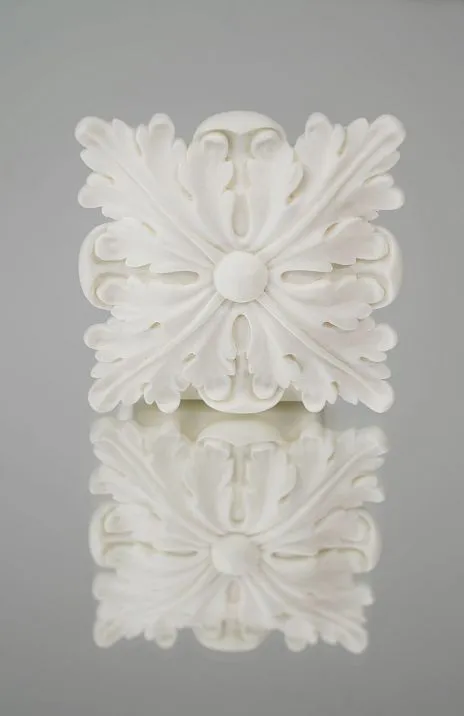
Each ceiling rosette is a miniature universe of ornamentation, where every element has its own significance and place. The central medallion, usually circular or polygonal, serves as the foundation for the entire decorative system. Its diameter ranges from 50 mm in compact models to 300 mm in monumental compositions.
Around the central medallion develops an ornamental symphony. Concentric rings create a rhythmic framework for the composition, each of which may carry its own decorative motif. Classical variants include bead bands, pearl motifs, acanthus leaves, or geometric elements.
Radial elements emanate from the center like sun rays, creating dynamism and energy in the composition. These may be stylized flower petals, flame tongues, architectural details, or abstract forms. Their number is usually a multiple of four or six — numbers that create a harmonious visual balance.
The outer contour of the rosette frames the entire composition, creating completeness and defining the boundaries of the decorative space. This element may be simple — in the form of a smooth molding — or complex — with rich ornamentation including botanical motifs, geometric patterns, or symbolic imagery.




Polyurethane: a material that changed the game
The revolution in the production of decorative elements began with the advent of polyurethane — a synthetic polymer that combines the best qualities of all traditional materials. The density of polyurethane is only 600-800 kg/m³, which is seven times lighter than plaster, while its flexural strength reaches 40 MPa — a figure unattainable for most natural materials.
Polyurethane's chemical resistance is remarkable. The material does not degrade under the influence of household chemicals, does not absorb odors, and does not serve as a nutrient medium for microorganisms. The water absorption coefficient is less than 0.5%, allowing polyurethane ceiling roses to be used even in spaces with extreme humidity.
Temperature stability opens up unlimited application possibilities. Ceiling rosettes Made from polyurethane, they retain their geometric dimensions in the range from -40°C to +90°C, making them suitable for use in unheated rooms, saunas, steam rooms, and winter gardens.
The production technology is based on high-pressure casting into precision silicone molds. This process ensures reproduction of the finest ornament details with an accuracy of 0.05 mm — a level of detail surpassing the capabilities of master craftsmen of previous centuries.
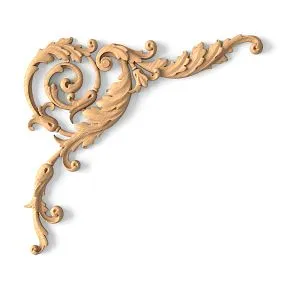
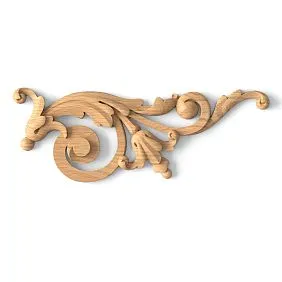
Our factory also produces:


Size range: from miniatures to monuments
Modern ceiling rose typology covers a wide range of sizes, allowing you to select the ideal solution for any space. Compact models with diameters of 150-300 mm are ideal for small rooms, offices, bedrooms. Their elegant proportions do not overwhelm the space, but create the necessary decorative accent.
Medium-sized roses with diameters of 400-600 mm represent the golden middle, suitable for most residential spaces. Their size allows for placing sufficiently rich ornamentation without creating a sense of excess. Such models often become central elements in living rooms, dining rooms, and offices.
Large compositions with diameters of 700-1000 mm are intended for spacious halls, lobbies, rooms with high ceilings. Their monumentality requires appropriate architectural surroundings and professional design approach.
Exclusive giants with diameters over 1200 mm are created for unique projects — palace interiors, reception rooms, cult buildings. Such roses are often manufactured according to individual projects and may include original elements or heraldic motifs.
Get Consultation
Stylistic directions in ceiling rose design
Classicism: harmony of golden proportions
Classic polyurethane ceiling roses embody eternal principles of beauty based on mathematical laws of the golden section. The central medallion occupies 38% of the total diameter, the first ornamental ring — 24%, the outer contour — the remaining 38%. These proportions, derived by ancient masters, create harmony perceived subconsciously.
The ornamental basis of classical roses is built on plant motifs — acanthus leaves, laurel wreaths, roses, grapevines. Each element has symbolic meaning: acanthus symbolizes life force and overcoming difficulties, laurel — victory and glory, rose — beauty and love, grapevine — fertility and abundance.
Geometric elements complement plant motifs, creating the structural basis of the composition. Meander symbolizes eternity and continuity of life, braided pattern — unity and interconnection of all things, beads and pearls — purity and perfection.
Baroque: Theatrical Opulence
Baroque roses are distinguished by maximum decorative saturation and theatrical effect. Ceiling rosettes In the Baroque style, they are characterized by deep relief, complex multi-level compositions, and abundance of decorative details.
Movement — the main characteristic of Baroque ornament. Curved lines, spiral scrolls, fluttering ribbons create a sense of continuous motion. Plant forms are stylized to the point of complete naturalism, transforming into purely decorative elements.
Asymmetric details within the overall symmetry of the composition give Baroque roses a particular liveliness. These may include slightly turned leaves, unequal scrolls, variations in the size of similar elements. Such subtleties require the highest level of craftsmanship in creating original forms.
Empire: the glory of the empire
The Empire style introduced motifs of military glory and imperial grandeur into decorative art. Polyurethane ceiling roses in the Empire style are characterized by strict composition, monumental forms, and use of symbols of power and victory.
The ornamental arsenal of Empire includes laurel wreaths, palm branches, torches, swords, shields, eagles, lions. Geometric elements dominate over plant motifs, creating a sense of strict order and hierarchy. Radial compositions, emanating from the center like rays of the imperial sun, are often used.
Color solutions in the Empire style lean toward solemnity — gold on white, gold on dark blue or dark green, rarely — silver on black. Such combinations emphasize the parade-like and formal nature of the style.
Modern: natural forms in a new interpretation
The Modern style revolutionized perceptions of decorative art by introducing stylized natural forms and asymmetrical compositions. Modern ceiling roses often deviate from strict radial symmetry, creating more free, organic compositions.
Modern plant motifs — irises, lilies, poppies, sunflowers — are rendered with botanical accuracy but stylized to create a new decorative reality. Long curved stems, broad leaves with drawn veins, flowers in various stages of blooming create a sense of living growth.
Linearity — a characteristic feature of Modernism. The ornament is built on long, flowing lines that may start from the center of the rose and, winding, reach its edges. These lines often imitate plant growth, water flow, or hair movement in the wind.
Art Deco: geometry of luxury
The Art Deco style brought strict geometry to ceiling rose design, combined with luxurious materials and finishing techniques. Ceiling rosettes Art Deco style is characterized by clear lines, symmetrical compositions, and the use of geometric shapes as primary decorative elements.
Zigzag lines, stepped forms, solar disks, stylized plant motifs — characteristic Art Deco elements. Compositions are built on the principle of radial symmetry, but instead of classical plant forms, they use geometric interpretations of natural objects.
Art Deco color solutions are bold and contrasting. Black with gold, silver with black, vibrant chromatic colors on a neutral background — such combinations create dramatic expressiveness characteristic of the jazz and skyscraper era.
Installation technology: the art of invisible mounting
Professional installation of ceiling sockets begins with careful planning and marking. The center of the ceiling is determined by the intersection of the room's diagonals, but in rooms with complex configurations, adjustments may be needed to account for furniture and architectural elements placement.
Preparing the base is critically important for the longevity of the result. The ceiling surface must be perfectly clean, dry, and degreased. Any irregularities exceeding 2 mm must be removed using putty and sanding. Priming with an acrylic deep-penetration primer improves adhesion and prevents staining.
Adhesive compositions for mounting polyurethane sockets must provide a bond strength of at least 1.5 MPa while maintaining a certain elasticity. Modern polyurethane adhesives meet these requirements, providing an open time of 15-20 minutes for position adjustment.
Adhesive is applied using a notched trowel with a 4-6 mm tooth size over the entire back surface of the socket. Large-diameter ceiling polyurethane sockets require special attention to even application — uneven layers may cause deformation of the element.
Electrical installation and lighting integration
Installation of a ceiling socket often involves work to relocate or install a central lighting connection point. Modern sockets are designed with standard electrical box and chandelier hook dimensions in mind.
Hidden wiring can be laid in special grooves provided in the construction of some socket models. This allows creating complex lighting systems without compromising the ceiling composition's aesthetics.
Integration of LED backlighting opens new possibilities for decorative lighting. LED strips placed in ornament recesses create striking contour lighting that highlights the relief of the decor. Color and intensity control allows creating various lighting scenarios.
Small-diameter spotlights can be embedded directly into the socket body, creating localized backlighting for individual ornament elements. Such a solution requires preliminary planning and manufacturing of the socket with appropriate technical holes.
Color solutions and decorative finishing techniques
Monochromatic classic schemes
A white ceiling socket remains the epitome of elegance and versatility. Pure white color emphasizes the perfection of forms and clarity of lines, creating a sense of freshness and spaciousness. Various shades of white — warm milk, cool Arctic, ivory — allow fine-tuning of interior color temperature.
Monochromatic gray solutions are gaining popularity in modern interiors. Ceiling rosettes In various shades of gray — from light silver to dark graphite — create an elegant and restrained atmosphere, especially effective when combined with contrasting wall colors.
Polychromatic artistic techniques
Colored moldings open boundless opportunities for creative self-expression. Ceiling polyurethane sockets can be painted in any colors, from soft pastels to vibrant tones. It is important to follow the principle of harmonious combination — no more than three main colors in one composition.
Gradient transitions create depth and perception of volume. The ombre technique, where color smoothly transitions from light to dark or from one shade to another, requires high execution skill. Paints are applied in layers with careful blending of boundaries.
Polychromatic painting allows creating unique artistic works. Individual ornament elements can be painted in different colors, creating a rich palette. This approach is especially effective in children's rooms and creative spaces.
Metallic finishes and special effects
Gilding remains a classic in decorative molding finishing. Modern technologies offer several options — from traditional gold leaf to imitation using gold paints and patina. Each method has its own application specifics and aesthetic qualities.
Gold leaf creates the most noble and deep luster, but requires special application skills and protective coatings. Patina is a more accessible alternative, providing good decorative effect at lower cost. Gold paints are easy to apply but lack the depth of luster.
Silvering creates a cold aristocratic atmosphere. Silver finishes look especially effective in interiors dominated by cool tones. Silver patination creates an effect of noble antiquity.
Copper and bronze finishes give interiors a warm, cozy character. Such solutions are especially popular in loft, steampunk, and eclectic style interiors. Artificial oxidation creates an effect of authentic time patina.
Acoustic properties and influence on microclimate
The relief surface of a ceiling socket affects the acoustic characteristics of the room. Complex ornamentation creates numerous reflective surfaces of varying orientations, which helps scatter sound waves and reduce reverberation.
Ceiling polyurethane sockets with deep relief can reduce reverberation time by 15-25% compared to smooth ceilings. This is especially noticeable in rooms with high ceilings, where echo may cause discomfort.
The sound absorption coefficient of polyurethane is 0.03-0.05, corresponding to hard reflective surfaces. However, the complex geometry of the ornament creates a diffraction effect, breaking sound waves into multiple components of different frequencies and directions.
The influence on the microclimate is related to the increased total ceiling surface area due to the relief. This promotes a more even distribution of temperature and humidity in the room. The polyurethane material does not absorb moisture and does not promote the growth of microorganisms.
Compatibility with various types of ceilings
Reinforced concrete slabs
Concrete ceilings provide an ideal base for installing ceiling sockets. The high strength and stability of the base ensure long-term mounting durability. Ceiling rosettes can be installed directly onto the concrete surface after appropriate preparation.
Preparation of the concrete ceiling includes removing flaking areas of old paint or plaster, filling cracks and holes, leveling uneven surfaces. It is essential to prime the surface with deep-penetration compounds to improve adhesion.
Gypsum board structures
Gypsum board ceilings require special attention at mounting points. Polyurethane ceiling sockets up to 600 mm in diameter can be mounted directly onto gypsum board provided the base is of good quality. For larger elements, additional reinforcement of the frame is recommended.
It is important to ensure that gypsum board sheets are securely fastened to the frame and do not have any bows. Any movement of the base may lead to socket detachment or cracks at the joints.
On stretch ceilings, there are specific features. Decorative elements are mounted to the base ceiling before installing the stretch fabric.
Installing ceiling sockets on stretch ceilings requires a special approach and preliminary planning. The socket must be mounted to the base ceiling before installing the stretch fabric, and a precise hole with a thermal ring is made in the fabric itself.
This installation method requires precise calculation of the socket's size and position. Errors at this stage are practically impossible to correct without completely replacing the stretch fabric. Therefore, such work should only be performed by highly qualified specialists.
Care and maintenance during operation
Regular maintenance
Polyurethane ceiling sockets require no complex maintenance, but regular maintenance will help preserve their original appearance for many years. The main issue is dust accumulation in the ornament's recesses, which over time may change the coating's color and reduce the relief's clarity.
Dry cleaning is performed using a soft natural-bristle brush or a vacuum cleaner with a soft attachment. Movements should follow the direction of the ornament, avoiding crosswise movements that may push dust deeper into recesses. The frequency of dry cleaning is every 2-3 months depending on the room's dustiness.
Wet cleaning is performed using slightly damp microfiber with neutral cleaning agents. It is important to avoid excessive moisture, which may penetrate under the coating and cause delamination. After wet cleaning, the surface should be wiped dry with a cloth.
Restoration and renewal
Mechanical damage to ceiling sockets is rare due to their placement, but may occur due to improper installation of other interior elements. Small chips and scratches are easily repaired using acrylic putty.
The damaged area is cleaned of dust and degreased. Putty is applied in a thin layer with slight excess, then sanded with fine-grit sandpaper after drying. The restored surface is primed and painted to match the original coating.
The color coating can be renewed multiple times. Polyurethane ceiling sockets hold paint exceptionally well, allowing for a complete change in interior style. The old coating does not require complete removal — a light sanding to create a rough surface is sufficient.
Economic aspects and return on investment
Initial costs
The cost of polyurethane ceiling sockets varies widely depending on size, ornament complexity, and quality of execution. Simple models with a diameter of 200-300 mm cost from 800 to 2000 rubles, medium-sized sockets 400-600 mm — from 2500 to 8000 rubles, large compositions 800-1200 mm — from 12000 to 35000 rubles.
Installation work accounts for 30-50% of the socket's cost depending on installation complexity. Additional work — ceiling preparation, electrical installation, finishing — may increase the project's total cost by 50-100%.
Comparison with alternative solutions shows the economic feasibility of polyurethane sockets. Gypsum analogs are 2-3 times more expensive with significantly greater installation and maintenance complexity. Handmade wooden sockets may cost 10-15 times more.
Long-term economic efficiency
The service life of quality polyurethane ceiling sockets is 25-30 years without replacement or major repair. This makes initial investments economically justified even with a high initial cost.
Minimal operational expenses — additional advantage. Unlike gypsum elements, which require periodic restoration, Ceiling rosettes polyurethane sockets require virtually no maintenance.
The ability to repeatedly renew the coating allows adapting the decor to changing design preferences without replacing the elements themselves. This is especially important in commercial spaces, where periodic interior updates are necessary.
Impact on property value
The presence of quality molded decoration significantly increases the market value of real estate. Statistical data show a 12-18% increase in value for apartments with professionally executed decorative finishes.
Polyurethane ceiling sockets create a sense of exclusivity and high-end finishing. This is especially important in the luxury real estate segment, where decorative elements can become a decisive factor when choosing between properties.
The liquidity of such real estate is also higher — apartments with quality decor sell faster and at higher prices. This makes investments in molded decoration not only aesthetically, but also economically justified.
Regional application specifics
Climate factors
Polyurethane ceiling sockets demonstrate excellent resistance to various climatic conditions in Russia. In northern regions, the material does not crack at extremely low temperatures, while in southern regions, it does not deform from heat and intense ultraviolet radiation.
Increased humidity in coastal and swampy regions does not negatively affect polyurethane. The material does not absorb moisture and does not serve as a nutrient medium for mold and fungi. This makes polyurethane sockets an ideal choice for humid climates.
A sharply continental climate with large temperature and humidity fluctuations also does not present a problem. Stability in dimensions ensures the absence of cracks at junctions with the ceiling even under significant temperature variations.
Seismic conditions
In seismically active regions, special attention is paid to methods of attaching decorative elements. The elasticity of polyurethane and modern adhesives provide a certain degree of joint mobility, preventing damage during minor building movements.
For regions with high seismic activity, a combined mounting method — adhesive plus mechanical fastening in the form of hidden anchors — is recommended. This approach ensures maximum reliability while preserving aesthetic qualities.
Development prospects and innovations
Technological innovations
The development of 3D printing opens new horizons in producing individual ceiling rose fixtures. Today, it is already possible to create unique elements according to custom designs with detail levels unattainable through traditional methods.
New polyurethane formulations with improved properties appear regularly. Self-cleaning surfaces, antibacterial additives, photocatalytic properties — these innovations make modern decorative elements not only beautiful but also functional.
Integration of "smart" technologies transforms decorative elements into active components of interior design. Built-in sensors can monitor temperature, humidity, air quality, and automatically adjust microclimate parameters.
Ecological aspects
Growing requirements for ecological safety stimulate the development of biodegradable polymers based on plant materials. These materials combine all the advantages of traditional polyurethane with minimal environmental impact.
Manufacturers are developing waste decorative element recycling programs as part of corporate social responsibility. Polyurethane can be recycled into new products, reducing the environmental footprint of production.
The world of ceiling decoration is experiencing a period of flourishing, when classical beauty finds new embodiment in modern materials and technologies. Ceiling rosettes Made of polyurethane — this is not merely a nod to tradition, but a conscious choice in favor of enduring beauty, practicality, and elegance.
Each ceiling rose installed in a home becomes a silent witness to family celebrations, festive events, cozy evenings with loved ones. It creates that special atmosphere which transforms a simple dwelling into a home — a place you want to return to, where you feel safe and happy.
Choosing a quality ceiling rose is an investment in your own well-being, in the beauty of everyday life, in those moments of admiration we experience each time we look up at the ceiling. This decision pays off not only economically, but emotionally — through years of enjoying perfect beauty.
STAVROS is a recognized leader in producing high-quality ceiling roses made of polyurethane, embodying in each product rich traditions of decorative art and advanced modern technologies. The long experience of artisans, careful selection of materials, and strict quality control at every stage of production enable STAVROS to create ceiling roses that become true works of art. Choosing STAVROS products means choosing proven quality, beauty that will delight for decades, and a guarantee that your home will acquire that unique atmosphere of elegance which distinguishes truly beautiful interiors.