Article Contents:
- Versatility of application: from classic to avant-garde
- Wall decoration: the art of vertical surfaces
- Ceiling cornices: the crown of architectural composition
- Furniture decoration: transforming function into art
- Applied elements: personalizing furniture facades
- Integration into modern furniture
- Architectural details: creating the character of space
- High-profile skirting boards: the foundation of a harmonious interior
- Columns and pilasters: monumental beauty
- Technological aspects of production: from raw material to masterpiece
- Premium raw material selection
- Precision mechanical processing
- Artistic carving: revival of traditions
- Finishing and protective coatings: beauty for centuries
- Natural oil-based compositions
- High-strength polyurethane systems
- Stylistic interpretations: from baroque to minimalism
- Classic luxury: palace traditions
- Modern eclecticism: bold combinations
- Eco-style: natural harmony
- Installation and integration: professional approach
- Preparatory work
- Mounting systems
- Final finishing on site
- Maintenance and longevity: preserving beauty
- Regular Maintenance
- Preventive renewal
- Economic aspects: investment in quality
- Pricing and cost factors
- Economic efficiency
- Ecological advantages: responsibility toward nature
- Sustainable forestry
- Zero-waste production
- Trends in development: looking into the future
- Digital technologies in production
- Integration of smart technologies
- Conclusion: STAVROS — art tested by time

In the world of modern design, there exists a material capable of instantly transforming any space, filling it with warmth, nobility, and an unparalleled atmosphere of luxury. Decorative elements made of oak are true works of art, where the craftsmanship of human hands combines with the natural perfection of wood, creating unique details capable of becoming the highlight of any interior.
What makes oak decorative elements so popular among lovers of quality design? The answer lies in the remarkable properties of this noble species: density reaches 750 kg/m³, moisture resistance is only 8% absorption, and tannin content provides natural protection against biological influences for decades. Each item carries a unique texture of annual rings, transforming ordinary decor into true masterpieces of natural art.


Versatility of application: from classic to avant-garde




Wall decoration: the art of vertical surfaces
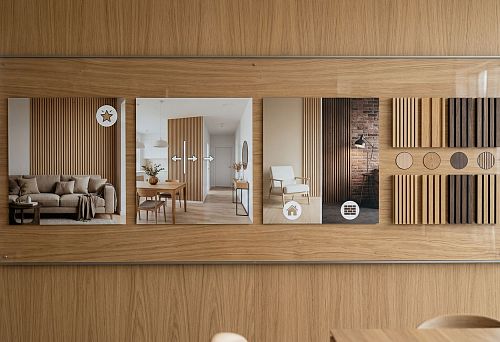
Walls are canvases on which oak decorative elements create unique compositions. Oak moldings transform ordinary surfaces into architectural masterpieces, creating complex geometric compositions or elegant framed borders.
Using various profiles allows creating multi-level panels with relief depth up to 40 mm. Combining straight and curved elements forms dynamic compositions that play with light and shadow, creating visual depth in space.
Carved inlays with diameters from 80 to 300 mm become central wall accents. Floral ornaments, heraldic symbols, abstract compositions — each element is hand-carved with remarkable detail, turning the wall into a gallery of sculptural art.
Our factory also produces:


Ceiling Moldingthe crown of architectural composition
Ceiling elements complete the spatial composition, creating a smooth transition between horizontal and vertical planes. Oak cornices 120 to 350 mm wide visually increase room height and add grandeur to the interior.
Multi-level profiles with deep shadow grooves create an architectural order effect. Built-in LED lighting turns the cornice into a source of soft diffused light, highlighting the beauty of oak texture and creating a cozy atmosphere.
Corner transitions are performed by precise trimming or using special corner elements. The radius of internal rounded edges is 15–20 mm, ensuring smooth lines and eliminating sharp edges.
Get Consultation
Furniture decoration: transforming function into art
Applied elements: personalizing furniture facades
Decorative Inserts made of oak can radically change the appearance of any furniture, turning an ordinary cabinet into a work of art. Element sizes range from miniature 50x30 mm to impressive 400x200 mm, allowing the creation of compositions of any complexity.
Mounting inlays is done using a special two-component adhesive or hidden screws with concealed heads. This mounting method ensures secure connections while preserving aesthetics — fasteners remain invisible from the front side.
The thickness of applied elements ranges from 8 to 25 mm depending on the complexity of the relief. Thin strips are used to create geometric compositions, while thick ones are used for volumetric carving with deep relief.
Integration into modern furniture
Modern technologies allow integrating oak decorative elements into furniture of any style. MDF or particleboard facades with milled grooves accept oak inserts, creating the impression of a single solid wood construction.
Contrasting combinations of light bases with dark oak elements create striking accents. Patination and artificial aging add historical charm to items and transform modern furniture into antique relics.
Architectural details: creating the character of space
High-profile baseboardsthe foundation of a harmonious interior
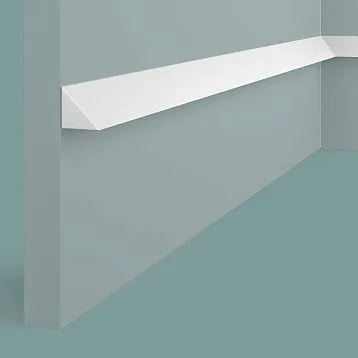
High baseboards from 100 to 250 mm create a visual foundation for the interior, unifying all elements into a single composition. Profiled edges with radii of 8–15 mm ensure smooth transitions and comfortable cleaning.
Hidden cable channels up to 40 mm wide allow laying electrical wires without compromising aesthetics. Removable panels provide access to communications for maintenance and modernization.
Corner connections are performed by precise 45-degree trimming with additional reinforcement using metal brackets. This ensures perfect element alignment without visible gaps.
Columns and pilasters: monumental beauty
Decorative oak columns with diameters from 200 to 400 mm create a sense of monumentality and classical luxury. Grooves 15–20 mm deep emphasize the verticality of the element and create play of light and shadow.
Composite columns are assembled from individual segments 600–800 mm long, facilitating transportation and installation in rooms with limited door height. Connections are made using metal pins 16–20 mm in diameter with precisely fitted elements.
Capitals and bases are manufactured separately and can reproduce classical architectural orders or feature original designs. Carved details are created manually using traditional tools and modern technologies.
Technological aspects of production: from blank to masterpiece
Selection of premium raw material
The creation of elite oak decorative elements begins with meticulous selection of wood. Stems aged at least 80-100 years, cut radially or semi-radially, are used to ensure maximum material stability.
Kiln drying is performed at a temperature of 52-58°C with gradual reduction of humidity to 6-8%. The process takes 4-8 weeks depending on the thickness of the blanks, but such delicacy guarantees the absence of internal stresses and deformations.
Each blank undergoes visual inspection for compliance with top grades. Knots larger than 15 mm, cracks deeper than 3 mm, and any signs of rot or insect damage are unacceptable.
Precision mechanical processing
Modern 5-axis machining centers allow creating elements of any complexity with accuracy to 0.05 mm. Programmable tool paths ensure ideal repeatability of batch elements.
Specialized end mills with carbide inserts operate at speeds up to 18,000 rpm, creating a perfectly smooth surface without chips or scratches. The CNC system controls cutting depth with accuracy of 0.01 mm.
Final processing includes multi-stage grinding with abrasives from P120 to P400. This ensures ideal surface preparation for applying protective-decorative coatings.
Artistic carving: revival of traditions
Decorative elements made from top-grade oak are created using hand carving. Master carvers use traditional tools — chisels, gouges, and various profiled rasps — to create complex compositions.
Deep carving is performed in several stages: rough shaping of the form, detailed ornamentation, and final finishing with smoothing of all surfaces. The time to produce a single carved element may reach 60-80 hours.
Each ornament is unique and bears the mark of individual craftsmanship. Botanical motifs include up to 25-30 different elements in one composition: leaves, flowers, fruits, and stems intertwine in complex rhythms.
Finishing and protective coatings: beauty for centuries
Natural oil-based compositions
Hard oils based on linseed and carnauba wax penetrate into the oak structure to a depth of up to 2 mm, creating a reliable protection from within. The coating highlights the natural beauty of the texture and preserves the tactile feel of natural wood.
Application is performed in 3-4 layers with intermediate grinding using P400 abrasive. Each layer is rubbed in by hand with circular motions, ensuring even distribution of the composition across the entire surface.
Full polymerization time is 72 hours at a temperature of 20-22°C and air humidity of 50-60%. After drying, the surface acquires a silky matte sheen and water-repellent properties.
High-strength polyurethane systems
Two-component polyurethane varnishes create a wear-resistant film thickness of 120-180 microns. The coating withstands abrasion up to 4-5 classes according to GOST and is resistant to household chemicals.
The technology includes 4-5 layers with interlayer drying of 4-6 hours. The final layer is polished to a mirror finish or matte-finished with special pastes depending on design requirements.
Adding titanium dioxide nanoparticles provides self-cleaning properties and UV protection. This is especially important for elements placed in areas with active natural lighting.
Stylistic interpretations: from baroque to minimalism
Classic luxury: palace traditions
In classical interiors, oak decorative elements fully realize their potential. Carved moldings with acanthus leaves, floral rosettes, and fluted pilasters create an atmosphere of aristocratic homes.
Gilding individual elements with gold leaf or antiqued imitation adds luxury and emphasizes the interior’s status. Patination of recesses creates an effect of multi-century history.
Compositions are built according to principles of classical architectural orders: Doric, Ionic, Corinthian. Each element has strict proportions and a clear place in the overall hierarchy.
Modern eclecticism: bold combinations
In modern interiors, oak elements successfully combine with industrial materials — metal, concrete, glass. The contrast of warm wood and cold surfaces creates a dynamic atmosphere.
Geometric compositions from simple forms emphasize the architectural graphics of space. Asymmetric placement of elements disrupts classical statics, introducing movement into the interior.
Integration of LED backlighting transforms decorative elements into accent lighting sources. Hidden LED strips highlight the relief of carving and create an effective play of light and shadow.
Eco Style: Natural Harmony
In ecological interiors, oak elements emphasize the connection with nature. Brushing the surface reveals the structure of annual rings, creating an expressive tactile relief.
Natural finishes preserve the ability of wood to "breathe," supporting a healthy microclimate in the room. The absence of chemical dyes ensures ecological safety.
The shapes of elements replicate natural contours: bends of branches, leaves, natural irregularities. This creates the feeling of decorative elements growing organically from the walls themselves.
Installation and integration: professional approach
Preparation Work
Installation of oak decorative elements requires careful surface preparation. Walls must be perfectly flat with deviations no more than 2 mm per linear meter. The moisture content of the substrate must not exceed 4%.
Marking is done using laser levels and construction strings. All dimensions are transferred from working drawings with precision to the millimeter. Special attention is paid to angular joints.
Priming surfaces with special compounds improves the adhesion of adhesive joints. The drying time for the primer is 4-6 hours at a temperature of 20°C.
Mounting Systems
Light elements weighing up to 5 kg are mounted using cold-curing polyurethane adhesive. The setting time of 15-20 minutes allows for adjusting the position during installation.
Heavy decorative details are additionally secured with hidden screws or anchors. Fasteners are placed in recesses, which are then covered with wooden plugs or putty.
Movable joints are provided at locations where building deformation may occur. Compensation gaps of 2-3 mm are filled with elastic sealants matching the wood color.
Final finishing on the site
After installation, all joints and mounting points are sanded with fine-grit abrasive P320-P400. Surfaces are cleaned of dust and degreased.
Local toning of repair areas is performed using special compounds with precise color matching. The final coating is applied with a brush or airbrush to create a uniform texture.
Quality control includes checking the strength of fasteners, absence of visible defects, and conformity of color and texture to samples.
Care and longevity: preserving beauty
Regular Maintenance
Daily care of oak decorative elements involves removing dust with a soft cloth or vacuum cleaner with a brush attachment. It is important to avoid abrasive materials and aggressive cleaning agents.
Wet cleaning is performed with slightly damp cloth without excessive wetting of the surface. Special wood care compounds restore the protective properties of the coating.
The frequency of wet cleaning is no more than once a week. In rooms with high humidity (kitchens, bathrooms), only moisture-resistant finishes are used.
Preventive renewal
Renewal of protective coating is performed every 5-7 years depending on usage intensity. Oil-based compounds are applied over the old coating without prior preparation.
Lacquer coatings require complete removal of the old layer by sanding. The procedure is labor-intensive, but the result is full restoration of the original appearance of the items.
Local repair of damage is performed with waxes of appropriate shade. More serious defects require partial replacement of damaged areas.
Economic Aspects: Investment in Quality
Pricing and cost factors
The cost of oak decorative elements is determined by the complexity of manufacturing, quality of raw material, and type of finish. Simple profiled planks cost 800-1200 rubles per linear meter, carved elements — 3000-8000 rubles per square meter.
Hand carving increases cost by 5-8 times compared to machine processing. Custom projects require additional expenses for sketch development and mold fabrication.
Selectively textured wood is 40-60% more expensive than standard. Antique treatment and artificial aging add 25-35% to the base cost.
Economic Efficiency
Oak decorative elements increase property value by 15-25% depending on the complexity and volume of decoration. This makes investments economically justified even at the first sale.
The service life of quality elements is 50-80 years with proper care. In terms of annual cost, the price is comparable to budget materials.
The possibility of restoration and modernization allows adapting the decor to changes in interior design without complete replacement of elements.
Ecological advantages: responsibility toward nature
Sustainable Forestry
All oak wood comes from forests certified under international FSC standards. This guarantees reforestation in volumes exceeding harvests.
Local suppliers of raw materials minimize transportation costs and the carbon footprint of the product. Supporting regional economy contributes to the development of sustainable forestry.
Selective logging preserves the forest ecosystem, allowing young trees to grow under natural conditions. This ensures high-quality timber for future generations.
Waste-free production
Modern technologies allow the use of up to 98% of harvested timber volume. Sawmill by-products are processed into fuel pellets, landscaping chips, and organic fertilizers.
Old decorative elements are accepted for recycling and reused in new products. This creates a closed production cycle with minimal environmental impact.
Trends in development: looking toward the future
Digital technologies in production
3D scanning of historical samples enables the creation of precise replicas of antique elements for restoration work. Digital archives preserve cultural heritage for future generations.
Parametric modeling accelerates the development of custom projects. Clients can view results even during the design stage and make necessary adjustments.
Robotics is gradually integrated into mechanical processing, ensuring consistent quality and reducing production times for mass-produced elements.
Integration of smart technologies
Built-in humidity and temperature sensors monitor wood condition in real time. The system alerts users to critical changes in operating conditions.
LED lighting with adjustable color temperature adapts to time of day and mood. Wireless control allows creating lighting scenes with a single button press.
Augmented reality helps visualize the future interior with decorative elements before work begins. This simplifies decision-making and reduces the risk of errors.
Conclusion: STAVROS — art tested by time
In an era of mass production and synthetic materials, decorative oak elements remain an island of authentic craftsmanship and natural beauty. Each piece embodies centuries of woodworking traditions combined with modern technology, creating a unique synthesis capable of transforming any space.
Choosing oak decorative elements is an investment in beauty, durability, and ecological responsibility. Natural materials create a healthy microclimate and positively affect residents' well-being, which is especially important in modern urban environments.
Each element — from the simplest molding to the most intricate carved composition — is crafted with love for the material and respect for tradition. Masters invest not only professional skills but also a part of their soul into each piece, making every item unique.
Modern technologies expand the possibilities of applying oak decor without compromising its natural essence. Integration of smart systems, new processing and finishing methods open boundless horizons for creativity.
Ecological certification and sustainable forestry programs guarantee that today’s beauty does not harm tomorrow’s nature. This makes choosing oak elements not only aesthetically but also ethically correct.
STAVROS — it’s not just a manufacturer of decorative elements, but a creative laboratory where masterpieces of woodwork are born. Every project for us is an opportunity to surpass ourselves and create something truly exceptional. Entrusting STAVROS with creating decor for your interior means choosing a partner who turns dreams into reality and space into art. STAVROS — it’s a guarantee that each element will become not just a detail of your interior, but part of your life story, delighting and inspiring for many years.