Article Contents:
- Historic Grandeur in Modern Execution
- Symbolism and Philosophy of Form
- Technical specifications and quality standards
- Requirements for Strength and Durability
- Material Science: Choosing Wood for Roman Balusters
- Exotic Woods for Exclusive Projects
- Manufacturing Technologies
- Final Finishing and Quality Control
- Design solutions and stylistic directions
- Color Solutions and Finishing
- Installation of Roman Balusters
- Features of mounting to various bases
- Maintenance and care
- Preventive Maintenance
- Economic Aspects and Pricing
- Long-Term Economic Efficiency
- Modern Trends and Innovations
- Ecological Aspects
- Application in Various Architectural Styles
- Regional Characteristics
- Conclusion
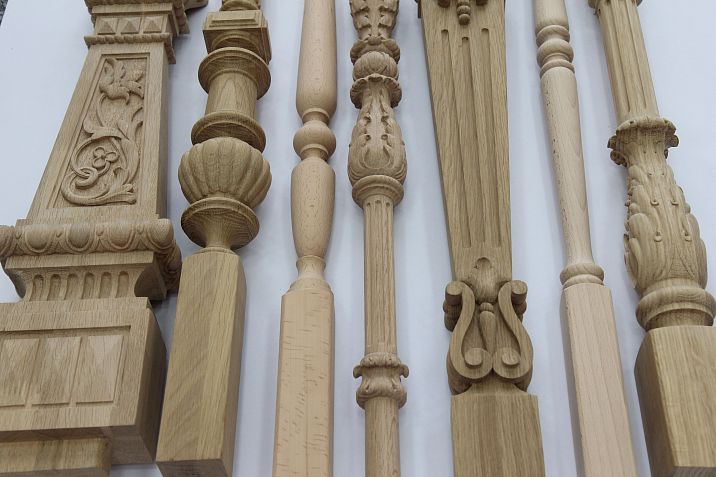
When it comes to creating a truly majestic interior, few elements can rival Roman balusters for their ability to bring the spirit of ancient luxury into modern spaces. These architectural masterpieces, born in the Renaissance as a tribute to the grandeur of the Roman Empire, are experiencing a new rebirth today, becoming symbols of refined taste and status.
What makes Roman balusters so special? Their secret lies in their unique geometry — a distinctive form of two bulbs positioned vertically opposite each other and connected by an elegant ring. This shape, reminiscent of ancient amphorae and vases, creates an unparalleled play of light and shadow, turning each baluster into a miniature work of art.
In today's world, where individuality is prized above all else, Roman balusters offer a unique opportunity to create an interior that speaks to your understanding of beauty and history. They do not merely serve as barriers — they tell a story, create an atmosphere, and shape the character of the space.


Historic Grandeur in Modern Execution
The journey of Roman balusters through centuries is an exciting story of how architectural elements can transcend temporal boundaries and remain relevant for centuries. Paradoxically, the Romans themselves did not use balusters in the form we know today. These elements received their name from Renaissance masters who drew inspiration from ancient forms.
The birth of the style occurred in the 15th century in Italy, when architects began reinterpreting the heritage of antiquity. The first balusters appeared in the palaces of Verona and Venice, where they adorned the balconies of noble houses. Their form was inspired by the pomegranate flower — a symbol of fertility and prosperity in ancient culture.
Michelangelo and the Revolution of Form — it was this great master who gave Roman balusters the form that became classical. He shifted the center of gravity downward, creating a more stable and elegant structure. His balusters adorned the stairs of the Capitoline Hill and became a model for imitation for centuries.
Evolution through epochs demonstrates the remarkable ability of Roman balusters to adapt to various stylistic directions. In Baroque, they gained greater decorative richness; in Classicism, they exhibited strict proportions; in modernity, they adopted minimalist forms while preserving their recognizable silhouette.




Symbolism and Philosophy of Form
The form of the Roman baluster carries deep symbolic meaning. The double bulb symbolizes the unity of opposites — earthly and heavenly, material and spiritual. The connecting ring represents the unifying link, harmony between different elements.
This philosophy of form makes Roman balusters not merely decorative elements, but carriers of a cultural code that is subconsciously perceived by humans as a symbol of stability, harmony, and nobility.
Our factory also produces:


Technical Specifications and Quality Standards
Modern Roman balusters are manufactured in accordance with strict technical requirements that ensure not only aesthetic appeal but also functional reliability. Standard dimensions are 50×50×900 mm or 60×60×900 mm, which comply with regulatory requirements for stair railings.
The constructive features of Roman balusters require special attention to load distribution. The narrowest part — the gripping ring — must withstand significant mechanical stresses. That is why the quality of the wood and precision of processing play a decisive role in the longevity of the product.
Ergonomic parameters consider not only safety but also visual perception. The proportions of Roman balusters are designed to create a sense of stability and reliability, which is psychologically important for users of staircases.
Get Consultation
Requirements for strength and durability
Mechanical loads on Roman balusters include not only vertical forces from the structure's own weight, but also horizontal loads from handrails. The standard load is 100 kg/m for residential buildings, which requires the use of high-quality wood and precise adherence to manufacturing technology.
Climate-related effects are especially important for balusters with complex profiles. Temperature and humidity fluctuations can cause uneven deformations, which are most noticeable at profile narrowing points. Proper drying of wood to 8-12% moisture content minimizes these risks.
Wood Science: Choosing Wood for Roman Balusters
Selecting material for manufacturing Roman balusters is an art requiring deep understanding of the properties of different wood species. Each species has unique characteristics that affect not only the appearance of the finished product but also its performance qualities.
oak remains the unrivaled choice for manufacturing Roman balusters premium-class. Its density of 700-800 kg/m³ ensures exceptional strength, while its pronounced texture highlights the elegance of classical forms. Tannins provide natural protection against biological damage.
Beech attracts with its uniform structure and ability to precisely process complex profiles. Density of 650-700 kg/m³ ensures sufficient strength with relatively easy processing. Fine-grained structure allows achieving a perfectly smooth surface after sanding.
Ash stands out for its expressive texture and high strength. Its fibrous structure creates a dynamic pattern, especially effective on curved surfaces of Roman balusters. Density of 650-750 kg/m³ guarantees the longevity of the structure.
Exotic species for exclusive projects
Redwood (mahogany) creates an atmosphere of luxury and refinement. Its rich reddish-brown color and noble texture make Roman balusters true works of art. The natural oily nature of the wood provides protection against moisture.
Walnut combines strength with exceptional texture beauty. Its dark brown color with purple undertones creates depth and nobility. Walnut is easy to process and polishes beautifully, which is important for the complex forms of Roman balusters.
Cherry attracts with its warm reddish-brown color, which becomes even more saturated over time. This species is ideal for creating a cozy and warm atmosphere in the home.
Manufacturing Technologies
Creating Roman balusters is a complex technological process requiring high skill from craftsmen and precise adherence to all processing stages. Each production stage affects the quality and longevity of the finished product.
Preparation of blanks begins with careful selection of wood. The material must be dried to optimal moisture and conditioned under production conditions for stabilization. Blanks are calibrated to within 0.1 mm precision to ensure ideal geometry.
Rough processing is performed on CNC lathes, ensuring precision and repeatability of forms. The processing program is calculated taking into account the specific characteristics of each wood species — cutting speed, feed rate, and material removal depth.
Profile formation is the most critical stage, requiring special craftsmanship. The characteristic shape of Roman balusters, with its smooth transitions and precise proportions, is created using special cutters and templates.
Final Processing and Quality Control
Sanding is performed in several stages with gradually decreasing abrasive grit. Special attention is paid to processing complex profile areas, where it is important to preserve line clarity and smooth transitions.
Dimensional control is performed using special templates and measuring tools. Deviations from specified dimensions must not exceed ±0.5 mm to ensure precise assembly of the railing.
Surface quality inspection includes visual examination and roughness control. The surface must be perfectly smooth, free of chips, scratches, and other defects that may affect the appearance of the finished product.
Design Solutions and Stylistic Directions
Roman balusters have an amazing ability to adapt to various stylistic directions while retaining their recognizability and elegance. This versatility makes them popular in a wide range of interior projects.
Classic style is a natural environment for Roman balusters. Here, they fully reveal their beauty, harmoniously blending with columns, pilasters, and moldings. Proportions and decorative elements conform to classical architectural canons.
Neoclassicism adapts traditional forms to modern requirements. In a neoclassical interior, Roman balusters may be simplified and stripped of excessive ornamentation, yet retain their recognizable shape and nobility.
Eclecticism allows bold combinations of Roman balusters with elements of other styles. The contrast between classical forms and modern materials creates interesting design solutions.
Color solutions and finishing
Natural wood tones highlight the material's inherent beauty. Transparent varnishes and oils preserve the wood's texture, creating a sense of warmth and coziness. Different species offer a rich palette of shades—from light beech to dark walnut.
Staining allows achieving the desired color while preserving the visible wood grain. Popular shades include antique oak, walnut, and redwood. High-quality stains penetrate deeply into the wood structure, ensuring even coloring.
Patination creates an effect of noble antiquity. Artificial aging accentuates the relief of balusters, creating play of light and shadow in profile recesses. This technique is especially effective in classical interiors.
Installation of Roman balusters
Correct installation of Roman balusters is essential not only for their longevity but also for the safety of the entire staircase structure. The installation process requires precision, professional skills, and understanding of working with wood.
Preparation work includes precise marking of baluster installation locations. The distance between baluster axes is typically 150-200 mm, ensuring optimal balance between safety and aesthetics. All dimensions must be verified to the millimeter.
Mounting methods are selected depending on the staircase construction and step material. The most reliable method is using metal bolts with a diameter of 8-10 mm, which provide strong connections and allow for adjustment.
Installation sequence begins with corner and support elements, followed by intermediate balusters. Each element must be installed strictly vertically and secured with the required force.
Features of mounting to different bases
Wooden steps provide the best conditions for mounting Roman balusters. Sufficient material thickness allows using various mounting methods—from traditional pegs to modern threaded connections.
Stone steps require use of special anchors and dowels. It is important to correctly select the type of fastener depending on the step material—marble, granite, or artificial stone have different properties.
Metal structures require welded or bolted connections. In this case, it is important to ensure reliable anti-corrosion protection at connection points.
Care and Maintenance
Proper care of Roman balusters ensures their beauty and functionality for many years. The complex shape of these elements requires special attention to details during preventive maintenance.
Regular cleaning should be performed using soft materials that do not damage the wood surface. Dust is removed with dry cloth or soft brush, special attention is paid to profile recesses where dirt may accumulate.
Wet cleaning is performed using special wood care products. It is important to avoid excessive moisture, which may cause wood deformation. After wet treatment, the surface must be thoroughly dried.
Coating renewal is recommended every 3-5 years depending on usage intensity. Before applying new coating, the surface must be cleaned and sanded if necessary.
Preventive maintenance
Fastening control should be performed regularly, especially in the first year after installation. Wood may shrink, causing weakening of connections. Timely tightening of fasteners prevents serious problems.
Repair of minor defects—scratches, chips, dents—should be performed immediately. Small damages are easily fixed with local sanding and touch-up, but neglected defects may require replacing the element.
Economic aspects and pricing
Investments in quality Roman balusters made of wood — is a long-term investment in the beauty and functionality of the home. The cost of the items is determined by many factors, each of which affects the final product quality.
Wood species is the primary pricing factor. Coniferous species (pine, spruce) cost 2-3 times less than hardwoods (oak, beech, ash). Exotic species (redwood, walnut) may cost 5-10 times more than common ones.
The complexity of processing Roman balusters with their distinctive shape requires highly skilled craftsmen and precise equipment. This affects the cost but ensures quality that cannot be achieved with simplified production.
Order volume significantly affects unit cost. Large batches allow optimizing production processes and reducing the cost per unit.
Long-term economic efficiency
The service life of quality Roman balusters made of hardwoods is 50-100 years with proper care. This makes them economically advantageous compared to cheaper alternatives requiring replacement every 10-15 years.
Impact on property value is an important factor when planning investments. Quality stair railings with Roman balusters significantly increase the attractiveness of a property to potential buyers and may increase its value by 10-20%.
The cost of maintaining quality items is minimal. They require only periodic renewal of protective coating and simple care, which is significantly more economical than constant repairs of cheaper structures.
Modern trends and innovations
The world of architecture and design is constantly evolving, and Roman balusters are not left behind in this process. Modern technologies and new materials open up new possibilities for interpreting classical forms.
Digital design allows creating precise 3D models of Roman balusters, optimizing their shape according to load and aesthetic requirements. Virtual reality enables viewing the final result even during the design stage.
CNC machines of the new generation provide unprecedented processing accuracy. This allows creating Roman balusters with perfect geometry and repeatability, which is especially important for large projects.
New nanotechnology-based protective coatings provide long-term protection of wood against moisture, UV radiation, and mechanical damage. They are virtually invisible but significantly extend the lifespan of products.
Ecological aspects
FSC certification guarantees that the wood originates from responsibly managed forests. This is becoming an increasingly important factor for environmentally conscious consumers.
Zero-waste technologies allow the use of all wood processing by-products. Sawdust and shavings are used to produce fuel briquettes, while small offcuts are used to manufacture mosaic elements.
Renewable energy sources in production reduce the carbon footprint of products. Solar panels and wind generators provide clean energy for operating equipment.
Application in various architectural styles
The versatility of Roman balusters is demonstrated by their ability to seamlessly integrate into various architectural styles, each time revealing new facets of their beauty.
Palladian style is a natural environment for Roman balusters. Strict proportions, classical orders, and compositional symmetry all emphasize the nobility of ancient forms. Balusters here serve not only a functional but also a compositional role.
Empire style, with its grandeur and ceremonial flair, uses Roman balusters as elements that emphasize the architecture's magnificence. Gilding, rich ornamentation, and monumentality—all of this is reflected in the balusters' design.
Modern style reinterprets classical forms, adapting them to a new aesthetic. Roman balusters in the modern style may acquire more fluid, organic shapes while retaining their recognizable silhouette.
Regional characteristics
Russian Classicism adapted Roman balusters to local traditions and climatic conditions. More substantial forms, consideration of Russian winter specifics, and use of local wood species—all of this created a unique interpretation of classical samples.
English style is characterized by restraint and practicality. Roman balusters here are more minimalist, lacking excessive ornamentation, yet preserving the elegance of proportions.
French style introduces elegance and refinement. Balusters may be enhanced with delicate carving, gilding, and other decorative elements, creating an atmosphere of luxury.
Conclusion
Roman balusters represent a unique phenomenon in the world of architecture—elements that have survived through centuries, retaining their relevance and appeal. Their secret lies not only in the perfection of form but also in deep symbolism that resonates with human perception of beauty and harmony.
In the modern world, where technologies develop at an incredible speed, Roman balusters remain an island of stability and tradition. They remind us that true beauty transcends time, and quality and craftsmanship will always be valued above all else.
Choosing Roman balusters for your home is an investment not only in the functionality and safety of your staircase, but also in creating an atmosphere that will delight you and your descendants for many years. Each baluster is a small monument to humanity's pursuit of beauty, embodied in wood by the hands of a master.
Modern technologies allow us to create Roman balusters that surpass historical samples in quality and precision, while preserving the spirit and aesthetics of the original. This gives us a unique opportunity to touch the great heritage of the past without sacrificing modern standards of quality and safety.
Quality Roman balusters — are an investment in the future, which pays off not only financially but also in daily enjoyment of admiring beauty. They create a home atmosphere where every detail is thoughtfully designed and executed with love for the craft.
In conclusion, it should be noted that choosing Roman balusters is a choice in favor of traditions of quality, beauty, and durability. In a world of mass production and disposable items, they remain a symbol of true craftsmanship and individual approach to creating living spaces.
For many years, the company STAVROS has specialized in creating high-quality solid wood products, including exclusive Roman balusters. By combining centuries-old craftsmanship traditions with modern technologies, STAVROS creates products distinguished by flawless quality, durability, and unique beauty. Each STAVROS Roman baluster is the result of careful material selection, professional craftsmanship, and strict quality control at every production stage, making STAVROS products a benchmark in the field of architectural elements capable of transforming any space and becoming a source of pride for their owners.