Article Contents:
- Philosophy of transformation: from utilitarianism to art
- Emotional transformation of space
- Psychology of perceiving textured surfaces
- Technical Perfection: Materials and Methods
- Wood as a living material
- Modern Processing Technologies
- Artistic refinement
- Stylistic Diversity: From Classicism to Modernism
- Eternal beauty of classical forms
- Natural motifs in decoration
- Geometric carving: mathematics of beauty
- Functional solutions: beauty in details
- Kitchen furniture: the heart of the home
- Bedroom furniture: intimacy and tranquility
- Living room: presentation of style
- Production nuances: secrets of craftsmanship
- Material preparation
- Cutting and grain orientation
- Carving Technology
- Protective coatings: durability and beauty
- Modern coatings and paints
- Oil finishes
- Waxing
- Installation and integration
- Mounting methods
- Fitting and joining
- Maintenance and care
- Daily care
- Seasonal maintenance
- Repair of damage
- Economic efficiency
- Investment in long-term beauty
- Saving on furniture replacement
- Enhancing interior status
- Regional Characteristics and Traditions
- Russian school of carving
- European Influences
- Eastern Motifs
- Modern trends
- Ecological safety
- Personalization
- Minimalism
- Integration with modern technologies
- Smart Furniture
- Multimedia solutions
- Perception Psychology
- Influence on mood
- Tactile sensations
- Social significance
- Conclusion: Investment in Beauty and Quality of Life

How to turn ordinary furniture into a work of art? How to infuse soul into faceless cabinet and chest fronts? The answer lies in the wonderful world of carved wooden decor for furniture art that can radically transform any space, endowing it with character and unique beauty.
Imagine morning, when the first rays of sunlight penetrate the room and touch the relief surface of the carved applique on your favorite cabinet. At this moment, an ordinary piece of furniture transforms into a source of aesthetic pleasure, and your home acquires that very special atmosphere which distinguishes a true home from mere dwelling.





Philosophy of transformation: from utilitarianism to art




Emotional transformation of space
Furniture is not just functional items. They are silent companions of our lives, witnesses of joys and sorrows, keepers of family traditions. When we add carved elements to them, a wonderful metamorphosis occurs: cold functionality gives way to the warmth of handcrafted beauty.
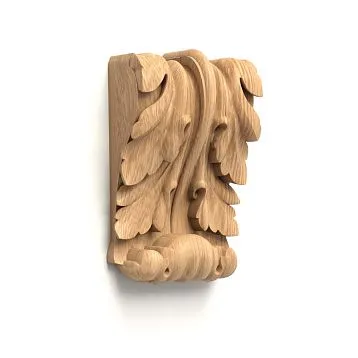
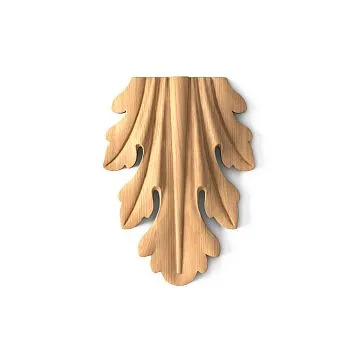
Decorative wooden appliques possess a special magic. They not only change the appearance of an item, but also influence our perception of the entire interior. A simple chest becomes a family heirloom, a typical kitchen acquires the soul of a home hearth, and a faceless hallway becomes a grand entrance to the world of beauty.
Our factory also produces:




Psychology of texture perception
Why does the human eye find carved surfaces so appealing? Our brain is evolutionarily tuned to seek out complex, varied forms. Smooth surfaces appear dull to us, while textured ones seem alive and engaging.
Tactile sensations play no less important a role. Touching a carved surface provides a rich palette of sensations: the smoothness of convex parts contrasts with the depth of recessions, creating a three-dimensional image that can be seen and felt.
Get Consultation
Technical Perfection: Materials and Methods
Wood as a living material
Choosing the wood species is the first and decisive step in creating quality furniture decor. Each species has unique characteristics that affect not only the appearance but also the longevity of the item.
Oak remains the unrivaled leader in producing carved elements for furniture. Its density reaches 700 kg/m³, allowing for the carving of the finest details with jewel-like precision. Oak veneers retain line clarity for decades, gradually acquiring a noble patina of time.
Beech attracts craftsmen with its uniform structure and excellent workability. This species is ideal for creating complex compositions with numerous small details. Beech items are highly suitable for toning, allowing them to be adapted to any interior color scheme.
Ash combines strength with expressive texture. Contrasting annual rings create a natural decorative effect, especially beautiful in large elements.
Modern Processing Technologies
Producing quality furniture decor today is a symbiosis of traditional craftsmanship and advanced technologies. CNC machines ensure mathematical precision for basic forms, but it is the hands of an experienced craftsman that give the final life to the item.
Facade veneers undergo a complex technological cycle. First, the wood is dried in special chambers to a moisture content of 8-10%, ensuring dimensional stability of the finished product. Then follows the cutting stage, taking into account the grain direction and defect placement.
Rough processing is performed on CNC milling machines. Modern equipment can work with precision down to 0.1 mm, which is critically important for elements that must fit together perfectly.
Artistic finishing
True beauty is born at the hand-finishing stage. The master carver carefully refines every detail, removes traces of machine processing, and gives the ornament vitality and expressiveness.
Multi-stage sanding is the most important production stage. Starting with coarse abrasives of 120 grit and gradually moving to fine ones (up to 400 grit), the craftsman achieves perfect surface smoothness.
Stylistic diversity: from classic to modern
Eternal beauty of classical forms
Classicism in furniture decor is a triumph of harmony and proportion. Traditional motifs — palmettes, meanders, laurel wreaths — create a sense of nobility and refinement. Such wooden veneers are perfect for offices, libraries, and living rooms in traditional style.
Baroque is a style for those who are not afraid of luxury. Ornate compositions with cherubs, cartouches, and acanthus leaves transform ordinary furniture into palace pieces. Baroque elements require appropriate surroundings but can create a truly royal atmosphere.
Neoclassicism brings to the interior the spirit of victory and triumph. Eagles, laurel wreaths, fasces — symbols of strength and greatness — make furniture solemn and monumental.
Natural motifs in decor
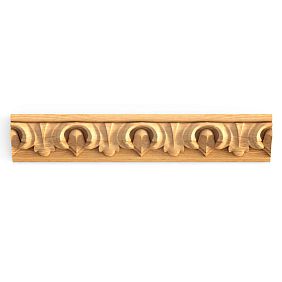
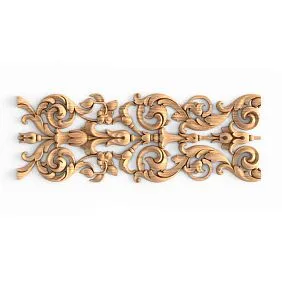
Plant ornaments remain the most popular in the world of furniture decor. Each motif carries its symbolic meaning: grapevines symbolize abundance, oak leaves — strength and longevity, roses — beauty and perfection.
Modern masters do not limit themselves to simply copying natural forms. They create stylized compositions where recognizable elements acquire a new artistic resonance.
Geometric carving: mathematics of beauty
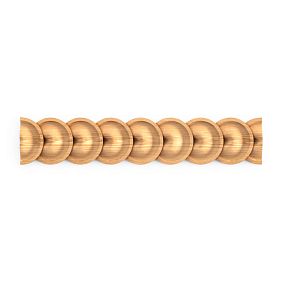
Geometric ornaments are ideal for lovers of strict forms. Triangles, rhombuses, circles, in the skilled hands of a master, transform into complex compositions where each element is mathematically precise in relation to the whole.
Especially effective are geometric carved wooden decorative elements for furniture look stunning under indirect lighting, when each facet creates its own play of light and shadow.
Functional solutions: beauty in details
Kitchen furniture: the heart of the home
The kitchen is where the family spends most of its time. Here, it is especially important to create an atmosphere of coziness and warmth. Carved veneers on kitchen facades transform a functional space into a true family hearth.
Plant motifs are ideal for kitchens — wheat stalks, grapevines, apple branches. They evoke associations with abundance and fertility, making the cooking process more heartfelt and pleasant.
Modern protective coatings make wooden elements absolutely practical for kitchen use. Special lacquers withstand increased humidity, temperature fluctuations, and easily clean off dirt.
Bedroom furniture: intimacy and tranquility
The bedroom is a space for rest and recovery. Carved furniture elements here should promote relaxation, create an atmosphere of calm and serenity.
For the bedroom, it's better to choose soft, smooth shapes without sharp angles and aggressive elements. Floral motifs, wavy lines, pastel tones — all of this contributes to creating a relaxing atmosphere.
A carved headboard looks especially impressive. It becomes the compositional center of the bedroom, creating a sense of safety and comfort.
Living room: presentation of style
The living room is the home's calling card, a place where guests are received and family evenings are held. Decorative elements made of solid wood here should demonstrate the taste and status of the homeowners.
Living rooms suit more complex and expressive compositions. Large inlays on furniture wall panels, carved elements on coffee tables, decorative inserts in buffets — all of this creates a sense of respectability and good taste.
Production nuances: secrets of craftsmanship
Material Preparation
The quality of the finished product is 80% determined by proper wood preparation. The material must be carefully sorted — boards with knots, cracks, or signs of fungal damage are excluded.
Wood drying is a critically important process. The moisture content must be reduced to 8-10% and evenly distributed throughout the entire volume of the stock. Forced drying is unacceptable — it leads to internal stresses that may manifest even after the item is manufactured.
Cutting and grain orientation
When cutting, not only economical material use is considered, but also correct grain orientation. For carved elements, radial-sawn blanks are preferred — they are more stable and less prone to warping.
The direction of the grain also affects carving quality. Cross-grain cuts cleanly without chips, while longitudinal grain requires special care and sharp tools.
Carving technology
Modern carving combines machine precision with artistic skill. CNC machines perform rough material removal and create the basic ornament contours. This ensures high productivity and repeatability of elements.
Final finishing is done by hand. The craftsman refines details inaccessible to machine processing, smooths transitions, and gives the ornament vitality and individuality.
Protective coatings: durability and beauty
Modern paint and coating materials
Water-based lacquers have become the standard for furniture production. They contain no solvents, dry quickly, and have no odor. At the same time, they provide reliable protection for wood against moisture, UV radiation, and mechanical damage.
Polyurethane lacquers have increased wear resistance. They are ideal for elements subjected to intensive use — countertops, drawer fronts, cabinet doors.
Oil finishes
Natural oils penetrate deeply into the wood structure, highlighting its texture and creating a "living" surface effect. Oil finishes are especially popular in Scandinavian style and eco-friendly interiors.
The advantage of oils is the possibility of local repair. Scratches and wear marks are easily removed by reapplying oil without disassembling the element.
Waxing
Wax coatings give wood a silky sheen, emphasizing the beauty of the material. Wax provides pleasant tactile sensations but requires regular renewal.
Modern waxes contain UV filters and antiseptic additives, significantly enhancing their protective properties.
Assembly and integration
Methods of mounting
Adhesive bonding is the primary method for attaching decorative inlays. Modern adhesives create bonds stronger than the wood itself. It is important to properly prepare surfaces — they must be clean, dry, and degreased.
Mechanical fastening is used for large elements or when disassembly is anticipated. Hidden self-tapping screws are used, and mounting points are carefully concealed.
Fitting and joining
Quality installation requires precise fitting of elements. Joints should be practically invisible, transitions — smooth. This requires high craftsmanship and quality tools.
Carved wooden furniture decor Often consists of several elements that must form a single composition. Precision in manufacturing and assembly is critically important.
Care and Maintenance
Daily Care
Wooden decorative elements require minimal but regular care. The main procedure is removing dust with a soft dry cloth or brush. It is important not to allow dust to accumulate in ornament recesses.
For wet cleaning, use a well-wrung cloth. After wet treatment, the surface is immediately wiped dry. Aggressive cleaning agents are not permitted.
Seasonal maintenance
During the heating season, when the air becomes dry, it is recommended to use humidifiers. The optimal humidity for wooden furniture is 45-55%.
The finish is renewed as needed, usually every 3-5 years. Oil-based finishes require more frequent renewal — every 1-2 years.
Repair of damage
Minor scratches and scuffs can be fixed yourself. Special repair compounds — waxes, touch-up pencils, matched to the finish color — are used for this.
Serious damage requires professional repair. Modern technologies allow restoring even complex carved areas almost without traces.
Economic Efficiency
Investment in long-term beauty
Quality carved decoration for wooden furniture is not an expense, but an investment. It dramatically increases the aesthetic value of furniture, making it unique and memorable.
Furniture with quality carved elements is significantly more valuable when resold compared to ordinary furniture. The difference may amount to 50-100% of the original price.
Savings on furniture replacement
Decorative appliqués allow updating the appearance of tired furniture without replacing it. This is especially relevant for quality furniture that still functions well but has become outdated aesthetically.
The cost of decorating constitutes only a small portion of the price of new furniture, yet the effect can be even more impressive.
Enhancing interior status
The presence of hand-carved elements in an interior is always perceived as a sign of good taste and wealth. This is especially important for reception areas — offices, meeting rooms, lobbies.
Regional characteristics and traditions
Russian School of Carving
Russia has rich traditions in woodworking. Different regions developed their own characteristics and styles. Vologda wood lace, Bogorodsk toys, Хохлома painting — all these are living traditions that find application in modern furniture decoration.
European influences
European schools of carving are distinguished by technical perfection and attention to detail. German precision, Italian elegance, French refinement — each school has contributed to the development of decorative arts.
Eastern motifs
Growing interest in Eastern philosophy introduces Asian decorative elements into European interiors. Chinese dragons, Japanese styles, Indian mandalas create an exotic atmosphere.
Modern trends
Ecological safety
Growing consumer environmental awareness stimulates demand for natural materials. Certified wood from sustainably managed forests has become a standard of quality.
Personalization
Modern consumers value individuality. Personalized ornaments, including family symbols, monograms, and commemorative dates, are becoming increasingly popular.
Minimalism
The minimalist trend also affects decorative arts. Minimalist forms, clean lines, absence of unnecessary details — this approach finds many supporters among the younger generation.
Integration with modern technologies
Smart furniture
Carved wooden furniture decor Begins to integrate with smart home elements. Hidden lighting, wireless charging, built-in speakers — all of this can be concealed behind decorative elements.
Multimedia solutions
Modern technologies allow embedding displays, projectors, and audio systems into furniture. Carved decoration helps seamlessly integrate these elements into a classic interior.
Psychology of Perception
Impact on Mood
Different types of ornamentation affect the human psyche differently. Plant motifs soothe, creating a sense of closeness to nature. Geometric patterns stimulate intellectual activity.
Tactile sensations
The opportunity to touch carved surfaces creates an additional channel for perceiving beauty. Relief elements activate tactile receptors, creating a rich palette of sensations.
Social significance
Quality carved decoration is always perceived as a sign of culture and good taste. It creates a positive impression of the owner, highlighting their status and individuality.
Conclusion: Investment in Beauty and Quality of Life
Carved wooden furniture decor It is not just interior decoration. It is a way to express your individuality, create a unique atmosphere in your home, and surround yourself with beauty that will delight you for years.
In the modern world of mass production and standardization, hand-carved elements remain an island of true craftsmanship. Each piece is unique, every detail bears the mark of the master’s hand and his vision of beauty.
Carved wooden inlays, furniture decorative elements, carved panels — all these items share one thing: they transform ordinary furniture into works of art, creating that unique atmosphere which distinguishes a true home from mere shelter.
By choosing quality carved decor, we invest not only in the beauty of our homes, but also in supporting traditional crafts and preserving cultural heritage. We create spaces that will delight not only us, but also our children and grandchildren.
For many years, the company STAVROS has remained faithful to the principles of quality and craftsmanship in creating carved decor. By combining traditional techniques with modern technologies, using the finest materials, and attracting talented artisans, the company creates items that become ornaments of homes and sources of pride for owners. Choosing STAVROS means choosing quality proven by time, beauty embodied in wood, and traditions that will endure for generations.